

Brief


|
At a Glance
As the video game industry grows, the definition of what it means to be a world-class game company is changing. Game companies that once relied on their employees’ passion for the game now need to develop more comprehensive talent models. Talent is a constant source of concern for senior executives in the game industry. Despite last year’s tech layoffs, talent shortages are perennial, with gaming job postings growing by about 40% over the past three years. The rise of AI and its potential effect on the workforce further complicates the issue. To get a better understanding of talent market dynamics and what video game companies need to do to attract and retain the people they need, we spoke with 20 executives at 17 top video game companies, from big publishers to smaller studios. We also analyzed talent flows and motivators from LinkedIn and Glassdoor. Our findings suggest that although the industry has long relied on its employees’ passion for games, companies will need to develop more comprehensive strategies for talent management if they are to secure the workforce needed to grow. A passionate workforceHistorically, video game companies have hired from within the industry, competing with other game companies rather than the broader tech industry for talent. Over the past five years, about 80% of people hired by game companies have come from within the industry, and 85% of those who left their game companies stayed within the industry. 80
People hired by gaming companies from within the industry (past five years) 85
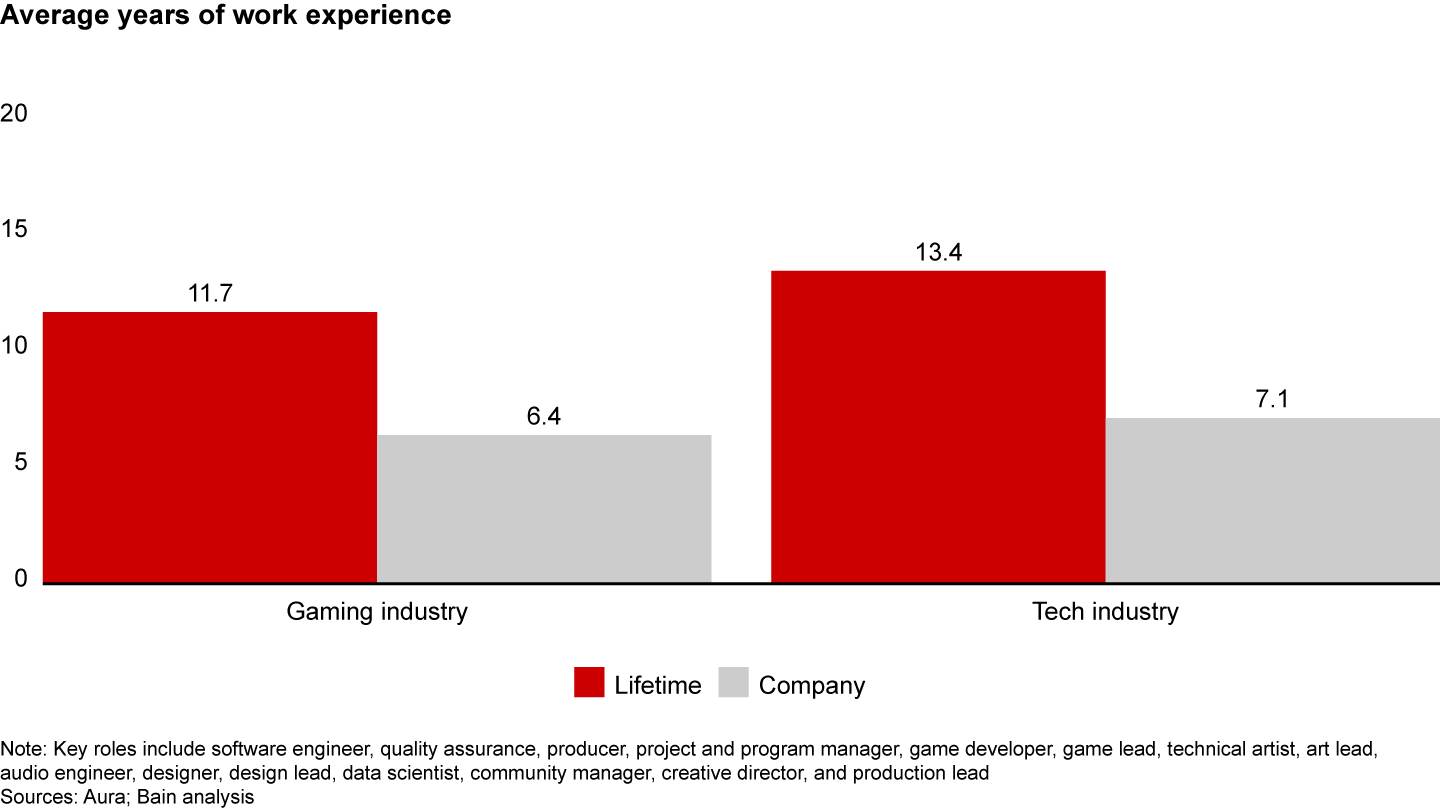
People who exited gaming companies but stayed in the industry (past five years) Executives highlighted purpose as the most common reason why employees join a game company—namely, the satisfaction that they are contributing to something worthwhile, important, and exciting. Over time, work-life balance, compensation, and supportive leadership become more important for most employees, and these aspects are more important from the beginning for people who are not joining out of passion for games. Most executives said that the “burn and churn” culture still exists. On average, the game industry has a higher attrition rate for key talent than the broader tech industry: 10% compared with 6% in 2022 (see Figure 1). People with key roles in the game industry have, on average, less career experience than employees with similar roles in the broader tech industry (see Figure 2).
Figure 1
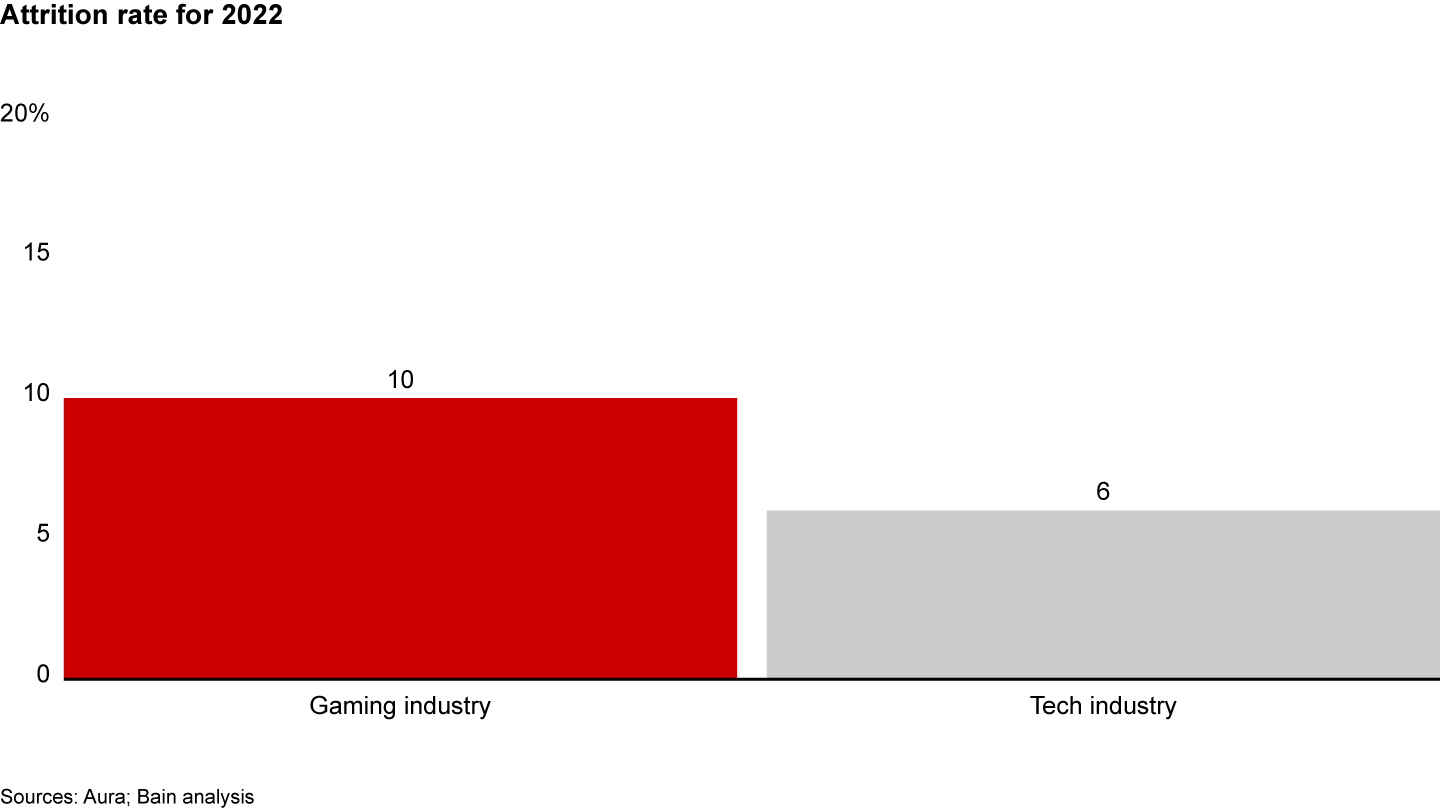

Figure 2

A maturing talent modelTo address high attrition rates and to support the industry’s growth, companies will need to hire more talent from other industries, and they won’t be able to rely as much on passion for a company or its games to counterbalance other issues. This is already beginning to happen: The percentage of software developers hired from within the game industry fell from 70% in 2019 to 53% in 2022. 70
2019 Software developers hired from within the gaming industry 53
2022 Software developers hired from within the gaming industry A more mature talent model offers a complete value proposition to employees, delivering on three aspects.
Video game companies provide the inspiration, but they often struggle with the other elements, which will be especially important to recruit and retain talent who are not die-hard gamers. To strengthen the areas of engagement and enablers, companies should invest in several key areas.
Beyond the value proposition, video game companies will need holistic talent strategies to evolve into world-class organizations. Games are getting more complex to develop, and video game companies are expanding into broader entertainment. New roles and capabilities will be required to deliver on these ambitions. In addition to these factors, companies also need to consider how AI could change the talent structure. Will it liberate creatives to focus on making better games, or will it wreak havoc on the organizational model? Bain’s recent research found that while 80% of executives have varying levels of concern on the impact of generative AI on the talent structure, most believe that the technology cannot fully replace the human spark of creativity. (For more, read the Bain Brief “How Will Generative AI Change the Video Game Industry?”) Over the past decade, leaders in the video game industry have raised the bar on entertainment, producing incredibly immersive gaming experiences. Today, the large investments being made in technology and the rapid experimentation with AI signal that the industry is poised for another step change. Yet, too many organizations still manage their employees as if they were small start-ups dependent on the enthusiasm of a passionate fan base. To thrive during the next wave of growth, video game companies will need to understand that they’re no longer competing against only other game companies for key talent but also against the entire tech industry. To deliver on that ambition, executives will need to develop complete talent strategies and manage their employees as effectively as other large technology organizations. |