


World Economic Forum

|
At a Glance
This article originally appeared on World Economic Forum. The global food system is a marvel of human achievement. It feeds 7.9 billion people, employs 40% of the world’s population, and generates a third of the global GDP. But at the same time, agriculture places a heavy burden on the environment, and the economic benefits are uneven. An inclusive and sustainable global food systemWe need to act more quickly to build a more sustainable, inclusive, and healthy food system. There are fewer than nine annual planting cycles left to meet key milestones of the Paris Agreement and the United Nations Sustainable Development Goals. Real progress depends on urgently tackling three paradoxes.
Figure 1
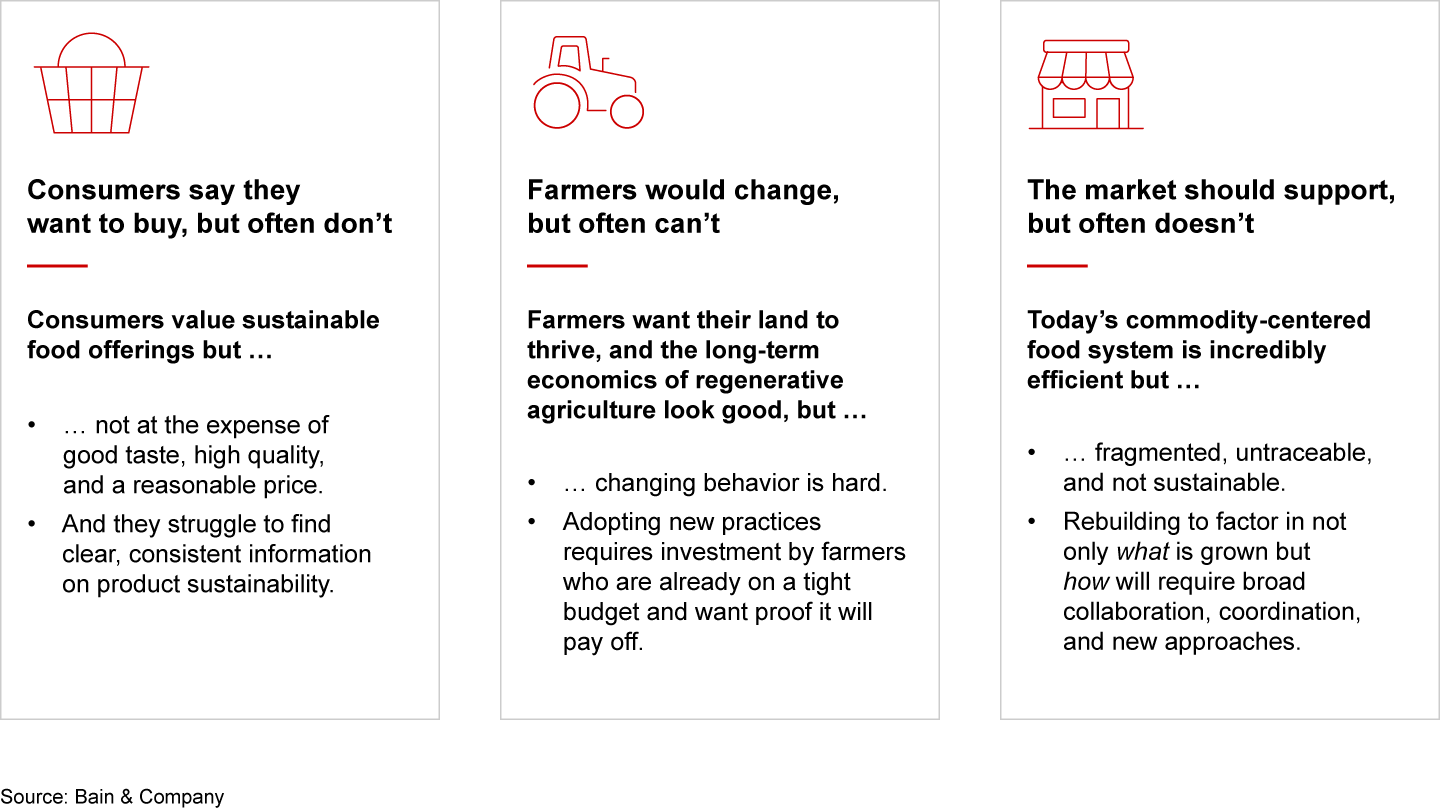

1) Consumers say they want to buy, but often don’t
Consumers around the world value sustainable food offerings. In a recent Bain & Company survey, 80% of European consumers report caring about sustainability, and 14% say ESG considerations are their main purchase criteria. Eighty-seven percent are willing to pay more for products made in an environmentally and socially responsible way. The figures are similar in Asia and the US. Unfortunately, shoppers’ high level of interest is not consistently reflected in what lands in their carts. Sustainable options often carry too high a price tag, and while sustainability is important to consumers, other factors are too, including taste, quality, and health benefits. Shoppers are also frustrated by how challenging it can be to get the information and guidance needed to evaluate a product’s sustainability. They want brands to provide clearer, simpler information. 2) Farmers would change, but often can’tIndividual farmers are critical to creating a more sustainable food system. As stewards of the land, farmers want to see it thrive, but farming is their livelihood, and they often operate on thin margins. Studies show that, over time, there is an economic benefit to shifting to the regenerative farming and grazing practices that help fight climate change by rebuilding soil’s organic matter, pulling carbon from the atmosphere and sequestering it in the ground. However, adopting these practices costs money and involves significant change, and farmers are looking for proof that it’s worth the investment. 3) The market should support, but often doesn’tOur food system is optimized for scale and efficiency and is centered on commodities that meet common standards. Farmers work to produce those commodities, and food companies rely on them to create consistent products. Operated at high volumes, it’s an incredibly efficient system, but sustainability simply isn’t factored in. Transitioning from a food system aimed at maximizing yield and efficiency to one that also rewards how food is grown will require fresh thinking, collaboration, and coordination among key market participants. Five actions can break these paradoxes and speed food systems’ transformation.
Overcoming the paradoxes of consumers, farmers, and the market will help build a food system that is strong enough to withstand cycles of global turbulence, that supports a thriving planet, healthy populations, and a prosperous society. With accelerated and committed corporate action, this is a goal within reach. 
Food System Transformation: The Time Is NowMore sustainable food and agriculture offers one of our best shots at reversing climate change and environmental degradation while improving health and livelihoods around the world. |