


Brief


|
At a Glance
In the face of the Covid-19 pandemic, corporate leaders are coming to grips with the sudden, devastating consequences of people shutting in and businesses shutting off. One Asian telecommunications provider, for instance, lost more than three-quarters of its contact center agents as operations in India and the Philippines shut down. Beyond the immediate fallout of the crisis, it has become clear that Covid-19 is radically accelerating the digital future. Consider the sea change in customer behavior and expectations over the past two months:

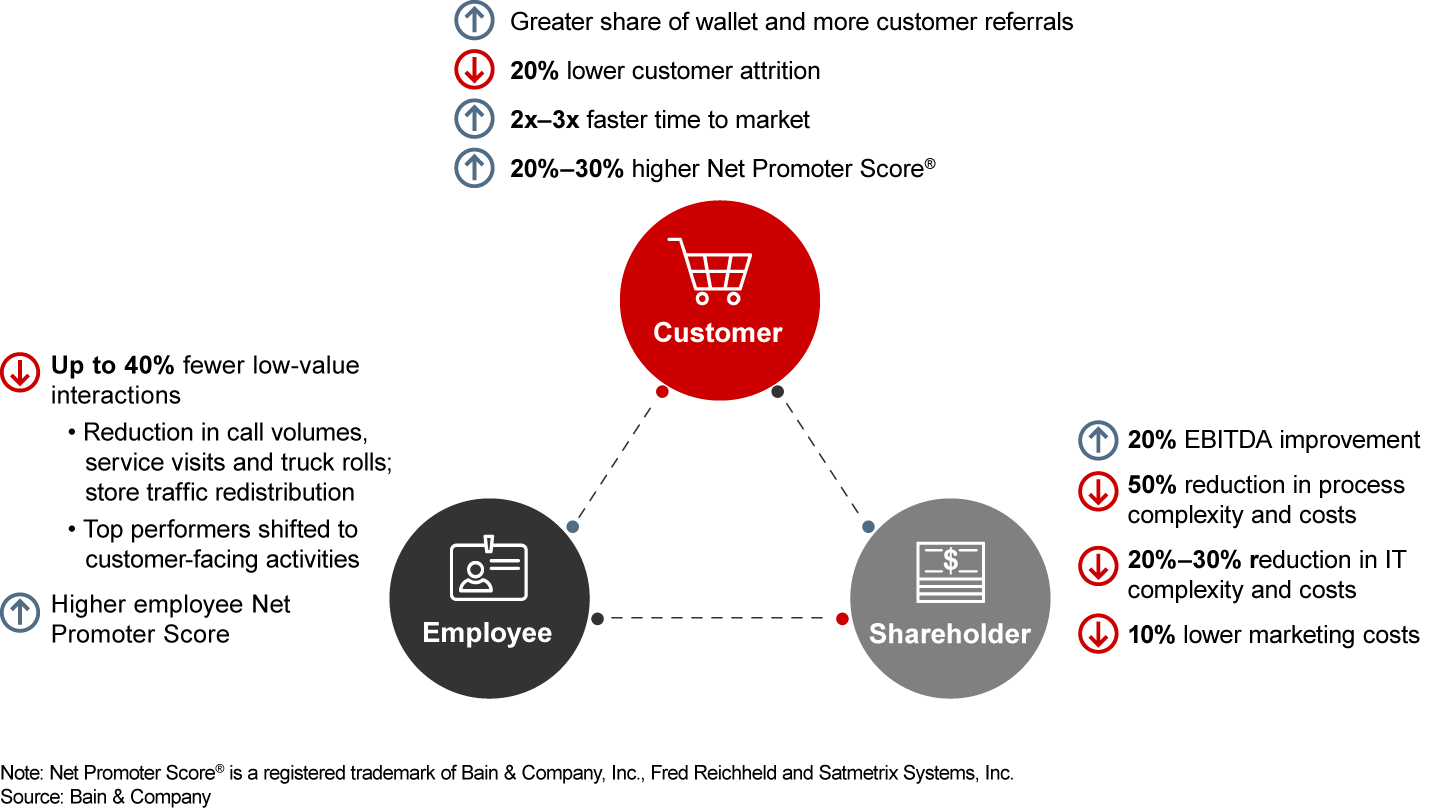
Macro Surveillance PlatformFor more detail on the business implications of coronavirus from Bain’s Macro Trends Group, log on to the Macro Surveillance Platform. Learn more about the platform > Digital channels and tools will form the heart of an effective response to these society-wide shifts. Consider Joseph, an acquaintance of one of the authors who lives in New York City and never needed to own a car there. When the coronavirus started to spike, he suddenly wanted a car to flee to his parents’ house upstate. He wanted to buy one quickly and have it delivered with no human contact. Online vehicle retailer Carvana could provide that service, with touchless delivery to his apartment within 24 hours. Now that he has purchased a car online and had it delivered to his doorstep, he likely won’t go back to haggling at the dealership, even once the virus has passed. Like Joseph, customers have put the ongoing shift to digital on fast-forward. Years of incremental change are now happening in weeks. Paper money is finally being abandoned, with noncash and mobile payments soaring in the past few weeks. Business managers are discovering that Zoom proves adequate for meetings and will rethink the need to travel for so many of them in the future. Millions of people have been forced to adopt distance learning and remote medicine. What started with no-contact food delivery is expanding to no-contact mortgage refinancing and estate planning, which companies resisted . . . until they had to change. The situation presents both a challenge and an opportunity for businesses. Customers will find a way to meet their needs digitally, through their current provider or another company that does a better job. This will widen the gap in performance between digital leaders and laggards, generating better results for customers, employees and shareholders (see Figure 1).
Figure 1

The North Star for customer experiencesSimple and digital products, services and customer experiences, delivered at lower cost, have become essential for continued growth—and in some industries, essential for survival. Completely digital, self-serve experiences that go right the first time remain the North Star, and the time frames to achieve this have been compressed. Companies must jump years in a matter of months to provide digital experiences that are easy, intuitive and reliable. Executives who aspire to offer truly simple and digital experiences should tailor their plan based on the degree of disruption in their industry, the readiness of their organization and the success of current digitalization efforts. Some industries, such as home entertainment, home fitness, home delivery and telecommunications, will have a massive growth spurt, though at the risk of overcapacity in the future. Others, notably business travel and mall-based retail, have shut down and will likely return at lower levels than before. Every industry will change, not just in the level of demand but also the way in which consumers fill it. How ready is your organization to deliver experiences simply, digitally and right the first time? Benchmark the firm against traditional competitors, upstarts and cross-category technology leaders that set consumer expectations. Peloton is disrupting gyms, Affirm is disrupting credit cards, and Amazon and Alibaba are disrupting many industries. Study such innovators for the contours of what a good experience looks like. A related question: With your current digitalization initiatives, what works well and what holds teams back? Few companies have made as much progress with digital channels and tools as they anticipated. Look closely at your current programs to understand the root causes of delay. Breaking through usually requires focused, minimum viable solutions that respond to customers’ top priorities, delivered using Agile principles in order to make rapid improvements. Components of a bold planBased on these considerations, ambitious leaders can develop a bold plan built from four components.
Digital still requires human intervention to build, operate and continually improve the customer experience. And the human touch remains valuable when people need help or advice. Those employees will need greater skill to deal with more complex customer needs. However, employee intervention should integrate into the digital experience rather than requiring a separate phone call or store visit. Get it done through Agile methodsNow for the hard part: pushing on an accelerated timeline, with teams likely working from home. Yes, this can be done. When one utility company needed to develop digital tools to help its field service team identify and repair power line problems that could cause wildfires, executives quickly discovered that Agile teams would raise the odds of making rapid progress. These cross-functional teams consisted of dedicated subject-matter experts, with leaders who had clear objectives, authority to make decisions and the right remote-work tools, such as Jira and Miro. A team’s effectiveness also depends on having enterprise technology that is robust and adaptable. Bedrock technology is essential for meeting substantially higher demand and allowing digital development through APIs and microservices, without touching the back-end systems. Finally, companies must motivate and align employees around the mission, to spark high performance even in a remote environment. The best practices of the employee Net Promoter System® can help here, including pop-up surveys to take the pulse of the organization, team huddles via Zoom, and frequent, clear communication from the senior team to help employees feel valued and connected. Answering several diagnostic questions can kick-start the effort (see “Key questions to diagnose your company’s readiness”). Key questions to diagnose your company’s readiness
Given the extensive behavioral, psychological and physical changes underway in virtually every country, executives who accelerate steps to make their businesses simple and digital will emerge in a much stronger competitive position. Gerard du Toit, Frédéric Debruyne and Karsten Fruechtl are partners with Bain & Company’s Customer Strategy & Marketing practice. Michael Brookshire is a partner with Bain’s Performance Improvement practice. They are based, respectively, in Boston, Brussels, Melbourne and Dallas. Net Promoter®, Net Promoter System®, Net Promoter Score® and NPS® are registered trademarks of Bain & Company, Inc., Fred Reichheld and Satmetrix Systems, Inc. 
CoronavirusThe global Covid-19 pandemic has extracted a terrible human toll and spurred sweeping changes in the world economy. Across industries, executives have begun reassessing their strategies and repositioning their companies to thrive now and in the world beyond coronavirus. 
Bain Simple & DigitalTransform your customer experiences and deliver them at radically lower cost. 
Covid-19: Coming Out of the Crisis Stronger by Accelerating DigitalGerard du Toit and Michael Brookshire share their insights on what companies should be doing in terms of their digital capabilities. |