


Brief


|
At a Glance
Dexterous, bipedal robots with general intelligence are advancing faster than many expected, and they’re quickly becoming economically viable. Within five years, robots will likely be able to perform a wide range of physical tasks at a cost that rivals or beats human labor. Adoption is poised to accelerate across industries, from manufacturing to food service, healthcare, and even construction. Four converging forces are accelerating development and pushing adoption toward an inflection point:
Why humanoid robots?Fixed robots have been around in some industrial and commercial environments for decades, with wheeled, automated guided vehicles (AGVs) expanding in popularity. But bipedal, humanoid robots offer some unique advantages. First, the world is built for humans, so humanoid robots fit right into these brownfield settings without the need for extensive retrofits or capex. Humanoid robots are also multipurpose. Their dexterity and design lead them to be able to perform a very wide range of activities. Guided by AI, the coming wave of humanoid robots will be able to learn and adapt in the environments where they’re deployed—homes, warehouses, factories, and public spaces. As with fixed robots, humanoid robots will be active for 24 hours, greatly expanding productivity. The demand case: A changing labor forcePopulation growth is slowing in major industrial economies, and fewer working-age people are in the labor force to support those in retirement (see Figure 1). This imbalance could result in a global labor shortage of nearly 8 million manufacturing workers by 2030, increasing the appetite for automation (see Figure 2). Humanoid robots could be critical for sustaining economic growth during this demographic shift.
Figure 1
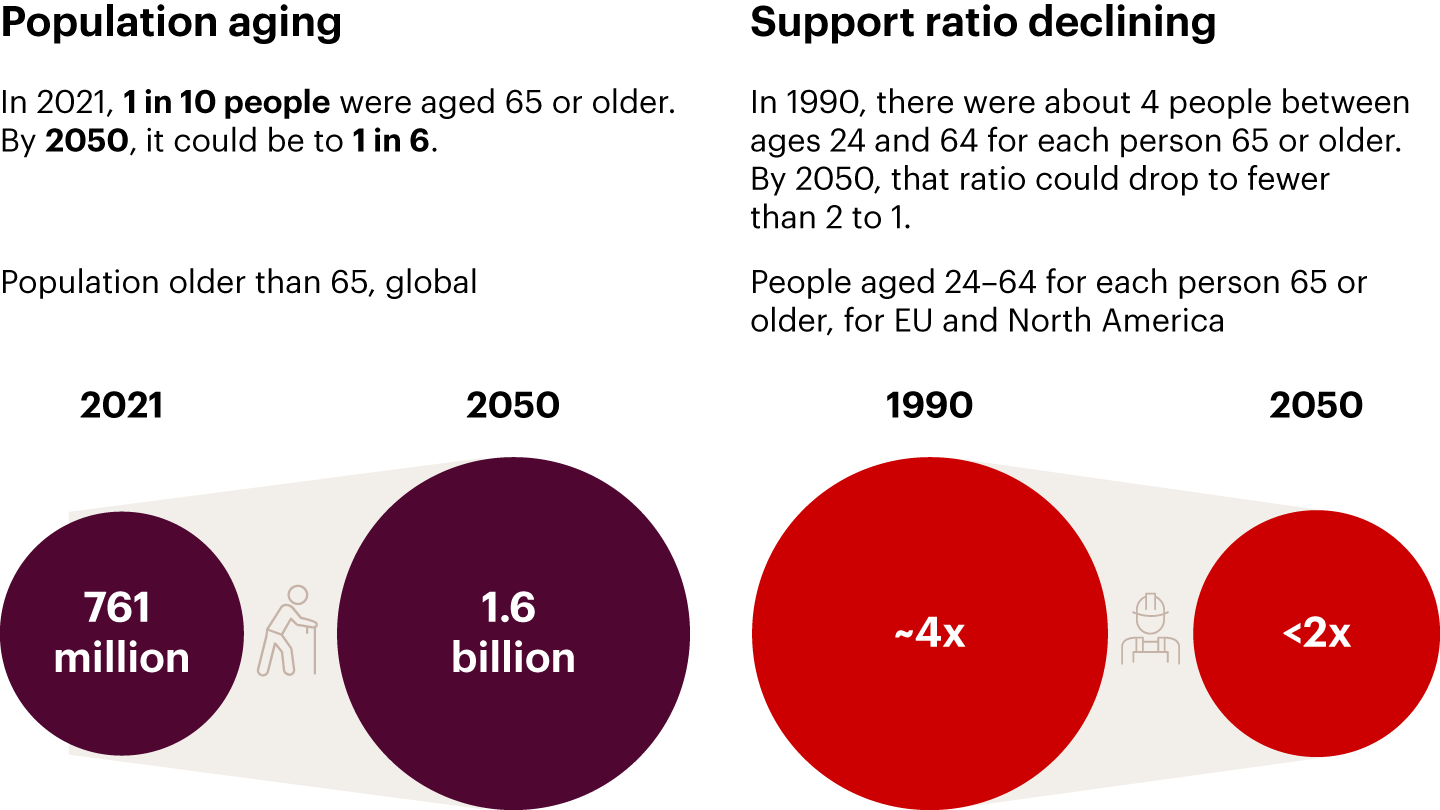

In addition, governments in high-income countries, most notably the US, are encouraging local production through tariffs and domestic subsidies. Since these countries are unlikely to have cost-competitive labor, the repatriation of manufacturing will increase demand for automation in general. The reduction in manufacturing jobs over the past few decades has also contributed to the atrophying of some skill sets in formerly industrial countries. Humanoid robots could fill gaps in specialized or general labor supply. Increased difficulties in hiring for in-person positions combined with mounting opposition to immigration are additional factors that could lead to humanoid robots changing the labor force.
Figure 2
The market ahead: Production risingForecasts vary, but in general, we anticipate steady growth in the deployment of humanoid robots through 2030, followed by a rapid uptick thereafter. Market projections range from $38 billion to more than $200 billion by 2035. Global funding in humanoid robotics start-ups is growing quickly, up from about $308 million in 2020 to $1.1 billion in 2024. Several global tech leaders along with specialized robotics start-ups are ramping up production (see Figure 3).
Figure 3
Over the past few years, robotic software and generative AI have shown the value they can add through automation of fields that depend on research, writing, and business processes, including coding, training, finance, marketing, sales, and administration. Humanoid robots will soon bring similar benefits into the physical world, including areas that require mobility, dexterity, and general intelligence, such as manufacturing, logistics, cleaning and maintenance, construction, healthcare, food prep and service, personal care, and other services environments (see Figure 4).
Figure 4
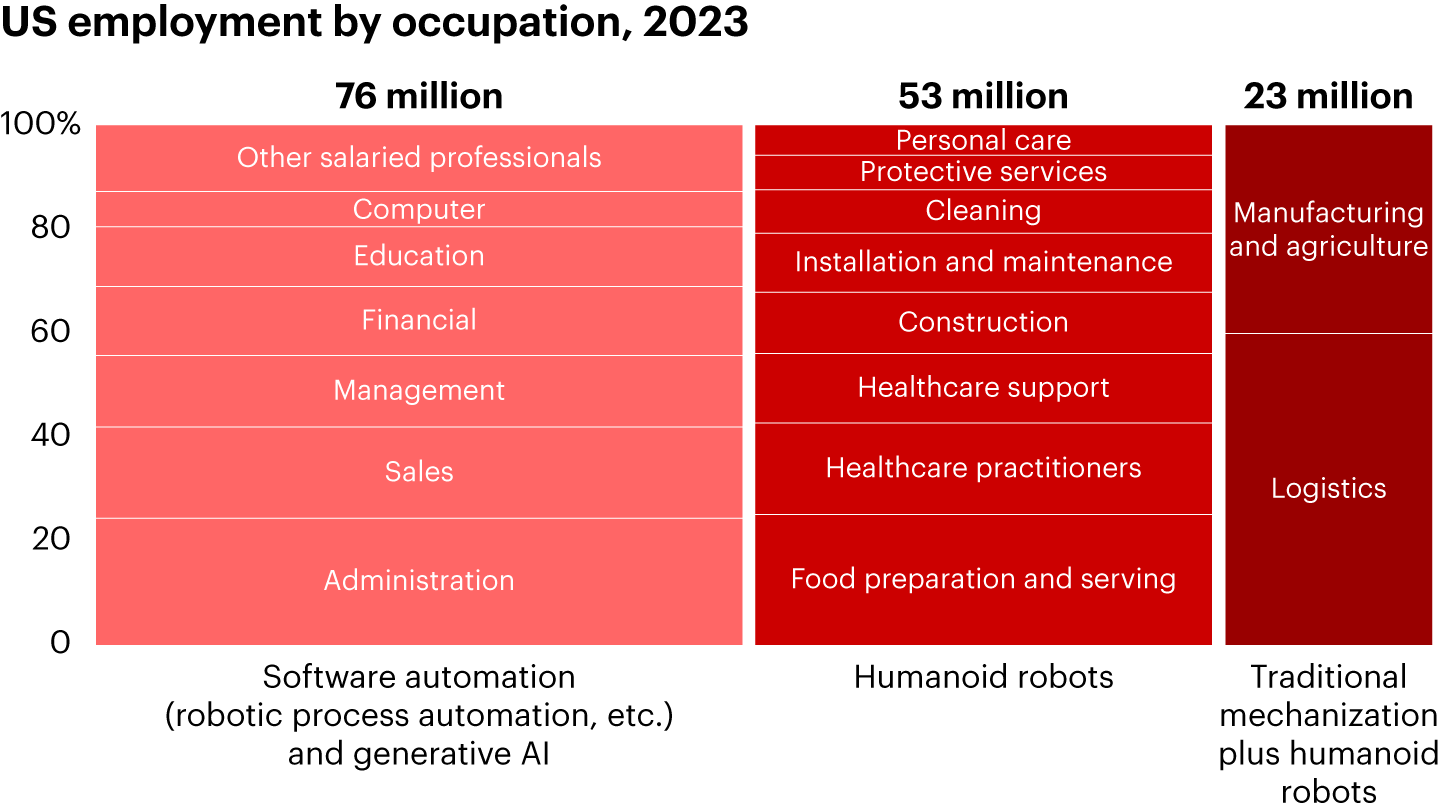

Note: The US Bureau of Labor Statistics Occupational Employment and Wage Statistics survey excludes private households and some agricultural workers Source: US Bureau of Labor Statistics Occupational Employment and Wage Statistics survey, May 2023Implications for executivesFor most companies, it’s too soon to deploy significant capital. But the technology is mature enough that they should begin to assess progress, experiment with prototypes, and incorporate the prospect of robots into major capital projects.
Humanoid robots won’t replace swaths of human workers overnight. But their growing dexterity, intelligence, and cost competitiveness all suggest that they will take on a meaningful share of physical jobs over the next three to five years. For forward-looking firms, now is the time to experiment and gain a competitive edge while shaping how this transformative technology will deliver value across industries. |