

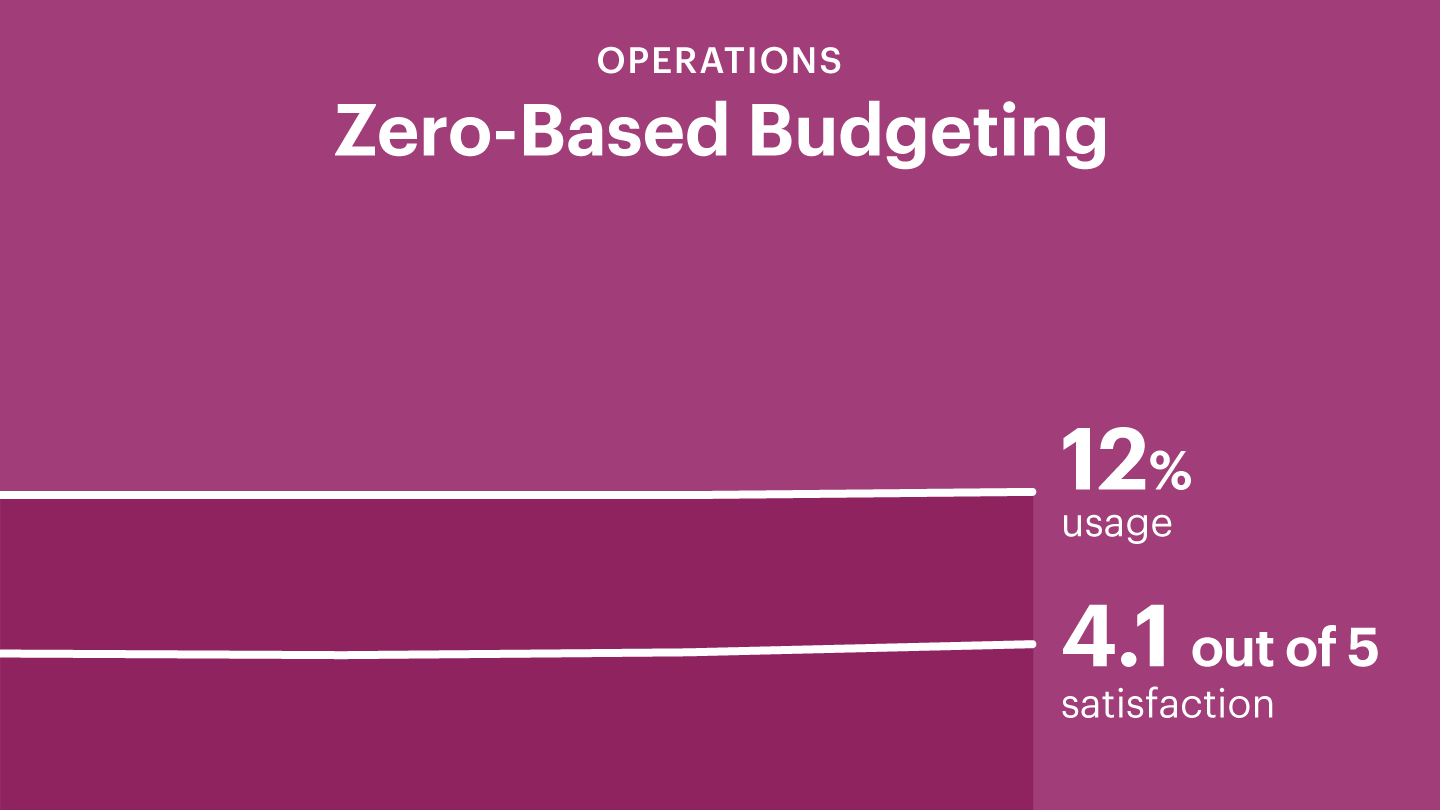
Management Tools

|
What Is Zero-Based Budgeting?Zero-based budgeting (ZBB) is a budgeting method that takes a “blank sheet of paper” approach to resource planning. The zero-based budget process differs from traditional budgeting by examining all expenses for each new period, not just by making incremental changes to prior-year budgets. It starts from a budget of zero, forcing managers to scrutinize all spending and requiring them to justify every expense item that should be kept. It helps companies to radically redesign their cost structures and boost competitiveness. The process is helpful for aligning resource allocations with strategic goals, although it can be time-consuming and difficult to quantify the returns on some expenditures, such as basic research. 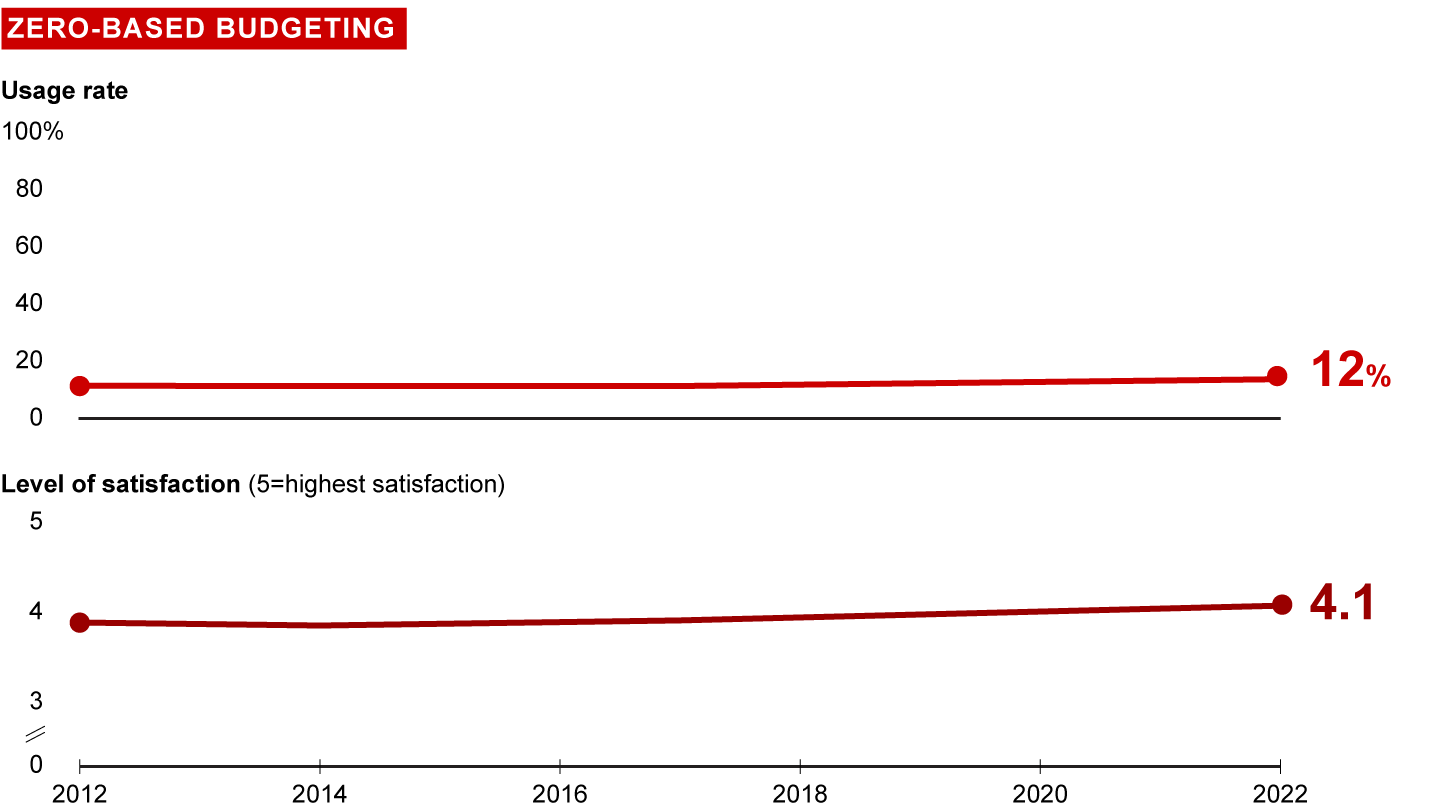

Zero-based budgeting is an ongoing cost management capability focused on delivering continuous cost improvement. It reinforces an ownership culture in which associates treat each dollar as if it is their own. ZBB achieves results by improving visibility on expenses, increasing justification for budgeted spending, and enabling ongoing results discussions and reallocation initiatives. How Is Zero-Based Budgeting Implemented?For zero-based budgeting, companies should take the following steps:
Related Topics
What Are the Common Uses for Zero-Based Budgeting?Zero-based budgeting is used to:

Management Tools & Trends 2023On the 30th anniversary of our survey, managers seem surprisingly upbeat. |