Brief


|
At a Glance
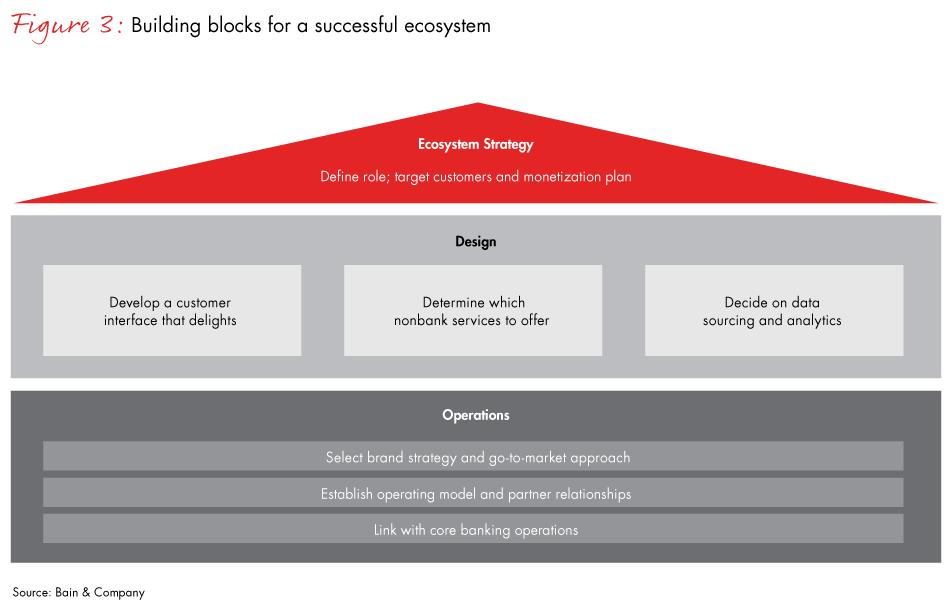
It’s not easy for small companies to grind through the basic operations of running a business. Owners and managers spend substantial time navigating separate platforms for banking, enterprise resource planning, human resources and other activities, each with its own spreadsheets of critical information. Retail merchants must sell through multiple channels, including the online platforms offered by the Rakutens, Alibabas and Amazons of the world. And small and medium-sized enterprises (SMEs) selling online are heavy users of payments technology. How can bankers help contain this sprawl? They can devise a simple, easy-to-use package that would integrate banking functions with, say, an external partner’s accounting and payroll software. Integrated technology packages could hold great appeal for SMEs, allowing banks to pursue new business models that would strengthen and expand their role with smaller business customers. SMEs also look for advice and support at transitional moments such as making acquisitions or starting to export. By offering value-added services that address SMEs’ broader needs, banks can position themselves at the center of an ecosystem of interconnected services. Potential services include sales planning, pricing, procurement, accounting and reporting, payroll, staff management, payments, and liquidity management (see Figure 1). The ecosystem model has already taken hold in other sectors, including mobile telecommunications, industrial goods (as exemplified by GE’s Predix platform) and insurance. Forward-looking insurers, for instance, are positioning themselves at the center of an ecosystem for services such as smoke, intrusion and leakage monitors for the home; telematics sensors for vehicles to reward safe driving or trigger maintenance alerts; health diagnostics and advice; and financial planning. 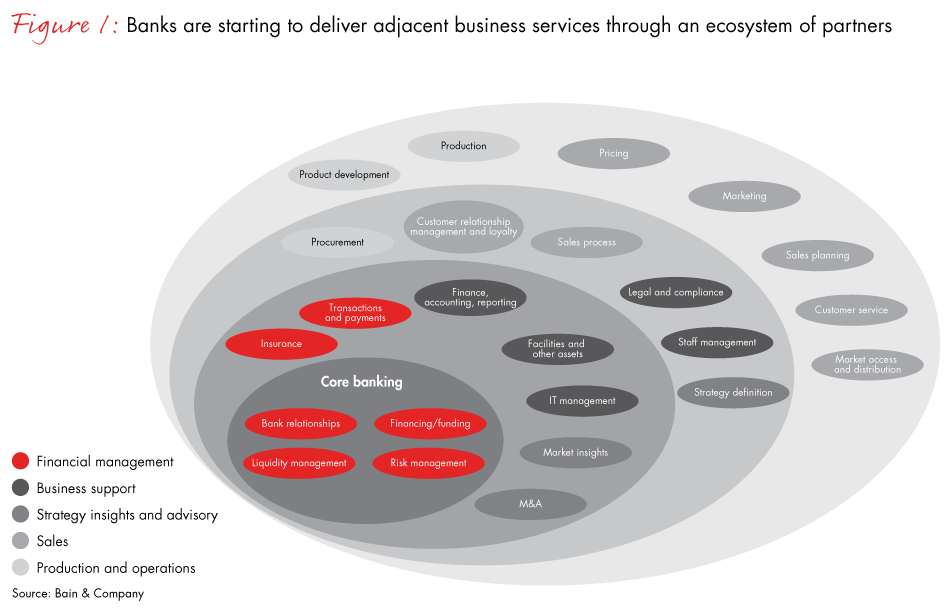 Some banks have made a promising start in developing their SME ecosystems. For example, ANZ in New Zealand targets start-ups, using monthly subscription fees for its revenue model. It partners with Honcho for business setup and other companies such as Xero for accounting. DBS is working with Singtel, the largest telecommunications provider in Singapore, to help SMEs go cashless and build e-commerce businesses. JPMorgan Chase recently acquired payment company WePay, in part, to build a wider suite of business services that already integrate with WePay so that business customers can link their banking accounts to these services and use them more efficiently. Deeper relationship, deeper dataBy developing an ecosystem of services beyond core banking or integrating into an existing ecosystem, banks should be able to tap new profit pools that they currently do not serve. A broader integrated offering should protect and deepen a bank’s customer relationship in the face of emerging new competition. Banks will also gain experience from new partnerships or go-to-market models that could help them speed up time to market and require less up-front investment. Further, Bain’s analysis of ecosystems offered through platforms in several industries shows that there are positive knock-on effects. In banking, institutions will gain access to the SME customer interface and data, which they can use to refine their offerings and make operations more efficient. For instance, a bank offering proprietary payment terminals to retailers sees transaction flows and seasonal peaks and troughs, which would allow the bank to anticipate the working capital needs of its retailer clients. In the mix of digital tools and human advice that a bank provides, service models will have to distinguish between the smallest clients and midsize firms. For the smallest clients, economics dictate a heavier use of self-service digital tools, including payments software development kits, which help companies incorporate financial features, such as payments, into websites and apps. Banks might even consider pioneering robo advice for very small firms. The major concern raised by micro firms, in our experience, is the complexity of moving among systems for payments management, accounting, human resources and bank transactions. This suggests substantial unmet demand for a simple, one-stop shop through a truly integrated system—not unlike the integrated platform for business banking needs that the banking community has discussed for years. As client firms grow larger, their needs and challenges involve specific business issues, such as how to export effectively or how to hedge a risk. That’s where an ecosystem of specialists can add value. Advice and interactions with skilled staff will be critical to serving these larger firms effectively, earning their loyalty and expanding the share of their wallet. Developing an ecosystem strategy starts with analyzing primary customer research to gain a comprehensive understanding of SMEs’ needs day to day and at each stage of their life cycle. A bank can assess each customer need on several dimensions.
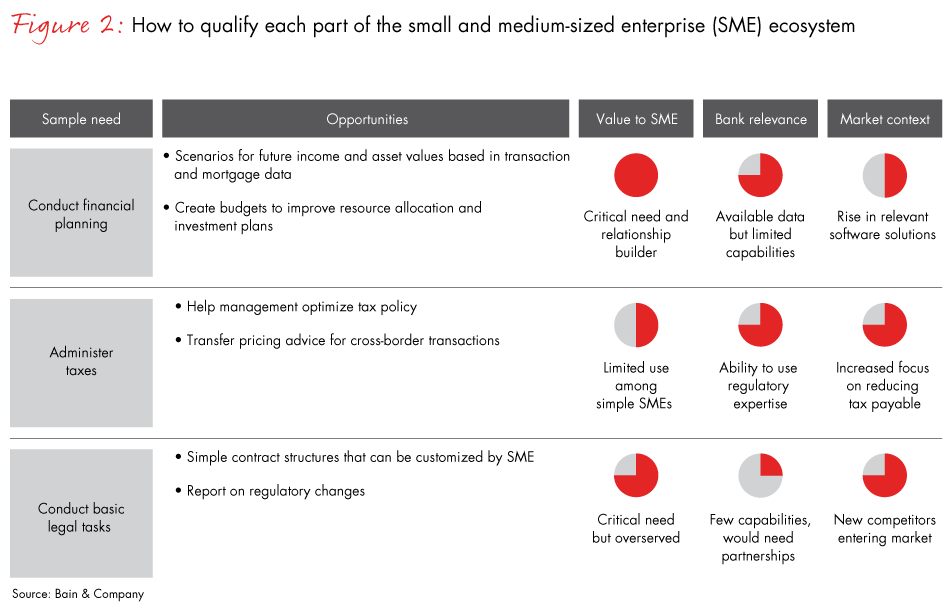
Bain Partner Seow-Chien Chew shares how banks can provide value-added services to small business ecosystems that will be mutually beneficial. Keep it credibleOne particular challenge for nearly all banks: Credibility is essential in this business, yet banks generally have low credibility for nonbank services. And SMEs complain even about core bank services such as slow, costly payments—especially international payments. Improving performance in this area and convincing SMEs of the improvement will be essential because payments acceptance and cross-border transactions have become basic needs for modern SMEs. Banks also must raise their level of service design in creating an ecosystem. Offering a web page with disjointed click-through links to external partners will not satisfy SME customers who have made it clear that they want an integrated platform. To be sure, an ecosystem strategy may not be right for all banks, such as those that aim to become low-cost, back-end utility providers of core services. But banks that have a deep understanding of customer needs, have strong customer relationships and deliver good customer experiences with their core services could confidently consider an ecosystem strategy. They can determine where to focus their ecosystem by considering each need in three dimensions (see Figure 2).
|