


World Economic Forum


|
At a Glance
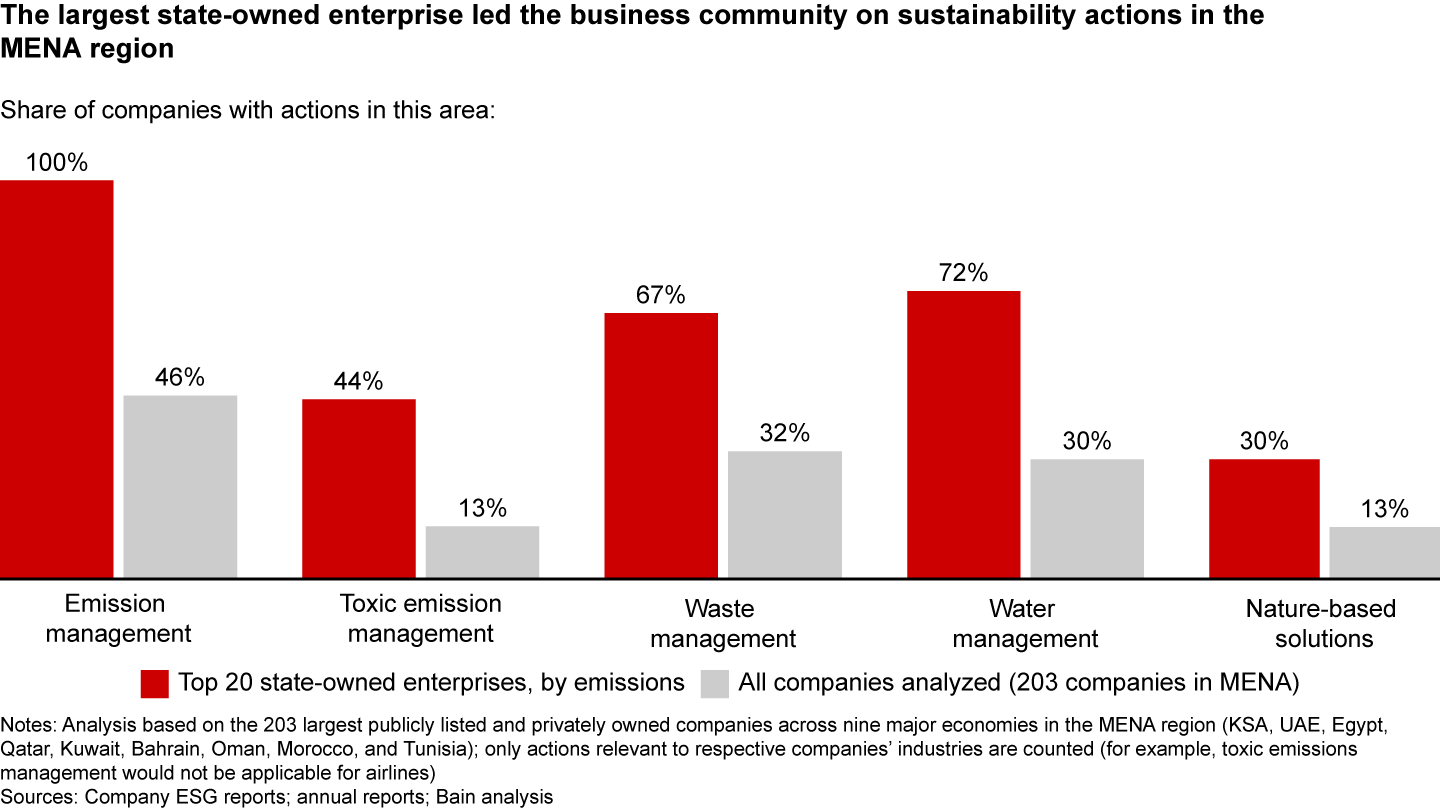
This article originally appeared on the World Economic Forum. Middle Eastern and North African countries are often criticized in discussions of climate change for the outsize emissions generated by the energy sectors. Such arguments ignore the fact that region’s oil and gas producers are meeting a demand for energy that is global. The consequences of rising temperatures will also hit the MENA region harder than most others, as growing desertification, dropping water-tables, and increasing heat waves threaten habitability across the region. A better way of framing the discussion would be to point out that any solution to climate change must run through the Middle East. And here the green shoots are visible. As the ambitious net zero commitments by Saudi Arabia, the United Arab Emirates (UAE), Oman, and Bahrain attest, governments across the region are beginning to embrace climate change action. With Egypt and the UAE hosting consecutive COP summits, the region is becoming a center of global climate discourse. Crucial to meeting regional governments’ emission reduction ambitions are MENA’s SOEs, which account for a significant share of the region’s economic activity. Taken alone, the top 20 SOEs by emissions in the MENA region have emissions equivalent to the entire country of Canada—but that means they also have the scale to accelerate sustainability action in the region by themselves. There are signs that they are doing exactly that. SOE LeadershipIn a previous blog post for the World Economic Forum, Bain & Company investigated the corporate climate commitments of 200 public and private MENA companies that represent 80% of their countries’ stock market capitalization and the largest firms in hard-to-abate sectors such as energy and steel. The findings highlighted the areas of improvement. MENA companies, for example, lag peers in other global regions on setting net zero targets, making disclosures to the Carbon Disclosure Project (CDP) and having Science-Based Target initiative (SBTi)-approved targets. We have since deepened our research to focus on the 20 largest MENA state-owned emitters that disclose their scope 1 and scope 2 emissions. These are companies of huge scale such as energy giant Aramco; Emirates, a global top 10 airline; and Saudi Electricity Company, which is among the world’s top 10 power companies by generation capacity. Given their size, many of these companies constitute a sizable chunk of national GDP. This gives them an outsized influence on the direction of corporate sustainability action in the region for two reasons. First, raw numbers: A decisive drop in emissions from any one of these companies will have a notable impact on emissions from the region as a whole. Second, stature: Many of these SOEs are national champions, and often other companies look to them for leadership and will follow their example. As such, MENA SOEs offer a crucial lens through which to assess the progress of companies in the region on climate change and sustainability. When we looked at the climate commitments of this subset of companies, we found that MENA SOEs are ahead of other businesses in the region (see Figure 1). Among MENA SOEs:
These are starkly higher than the broader business community in the region as represented by our analysis of largest 200+ companies of the region.
Figure 1

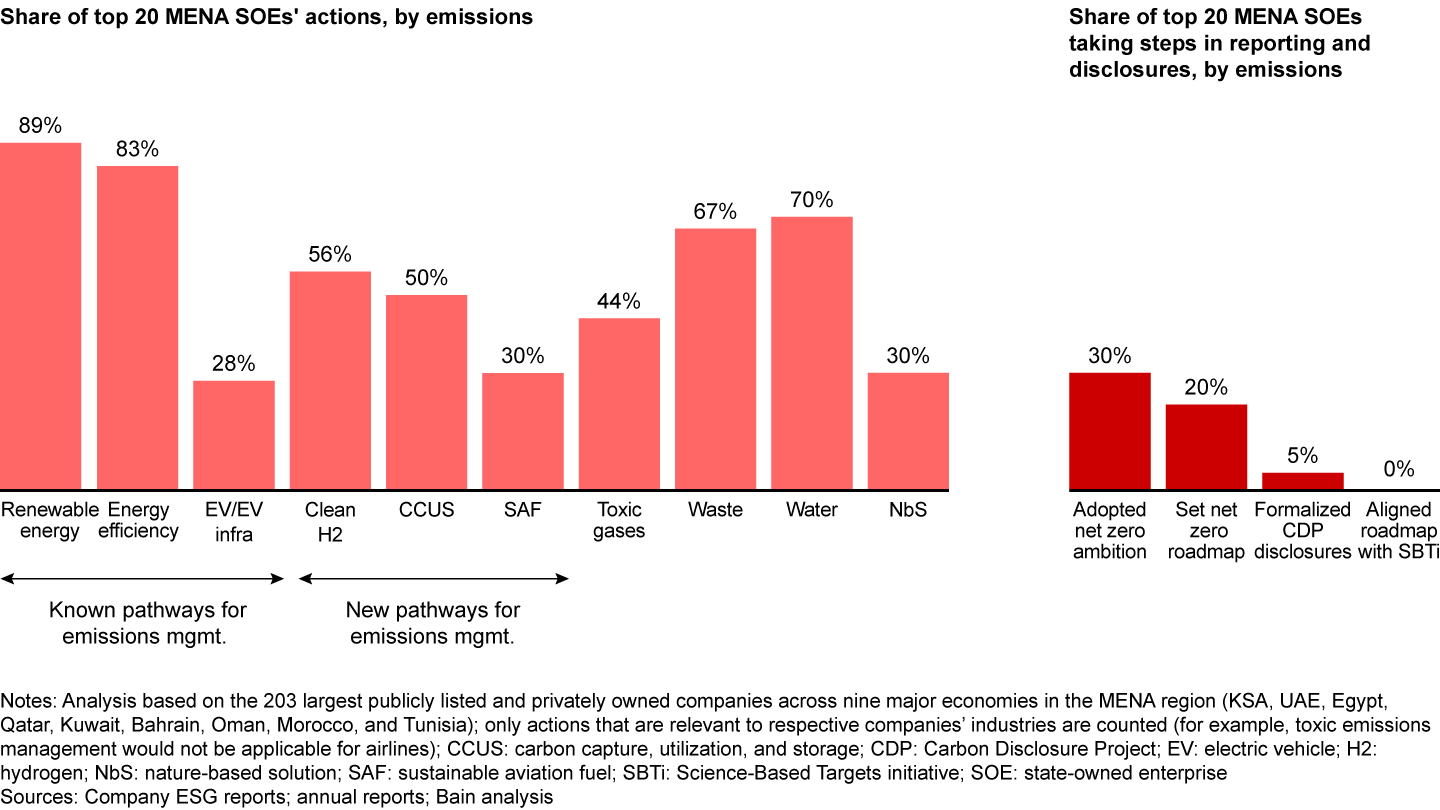
Government AmbitionsIn the last two years, we have witnessed significant momentum toward setting national decarbonization targets in the region. Now, nearly 60% of region’s emissions are covered by net zero ambition representing (based on the nine largest economies of the region), and state-owned companies will be essential to meeting those targets given their size and stature. Several SOEs in the regions have already made eye-catching investments in sustainability initiatives. Saudi Aramco, for example, is investing in one of the world’s largest carbon capture and storage plants, while the UAE’s Masdar is involved in building the world’s largest concentrated solar power (CSP) plant. In our subset of the largest 20 SOE emitters, nearly 90% have plans for renewable energy, and more than 80% have adopted energy efficiency measures. Perhaps most interestingly, 50% of them have started working on new pathways such as clean hydrogen, carbon capture, utilization, and storage (CCUS), and carbon capture and storage (CCS), and 30% have plans for sustainable aviation fuel. When it comes to reporting and disclosures, however, MENA SOEs can still be much more ambitious (see Figure 2). Only 30% of this group has adopted a net zero target, 20% have set a roadmap for it, and none have aligned the roadmap with SBTi. Similarly, only 5% have institutionalized CDP disclosures.
Figure 2

A Catalyst for Other CompaniesGovernments can play a part in setting ambitions, and increasingly in the MENA region, they are. However, it is companies that actually undertake most economic activity—and as such, the private sector will need to bear the responsibility of delivering sustainability action. In the MENA region, the 20 largest SOEs are taking a lead in some areas but must accelerate their actions with regard to consistent emission measurement, disclosures, and target setting. Going forward, they can help smaller private and public companies in the region make rapid progress too, by:
World Economic Forum, in its partnership with Bain & Company, is working with stakeholders in the MENA region, including large SOEs, to support such change as part of the WEF’s Leaders for a Sustainable MENA (LSM) initiative. Together we are building a coalition of climate-conscious and change-hungry partners who want to combat climate change and bring climate adaptation to the forefront. As the world moves toward COP 28, LSM aims to create a platform of dialogue where cross-border public-private partnerships can grow to deliver a net zero transition for the MENA region. |