

Founder's Mentality Blog

|
|
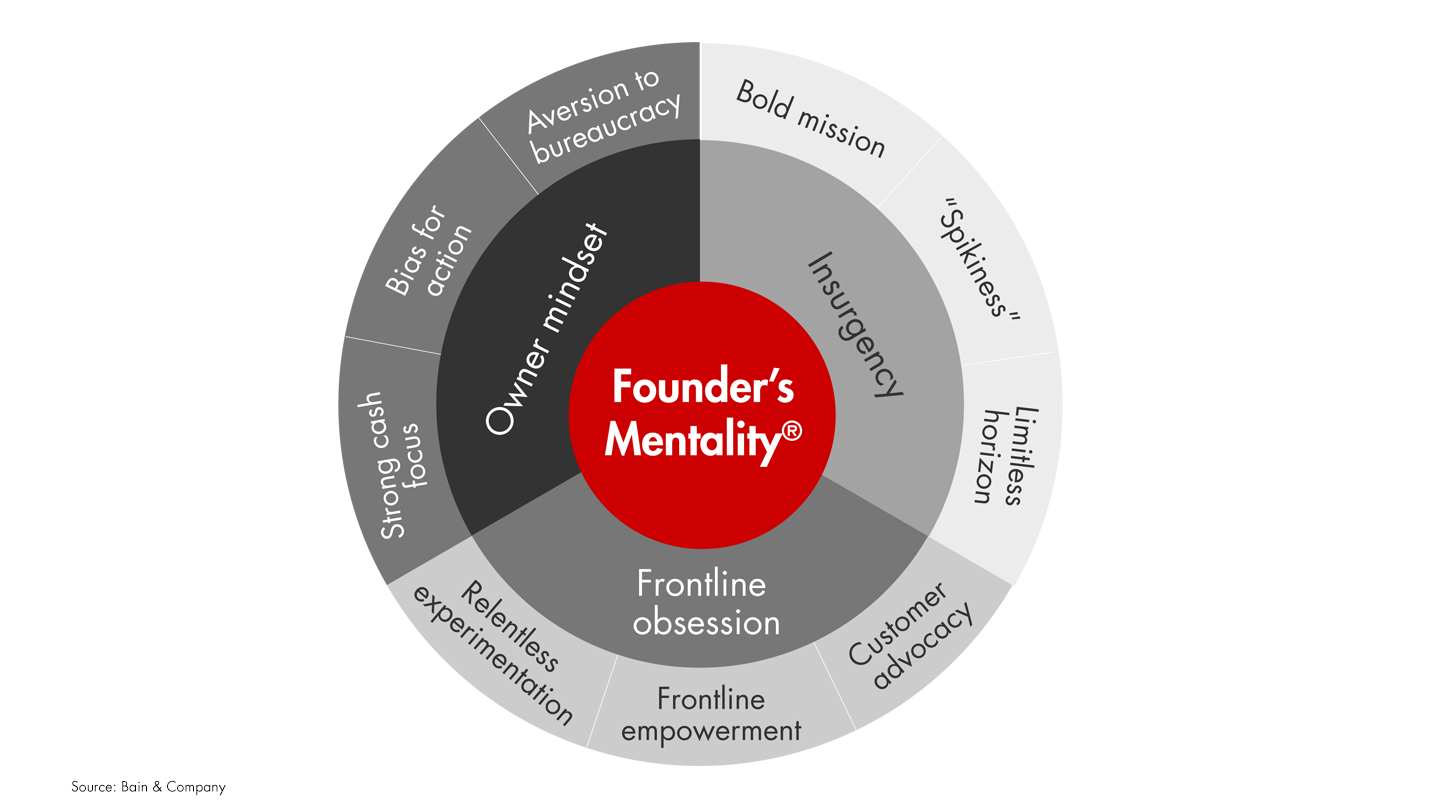
Leaders of insurgent companies are endlessly restless. They are determined to shape the future and are committed to thrive in turbulence, not fall victim to it. This requires constant innovation around the customer and the customer offering and, more fundamentally, around the business. We define companies with high Founder’s Mentality as those with an extraordinary sense of insurgency, a frontline obsession and an owner mindset, each of which have their own sub-elements (see Figure 1).
Figure 1

Frontline obsession manifests itself in three ways:

About the Founder's MentalityThe three elements of the Founder's Mentality help companies sustain performance while avoiding the inevitable crises of growth. Let’s examine the third of these behaviors, relentless experimentation. We have had dozens of conversations with companies about how they innovate around customers, but here’s one example in which the founder discussed the company’s initial “engine of growth”: “I think the core of our insurgency is all about ‘pioneering segments.’ We found a core group of users that were demanding more from their electrical solutions and we worked with them to develop new products and uses. And once we satisfied them, we set out to create more of these kinds of customers. We did this through teaming. We had some great technologists, who discovered lots of new electronic solutions and new features. And we had our sales teams in the market, working with users to understand their needs. Because teaming was the cultural norm, we mobilized and demobilized little SWAT teams to tackle new segments and find new products for them. Because we all felt we owned the customer and our growth objectives, we all felt an equal stake in developing new products and finding new areas for growth.” There’s a big theme here we will explore further in other blogs—the loss of Founder’s Mentality results in the loss of engines of growth. The founder quoted above highlighted the importance of customer-led innovation—when the company builds an integrated team (sales, customer care, technologists) that is co-located with customers to create new solutions that meet emerging needs. In our discussion, this founder warned against the move to functional excellence, which can force people into silos: “Yes, you need to capture efficiencies that come from specialization, but not at the expense of teaming, which ensures your main engine of growth—customer innovation.” Maintaining a culture of relentless experimentation starts with a mindset that says, “We are better off remaining the industry disruptor with our core customers than letting new insurgents disrupt us.” It also demands agility—your company needs to mobilize and demobilize integrated teams to co-create new solutions for your customers. And finally, it demands you celebrate the “doers” who are willing to improve customer solutions incrementally through relentless experimentation and, in doing so, fuel a critical engine of growth. |