

Brief

At a Glance
- Grocers have been a lifeline for many in the pandemic, and the surge in demand has now created a twofold strategic opportunity: Executive teams have more money to reinvest than they’d expected and a chance to deepen their renewed bond with shoppers.
- However, the next decade could be tough for those that don’t seize the moment to retool. New Bain & Company modeling suggests that profit growth will be lackluster unless grocers tackle an array of threats decisively.
- Seven actions in particular can help grocers confront future challenges: sharpening the customer value proposition, delighting shoppers on high-impact journeys, winning profitably in e-commerce, reimagining the role of the store and network, gaining a supply chain edge, preparing for more consolidation, and exploring new profit pools.
Three meals a day at home became the norm for many Americans during the Covid-19 pandemic, boosting grocers’ sales and profits at the expense of restaurants and cafés. These gains were hard won in very difficult circumstances: Grocers had to adapt overnight to keep customers and employees safe, ramp up online capacity, troubleshoot supply chain disruptions, and firefight across their operations. However, the progress made in 2020 may end up being short lived unless grocers can maintain their momentum with customers and retool for the strategic challenges ahead.
The US grocery sector faces a tough decade. Forces that pummeled it pre-Covid remain intact and many have strengthened in power. The dilutive shift to online grocery has accelerated, and omnichannel leaders are locking in shoppers to subscription services. Discounters continue to build stores, lowering prices and squeezing margins. Consumers still want more convenience, more value, more environmental and social impact. Restaurants—such an easy alternative to eating in before Covid-19—will regain traction at some point.
New disruption is on the horizon, too. Disintermediation is just one of the forms it might take: The popularity of food delivery aggregators could loosen bonds formed over decades between grocers and their customers. Turbulence could come from many other sources, including artificial intelligence, automation and personalization (of assortment, promotions, pricing and so on).
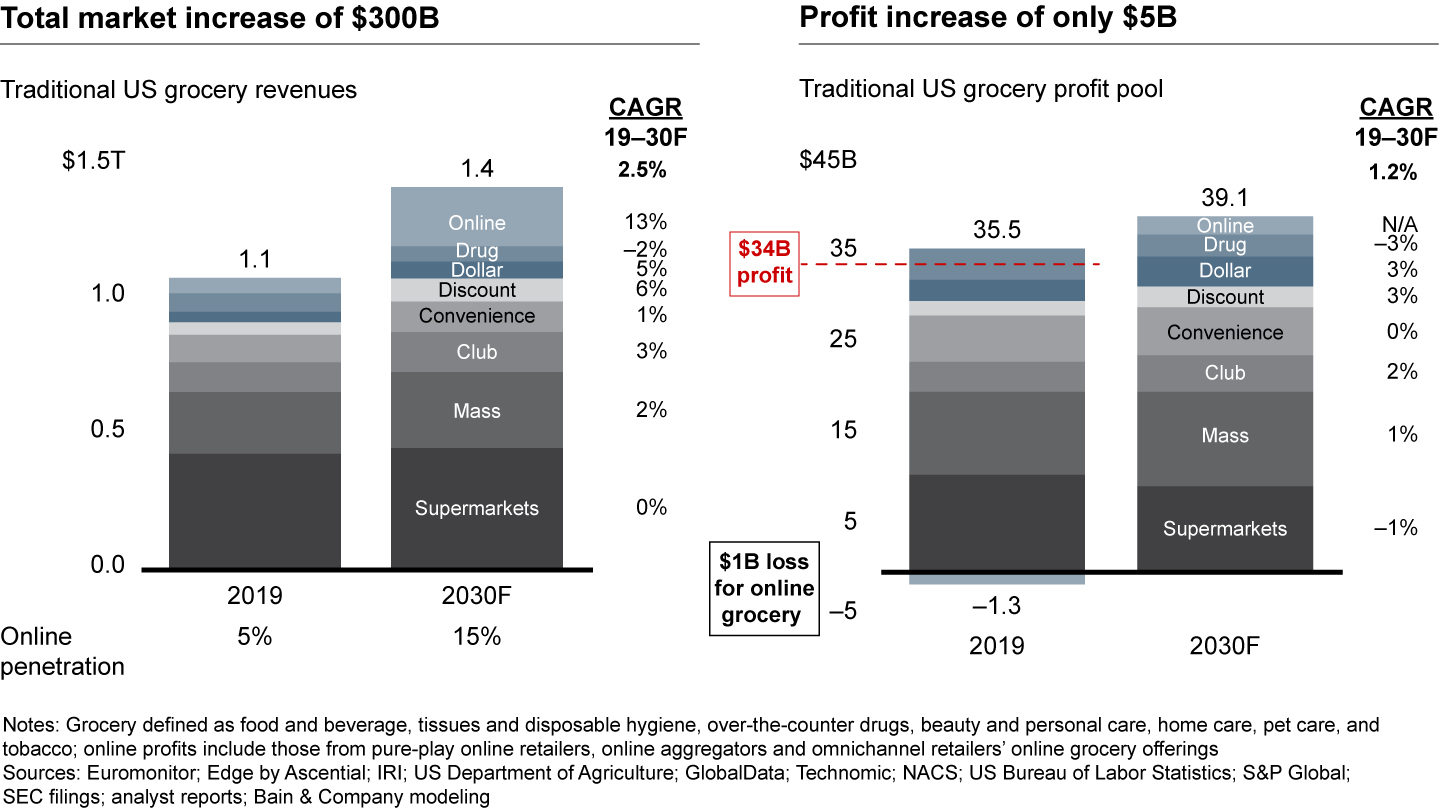
Although vaccine uncertainties make long-term forecasts more volatile than usual, we think grocery will lose much of its 2020 momentum over the next decade if it doesn’t respond decisively to the persistent pressure and looming disruption in the sector. Between 2019 and 2030, Bain & Company modeling suggests grocery profits overall will increase from just over $34 billion to $39 billion in the absence of concerted strategic action—a compound annual growth rate of only 1.2% (see Figure 1).
Figure 1

Next year could be tough as sales lap the highs of 2020. In our base-case scenario for 2021, restaurants begin to recover and grocery sector revenues could be flat or slightly down (see Figure 2). In our low-case scenario for grocery, a vaccine is widely distributed and adopted early in 2021 and diners rush back to restaurants; annual revenues could fall by 4% to 7% were that to happen. Our high-case scenario for grocery is a bleak one for all of us who are already tired of pandemic curbs: It envisions lingering health and safety restrictions, an ongoing struggle in the restaurant sector and a rise in US grocery revenues of 2% to 5% in 2021.
Figure 2
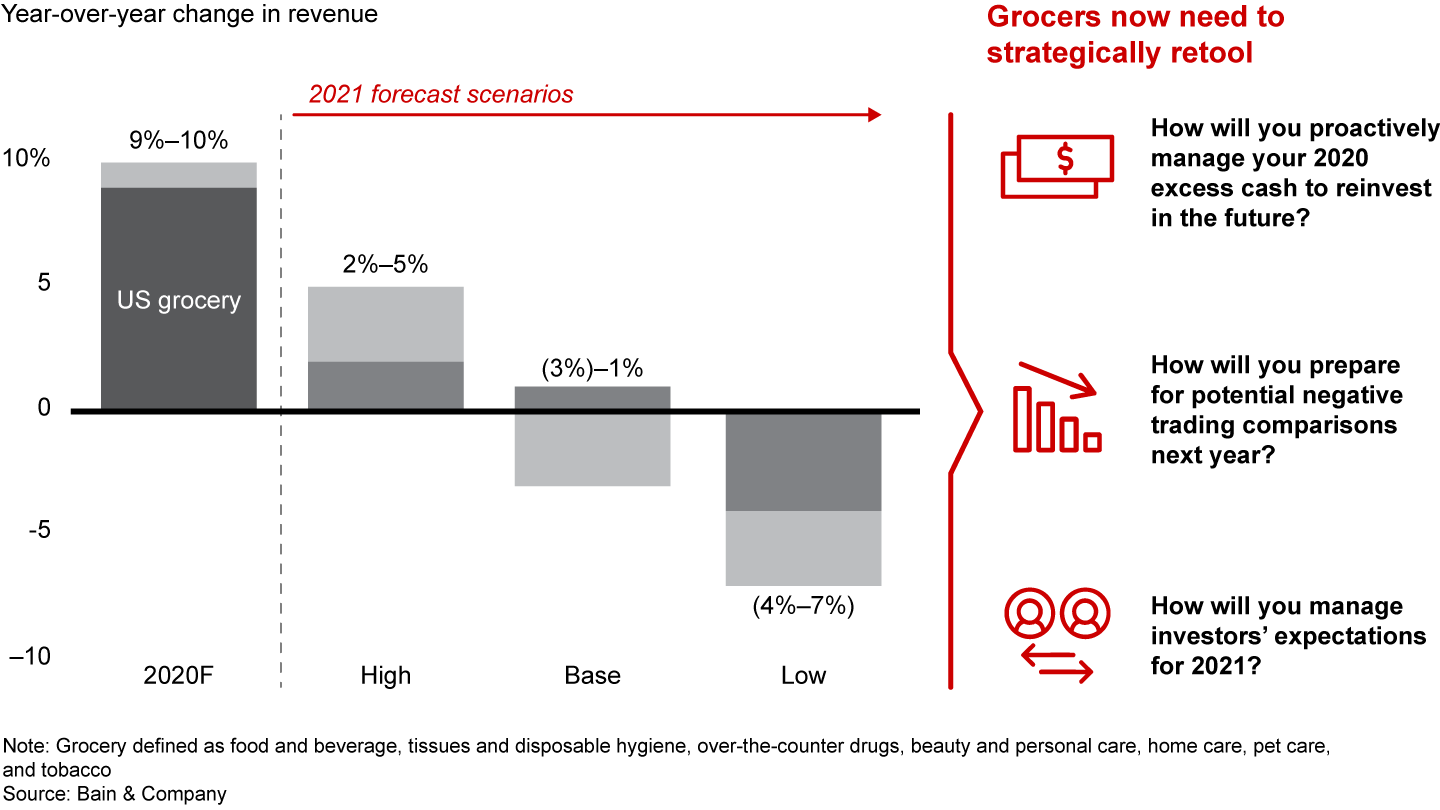

In all three scenarios, grocery is shaping up for a substantial drop from what’s likely to be a high single-digit increase in 2020. Meanwhile, the 2.6% annual grocery sales growth posted between 2014 and 2019 only looks achievable at the top end of our 2021 expectations.
Whichever short-term scenario prevails, we see a range of actions that can help grocers adapt to the demands of the coming decade. Right now, executive teams have more cash available to reinvest than they’d expected—a reason to be optimistic and proactive in the months ahead. But today’s strategic opportunity is also rooted in the fact that grocery became more central to customers’ lives in the pandemic. Now’s the time to deepen that bond instead of letting it fade in the Covid-19 recovery.
Persistent pressure and looming disruption
For investors, grocery has been one of the toughest retail sectors: Between 2014 and 2019, total shareholder return (TSR) from publicly traded grocers was 7.7% vs. a retail average of 11.1%. During the pandemic, the outperformance of mass merchants and value players has helped improve the five-year grocery TSR trend. Yet the forces that stifled the sector pre-virus have not gone away.
Rising consumer expectations are one stressor. Accustomed to Netflix- and Uber-style innovations, consumers continue to demand more from grocery shopping. The poor profitability of online grocery is another threat after Covid-19 accelerated the adoption of home delivery and in-store or curbside pickup. Online grocery penetration in the US could rise from 5.1% at the end of 2019 to 11% in 2025 and 15% in a 2030 base case, according to Bain’s modeling. That could slash two percentage points from margins over the next decade if grocers don’t improve the economics of the channel.

How to Ramp Up Online Grocery—without Breaking the Bank
Now that Covid-19 has accelerated demand for deliveries and pickups, grocers urgently need e-commerce to start paying its way.
Value formats have posted sales growth more than double the grocery average between 2014 and 2019. The rollout of new Aldi and Lidl stores that helped fuel this growth continues apace. With many households under financial strain, discounters should continue to exert a sector-wide influence on pricing, aided by their private-label bias and hardwired cost control.
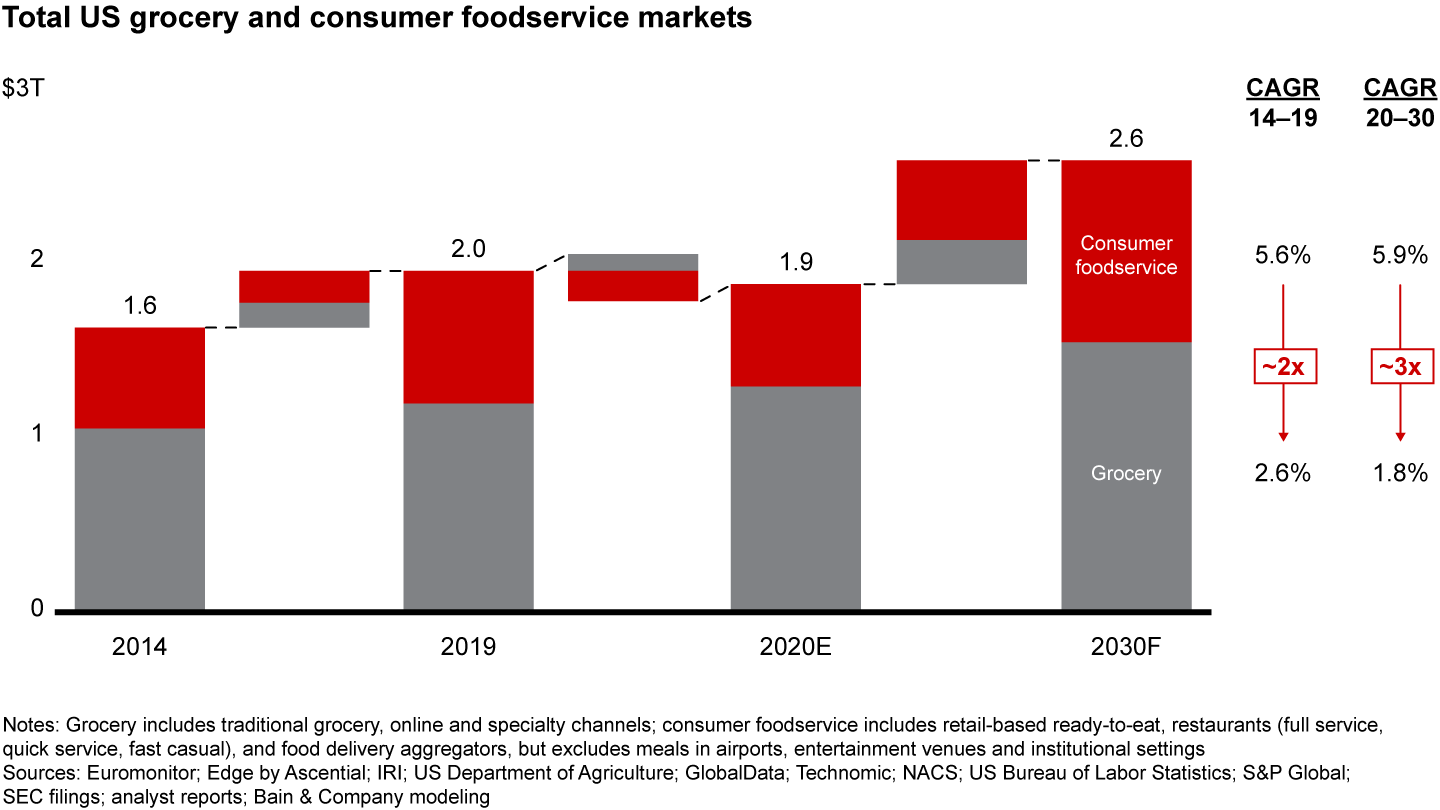
Over the coming decade, restaurants of all hues will once again become a viable challenger—and even a direct competitor—to grocery as an alternative channel for food sales. Consumer foodservice (including restaurants and food delivery aggregators such as Uber Eats, but not meals at airports, entertainment venues and institutional settings) increased sales twice as fast as grocers between 2014 and 2019 by giving diners the convenience that their busy lives demanded.
Even as the pandemic closed restaurants, the likes of Panera, Subway and Denny’s were finding new ways to reach customers through the sale of groceries or meal kits. Bain modeling suggests that although consumer foodservice will take a few years to recover fully, annualized sales growth for 2020–2030 could still comfortably outpace that of grocery (see Figure 3). That said, grocers might succeed with a value-led counterattack (for instance, by stressing the cost advantage of buying their ready-to-eat rotisserie chicken and roasted potatoes vs. going out to eat or ordering in).
Figure 3

These four sources of persistent pressure could all generate disruptive threats—a lurch in market dynamics or a radical new business model. One disruption scenario consists of delivery aggregators hijacking the grocer-customer relationship. Another is the dawn of “Food as a Service,” in which the lines between restaurants and grocers blur so much that both serve all consumption occasions—supplying ingredients for home cooking, preparing ready meals and running full-service restaurants.
There are other vectors of potential disruption, such as the shift to home working, the rise of “clean eating,” increasing pressure for carbon-neutral supply chains, automation and the deployment of artificial intelligence. Executive teams can bolster their company’s resilience by envisioning the most jarring scenario in each of these areas and then considering the most robust strategic response.
What if competitors went big on vertical farms that grow produce hydroponically in-store or at distribution centers, improving freshness and taste, while reducing spoilage? What if discounters went on a tear between now and 2030, increasing their share tenfold to control more than half the US market? (That’s not totally farfetched when you consider that discounters currently account for almost 40% of the German market.) What if pricing became dynamic—tailored to consumers’ profiles and adjustable as they move through a store?
Grocers are now able to reinvest the proceeds of their unexpectedly strong 2020 to anticipate some of these outcomes and exert greater control over their own destiny.
Seven strategic actions to secure the future
Some executive teams are already absorbing the persistent pressure in the sector and bracing themselves for the looming disruption. Others will need to orchestrate an urgent transformation to prepare for the realities of the next decade and avoid losing touch with consumers. Whatever the starting point, our experience suggests that seven strategic actions can fuel long-term outperformance.
Sharpen your customer value proposition. Forget about conquering on all fronts. Instead, cultivate a differentiated value proposition that wins in at least one area, such as assortment, convenience or price, while remaining competitive across the board.
Future success in assortment will have a number of components, including local, seasonal and private-label ranges. The latter is notably rich in opportunity: Private label can keep prices down, boost loyalty and add 10 percentage points to gross margin. US private-label penetration has risen to 19% but Europe averages 35%; if the US caught up, that could amount to a $170 billion sales shift, ripe for targeting.
Retail-based foodservice (such as the elaborate prepared dishes sold at Wegmans and Whole Foods Market) is one of the fastest-growing segments of the foodservice market; we expect it to generate about 5% compound annual growth between 2019 and 2030. That could make it an attractive component of a grocer’s broader customer value proposition as coronavirus worries subside.
Delight customers on high-impact journeys. Delighting customers brings big rewards in grocery. Our Net Promoter System℠ data shows brand advocates come more often and buy more per trip than those whose view of the brand is more passive or neutral. However, shoppers’ needs are diversifying and the paths to purchase are multiplying.
To keep up, grocers should focus customer experience redesign on the most frequent and valuable journeys, especially online. The pickup of online orders, both curbside and in-store, is one area that needs work. The average Net Promoter Score℠ for this service fell from 40 to 13 in our 2020 customer advocacy survey as grocers rapidly expanded their pickup facilities during the pandemic, with inevitable glitches.
However, these high-priority fixes are just the start. Grocers will need to master customer relationship management and digital marketing to gain a single, cross-channel view of the customer—and then use that data to personalize their experience.
Win profitably in e-commerce. As demand for online grocery surges and in-store growth becomes elusive, grocers more than ever need a differentiated e-commerce offering that matches their value proposition. It has to generate a decent return, too. While ramping up online capacity, many executive teams need to address the fact that their web orders dilute profits or even generate a loss.
They can repair the broken economics of online grocery by optimizing their omnichannel network, diversifying revenue streams and removing unsustainable channel subsidies. (For full details, see the Bain Brief “How to Ramp Up Online Grocery—without Breaking the Bank.”)
Reimagine the role of the store and network. Even in the most bullish projections for online growth, most grocery sales will still happen in traditional stores in 2030. The nimblest grocers will deploy digital technology to streamline their store operations and serve their customers better, by speeding up checkout, for instance.
Some stores will need to be closed and others repurposed as online nodes to keep up with grocery’s faster digital migration. Local relative market share can help guide these decisions.
To reflect shifting consumer tastes, executive teams should also consider repurposing excess space for foodservice, fresh produce, third-party partnership, and online order pickup and fulfillment.
Gain a supply chain edge. Grocery supply chain management used to focus on traditional stores and cost control. It’s now broadened to fulfillment centers, pickup points and lockers—and a mounting realization that investment in supply chains can give grocers a competitive edge.
Walmart, for instance, was able to give its shoppers the speed and convenience they craved by developing same-day delivery infrastructure supported by local stores across the US. HEB’s year-round emergency planning—honed by years of bracing itself for Texan hurricanes, tornadoes and floods—helped it to keep products on shelves as Covid-19 spread.
Close collaboration with vendors will be key to making advances in convenience, efficiency and resilience. Executive teams will likely need to enlist the entire value chain—consumers, growers, manufacturers, processors, regulators, nongovernmental organizations—to meet rising demands for greater sustainability.
Some grocers may find that localizing supply boosts their ability to weather adversity—not just natural shocks but also geopolitical complications and possible trade wars.
Prepare for more consolidation. Scale has never been so important in grocery, making further consolidation likely. Local scale remains key to profitability; absolute scale unlocks the savings needed to fund much-needed digital investment. Acquisition opportunities emerged in the pandemic, and more distressed assets are likely to be available in the recovery, as the initial Covid-19 sales boost fades into memory.
Grocers should identify the M&A role that fits them best. Are they a consolidator, bulking up to become an Alibaba-style ecosystem? Are they better suited to regional bolt-on deals and “virtual scale” partnerships? Do they actually need scope-driven (rather than scale-driven) deals that can either offer growth beyond their core or transform existing products and capabilities? Through “gameboarding” and other strategic scenario analysis, executive teams can refine their options and anticipate deals rivals may pursue.
Explore new profit pools. With little room to lift core sales, grocers may need to tap adjacent profit pools to grow. That can be through vertical integration (food processing, product development or manufacturing, for instance) or horizontal diversification that targets existing customers or suppliers (financial services, health, etc.).
Digital advertising is an alluring adjacency but no slam dunk. Consumer products groups are media-buying veterans; most grocers are newer to the game, although some are learning it quickly. Studying established digital advertising players and pure e-commerce businesses can help with that transition.
Grocers (particularly big ones) can also monetize customer data much more effectively, especially if they modernize their systems, deploy tech talent with agility and deepen data collaborations with their suppliers.
Kroger’s data analytics arm 84.51° shows what can be achieved. Having grown out of Kroger’s partnership with Tesco’s pioneering dunnhumby unit, it’s now the engine for a precision marketing service for consumer brands and other diversification.
Building fresh capabilities to thrive
For grocery executive teams, 2020 certainly didn’t feel like a windfall year, given the operational strain they were under. Yet it has given grocers more firepower to tackle the strategic challenges that lie ahead.
The task won’t be easy. The actions we’ve outlined above will need underpinning by investment in new digital and technological capabilities. They’ll require grocers to extend Agile ways of working developed through the crisis, continually scour the entire cost base for savings for additional firepower, strike innovative partnerships and show an activist mindset. But they should enable US grocers to thrive over the next decade.
Net Promoter®, NPS®, NPS Prism®, and the NPS-related emoticons are registered trademarks, and Net Promoter Score℠, NPSx℠, and Net Promoter System℠ are service marks of Bain & Company, Inc., NICE Systems, Inc., and Fred Reichheld.
Published in 十一月 2020