


Founder's Mentality Blog


|
|
As we’ve worked with individual micro-battle teams on their prototyping, a key question has emerged: “What is the best way to plan each round of prototypes to help us move closer to a scalable, repeatable model that can be deployed across the organization?” It’s the micro-battle leaders’ job to focus on creating a repeatable model to scale a new innovative idea. (We’re assuming you know the basics of micro-battles; If you don’t, please start with this overview.) A scalable, repeatable model demands that these leaders aggressively test a new failure point at each cycle. In other words, they aren’t creators, confirming an idea is a good one and handing it off to another team to scale. They are mobilizers, committed to systematically testing implementation and scaling issues as they go. When they declare victory, the micro-battle is already on the road to full-scale deployment. We’ve found that the best micro-battle leaders take several actions, with the help of a few proprietary tools, to do this. 
Micro-battlesWant to learn more about the journey to scale insurgency? Explore the Bain Micro-battles System℠, step by step. Let’s illustrate the journey from prototype to deployment with a case study that combines some of our recent experiences. We’ll call our fictitious company “South American Burgers.” It’s one of the leading fast food chains in South America, with businesses in Argentina, Brazil and Chile. About half of its stores are owned by the corporate parent and half are franchises. The company was originally founder-led, but now it’s run by a set of professional managers. Senior leaders realized they’ve lost their Founder’s Mentality®, and they’ve launched a set of micro-battles to address this. One micro-battle involves introducing self-serve soft ice cream stations in their restaurants. Senior leadership has selected a micro-battle team to lead the initiative and asked them to test the consumer proposition and demand. The team must also determine how to roll out the self-serve machines across stores. To move toward a repeatable model, the team at South American Burgers should take five actions, guided by a few supplementary tools. 1. Maintain a sense of bold ambition. If you think big, success with the micro-battle will fundamentally transform your leadership economics and competitive position with specific customers. The best micro-battle leaders always focus on strategic intent, making sure the ambition of the micro-battle is big and bold enough to be worth it. The early stages of micro-battles pressure teams to move from a large ambition and start prototyping a smaller idea. That transition is important, but not if it results in a smaller ambition for the micro-battle. The micro-battle mission helps micro-battle leaders think boldly as they make progress (see Figure 1). They are asked to confirm the ambition for the micro-battle and the repeatable model, and address the major deployment issues that could impede the rollout. The team updates the mission as they reach discoveries and failures in each cycle. 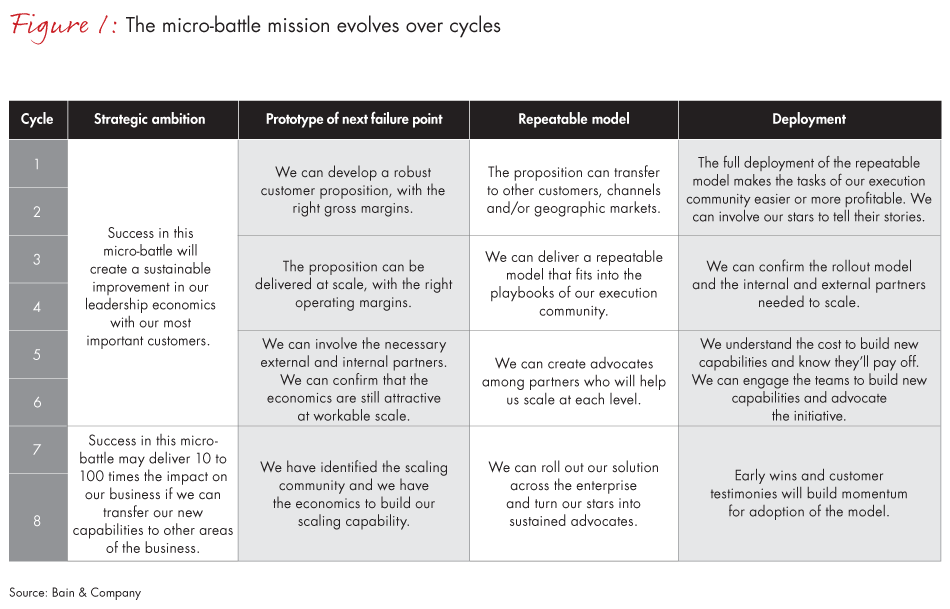
Six tests can help teams determine if the micro-battle ambition is big enough:
2. Develop a prototype schedule that sets out a sequence of failure points. A prototype schedule is very important, as it helps the team address a fundamental trade-off in micro-battles. On one hand, you want to test and learn solutions through multiple cycles of prototyping. The more you test and retest a single prototype, the more likely it will successfully address specific customer requirements. On the other hand, you’re trying to deliver a complex repeatable model. The first goal demands you focus on a similar prototype through multiple iterations. The second goal demands you constantly stretch the prototype to move closer to a repeatable model. We’ve worked with teams to develop two tools that address this trade-off: the failure-points grid and the prototype schedule. Both tools help you evolve the prototype over time, while testing all the important elements of successful Repeatable Models®.
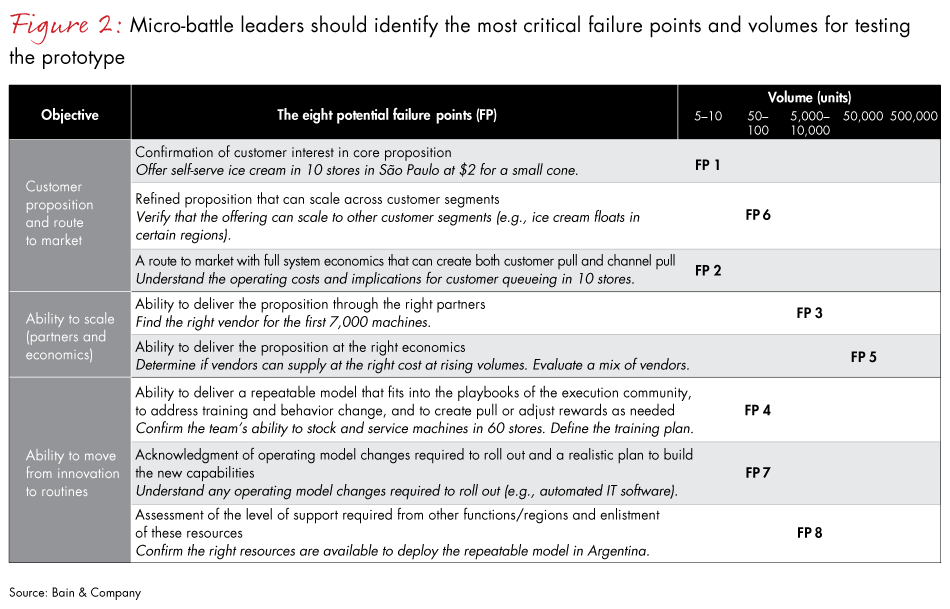
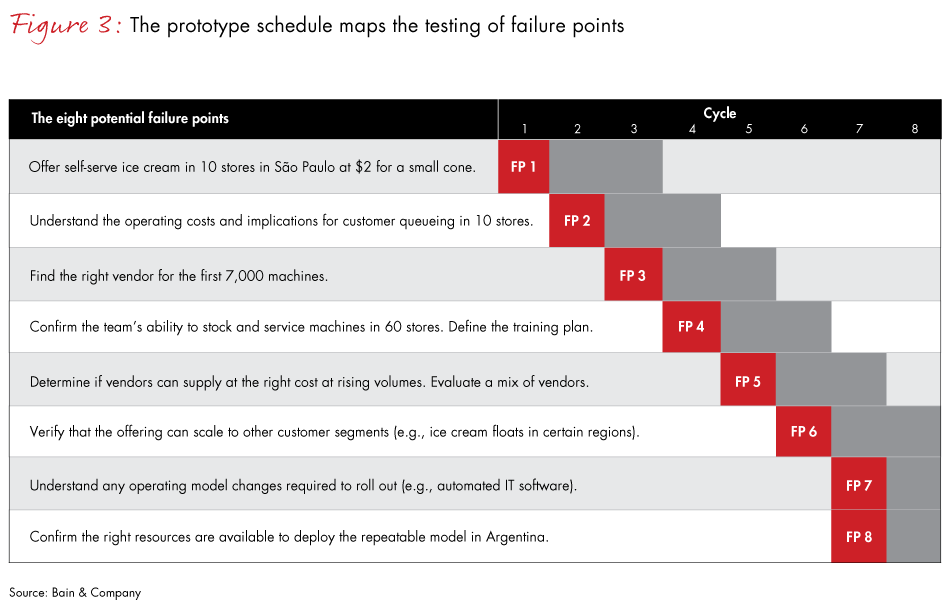
3. Focus on Agile ways of working while testing failure points. There’s a danger that failure points, grids and schedules will all sound very static and bureaucratic. It’s imperative that micro-battle leaders employ these tools in an Agile way. The tools help define the next sprint and the backlog. But they don’t lock the team into a set 16-week schedule. Market tests are never black and white. It’s rare that a team completes a cycle and states, “We’ve been completely successful and can move to the next failure point.” It’s much more likely that the team will report, “The market feedback is good enough—we know with further refinement we’ll get this right,” or even, “We have not succeeded and need another cycle to improve our prototype and get success.” The schedule must be fluid and subject to change with each sprint. It needs to leave room for failure as well as discovery. It must also allow for the teams to move forward to the next unknown, while simultaneously refining previously tested solutions. The micro-battle leader at South American Burgers is exemplary—she knew her team was confident in the initial price tested, but also that questions of variable consumer demand would be left unanswered if they stopped there. So she encouraged her team to keep pushing for improvement, while continuing to change queuing patterns in stores and find vendors to roll out the machines at scale. 4. Complement the core team with key players from all three communities. A micro-battle is a rigorous journey that relies on skilled members of the three communities from the initial prototype to deployment. While the best micro-battle leaders reject the idea of handing off innovations for someone else to scale, it’s no wonder that we need teams to change slightly over time. As teams move down the list of failure points, strong leaders bring in the right people to address implementation issues during the right cycle. It’s critical that these new participants are involved in developing solutions, rather than judging solutions and acting as impediments. To determine which experts to bring in for each micro-battle cycle, our ice cream team used a simplified version of our tool (see Figure 4). Early in the third cycle, the team began testing vendors of the machines. It quickly discovered that determining the responsibility and terms for purchasing the machines was a very big deal. The vendor market was fragmented, and no vendors were willing to sell the machines on credit. In addition, many of the restaurants in Brazil were franchises that couldn’t afford to purchase the machines up front. Ultimately, there was only one scalable solution—the corporate parent needed to buy the machines and lease them to the franchises. The terms were attractive to all parties, but the working capital implications were significant. The micro-battle team would need the CFO’s approval. Rather than postpone discussion of this issue until the team had refined the prototype, the micro-battle team leader realized the discussion was actually the third failure point: if the team couldn’t finance the machines at scale, it didn’t have a scalable growth idea. In the third cycle, the team leader brought in two senior finance people to draft a financial term sheet that would work for the vendors, franchises and CFO. The team got it right initially, but refined it over two more cycles with a larger set of finance people, including partners from vendors, franchises and banks. By the sixth cycle, the financial package was a key part of the proposition and fully supported by the CFO. A great micro-battle leader brings in the right people to get to a “yes,” rather than keep them off the team waiting to say “no.” 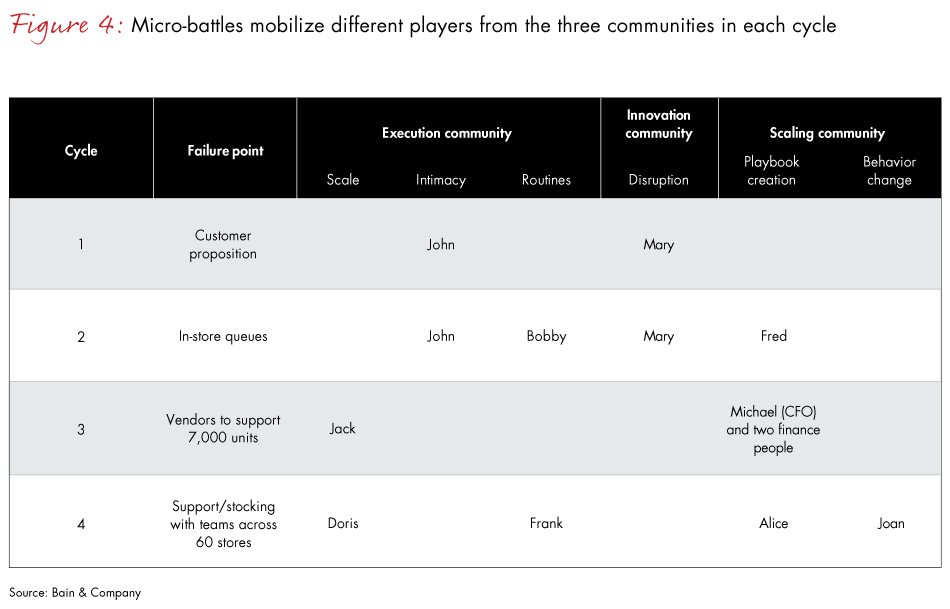
5. Consider rollout models to create pull for the initiative. Leaders often fail to think through different rollout models, and as a result, believe that deploying a playbook is the best model. But most Repeatable Models are complex. They demand a higher degree of local tailoring than a playbook allows. Moreover, the people who have to implement the repeatable model need the opportunity to understand the idea and buy into it. It’s naïve to think that you can roll out a complex idea with a new playbook and demand that everyone complies. No wonder there’s so much yield loss. A good micro-battle leader considers different rollout models and how to test failure points in the rollout plan (see Figure 5). At South American Burgers, the franchise stores added a high degree of complexity and widespread behavior change; a standard playbook wouldn’t work. The team leader realized the best way to deploy the model was to “go viral.” She decided to run a final set of prototypes in the stores of the most sceptical franchisee, Pablo Rodriguez. Pablo was a founder himself, running a separate chain of pizza outlets along with his franchise agreement. He tended to be very wary of “corporate initiatives.” At the same time, as a founder, he aggressively supported smart ideas. He knew how to make money. To ensure successful deployment, the team leader realized that she should run a full test of the ice cream concept at 10 of Pablo’s stores. She asked that Pablo champion the new concept if they worked in his stores. When the ice cream machines succeeded, Pablo became a crucial supporter of the rollout. 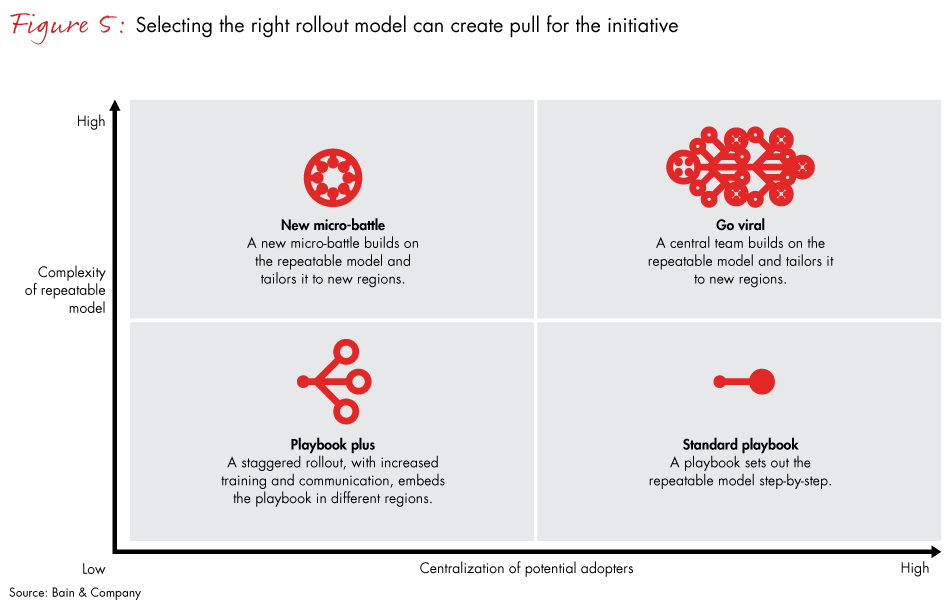
Micro-battle teams should address the five actions we’ve described as they scope out and define their micro-battles mission. As they progress through each cycle, they revisit and update the mission with new lessons, to eventually deliver a scalable, repeatable model (see Figure 6). 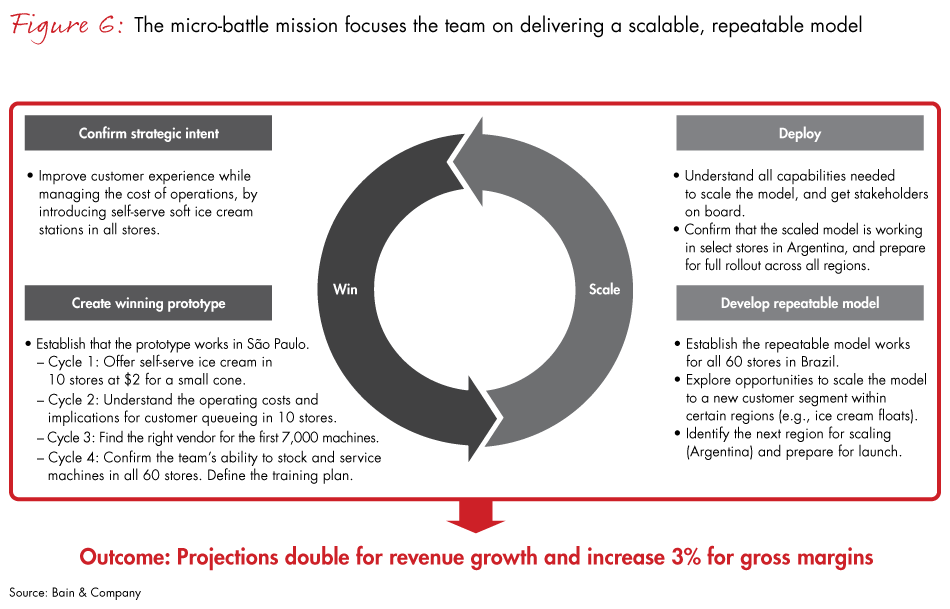
We’ve developed a workbook that collects these actions and tools, to help micro-battle teams prepare for each sprint. The workbook not only ensures that micro-battle teams operate successfully, but also helps the Amplify teams. Remember, the Amplify team runs the portfolio of micro-battles and ensures that all micro-battle teams can learn from each other. By asking micro-battle leaders to consider each of these actions, the Amplify team can enable best practices throughout the organization. In our South American Burgers example, the company was also working on a dozen other battles focused on every aspect of the business. As each micro-battle team came forward, the Amplify teams immediately saw two patterns. First, many teams discovered that the company could use its cash position to support franchises in new ways that could help them compete locally. Second, the idea to bring Pablo Rodriguez on board as an early adopter and promoter of change helped roll out a number of initiatives. The tools forced the teams to think ahead to the next three to four sprints, helping them identify both issues within the first month of rollout. As a result, they moved much faster. The approach helped the senior leadership think about how to operate with speed and leverage scale. Micro-battles were helping them become a scale insurgent. And that, after all, is the point. 
A Checklist for Launching Micro-battlesBy having the tough conversations early on, teams can keep their micro-battles out of the “special projects graveyard.” Founder’s Mentality® and Elements of Value® are registered trademarks of Bain & Company, Inc. |