


Brief


|
At a Glance
If 2021 elevated optimism in voluntary carbon markets (VCMs), then 2022 brought some of those expectations down to earth. The markets’ explosive growth between 2019 and 2021 as well as the rapid acceleration of corporate net-zero commitments led companies to make big bets on its eventual size. But by 2022, participants were confronting new levels of complexity about the markets and the role of credits in their broader sustainability strategies. Carbon markets are at an inflection point: Either the uncertainties will be resolved through cooperation by participants and regulators, leading to yet more growth, or markets will become bogged down by poor alignment and confusion. The latter course could cause many potential buyers to wait for greater clarity, thus slowing the growth of VCMs and limiting the potential of this important tool in the fight against the climate crisis. A look at the market dynamics of 2022 and the outlook for 2023 provides some insight to corporates navigating the VCMs and hoping to capitalize on the opportunities within them. 2022: A bumpier road than expectedDespite buoyant market sentiment in the wake of COP26, VCMs grew more slowly in 2022 than many expected (see Figure 1).
Figure 1
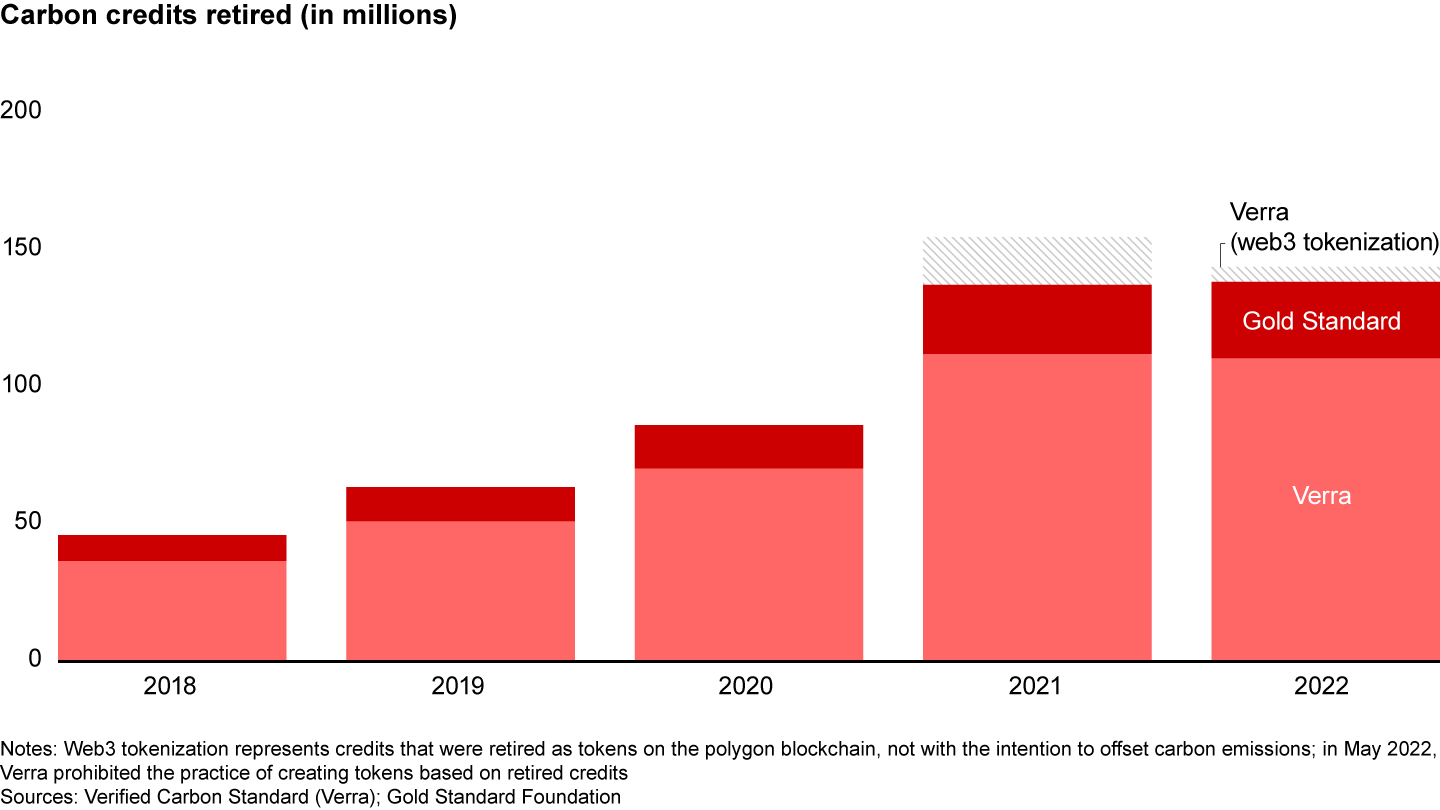

The broader macroeconomic environment affects carbon markets, but they are also shaped by four major uncertainties.
Outlook for 2023: Carbon markets at an inflection pointSeveral increasingly important trends will shape the carbon markets in 2023, each with the potential to strengthen markets, increase integrity, and help build scale. But as the stakes get higher, they also pose threats of creating confusion, disagreement, and fragmentation. We will see rigorous debates over the claims that credit buyers can make. VCMs lack a consensus on the claims that buyers of carbon credits can make. Claims of carbon neutrality are common, but it’s often unclear whether this refers to the offset of direct emissions or also includes indirect emissions along the value chain. Often, it’s not clear what type of credits are being considered. Avoidance or removal credits? Short- or long-term storage? And what’s the level of quality? Given this, different companies could make identical claims for entirely different offsetting approaches, which doesn’t reward investments in strategies that rely on high integrity or credit quality. The market will have to work toward consensus on standardization of voluntary claims. In 2023 and beyond, we expect to see lively debates over which claims are the appropriate ones for credit buyers to make and for the VCMI to have a central role in these debates. Markets for nature-based solutions will start to quantify the value of ecosystems and biodiversity. A greater focus on ecosystems, as seen in the COP27 cover decision and the COP15 biodiversity summit, will encourage the growth of a market for biodiversity credits. The Biodiversity Credit Alliance, a broad coalition of public, private, and civil sector participants, is forming a credible and scalable biodiversity credits market. Other new standards for nature-based solutions, such as those by the Science Based Targets Network (SBTN) or the Taskforce on Nature-related Financial Disclosures (TNFD), are expected to launch in 2023. This, together with existing nature-focused public and private funds (e.g., Global EbA Fund by UN Environment Programme or the Bezos Earth Fund), and the expansion of business coalitions with a strong focus on biodiversity (e.g., The Natural Climate Solutions Alliance or One Planet Business for Biodiversity) all point toward an enhanced focus on high-quality, nature-based solutions in the near-term future. Several promising pilot projects use a crediting approach to certify biodiversity impacts and divide up the impact into purchasable units. But measuring biodiversity is complex. And integrating more qualitative claims into carbon markets could create more confusion than clarity. Carbon markets are based on a single quantifiable metric—namely, carbon emissions—and yet they have taken decades to mature. A concentrated global effort will be needed to determine how to integrate the impacts of biodiversity into markets, to avoid creating more complexity. Calls to regulate VCMs will get louder. The carbon markets established by the UN and national governments under the Kyoto Protocol declined when European demand for carbon credits dried up from 2012 on. VCMs filled the void and flourished, providing an increasingly popular path for corporates to demonstrate climate leadership. But a lack of regulation has resulted in a complex array of actors, conventions, and standards. As the voluntary markets have grown in volume and value, they have attracted the attention of regulators, who want to define stricter guardrails for private sector climate action. In the second half of 2022, several governments and regulatory bodies showed interest in regulating VCMs to help bring needed clarity. The US Commodity Futures Trading Commission (CFTC) held a convening on these markets and sought public comment on climate-related financial risks within derivatives and commodities markets. The UK Climate Change Committee (CCC), a statutory body that advises the UK government on climate change, has urged governments to guide and regulate the market. And the International Organization of Securities Commissions (IOSCO), an international association of financial markets regulators, launched a public consultation on key considerations for enhancing the resilience and integrity of VCMs. In the short to medium term, we expect more regulatory involvement and oversight in VCMs. If done well, this could create the much-needed guardrails that will provide the trust required to scale. If done hastily, however, and without learning from the groundbreaking work done by voluntary actors already, it could also stifle the emerging infrastructure and constrict adoption. What this means for corporates: Bold action is needed, despite the uncertaintyIn this fast-changing environment, it can be difficult for corporates to make the right decisions, but the urgency of the climate crisis does not allow us to wait for the perfect market. Executives need to act decisively, even in a volatile environment. Several actions can help navigate the uncertainty and avoid inaction. Act today, not tomorrow. Bold decarbonization action remains the top priority for companies on their net-zero journeys. As corporates set ambitious goals to align their decarbonization plans with a 1.5-degree future, many recognize that they will need to rely on carbon credits to meet their near-term emissions reduction goals. Taking an early stance will help companies develop their carbon credits position and give them an advantage over peers. Consider carbon credits as part of a holistic strategy. Credits are not a one-size-fits-all solution for climate action. Companies should carefully consider their options to decarbonize their own value chain, using carbon credits as a last resort. Integrating other benefits such as biodiversity, poverty alleviation, or social inclusion in their choice of carbon credits can help companies meet their broader sustainability goals. Some companies will also want to explore the commercial opportunity in credits beyond their own business needs. These companies will need to determine where to participate in the value chain and how to secure sufficient high-quality credits, whether from passive procurement or moving upstream to investing in project development. They will also need to identify the critical enablers, including building the required capabilities and developing a clear communication plan that reduces reputational risk. Prioritize high-quality credits. To mitigate reputational (and potentially compliance) risk, corporates should invest only in high-quality carbon credits.
Performing highly on these criteria reduces the risk of unexpected surprises, such as the reversal of the climate change impact or the discovery that the credits stem from activities that represent a business-as-usual scenario. Review the approach to the use of carbon credits frequently. Carbon markets are getting more attention and changing rapidly. Persistent uncertainty requires every actor to pay close attention to the developments as they unfold. Executives should view their engagement with carbon markets through an Agile strategy and revisit their approach frequently to make sure it keeps pace with the changing market consensus. The public pressure on companies to take urgent action is reaching unprecedented levels. Nevertheless, the increasing complexity in VCMs will require companies to build capabilities and expertise to access, analyze, and understand the credits they are buying to ensure integrity and quality of credits purchased. The winners in 2023 and beyond will be those with a clear strategy to navigate this complex and rapidly evolving market landscape. Bain & Company has teamed with Sylvera to develop world-leading carbon market strategies for clients. |