


Brief


|
At a Glance
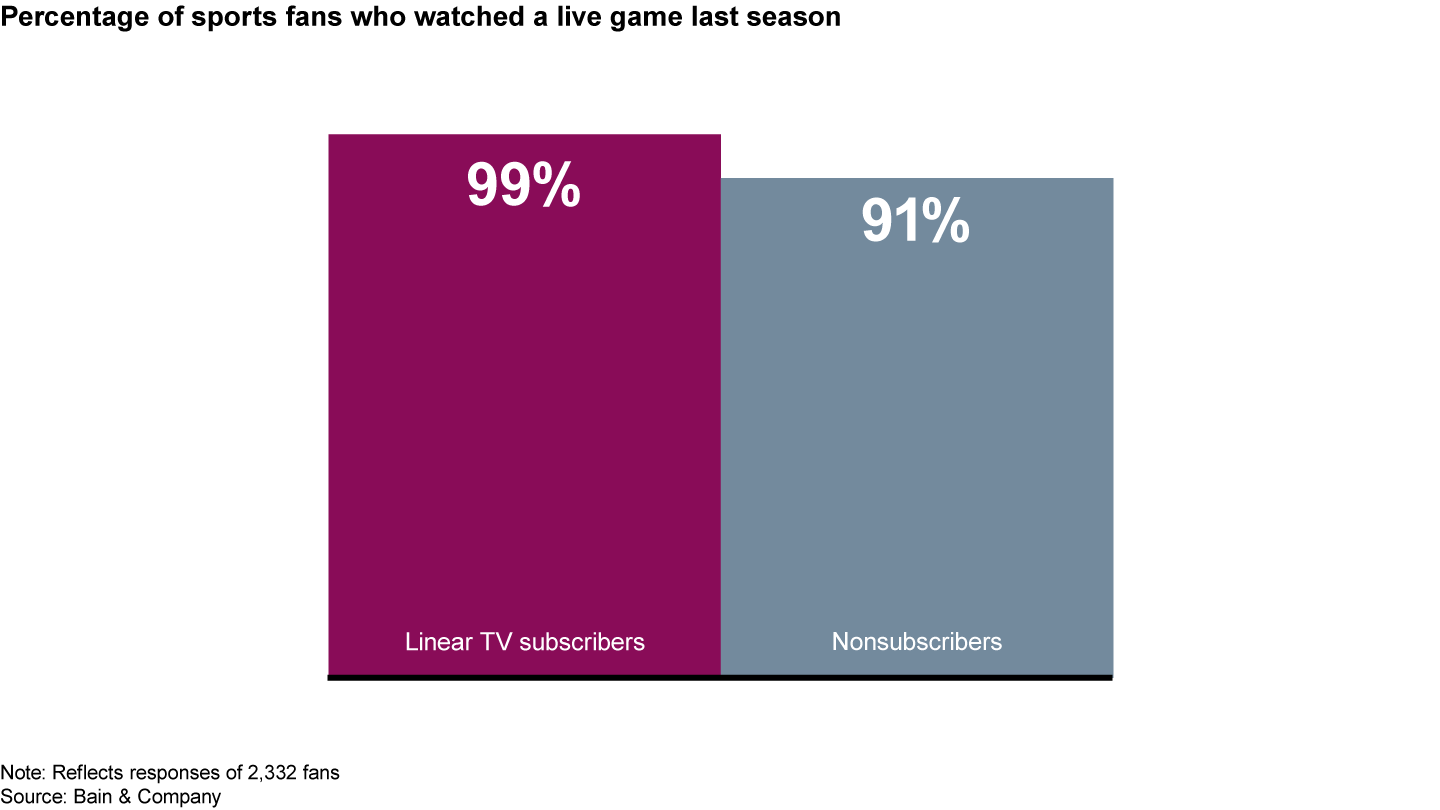
As America’s viewers have shifted away from traditional, linear pay TV, one group of viewers seemed immune to the siren call of streaming: sports fans. While total hours spent watching entertainment on linear pay TV fell by more than a third over the past decade, time spent watching sports dropped by only about 10%. But fan loyalty only goes so far. Though most sports fans still watch with a pay-TV bundle, some are finding other ways to tune in. Living outside the bundle doesn’t appear to change fan behavior greatly. Most fans watch relatively few of their favorite team’s games each season. And Bain’s research finds that cord cutters are almost as likely to have watched a game as are subscribers (91% vs. 99%), thanks to the ready availability of games on the TVs of friends, family and bars (see Figure 1).
Figure 1

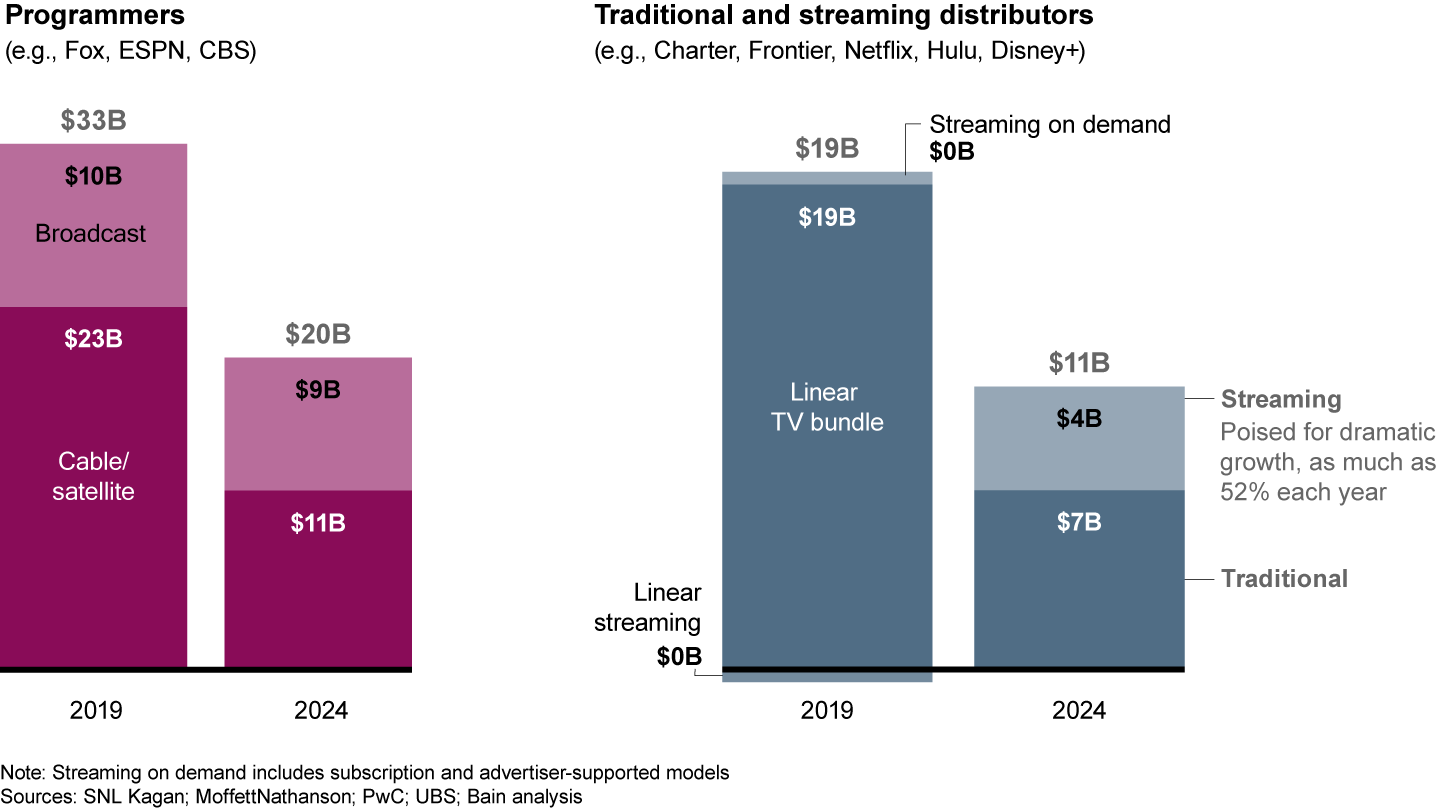
A market correction for sports rightsThis cord cutting follows a pattern at work for years across the larger universe of broadcast, cable and streaming media. Profits are shifting from traditional linear programmers and distributors to digital streaming platforms. Bain estimates that programmers and distributors as a group could see their profits contract by about 10% per year between 2019 and 2024, though some will do better than others (see Figure 2).
Figure 2

As profits decline, programmers will pay less for sports rights that fund leagues and teams. Leagues rely on this revenue to invest back into the sport, including the teams, the players and the support staff. Further complicating the situation, new rights deals for the National Football League—the most significant share of sports rights in the US—could crowd out funding for other sports. Competing leagues will have to manage more uncertainty about how to fund the long-term health of their sport. Major League Baseball, for example, faces significant challenges with its aging fan base, player contract guarantees and dependence on the traditional broadcast distribution model to fund the sport. An emerging playbook for the sports ecosystemHow will programmers, distributors, and the leagues and teams adapt to a rapidly approaching reality in which one-third of sports viewers have stopped paying for a traditional bundle? As technology evolves, these direct offers could become more sophisticated, including access to more data on player and team performance, new betting opportunities, or more interactive and immersive viewing modes. Managing the tension between traditional and new forms of distribution will become one of the most important strategic imperatives for the sports ecosystem. Many have already started to experiment with expanded media offers, including some of the following:
Implications beyond sportsFor sports leagues, teams and broadcasters, the trend away from traditional pay-TV bundles represents a disruptive shift bordering on an existential crisis. But it’s part of a trend affecting the entire media landscape. Those who can break down the economics of the content bundle and recreate that value in a hybrid model of linear and streaming distribution will be the ones most likely to maintain their competitive advantage. |