Skip to Content
  • Γραφεία

    Γραφεία

    North & Latin America
    • Atlanta
    • Austin
    • Bogota
    • Boston
    • Buenos Aires
    • Chicago
    • Dallas
    • Denver
    • Houston
    • Los Angeles
    • Mexico City
    • Minneapolis
    • Monterrey
    • Montreal
    • New York
    • Rio de Janeiro
    • San Francisco
    • Santiago
    • São Paulo
    • Seattle
    • Silicon Valley
    • Toronto
    • Washington, DC
    Europe & Africa
    • Amsterdam
    • Athens
    • Berlin
    • Brussels
    • Copenhagen
    • Dusseldorf
    • Frankfurt
    • Helsinki
    • Istanbul
    • Johannesburg
    • Kyiv
    • Lisbon
    • London
    • Madrid
    • Milan
    • Munich
    • Oslo
    • Paris
    • Rome
    • Stockholm
    • Vienna
    • Warsaw
    • Zurich
    Middle East
    • Doha
    • Dubai
    • Riyadh
    Asia & Australia
    • Bangkok
    • Beijing
    • Bengaluru
    • Brisbane
    • Ho Chi Minh City
    • Hong Kong
    • Jakarta
    • Kuala Lumpur
    • Manila
    • Melbourne
    • Mumbai
    • New Delhi
    • Perth
    • Shanghai
    • Singapore
    • Sydney
    • Tokyo
    See all offices
  • Alumni
  • Media Center
  • Εγγραφή
  • Επικοινωνία
  • Greece | Elliniká

    Select your region and language

    Global
    • Global (English)
    North & Latin America
    • Brazil (Português)
    • Argentina (Español)
    • Canada (Français)
    • Chile (Español)
    • Colombia (Español)
    Europe, Middle East, & Africa
    • France (Français)
    • DACH Region (Deutsch)
    • Italy (Italiano)
    • Spain (Español)
    • Greece (Elliniká)
    Asia & Australia
    • China (中文版)
    • Korea (한국어)
    • Japan (日本語)
  • Saved items (0)
    Saved items (0)

    You have no saved items.

    Bookmark content that interests you and it will be saved here for you to read or share later.

    Explore Bain Insights
  • Κλάδοι
    Main menu

    Κλάδοι

    • Aerospace & Defense
    • Agribusiness
    • Chemicals
    • Construction & Infrastructure
    • Consumer Products
    • Financial Services
    • Healthcare & Life Sciences
    • Industrial Machinery & Equipment
    • Media & Entertainment
      Κλάδοι
      Media & Entertainment
      • Media Lab
    • Metals
    • Mining
    • Oil & Gas
    • Paper & Packaging
    • Private Equity
      Κλάδοι
      Private Equity
      • Due Diligence
      • Exit Planning
      • Firm Strategy & Operations
      • Portfolio Value Creation
    • Social Impact
    • Retail
    • Technology
    • Telecommunications
      Κλάδοι
      Telecommunications
      • Capital Expenditure
      • Telco Digital Transformation
    • Transportation
    • Travel & Leisure
    • Utilities & Renewables
  • Συμβουλευτικές Υπηρεσίες
    Main menu

    Συμβουλευτικές Υπηρεσίες

    • Customer Experience
    • Sustainability
    • Innovation
    • M&A
    • Operations
    • People & Organization
    • Private Equity
    • Sales & Marketing
    • Strategy
    • AI, Insights, and Solutions
    • Technology
    • Transformation
  • Digital
  • Πληροφορίες
    Main menu

    Πληροφορίες

    • Industry Insights
    • Services Insights
    • Bain Books
    • Webinars
    • Bain Futures
    View all Insights
    Featured topics
    • Artificial Intelligence
    • Managing Inflation
    • Thriving in Uncertainty
    • The Talent Imperative
    • Macro Trends
    • Healthcare Private Equity Report
    • CEO's Guide to Sustainability
    • Technology Report
    • Energy & Natural Resources Report
    • Paper & Packaging Report
    • CEO Insights
    • CFO Insights
    • COO Insights
    • CIO Insights
    • CMO Insights
    View all featured topics
  • Σχετικά με εμάς
    Main menu

    Σχετικά με εμάς

    • What We Do
    • What We Believe
    • Our People & Leadership
    • Client Results
    • Awards & Recognition
    • Global Affiliations
    • Social Impact
    • Sustainability
    • World Economic Forum
    Learn more about Further
  • Careers
    Main menu

    Careers

    • Work with Us
      Careers
      Work with Us
      • Find Your Place
      • Our Work Areas
      • Integrated Teams
      • Students
      • Internships & Programs
      • Recruiting Events
    • Life at Bain
      Careers
      Life at Bain
      • Blog: Inside Bain
      • Career Stories
      • Our People
      • Where We Work
      • Supporting Your Growth
      • Affinity Groups
      • Benefits
    • Impact Stories
    • Hiring Process
      Careers
      Hiring Process
      • What to Expect
      • Interviewing
    FIND JOBS
  • Γραφεία
    Main menu

    Γραφεία

    • North & Latin America
      Γραφεία
      North & Latin America
      • Atlanta
      • Austin
      • Bogota
      • Boston
      • Buenos Aires
      • Chicago
      • Dallas
      • Denver
      • Houston
      • Los Angeles
      • Mexico City
      • Minneapolis
      • Monterrey
      • Montreal
      • New York
      • Rio de Janeiro
      • San Francisco
      • Santiago
      • São Paulo
      • Seattle
      • Silicon Valley
      • Toronto
      • Washington, DC
    • Europe & Africa
      Γραφεία
      Europe & Africa
      • Amsterdam
      • Athens
      • Berlin
      • Brussels
      • Copenhagen
      • Dusseldorf
      • Frankfurt
      • Helsinki
      • Istanbul
      • Johannesburg
      • Kyiv
      • Lisbon
      • London
      • Madrid
      • Milan
      • Munich
      • Oslo
      • Paris
      • Rome
      • Stockholm
      • Vienna
      • Warsaw
      • Zurich
    • Middle East
      Γραφεία
      Middle East
      • Doha
      • Dubai
      • Riyadh
    • Asia & Australia
      Γραφεία
      Asia & Australia
      • Bangkok
      • Beijing
      • Bengaluru
      • Brisbane
      • Ho Chi Minh City
      • Hong Kong
      • Jakarta
      • Kuala Lumpur
      • Manila
      • Melbourne
      • Mumbai
      • New Delhi
      • Perth
      • Shanghai
      • Singapore
      • Sydney
      • Tokyo
    See all offices
  • Alumni
  • Media Center
  • Εγγραφή
  • Επικοινωνία
  • Greece | Elliniká
    Main menu

    Select your region and language

    • Global
      Select your region and language
      Global
      • Global (English)
    • North & Latin America
      Select your region and language
      North & Latin America
      • Brazil (Português)
      • Argentina (Español)
      • Canada (Français)
      • Chile (Español)
      • Colombia (Español)
    • Europe, Middle East, & Africa
      Select your region and language
      Europe, Middle East, & Africa
      • France (Français)
      • DACH Region (Deutsch)
      • Italy (Italiano)
      • Spain (Español)
      • Greece (Elliniká)
    • Asia & Australia
      Select your region and language
      Asia & Australia
      • China (中文版)
      • Korea (한국어)
      • Japan (日本語)
  • Saved items  (0)
    Main menu
    Saved items (0)

    You have no saved items.

    Bookmark content that interests you and it will be saved here for you to read or share later.

    Explore Bain Insights
  • Κλάδοι
    • Κλάδοι

      • Aerospace & Defense
      • Agribusiness
      • Chemicals
      • Construction & Infrastructure
      • Consumer Products
      • Financial Services
      • Healthcare & Life Sciences
      • Industrial Machinery & Equipment
      • Media & Entertainment
      • Metals
      • Mining
      • Oil & Gas
      • Paper & Packaging
      • Private Equity
      • Social Impact
      • Retail
      • Technology
      • Telecommunications
      • Transportation
      • Travel & Leisure
      • Utilities & Renewables
  • Συμβουλευτικές Υπηρεσίες
    • Συμβουλευτικές Υπηρεσίες

      • Customer Experience
      • Sustainability
      • Innovation
      • M&A
      • Operations
      • People & Organization
      • Private Equity
      • Sales & Marketing
      • Strategy
      • AI, Insights, and Solutions
      • Technology
      • Transformation
  • Digital
  • Πληροφορίες
    • Πληροφορίες

      • Industry Insights
      • Services Insights
      • Bain Books
      • Webinars
      • Bain Futures
      View all Insights
      Featured topics
      • Artificial Intelligence
      • Managing Inflation
      • Thriving in Uncertainty
      • The Talent Imperative
      • Macro Trends
      • Healthcare Private Equity Report
      • CEO's Guide to Sustainability
      • Technology Report
      • Energy & Natural Resources Report
      • Paper & Packaging Report
      • CEO Insights
      • CFO Insights
      • COO Insights
      • CIO Insights
      • CMO Insights
      View all featured topics
  • Σχετικά με εμάς
    • Σχετικά με εμάς

      • What We Do
      • What We Believe
      • Our People & Leadership
      • Client Results
      • Awards & Recognition
      • Global Affiliations
      Further: Our global responsibility
      • Social Impact
      • Sustainability
      • World Economic Forum
      Learn more about Further
  • Careers
    Popular Searches
    • Agile
    • Digital
    • Strategy
    Your Previous Searches
      Recently Visited Pages

      Content added to saved items

      Saved items (0)

      Removed from saved items

      Saved items (0)

      Report

      Corporate M&A: Healthcare Acquisitions Feed Revenue Growth

      Corporate M&A: Healthcare Acquisitions Feed Revenue Growth

      To maximize value, companies need an airtight integration thesis.

      By Jeff Haxer, Dale Stafford, and Ben Siegal

      • min read
      }

      Report

      Corporate M&A: Healthcare Acquisitions Feed Revenue Growth
      en
      At a Glance
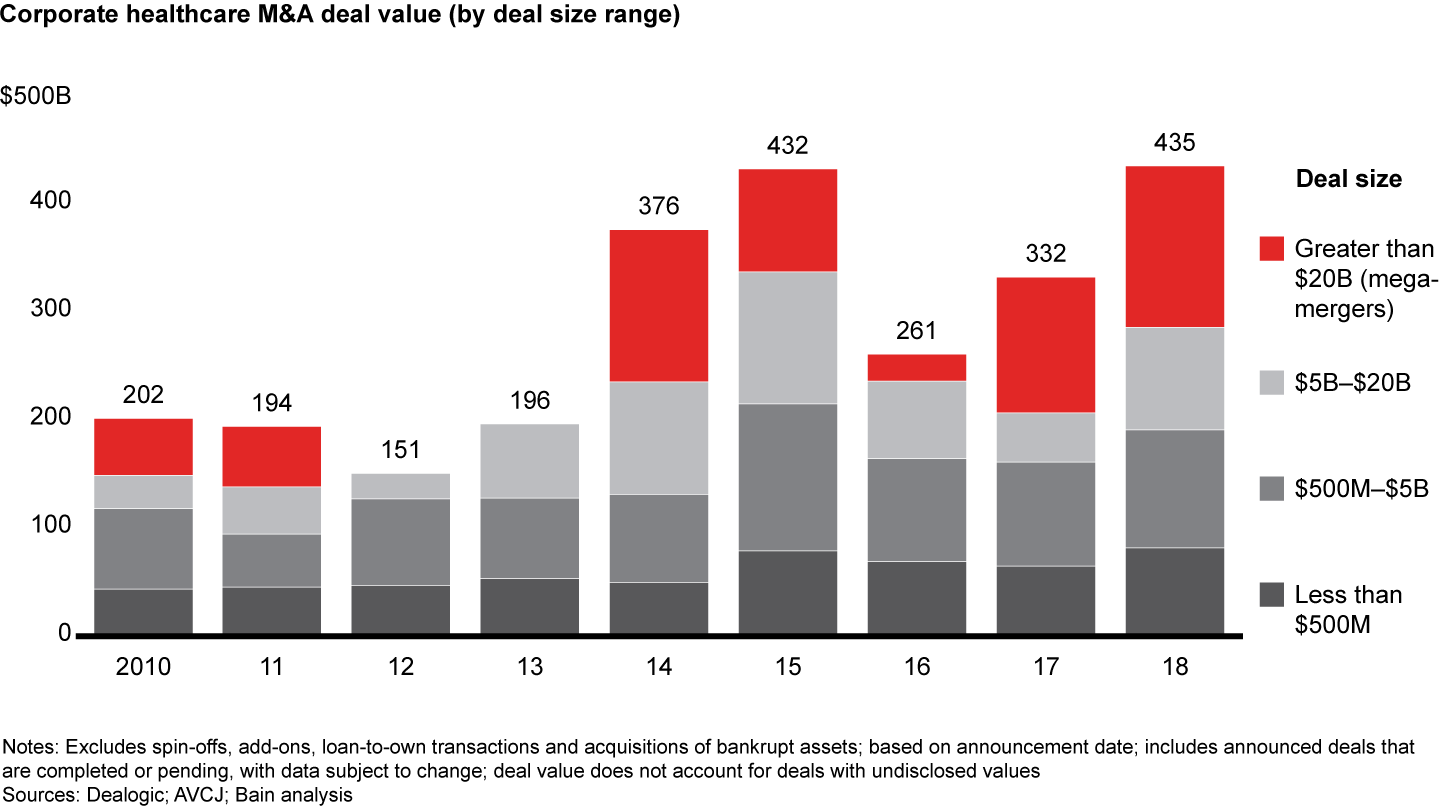
      • While the deal volume of healthcare corporate M&A stayed relatively flat in 2018, disclosed value grew 31% over the 2017 level, to $435 billion, surpassing the 2015 peak of $432 billion.
      • Megamergers accounted for about one-third of total value. Average disclosed deal size has risen in each of the past two years: $240 million in 2018, up from $190 million in 2017 and $150 million in 2016.
      • Revenue growth, fueled by acquisition, will likely become the most important driver of total shareholder return (TSR), as price-to-earnings (P/E) multiple expansion slows and pressure against rising prices intensifies.
      • Recent regulatory developments will complicate acquirers’ abilities to quickly close a transaction and realize deal value.
      • To maximize the value of M&A in a high-valuation environment, companies will need to craft an airtight integration thesis.

      This article is part of Bain’s 2019 Global Healthcare Private Equity and Corporate M&A Report. Explore the contents of the report here or download the PDF to read the full report.

      Corporate M&A activity remained high in 2018 as total disclosed deal value reached a record $435 billion, in part on the back of two megamergers that accounted for a little more than one-third of value (see Figures 8 and 9). Takeda acquired Shire for more than $80 billion (including net debt), and Cigna bought Express Scripts for approximately $67 billion (including net debt)—two of the largest healthcare deals ever.

      Figure 8
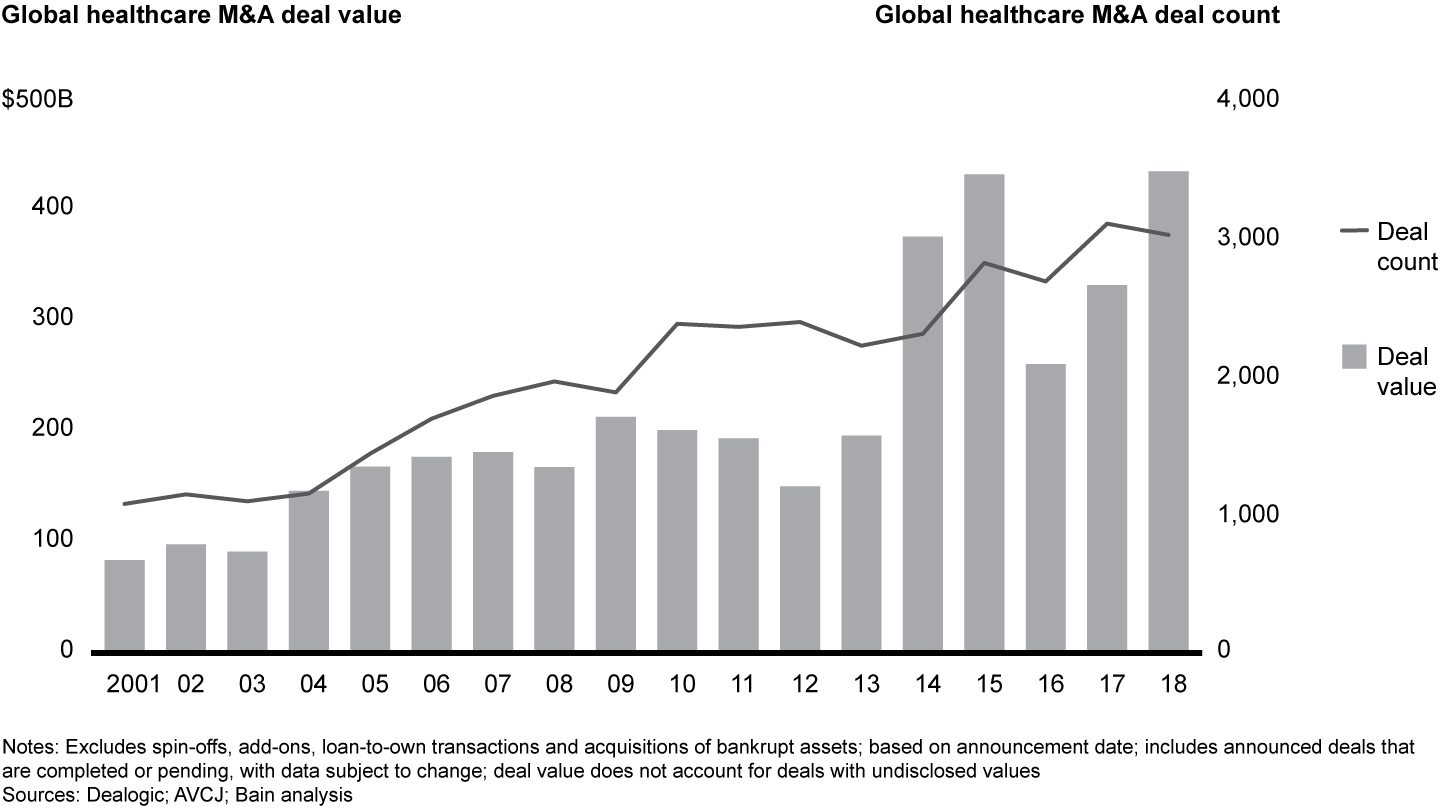
      Healthcare corporate M&A disclosed value reached a historic high, while volume remained close to its 2017 peak
      Healthcare corporate M&A disclosed value reached a historic high, while volume remained close to its 2017 peak
      Healthcare corporate M&A disclosed value reached a historic high, while volume remained close to its 2017 peak
      Figure 9
      Megamergers continue to be a feature of corporate M&A in healthcare, but there was also a significant increase in value from smaller deals in 2018
      Megamergers continue to be a feature of corporate M&A in healthcare, but there was also a significant increase in value from smaller deals in 2018
      Megamergers continue to be a feature of corporate M&A in healthcare, but there was also a significant increase in value from smaller deals in 2018

      We expect deal activity to continue at this high pace in the near future as public healthcare companies use acquisitions to grow revenue. In fact, the average disclosed deal size has risen over the past two years: $240 million in 2018, up from $190 million in 2017 and $150 million in 2016.

      Three deal theses, each focused on revenue growth, informed most transactions in 2018.

      • Category leadership continued as a significant thesis both for acquisitions and divestitures.
      • R&D-centered acquisitions were a path for companies to bolster their innovation pipelines and create new growth vectors via next-generation platforms.
      • Vertical integration spurred multiple megadeals in which the potential upside is high, but the degree of difficulty is even higher than category leadership or R&D-focused deals.

      Major companies have used the benefits of category leadership to inform their deal rationales for both acquisitions and divestitures. In 2018, Pfizer and GlaxoSmithKline each carved out their respective consumer healthcare divisions, which they then agreed to merge in an all-equity joint venture. Other large companies have taken a similar path. Johnson & Johnson, continuing a recent trend of divesting noncore assets (including Codman Neurosurgery to Integra Life Sciences and Ortho-Clinical Diagnostics to Carlyle), sold LifeScan, a blood glucose–monitoring device company, to Platinum Equity for $2.1 billion, and the Advanced Sterilization Products division of Ethicon to Fortive for $2.8 billion. Other companies divesting assets included Shire, General Electric and Novartis.

      Buyout funds have shown increased interest in corporate carve-outs, which has helped push up valuations and has further prompted the divestiture of noncore assets (see “Spotlight: In a crowded market, funds expand their deal approaches”). Sanofi sold its European generics business, Zentiva, to Advent for $2.4 billion in one of the biggest buyout deals of the year.

      Corporate buyers also showed a penchant for teaming with PE funds to tap experienced operators and to help finance deals. There were 18 corporate–PE firm partnerships in 2018, totaling $7.9 billion. In one such instance, OptumHealth partnered with a Summit Partners–led group to acquire a controlling interest in Sound Inpatient Physicians for $2.2 billion. Humana also teamed with a consortium including TPG and Welsh, Carson, Anderson & Stowe to acquire Curo Health Services for $1.4 billion, which is slated to be combined with the partnership’s 2017 acquisition of Kindred.

      As the bar for innovation rises, acquirers look for targets with complementary R&D capabilities or drug assets, which allows them to avoid building these capabilities or programs in house and to gain leadership in their chosen areas of research. In one of the top 10 deals of the year, France-based Sanofi paid $11.6 billion to acquire US-based Bioverativ, which has early-stage research programs in hemophilia and other blood disorders, in order to strengthen its rare disease pipeline. Acquirers also will pay a premium price for next-generation platform technologies, which, especially in biopharma and medtech, have the potential to disrupt entire industries. For example, Celgene bought out the remaining stake in Juno Therapeutics, one of the only US-based developers of chimeric antigen receptor T-cell (CAR-T) cancer immunotherapy treatment, for $9.0 billion. Additionally, Medtronic announced plans to acquire Mazor Robotics, which develops robotic technology and guidance systems to assist in spinal surgeries, for $1.6 billion; the acquisition would add new capabilities to Medtronic’s existing spine product portfolio.

      Several of the largest US health insurers have vertically integrated in recent years as they seek differentiation and new models for growth. In 2018, global health insurer Cigna acquired PBM Express Scripts, resulting in the three largest PBMs (Express Scripts, CVS and OptumRx) being attached to health plans (Cigna, Aetna and UnitedHealth, respectively). As large insurers bring large PBMs in house, they have expressed an intent to lower prices and give value back to policyholders. Cigna and Express Scripts publicly have set a goal to lower medical and pharmacy prices to match the consumer price index by 2021.

      This trend of payers vertically integrating could accelerate downward pricing pressure for pharma and medtech firms in the future, forcing further innovation, strategic M&A and aggressive portfolio management. As pressure on drug prices and healthcare costs intensifies, the mandate for efficient operations and increased innovation in these sectors does as well.

      With the increased public pressure on pricing, we believe companies will continue to look for acquisitions to drive revenue growth and TSR. Our analysis of public healthcare company TSRs uncovered several telling points. Revenue growth has been the single biggest driver of TSRs over the past five-, three- and one-year periods ending in 2018, driving 7 to 8 percentage points of annual growth in TSRs. While P/E multiple growth has made a significant contribution, its impact has declined from 8.1 points of annual growth for the five years ending in 2017 to 4.6 points of growth for the five years ending in 2018. Margin expansion, which can result from either pricing growth or cost reduction, drove less than 3 percentage points of annual growth in TSRs for the five-, three- and one-year periods ending in 2018. If P/E multiple growth continues to slow and pricing pressures continue to mute margin expansion, public healthcare companies will need to find other levers for improving TSRs.

      Several recent regulatory developments further complicate acquirers’ ability to quickly close a transaction and realize value. State regulators in the US have heightened their scrutiny of large, cross-state deals in the payer sector, resulting in delayed transactions and unanticipated costs in multiple high-profile health insurance deals. This happened with Cigna and Express Scripts, which was delayed in New York, New Jersey and California as the deal required additional time to receive regulatory approvals, as well as the CVS-Aetna deal, which required a $40 million payment to the state of New York for health insurance education prior to approval.

      Medtech acquirers also need to be mindful of new global regulatory developments. In the US, the Food and Drug Administration (FDA) plans to modify the medical device 510(k) clearance pathway to keep pace with the growing complexity of medtech innovation. The FDA’s proposal, set to come out in early 2019, will likely slow some innovation and raise R&D costs. Additional scrutiny extended to Europe, where MDR, mentioned earlier in this report, will raise the cost of medical device manufacturing, potentially leading to further consolidation. The changes, published in 2017, requiring device makers to comply by 2020, will increase the breadth of regulated devices, raise the standards of clinical data and require companies to recertify many legacy devices. Acquirers will need to ensure regulatory approval files are in order as a prerequisite to any deal closing.

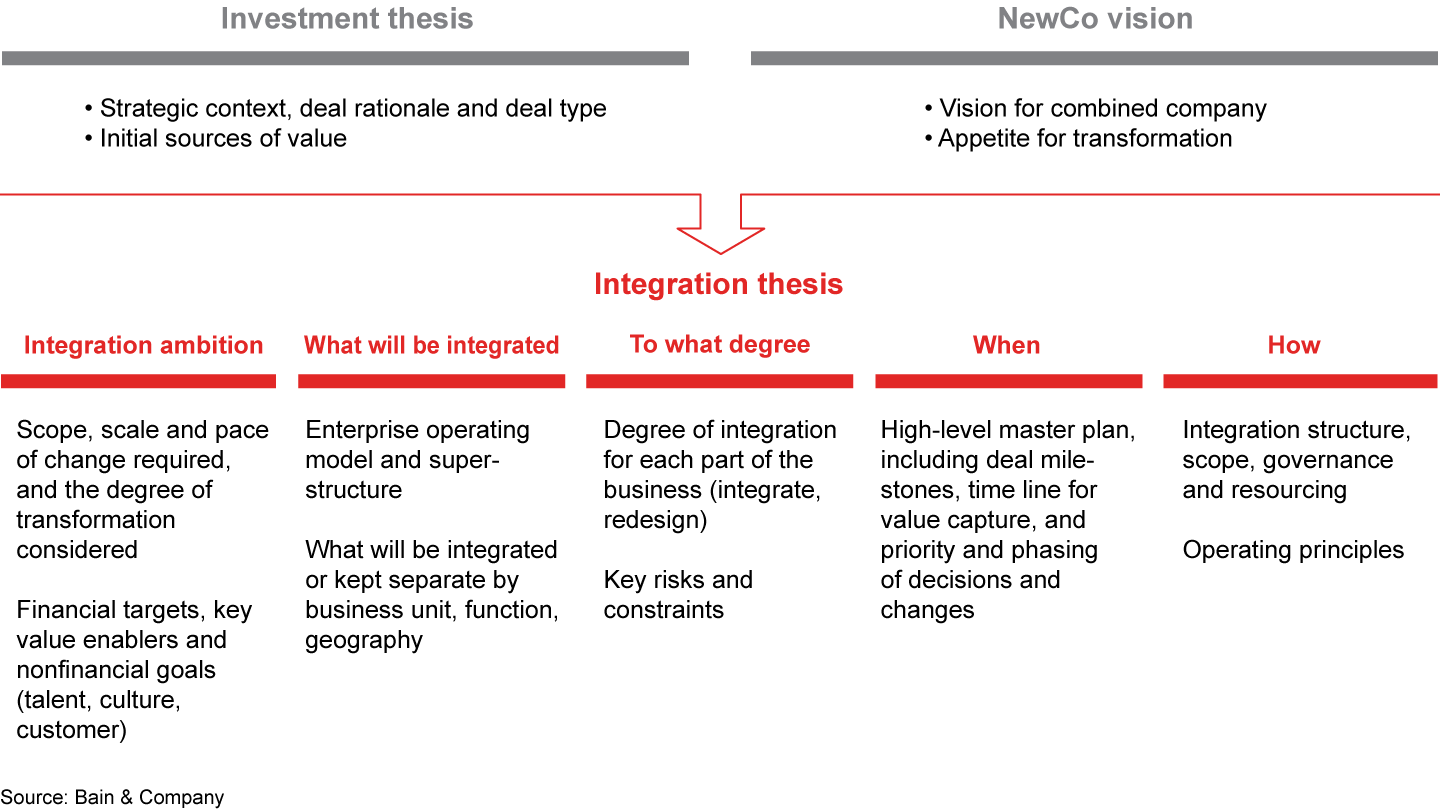
      The confluence of these major trends—a greater need for top-line growth, the increasing cost of acquisitions and more intensive regulatory scrutiny—raises the complexity of many deals. Additionally, we see more scope acquisitions or carve-outs, which are inherently more complex than a scale acquisition or full company acquisition. Acquirers may already have experience in developing an investment thesis during due diligence (see Figure 10). It pays to take this one step further to create an integration thesis that sets direction and guardrails to inform the integration efforts as part of the due diligence or immediately following the announcement (see Figure 11).

      Figure 10
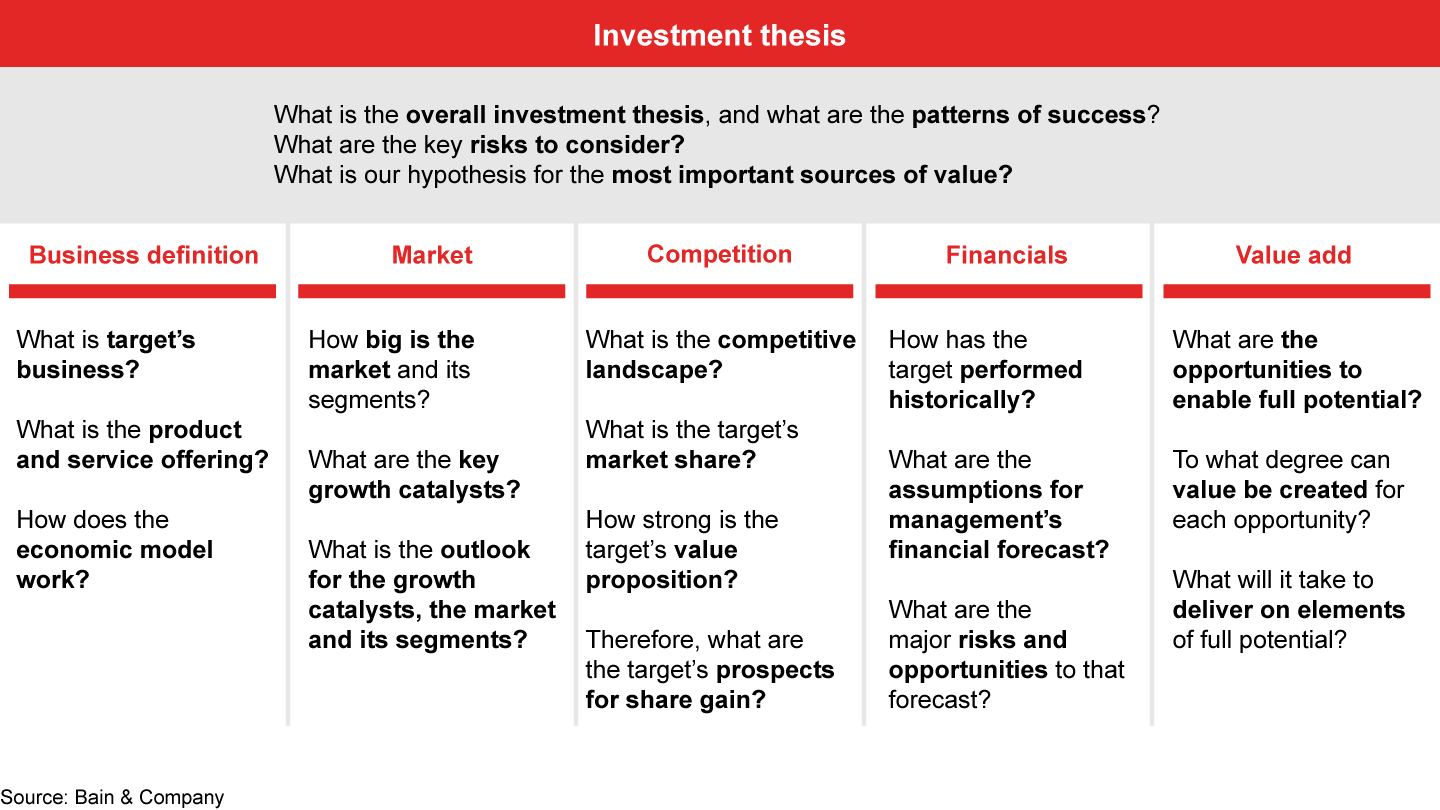
      A strong investment thesis must explain how the deal will make the business more valuable
      A strong investment thesis must explain how the deal will make the business more valuable
      A strong investment thesis must explain how the deal will make the business more valuable
      Figure 11
      A strong integration thesis provides the direction and guardrails for management to merge two organizations effectively
      A strong integration thesis provides the direction and guardrails for management to merge two organizations effectively
      A strong integration thesis provides the direction and guardrails for management to merge two organizations effectively

      Without thoughtful investment and integration theses, integrations are prone to break down. Synergies may go unidentified and uncaptured, causing acquirers to leave value on the table. Operating model mismatches can result in underperforming teams and talent defection. And inadequate attention to integration of the chassis—namely, IT systems and core processes—can erode productivity. As a result, companies risk chasing top-line growth in areas that may eventually wind up diluting their overall TSR.

      We expect the recent trend of significant deal activity to continue as companies look to grow revenue through acquisition. Themes such as partnering with PE funds should also persist as corporates look for creative ways to make the most of acquisitions. As deal values increase and deal theses become more complex, companies must understand what it will take to realize the full value of their acquisitions. A well-researched investment thesis combined with a thoughtful integration thesis will raise the odds of maximizing deal value.

      Read the Next Section

      Exits: A Return to Steady State as Recession-Vintage Assets Clear

      Authors
      • Headshot of Jeff Haxer
        Jeff Haxer
        Partner, Chicago
      • Headshot of Dale Stafford
        Dale Stafford
        Partner, New York
      • Headshot of Ben Siegal
        Ben Siegal
        Partner, Boston
      Contact us
      Related Industries
      • Healthcare & Life Sciences
      • Private Equity
      Healthcare & Life Sciences
      Year in Review: Healthcare Megadeals Lead the Way

      Investors flocked to recession-resistant healthcare investments ahead of a possible downturn.

      More
      Healthcare & Life Sciences
      Exits: A Return to Steady State as Recession-Vintage Assets Clear

      Holding periods for healthcare investments returned to between three and five years.

      More
      Healthcare & Life Sciences
      2019 and Beyond: An Oasis of Calm?

      The jury is out on whether the next round of healthcare investments will generate returns on par with previous buyouts.

      More
      Healthcare & Life Sciences
      Healthcare Private Equity Market 2025: Resurgence and Record Growth

      Healthcare private equity investment posted a very strong year for deal value and volume, paired with a strong rebound in exits.

      More
      Healthcare & Life Sciences
      What Differentiates Winning Healthcare IT Investments

      Amidst continued high-valuation multiples and competitive deal processes, a disciplined focus on value-creation levers distinguishes winning bids and successful exits.

      More
      First published in Απρίλιος 2019
      Tags
      • Healthcare & Life Sciences
      • Private Equity

      How We've Helped Clients

      A Paper Company Takes Bold Steps to Make Sustainability a Source of Profits

      Read case study

      Pharma oncology growth strategy

      Read case study

      Review focuses biotech on portfolio potential

      Read case study

      Έτοιμοι να μιλήσουμε

      Συνεργαζόμαστε με φιλόδοξους ηγέτες που θέλουν να καθορίσουν το μέλλον και όχι. Όχι να κρυφτούν από αυτό. Μαζί, επιτυγχάνουμε πετυχαίνουμε εξαιρετικά αποτελέσματα.

      Μείνετε μπροστά σε έναν γρήγορα εξελισσόμενο κόσμο. Εγγραφείτε στο Bain Insights, τη μηνιαία μας επισκόπηση των κρίσιμων θεμάτων που αντιμετωπίζουν οι παγκόσμιες επιχειρήσεις

      *Έχω διαβάσει την Πολιτική Απορρήτου και συμφωνώ με τους όρους της.

      Please read and agree to the Privacy Policy.
      Bain & Company
      Επικοινωνήστε μαζί μας Sustainability Accessibility Όροι χρήσης Privacy Cookie Policy Sitemap Log In

      © 1996-2026 Bain & Company, Inc.

      Contact Bain

      How can we help you?

      • Business inquiry
      • Career information
      • Press relations
      • Partnership request
      • Speaker request
      See all offices