
Skip to Content
  • Offices

    Offices

    North & Latin America
    • Atlanta
    • Austin
    • Bogota
    • Boston
    • Buenos Aires
    • Chicago
    • Dallas
    • Denver
    • Houston
    • Los Angeles
    • Mexico City
    • Minneapolis
    • Monterrey
    • Montreal
    • New York
    • Rio de Janeiro
    • San Francisco
    • Santiago
    • São Paulo
    • Seattle
    • Silicon Valley
    • Toronto
    • Washington, DC
    Europe & Africa
    • Amsterdam
    • Athens
    • Berlin
    • Brussels
    • Copenhagen
    • Dusseldorf
    • Frankfurt
    • Helsinki
    • Istanbul
    • Johannesburg
    • Kyiv
    • Lisbon
    • London
    • Madrid
    • Milan
    • Munich
    • Oslo
    • Paris
    • Rome
    • Stockholm
    • Vienna
    • Warsaw
    • Zurich
    Middle East
    • Doha
    • Dubai
    • Riyadh
    Asia & Australia
    • Bangkok
    • Beijing
    • Bengaluru
    • Brisbane
    • Ho Chi Minh City
    • Hong Kong
    • Jakarta
    • Kuala Lumpur
    • Manila
    • Melbourne
    • Mumbai
    • New Delhi
    • Perth
    • Seoul
    • Shanghai
    • Singapore
    • Sydney
    • Tokyo
    See all offices
  • Alumni
  • Media Center
  • Subscribe
  • Contact
  • Argentina | Español

    Select your region and language

    Global
    • Global (English)
    North & Latin America
    • Brazil (Português)
    • Argentina (Español)
    • Canada (Français)
    • Chile (Español)
    • Colombia (Español)
    Europe, Middle East, & Africa
    • France (Français)
    • DACH Region (Deutsch)
    • Italy (Italiano)
    • Spain (Español)
    • Greece (Elliniká)
    Asia & Australia
    • China (中文版)
    • Korea (한국어)
    • Japan (日本語)
  • Saved items (0)
    Saved items (0)

    You have no saved items.

    Bookmark content that interests you and it will be saved here for you to read or share later.

    Explore Bain Insights
  • Industries
    Main menu

    Industries

    • Aeroespacial y Defensa
    • Agroindustria
    • Químicos
    • Construcción e Infraestructura
    • Productos de Consumo
    • Servicios Financieros
    • Salud y Ciencias de la Vida
    • Maquinaria y Equipo Industrial
    • Medios y Entretenimiento
      Industries
      Medios y Entretenimiento
      • Media Lab
    • Metales
    • Minería
    • Petróleo y Gas
    • Papel y Empaque
    • Private Equity
      Industries
      Private Equity
      • Due Diligence
      • Exit Planning
      • Firm Strategy & Operations
      • Portfolio Value Creation
    • Sector Público y Social
    • Retail
    • Tecnología
    • Telecomunicaciones
      Industries
      Telecomunicaciones
      • Capital Expenditure
      • Telco Digital Transformation
    • Transporte
    • Viajes y Turismo
    • Servicios Públicos y Energías Renovables
  • Consulting Services
    Main menu

    Consulting Services

    • Customer Experience
    • Sustainability
    • Innovation
    • M&A
    • Operations
    • People & Organization
    • Private Equity
    • Sales & Marketing
    • Strategy
    • AI, Insights, and Solutions
    • Technology
    • Transformation
  • Digital
  • Insights
    Main menu

    Insights

    • Industry Insights
    • Services Insights
    • Bain Books
    • Webinars
    • Bain Futures
    View all Insights
    Featured topics
    • Tariff Response
    • Artificial Intelligence
    • Thriving in Uncertainty
    • Executive Conversations
    • Macro Trends
    • M&A Report
    • Healthcare Private Equity Report
    • Paper & Packaging Report
    • Technology Report
    • CEO's Guide to Sustainability
    • CEO Insights
    • CFO Insights
    • COO Insights
    • CIO Insights
    • CMO Insights
    View all featured topics
  • About
    Main menu

    About

    • What We Do
    • What We Believe
    • Our People & Leadership
    • Client Results
    • Awards & Recognition
    • Global Affiliations
    Further: Our global responsibility
    • Sustainability
    • Social Impact
    • World Economic Forum
    Learn more about Further
  • Carreras
    Main menu

    Carreras

    • Trabaja con Nosotros
      Carreras
      Trabaja con Nosotros
      • Find Your Place
      • Nuestras Áreas de Trabajo
      • Equipos Integrados
      • Estudiantes
      • Internships & Programs
      • Eventos de Reclutamiento
    • La Vida en Bain
      Carreras
      La Vida en Bain
      • Historias Profesionales
      • Nuestra Gente
      • Dónde Trabajamos
      • Apoyando tu Crecimiento
      • Grupos de Afinidad
      • Beneficios
    • Impact Stories
    • Nuestro Proceso
      Carreras
      Nuestro Proceso
      • Qué Esperar
      • Entrevistas
    FIND JOBS
  • Offices
    Main menu

    Offices

    • North & Latin America
      Offices
      North & Latin America
      • Atlanta
      • Austin
      • Bogota
      • Boston
      • Buenos Aires
      • Chicago
      • Dallas
      • Denver
      • Houston
      • Los Angeles
      • Mexico City
      • Minneapolis
      • Monterrey
      • Montreal
      • New York
      • Rio de Janeiro
      • San Francisco
      • Santiago
      • São Paulo
      • Seattle
      • Silicon Valley
      • Toronto
      • Washington, DC
    • Europe & Africa
      Offices
      Europe & Africa
      • Amsterdam
      • Athens
      • Berlin
      • Brussels
      • Copenhagen
      • Dusseldorf
      • Frankfurt
      • Helsinki
      • Istanbul
      • Johannesburg
      • Kyiv
      • Lisbon
      • London
      • Madrid
      • Milan
      • Munich
      • Oslo
      • Paris
      • Rome
      • Stockholm
      • Vienna
      • Warsaw
      • Zurich
    • Middle East
      Offices
      Middle East
      • Doha
      • Dubai
      • Riyadh
    • Asia & Australia
      Offices
      Asia & Australia
      • Bangkok
      • Beijing
      • Bengaluru
      • Brisbane
      • Ho Chi Minh City
      • Hong Kong
      • Jakarta
      • Kuala Lumpur
      • Manila
      • Melbourne
      • Mumbai
      • New Delhi
      • Perth
      • Seoul
      • Shanghai
      • Singapore
      • Sydney
      • Tokyo
    See all offices
  • Alumni
  • Media Center
  • Subscribe
  • Contact
  • Argentina | Español
    Main menu

    Select your region and language

    • Global
      Select your region and language
      Global
      • Global (English)
    • North & Latin America
      Select your region and language
      North & Latin America
      • Brazil (Português)
      • Argentina (Español)
      • Canada (Français)
      • Chile (Español)
      • Colombia (Español)
    • Europe, Middle East, & Africa
      Select your region and language
      Europe, Middle East, & Africa
      • France (Français)
      • DACH Region (Deutsch)
      • Italy (Italiano)
      • Spain (Español)
      • Greece (Elliniká)
    • Asia & Australia
      Select your region and language
      Asia & Australia
      • China (中文版)
      • Korea (한국어)
      • Japan (日本語)
  • Saved items  (0)
    Main menu
    Saved items (0)

    You have no saved items.

    Bookmark content that interests you and it will be saved here for you to read or share later.

    Explore Bain Insights
  • Industries
    • Industries

      • Aeroespacial y Defensa
      • Agroindustria
      • Químicos
      • Construcción e Infraestructura
      • Productos de Consumo
      • Servicios Financieros
      • Salud y Ciencias de la Vida
      • Maquinaria y Equipo Industrial
      • Medios y Entretenimiento
      • Metales
      • Minería
      • Petróleo y Gas
      • Papel y Empaque
      • Private Equity
      • Sector Público y Social
      • Retail
      • Tecnología
      • Telecomunicaciones
      • Transporte
      • Viajes y Turismo
      • Servicios Públicos y Energías Renovables
  • Consulting Services
    • Consulting Services

      • Customer Experience
      • Sustainability
      • Innovation
      • M&A
      • Operations
      • People & Organization
      • Private Equity
      • Sales & Marketing
      • Strategy
      • AI, Insights, and Solutions
      • Technology
      • Transformation
  • Digital
  • Insights
    • Insights

      • Industry Insights
      • Services Insights
      • Bain Books
      • Webinars
      • Bain Futures
      View all Insights
      Featured topics
      • Tariff Response
      • Artificial Intelligence
      • Thriving in Uncertainty
      • Executive Conversations
      • Macro Trends
      • M&A Report
      • Healthcare Private Equity Report
      • Paper & Packaging Report
      • Technology Report
      • CEO's Guide to Sustainability
      • CEO Insights
      • CFO Insights
      • COO Insights
      • CIO Insights
      • CMO Insights
      View all featured topics
  • About
    • About

      • What We Do
      • What We Believe
      • Our People & Leadership
      • Client Results
      • Awards & Recognition
      • Global Affiliations
      Further: Our global responsibility
      • Sustainability
      • Social Impact
      • World Economic Forum
      Learn more about Further
  • Carreras
    Popular Searches
    • Agile
    • Digital
    • Strategy
    Your Previous Searches
      Recently Visited Pages

      Content added to saved items

      Saved items (0)

      Removed from saved items

      Saved items (0)

      Brief

      Choosing Your Next Go-to-Market Investment

      Choosing Your Next Go-to-Market Investment

      Where should you spend the next dollar on commercial capabilities? A diagnostic X-ray reveals the gaps that matter to your business.

      By Jonathan Frick, Jason McLinn, Mark Kovac, and Chris Dent

      • min read
      }

      Brief

      Choosing Your Next Go-to-Market Investment
      en
      Executive Summary
      • When a company’s sales performance lags or new competitors threaten with better commercial execution, sales leaders may not know exactly where or in what sequence to attack the problem.
      • Fixing one narrow aspect of the commercial model, such as pricing or compensation, rarely works, because each aspect of the model links with others.
      • A diagnostic “X-ray” of 65 commercial capabilities in six categories allows sales leaders to gauge their performance against competitors in their industry and—importantly—companies outside their industry but with a similar go-to-market model.
      • For a given industry and go-to-market model, typically there are a small handful of capabilities at which companies must excel in order to generate outsized revenue and market-share growth.

      Sales executives staring at a deficiency in performance, or a demand-led shift in how they go to market, or an insurgent competitor nipping at their heels, face a conundrum common to any complex problem: Where to begin? Naturally, the loudest or latest complaint should not set the agenda, but anecdotal conversations do have a way of sticking in sales leaders’ minds as they decide how to respond.

      What’s more, sales leaders may not have a good sense of the best commercial practices to remedy the situation, including practices among companies outside their immediate industry but with a similar commercial model and therefore similar issues and opportunities.

      Discerning where to start—whether to turn around a lagging go-to-market model or take an already solid organization into the lead—is not obvious. Yet companies must understand exactly which are the most important commercial capabilities to address, and in what sequence. 

      As with any complicated enterprise, you should step back and look at all the parts, not just those that seem to be weakest or generate the loudest complaints. Focusing narrowly on one problem may overlook links to other aspects of the commercial enterprise. For example, fixing sales compensation might be far more effective if you also changed how sales representatives are trained.

      To that end, Bain & Company recently undertook an extensive survey that asked executives at nearly 900 business-to-business (B2B) companies worldwide about their firms’ commercial capabilities. The analysis also ranked companies in terms of revenue and market share growth. This “X-ray” reveals which commercial capabilities matter most for a given industry and commercial model, which helps leaders prioritize which levers to pull first.

      Based on decades of experience working with sales and marketing organizations, we defined 65 best practices, including a number of digital practices, in six categories of capabilities (see Figure 1). For instance, the best practice for “customer digital behavior” is “We have a deep understanding of our customers’ and prospects’ digital activities and behaviors, enabled through insight into website behavior, content engagement, search patterns, social media activity and inbound lead performance.”

      Figure 1
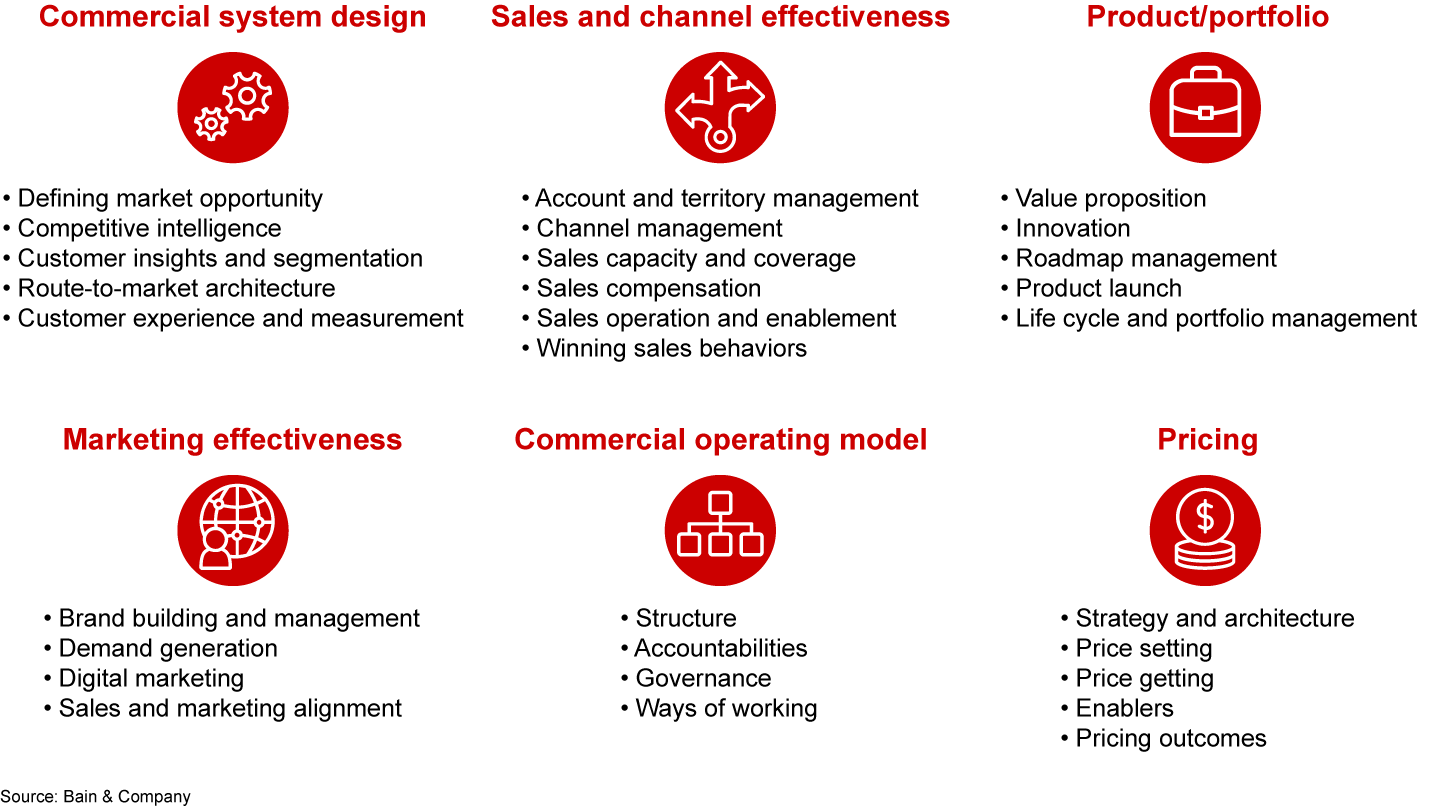
      The commercial excellence X-ray examines capabilities in six categories
      The commercial excellence X-ray examines capabilities in six categories
      The commercial excellence X-ray examines capabilities in six categories

      We asked respondents to rate their own company along these best-in-class definitions, then sorted their answers according to the company’s business performance. We defined the top performers as companies that grew absolute revenue at a significant rate and gained market share within their industry over the previous two years.

      Clear patterns emerge. To start, the winners not only rate higher than the average on virtually every capability, but also rate especially well on a handful of capabilities of particular relevance for their situation. When companies carry out an X-ray diagnostic and address their commercial performance holistically, we have seen them gain 3 to 5 percentage points of profit margin and unlock higher revenue growth. 

      A holistic view of commercial excellence

      Taking a holistic view of commercial capabilities, the analysis confirms, is much more effective than tinkering with each capability on its own. Improving, say, pricing by itself rarely leads to commercial excellence. Rather, a sales group performs best when it is supported by strong product management and selling on clear value propositions. Any potential pricing increase will only be realized when the salesforce is well aligned behind the objectives, and the right tools are in place to track results.

      A second insight is that the importance of specific capabilities varies with each company’s circumstances, which go beyond its industry and geographical market. You should also factor in the chosen commercial model, defined along two dimensions: whether the company has relatively simple or complex sales in terms of the product or selling process, and whether its sells directly, indirectly or through multiple channels (see Figure 2). Looking at the combination of the industry and commercial model raises the predictive power for business outcomes. 

      Figure 2
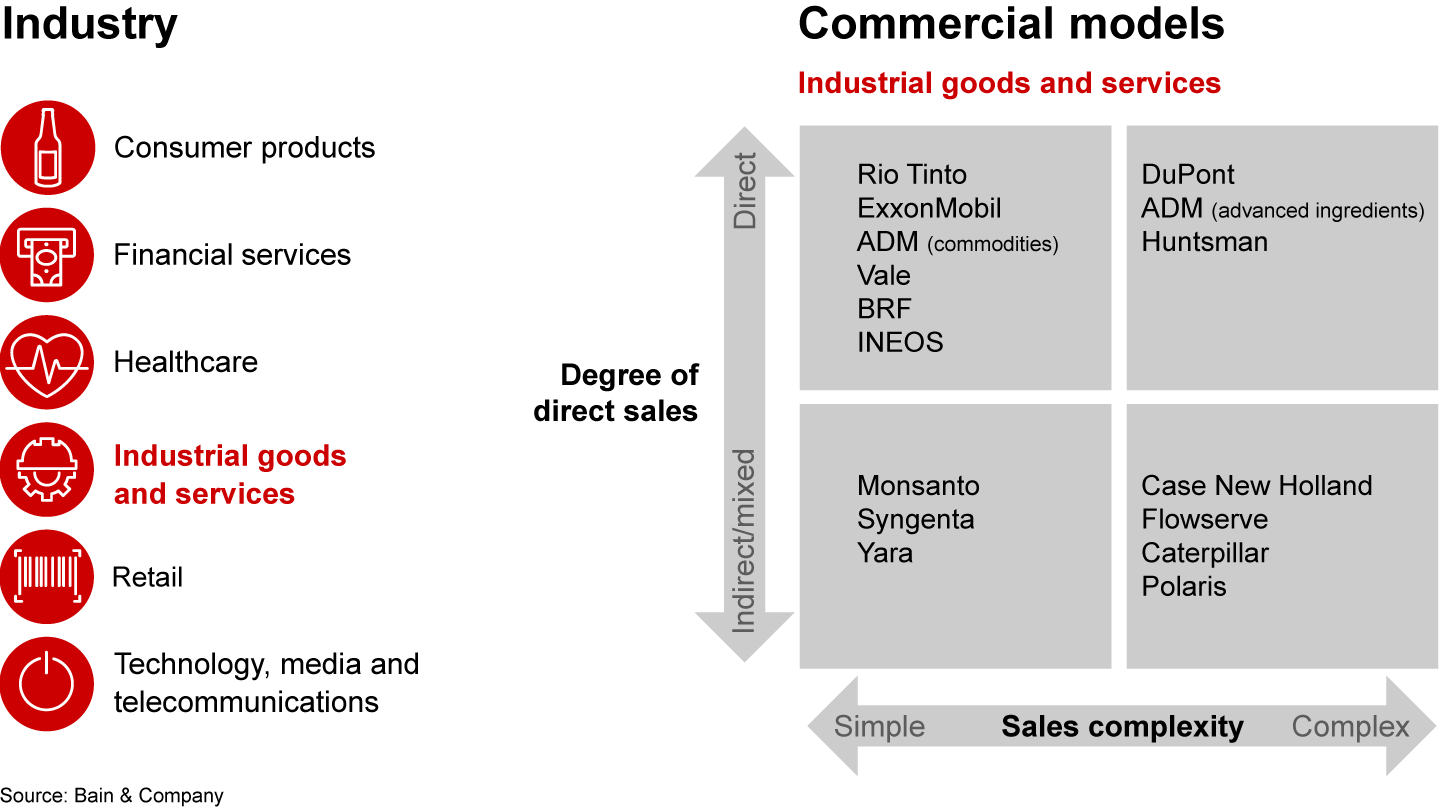
      It is useful to view capabilities through the dual lenses of industry and commercial models
      It is useful to view capabilities through the dual lenses of industry and commercial models
      It is useful to view capabilities through the dual lenses of industry and commercial models

      Consider a company selling basic commodities with a simple, direct sales model. Many of the capabilities most predictive of outperformance involve pricing and salesforce allocation. These include dynamic pricing in response to market trends, pricing compliance for sales reps, a deep understanding of customer-level profitability, salespeople aligned with the right opportunities and rigorous sales KPIs. This set of capabilities make sense when you consider the volatile, margin-thin market environments such firms tend to operate in.

      By contrast, for a computer hardware/software firm that has a more complex product portfolio and sells through multiple channels, success involves other key capabilities: how the firm adapts to new trends and opportunities, sales behaviors and pricing alignment to strategy. Again, this set makes sense because such companies often have broad portfolios of technical products, sold in complex buying processes involving multiple sales roles.

      One global industrial manufacturer used the X-ray diagnostic to determine where investment in commercial capabilities would yield the greatest payoff. The company benchmarked its performance on capabilities against peers, then surveyed senior executives as well as more than 200 sales and marketing professionals to validate the benchmarking. It found two areas where it could improve.

      The first area consisted of known issues that commercial leaders already believed were important, had begun to address and had validated through their research, including:

      • Developing a quantified view of market opportunities at the account level. That would help sales teams set more accurate targets and prioritize their opportunities.
      • Improving selling based on value delivered, through more effective governance and involvement of sales executives.
      • Integrating digital tools into their sales activities, and deploy new pricing and marketing tools.

      The second area consisted of blind spots where executives had thought the organization was effective, but actually underperformed relative to peers. These blind spots needed attention urgently in order to raise commercial performance, particularly among frontline sales reps (see Figure 3). For a small set of key accounts, the company piloted several changes:

      Figure 3
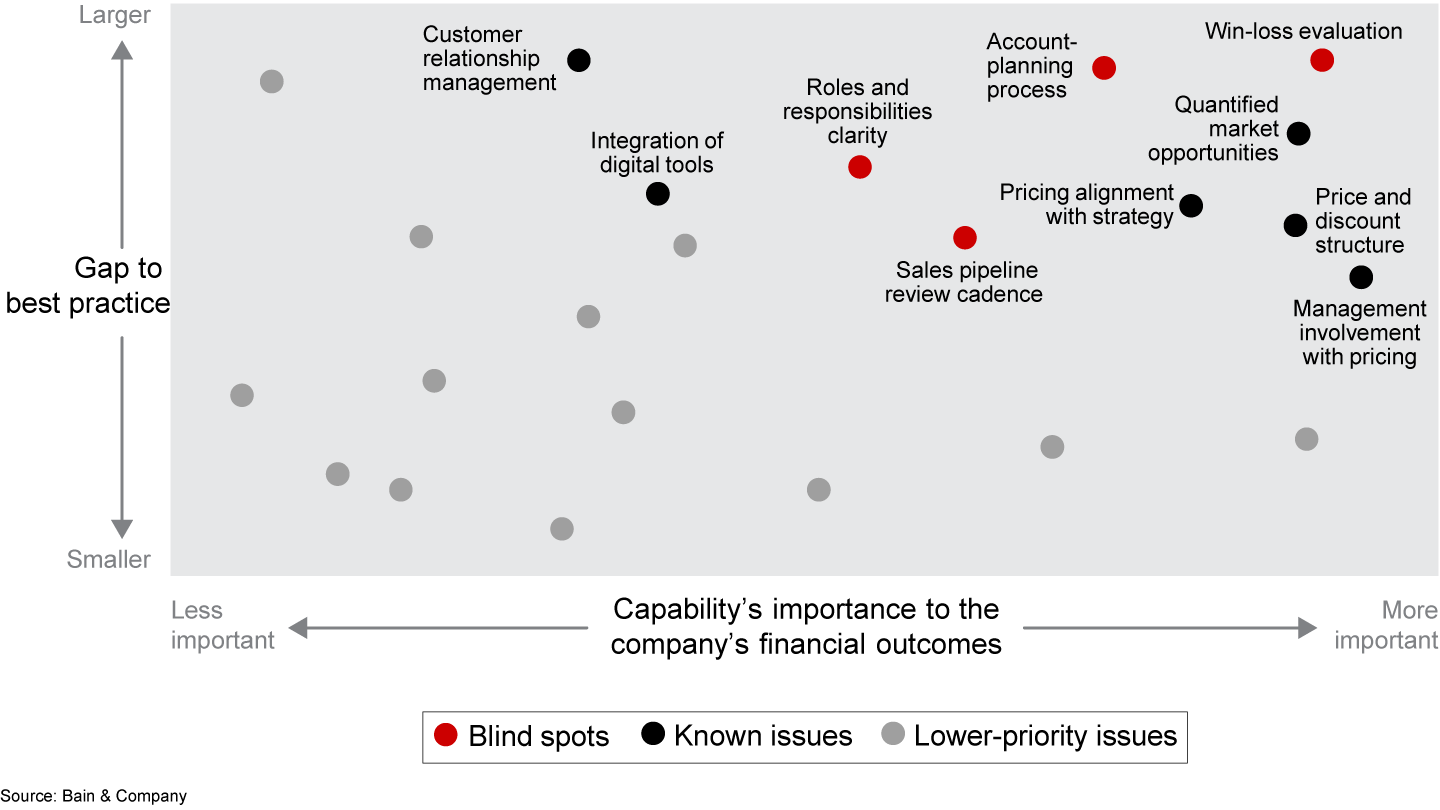
      An industrial company’s X-ray identified capabilities that the firm had begun to address, and uncovered others that needed urgent attention
      An industrial company’s X-ray identified capabilities that the firm had begun to address, and uncovered others that needed urgent attention
      An industrial company’s X-ray identified capabilities that the firm had begun to address, and uncovered others that needed urgent attention
      • Clarifying roles and responsibilities within the product and service sales organizations to promote integrated selling.
      • Moving account planning from an analog, annual activity to a digital, continuous approach.
      • Investing in more structured win-loss assessments and campaign debriefs to spread best practices across sales regions and account teams.

      Improvements materialized quickly, as the pilot accounts saw a 30% increase in the value of opportunities added to the pipeline and expected to close over the following year. Moreover, sales reps and others in the organization have been energized by the renewed focus on helping them succeed. Senior account executives began actively seeking each other out to share account strategies and best practices, behavior that had rarely occurred in their highly competitive and siloed sales environment. That cultural shift goes a long way toward building internal support for the change and ensuring the results last beyond initial pilots.

      It is worth noting that many large companies operate with different commercial models in different parts of the enterprise. In these cases, executives should consider how the commercial organization is set up for success, and thoughtfully define boundaries around what is shared and what is unique to a business unit.

      Failure modes—and how to overcome them

      Our analysis also identified a half-dozen patterns of failure, each delineated by subpar performance in a cluster of commercial capabilities (see Figure 4).

      Figure 4
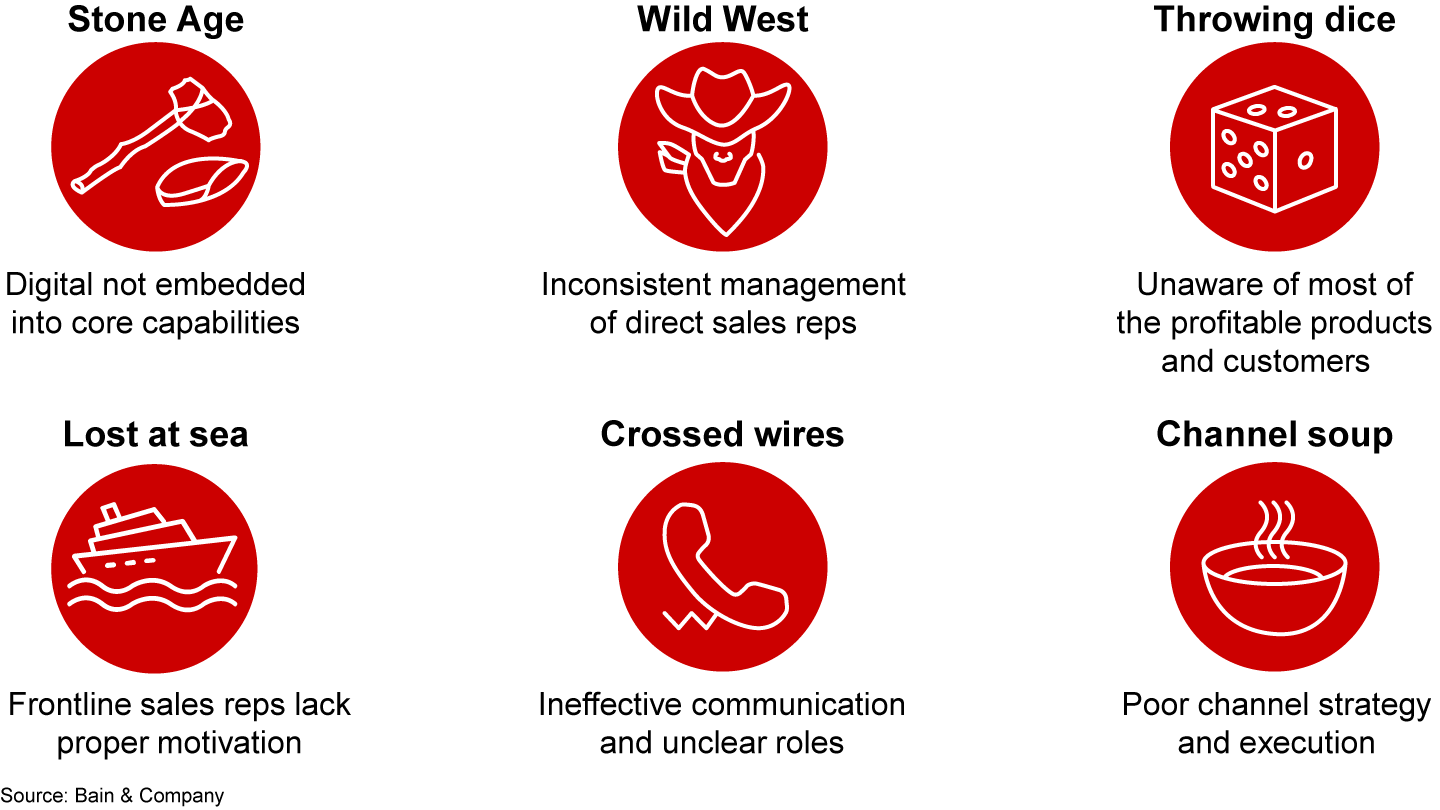
      Losers tend to fall into at least one failure mode
      Losers tend to fall into at least one failure mode
      Losers tend to fall into at least one failure mode

      Stone Age—failing to embed digital tools and skills. This pattern sometimes surfaces among companies that previously operated in a simpler market, such as a concentrated customer set or slow pace of change, where it could manage the salesforce on a spreadsheet. In other cases, companies may have grown too fast to have taken the time to invest in the proper digital infrastructure.

      Wild West—inconsistent management of direct sales reps. Some companies consider sales more art than science, giving frontline sales managers wide latitude. Without guidance on best practices and standardized metrics, different pockets of the commercial organization end up doing things in wildly different ways, with disparate outcomes.

      Throwing dice—being unaware of the most profitable products and customers. For companies with a wide variety of customers, products with many configurations or customizations, or opaque pricing systems, profitability can vary dramatically and unpredictably among customers if the company lacks robust data. Even companies in simpler situations might not have reliable information on the spending of each customer in a product category.

      Lost at sea—lack of proper motivation and incentives for sales reps. This can happen when companies change policies in isolation, for example, changing strategy without aligning compensation.

      Crossed wires—ineffective communication and unclear roles. Wires can cross when companies broaden their product portfolio over time, adding layers of roles to shore things up along the way, which ultimately causes confusion.

      Channel soup—poor channel strategy and execution. It’s fine to add sales channels, but not without stepping back to consider which products should be sold through which channels in which markets.

      A company may perform well on the capabilities most important for its industry and commercial model, yet still fail along one of these patterns. On average, however, more than twice as many losing companies—those with stagnant or declining market share and revenue—exhibit one or more of the failure modes.

      Avoiding these types of failure and tuning the commercial engine for peak performance goes back to the insights supported by the survey analysis. While the route to commercial excellence will of course vary by company, a sensible plan likely involves the following steps:

      • Think holistically about the challenge, as all aspects of the commercial engine are highly interconnected.
      • Do an X-ray diagnostic to identify the capabilities at which you must excel in order to succeed with your commercial model and industry, and those at which you can be “good enough.” Because the diagnostic is a digital tool, senior management can explore the output together in real time.
      • Understand where you have the biggest gaps with best-practice companies.
      • Focus first on the handful of interlinked capabilities that are critical to your situation and where you have significant gaps.
      • Address these gaps through a concerted plan, before moving on to secondary issues. 

      Too many options can be as frustrating as too few. With so many possible avenues for investment and management attention, sales organizations need a practical way to focus on where they will reap the greatest return. Applying the X-ray diagnosis to the commercial organization identifies the most promising capabilities for the chosen model. Executives will know exactly what they need to fix or improve, and how far they must rise to match or surpass competitors.

      Jonathan Frick, Jason McLinn and Mark Kovac are partners with Bain & Company’s Customer Strategy & Marketing practice, and Kovac leads the firm’s B2B Commercial Excellence Group. Chris Dent is an expert principal with the practice.

      Authors
      • Headshot of Jonathan Frick
        Jonathan Frick
        Partner, London
      • Headshot of Jason McLinn
        Jason McLinn
        Partner, Chicago
      • Headshot of Mark Kovac
        Mark Kovac
        Advisory Partner, Dallas
      • Headshot of Chris Dent
        Chris Dent
        Partner, Denver
      Related Consulting Services
      • Go-to-Market Strategy
      Go-to-Market Strategy
      Executive Survey: AI Moves from Pilots to Production

      As AI becomes a top priority, businesses are scaling faster, seeing more impact—and preparing for disruption.

      Read more
      Go-to-Market Strategy
      Better Questions, Better Sales Calls

      Top reps dig deep even when the deal doesn’t close on the first contact.

      Read more
      Go-to-Market Strategy
      Growth Leaders Redefine Productivity

      Bain partners share how today's top companies are turning efficiency into strategic advantage.

      Read more
      Go-to-Market Strategy
      The Customer Loyalty Metrics That Matter Most for B2B Companies

      Mining customers’ perceptions of the brand, account relationships, and joint projects inform the best next actions to foster loyalty and long-term growth.

      Read more
      Go-to-Market Strategy
      AI Is Transforming Productivity, but Sales Remains a New Frontier

      Potential applications of generative and agentic AI could free up more selling time and boost conversion rates.

      Read more
      First published in enero 2019
      Tags
      • Go-to-Market Strategy

      How We've Helped Clients

      A Logistics Company Transforms Its Salesforce and Account Planning Processes

      See more related case studies

      Aggressively growing an IT service provider with a high-performance culture

      See more related case studies

      Building a winning media salesforce

      See more related case studies

      Want to continue the conversation

      We help global leaders with their organization's most critical issues and opportunities. Together, we create enduring change and results

      Bain Insights. Our perspectives on critical issues global businesses face in today's challenging environment, delivered monthly.

      *I have read and understand Bain’s Privacy Notice.

      Please read and agree to the Privacy Policy.
      Bain & Company
      Contact us Sustainability Accessibility Terms of use Privacy Modern Slavery Act Statement Cookie Policy Sitemap Log In

      © 1996-2026 Bain & Company, Inc.

      Contact Bain

      How can we help you?

      • Business inquiry
      • Career information
      • Press relations
      • Partnership request
      • Speaker request
      See all offices