

Brief

Executive Summary
- The Inflation Reduction Act changes the trajectory of greenhouse gas emissions in the US, positioning it to become a global leader in the fight against climate change.
- By creating more certainty for investments in clean energy production and low-carbon materials, the act reduces the risks and costs of decarbonization.
- Companies that were tentatively moving in the direction of clean energy and green products can move more aggressively into these new businesses now, a change that will shake up trade relationships and boost the role of the US private sector in the global clean energy sector.
- The act also targets inequities exacerbated by the energy transition, setting aside funds and investment incentives that will benefit communities most affected by pollution and the energy transition.
The Inflation Reduction Act is a game changer for the United States’ participation in the new energy economy. By reducing the costs and risks of decarbonization, mostly through new tax incentives for clean energy investments, it changes the terms for private sector investment in American clean energy and manufacturing, and positions the US as a leader on commodities crucial to the global energy transition, including hydrogen and decarbonized power generation.
By clearly defining a wide range of incentives, the act creates certainty for decarbonization investments over the next 10 years, empowering companies to invest in new technology, equipment, and infrastructure with more confidence. It unleashes the private sector to drive a dramatic reduction of US greenhouse gas emissions, with projected reductions of up to 42% below 2005 levels by 2030 (see Figure 1).
Figure 1
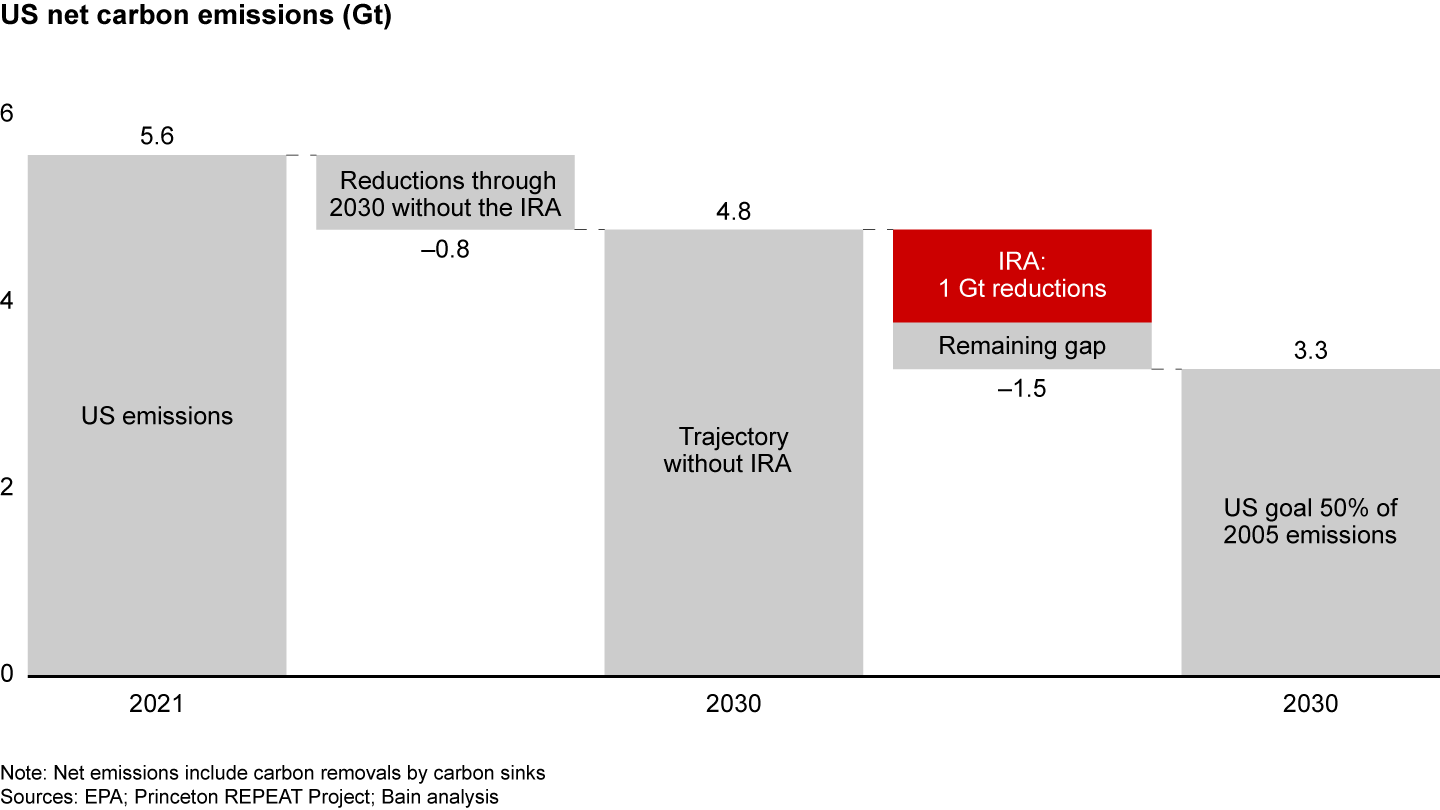

The IRA introduces $433 billion in new spending balanced against $811 billion in new revenue, most of it from a 15% minimum corporate tax and reforms that will allow the government to negotiate prices of prescription drugs purchased through Medicare. About $369 billion of that spending is targeted at addressing climate change or ensuring energy security; it is the United States’ greatest investment to date in tackling climate change.
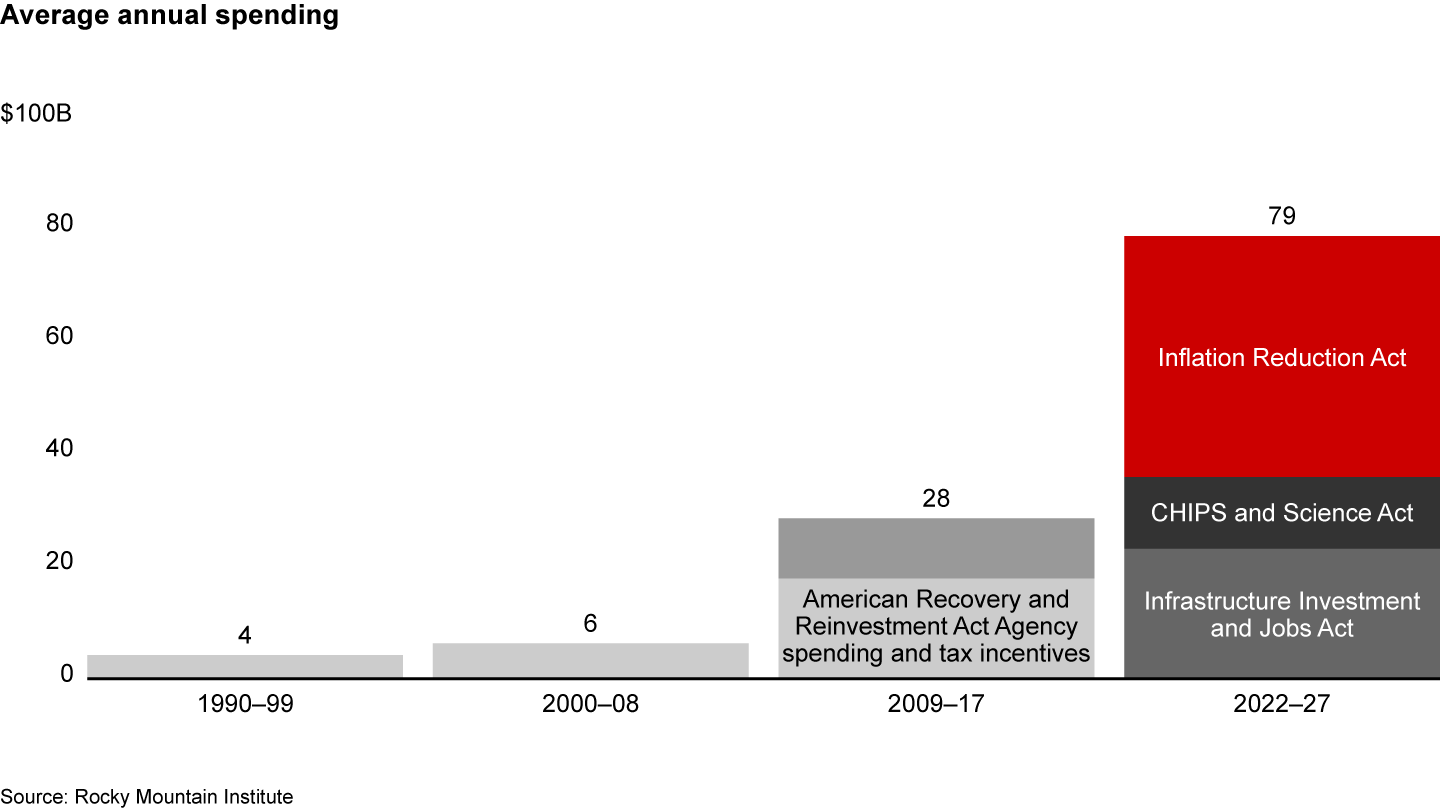
When combined with climate-related spending in 2021’s Infrastructure Investment and Jobs Act and the more recent CHIPS and Science Act aimed at bolstering American semiconductor chip manufacturing capacity, US federal spending on clean energy, manufacturing, and infrastructure will nearly triple over the next decade (see Figure 2). Together, these measures put the country on track to deliver as much as two-thirds of the work needed for the US to close the gap between current policies and its 2030 climate goals.
Figure 2

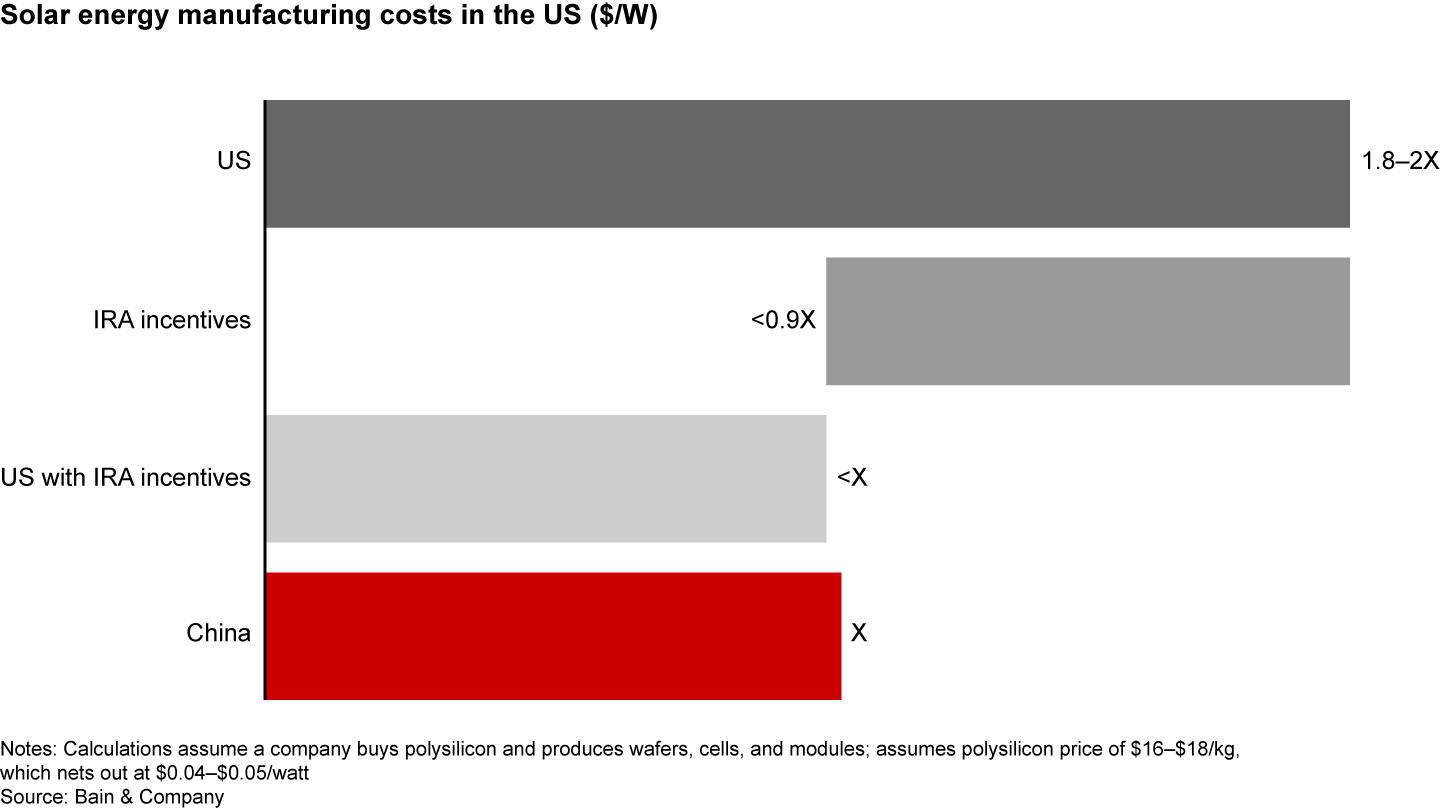
New policies have been designed specifically to make green energy and derivatives produced in the US competitive globally and with fossil fuel alternatives. For example, incentives bring the cost of manufacturing solar panels in the US down to parity with China—and with better returns, given higher price premiums. Low-carbon hydrogen will be cheaper to make in the US than gray hydrogen made along the US Gulf Coast. The legislation recognizes that the importance of climate change and energy security make it essential for the US to reclaim critical aspects of its energy supply chain, encouraging reshoring and new employment in heavily affected regions.
Beyond energy industries, the act will also help reduce the emissions footprint of companies in other industries, as they source more widely available clean energy and green technologies made more readily available (and more affordable) by the IRA’s incentives.
Meaningful clean energy and manufacturing opportunities
One of the most striking aspects of the IRA is how finely tuned it appears to be in supporting US industry to meet cost-competitive thresholds—for example, on solar panels and green hydrogen. It seems clear that policymakers listened to industry expertise and invested time developing a deep understanding of the economics of clean energy. Given the incentives, we expect the IRA to have profound effects across a wide array of clean technologies and the broader economy. Companies that were already positioning themselves to shift or expand their business toward clean energy are in a better position to take advantage of the opportunities.
- Hydrogen. A combination of tax incentives could bring green hydrogen costs below $1 per kilogram, achieving the Department of Energy’s Hydrogen Shot objective of reducing the cost of low-carbon energy to $1/kg within the decade (see Figure 3). Companies in the US and around the world are racing to capitalize on the opportunity in many ways, including greening the existing hydrogen supply (for example, in refining and chemicals), accelerating gas blending pilots, and building out the green ammonia supply chain.
- Battery manufacture. The requirements to qualify for the electric vehicle (EV) tax credit are realigning the lithium-ion battery supply chain. Since the bill’s signing, LG and Honda have announced a plan to build a $4.4 billion battery factory in the US, while Tesla is reconsidering its plans to make more batteries in Germany, possibly keeping that activity in the US. Battery recycling has also gained momentum, as shown by the recent $300 million fund-raising by Ascend Elements, a start-up that supplies recycled materials to US battery makers.
- Solar manufacture. The IRA’s incentives position the US to become competitive with market leader China in solar manufacturing costs (see Figure 4). Since end prices may be higher in the US, the returns may be greater for US manufacturers. First Solar, the only major American-owned manufacturer of solar panels, has announced $1.2 billion of additional investments to expand capacity in the US, a major pivot from previously announced plans to expand in Europe and India. We are also seeing significant international interest to participate in building out the US supply chain to serve both domestic and global demand.
- Power generation. The evolution of the act’s provisions to a technology neutral position by 2024 provides access to tax incentives across the full range of low-carbon power generation sources. This seeds the ground for new investment in small modular nuclear, geothermal, fusion, and other forms of generation. The Department of Energy’s recent report on reusing retired coal-fired power plant sites for new nuclear production (called coal-to-nuclear, or C2N) suggests project costs could be 35% less than greenfield projects built on new sites, even before the new tax credits are applied.
- Domestic manufacturing. The act includes $37 billion to develop manufacturing capabilities in clean energy, setting aside a portion to reward investment in communities adversely affected by the use or decommissioning of fossil fuel infrastructure. We are seeing renewed interest in repurposing existing or decommissioned facilities and infrastructure to take advantage of the opportunity to build more domestic manufacturing across clean energy supply chains.
- Sustainable jobs. Through these incentives, the legislation embodies the idea of creating good, long-lasting jobs in clean energy industries, particularly in the communities where they will have the greatest benefit on the local economies.
Figure 3
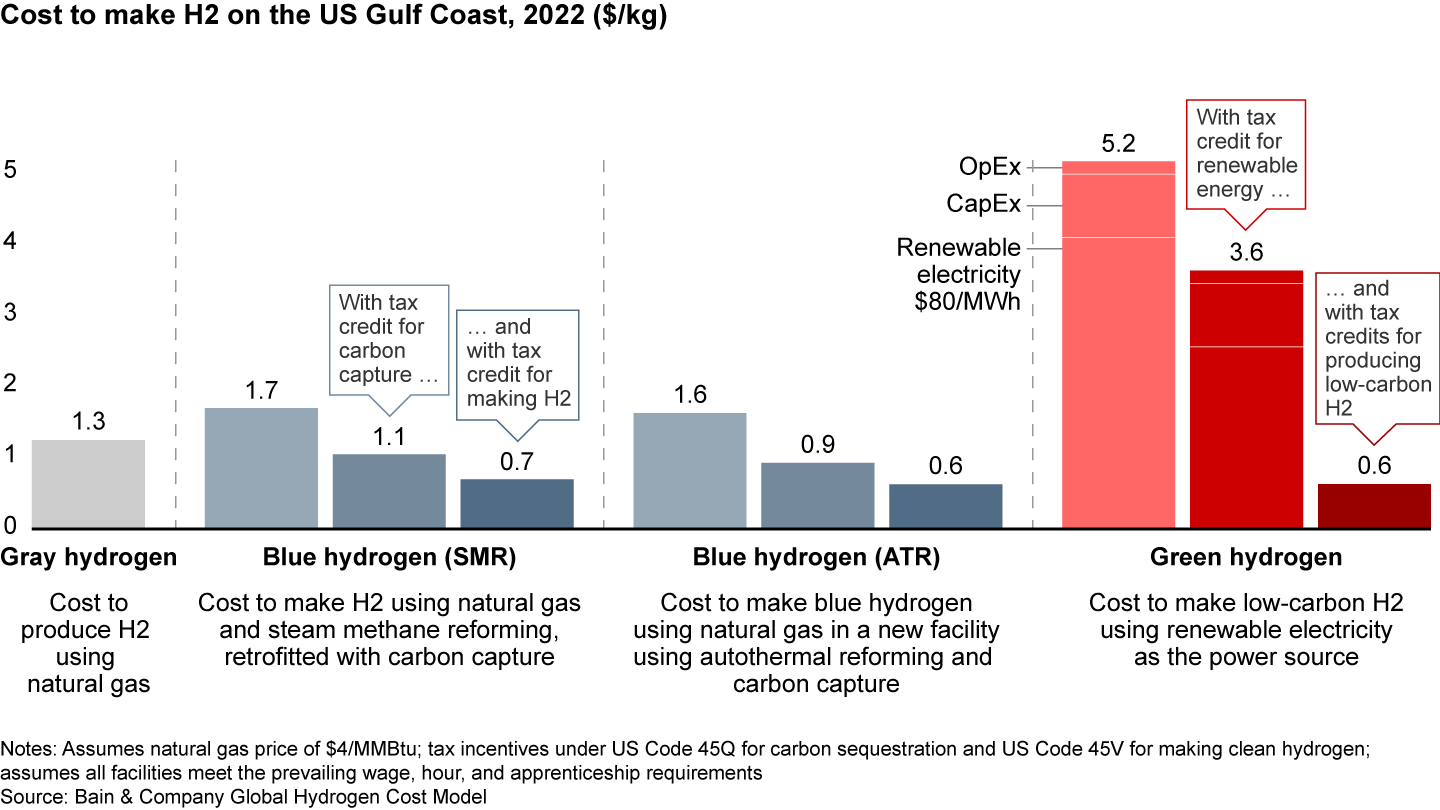

Figure 4

Several important issues remain unresolved
While the IRA creates the potential for profound change, several important issues still need to be resolved.
Permitting. Given the emphasis on electrification and nonfossil infrastructure, some of the most urgent questions have to do with resolving challenges to siting and permitting. To unleash the full emission reduction potential of the act, the US will need more decarbonized power generation and a more robust electricity grid. To make that happen, the approval process for new infrastructure must be significantly streamlined. Today, across nearly every region of the US, long interconnection queues have bogged down the permitting process and slowed the development of key projects. The rapid electrification of the country’s vehicle fleet and the build-out of green hydrogen facilities will require more renewable energy, exacerbating the situation. Congress has articulated plans to take this issue up soon, although timing is uncertain, and plans could change depending on the outcomes of the November 2022 federal midterm elections.
Sourcing. Other unanswered questions include how to ramp up domestic manufacturing at the rates needed, and where to source materials and components to meet the new targets. No one knows how much longer the market can meet requirements for critical components, including polysilicon, lithium, cobalt, nickel, and US-made steel. US automakers have already sent warning signals indicating it’s improbable they will be able to meet the requirements for the EV tax credit under the proposed timelines, mostly having to do with sourcing critical mineral and battery components in North America. We may see automakers shift underlying battery technologies from nickel magnesium cobalt (NMC) to lithium iron phosphate (LFP), to attenuate material composition coming from challenging locations. Regardless, the increased demand for lithium, both from EVs and grid-scale storage, is likely to result in strained supply chains and higher prices over the near-term.
Recycling and circularity. Vast amounts of minerals and metals will be necessary to deliver the energy transition. However, the IRA leaves open many questions about the life-cycle management of these materials. What role will recycling and circularity play? The lithium value chain is beginning to receive some attention, but more will need to be done to mitigate the environmental effects on land, water, emissions, and biodiversity.
Administering the incentives. It’s also not certain how the US government will manage the incentives at the pace required to hit the stated goals. Administering the provisions of the IRA will require additional clarification from federal agencies on how companies and individuals can take advantage of the incentives, as well as many more federal employees to ensure the government can deliver on its promises. Many federal departments and agencies are understaffed and struggling to keep up with existing programs, let alone new ones, and the federal hiring process is notoriously sluggish.
Global implications
While the IRA could provide a blueprint for similar technology-agnostic, incentive-based laws in other countries, the most immediate international effects of the legislation are likely to be in trade and the markets for green ammonia, solar panels, and batteries. The incentives in the IRA stand to reposition the US as an exporter of clean energy, both in terms of the critical components (solar panels, batteries) and products (green ammonia, green hydrogen). This could upend existing trade flows in these markets and give emerging markets better access to more affordable green technologies and products.
It’s also likely to encourage global and multinational companies to invest in experimentation in the US, leveraging the favorable tax conditions to test decarbonization pathways and business models that could be exported globally. The US could see reverberations globally from the new policies, both in terms of new trade and investment, and in terms of trade retaliation.
Improving equity
The IRA frames the energy transition as the new frontier of industrial policy with a major focus on creating well-paying, durable jobs to support the greener economy. In addition to tax incentives for building clean energy infrastructure and generating green power and products, the legislation provides additional funding and incentives to ensure that low-income communities and those most affected by the transition receive some benefits. It does this by allocating some of the clean energy and energy manufacturing credits to these communities, to create good, sustainable jobs that will grow local economies, rather than short-term ones. These provisions could account for $5 billion to $15 billion in spending, depending on how many projects qualify.
The IRA also includes provisions designed to reduce pollution from power plants, industrial plants, transit fleets, and ports, which tend to disproportionately impact low-income communities and communities of color. The health impacts of the bill suggest these measures could avert between 3,000 and 4,500 premature mortalities, with communities of color seeing the largest decrease on a percent basis.
The law also puts a greater emphasis on sourcing, for example, by indicating where components must be built in order to qualify for tax incentives. These measures aim to help rebuild the US’s manufacturing capabilities, while reducing dependence on international partners that may be sources of trade tension or conflict.
The IRA promises to do many things, but one of its most important effects will be reducing the risk for individual companies as they decide how to invest to reduce their footprint and change their operations. By encouraging widespread and rapid investment, the legislation will bring down costs for clean energy, and goods and services produced with clean energy, very rapidly. In doing so, it is likely to make the US a leader in the fight against climate change and put the country’s private sector in a position to play a leading role in the clean energy sector.
The authors would like to thank Anisa Mechler and Tim Woolsey for their contributions to this work.
First published in octubre 2022