

Five lessons from my first case at Bain
Five lessons from my first case at Bain
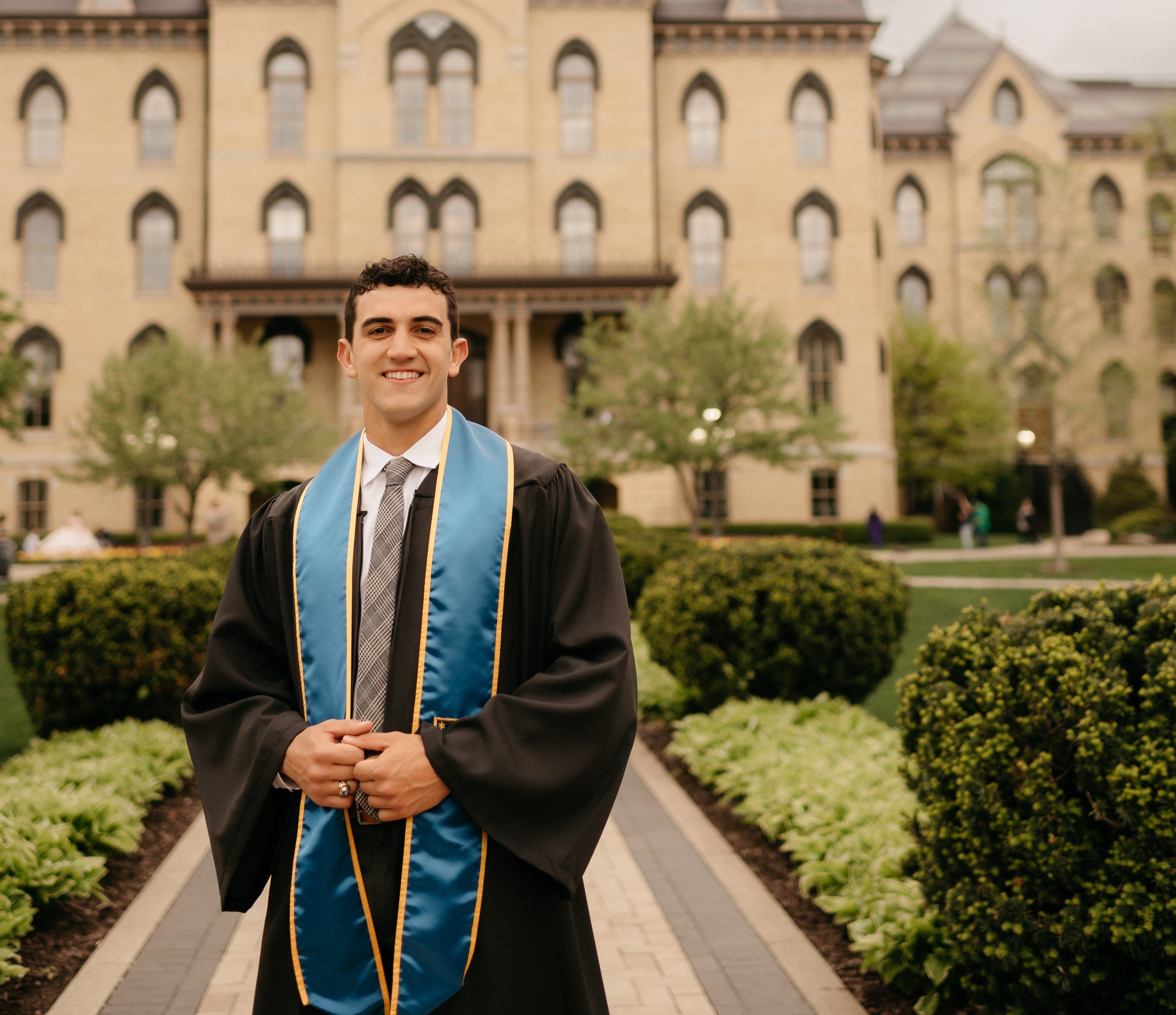
An associate consultant shares what surprised him, challenged him, and shaped his first case
Starting your first case at Bain comes with plenty of expectations, and just as many unknowns. From learning how case teams really work to finding your voice with clients, that first experience can shape how you think about consulting and your career ahead.
Cam Teza, an Associate Consultant in Bain’s Chicago office, shares reflections on his first case, including what surprised him most, the responsibility he took on early, and the lessons that stuck with him along the way.
This was exactly the kind of collaborative, high-stakes work I was hoping to do, way ahead of when I expected.
Cam Teza
Associate Consultant
Here are five lessons from his first case experience:
1. Bain teams are deeply embedded with their clients
Going into my first case at Bain, I expected our case team to act as a separate entity from our client. I imagined consultants sitting in a distant room at the client site, crunching data that was sent “over the fence” to us, only surfacing when delivering a presentation or requesting more data or interviews.
I was surprised upon starting my first case by how embedded the case team was. While it certainly took time to prove our value, it got to the point where we were a trusted partner, weighing in on organizational challenges even when they were outside of our purview. By the time our case finished, and it was time to hand over our responsibilities to the clients, we were told that it felt like a part of their own team was leaving the company.
2. Your voice matters from day one
On my first case, I expected my role to be limited. With an established corporate client like ours, I assumed the risk of having a fresh-faced associate consultant say the wrong thing in a client touchpoint would outweigh the benefits of development and client relationship-building. Thankfully, I was wrong!
While there was certainly a period of shadowing in meetings, my supervisors emphasized two things: carving out time in formal meetings for me to contribute in a valuable way, and inviting my point of view during informal check-ins.
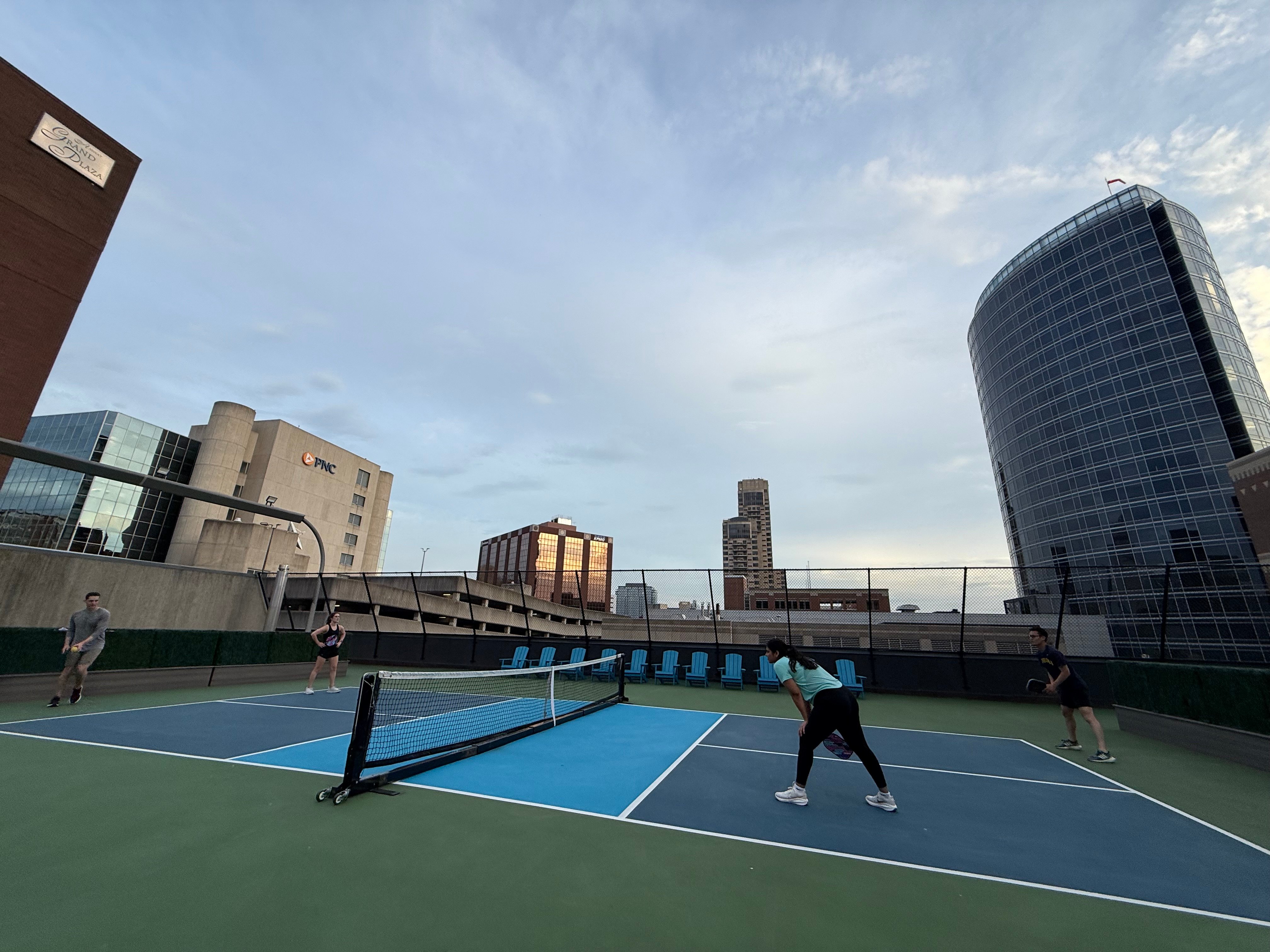
Case teams don’t just work hard—they hit the pickleball court together, too.
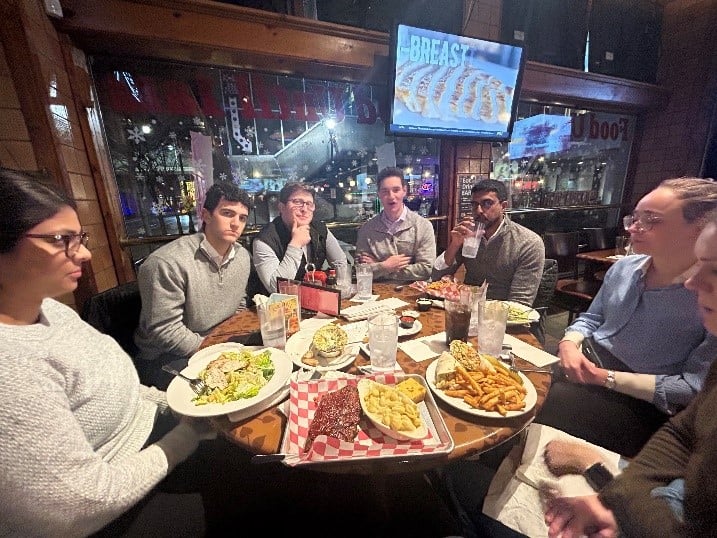
Team dinners are a great way to get to know your colleagues outside of work.
3. Owning client relationships is part of learning at Bain
As part of the change management team, we had many client maps, including the client's results delivery team and the other employees who would be supporting the transformation. It behooved my supervisor to pass some of these relationships on to me to balance the client load. As a result, I owned certain client relationships much earlier than I expected.
One of those maps was our client's analytics team, whose support would be invaluable in setting up the tracking and reporting of our strategy's progress. Once I became the main client map, I would take meetings with them myself, sharing our plans for the reporting and working through some of the smaller details with their team, such as data connectivity, KPIs to track, and report layout.
As the main interface for our case team, I occasionally balanced multiple perspectives and priorities, and our strong partnership with the analytics team ensured smooth collaboration. Together, we launched a dashboard for senior leadership well ahead of the usual timeline, leaving it in the hands of a capable and deeply engaged team.
4. High-stakes collaboration can happen anytime, anywhere
One client check-in that especially stuck with me happened in the cafeteria, of all places. The night before, one of the partners on our case had received a pressing ask from a VP about a key business opportunity. After doing the analysis that night, our case team was eating lunch in the client cafeteria when the VP unexpectedly came up to our table.
They told us they were on their way to meet with the CEO about our analysis and asked whether we could make a few refinements. The VP, the partner, my supervisor, and I got to work—laptops next to lunch trays, scribbling math on a scrap of paper. Fifteen minutes later, that analysis went to the CEO.
This experience was exactly the kind of collaborative, high-stakes work I was hoping to do, just way ahead of when I expected to actually be doing it.
5. Team culture makes all the difference
My first case at Bain wouldn't have been the same without our amazing team. Any travel case can feel demanding when hours get longer and time is spent in hotels and on planes, but we built a team culture that was truly enjoyable and "filled our cups."
We prioritized team dinners as a break from work, which spawned some truly hilarious exchanges and elicited some amazing Bain "back in the day" stories from our partners, who often made time to join despite crazy schedules. Our team dynamic has only gotten richer with time; several of the more senior members of that team are my closest Bain mentors, and several of the more junior members are some of my closest Bain friends.
Interested in starting your career at Bain?
Explore early-career opportunities and learn how consultants grow from day one.


