

Report

Executive summary
The current business landscape is characterized by unprecedented structural changes, fluctuating consumer confidence, and global geopolitical tensions, confronting companies with myriad uncertainties. Executives can no longer rely solely on overall market performance to drive success. In this new era, pressing questions arise: What kind of leadership can guide companies through crises and beyond? What is the unique value of female leadership?
In response to these questions, Bain & Company, in collaboration with Spencer Stuart, has conducted extensive research to identify the essential leadership traits required to address macro challenges in the evolving market environment. We used consulting expertise, industry insights, surveys, interviews, and secondary research to identify critical leadership traits like determination, accountability, engagement, inspiration, risk management, and adaptability. By studying female executives, we also found that their distinct qualifications, which we call “Her Power,” complement these leadership traits. Her Power enables them to effectively navigate companies through challenging external environments.
- Exceptional resilience. In times of high pressure and adversity, female executives often exhibit remarkable perseverance and determination, enabling them to maintain strategic focus and effectively address challenges. This unwavering resolve serves as an anchor, propelling their companies to rise above adversity.
- Empathy and compassion. Female leaders possess a great capacity for boosting deep-seated values within their teams. In the face of adversity, they acknowledge and appreciate the contributions of their teams, willingly share responsibility, and provide positive reinforcement. A strong sense of empathy can allow them to address employee needs, provide emotional support during tough times, and rally the team toward a common goal.
- Sensitivity and meticulousness. During downturns, increased collaboration and cross-team coordination are essential for delivering results. By being sensitive and paying meticulous attention to detail, women leaders can effectively coordinate and orchestrate efforts toward alignment. A cautious and thorough approach also helps companies mitigate risk.
Fully harnessing the potential of “Her Power” demands both a comprehensive understanding of the challenges women encounter in the workplace and a commitment to addressing them. The joint efforts of both women and companies are required to navigate career and workplace challenges. Female leaders can combine personal breakthroughs with external support to maximize their leadership abilities and full potential in the workplace.
Foreword
“Women have this amazing ability to understand and connect with others, which is really important in today’s market, where cross-functional collaboration is key. At Kimberly-Clark, we’re committed to fostering a more inclusive workplace culture for women by offering flexible work options and organizing occasion-based activities like Women’s Day and back-to-school seasons.” —Katy Chen, Managing Director of Kimberly-Clark China
“Women show remarkable resilience, particularly in the face of adversity. They are powerful when they needed to be and can continue to overcome the challenges of their environment. To unlock women’s full potential, it’s essential for companies and society to create a supportive ecosystem that empowers women. Female leaders, on their part, need to develop a strong inner drive, the ability to speak up, and a sense of confidence and security.” —Holly Lei, Global Senior Vice President, President of Covestro China
“Female leaders are attentive, patient, and compassionate, and prioritize social responsibility. In our livestock industry, women tend to pay more attention to animal welfare and implementing food safety standards. It’s important for female leaders to use these traits to advocate and lead their employees to engage in philanthropic endeavors, making ongoing contributions to society.” —Chang Liu, Chair of New Hope Liuhe Co., Ltd. and Director of New Hope Group
“Leaders must stay attuned to market changes and understand how they affect businesses, consumers, and stakeholders. Women often have a natural edge in this regard. It is vital for working women to maintain a growth mindset and avoid stereotypes or self-imposed limitations.” —Anne Tse, APAC Chief Growth Officer and Greater China CEO of PepsiCo
“In difficult situations, female leaders are more likely to recognize and appreciate their team’s efforts, reflect on the problems, and identify the root cause. This makes them the anchor of the team. Company leaders should foster an environment of trust and encouragement so that women can reach their full potential.” —Aiying Wang, President and CEO of Envac Greater China, SEA & India
“Female leaders are often keen to nurture and teach their teams. For example, my team likes to call me Teacher Wu. Personally, I find great fulfillment in helping my team grow. My advice to working women is to be proactive in setting boundaries between work and family life and the principles of work-life balance. And it’s important to communicate with family and seek their understanding and support.” —Jalin Wu, Global Executive Officer of Fast Retailing Group and Chief Marketing Officer of UNIQLO Greater China
“Female leaders can be uniquely valuable in downturns; they are usually more empathetic, emotionally consistent, and more resilient. It’s critical to have female role models in a company, and having a precedent will show others a viable path. It’s important for leaders to give unwavering encouragement and trust for women to reach their full potential in the workplace.” —Kiki Yang, Partner, Bain & Company
“Don’t label female leadership. The focus should be on being a competent leader, not on highlighting gender differences. A great leader is mission-driven, leads by example, and can bring a team or organization together towards a shared ambition and achieve high performance that lasts. I hope that women in the workplace can be comfortable in their own skin, understand their own strengths, build self-confidence, and calmly accept praise and criticism. They should also remain curious and keep learning to be exceptional and not replaceable.” —Christine Zhou, Senior Vice President and President of Region China, Novo Nordisk
Leadership becomes increasingly important
In the midst of economic and macro challenges, the role of leadership has become increasingly significant. In China’s evolving macro environment, a convergence of structural changes has heightened the uncertainty of the economic outlook. Volatile consumer confidence, moderate consumer demand, and escalating geopolitical tensions all compound this uncertainty. Businesses, as integral components of society, find numerous challenges in this shifting landscape. The evolving consumer demand, technological advancements, and the imperative to streamline costs all present obstacles to growth.
The pandemic and other social crises were critical litmus tests for a company’s capabilities in managing emergency risks. As we move into the post-pandemic era, the imperative shifts to motivating the organization and unlocking the full potential of its top talent. These efforts are key in equipping companies for the transformative journey ahead.
With both economic and macro challenges presenting themselves, companies can no longer simply benefit from overall market trends. The requirements of leadership have changed (see Figure 1). To navigate through turbulence and thrive, companies now need executives capable of seizing external opportunities while also inspiring and engaging team members.
Figure 1
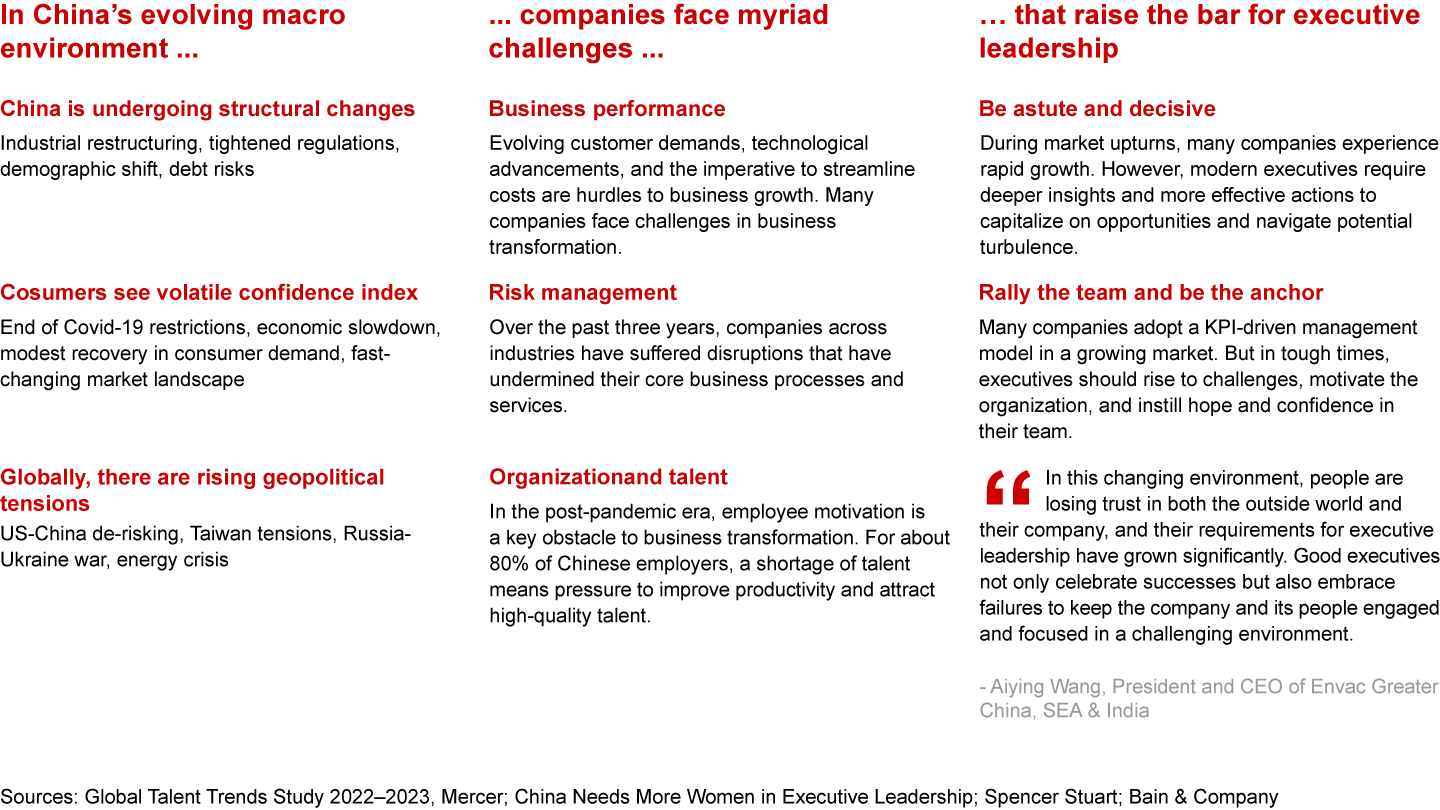

In this unparalleled environment, companies need to focus internally to optimize team engagement. It is crucial to have an executive who serves as an anchor for both the company and the team.
Based on our insights, successful executives should possess four essential skills:
- Strategic thinking: setting the course for the future (for example, leveraging industry insights, developing strategy, and simplifying communication)
- Inspirational leadership: leading the team and boosting morale (for example, hiring and promoting the right people, cultivating and developing champions, efficiently managing the organization, and managing relationships with stakeholders)
- Delivering results: adding expertise to enforce execution (for example, using insights for customers and products, consulting experts in key operational areas like R&D, manufacturing, marketing, sales, and finance)
- Personal virtues: building an influential leadership brand
Within these skills are vital traits that are critical to addressing macro challenges. Strategic thinking equips executives to maintain determination and accountability and be well prepared to face challenges and make decisions. Inspirational leadership enables them to unite the team, boost morale, motivate the organization, and foster a culture of success. Delivering results empowers executives to facilitate effective internal and external communication to overcome obstacles, identify warning signs, and adapt to changes.
Empowering companies to navigate through turbulence: What makes female leadership different?
Male leaders can have a reputation for being adventurous and taking risks. They are sometimes known for their creativity in capitalizing on tailwinds and creating value in a growth-oriented market environment. However, the current market environment demands a different focus. Today’s successful leaders are inspiring strategic thinkers who can deliver results. Interestingly, some of women’s inherent characteristics align with the most-needed leadership traits, offering a distinctive “Her Power” that steers companies through turbulence. Specifically:
- Women often demonstrate more resilience (strategic thinking). By determinedly confronting market turmoil and maintaining composure as they strategically tackle internal and external challenges, women can serve as an anchor, uplifting the organization’s morale.
- Women have been lauded for being more empathetic and explicitly compassionate (inspirational leadership). Female executives excel in uncovering deep-seated values, particularly during adversity. This inspirational ability can help stabilize teams. These leaders’ capacity for empathy enables them to provide emotional support and rally the team during challenging times.
- Women tend to be more sensitive in interpersonal relationships (results delivery). By orchestrating initiatives to maximize internal and external synergies, female leaders can adeptly minimize conflicts. Additionally, their cautious and thoughtful approach allows them to anticipate and mitigate risks.
Research suggests that these qualities have made companies led by women more adept at creating value in turbulent times. The Positive Impact and Development Status of Female Directors of Listed Companies in China report reveals that, over the course of the three-year Covid-19 pandemic, companies with women in senior positions on their board have notably higher-than-average cash dividends than their counterparts, along with a higher average buyback value. Additionally, as highlighted in the Harvard Business Review, companies with a diverse leadership team are 70% more likely to seize new markets and achieve a 19% higher innovation revenue outperformance during economic downturns. We believe the following traits align with the qualities of Her Power.
Resilience: Serving as the anchor, female executives exhibit enhanced strategic determination, allowing them to overcome challenges and guide the team through turbulent times with composure.
Women often experience more personal, family, and physiological challenges while growing up when compared to men. Overcoming these hurdles equips them with greater resilience, stronger willpower, and the capacity to maintain composure and steadfastness in the midst of adversity.
During the interviews, female executives expressed optimism and positivity regarding their ability to leverage pressure as a means to cultivate resilience:
“The essence of women’s leadership is rooted in motherhood—being a mother makes women stronger. When needed, women can be incredibly strong, particularly in challenging times. On their way to the top levels of leadership, women often face more external challenges and overcome more obstacles than men, demonstrating their determined will.” —Holly Lei, Global Senior Vice President, President of Covestro China
“Many people assume that women are more emotional, but that’s not always the case. Female executives, who have faced greater challenges, often have more stable emotions, are less influenced by external factors, and show remarkable perseverance and determination. This enables them to calmly confront and solve challenges facing the company.” —Kiki Yang, Partner, Bain & Company
During a macroeconomic downturn, the female executives’ resilience grants them greater patience, heightened determination, and a stronger sense of purpose. They can calmly confront challenges, uphold strategic resolve, serve as a stabilizing force for the companies to boost morale, lead the team in overcoming obstacles, and navigate through uncertainty.
Female executives we interviewed shared their personal experiences in this regard:
“Female leaders tend to have a long-term vision and are committed to doing what they believe is right. For instance, I have long believed in the power of digital transformation for our group. So I spent two years helping the management build trust in our digital partners, despite all the internal and external challenges. This perseverance laid the foundation for our company to grow through the adversity and create long-term value.” —Jalin Wu, Global Executive Officer of Fast Retailing Group and Chief Marketing Officer of UNIQLO Greater China
“As a leader, it’s crucial to demonstrate a sense of mission. During recent tough times, I’ve been committed to our sustainability mission and long-term strategic direction. ... When you have a strong sense of mission, you are like an anchor. ... This can make your people feel at ease during economic downturns, ... reignite your team’s passion, and guide them through the mist.” —Aiying Wang, President and CEO of Envac Greater China, SEA & India
Empathy: Female executives excel at inspiring individuals from within during times of adversity and demonstrate superior listening and understanding skills, enabling them to rally and nurture their team.
Female executives possess a superior ability to elevate deep-seated values. In times of adversity, they can inspire individuals from within and provide stability to the team.
Female executives are often more inclined to appreciate and acknowledge the team’s efforts in challenging times. They share responsibility with the team, analyze problems by empathizing with others’ perspectives, and take accountability for mistakes. This attitude of unity helps boost morale. They also use positive incentives to assist the team in achieving viable goals during adversity, aiming to stabilize the team and motivate them to start anew.
One female executive we interviewed emphasized the tremendous impact of empathy in inspiring people:
“In the face of the unprecedented challenge, my team and I embraced a ‘war culture’ with the war values of ‘standing strong with faith and thriving with love.’ By standing firm with our people and going through thick and thin together, we believe that, with such determination, we will ultimately be victorious.” —Chang Liu, Chair of New Hope Liuhe Co., Ltd. And Director of New Hope Group
Female executives are adept at rallying and cultivating the team through empathy.
Providing emotional support can assist individuals in managing stress and reducing anxiety and depression. In the same vein, an executive who offers emotional support to employees can mitigate internal conflicts and bolster resilience in the face of crises. A strong sense of empathy allows female executives to deeply understand their employees, offer emotional support, and maintain team engagement through tough times. Additionally, women can often be skilled listeners, dedicated to nurturing and empowering their teams.
This sentiment is echoed by another female executive we interviewed:
“The mission of the healthcare industry is to protect human health, and women, with their sensitivity and empathy, can make a significant contribution to it. Effective leaders demonstrate strong listening and empathy skills. Those who have these natural gifts or hone these skills can play a critical role in fostering cohesive teams and building more resilient organizations.” —Christine Zhou, Senior Vice President and President of Region China, Novo Nordisk
Sensitivity: When combined with prudence, sensitivity can significantly improve collaboration and alignment, minimize risk, and more efficiently tackle fundamental issues.
Women often possess a heightened sensitivity to interpersonal relationships, enabling them to coordinate collective efforts that promote collaboration and alignment.
Female leaders with a heightened sensitivity to interpersonal dynamics can effectively coordinate collective efforts, promoting collaboration and unity. Female executives are also valued for strong communication skills, enabling them to convey information clearly, attentively consider team members’ opinions and feedback, and engage with them in a compelling and approachable manner.
Traits like these, which women often possess, make female executives particularly effective at reconciling the needs of internal teams and external stakeholders in a mutually acceptable manner. These traits empower them to resolve conflicts and foster effective collaboration among multiple parties during challenging times.
The executives we interviewed expressed their appreciation for the “bonding” trait:
“Cross-functional collaboration and strong interdepartmental relationships are critical for companies to survive the current downturn. Perceptive and considerate female leaders have the exact ability to bring functions together effectively, which is super helpful in this challenging time.” —Katy Chen, Managing Director of Kimberly-Clark China
Women leaders with a strong inclination toward caution, thoughtfulness in mitigating risk, and resolve in addressing fundamental issues within uncertain environments help their organizations thrive.
Risk aversion among executives leads to a reduced likelihood that their company will experience breaches, defaults, or misconduct. Research from CFO.com indicates that companies with female chief financial officers (CFOs) are less likely to “cook the books” than those where men are CFOs. Similarly, a study featured in the Harvard Business Review reveals that banks with more women on their boards incur lower fines for misconduct. This research reinforces the idea that prioritizing long-term planning and sustainability in leadership decision making emphasizes these aspects over immediate financial metrics.
The following quotes shed some light on this:
“Female leaders tend to be more sensitive to industry changes and potential crises. This allows them to prepare ahead of time and protect their teams. Such keen intuition is a natural trait ingrained in women’s genetic makeup.” —Anne Tse, APAC Chief Growth Officer and Greater China CEO of PepsiCo
“(Female directors) can offer different perspectives and thus take a more macro and cautious approach to decision making. … They are better at auditing and risk management ... [and] less likely to be involved in fraud, which helps reduce and mitigate operational risks for companies.” —Positive Impact and Development Status of Female Directors of Listed Companies in China report
Unlocking the full potential of “Her Power” requires a true understanding of the challenges women face in the workplace and an ability to address them precisely
Based on our interviews, we identified the following challenges that women often counter at different stages of their lives and careers.
Traditional family values, societal stereotypes, and a lack of positive reinforcement are the common barriers that women face throughout their careers.
Women face distinct personal and workplace challenges at various stages of their careers.
When they are young professionals, women are in pivotal phase. They embark on their professional journey and strive for personal growth. However, entrenched traditional family values, such as the pursuit of stability, and societal stereotypes that perceive women as mediocre, less capable, and lacking ambition have transitioned from mere “psychological suggestions” to tangible barriers impeding women’s career advancement.
Women we interviewed in this early career stage (generally in their 20s) said:
- “My family and friends try to convince me that it's more important for girls to find an effortless and stable job. I’m afraid of having a baby; I’m concerned that it will affect my career.”
- “Sometimes, my ideal company and position tend to favor male candidates. Why are my male colleagues being paid more than me for the same job?”
Advancing further into their careers and adulthood is a prime stage for women’s professional development. Yet the responsibilities of having children and societal expectations surrounding parenting unavoidably impact their career trajectory. Consequently, some women find themselves missing out on promotions and career advancement opportunities.
Women we interviewed in this career stage (in their 30s) shared:
- “Companies often consider marital and parental status as an important factor in hiring. I’m afraid to take time off, even when my kids are sick or my elderly parents require assistance because my job is just as demanding, and I don't want to upset my boss.”
- “I've noticed that men sometimes get promoted faster even though we do the same work and achieve similar results.”
As mid-career professionals, women are challenged to overcome self-imposed limitations and ascend to the peak of their careers. However, integrating into executive networks typically dominated by men poses a significant obstacle hindering women’s career progression.
Mid-career professional women (in their 40s) we spoke with said:
- “I'm not sure if I’ll get promoted because I rarely see successful female role models in leadership positions.”
- “Given my family and my age, I am afraid of stepping out of my comfort zone and making changes, and instead, I begin to seek stability.”
- “It's often more difficult for women to be promoted to management positions; they have to put in more effort and demonstrate proven capabilities. It’s challenging for female leaders to integrate into male-dominated social networks.”
As late-career professionals, it becomes crucial to continue leveraging accumulated experience and expertise to create value. But the reality of women’s career trajectories coming to an end becomes increasingly apparent during this phase.
One woman we spoke to in this stage (women in their 50s or older) said, “I believe I have more value to offer, but as women, our careers are often shorter than men’s.”
With deliberate action, companies and women can overcome these barriers and unlock women’s leadership potential in the workplace.
- Inner drive. Women need to break through boundaries, believe in themselves, and fully tap into their inner drive. Specifically, they should:
- Share ambitions and ask for help. Encourage each other to defy societal constraints, particularly within families.
- Act confidently. Be courageous in managing upward, understanding that confidence builds over time.
- Build networks intentionally. Take action to build trusted professional relationships and lead teams to grow together.
- Combat bias. Set career goals periodically and establish personal principles and boundaries at work to combat bias and navigate professional journeys.
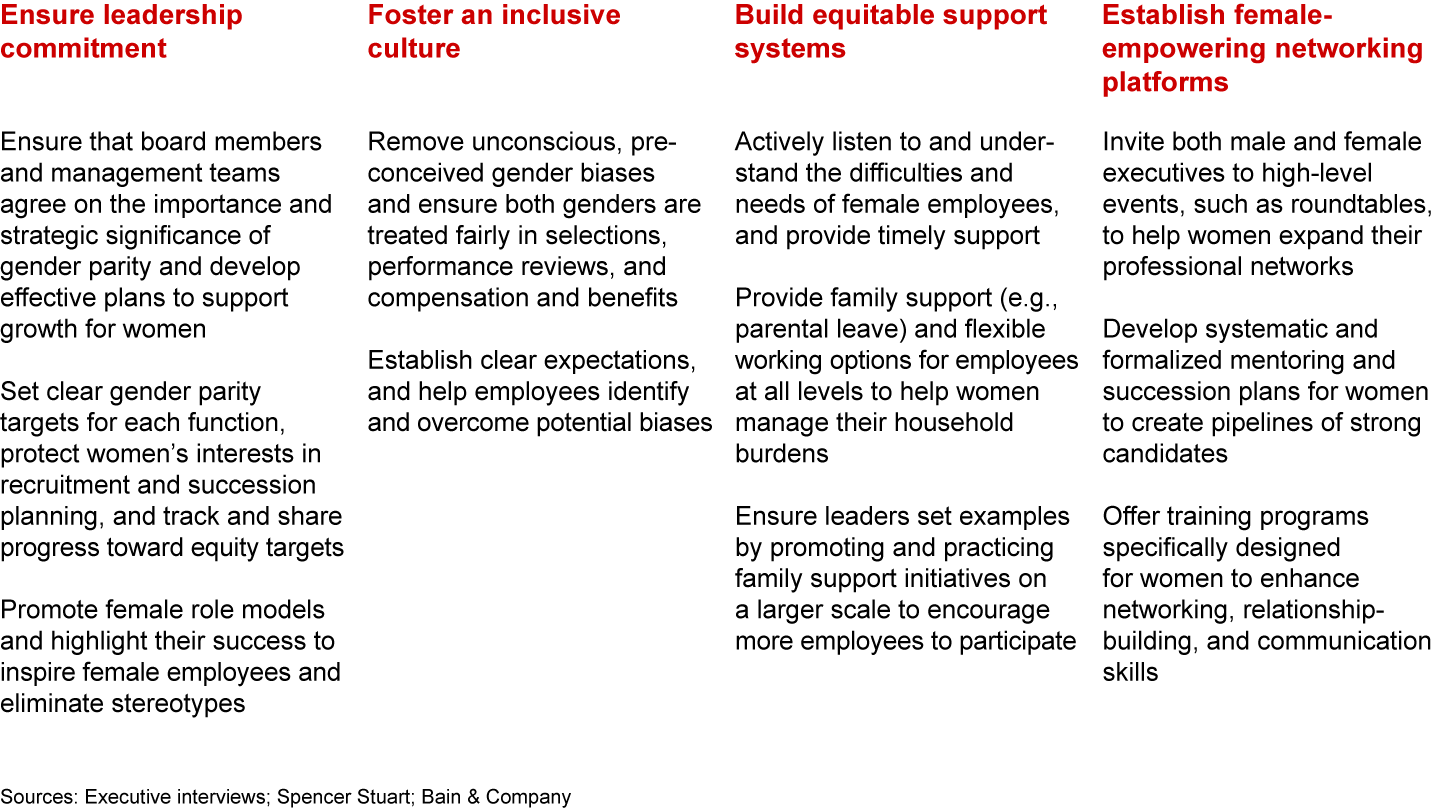
- External support. Companies need to create an equitable environment for men and women (see Figure 2). Specifically, they should:
- Ensure leadership commitment. Companies should prioritize gender parity as a business imperative, setting gender targets for the organization, promoting female role models, and highlighting their success.
- Foster an inclusive culture. Efforts should be made to cultivate an inclusive culture, identify and eliminate unconscious biases, and ensure fair treatment for both genders in the workplace.
- Build equitable support systems. Companies should provide more flexible, comprehensive support for women to better balance their work and home lives.
- Establish female-empowering networking platforms. Companies should organize more external and internal social activities, allowing women to connect with inspiring female role models, make connections, and support and empower each other.
Figure 2

Conclusion
In this transformative era, the obstacles facing businesses present a unique chance to redefine essential leadership qualities and recognize the exceptional “Her Power” demonstrated by women executives in navigating companies through crises and adversity.
We urge you to acknowledge and celebrate the exceptional contributions made by women. We sincerely hope for a collaborative effort between companies and female executives to navigate challenging environments together.

At Spencer Stuart, we know how much leadership matters. We are trusted by organizations around the world to help them make the senior-level leadership decisions that have a lasting impact on their enterprises. Through our executive search, board and leadership advisory services, we help build and enhance high-performing teams for select clients ranging from major multinationals to emerging companies to nonprofit institutions. Privately held since 1956, we focus on delivering knowledge, insight and results through the collaborative efforts of a team of experts—now spanning more than 60 offices, over 30 countries and more than 50 practice specialties. Boards and leaders consistently turn to Spencer Stuart to help address their evolving leadership needs in areas such as senior-level executive search, board recruitment, board effectiveness, succession planning, in-depth senior management assessment, employee engagement and many other facets of culture and organizational effectiveness.
First published in marzo 2024