
Skip to Content
  • Offices

    Offices

    North & Latin America
    • Atlanta
    • Austin
    • Bogota
    • Boston
    • Buenos Aires
    • Chicago
    • Dallas
    • Denver
    • Houston
    • Los Angeles
    • Mexico City
    • Minneapolis
    • Monterrey
    • Montreal
    • New York
    • Rio de Janeiro
    • San Francisco
    • Santiago
    • São Paulo
    • Seattle
    • Silicon Valley
    • Toronto
    • Washington, DC
    Europe & Africa
    • Amsterdam
    • Athens
    • Berlin
    • Brussels
    • Copenhagen
    • Dusseldorf
    • Frankfurt
    • Helsinki
    • Istanbul
    • Johannesburg
    • Kyiv
    • Lisbon
    • London
    • Madrid
    • Milan
    • Munich
    • Oslo
    • Paris
    • Rome
    • Stockholm
    • Vienna
    • Warsaw
    • Zurich
    Middle East
    • Doha
    • Dubai
    • Riyadh
    Asia & Australia
    • Bangkok
    • Beijing
    • Bengaluru
    • Brisbane
    • Ho Chi Minh City
    • Hong Kong
    • Jakarta
    • Kuala Lumpur
    • Manila
    • Melbourne
    • Mumbai
    • New Delhi
    • Perth
    • Shanghai
    • Singapore
    • Sydney
    • Tokyo
    See all offices
  • Alumni
  • Media Center
  • Subscribe
  • Contact
  • Colombia | Español

    Select your region and language

    Global
    • Global (English)
    North & Latin America
    • Brazil (Português)
    • Argentina (Español)
    • Canada (Français)
    • Chile (Español)
    • Colombia (Español)
    Europe, Middle East, & Africa
    • France (Français)
    • DACH Region (Deutsch)
    • Italy (Italiano)
    • Spain (Español)
    • Greece (Elliniká)
    Asia & Australia
    • China (中文版)
    • Korea (한국어)
    • Japan (日本語)
  • Saved items (0)
    Saved items (0)

    You have no saved items.

    Bookmark content that interests you and it will be saved here for you to read or share later.

    Explore Bain Insights
  • Industries
    Main menu

    Industries

    • Aeroespacial y Defensa
    • Agroindustria
    • Químicos
    • Construcción e Infraestructura
    • Productos de Consumo
    • Servicios Financieros
    • Salud y Ciencias de la Vida
    • Maquinaria y Equipo Industrial
    • Medios y Entretenimiento
      Industries
      Medios y Entretenimiento
      • Media Lab
    • Metales
    • Minería
    • Petróleo y Gas
    • Papel y Empaque
    • Private Equity
      Industries
      Private Equity
      • Due Diligence
      • Exit Planning
      • Firm Strategy & Operations
      • Portfolio Value Creation
    • Sector Público y Social
    • Retail
    • Tecnología
    • Telecomunicaciones
      Industries
      Telecomunicaciones
      • Capital Expenditure
      • Telco Digital Transformation
    • Transporte
    • Viajes y Turismo
    • Servicios Públicos y Energías Renovables
  • Consulting Services
    Main menu

    Consulting Services

    • Customer Experience
    • Sustainability
    • Innovation
    • M&A
    • Operations
    • People & Organization
    • Private Equity
    • Sales & Marketing
    • Strategy
    • AI, Insights, and Solutions
    • Technology
    • Transformation
  • Digital
  • Insights
    Main menu

    Insights

    • Industry Insights
    • Services Insights
    • Bain Books
    • Webinars
    • Bain Futures
    View all Insights
    Featured topics
    • Tariff Response
    • Artificial Intelligence
    • Thriving in Uncertainty
    • Executive Conversations
    • Macro Trends
    • M&A Report
    • Healthcare Private Equity Report
    • Paper & Packaging Report
    • Technology Report
    • CEO's Guide to Sustainability
    • CEO Insights
    • CFO Insights
    • COO Insights
    • CIO Insights
    • CMO Insights
    View all featured topics
  • About
    Main menu

    About

    • What We Do
    • What We Believe
    • Our People & Leadership
    • Client Results
    • Awards & Recognition
    • Global Affiliations
    Further: Our global responsibility
    • Sustainability
    • Social Impact
    • World Economic Forum
    Learn more about Further
  • Carreras
    Main menu

    Carreras

    • Trabaja con Nosotros
      Carreras
      Trabaja con Nosotros
      • Find Your Place
      • Nuestras Áreas de Trabajo
      • Equipos Integrados
      • Estudiantes
      • Internships & Programs
      • Eventos de Reclutamiento
    • La Vida en Bain
      Carreras
      La Vida en Bain
      • Historias Profesionales
      • Nuestra Gente
      • Dónde Trabajamos
      • Apoyando tu Crecimiento
      • Grupos de Afinidad
      • Beneficios
    • Impact Stories
    • Nuestro Proceso
      Carreras
      Nuestro Proceso
      • Qué Esperar
      • Entrevistas
    FIND JOBS
  • Offices
    Main menu

    Offices

    • North & Latin America
      Offices
      North & Latin America
      • Atlanta
      • Austin
      • Bogota
      • Boston
      • Buenos Aires
      • Chicago
      • Dallas
      • Denver
      • Houston
      • Los Angeles
      • Mexico City
      • Minneapolis
      • Monterrey
      • Montreal
      • New York
      • Rio de Janeiro
      • San Francisco
      • Santiago
      • São Paulo
      • Seattle
      • Silicon Valley
      • Toronto
      • Washington, DC
    • Europe & Africa
      Offices
      Europe & Africa
      • Amsterdam
      • Athens
      • Berlin
      • Brussels
      • Copenhagen
      • Dusseldorf
      • Frankfurt
      • Helsinki
      • Istanbul
      • Johannesburg
      • Kyiv
      • Lisbon
      • London
      • Madrid
      • Milan
      • Munich
      • Oslo
      • Paris
      • Rome
      • Stockholm
      • Vienna
      • Warsaw
      • Zurich
    • Middle East
      Offices
      Middle East
      • Doha
      • Dubai
      • Riyadh
    • Asia & Australia
      Offices
      Asia & Australia
      • Bangkok
      • Beijing
      • Bengaluru
      • Brisbane
      • Ho Chi Minh City
      • Hong Kong
      • Jakarta
      • Kuala Lumpur
      • Manila
      • Melbourne
      • Mumbai
      • New Delhi
      • Perth
      • Shanghai
      • Singapore
      • Sydney
      • Tokyo
    See all offices
  • Alumni
  • Media Center
  • Subscribe
  • Contact
  • Colombia | Español
    Main menu

    Select your region and language

    • Global
      Select your region and language
      Global
      • Global (English)
    • North & Latin America
      Select your region and language
      North & Latin America
      • Brazil (Português)
      • Argentina (Español)
      • Canada (Français)
      • Chile (Español)
      • Colombia (Español)
    • Europe, Middle East, & Africa
      Select your region and language
      Europe, Middle East, & Africa
      • France (Français)
      • DACH Region (Deutsch)
      • Italy (Italiano)
      • Spain (Español)
      • Greece (Elliniká)
    • Asia & Australia
      Select your region and language
      Asia & Australia
      • China (中文版)
      • Korea (한국어)
      • Japan (日本語)
  • Saved items  (0)
    Main menu
    Saved items (0)

    You have no saved items.

    Bookmark content that interests you and it will be saved here for you to read or share later.

    Explore Bain Insights
  • Industries
    • Industries

      • Aeroespacial y Defensa
      • Agroindustria
      • Químicos
      • Construcción e Infraestructura
      • Productos de Consumo
      • Servicios Financieros
      • Salud y Ciencias de la Vida
      • Maquinaria y Equipo Industrial
      • Medios y Entretenimiento
      • Metales
      • Minería
      • Petróleo y Gas
      • Papel y Empaque
      • Private Equity
      • Sector Público y Social
      • Retail
      • Tecnología
      • Telecomunicaciones
      • Transporte
      • Viajes y Turismo
      • Servicios Públicos y Energías Renovables
  • Consulting Services
    • Consulting Services

      • Customer Experience
      • Sustainability
      • Innovation
      • M&A
      • Operations
      • People & Organization
      • Private Equity
      • Sales & Marketing
      • Strategy
      • AI, Insights, and Solutions
      • Technology
      • Transformation
  • Digital
  • Insights
    • Insights

      • Industry Insights
      • Services Insights
      • Bain Books
      • Webinars
      • Bain Futures
      View all Insights
      Featured topics
      • Tariff Response
      • Artificial Intelligence
      • Thriving in Uncertainty
      • Executive Conversations
      • Macro Trends
      • M&A Report
      • Healthcare Private Equity Report
      • Paper & Packaging Report
      • Technology Report
      • CEO's Guide to Sustainability
      • CEO Insights
      • CFO Insights
      • COO Insights
      • CIO Insights
      • CMO Insights
      View all featured topics
  • About
    • About

      • What We Do
      • What We Believe
      • Our People & Leadership
      • Client Results
      • Awards & Recognition
      • Global Affiliations
      Further: Our global responsibility
      • Sustainability
      • Social Impact
      • World Economic Forum
      Learn more about Further
  • Carreras
    Popular Searches
    • Agile
    • Digital
    • Strategy
    Your Previous Searches
      Recently Visited Pages

      Content added to saved items

      Saved items (0)

      Removed from saved items

      Saved items (0)

      Brief

      Creating the Workforce for an Oil and Gas Industry in Transition

      Creating the Workforce for an Oil and Gas Industry in Transition

      Can the industry attract and retain the diverse talent it needs to thrive in the era of new energy?

      By Brenen Blair, Jim Claunch, and Emily Emmett

      • min read
      }

      Brief

      Creating the Workforce for an Oil and Gas Industry in Transition
      en
      Executive Summary
      • Oil and gas companies are looking to a wider talent pool to find the people and skills they need to thrive as the industry evolves.
      • In addition to traditional petroleum engineers, companies will need talent with digital, analytic, software, and economic capabilities to fill new energy roles.
      • Recruiting and retaining this broader and more diverse workforce will require a step change in the industry’s approach to talent, leadership, and inclusion.
      • Progress will require company-level actions such as strategy-informed workforce planning and radical transparency, as well as industrywide coalitions to change perceptions and drive progress.

      All of the challenges that oil and gas companies face—the energy transition, new business models, digital technology, lower-carbon barrels—require more and different types of talent to address. For the industry at large, talent supply has become a major challenge in its own right.

      The oil and gas industry has thrived for decades on the skills of a focused set of engineering backgrounds and perspectives, in a culture built around risk aversion and careful stewardship of capital. But the next chapter will be different: energy companies need new skills like data analytics, software engineering, AI and machine learning, and environmental expertise to successfully navigate the energy transition (see Figure 1). And as the great retirement continues to cycle out a generation of seasoned experts, companies will rely on a refreshed talent base of more diverse workers—in both skills and identities—to transform the energy sector and our world.

      Figure 1
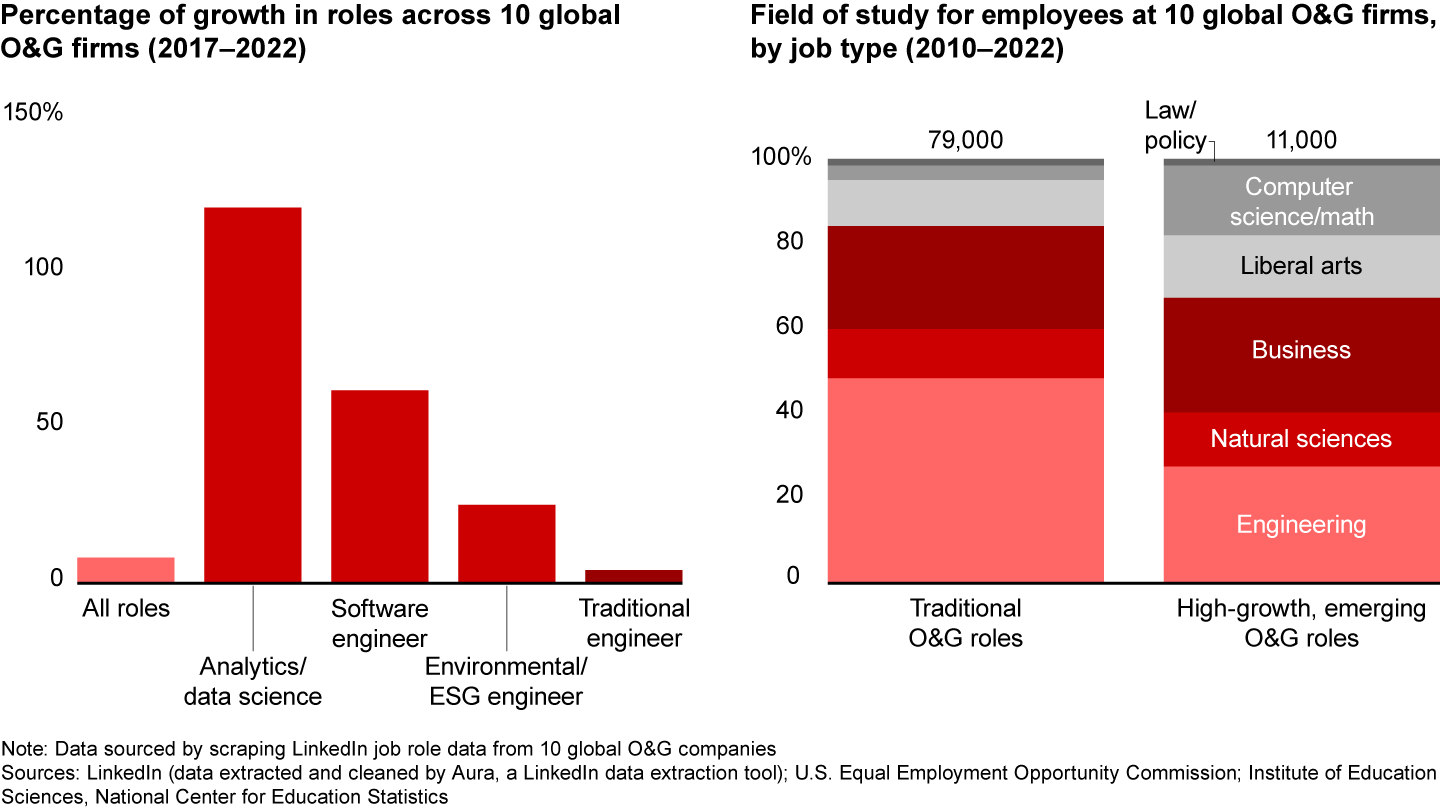
      The oil and gas industry will need to attract and retain more diverse talent from a broader array of backgrounds to successfully deliver the energy transition
      The oil and gas industry will need to attract and retain more diverse talent from a broader array of backgrounds to successfully deliver the energy transition
      The oil and gas industry will need to attract and retain more diverse talent from a broader array of backgrounds to successfully deliver the energy transition

      But today, many of the people with those skills are wary of working in the oil and gas industry. Many who do go to work for oil and gas don’t thrive or don’t stay, often because they may not feel included or can’t see a viable path to a leadership role. It’s difficult for anyone to do their best work in an environment where they don’t feel like they belong. This is, depending on whom you ask, a “talent″ issue, an “inclusion” issue, or a “culture” issue.

      “When people have the opportunity to work at places that are more innovative and interesting, with diverse talent, it is really hard to attract people to work in an old-school work environment.”

      White female in-field worker, US

      Regardless of what you call it, to succeed, oil and gas executives will need to rethink how they hire, manage, and retain talented people. They’ll need to rewire the full ecosystem of talent strategy, sourcing, and, perhaps most importantly, retention and employee value proposition. And they’ll need to change the perceptions of the people they need the most, to make sure they can attract, retain, and reap the full benefits of these workers’ backgrounds, capabilities, and ways of thinking.

      Fortunately, the oil and gas industry has a remarkable track record of solving industry-wide challenges through authentic collaboration, open dialogue, information sharing, and culture change driven through day-to-day behaviors. Companies can draw on a historical playbook of developing safety culture, including best practice sharing, unified reporting, and deeply engraining new behaviors into work environments. Powerful opportunities exist for companies to work together to change perceptions of the industry to attract and retain the talent pool of the future.

      Tomorrow’s talent: Diverse skill sets, backgrounds, and identities

      Historically, the oil and gas industry has tuned its culture to manage and mitigate risk. While this was critical—and remains so—the same posture of caution that is appropriate in a high-risk environment can also run counter to fostering innovation, which is becoming ever more critical. To accelerate innovation, the industry will need to widen its talent pipeline and take risks on employees with new skills and perspectives. Maximizing the potential of this workforce will be an all-hands effort, requiring new talent pipelines from a more demographically diverse pool of prospects. Bain’s research finds that academic pipelines that include high-growth roles (such as computer science, economics, and business) are more diverse than the pipelines for more traditional roles like petroleum engineering (see Figure 2). That said, it also finds that even the petroleum engineering pipeline of today is more diverse than it was a decade ago.

      Figure 2
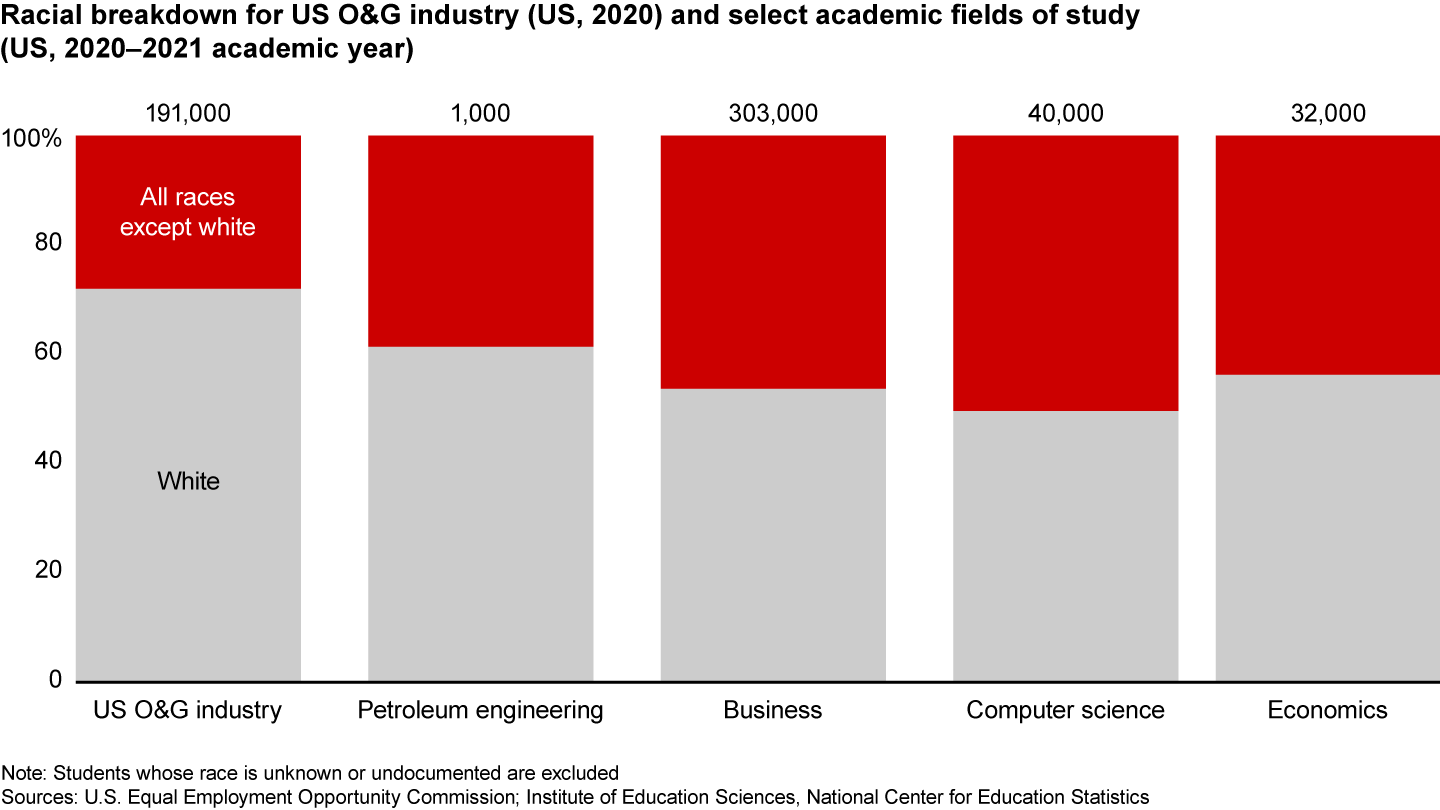
      Academic pipelines for emerging talent roles are more diverse than traditional talent pools
      Academic pipelines for emerging talent roles are more diverse than traditional talent pools
      Academic pipelines for emerging talent roles are more diverse than traditional talent pools

      The path forward requires changes to the industry’s talent profile, with more diverse employees from more academic sources bringing new skill sets to the table. Finding and hiring these employees is only the first step. For them to stay, develop their careers, and contribute meaningfully to the organization, they need to feel included. Bain’s research finds that employees who feel fully included are 14 times more likely to be promoters of their organization, up to 6 times more likely to stay with the organization, and, crucially, for supporting an industry in deep transition, up to 5 times more likely to challenge the status quo. People managers play a crucial role in creating this culture, which means building skills to lead with more empathy and inclusion, while rewarding, tracking, and celebrating leadership that creates the right environments.

      “[For female engineers], there’s a lot of expectations on bringing your operations personnel donuts a couple of times a week, or bringing them baked goods. I would joke with them and ask, ‘Did the male engineer before me do this?’”

      White female in-field worker, US

      Today’s landscape: The experience in and beyond the field

      Today, however, female, LGBTQ+, and racial minority employees in the oil and gas industry say they feel less included and less optimistic about career advancement than their majority-identity peers. One reason for this is that rotations in the field, which are often critical for career advancement, are often particularly unwelcoming to minority-identifying individuals, who may face basic accessibility challenges, harassment, and an ongoing need to mask identities and assimilate. This design feature of the talent path, found in many companies, limits the advancement of minority populations to those who are able to endure challenging, noninclusive environments for years.

      “I feel like I always have to show myself as strong, capable, empowered. You must be there all the time, proving, disproving, reaffirming your place. . . . I am not less because I am a woman.”

      Latinx female in-field worker, Brazil

      Going it alone: What we’re doing today

      Many oil and gas leaders are aware of this disconnect between the talent needed for the future and the lived experience today. Many have begun to act with visible commitments to and investments in diversity, equity, and inclusion (DEI), particularly in the last two to three years. In 2021, 70% of large oil and gas companies we analyzed fully disclosed employment diversity data in the US, up from 4% in 2019. This compares with 55% in the overall S&P 500 in 2021. In parallel, board representation of minority-identified individuals and women is nearing parity with other industries, including technology. Most large oil and gas firms now report basic DEI stats, and leading firms invest in employee resource groups and dedicated DEI roles (see Figure 3). However, far fewer are taking more critical and difficult measures, such as tying executives’ compensation to diversity and inclusion goals or publicly reporting on internal inclusion results. There is no unified or longitudinal measure of inclusion, in the field or otherwise. About 60% of the largest global oil and gas companies don’t report gender pay equity, and 65% don’t report supplier diversity commitments.

      Figure 3
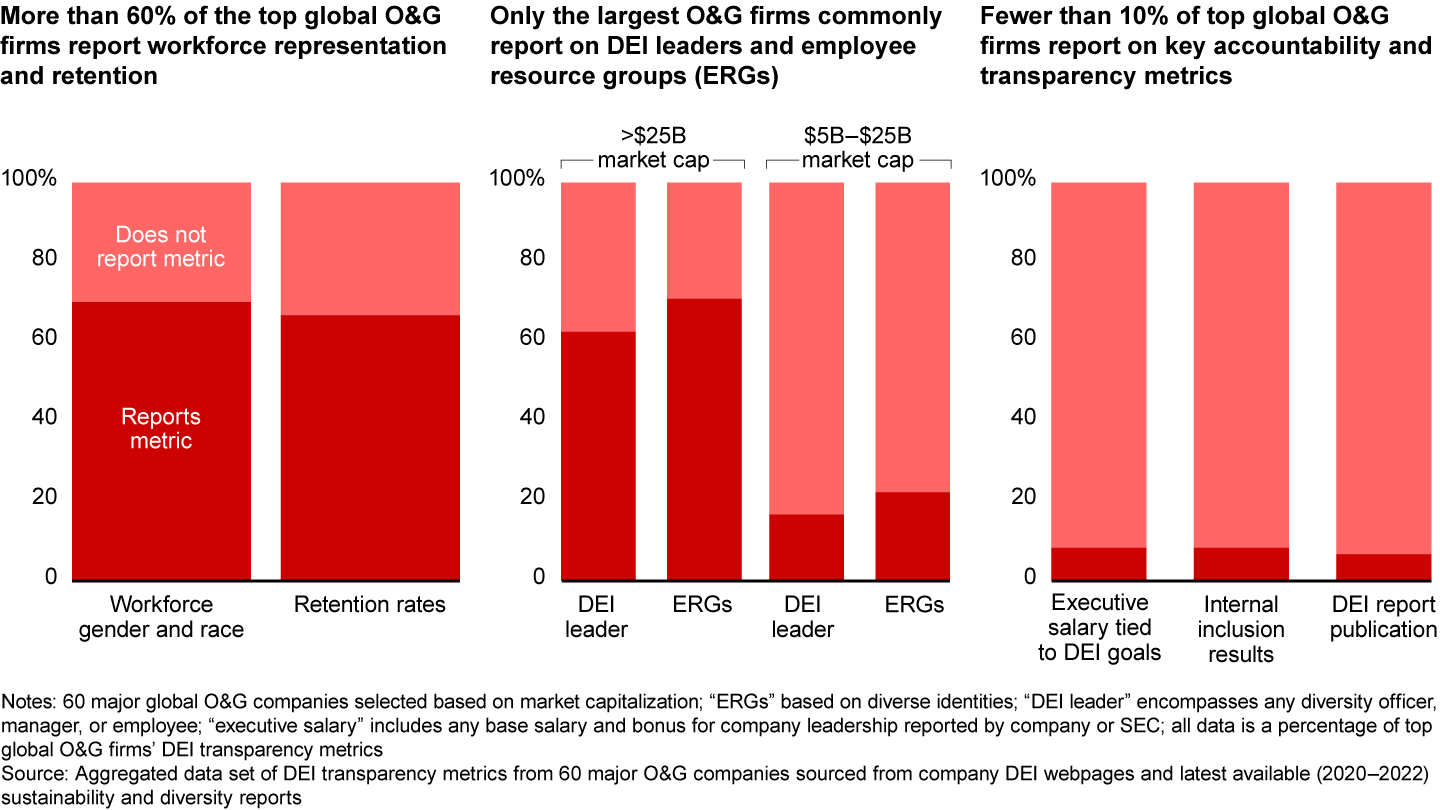
      Larger firms are taking steps on DEI, but few are moving on harder actions more likely to make real progress
      Larger firms are taking steps on DEI, but few are moving on harder actions more likely to make real progress
      Larger firms are taking steps on DEI, but few are moving on harder actions more likely to make real progress

      “The company made DEI statements, but everyone saw it as a hassle. . . . Here we go again, it’s just DEI.”

      Disabled Black female employee, US

      DEI has not yet been fully embraced as a business capability—sometimes failing to drive meaningful results on talent outcomes and contribute to solving the broader workforce challenge facing the industry. Midsized companies in the industry are even less transparent and have yet to begin meaningfully investing in DEI basics, including reporting of representation and pay equity data.

      The result is that DEI efforts, as a discipline, can feel like theatrics to employees at times, leaving a long way to go in expanding and diversifying the industry’s talent—with no time to lose. While no industry has cracked the code on equity and inclusion, the imperative for oil and gas to recruit more diverse talent and unlock their full potential could not be more pressing.

      “I have never felt such a strong need to be masking [as I did in the field]. Very masculine in the heteronormative way. It was so pervasive.”

      Gay male corporate worker, US

      In spite of this, the industry made no meaningful progress in gender and racial representation in the five years leading up to 2020 (see Figure 4). In the US, representation of women in oil and gas is about 35% to 45% lower than in the general working population, 30% to 40% lower for Black people, and 35% to 45% lower for Asian people. These numbers suggest that the industry is not yet attracting a wider range of people who will bring in new skill sets and ways of thinking—which is the true business value at stake, to say nothing of doing the right thing by employees.

      Figure 4
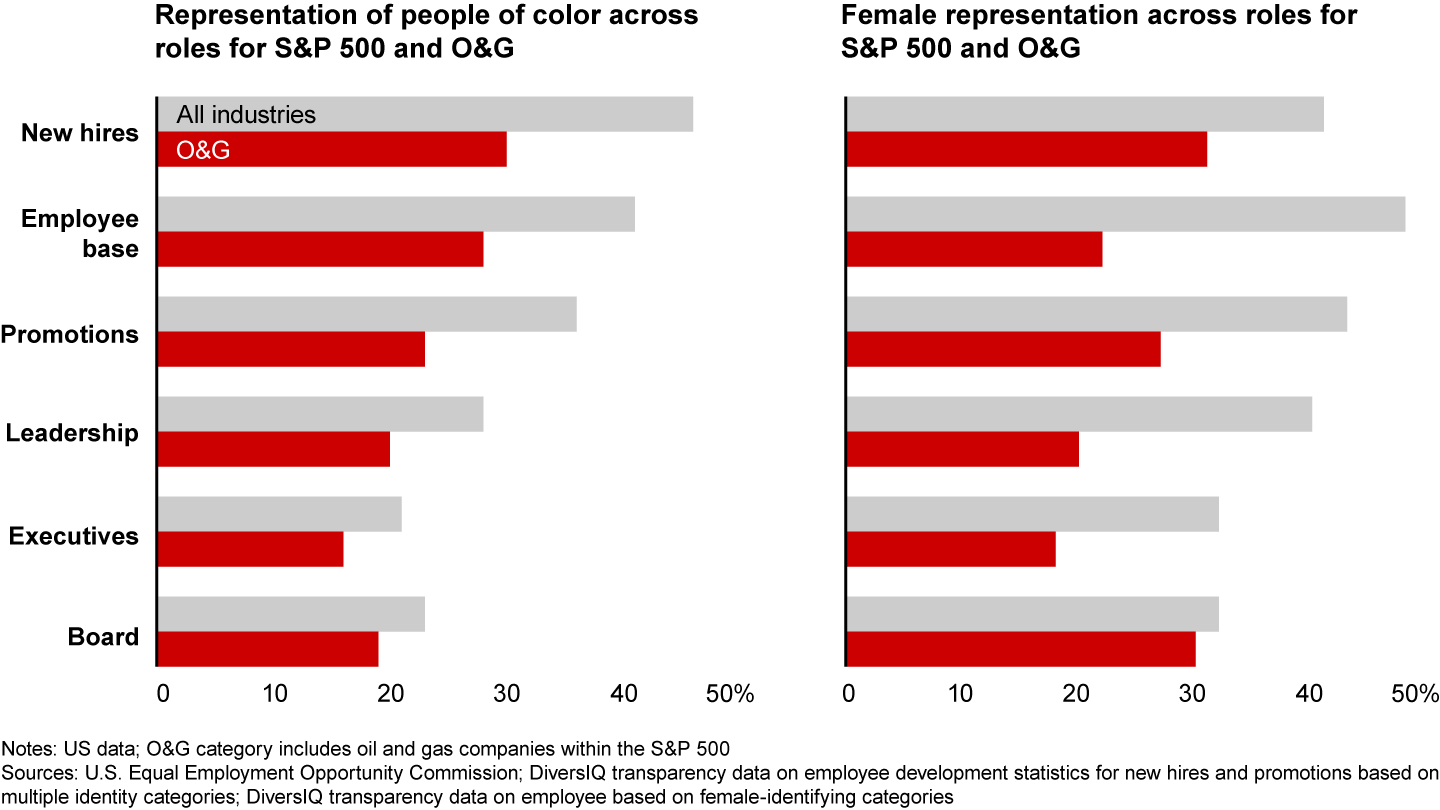
      People of color and women are underrepresented in oil and gas, compared to other industries, at every rung of the ladder, from hiring to the C-suite
      People of color and women are underrepresented in oil and gas, compared to other industries, at every rung of the ladder, from hiring to the C-suite
      People of color and women are underrepresented in oil and gas, compared to other industries, at every rung of the ladder, from hiring to the C-suite

      Broad cultural change is needed across the sector

      The energy transition provides the oil and gas sector with an unprecedented opportunity to make permanent, transformative changes in its talent ecosystem and to leapfrog other industries on building diverse, inclusive organizations. Innovation and performance are imperatives for oil and gas companies that want to thrive during the transition. Research suggests that diverse teams make better business decisions 87% of the time, and diverse leadership teams are 1.7 times more likely to capture a new market—a critical skill for tomorrow’s energy leaders.

      “Energy sustainability and diversity, equity, and inclusion go hand-in-hand. We are going to see a positive shift, because it’s a necessity. In our business, sustainability takes on a lot of faces.”

      Black female in-field worker, UK

      Building more diverse, inclusive, and equitable organizations is an indissoluble piece of the oil and gas industry’s talent challenge and a leading indicator on an organization’s readiness to adapt to new conditions. Individual companies will need to make meaningful investments in shaping their cultures toward greater inclusion, redesigning employee value propositions, and creating equitable career paths. The journey will vary from firm to firm, but critical investments will include:

      • Take a future-back view on talent. Apply sharp, rigorous workforce planning deeply informed by strategy, market demand, and current attrition trends to inform where and how to focus efforts.
      • Align and enroll leadership around the case for change, DEI ambitions, and measurable goals—using a mix of head and heart.
      • Invest in upskilling your people capabilities. Changing the workforce and solving talent gaps will require sharper skills from human resources, cultural leaders, and managers to identify gaps, change behaviors, align systems to create greater inclusion, and build and model empathic leadership.
      • Build the infrastructure for progress, including data tracking and measurement, dedicated DEI teams and committees, and executive incentives.
      • Ensure transparency, with annual reporting and longitudinal views, and use this transparency internally and externally to drive progress.

      At the same time, the industry will need to work together to change public perceptions about working in energy, make progress on inclusion, and attract a stronger and more diverse workforce. Committing to broad efforts like the International Association of Oil & Gas Producers’ Workforce Energy initiative can help address the challenge by encouraging companies to:

      • Commit to cross-industry collaboration on DEI efforts
      • Standardize DEI metrics with minimum commitments and transparency expectations
      • Share best practices, recognizing this is an industry-wide challenge with shared opportunity
      • Build a monitoring infrastructure to ensure public accountability

      “We still have a long way to go. We have lost some people at the lower levels because they do not see people that look like them above them in the company.”

      Black male corporate worker, US

      Industry partnerships will make it possible (and less risky) to standardize metrics and improve transparency. These collaborations will be essential for standardizing DEI metrics, facilitating transparency, and encouraging best practices to spur change. But the journey ahead is long and will require a serious commitment to questioning old ways of working.

      The talent challenge is huge, but by working together and tapping their deep experience in managing transformation, oil and gas companies can make the changes necessary to find, attract, and realize the benefits from a broader and more diverse talent pool.

      Authors
      • Brenen Blair
        Alumni, Houston
      • Headshot of Jim Claunch
        Jim Claunch
        Partner, Houston
      • Headshot of Emily Emmett
        Emily Emmett
        Partner, Houston
      Related Industries
      • Energy & Natural Resources
      • Oil & Gas
      Related Consulting Services
      • Diversity, Equity & Inclusion
      How We Can Help
      • Talent
      Energy & Natural Resources
      POWERful Women's Annual State of the Nation 2025

      Bain & Company collaborated with POWERful Women on their annual report on female representation in the UK energy industry.

      Read more
      Energy & Natural Resources
      Oil & Gas M&A

      Why some companies are winning by a wider margin.

      Read more
      Talent
      HR: The Hidden Accelerator of AI Adoption

      Scaling AI starts with people. Yet only half of companies involve HR in their strategy.

      Read more
      Energy & Natural Resources
      Fueling the Future: How Business, Finance, and Policy Can Accelerate the Clean Fuels Market

      Why global clean fuel ambitions are outpacing investment, and what leaders must do to unlock capital and scale viable projects.

      Read more
      Talent
      You Can't Spell AI without HR: The Surprising Secret to Scale

      High-performing companies are integrating HR into their generative AI strategies as they balance big bets with near-term wins.

      Read more
      First published in mayo 2023
      Tags
      • Diversity, Equity & Inclusion
      • Energy & Natural Resources
      • Oil & Gas
      • Talent

      How We've Helped Clients

      Moving Beyond an Operating Model Redesign to Live the Model

      See more related case studies

      An Oil and Gas Leader Creates a New Clean Energy Business

      See more related case studies

      An OFS captures post-merger growth synergies

      See more related case studies

      Want to continue the conversation

      We help global leaders with their organization's most critical issues and opportunities. Together, we create enduring change and results

      Bain Insights. Our perspectives on critical issues global businesses face in today's challenging environment, delivered monthly.

      *I have read and understand Bain’s Privacy Notice.

      Please read and agree to the Privacy Policy.
      Bain & Company
      Contact us Sustainability Accessibility Terms of use Privacy Modern Slavery Act Statement Cookie Policy Sitemap Log In

      © 1996-2026 Bain & Company, Inc.

      Contact Bain

      How can we help you?

      • Business inquiry
      • Career information
      • Press relations
      • Partnership request
      • Speaker request
      See all offices