
Skip to Content
  • Offices

    Offices

    North & Latin America
    • Atlanta
    • Austin
    • Bogota
    • Boston
    • Buenos Aires
    • Chicago
    • Dallas
    • Denver
    • Houston
    • Los Angeles
    • Mexico City
    • Minneapolis
    • Monterrey
    • Montreal
    • New York
    • Rio de Janeiro
    • San Francisco
    • Santiago
    • São Paulo
    • Seattle
    • Silicon Valley
    • Toronto
    • Washington, DC
    Europe & Africa
    • Amsterdam
    • Athens
    • Berlin
    • Brussels
    • Copenhagen
    • Dusseldorf
    • Frankfurt
    • Helsinki
    • Istanbul
    • Johannesburg
    • Kyiv
    • Lisbon
    • London
    • Madrid
    • Milan
    • Munich
    • Oslo
    • Paris
    • Rome
    • Stockholm
    • Vienna
    • Warsaw
    • Zurich
    Middle East
    • Doha
    • Dubai
    • Riyadh
    Asia & Australia
    • Bangkok
    • Beijing
    • Bengaluru
    • Brisbane
    • Ho Chi Minh City
    • Hong Kong
    • Jakarta
    • Kuala Lumpur
    • Manila
    • Melbourne
    • Mumbai
    • New Delhi
    • Perth
    • Shanghai
    • Singapore
    • Sydney
    • Tokyo
    See all offices
  • Alumni
  • Media Center
  • Subscribe
  • Contact
  • Colombia | Español

    Select your region and language

    Global
    • Global (English)
    North & Latin America
    • Brazil (Português)
    • Argentina (Español)
    • Canada (Français)
    • Chile (Español)
    • Colombia (Español)
    Europe, Middle East, & Africa
    • France (Français)
    • DACH Region (Deutsch)
    • Italy (Italiano)
    • Spain (Español)
    • Greece (Elliniká)
    Asia & Australia
    • China (中文版)
    • Korea (한국어)
    • Japan (日本語)
  • Saved items (0)
    Saved items (0)

    You have no saved items.

    Bookmark content that interests you and it will be saved here for you to read or share later.

    Explore Bain Insights
  • Industries
    Main menu

    Industries

    • Aeroespacial y Defensa
    • Agroindustria
    • Químicos
    • Construcción e Infraestructura
    • Productos de Consumo
    • Servicios Financieros
    • Salud y Ciencias de la Vida
    • Maquinaria y Equipo Industrial
    • Medios y Entretenimiento
      Industries
      Medios y Entretenimiento
      • Media Lab
    • Metales
    • Minería
    • Petróleo y Gas
    • Papel y Empaque
    • Private Equity
      Industries
      Private Equity
      • Due Diligence
      • Exit Planning
      • Firm Strategy & Operations
      • Portfolio Value Creation
    • Sector Público y Social
    • Retail
    • Tecnología
    • Telecomunicaciones
      Industries
      Telecomunicaciones
      • Capital Expenditure
      • Telco Digital Transformation
    • Transporte
    • Viajes y Turismo
    • Servicios Públicos y Energías Renovables
  • Consulting Services
    Main menu

    Consulting Services

    • Customer Experience
    • Sustainability
    • Innovation
    • M&A
    • Operations
    • People & Organization
    • Private Equity
    • Sales & Marketing
    • Strategy
    • AI, Insights, and Solutions
    • Technology
    • Transformation
  • Digital
  • Insights
    Main menu

    Insights

    • Industry Insights
    • Services Insights
    • Bain Books
    • Webinars
    • Bain Futures
    View all Insights
    Featured topics
    • Tariff Response
    • Artificial Intelligence
    • Thriving in Uncertainty
    • Executive Conversations
    • Macro Trends
    • M&A Report
    • Healthcare Private Equity Report
    • Paper & Packaging Report
    • Technology Report
    • CEO's Guide to Sustainability
    • CEO Insights
    • CFO Insights
    • COO Insights
    • CIO Insights
    • CMO Insights
    View all featured topics
  • About
    Main menu

    About

    • What We Do
    • What We Believe
    • Our People & Leadership
    • Client Results
    • Awards & Recognition
    • Global Affiliations
    Further: Our global responsibility
    • Sustainability
    • Social Impact
    • World Economic Forum
    Learn more about Further
  • Carreras
    Main menu

    Carreras

    • Trabaja con Nosotros
      Carreras
      Trabaja con Nosotros
      • Find Your Place
      • Nuestras Áreas de Trabajo
      • Equipos Integrados
      • Estudiantes
      • Internships & Programs
      • Eventos de Reclutamiento
    • La Vida en Bain
      Carreras
      La Vida en Bain
      • Historias Profesionales
      • Nuestra Gente
      • Dónde Trabajamos
      • Apoyando tu Crecimiento
      • Grupos de Afinidad
      • Beneficios
    • Impact Stories
    • Nuestro Proceso
      Carreras
      Nuestro Proceso
      • Qué Esperar
      • Entrevistas
    FIND JOBS
  • Offices
    Main menu

    Offices

    • North & Latin America
      Offices
      North & Latin America
      • Atlanta
      • Austin
      • Bogota
      • Boston
      • Buenos Aires
      • Chicago
      • Dallas
      • Denver
      • Houston
      • Los Angeles
      • Mexico City
      • Minneapolis
      • Monterrey
      • Montreal
      • New York
      • Rio de Janeiro
      • San Francisco
      • Santiago
      • São Paulo
      • Seattle
      • Silicon Valley
      • Toronto
      • Washington, DC
    • Europe & Africa
      Offices
      Europe & Africa
      • Amsterdam
      • Athens
      • Berlin
      • Brussels
      • Copenhagen
      • Dusseldorf
      • Frankfurt
      • Helsinki
      • Istanbul
      • Johannesburg
      • Kyiv
      • Lisbon
      • London
      • Madrid
      • Milan
      • Munich
      • Oslo
      • Paris
      • Rome
      • Stockholm
      • Vienna
      • Warsaw
      • Zurich
    • Middle East
      Offices
      Middle East
      • Doha
      • Dubai
      • Riyadh
    • Asia & Australia
      Offices
      Asia & Australia
      • Bangkok
      • Beijing
      • Bengaluru
      • Brisbane
      • Ho Chi Minh City
      • Hong Kong
      • Jakarta
      • Kuala Lumpur
      • Manila
      • Melbourne
      • Mumbai
      • New Delhi
      • Perth
      • Shanghai
      • Singapore
      • Sydney
      • Tokyo
    See all offices
  • Alumni
  • Media Center
  • Subscribe
  • Contact
  • Colombia | Español
    Main menu

    Select your region and language

    • Global
      Select your region and language
      Global
      • Global (English)
    • North & Latin America
      Select your region and language
      North & Latin America
      • Brazil (Português)
      • Argentina (Español)
      • Canada (Français)
      • Chile (Español)
      • Colombia (Español)
    • Europe, Middle East, & Africa
      Select your region and language
      Europe, Middle East, & Africa
      • France (Français)
      • DACH Region (Deutsch)
      • Italy (Italiano)
      • Spain (Español)
      • Greece (Elliniká)
    • Asia & Australia
      Select your region and language
      Asia & Australia
      • China (中文版)
      • Korea (한국어)
      • Japan (日本語)
  • Saved items  (0)
    Main menu
    Saved items (0)

    You have no saved items.

    Bookmark content that interests you and it will be saved here for you to read or share later.

    Explore Bain Insights
  • Industries
    • Industries

      • Aeroespacial y Defensa
      • Agroindustria
      • Químicos
      • Construcción e Infraestructura
      • Productos de Consumo
      • Servicios Financieros
      • Salud y Ciencias de la Vida
      • Maquinaria y Equipo Industrial
      • Medios y Entretenimiento
      • Metales
      • Minería
      • Petróleo y Gas
      • Papel y Empaque
      • Private Equity
      • Sector Público y Social
      • Retail
      • Tecnología
      • Telecomunicaciones
      • Transporte
      • Viajes y Turismo
      • Servicios Públicos y Energías Renovables
  • Consulting Services
    • Consulting Services

      • Customer Experience
      • Sustainability
      • Innovation
      • M&A
      • Operations
      • People & Organization
      • Private Equity
      • Sales & Marketing
      • Strategy
      • AI, Insights, and Solutions
      • Technology
      • Transformation
  • Digital
  • Insights
    • Insights

      • Industry Insights
      • Services Insights
      • Bain Books
      • Webinars
      • Bain Futures
      View all Insights
      Featured topics
      • Tariff Response
      • Artificial Intelligence
      • Thriving in Uncertainty
      • Executive Conversations
      • Macro Trends
      • M&A Report
      • Healthcare Private Equity Report
      • Paper & Packaging Report
      • Technology Report
      • CEO's Guide to Sustainability
      • CEO Insights
      • CFO Insights
      • COO Insights
      • CIO Insights
      • CMO Insights
      View all featured topics
  • About
    • About

      • What We Do
      • What We Believe
      • Our People & Leadership
      • Client Results
      • Awards & Recognition
      • Global Affiliations
      Further: Our global responsibility
      • Sustainability
      • Social Impact
      • World Economic Forum
      Learn more about Further
  • Carreras
    Popular Searches
    • Agile
    • Digital
    • Strategy
    Your Previous Searches
      Recently Visited Pages

      Content added to saved items

      Saved items (0)

      Removed from saved items

      Saved items (0)

      Brief

      How Should Your Supply Chain Respond to the Crisis in Ukraine?

      How Should Your Supply Chain Respond to the Crisis in Ukraine?

      It’s unclear how Russia’s invasion of Ukraine will end, but actions today can boost resilience.

      By Joe Terino, Peter Guarraia, Michelle Supko, Chris Rolfe, Amish Thakker, and Jörg Gnamm

      • min read
      }

      Brief

      How Should Your Supply Chain Respond to the Crisis in Ukraine?
      en
      At a Glance
      • Even as they reel from the tragedy of the Russia-Ukraine war, executive teams need to keep their supply chains functioning, just as they did during the Covid-19 pandemic.
      • Our analysis of the likely short- and long-term impact of the invasion anticipates broad pressures on companies’ raw materials, logistics/transportation, teams, and infrastructure.
      • Companies should assess and prioritize risks across the value chain, monitor changing risk signals, actively counter the persistent headwinds of inflation, upgrade risk mitigation strategies, enhance supplier base traceability, and refine their operating model to support risk management and recovery.

      The effects of war on the citizens of Ukraine are immediate and horrific. As shocked companies around the world help in any way they can, they’re also trying to understand the likely secondary impact of the Russian invasion on their employees, customers, operations, and supply chain.

      The last of these preoccupations has been a familiar one for executive teams over the past decade or so, as a succession of national, regional, and international events shook the world and strained supply chains. The earthquake and tsunami that struck Japan in 2011. The 2015 port disruptions in the US (labor disputes) and China (storage explosions). Escalating trade disputes between the US and China, and Japan and South Korea. The United Kingdom’s exit from the European Union. That’s a far-from-exhaustive list of the turbulence.

      And then Covid-19 emerged. The pandemic revealed many lingering vulnerabilities in global supply chains, causing leading multinationals to rethink their supply chain strategy to minimize similar disruption in the future. Amid the current crisis, some executive teams might now be cushioned by continuous improvements to their supply chain resilience undertaken since 2020. Other companies might be regretting reverting to a wait-and-see approach when lockdowns ended.

      But regardless of how much they learned during the pandemic and other pivotal episodes in recent history, few companies will think they have a clear idea of how the war in Ukraine—one of the most dangerous and unpredictable developments since the Second World War—will affect their supply chain and for how long. Nor do the questions stop at, “How do we keep serving our customers?” There’s also the cost of maintaining continuity and the impact on sustainability efforts.

      Amid ongoing shocks such as these, we find it’s helpful for executive teams to analyze the immediate and longer-term impact on raw materials, logistics/transportation, teams, and infrastructure. Below is our early assessment of the challenges in these areas, as well as a handful of no-regret moves that should help companies strengthen supply chain resilience in almost all scenarios for the war in Ukraine, while also guarding against future turbulence from other sources.

      Challenges over the next three to six months

      As surging commodity prices have already shown, the war in Ukraine is constraining the short-term supply of natural resources and other raw materials vital to businesses around the world, amid fears of worse to come in the months ahead.

      For oil and gas, the volatility reflects the unwinding of partnerships between western and Russian energy groups, such as BP choosing to divest its shareholding in Rosneft and Shell cutting its ties with Gazprom. The impact of supply issues will vary by country and be heavily influenced by actions against Russian oil and gas exports (whether government-mandated or self-imposed). Gas is a particular vulnerability, with almost 40% of the natural gas consumed in the European Union originating in Russia. Italy and Germany are particularly exposed to fluctuating gas prices and supply, when the proportion of gas coming from Russia is considered in combination with a country’s overall dependence on gas as an energy source (see Figure 1). Also expect pricing pressure on oil-derived products such as naphtha, used in resins and plastics.

      Figure 1
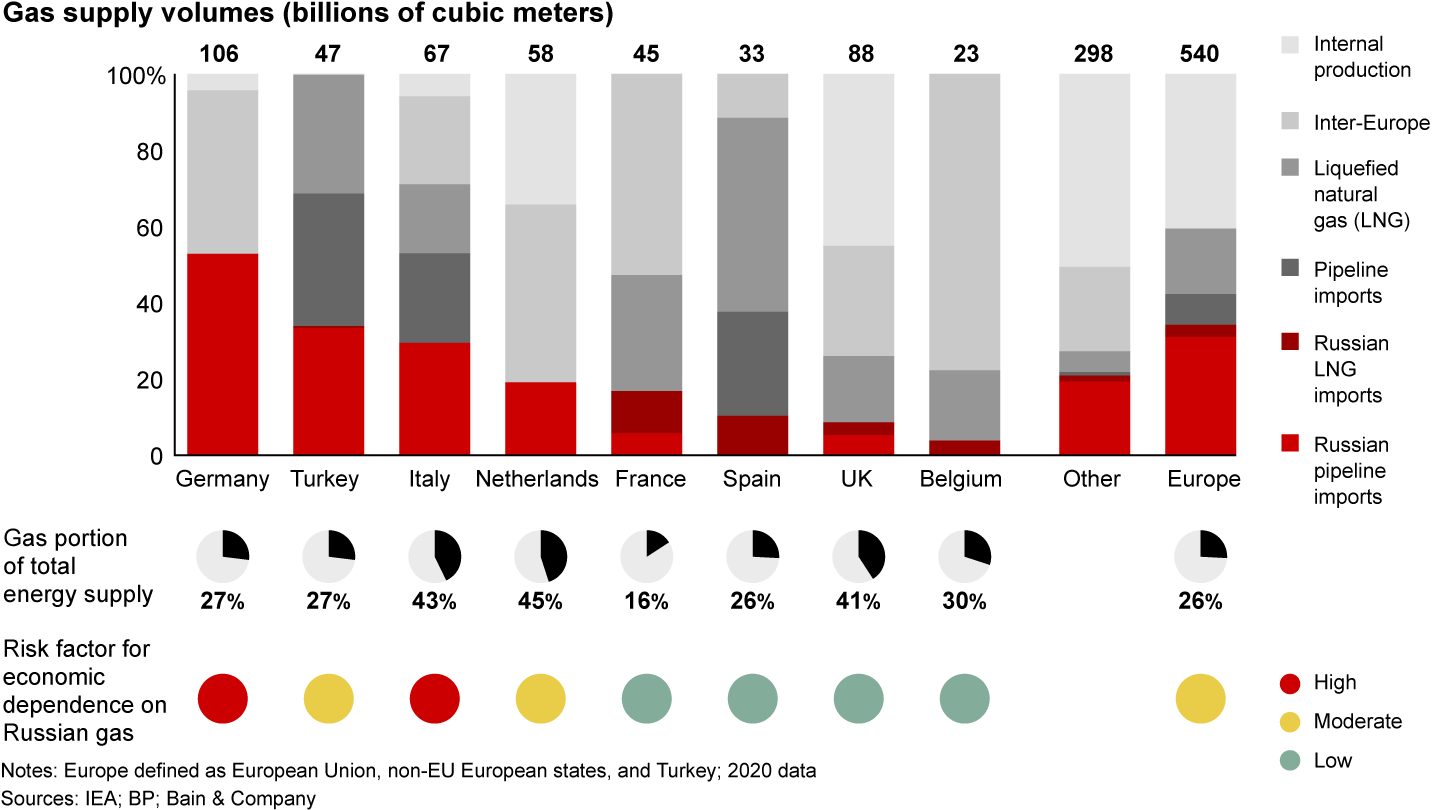
      Europe counts on Russia for a third of its natural gas supply, with Germany most dependent
      Europe counts on Russia for a third of its natural gas supply, with Germany most dependent
      Europe counts on Russia for a third of its natural gas supply, with Germany most dependent

      Agriculture is anxious about the short-term availability of commodities used in fertilizer, such as ammonia, potash, and urea. Their surging prices reflect the importance of Russia and Belarus as major global exporters of fertilizer and its components in peacetime. The impact has been felt as far away as Brazil, where farmers have been scrambling to secure fertilizer supplies. Wheat and corn prices may remain elevated given input cost trends and the importance of Ukrainian and Russian exports. Big grain importers such as Egypt, Turkey, and Nigeria could be disproportionately hit.

      The price of steel and other commodities derived from natural resources (e.g., iron ore) may continue to rise, given Russia and Ukraine’s importance to supply. A very large chunk of the world’s supply of neon, vital to the production of semiconductors, is produced in Russia as a byproduct of steelmaking and then purified in Ukraine (see Figure 2). Germany’s automobile makers could be among those hit hard in the short term if semiconductor makers exhaust their inventories of neon and are unable to secure enough supplies to avoid a fresh chip shortage.

      Figure 2
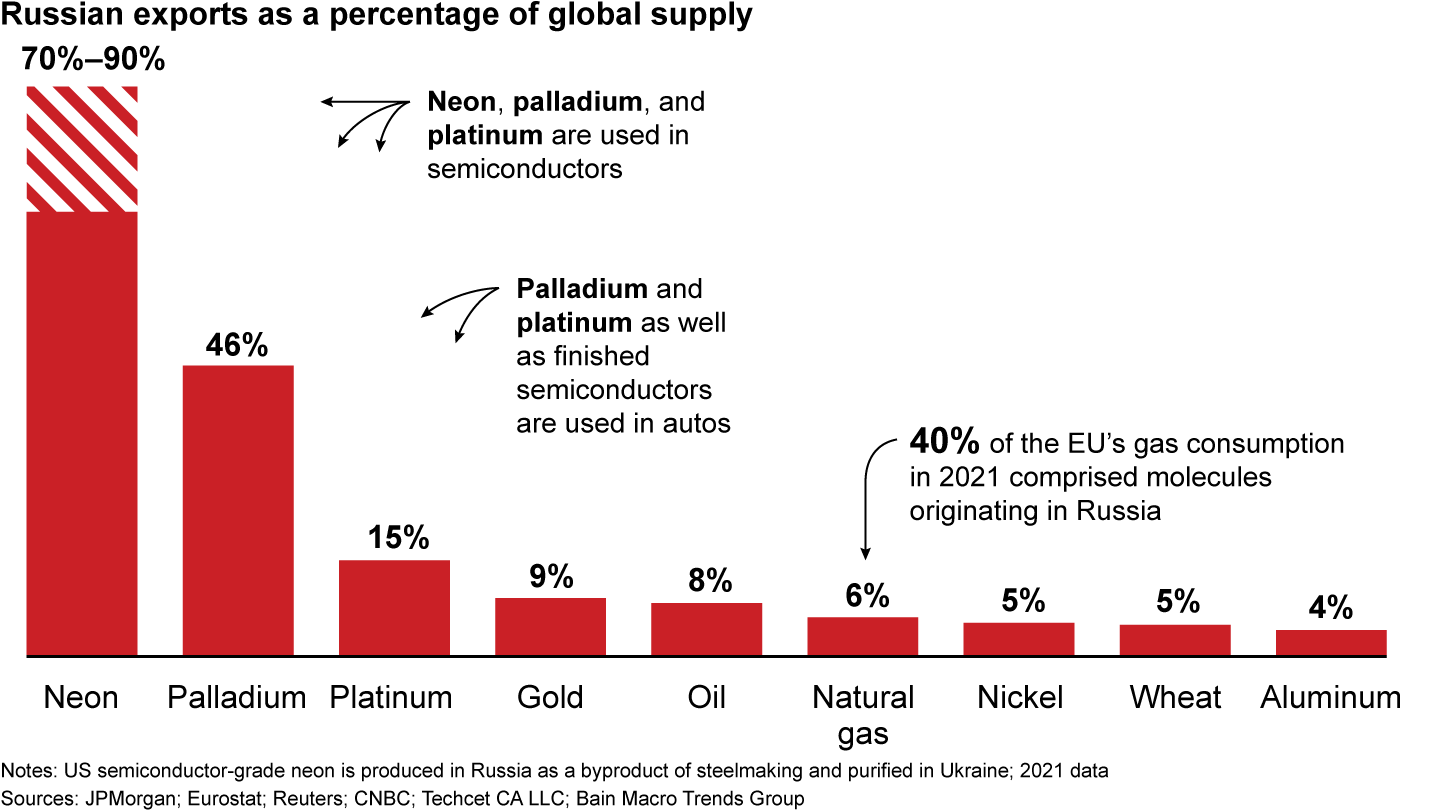
      Makers of semiconductors and automobiles have relied on Russia for some commodities
      Makers of semiconductors and automobiles have relied on Russia for some commodities
      Makers of semiconductors and automobiles have relied on Russia for some commodities

      The humanitarian imperative to prioritize refugees is likely to have a knock-on impact on commercial air, road, and rail transport and logistics in western Europe, while war-related disruption to maritime traffic in the Black Sea is likely to continue. Companies still doing business and employing people in the region will face obvious short-term operating constraints given the conditions many of their workers are facing. Sanctions and independent decisions by companies may well further redraw local commercial boundaries. Worldwide, companies will have to cope with volatile demand in certain categories as consumers adjust spending amid soaring food and energy costs.

      Longer-term challenges beyond six months

      The outlook for raw materials (including energy) is mixed. Downstream agricultural products such as ethanol and other corn- or wheat-based derivatives are likely to be affected by production shortfalls and the diversion of supplies to food.  Similarly, we expect trade restrictions with Russia to reduce the production and availability of key strategic metals, alloys, and other derivative metal products (e.g., batteries) that use materials such as nickel, tungsten, and neon gas.

      However, steel prices may stabilize as international players increase steel production capacity (while trying to balance environmental commitments with any increased coal use needed to deliver that extra capacity). Until global capacity is rebalanced, the price of oil and gas may continue to rise further against a backdrop of deepening sanctions, especially as the winter heating season approaches.

      Unless the conflict substantially escalates, road, rail, and air logistics should stabilize, although global disruptions may remain for air logistics, given Russian airspace restrictions and constraints on Ukraine’s heavy cargo capabilities. Similarly, most maritime routes should stabilize, although significant disruption may remain in and around Russia.

      Companies operating in the region will likely have to reconfigure their labor pools in areas such as engineering and design, production, and logistics. Businesses worldwide may have to make their global supply chains more transparent to customers wanting to identify and manage future Russian exposure, as well as comply with trade restrictions. Similarly, their customers may also start to demand more flexibility and resilience in situations where global supply nodes are located in areas of heightened geopolitical risk. Catering to those demands for enhanced continuity planning could result in strategic redundancy and higher costs to serve customers.

      On a macroeconomic level, the sanctions imposed on Russia could contribute to the end of the era of capital superabundance and capital globalization, constraining foreign direct-investment flows and influencing supply chain investment decisions. A marked increase in defense spending in the European Union and beyond could reduce government spending in other areas. Robust cybersecurity will be essential across the end-to-end value chain—from design through fulfillment. Global and company environmental, social, and corporate governance (ESG) agendas and commitments may also need to be recalibrated as geopolitical and trade bloc dynamics create inefficiencies and a potential delay in energy transition, resulting in prolonged reliance on coal-based energy.

      Boosting supply chain resilience amid uncertainty

      No company can afford to underestimate the significance of the war in Ukraine, even if it doesn’t seem to directly affect them now. It’s unclear how the crisis will resolve, or whether it sets a precedent that other geopolitical actors will follow. And in the wider analysis, the frequency and magnitude of supposedly once-in-a-generation shocks was already calling for an ongoing strategic response to improve supply chain resilience (see Figure 3).

      Figure 3
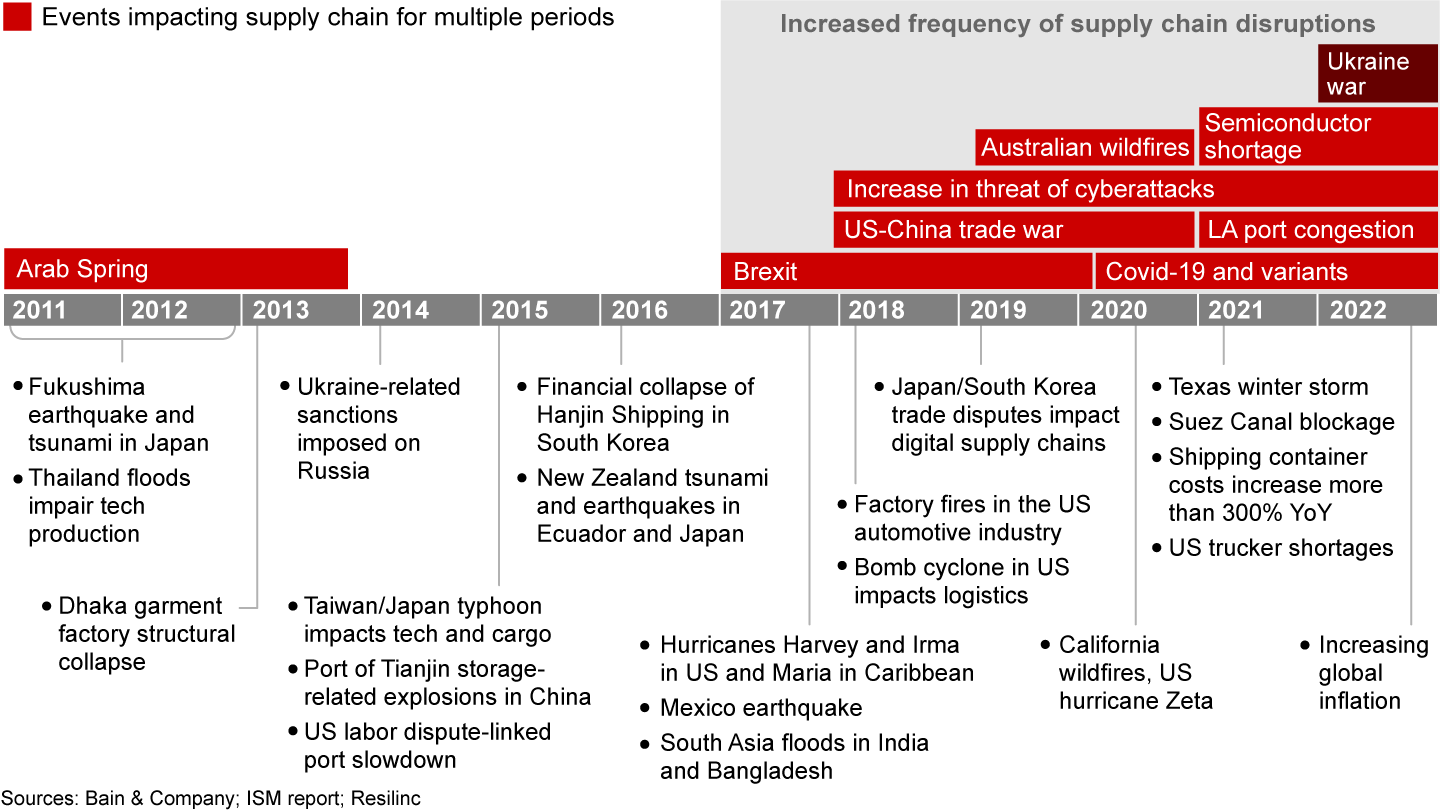
      The frequency and magnitude of supply chain disruption has been increasingly relentless in the decade preceding the war in Ukraine
      The frequency and magnitude of supply chain disruption has been increasingly relentless in the decade preceding the war in Ukraine
      The frequency and magnitude of supply chain disruption has been increasingly relentless in the decade preceding the war in Ukraine

      In addition to their urgent responsibility to safeguard staff and customers in the region, executive teams should consider a handful of no-regret supply chain actions, both to protect their business in the short term and transform their resilience over the next decade.

      • Assess risks across the value chain, prioritizing key themes and single points of failure. Conduct a data-driven risk assessment of the value chain from product development and the supply base through production and fulfillment. For the key threats, evaluate probable scenarios and assess the potential magnitude of business and customer impacts across multiple dimensions (timeline, service levels, etc.)
      • Establish signposts that predict changes to your supply chain risk profile and develop the capabilities to monitor them closely. Identify the key signals and leading indicators to flag potential risks such as geopolitical trade tensions, industry capacity-to-demand ratios, supplier health, and commodity capacity/geographic concentration. Develop capabilities to provide early warning notifications and establish processes to run simulations to inform and prioritize risk mitigation. Create a digital roadmap that embraces advanced analytics and leading technology for greater precision and accuracy.
      • Actively counter the persistent headwinds of inflation. Cost management will remain a strategic issue across industries, as companies confront challenges related to volatile customer demand, commodity costs, supply chain constraints, and labor availability. Establish a cost management program that’s more than a match for inflation, offering visibility into cost pools, key performance indicators, and performance trends.
      • Upgrade mitigation strategies for the most acute risks, while filling any gaps in your mitigation planning. Create a full set of mitigation options (e.g., product/process redesign, alternative sources, network structure, capacity buffers, back-up or flexible routes for logistics flows, etc.) informed by industry benchmarks and best practices. Specifically, for the supply base, clearly understand where you need to have surety of supply. For manufacturing, evaluate Industry 4.0 applications to minimize labor and raw material requirements (e.g., additive manufacturing) as well as support cost curve reductions for potentially relocating sites closer to demand centers. Confirm internal alignment of your commercial strategy to understand the investment posture to prioritize and mitigate risks associated with your most strategic customers, product lines/offerings, and services.
      • Enhance traceability by mapping your supply base from the top tier downwards, using tools that offer maximum visibility. Starting with a full mapping of the supply base, initiate a plan to achieve visibility at each tier of the value chain—from raw materials to finished goods to recycling—to improve operational, sustainability, regulatory, and resilience outcomes. Create a flexible long-term traceability roadmap to support the pragmatic sequencing of data, technology, and partnership investments required for successful test-and-learn pilots and enterprise scaling.  
      • Refine your operating model so your resilience strategy infuses the way your company is organized and governed, as well as the tools it uses. Deploy a cross-functional operating model that links business and operations functions to support proactive risk management and rapid recovery capabilities, utilizing the leading technology identified in the digital roadmap. Ultimately, strive to create a culture that views resilience as a necessary competitive advantage.

      These actions can all improve supply chain resilience today and tomorrow. But the need to act far exceeds the usual obligations to stakeholders. As shown in the Covid-19 pandemic, when the consistent availability of groceries and other staples was a lifeline for many, keeping products and services flowing amid extreme turbulence can help to stabilize more than just businesses.

      Authors
      • Joe Terino
        Alumni, Boston
      • Headshot of Peter Guarraia
        Peter Guarraia
        Alumni, Houston
      • Headshot of Michelle Supko
        Michelle Supko
        Practice Executive Vice President, Nashville
      • Chris Rolfe
        Practice Senior Manager, Boston
      • Amish Thakker
        Alumni, Atlanta
      • Headshot of Jörg Gnamm
        Jörg Gnamm
        Partner, Munich
      Related Consulting Services
      • Macro Strategy
      • Supply Chain
      COO insights
      From China to Trouble?

      Swapping supply chains doesn’t mean escaping risk.

      Read more
      COO insights
      Tariffs: The Next Chapter

      Companies need to rebuild their strategies for a world in which the free movement of goods, capital, IP, and people cannot be taken for granted.

      Read more
      COO insights
      Beyond Tariffs: The Supply Chain Reinvention Imperative

      Tariffs are accelerating businesses’ operations overhaul. Winning in today’s disrupted world demands bold trade-offs and strategic transformation.

      Read more
      COO insights
      In an Era of Tariffs and Turbulence, Four Moves That Matter

      Understand your exposure. Understand your competitors’ exposure. Adjust your pricing and supply chains accordingly. Repeat as necessary.

      Read more
      COO insights
      Microfactories: The Back-to-Local Moment

      Automation could allow much smaller factories to operate closer to consumers and deliver more bespoke products.

      Read more
      First published in marzo 2022
      Tags
      • COO insights
      • Macro Strategy
      • Macro Trends
      • Resilience amid Global Crisis
      • Supply Chain

      How We've Helped Clients

      Turning bottlenecks into growth opportunities

      See more related case studies

      Revamped supply chain doubles consumer product profitability

      See more related case studies

      Carmaker shifts its production model

      See more related case studies

      Want to continue the conversation

      We help global leaders with their organization's most critical issues and opportunities. Together, we create enduring change and results

      Bain Insights. Our perspectives on critical issues global businesses face in today's challenging environment, delivered monthly.

      *I have read and understand Bain’s Privacy Notice.

      Please read and agree to the Privacy Policy.
      Bain & Company
      Contact us Sustainability Accessibility Terms of use Privacy Modern Slavery Act Statement Cookie Policy Sitemap Log In

      © 1996-2026 Bain & Company, Inc.

      Contact Bain

      How can we help you?

      • Business inquiry
      • Career information
      • Press relations
      • Partnership request
      • Speaker request
      See all offices