
Skip to Content
  • Offices

    Offices

    North & Latin America
    • Atlanta
    • Austin
    • Bogota
    • Boston
    • Buenos Aires
    • Chicago
    • Dallas
    • Denver
    • Houston
    • Los Angeles
    • Mexico City
    • Minneapolis
    • Monterrey
    • Montreal
    • New York
    • Rio de Janeiro
    • San Francisco
    • Santiago
    • São Paulo
    • Seattle
    • Silicon Valley
    • Toronto
    • Washington, DC
    Europe & Africa
    • Amsterdam
    • Athens
    • Berlin
    • Brussels
    • Copenhagen
    • Dusseldorf
    • Frankfurt
    • Helsinki
    • Istanbul
    • Johannesburg
    • Kyiv
    • Lisbon
    • London
    • Madrid
    • Milan
    • Munich
    • Oslo
    • Paris
    • Rome
    • Stockholm
    • Vienna
    • Warsaw
    • Zurich
    Middle East
    • Doha
    • Dubai
    • Riyadh
    Asia & Australia
    • Bangkok
    • Beijing
    • Bengaluru
    • Brisbane
    • Ho Chi Minh City
    • Hong Kong
    • Jakarta
    • Kuala Lumpur
    • Manila
    • Melbourne
    • Mumbai
    • New Delhi
    • Perth
    • Shanghai
    • Singapore
    • Sydney
    • Tokyo
    See all offices
  • Alumni
  • Media Center
  • Subscribe
  • Contact
  • Colombia | Español

    Select your region and language

    Global
    • Global (English)
    North & Latin America
    • Brazil (Português)
    • Argentina (Español)
    • Canada (Français)
    • Chile (Español)
    • Colombia (Español)
    Europe, Middle East, & Africa
    • France (Français)
    • DACH Region (Deutsch)
    • Italy (Italiano)
    • Spain (Español)
    • Greece (Elliniká)
    Asia & Australia
    • China (中文版)
    • Korea (한국어)
    • Japan (日本語)
  • Saved items (0)
    Saved items (0)

    You have no saved items.

    Bookmark content that interests you and it will be saved here for you to read or share later.

    Explore Bain Insights
  • Industries
    Main menu

    Industries

    • Aeroespacial y Defensa
    • Agroindustria
    • Químicos
    • Construcción e Infraestructura
    • Productos de Consumo
    • Servicios Financieros
    • Salud y Ciencias de la Vida
    • Maquinaria y Equipo Industrial
    • Medios y Entretenimiento
      Industries
      Medios y Entretenimiento
      • Media Lab
    • Metales
    • Minería
    • Petróleo y Gas
    • Papel y Empaque
    • Private Equity
      Industries
      Private Equity
      • Due Diligence
      • Exit Planning
      • Firm Strategy & Operations
      • Portfolio Value Creation
    • Sector Público y Social
    • Retail
    • Tecnología
    • Telecomunicaciones
      Industries
      Telecomunicaciones
      • Capital Expenditure
      • Telco Digital Transformation
    • Transporte
    • Viajes y Turismo
    • Servicios Públicos y Energías Renovables
  • Consulting Services
    Main menu

    Consulting Services

    • Customer Experience
    • Sustainability
    • Innovation
    • M&A
    • Operations
    • People & Organization
    • Private Equity
    • Sales & Marketing
    • Strategy
    • AI, Insights, and Solutions
    • Technology
    • Transformation
  • Digital
  • Insights
    Main menu

    Insights

    • Industry Insights
    • Services Insights
    • Bain Books
    • Webinars
    • Bain Futures
    View all Insights
    Featured topics
    • Tariff Response
    • Artificial Intelligence
    • Thriving in Uncertainty
    • Executive Conversations
    • Macro Trends
    • M&A Report
    • Healthcare Private Equity Report
    • Paper & Packaging Report
    • Technology Report
    • CEO's Guide to Sustainability
    • CEO Insights
    • CFO Insights
    • COO Insights
    • CIO Insights
    • CMO Insights
    View all featured topics
  • About
    Main menu

    About

    • What We Do
    • What We Believe
    • Our People & Leadership
    • Client Results
    • Awards & Recognition
    • Global Affiliations
    Further: Our global responsibility
    • Sustainability
    • Social Impact
    • World Economic Forum
    Learn more about Further
  • Carreras
    Main menu

    Carreras

    • Trabaja con Nosotros
      Carreras
      Trabaja con Nosotros
      • Find Your Place
      • Nuestras Áreas de Trabajo
      • Equipos Integrados
      • Estudiantes
      • Internships & Programs
      • Eventos de Reclutamiento
    • La Vida en Bain
      Carreras
      La Vida en Bain
      • Historias Profesionales
      • Nuestra Gente
      • Dónde Trabajamos
      • Apoyando tu Crecimiento
      • Grupos de Afinidad
      • Beneficios
    • Impact Stories
    • Nuestro Proceso
      Carreras
      Nuestro Proceso
      • Qué Esperar
      • Entrevistas
    FIND JOBS
  • Offices
    Main menu

    Offices

    • North & Latin America
      Offices
      North & Latin America
      • Atlanta
      • Austin
      • Bogota
      • Boston
      • Buenos Aires
      • Chicago
      • Dallas
      • Denver
      • Houston
      • Los Angeles
      • Mexico City
      • Minneapolis
      • Monterrey
      • Montreal
      • New York
      • Rio de Janeiro
      • San Francisco
      • Santiago
      • São Paulo
      • Seattle
      • Silicon Valley
      • Toronto
      • Washington, DC
    • Europe & Africa
      Offices
      Europe & Africa
      • Amsterdam
      • Athens
      • Berlin
      • Brussels
      • Copenhagen
      • Dusseldorf
      • Frankfurt
      • Helsinki
      • Istanbul
      • Johannesburg
      • Kyiv
      • Lisbon
      • London
      • Madrid
      • Milan
      • Munich
      • Oslo
      • Paris
      • Rome
      • Stockholm
      • Vienna
      • Warsaw
      • Zurich
    • Middle East
      Offices
      Middle East
      • Doha
      • Dubai
      • Riyadh
    • Asia & Australia
      Offices
      Asia & Australia
      • Bangkok
      • Beijing
      • Bengaluru
      • Brisbane
      • Ho Chi Minh City
      • Hong Kong
      • Jakarta
      • Kuala Lumpur
      • Manila
      • Melbourne
      • Mumbai
      • New Delhi
      • Perth
      • Shanghai
      • Singapore
      • Sydney
      • Tokyo
    See all offices
  • Alumni
  • Media Center
  • Subscribe
  • Contact
  • Colombia | Español
    Main menu

    Select your region and language

    • Global
      Select your region and language
      Global
      • Global (English)
    • North & Latin America
      Select your region and language
      North & Latin America
      • Brazil (Português)
      • Argentina (Español)
      • Canada (Français)
      • Chile (Español)
      • Colombia (Español)
    • Europe, Middle East, & Africa
      Select your region and language
      Europe, Middle East, & Africa
      • France (Français)
      • DACH Region (Deutsch)
      • Italy (Italiano)
      • Spain (Español)
      • Greece (Elliniká)
    • Asia & Australia
      Select your region and language
      Asia & Australia
      • China (中文版)
      • Korea (한국어)
      • Japan (日本語)
  • Saved items  (0)
    Main menu
    Saved items (0)

    You have no saved items.

    Bookmark content that interests you and it will be saved here for you to read or share later.

    Explore Bain Insights
  • Industries
    • Industries

      • Aeroespacial y Defensa
      • Agroindustria
      • Químicos
      • Construcción e Infraestructura
      • Productos de Consumo
      • Servicios Financieros
      • Salud y Ciencias de la Vida
      • Maquinaria y Equipo Industrial
      • Medios y Entretenimiento
      • Metales
      • Minería
      • Petróleo y Gas
      • Papel y Empaque
      • Private Equity
      • Sector Público y Social
      • Retail
      • Tecnología
      • Telecomunicaciones
      • Transporte
      • Viajes y Turismo
      • Servicios Públicos y Energías Renovables
  • Consulting Services
    • Consulting Services

      • Customer Experience
      • Sustainability
      • Innovation
      • M&A
      • Operations
      • People & Organization
      • Private Equity
      • Sales & Marketing
      • Strategy
      • AI, Insights, and Solutions
      • Technology
      • Transformation
  • Digital
  • Insights
    • Insights

      • Industry Insights
      • Services Insights
      • Bain Books
      • Webinars
      • Bain Futures
      View all Insights
      Featured topics
      • Tariff Response
      • Artificial Intelligence
      • Thriving in Uncertainty
      • Executive Conversations
      • Macro Trends
      • M&A Report
      • Healthcare Private Equity Report
      • Paper & Packaging Report
      • Technology Report
      • CEO's Guide to Sustainability
      • CEO Insights
      • CFO Insights
      • COO Insights
      • CIO Insights
      • CMO Insights
      View all featured topics
  • About
    • About

      • What We Do
      • What We Believe
      • Our People & Leadership
      • Client Results
      • Awards & Recognition
      • Global Affiliations
      Further: Our global responsibility
      • Sustainability
      • Social Impact
      • World Economic Forum
      Learn more about Further
  • Carreras
    Popular Searches
    • Agile
    • Digital
    • Strategy
    Your Previous Searches
      Recently Visited Pages

      Content added to saved items

      Saved items (0)

      Removed from saved items

      Saved items (0)

      Brief

      Measuring a Company's Digital Competence

      Measuring a Company's Digital Competence

      Sector-specific scorecards give private equity firms a critical edge in digital due diligence and value creation.

      By Andrew Tymms, Read Simmons and Jayne Zecha

      • min read
      }

      Brief

      Measuring a Company's Digital Competence
      en

      No investor today can afford to overlook a target company’s digital competence. The harder question: How do you actually build that critical perspective into due diligence?

      Digital innovation moves so quickly, and has such a pervasive impact on virtually every aspect of doing business, that determining where to look and what to ask is a constantly moving target. Measuring threats and opportunities can feel like trying to map a genome: While similarities exist across species and subspecies, every individual is different.

      The most effective firms approach the problem as an extension of the rigorous, individualized approach to due diligence that they already use to size up a target company. What’s different is the recognition that developing a full understanding of digital competence requires a deeper layer of inquiry, this one aimed specifically at evaluating the impact digital innovation has on value.

      That means filtering the noise to identify the most relevant areas of impact for a given sector or subsector, and then producing a detailed measure of a target company’s capabilities in those key areas relative to competitors. Where in the value chain, for instance, are companies in that sector using technology to improve performance? How is digital technology changing customer expectations, market size or growth prospects? Is the target company a leader with a sustainable advantage in key areas of impact, or is it a laggard? And given this assessment, is there potential to boost value post-acquisition, or is it too late to catch up with the rest of the industry?

      Scoring digital competence


      One effective way to frame the issues is through a sector-specific digital scorecard that helps investors answer a critical set of questions. The right framework can bring structure and clarity to the diligence process in two ways: first, by defining where digital technology has the greatest impact in that sector and, second, by providing a clear method for assessing how a given company compares with the competition in capability areas that will be essential for success in the face of digital change. This is especially valuable at a time when private equity firms are facing asset prices that have soared to record levels. A fact-based assessment of a company’s digital competence can provide investors with the conviction to pay up for an asset in a highly contested auction or take a pass when the diligence process raises red flags.

      A key challenge in assessing digital impact is that no two sectors are alike. Even raising the right questions requires extensive knowledge and experience working in a given industry. In retail markets, for instance, the paramount priority may be creating highly relevant omnichannel customer experiences that build strong relationships with a target demographic. For an auto supplier, on the other hand, the key issue may be how well it meets customer needs in areas like infotainment and assisted driving, or how effectively it deploys digital tools in its own business to manage its supply chain, inventories and product development. Defining where digital contributes the most value in a given industry is the first step in assessing where a company falls on a spectrum of excellence and leadership. It also helps identify where insurgents are disrupting the status quo and how quickly.

      What good looks like: A digital leader in beauty products


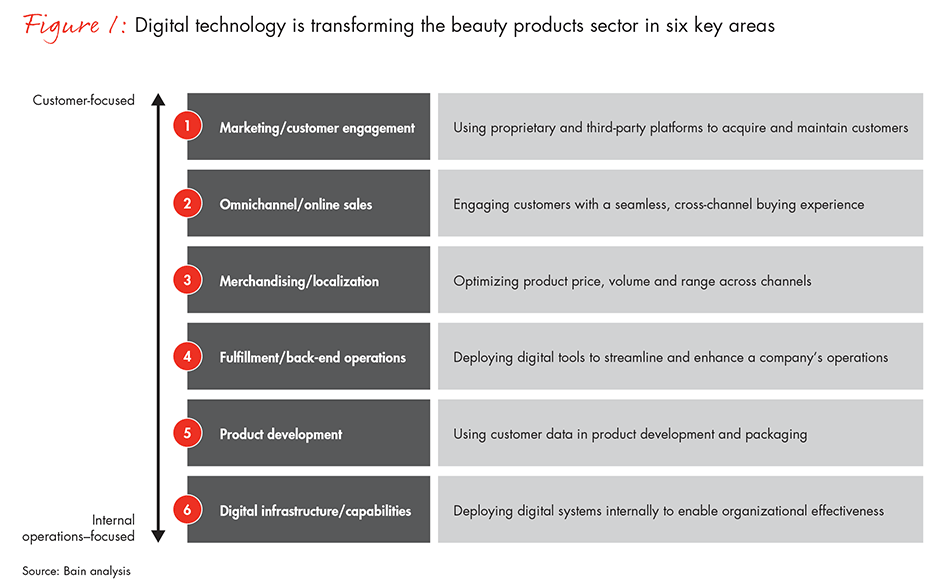
      In the beauty products sector, for example, the marriage of e-commerce and data analytics has completely transformed the relationship between customers and brands. Digital technology has had a major impact on six key aspects of the business (see Figure 1). In marketing and customer engagement, what counts is how a company uses proprietary and third-party platforms to acquire and maintain a customer base. The best-in-class companies are creating seamless, omnichannel experiences that allow customers to research thousands of products, buy them online or at retail stores and keep track of their purchases. In merchandising, digital tools help companies optimize their product and price mix across channels and geographies. Digital analytics also helps streamline fulfillment and back-end operations while sharpening product development and enabling product personalization. To make it all work, leading companies invest heavily in the new talent and capabilities needed to manage digital effectiveness.

      measuring-companys-digital-competence-fig1_embed

      These six lenses work well to focus attention on broad capabilities. But taking the full measure of digital competence requires drilling down further by asking a key set of diligence questions specific to each area of impact: How effectively is the company engaging customers on social media platforms, for instance, or to what degree has it integrated fulfillment systems with supply chain partners? This analysis, in turn, leads to an assessment of relative rank in each area (best in class, at par or laggard). Applied across the value chain, the scorecard draws a picture of where the company demonstrates sustainable leadership and where it is vulnerable. It also helps determine where the target offers opportunities to create value post-acquisition.

      Consider how the scorecard works in assessing two potential targets with very different capabilities. One is a large, regional beauty-products brand that has invested heavily in using digital technology to enhance its customer-facing capabilities. In marketing and engagement, it is clearly best in class. To help customers choose among thousands of SKUs, the company delivers a regular stream of relevant, high-quality content over multiple, integrated channels. It encourages ongoing conversations with its fans over social media by posting seasonal makeup looks to Instagram or offering video makeup tutorials and rich interviews with makeup professionals and other influencers. It also taps into new customers by using Facebook’s Atlas platform to target online advertising precisely, and it has developed strong capabilities to gather and track the customer data flowing from its many platforms to both improve product offerings and uncover trends that can sharpen marketing.

      Less impressive is how it uses digital tools to localize its merchandizing efforts across geographies and provide customers with highly personalized experiences. It is also in the early days of optimizing its supply chain for its digital business. Given progress in these areas, however, and the fact that top leadership is focused on them, these issues may look more like opportunities than red flags for an aggressive new owner. More analysis will determine whether that opportunity is already reflected in the asking price and whether the company’s digital competitive advantage is sustainable.

      A second company presents a less clear picture. Although it has developed a strong retail-based following in the analog world, it trails its rivals in most areas when it comes to using digital tools to improve performance. Like the company in our first example, this one has focused its digital investment on the marketing and engagement capabilities that are so vital to generating interest among the target demographic: young, beauty-conscious women. It, too, has developed strong tutorial content and is making use of social platforms to increase awareness and engagement.

      But in other areas, it lags its peers. Its website is serviceable but lacks critical functionality, such as the ability to filter research by product category or sign up for auto-replenishment. It also has inconsistent messaging across platforms regarding pricing and promotions. It has done little to tie together its strong retail presence and branding with the digital channels that are becoming the go-to resource for most of its target customers. It also has failed to invest in capabilities to gather and analyze customer data to use in product development and marketing strategy.

      This combination of strong brand and following with relatively weak digital capability raises serious questions for a potential investor. The lack of investment in the tools, capabilities and talent needed to stand out digitally in a crowded beauty market is a major problem. What would it take in terms of investment and time for this company to catch up to its peers? Can it ever catch up? And what would be the cost to the business in the meantime, as competitors take share?

      Putting a digital scorecard to work


      Leading private equity firms know that answering questions like these with confidence demands true, microlevel insight. A general estimation of how companies are positioned with regard to digital competence will lead to a vague assessment of value. Imprecision can lead to major mistakes at a time when digital innovation can dramatically change a company’s trajectory, for better or worse. The best firms use scorecards to develop a specialized understanding of digital impact in three ways:

      • In the diligence process, they apply scorecards to gain an insider’s appreciation for how digital innovation will change the competitive dynamic for every target company, and how quickly. This helps form a detailed appraisal of how well the company is positioned to succeed in the face of digital disruption and where digital can really transform its business to unlock value.
      • Once they own a company, they use similar scorecards to assess the digital capabilities and competence of each of their portfolio companies as a starting point for creating a robust value-creation plan.
      • Finally, they understand that the speed of digital information and change demands that both the scorecards and assessments have to be updated regularly to ensure that the firm itself stays ahead of the digital curve.

      Staying ahead of the curve, of course, is becoming the central challenge for investors searching out value in the digital age. For each industry, it requires a deep understanding of both the existing competitive dynamics and how they are changing as digital technology redraws the landscape. It’s not enough to know that digital technology is transforming industries. The right scorecard should focus attention on where, specifically, that transformation is taking place.

      Andrew Tymms and Read Simmons are Bain & Company partners leading the firm’s Private Equity practices in London and New York, respectively. Jayne Zecha is a principal with Bain’s Private Equity and Telecommunications, Media and Technology practices.


      measuring-companys-digital-competence-fig1_full
      Authors
      • Headshot of Andrew Tymms
        Andrew Tymms
        Advisory Partner, Melbourne
      • Headshot of Jayne Zecha
        Jayne Zecha
        Partner, London
      Related Industries
      • Private Equity
      Related Consulting Services
      • Digital
      Private Equity
      Bain & Company's Global Private Equity Report 2016

      Bain's annual Global Private Equity Report offers a comprehensive view of the challenges that private equity investors face following a decade of volatility and change, as well as what it will take to succeed in 2016.

      Read more
      Technology
      Anatomy of a Digital Forerunner

      Five key characteristics of the companies that combine scale with digital agility.

      Read more
      Private Equity
      e-Conomy SEA 2025

      From digital decade to AI reality: Accelerating the future in ASEAN

      Read more
      Private Equity
      What Kind of AI Cycle Are We Actually In?

      The question for investors is not whether AI will boom or bust, but who may be unwittingly subsidizing the buildout.

      Read more
      Digital
      What Business Leaders Need to Know About AI Sovereignty

      Aligning business strategy with national AI priorities is necessary to compete and scale.

      Read more
      First published in agosto 2016
      Tags
      • Digital
      • Private Equity

      How We've Helped Clients

      A Strategic Vision Inspires a Strategic Acquisition

      See more related case studies

      Rapid Tech Due Diligence Helped a Private Equity Firm Invest with Confidence

      See more related case studies

      Broader market plus tighter sales strategy equals big success for a portfolio company

      See more related case studies

      Want to continue the conversation

      We help global leaders with their organization's most critical issues and opportunities. Together, we create enduring change and results

      Bain Insights. Our perspectives on critical issues global businesses face in today's challenging environment, delivered monthly.

      *I have read and understand Bain’s Privacy Notice.

      Please read and agree to the Privacy Policy.
      Bain & Company
      Contact us Sustainability Accessibility Terms of use Privacy Modern Slavery Act Statement Cookie Policy Sitemap Log In

      © 1996-2026 Bain & Company, Inc.

      Contact Bain

      How can we help you?

      • Business inquiry
      • Career information
      • Press relations
      • Partnership request
      • Speaker request
      See all offices