

Brief

Executive Summary
- Senior executives face an increasingly complex landscape, characterized by interconnected disruptions like technological advances, market shifts, and environmental challenges.
- Leaders distinguish trends from fads, turning insights into strategies while taking a coordinated rather than decentralized approach to manage disruptions effectively.
- Critical emerging technologies in 2024 include generative AI, quantum computing, and climate tech, each requiring unique capabilities to realize their potential.
Across industries, senior executives are navigating an increasingly complex landscape moving at ever greater speed—a cycle of continuous disruption. These disruptions, including advances in technology, shifts in market demands, environmental challenges, and geopolitical instability, are interconnected and amplify each other, creating new situations where change can outpace the organization’s ability to adapt.
Leaders play an important role in deciding how to adapt to and thrive with these disruptions, identifying weak and strong signals, separating fads from trends, and translating insights into a meaningful, proactive set of priorities to frame and propel an organization’s strategic goals. Someone has to have the global view, and senior executives are uniquely positioned to coordinate the orchestration of new initiatives, rather than take a less productive, decentralized, and siloed approach.
Global orchestration is essential, given the pace and variety of the current wave of disruptions. It’s one thing to determine the business strategy and opportunities for one new technology, but when a second or third “meteorite” approaches, how do you modify the transformation agenda? What gets deprioritized, and how does the budget respond?
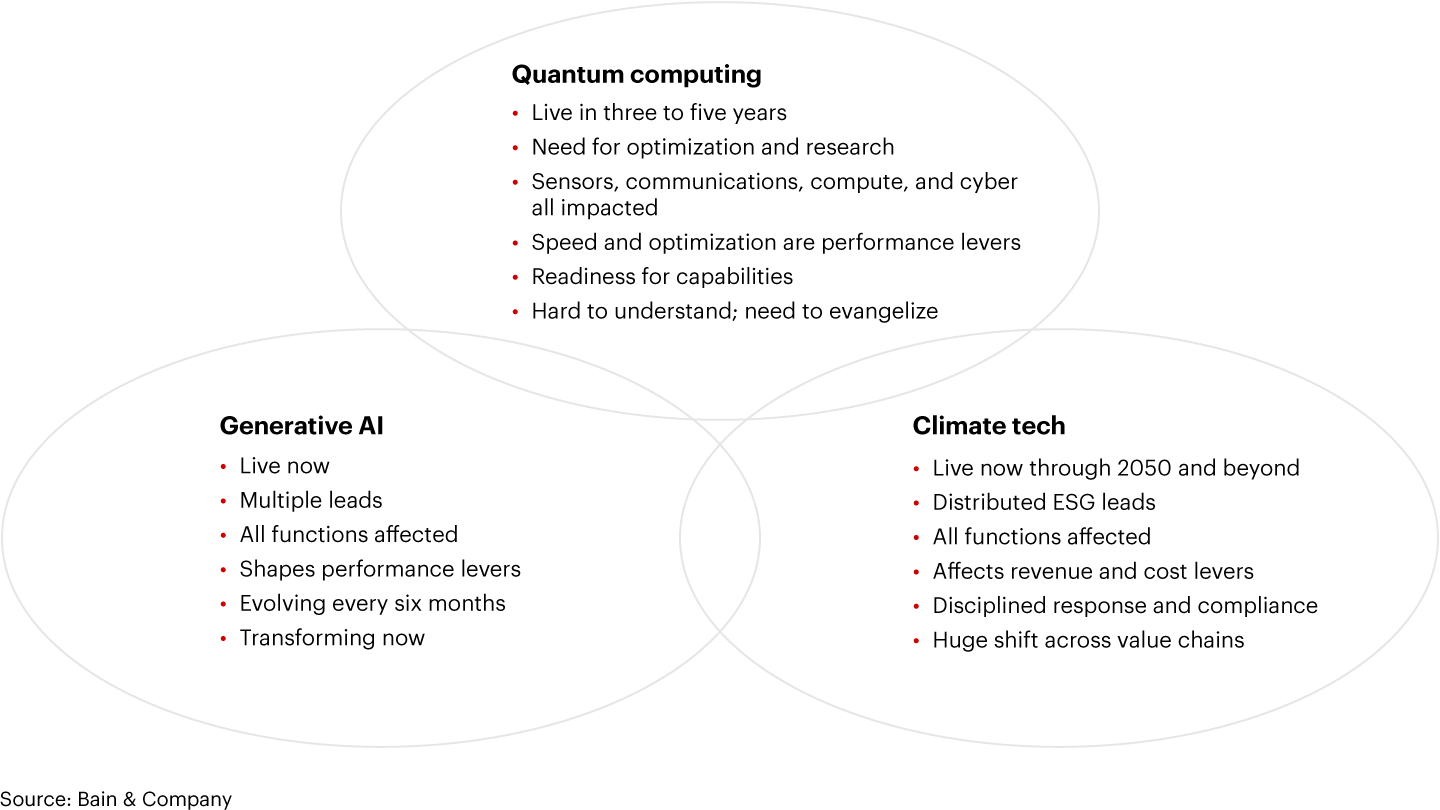
Through our work at Bain’s Venture Ecosystem with corporate innovation leaders, venture capitalists, and start-ups, we have considered three of these meteorites that are high on every senior executive’s list of priorities in 2024: generative AI, quantum computing, and climate technology, each requiring distinctive and complementary capabilities to successfully exploit (see Figure 1).
Figure 1

Generative AI: starting gun for AI transformations
Since it burst into the mainstream in late 2022, generative AI has been high on most companies’ agendas. Bain’s recent research found almost 90% of companies are already using gen AI in some capacity, with nearly as many citing it as a top five priority—one with the potential to disrupt their industries and spark new innovation. Our conversations with executives find them looking beyond experimentation and hype, eager and willing to adapt to use generative AI to create real value.
Successful adoption of generative AI relies on a range of factors, but three important ones are ensuring high data quality, focusing on solving real business pain points, and nurturing talent. Bain’s recent research on AI readiness underscores the importance of the first issue: Executives cited quality and accuracy of data as a top concern. When it comes to using AI to solve business points, our survey found that executives are moving past the stage of “innovation theater” intended mostly to generate good optics and already are focusing on using the technology to improve customer experience and generate revenue. Investment for experimentation has faded as the need to develop a strong business case has grown. Finally, companies are competing to hire and develop talented people who have the right technical expertise along with the capabilities to apply AI developments to tackle real pain points.
Bain recently hosted a Digital Leaders Forum, at Web Summit in Lisbon, and found executives are focused on using generative AI to create value. Executives were excited about understanding the opportunities that generative AI engenders and prioritizing these in line with their companies’ strategic ambitions. Some critical questions revolved around how to ensure mass adoption of new technologies and how to create the will to embrace change—not only within the organization, but among customers, too. Generative AI is already a key issue in long-term planning: A leader at a large European retailer was confident of his company’s AI approach over the next one to three years, but more uncertain looking five to ten years out.
As more companies deploy generative AI solutions, demand for data storage and compute will rise, increasing the management complexity and the environmental footprint of the technology function. The speed to adopt generative AI should be balanced with the relevant environmental considerations and, where possible, new climate technologies should be deployed to mitigate these increases. These may include more efficient data centers or more intelligent use of cloud resources to minimize data transfers. (For more, read the Bain Brief “Bringing the Power of Enterprise Technology to Decarbonization.”) Quantum computing could also play a role in lowering costs and reducing energy usage by raising efficiency. For example, “tensorization” in quantum computing streamlines linear structures and can lead to more efficient algorithms and parallelization.
Understanding generative AI’s interdependence on these other technologies can help executive teams chart a more scalable and sustainable implementation trajectory.
Quantum computing: a leap in processing power
Quantum computing doesn’t get as much buzz as generative AI, but that’s good for leaders who want to shape this disruptive technology before it makes headlines.
Quantum computing uses revolutionary methods to radically increase processing power, managing very complex computations in much less time. Instead of the binary 1-0 bits that traditional computing relies on, quantum bits (qubits) have unique qualities that allow them to exist in a combination of states 0 and 1 and take advantage of relationships among qubits that allow computers to process vast amounts of information in parallel.
This represents a new paradigm for information analysis, one that companies are already paying attention to: Between 2015 and 2022, mentions of quantum computing in earnings calls rose 69%. Potential applications include simulation and drug development in healthcare, disease risk predictions in life sciences, and defect detection in manufacturing.
However, with so many unknowns, how does one begin their quantum journey? Firstly, start soon. Although some estimates put commercial viability out in the mid-2030s or sooner, when systems may be able to process 1 million qubits at once, things could move faster. In 2022, IBM more than tripled its previous capability, demonstrating a 433-bit processor. Gaining an understanding of the previously unthinkable opportunities (and risks) can help companies evaluate the potential and the time to get there.
Discussions about quantum at Bain’s Digital Leaders Forum focused on economics (e.g., what problems justify this technology for their solution?), enabling factors (e.g., should companies work with universities to develop the technology?), and the need to develop proofs of concept as the hardware matures. Executives believe the cost of entry is still low and that they have time to develop their capabilities for foresight and adaptability to help them prepare for this technology.
It’s easy to see how quantum’s superior processing power will support the massive processing needs of AI. The technology also offers dramatic implications for climate technology, from climate forecasting to emissions tracking. Quantum’s superior processing abilities could make AI cleaner and climate technology smarter.
Climate technology: a driver of sustainability
Technology and data capabilities are critical factors enabling companies to meet their sustainability goals. (For more, read the Bain Brief “Achilles’ Heel to Accelerator: How Digital Can Create Sustainability Leadership.”) Bain’s recent research finds that most executives still consider themselves followers in sustainability (55% of respondents in a 2023 survey), taking a reactive stance and focusing mostly on compliance. Only 11% described themselves as sustainability leaders.
In discussions about sustainability at Bain’s Digital Leaders Forum, many executives said they still think of sustainability as separate from IT, not making the connection yet to the role that tech and data play in monitoring and enabling sustainability progress across the value chain. Many said they see government incentives and regulations as the driving force for making change happen. All tended to agree that reporting was a “nightmare” with little consistency across agencies and regions.
IT already accounts for a significant amount of most company’s scope 1 and 2 emissions, and the additional compute power necessary to run generative AI applications could exacerbate the issue. But AI will also play a role in managing sustainability across the organization by tracking emissions and other metrics. Foundation models are an example where generative AI will tap large amounts of data to pre-train huge neural networks, generating tools for creative output and pattern recognition that map everything from energy consumption to supply chain networks.
Quantum computing will also play a supportive role in climate technology, enabling the processing of ever more complex problems—for example, in climate modeling or developing advanced materials that increase energy efficiency.
Global orchestration of disruptive transformations
None of these technologies are sneaking up on us. Senior executives across organizations see them coming and may view them through their own functional lens: a COO evaluating their operational impact, a CFO assessing the revenue and cost implications, a CIO considering the tech architecture and infrastructure necessary to support them. These perspectives are necessary for every part of the company to prepare, but successful transformations still require a decision maker in the center, orchestrating the adaptions to new technologies and reprioritizing initiatives in service of the company’s strategic ambitions. In some organizations, this central orchestrator may be the chief digital officer, but any senior role with the mandate to bring the threads together could manage this globalized coordination.
A key muscle for these orchestrators lies in their ability to understand the interconnected complexity of the approaching wave of disruptions and help organizations prepare for and manage transformations to take full advantage of them. Aligning with business leaders is critical to make sure that transformations support strategic ambitions. One area that’s too often overlooked is aligning with HR: New technologies deployed at scale increasingly require massive upskilling and new talent, and filling the pipeline to equip the company with necessary capabilities is of strategic importance.
In approaching these tasks, executives can think in terms of three overlapping waves of activity.
- A developmental agenda requiring careful planning, strategic analysis, and a clear implementation of roadmaps to track steady, incremental growth from using these technologies. The roadmap should also show how technology innovations and disruptions will affect your industry, and how they will shape your strategy, operations, technology, and talent. Monitoring signposts—for example, indicators of widespread adoption—will help executives navigate the uncertainty inherent in any new technology. A flexible approach, supported by ongoing dialogue among critical stakeholders, allows teams to tackle the most critical aspects of developing each technology by adjusting to changing conditions and refreshing the backlog of unresolved strategic issues.
- A delivery agenda, requiring test and pivot, along with enough agility to shift to a different path if the strategic direction alters. Shared dashboards help teams assess how new initiatives are performing, and an ongoing dialogue tracks progress, identifies and removes roadblocks, and speeds decisions about when to abandon or promote initiatives.
- A global orchestration brings all these initiatives together to address the opportunities inherent in disruption, whereas succumbing to decentralized thinking may benefit part of the organization rather than the whole (see Figure 2). It also considers the larger ecosystem beyond the organization, ensuring alignment with and awareness of broader developments in the venture and policy world.
Figure 2
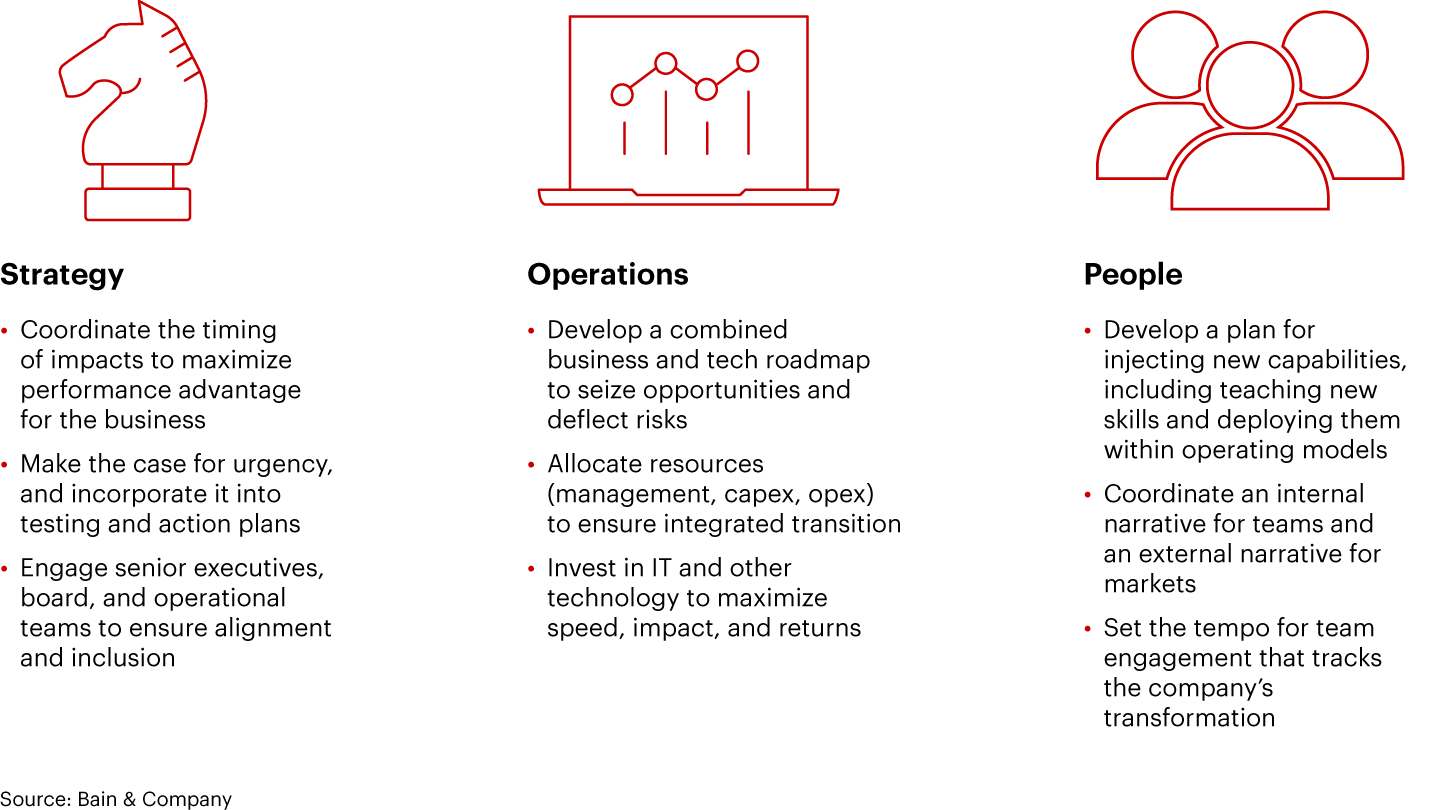

Most senior executives understand that disruptive technologies are equal parts imperative and opportunity. Implementers across an organization feel the burden of the imperative, working to understand and integrate these new technologies into current and future business operations. But successful competitive differentiation depends on the talents and efforts of the global orchestrator—one executive or a team that can conceptualize and prioritize the adoption of many disruptions working together. Only then can the company see that the whole is greater than the sum of the parts.
First published in julio 2024