

Global Private Equity Report

Executive Summary
- Strong management can make or break a deal; there’s no debate about that.
- Yet PE firms often struggle to put the right people in the right roles fast enough to enhance portfolio company value.
- Making faster, better decisions depends on linking talent strategy directly to the explicit roles and missions laid out in the value-creation plan and spelling out exactly what’s needed to execute.
This article is part of Bain's 2021 Global Private Equity Report.
Getting talent decisions right—especially at speed, across dozens of portfolio companies―is one of the stiffest challenges private equity firms face. The experience of one PE-owned company in the packaging industry is typical of what can go wrong.
For a deal predicated on reigniting revenue growth, the new owners developed a detailed value-creation plan (VCP), laying out a strategy to aggressively expand national accounts. Because it required new sales leadership, the company quickly hired an accomplished industry veteran, with high hopes that he could jump-start the commercial organization.
Instead, he stumbled badly. The new hire had a strong record within the packaging industry of increasing sales, which on the surface seemed exactly what the company needed. But beyond experience, the new owners and management hadn’t fully considered the nuanced set of capabilities and motivations a candidate would also need to accelerate performance in this particular situation.
The sales chief had succeeded in the past with a hard-driving, command-and-control style, which was like oil and water with the packaging company’s culture. He ended up alienating sales reps who had grown up in a highly decentralized, entrepreneurial organization. The mismatch ultimately threatened to derail the entire deal.
There are innumerable reasons why talent decisions like this go awry. But firms with the highest success rates have something in common: They are highly disciplined about linking talent decisions to the explicit requirements laid out in the VCP. This may sound obvious, but it is a principle rarely applied either rigorously or consistently. Done right, it follows a clear sequence:
- Having laid out a deal hypothesis and examined talent issues in due diligence, PE investors align with management―and align quickly―on a VCP that details the value-creation strategies essential to generating attractive returns.
- This includes a repeatable process to define the key roles explicitly linked to those strategies and clear, measurable objectives for each role. That information then leads to precise job descriptions that spell out the unique set of experiences, capabilities and motivations required for success.
- The right talent may already be in place or the company may have to recruit people (either internally or externally). But defining needs based on a clearly stated set of value-creation objectives is essential to diagnosing and filling gaps. It also determines the specific targets and milestones leadership needs to gauge progress and measure success.
The honeymoon syndrome
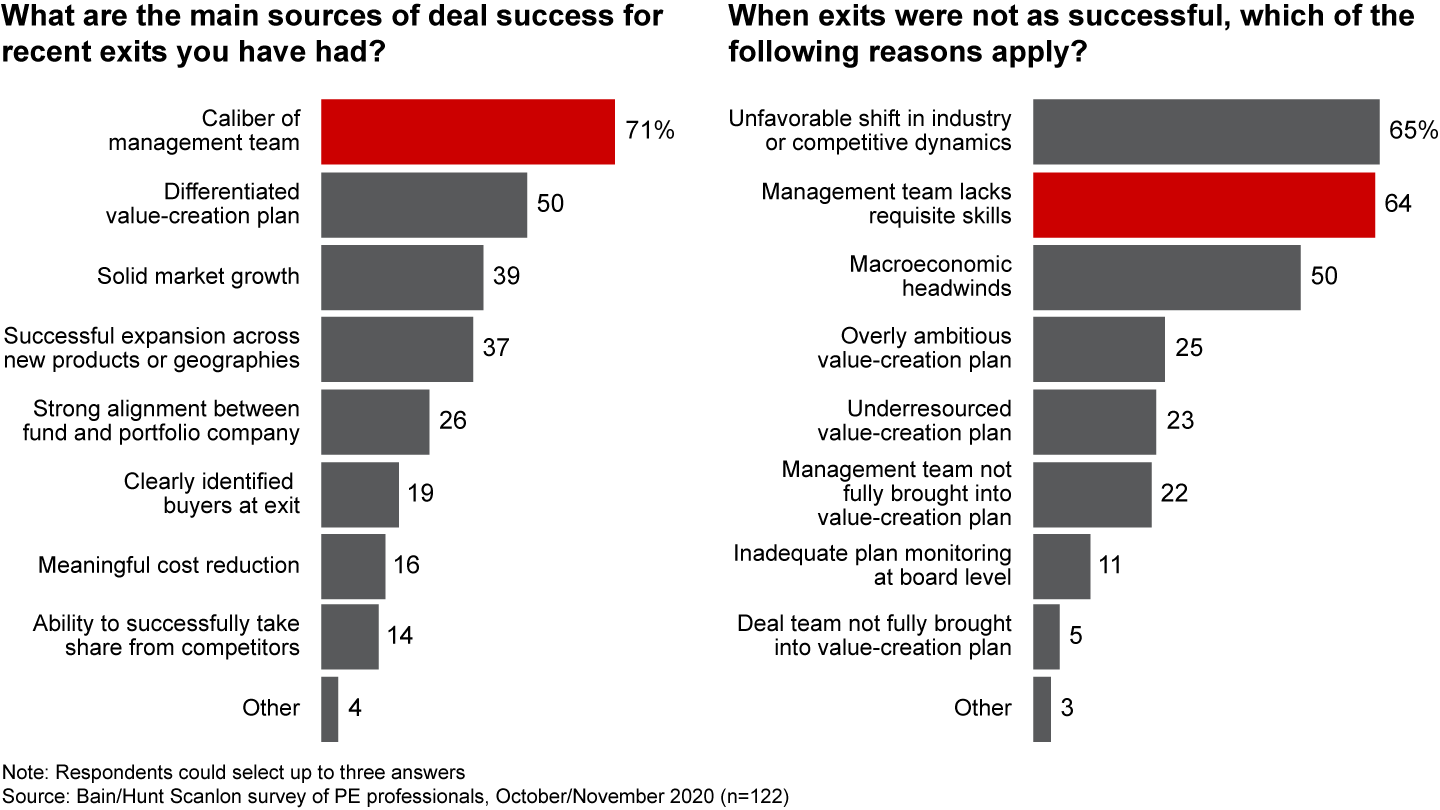
A recent Bain/Hunt Scanlon survey of 122 PE professionals shows that firms are well aware that management is critical to deal success (see Figure 1). Yet they too often lack a consistent, repeatable process for making talent decisions swiftly. The natural tendency at the end of a long deal process is to utter a sigh of relief, clink glasses with management (virtually these days) and let things ride for a time. Many deal teams say they hesitate to make changes because they want to give existing managers a chance to prove themselves. Others take the “devil you know” approach and are wary of rocking the boat with management changes at a critical time.
Figure 1

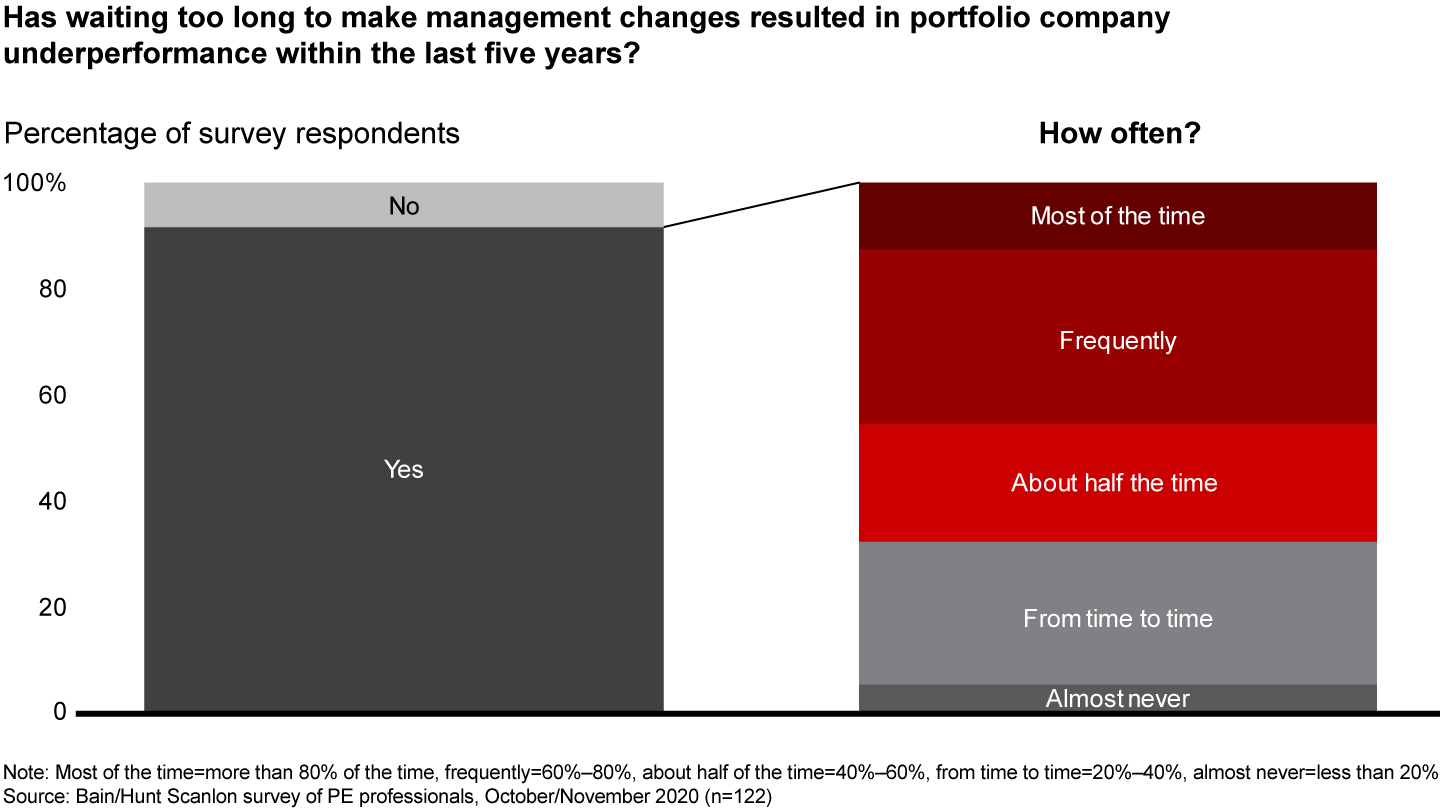
The cost of hesitation, however, is high. An overwhelming 92% of survey respondents said that waiting too long to take action on talent issues had resulted in portfolio company underperformance over the past five years. Almost 70% indicated this happened in at least half of their deals (see Figure 2). Deal teams are especially wary of changing CEOs―93% view such a move as risky or highly risky, and a majority have done it in fewer than half their deals. Yet when they do take action, it is broadly successful 75% of the time.
Figure 2

Recognizing the problem, firms have invested steadily over the past several years to raise their talent game. In addition to partnering with best-in-class executive search and assessment firms, general partners have been hiring portfolio talent professionals to assess and build new management teams, diversify boards, cultivate executive networks and otherwise support companies across the portfolio. But it isn’t easy. Most funds have one, maybe two, dedicated talent professionals and a long list of portfolio companies to work with. What’s often missing, starting in due diligence, is a rigorous process applied consistently at the deal level to define requirements for generating anticipated returns.
This is curious when you consider the meticulous attention private equity firms bring to all other aspects of dealmaking and value creation. Firms are surgical in breaking down balance sheets and revamping supply chains to wring out cost efficiencies. They invest heavily in market research and analytics to determine revenue opportunities and scrub commercial organizations to improve go-to-market capabilities.
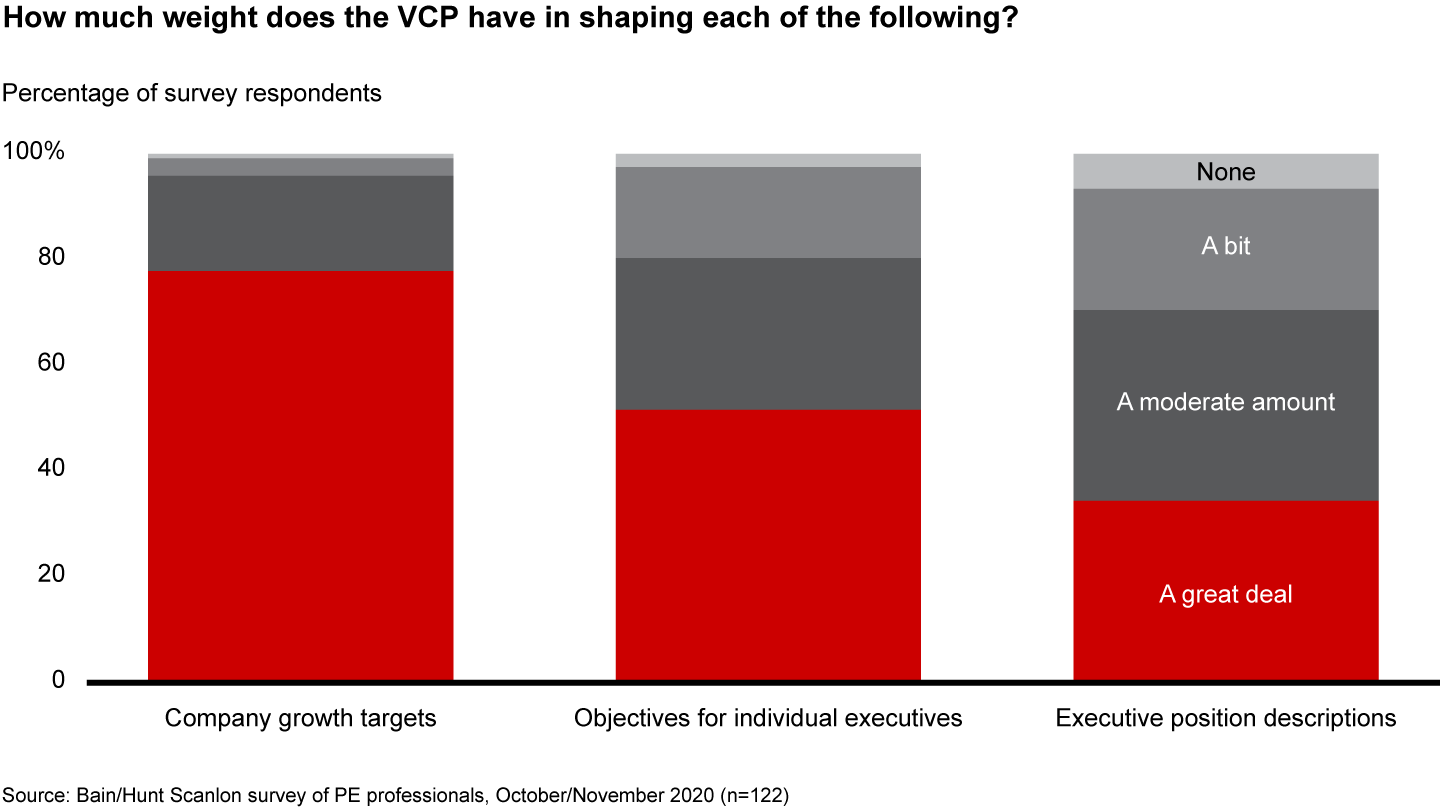
Yet while close to 80% of our survey respondents said they use the VCP to set growth targets, only 34% said they link objectives to clear and actionable executive position descriptions, and only half said they use the VCP to set objectives for individual executives (see Figure 3). Many firms, in other words, see the VCP as an indispensable guide for planning―except when it comes to determining specifically who they need to execute those plans.
Figure 3

Linking talent to aspiration
Why the disconnect? The answer most of the time is that people issues—both at the C-suite level and below—are complex and hard to measure. Because personalities are involved, the challenge is widely viewed as art more than science. That’s precisely why the firms that excel at talent decisions do their best to take subjectivity out of the process by using a highly analytical, left-brained process analogous to underwriting other essential aspects of the deal.
Starting with the specific return objectives laid out in the VCP, they work backward to create a fact-based, strategic set of talent requirements. This demands answers to a few key questions:
- What roles and functions are critical to delivering on this specific plan?
- What are the explicit, quantified goals those executives will have to achieve over the short and longer term?
- What experiences, capabilities and motivations must each executive have in order to execute and generate these results?
A rigorous, analytical approach makes talent decisions easier on everybody because it eliminates ambiguity about what’s required to win. By definition, a strong VCP requires a company to do something new, something it hasn’t done before, and the skills needed for that may or may not exist within the company already. The most relevant inquiry isn’t whether incumbent portfolio company leadership has done a good or bad job of taking the company from point A to point B. What’s essential is to be crystal clear about what it will take to get to point C and deliver on the value-creation plan. That shifts the conversation from personalities to precise goals and requirements.
A rigorous, analytical approach makes talent decisions easier because it eliminates ambiguity about what’s required to win.
When Berkshire Partners bought kids’ apparel company Carter’s, for instance, the company had historically sold directly to consumers through its own stores. But the new VCP required it to expand distribution into Walmart, a channel Carter’s didn’t fully understand at the time. Serving Walmart profitably would mean increasing service levels and reducing cost by moving supply chains to China and Mexico. To ratchet down the risk, Berkshire and management augmented the board by hiring the former CEO of Sara Lee, who had deep experience selling to Walmart and the right mix of capabilities and motivations to help Carter’s make the transition. The company also hired several supply chain experts to buttress the organization with the right skills.
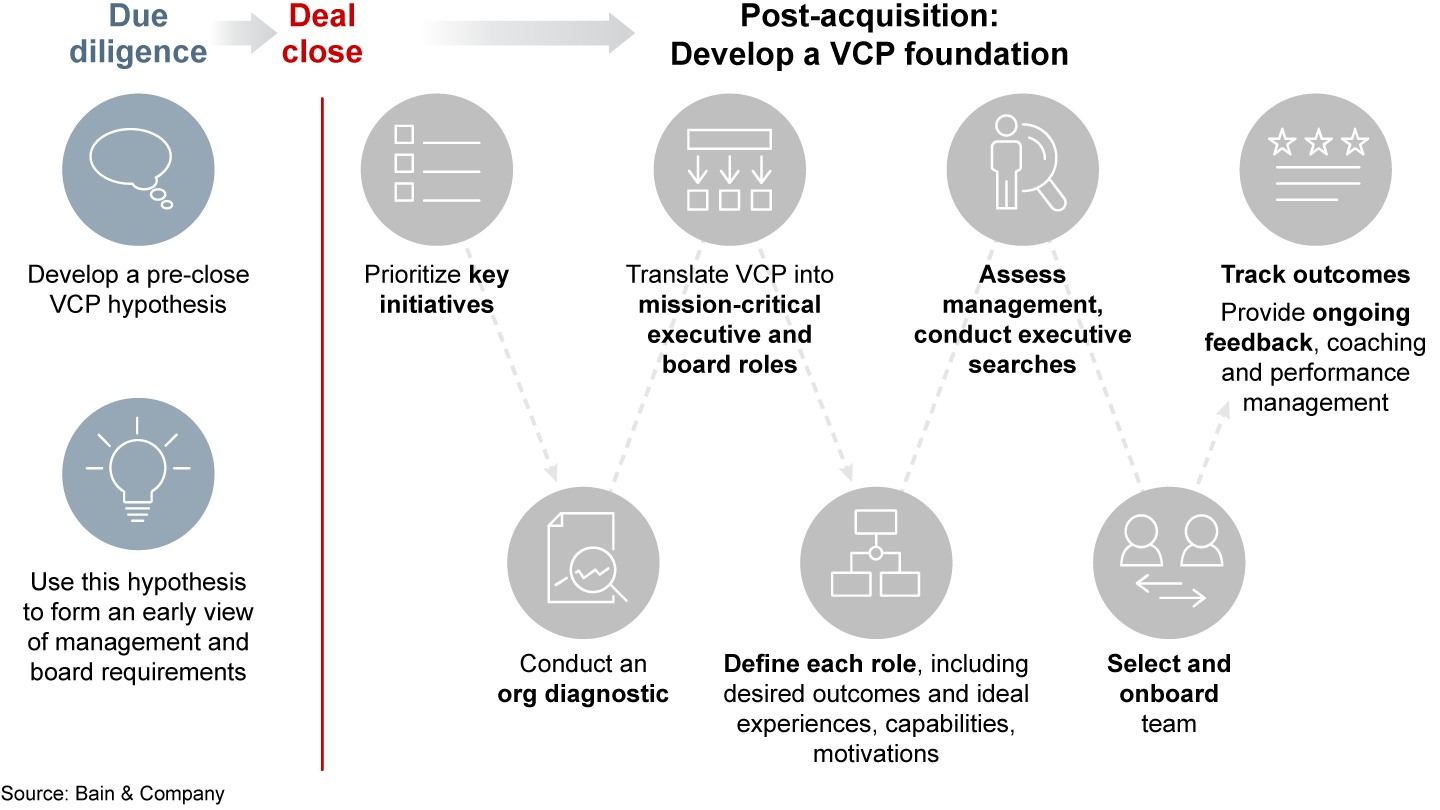
The most effective deal teams begin to think about the talent a company will need during due diligence. The VCP (ideally created within six months of close) confirms those requirements, forming an essential link between the full-potential strategy and the talent strategy. Teams should already be using the plan to create detailed role profiles and scorecards that give the company (and its advisers) the information they need to make assessments (see Figure 4).
Figure 4

This process may confirm that the existing management team is fit for purpose and ready to go with minor adjustments. But it may demonstrate that the company needs to create important new roles or look outside to find the right capabilities. The company, the firm and their advisers must know exactly what they are solving for so they can move expeditiously to build the optimal team.
The experience trap
Without a precise, mission-driven definition of the talent you need, the tendency is to overindex on past experience. If growth through a new digital marketing strategy is what you’re after, then surely someone who has made that happen in the past is a strong candidate. That may be true. Yet as we saw in the packaging company example, if that person lacks the capabilities and motivations required for success in a specific situation, then you may be headed for trouble. As the operating partner of portfolio talent at one firm put it: “There is a tendency among our deal and operating partners to evaluate candidates based on IQ and past experience, but this doesn’t capture many aspects of leadership that are essential for success in very nuanced portfolio company situations.”
It’s hardly news to search firms that finding the right candidate involves more than just evaluating past experiences. But a recruiter’s output is only as good as the input he or she receives from the hiring manager. Because deal teams often lack clear definition around the roles that are critical to delivering value, they are imprecise when defining the required mix of experience, capabilities and motivations. Precision, however, can make all the difference.
Deal teams often lack clear definition around the roles critical to delivering value, so they are imprecise when defining the required mix of experience, capabilities and motivations.
When Carlyle spent $3.2 billion to acquire the industrial packaging group of Illinois Tool Works in 2014, it was a typical carve-out. The firm knew that capturing value would mean building or augmenting a number of key functions, especially procurement. The new company, renamed Signode, manufactured and distributed plastic, paper and metal packaging. Generating savings (direct and indirect) from these commodities was central to the deal thesis.
To win, Signode created a new role for a global procurement officer and found a seasoned executive who had deep experience negotiating with raw materials suppliers. But to deliver on the VCP, he needed much more than that. He also had to build a global team that could execute effectively in a collaborative, decentralized environment across both direct and indirect sourcing categories. He had to be comfortable with a PE firm’s sense of urgency and have the emotional intelligence to understand the delicate balance of pushing the envelope to generate savings quickly, but in a way that wouldn’t alienate suppliers and disrupt production.
As it turned out, the executive helped Signode find significantly more savings than the investment thesis anticipated. The lean procurement capability he built was an important contributor to Carlyle’s strong return on equity when it exited to Crown Holdings four years later.
Solving the puzzle
Very often, the best solution is not the most obvious one. In most cases, linking the VCP to leadership requirements is like finding the right pieces to a jigsaw puzzle.
When one firm acquired an industrial company in 2017, leadership was a clear problem. Over the next three years, the company cycled through two CEOs, leaving the organization whipsawed between strategies and struggling to align on the VCP. As the board and the new owners began to look for a new leader to stabilize the situation, they saw a lot to like in the company’s incumbent chief financial officer. But it wasn’t clear he had everything the VCP called for in the CEO role.
Part of the job was to execute on a set of commercial, operational and M&A objectives aimed at spurring profitable growth. All felt that, with the right coaching, the CFO could step up to those challenges. Promoting from the inside also had the advantage of avoiding disruption at a time when the Covid-19 pandemic put a premium on continuity. The problem was that the VCP also anticipated exiting through an initial public offering, after which the owners would likely retain a stake for at least 18 months. The CFO had no experience taking a company public, opening the deal up to execution risk.
By breaking down the full set of challenges and mapping each one to an executive or board role, an unorthodox solution emerged. The company’s board chairman had ample experience guiding companies through the IPO gauntlet and was willing to take on an executive chairman role to both manage the process and coach the new CEO through it. In many ways, this was the best of both worlds. The company could continue to groom a promising executive, and the new owners could rest assured that all exit options remained available.
Firms find that linking roles and responsibilities to the VCP naturally opens the search aperture to the most relevant set of characteristics. The experience bias tends to dissipate as teams think more deeply about how roles intersect within the organization and how a person’s mindset and values might mesh within an existing culture. The most effective firms are always asking the same question and seeking alignment on the answer: Is this the right match for the particular job we need to do? If not, what’s the risk of moving forward?
Sometimes experience is actually the least important factor. When a PE firm recently acquired a global aftermarket parts and services provider, a critical aspect of the VCP was increasing revenue of a key business unit based on the strength of new product introductions. Making that happen would involve transforming the unit’s go-to-market model by building new sales channels and beefing up the commercial organization. The challenge was that nobody on the existing team had done anything like that before at scale.
What the company did have, however, was an especially promising executive who the CEO believed had the right stuff to step into the challenge. The new owners agreed this executive had high potential, and they used a fine-grained role description derived from the VCP to set up the right scaffold to support him. This involved identifying the specific areas in which he needed development and setting very specific short- and long-term objectives. Clear expectations, support from management and evaluations at every step of the journey would keep the executive on track. It also could assure the new owners that they had made the right decision in elevating him.
The real risk in most talent situations is not placing educated bets on promising people but moving forward based on incomplete information. That slowed down progress when the leaders of a PE-owned retail chain sought to lay the foundation for accelerated growth. While the company had expanded steadily under previous ownership by opening and acquiring new locations, due diligence showed that the next phase of growth would require a much more sophisticated approach to marketing―one that would increase the flow of new customers while sharply reducing acquisition costs.
Early on, the company hired an executive to lead the marketing function who had strong experience generating sales growth through traditional media. Once the VCP took shape, however, the new owners saw a ripe opportunity to improve marketing effectiveness by shifting the company’s media buy online and targeting ads at the company’s key demographic groups in the specific geographies where it had locations. There was also upside in sharpening the company’s online presence.
Adding digital competency required doubling the marketing staff and creating a major new role for a digitally savvy chief marketing officer. This person would not only have to dramatically alter the traditional media plan but also manage a digital team, build cross-functional processes and sharpen the customer experience―all while operating in an accelerated, high-pressure private equity setting. A key part of the job was managing change in advance of accelerating growth, building a solid new foundation to support the more aggressive double-digit revenue ambition. That would require the full slate of transformation competencies: redefining roles, breaking old habits and winning buy-in among a wide variety of stakeholders.
Once the company put an external hire in place, equity value creation took off. The new CMO quickly delivered against a highly specific set of outcomes prescribed by the VCP, drawing up an 18-month marketing roadmap with clear metrics, redesigning the org chart, building cross-functional cooperation and hitting specific customer traffic and efficiency targets. The only regret for the company and its owners was that they hadn’t moved faster to define what they really needed.
As the data from our survey shows, hesitation and poor people decisions can spell the difference between deal success and failure. This is especially true in an upside-down post-Covid world, where a combination of record deal multiples and deep economic uncertainty leaves little room for error.
Capturing full potential when it comes to talent management means replacing gut decisions with a systematic, analytical approach to identifying needs and filling gaps, starting in due diligence and running throughout the ownership period. Anything less is leaving money on the table.
More from the report
Read our 2021 Global Private Equity Report
First published in marzo 2021