
Skip to Content
  • Offices

    Offices

    North & Latin America
    • Atlanta
    • Austin
    • Bogota
    • Boston
    • Buenos Aires
    • Chicago
    • Dallas
    • Denver
    • Houston
    • Los Angeles
    • Mexico City
    • Minneapolis
    • Monterrey
    • Montreal
    • New York
    • Rio de Janeiro
    • San Francisco
    • Santiago
    • São Paulo
    • Seattle
    • Silicon Valley
    • Toronto
    • Washington, DC
    Europe & Africa
    • Amsterdam
    • Athens
    • Berlin
    • Brussels
    • Copenhagen
    • Dusseldorf
    • Frankfurt
    • Helsinki
    • Istanbul
    • Johannesburg
    • Kyiv
    • Lisbon
    • London
    • Madrid
    • Milan
    • Munich
    • Oslo
    • Paris
    • Rome
    • Stockholm
    • Vienna
    • Warsaw
    • Zurich
    Middle East
    • Doha
    • Dubai
    • Riyadh
    Asia & Australia
    • Bangkok
    • Beijing
    • Bengaluru
    • Brisbane
    • Ho Chi Minh City
    • Hong Kong
    • Jakarta
    • Kuala Lumpur
    • Manila
    • Melbourne
    • Mumbai
    • New Delhi
    • Perth
    • Shanghai
    • Singapore
    • Sydney
    • Tokyo
    See all offices
  • Alumni
  • Media Center
  • Subscribe
  • Contact
  • Colombia | Español

    Select your region and language

    Global
    • Global (English)
    North & Latin America
    • Brazil (Português)
    • Argentina (Español)
    • Canada (Français)
    • Chile (Español)
    • Colombia (Español)
    Europe, Middle East, & Africa
    • France (Français)
    • DACH Region (Deutsch)
    • Italy (Italiano)
    • Spain (Español)
    • Greece (Elliniká)
    Asia & Australia
    • China (中文版)
    • Korea (한국어)
    • Japan (日本語)
  • Saved items (0)
    Saved items (0)

    You have no saved items.

    Bookmark content that interests you and it will be saved here for you to read or share later.

    Explore Bain Insights
  • Industries
    Main menu

    Industries

    • Aeroespacial y Defensa
    • Agroindustria
    • Químicos
    • Construcción e Infraestructura
    • Productos de Consumo
    • Servicios Financieros
    • Salud y Ciencias de la Vida
    • Maquinaria y Equipo Industrial
    • Medios y Entretenimiento
      Industries
      Medios y Entretenimiento
      • Media Lab
    • Metales
    • Minería
    • Petróleo y Gas
    • Papel y Empaque
    • Private Equity
      Industries
      Private Equity
      • Due Diligence
      • Exit Planning
      • Firm Strategy & Operations
      • Portfolio Value Creation
    • Sector Público y Social
    • Retail
    • Tecnología
    • Telecomunicaciones
      Industries
      Telecomunicaciones
      • Capital Expenditure
      • Telco Digital Transformation
    • Transporte
    • Viajes y Turismo
    • Servicios Públicos y Energías Renovables
  • Consulting Services
    Main menu

    Consulting Services

    • Customer Experience
    • Sustainability
    • Innovation
    • M&A
    • Operations
    • People & Organization
    • Private Equity
    • Sales & Marketing
    • Strategy
    • AI, Insights, and Solutions
    • Technology
    • Transformation
  • Digital
  • Insights
    Main menu

    Insights

    • Industry Insights
    • Services Insights
    • Bain Books
    • Webinars
    • Bain Futures
    View all Insights
    Featured topics
    • Tariff Response
    • Artificial Intelligence
    • Thriving in Uncertainty
    • Executive Conversations
    • Macro Trends
    • M&A Report
    • Healthcare Private Equity Report
    • Paper & Packaging Report
    • Technology Report
    • CEO's Guide to Sustainability
    • CEO Insights
    • CFO Insights
    • COO Insights
    • CIO Insights
    • CMO Insights
    View all featured topics
  • About
    Main menu

    About

    • What We Do
    • What We Believe
    • Our People & Leadership
    • Client Results
    • Awards & Recognition
    • Global Affiliations
    Further: Our global responsibility
    • Sustainability
    • Social Impact
    • World Economic Forum
    Learn more about Further
  • Carreras
    Main menu

    Carreras

    • Trabaja con Nosotros
      Carreras
      Trabaja con Nosotros
      • Find Your Place
      • Nuestras Áreas de Trabajo
      • Equipos Integrados
      • Estudiantes
      • Internships & Programs
      • Eventos de Reclutamiento
    • La Vida en Bain
      Carreras
      La Vida en Bain
      • Historias Profesionales
      • Nuestra Gente
      • Dónde Trabajamos
      • Apoyando tu Crecimiento
      • Grupos de Afinidad
      • Beneficios
    • Impact Stories
    • Nuestro Proceso
      Carreras
      Nuestro Proceso
      • Qué Esperar
      • Entrevistas
    FIND JOBS
  • Offices
    Main menu

    Offices

    • North & Latin America
      Offices
      North & Latin America
      • Atlanta
      • Austin
      • Bogota
      • Boston
      • Buenos Aires
      • Chicago
      • Dallas
      • Denver
      • Houston
      • Los Angeles
      • Mexico City
      • Minneapolis
      • Monterrey
      • Montreal
      • New York
      • Rio de Janeiro
      • San Francisco
      • Santiago
      • São Paulo
      • Seattle
      • Silicon Valley
      • Toronto
      • Washington, DC
    • Europe & Africa
      Offices
      Europe & Africa
      • Amsterdam
      • Athens
      • Berlin
      • Brussels
      • Copenhagen
      • Dusseldorf
      • Frankfurt
      • Helsinki
      • Istanbul
      • Johannesburg
      • Kyiv
      • Lisbon
      • London
      • Madrid
      • Milan
      • Munich
      • Oslo
      • Paris
      • Rome
      • Stockholm
      • Vienna
      • Warsaw
      • Zurich
    • Middle East
      Offices
      Middle East
      • Doha
      • Dubai
      • Riyadh
    • Asia & Australia
      Offices
      Asia & Australia
      • Bangkok
      • Beijing
      • Bengaluru
      • Brisbane
      • Ho Chi Minh City
      • Hong Kong
      • Jakarta
      • Kuala Lumpur
      • Manila
      • Melbourne
      • Mumbai
      • New Delhi
      • Perth
      • Shanghai
      • Singapore
      • Sydney
      • Tokyo
    See all offices
  • Alumni
  • Media Center
  • Subscribe
  • Contact
  • Colombia | Español
    Main menu

    Select your region and language

    • Global
      Select your region and language
      Global
      • Global (English)
    • North & Latin America
      Select your region and language
      North & Latin America
      • Brazil (Português)
      • Argentina (Español)
      • Canada (Français)
      • Chile (Español)
      • Colombia (Español)
    • Europe, Middle East, & Africa
      Select your region and language
      Europe, Middle East, & Africa
      • France (Français)
      • DACH Region (Deutsch)
      • Italy (Italiano)
      • Spain (Español)
      • Greece (Elliniká)
    • Asia & Australia
      Select your region and language
      Asia & Australia
      • China (中文版)
      • Korea (한국어)
      • Japan (日本語)
  • Saved items  (0)
    Main menu
    Saved items (0)

    You have no saved items.

    Bookmark content that interests you and it will be saved here for you to read or share later.

    Explore Bain Insights
  • Industries
    • Industries

      • Aeroespacial y Defensa
      • Agroindustria
      • Químicos
      • Construcción e Infraestructura
      • Productos de Consumo
      • Servicios Financieros
      • Salud y Ciencias de la Vida
      • Maquinaria y Equipo Industrial
      • Medios y Entretenimiento
      • Metales
      • Minería
      • Petróleo y Gas
      • Papel y Empaque
      • Private Equity
      • Sector Público y Social
      • Retail
      • Tecnología
      • Telecomunicaciones
      • Transporte
      • Viajes y Turismo
      • Servicios Públicos y Energías Renovables
  • Consulting Services
    • Consulting Services

      • Customer Experience
      • Sustainability
      • Innovation
      • M&A
      • Operations
      • People & Organization
      • Private Equity
      • Sales & Marketing
      • Strategy
      • AI, Insights, and Solutions
      • Technology
      • Transformation
  • Digital
  • Insights
    • Insights

      • Industry Insights
      • Services Insights
      • Bain Books
      • Webinars
      • Bain Futures
      View all Insights
      Featured topics
      • Tariff Response
      • Artificial Intelligence
      • Thriving in Uncertainty
      • Executive Conversations
      • Macro Trends
      • M&A Report
      • Healthcare Private Equity Report
      • Paper & Packaging Report
      • Technology Report
      • CEO's Guide to Sustainability
      • CEO Insights
      • CFO Insights
      • COO Insights
      • CIO Insights
      • CMO Insights
      View all featured topics
  • About
    • About

      • What We Do
      • What We Believe
      • Our People & Leadership
      • Client Results
      • Awards & Recognition
      • Global Affiliations
      Further: Our global responsibility
      • Sustainability
      • Social Impact
      • World Economic Forum
      Learn more about Further
  • Carreras
    Popular Searches
    • Agile
    • Digital
    • Strategy
    Your Previous Searches
      Recently Visited Pages

      Content added to saved items

      Saved items (0)

      Removed from saved items

      Saved items (0)

      Article

      The Supply Chain Needs a Permanent Seat at Retail’s Top Table

      The Supply Chain Needs a Permanent Seat at Retail’s Top Table

      A changed landscape means it’s time to focus on value-creating investment as well as cost control.

      By Mikey Vu, Ryan Fisher, and Travis Wibracht

      • min read
      }

      Article

      The Supply Chain Needs a Permanent Seat at Retail’s Top Table
      en

      When Covid-19 hit, supply chain leaders gained a bigger say in the way retailers were run. As resilience became the overriding priority, supply chain teams shaped top-level decisions rather than merely implementing them at the lowest cost possible. Amid persistent shortages, their newly prominent role allowed retailers to hold everything together, prioritize what customers truly cared about, and come out of the pandemic stronger than before.

      Now, rather than letting the supply chain become an afterthought once again, it’s time to take the next step in realizing its full strategic potential. That means promoting it from back-office status to a permanent seat at the top table.

      Upgrading the supply chain function’s status is vital because shopper expectations have surged since the pandemic hit. Consumers want faster delivery, for one thing: In US grocery, for instance, more than three-quarters of online orders now arrive the same day, while a quarter of millennials are willing to pay up to $15 for home delivery within an hour (see Figure 1). Shoppers also hunger for more flexible fulfillment and fresher products. Tolerance for stockouts and narrow assortments has declined, meanwhile.

      Figure 1
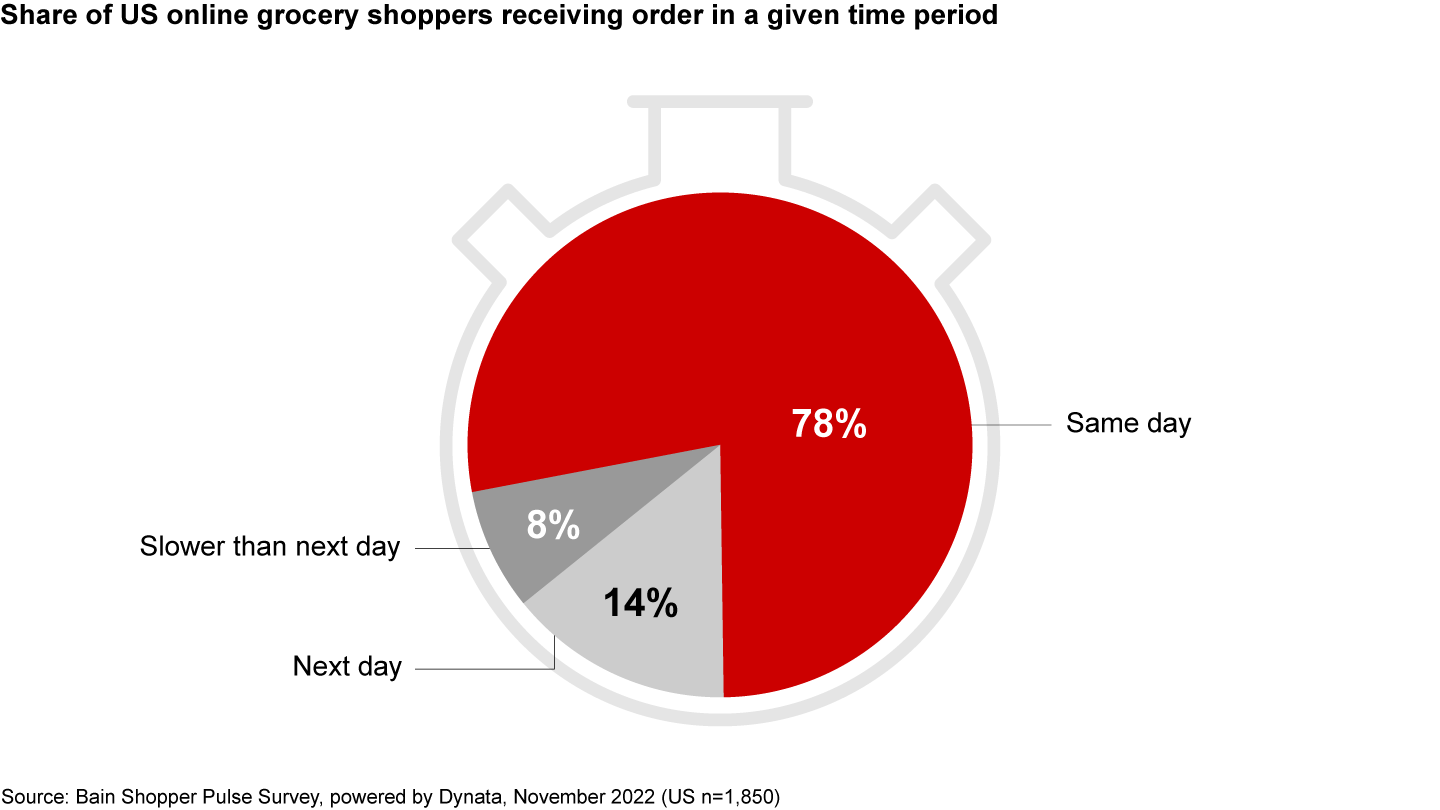
      More than 75% of online grocery orders in the US arrive the same day—just one sign that supply chain expectations have risen
      More than 75% of online grocery orders in the US arrive the same day—just one sign that supply chain expectations have risen
      More than 75% of online grocery orders in the US arrive the same day—just one sign that supply chain expectations have risen

      Meeting these heightened expectations can put a strain on supply chains and profitability, and some retailers are starting to invest in response to the challenge. In our latest retail supply chain survey, a collaboration with the National Retail Federation, we asked retail leaders what strategies they were implementing to address the accelerated shift to e-commerce and boost their customer value proposition. We found that 66% were optimizing inventory, 50% were deploying new last-mile delivery strategies, and 45% were opening microfulfillment centers.

      Despite this evolution, many retail executive teams are not yet aware of how much their supply chain can aid growth. That’s not just because some retailers have historically limited their supply chain ambitions to optimizing truck routes and keeping a lid on cost per case per mile. It’s also because they still see supply chain as a function that takes orders rather than one that solves problems. Such an approach misses how much digital twin modeling of physical supply chains has quietly advanced—to a stage where the customer impact of various network scenarios can be assessed with astonishing granularity. Happily, it’s not too late for retailers to capitalize.

      Where the supply chain can have a strategic impact

      There are diverse contexts in which the latest supply chain modeling tools can create end-to-end value—and help retailers avoid letting down their customers.

      Take the delivery of strawberries to grocery stores. In a conventional supply chain approach, retailers would wait to fill trucks to the brim before dispatch. That might make sense in narrow, cost-centric terms that take little account of the broader health of the business. However, the delay in dispatch would also adversely impact freshness, making the item less alluring to the shopper, who might not just pass on the strawberries but also decide to shop at a rival store. That’s not a far-fetched scenario, given the importance grocery shoppers place on produce freshness.

      Stockouts are another supply chain setback that can jeopardize the relationship between a retailer and its customers: Our research shows they are the most annoying of all the episodes that shoppers commonly encounter in grocery (see Figure 2). Stockouts are also a high-risk situation in other corners of retail, of course, potentially causing the disappointed shopper to transfer their allegiance elsewhere.

      Figure 2
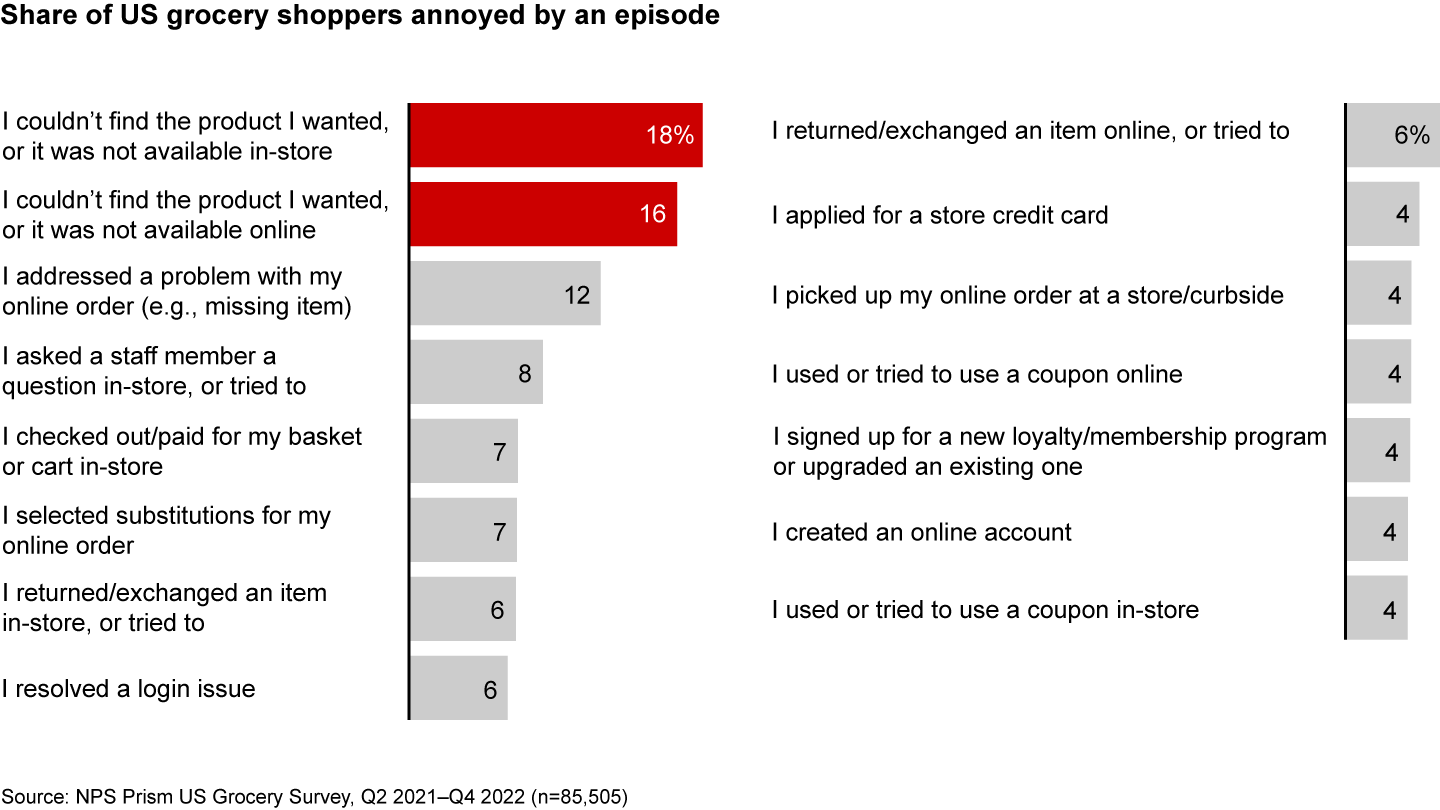
      Stockouts emerged as the most annoying occurrence among common episodes in the US grocery-buying journey
      Stockouts emerged as the most annoying occurrence among common episodes in the US grocery-buying journey
      Stockouts emerged as the most annoying occurrence among common episodes in the US grocery-buying journey

      Supply chain weaknesses might mean that a consumer doesn’t even bother to start their shopping journey with a certain retailer. For example, if a customer needs a piece of sports equipment for an event that same day, their choice of retailer won’t come down to affinity; it’ll be determined by the concrete reality of which retailer has built reliable same-day delivery capabilities. 

      As they seek to delight rather than disappoint customers at crucial moments such as these, executive teams can now get a much more holistic sense of how supply chain adjustments can produce better outcomes. Retailers can model the impact of strategic supply chain moves against a broader array of metrics than just cost, such as consistency of in-store availability, basket size, a customer’s loyalty to the brand (as measured by Net Promoter ScoreSM), and how much of their spending the retailer is securing.

      A new lens for supply chain investment

      Shifting the supply chain emphasis from cost containment to strategic investment will involve difficult conversations at the start—but they’ll be the right sort of difficult conversations, and the extra clarity created by investment in cutting-edge supply chain modeling should gradually make them easier.

      In fresh produce, for instance, giving the consumer an extra day of freshness might require a grocer to spend $100 million on a new automated refrigerated distribution center that would increase both the frequency of deliveries from farms and the number of stores that receive perishable food deliveries daily. But the likely revenue boost could be worth it if that expenditure cut the cycle time between needing and receiving a delivery at hundreds of stores, for example.

      One way to fund supply chain investments is to push further beyond retail’s historic core. Bain research suggests that, between now and 2030, retailers will see only modest profit growth from traditional trade (retail activities centered on the simple sale of goods procured from suppliers). Instead, the lion’s share of profit growth is likely to come from activity that reaches beyond trade, such as marketplaces, advertising, and financial services. We forecast that “beyond trade” activities could account for half of retailer profits in 2030 in a typical Western market (see the Bain Brief “The Future of Retail: The Age of Convergence”). In addition, some scale players still aren’t done monetizing all their existing supply chain advantages in traditional trade.

      It’s also worth bearing in mind that, when the newly empowered supply chain team brings bold ideas to the CEO, the associated investment in supply chain automation is likely to provide another benefit to the company: less vulnerability to labor market shortages. Two-thirds of retailers in the Bain/National Retail Federation survey highlighted labor shortages as a significant and ongoing pressure.

      Three ways to emulate the rise of IT

      In many ways, the supply chain function in retail is starting to go through the same sort of transition that IT has experienced in recent years, from a back-end function to an integral strategic function. A couple of decades ago, IT was tasked with keeping things running while continuously seeking opportunities to cut costs and protect the bottom line. However, as omnichannel growth accelerated, leaders started to lean on their IT teams to develop differentiated customer experiences that could spur top-line growth too.

      In retail, the leaders in this transition are already starting to treat supply chain management as a team sport—by identifying key dimensions of their value proposition and engaging supply chain managers in a cross-functional team to reinforce them. They are also asking themselves crucial questions, such as:

      • If we invest for speed, what is it worth to our customer?
      • How do we increase availability and raise service levels for stores and customers?
      • How can we think differently about end-to-end freight?
      • What is the financial value of the labor resilience gained from automation?
      • How can we get our products as close to the customer as possible without encountering untenable costs?

      Answering these questions is not easy, and old ways of working are pervasive. Even the best struggle to quantify the potential value of supply chains as a competitive weapon. While each retailer will need to craft its own recipe for success, three actions are key.

      First, retailers need to keep supply chain expertise at the top table and strike a new balance between efficiency, convenience, and resilience. After authorizing heavy spending on supply chain resilience during the pandemic, executive teams should avoid a knee-jerk retrenchment as they rebalance their approach. Instead, leading companies will empower supply chain managers to bring to the table ideas that generate strategic value beyond their costs. They will rigorously focus on key customer metrics and prioritize investments with the highest potential for growth beyond the status quo, working with other functions such as merchandising and store operations to create a truly delightful and differentiated experience for customers every step of the way.

      Second, they need to build sophisticated modeling capabilities that exploit the full power of data science and network analytics. While it is tempting to trust legacy capabilities to evolve, the pace of change in today’s retail landscape renders them largely obsolete. Being able to articulate and quantify the impact of every investment scenario or network change—including dead net cost to the penny (and at case and flow path level), full end-to-end inventory impact, capacity and utilization impact, and customer availability—makes a supply chain expert a far more persuasive figure at the decision-making table, one that can engage deeply in strategic conversations about the overall direction of the business.

      This last point feeds into our third imperative: the need to master cross-functional change management. Leading retailers will secure buy-in across the organization for supply chain initiatives. This will entail early cross-functional discussions of the implications of planned moves, geared toward agile ideation and implementation. The decision-making process will look beyond financial metrics, relying on broad engagement and ownership to develop a holistic view of the value at stake. For supply chain teams, it’s an opportunity to develop the same skills at influencing peers that IT specialists built up in their own rise to prominence.

      Strategic investment in the supply chain can create more value than a single-minded focus on cost-cutting: Retailers won’t regret pulling up that extra chair.


      Authors
      • Headshot of Mikey Vu
        Mikey Vu
        Partner, Austin
      • Headshot of Ryan Fisher
        Ryan Fisher
        Partner, Dallas
      • Headshot of Travis Wibracht
        Travis Wibracht
        Partner, Dallas
      Related Industries
      • Grocery
      • Retail
      Related Consulting Services
      • Operations
      • Supply Chain
      How We Can Help
      • Net Promoter Score℠
      Retail
      Sourcing amid Uncertainty: Fashion and Footwear Retail Strategies

      Costs are mounting, supply chains are in flux, and the future is murky. Winning brands are acting now to reinforce their resilience.

      Read more
      Retail
      The Most Loved Private-Label Brands in Fresh and Perishable Food

      Texas grocer H-E-B tops our second ranking of US own-label brands.

      Read more
      How Synthetic Customers Bring Companies Closer to the Real Ones

      From product design to campaign testing, companies are using synthetic customers to get sharper answers faster.

      Read more
      Supply Chain
      How AI Is Starting to Transform Circular Packaging

      There are 15 AI use cases companies across the value chain can use today to accelerate circularity.

      Read more
      Retail
      The Most Loved Private-Label Brands in Shelf-Stable and Frozen Food

      Trader Joe’s tops our first ranking of loyalty-boosting own-label brands in US grocery.

      Read more
      First published in marzo 2023
      Tags
      • Grocery
      • Net Promoter Score℠
      • Operations
      • Retail
      • Supply Chain

      How We've Helped Clients

      A Grocery Giant Enjoys the Fruits of a Successful Merger Integration

      See more related case studies

      A Global Retailer Transforms Technology and Data to Conquer the Digital Future

      See more related case studies

      Global expansion boosts supermarket earnings and growth

      See more related case studies

      Want to continue the conversation

      We help global leaders with their organization's most critical issues and opportunities. Together, we create enduring change and results

      Net Promoter®, NPS®, NPS Prism®, and the NPS-related emoticons are registered trademarks and Net Promoter Score℠ and Net Promoter System℠ are service marks of Bain & Company, Inc., Satmetrix Systems, Inc., and Fred Reichheld.

      Bain Insights. Our perspectives on critical issues global businesses face in today's challenging environment, delivered monthly.

      *I have read and understand Bain’s Privacy Notice.

      Please read and agree to the Privacy Policy.
      Bain & Company
      Contact us Sustainability Accessibility Terms of use Privacy Modern Slavery Act Statement Cookie Policy Sitemap Log In

      © 1996-2026 Bain & Company, Inc.

      Contact Bain

      How can we help you?

      • Business inquiry
      • Career information
      • Press relations
      • Partnership request
      • Speaker request
      See all offices