
Skip to Content
  • Bureaux

    Bureaux

    Amérique du Nord et Amérique du Sud
    • Atlanta
    • Austin
    • Bogota
    • Boston
    • Buenos Aires
    • Chicago
    • Dallas
    • Denver
    • Houston
    • Los Angeles
    • Mexico City
    • Minneapolis
    • Monterrey
    • Montreal
    • New York
    • Rio de Janeiro
    • San Francisco
    • Santiago
    • São Paulo
    • Seattle
    • Silicon Valley
    • Toronto
    • Washington, DC
    Europe, Moyen-Orient et Afrique
    • Amsterdam
    • Athens
    • Berlin
    • Brussels
    • Copenhagen
    • Doha
    • Dubai
    • Dusseldorf
    • Frankfurt
    • Helsinki
    • Istanbul
    • Johannesburg
    • Kyiv
    • Lisbon
    • London
    • Madrid
    • Milan
    • Munich
    • Oslo
    • Paris
    • Riyadh
    • Rome
    • Stockholm
    • Vienna
    • Warsaw
    • Zurich
    Asie et Australie
    • Bangkok
    • Beijing
    • Bengaluru
    • Brisbane
    • Ho Chi Minh City
    • Hong Kong
    • Jakarta
    • Kuala Lumpur
    • Manila
    • Melbourne
    • Mumbai
    • New Delhi
    • Perth
    • Shanghai
    • Singapore
    • Sydney
    • Tokyo
    Voir tous les bureaux
  • Alumni
  • Presse
  • S’abonner
  • Contacter
  • Canada | Français

    Sélectionnez votre région et votre langue

    Global
    • Global (English)
    Amérique du Nord et Amérique du Sud
    • Brazil (Português)
    • Argentina (Español)
    • Canada (Français)
    • Chile (Español)
    • Colombia (Español)
    Europe, Moyen-Orient et Afrique
    • France (Français)
    • DACH Region (Deutsch)
    • Italy (Italiano)
    • Spain (Español)
    • Greece (Elliniká)
    Asie et Australie
    • China (中文版)
    • Korea (한국어)
    • Japan (日本語)
  • Saved items (0)
    Saved items (0)

    You have no saved items.

    Bookmark content that interests you and it will be saved here for you to read or share later.

    Explore Bain Insights
  • Expertises Sectorielles
    Menu principal

    Expertises Sectorielles

    • Aerospace et Défense
    • Agroalimentaire
    • Chimie
    • Infrastructures, BTP et Matériaux de Construction
    • Grande Consommation
    • Services Financiers
    • Santé
    • Engins & Equipements Industriels
    • Media et Divertissement
    • Metals
    • Mining
    • Pétrole & Gaz
    • Papier et Emballage
    • Private Equity
    • Secteur Public
    • Distribution
    • Technologie
    • Télécommunications
    • Transportation
    • Travel & Leisure
    • Utilities & Energies Renouvelables
  • Expertises Fonctionnelles
    Menu principal

    Expertises Fonctionnelles

    • Expérience Client
    • ESG
    • Innovation
    • Fusions et Acquisitions
    • Opérations
    • People & Organization
    • Private Equity
    • Sales & Marketing
    • Stratégie
    • IA, Perspectives et Solutions
    • Technology
    • Transformation
  • Digital
  • Points de Vue
  • About
    Menu principal

    About

    • Notre Activité
    • Nos Valeurs
    • Nos Collaborateurs et Notre Équipe Dirigeante
    • Notre Impact
    • Prix & Récompenses
    • Partenariats Internationaux
    Further: Our global responsibility
    • Sustainability
    • Impact Social
    • World Economic Forum
    Learn more about Further
  • Carrières
    Menu principal

    Carrières

    • Rejoignez-nous
      Carrières
      Rejoignez-nous
      • Find Your Place
      • Nos domaines d’expertise
      • Equipes multidisciplinaires
      • Étudiants
      • Stages et programmes
      • Événements de recrutement
    • La vie chez Bain
      Carrières
      La vie chez Bain
      • Blog: Inside Bain
      • Récits de carrière
      • Nos collaborateurs
      • Nos bureaux
      • Soutenir votre évolution professionnelle
      • Groupes d’affinités
      • Avantages chez Bain
    • Histoires d’impact
    • Notre processus de recrutement
      Carrières
      Notre processus de recrutement
      • Ce que vous pouvez attendre
      • Entretiens
    Trouver un poste
  • Bureaux
    Menu principal

    Bureaux

    • Amérique du Nord et Amérique du Sud
      Bureaux
      Amérique du Nord et Amérique du Sud
      • Atlanta
      • Austin
      • Bogota
      • Boston
      • Buenos Aires
      • Chicago
      • Dallas
      • Denver
      • Houston
      • Los Angeles
      • Mexico City
      • Minneapolis
      • Monterrey
      • Montreal
      • New York
      • Rio de Janeiro
      • San Francisco
      • Santiago
      • São Paulo
      • Seattle
      • Silicon Valley
      • Toronto
      • Washington, DC
    • Europe, Moyen-Orient et Afrique
      Bureaux
      Europe, Moyen-Orient et Afrique
      • Amsterdam
      • Athens
      • Berlin
      • Brussels
      • Copenhagen
      • Doha
      • Dubai
      • Dusseldorf
      • Frankfurt
      • Helsinki
      • Istanbul
      • Johannesburg
      • Kyiv
      • Lisbon
      • London
      • Madrid
      • Milan
      • Munich
      • Oslo
      • Paris
      • Riyadh
      • Rome
      • Stockholm
      • Vienna
      • Warsaw
      • Zurich
    • Asie et Australie
      Bureaux
      Asie et Australie
      • Bangkok
      • Beijing
      • Bengaluru
      • Brisbane
      • Ho Chi Minh City
      • Hong Kong
      • Jakarta
      • Kuala Lumpur
      • Manila
      • Melbourne
      • Mumbai
      • New Delhi
      • Perth
      • Shanghai
      • Singapore
      • Sydney
      • Tokyo
    Voir tous les bureaux
  • Alumni
  • Presse
  • S’abonner
  • Contacter
  • Canada | Français
    Menu principal

    Sélectionnez votre région et votre langue

    • Global
      Sélectionnez votre région et votre langue
      Global
      • Global (English)
    • Amérique du Nord et Amérique du Sud
      Sélectionnez votre région et votre langue
      Amérique du Nord et Amérique du Sud
      • Brazil (Português)
      • Argentina (Español)
      • Canada (Français)
      • Chile (Español)
      • Colombia (Español)
    • Europe, Moyen-Orient et Afrique
      Sélectionnez votre région et votre langue
      Europe, Moyen-Orient et Afrique
      • France (Français)
      • DACH Region (Deutsch)
      • Italy (Italiano)
      • Spain (Español)
      • Greece (Elliniká)
    • Asie et Australie
      Sélectionnez votre région et votre langue
      Asie et Australie
      • China (中文版)
      • Korea (한국어)
      • Japan (日本語)
  • Saved items  (0)
    Menu principal
    Saved items (0)

    You have no saved items.

    Bookmark content that interests you and it will be saved here for you to read or share later.

    Explore Bain Insights
  • Expertises Sectorielles
    • Expertises Sectorielles

      • Aerospace et Défense
      • Agroalimentaire
      • Chimie
      • Infrastructures, BTP et Matériaux de Construction
      • Grande Consommation
      • Services Financiers
      • Santé
      • Engins & Equipements Industriels
      • Media et Divertissement
      • Metals
      • Mining
      • Pétrole & Gaz
      • Papier et Emballage
      • Private Equity
      • Secteur Public
      • Distribution
      • Technologie
      • Télécommunications
      • Transportation
      • Travel & Leisure
      • Utilities & Energies Renouvelables
  • Expertises Fonctionnelles
    • Expertises Fonctionnelles

      • Expérience Client
      • ESG
      • Innovation
      • Fusions et Acquisitions
      • Opérations
      • People & Organization
      • Private Equity
      • Sales & Marketing
      • Stratégie
      • IA, Perspectives et Solutions
      • Technology
      • Transformation
  • Digital
  • Points de Vue
  • Carrières
    Recherches les plus fréquentes
    • Agile
    • Digital
    • Stratégie
    Vos recherches précédentes
      Pages récemment visitées

      Content added to saved items

      Saved items (0)

      Removed from saved items

      Saved items (0)

      Etude

      Building Strategic Cybersecurity Capabilities After the Invasion of Ukraine

      Building Strategic Cybersecurity Capabilities After the Invasion of Ukraine

      The war has underscored the need for companies to catch up with best practices—and then go further.

      Par Frank Ford, Syed Ali, et Mark Leggate

      • min
      }

      Etude

      Building Strategic Cybersecurity Capabilities After the Invasion of Ukraine
      en
      En Bref
      • Amid warnings of increased malicious activity from Russia-linked groups, companies must swiftly get the cybersecurity basics right and avoid underspending on this critical function.
      • Companies with direct-but-dormant exposure to Russia face additional complications, while all executive teams will have to be on their guard against intellectual property theft.
      • The most resilient businesses will go beyond checklist-focused implementation of industry frameworks, nurturing strategic capabilities that evolve with shifting cyber threats.

      Cybersecurity is increasingly seen as risk No. 1 by large businesses—and with good reason. Even before the Russian invasion of Ukraine escalated the threat posed by hackers, cybercrime was costing the world an estimated $6 trillion annually according to Cybersecurity Ventures, through malign actions such as ransomware attacks, data destruction, embezzlement, and theft of intellectual property.

      By their own admission, many companies aren’t ready to contain this rising threat. When we surveyed executives on the topic, only 43% felt that their company followed cybersecurity best practices. Yet even that lowly figure looks like an overestimate. Deeper analysis of our survey sample showed that only about 24% actually met the best practice threshold. On a cybersecurity maturity scale of 1–5, a typical company is likely to rate only 1.5–2.5: way too low.

      With the heightened threat unlikely to ease soon, many companies need to refocus on getting the cybersecurity basics right. However, a truly strategic response to today’s dangers will require much more than a tactical alignment with industry norms. Over the coming months, the most resilient companies will also build and refine the capabilities needed to keep improving their defenses against the evolving situation in Russia and Ukraine—and against fresh threats yet to emerge.

      First things first: Get the basics right

      Ukraine-related cybersecurity incidents have been numerous both before and during the invasion, including distributed denial-of-service attacks, data-wiping malware, and website defacement. According to Microsoft, sustained pre-invasion cyber operations against Ukraine by groups aligned with Russia began as early as March 2021, ahead of intensifying activity that included more than 230 observed cyberattacks in Ukraine from December 2021 to March 2022.

      The impact of the hostile activity has been international. For instance, when a satellite-based Internet service suffered a cyberattack subsequently blamed on Russia, the outage hit tens of thousands of customers across Europe, not just Ukraine, and also affected German wind turbines. More than 90% of Russia-based attacks observed in Microsoft’s online services in 2021 were aimed at NATO member states, particularly the US, the UK, Norway, Germany, and Turkey.

      More online attacks are expected to follow. The US and other countries have warned companies inside and outside the conflict zone to brace themselves for increased malicious cyber activity from Russia-linked groups, in retaliation for sanctions and international support for Ukraine. The European Union said cyberattacks against Ukraine “could spill over into other countries and cause systemic effects, putting the security of Europe’s citizens at risk.”

      In response, companies should understand and swiftly act on government advisories. In the US, that includes communications from the Federal Bureau of Investigation (FBI), the Cybersecurity and Infrastructure Security Agency (CISA), and the National Security Agency (NSA). Companies outside the US should look to the local equivalents, many of which have been involved in cross-border cooperation.

      The absence of critical security patches is at the root of many breaches. As well as rigorously checking that patches are applied in a timely fashion, companies need to ensure that employees (particularly the high-value targets at the top of the organization) know how to identify and avoid malware-laced emails and other threats.

      Other basic hygiene measures include enforcing multifactor authentication, conducting extensive vulnerability scans, and instigating a general hardening of the technology environment (for instance, by shutting down unneeded services or ports).

      Gauging the right level of spending and investment in cybersecurity is critical—a challenge that includes ensuring that there are enough skilled cybersecurity professionals on the payroll. Our research and experience show many companies underinvest significantly (see Figure 1), which leaves them underprotected and prone to a range of issues, such as incomplete or outdated cyber-protection technology and inadequate training for both cyber specialists and general employees.

      Figure 1
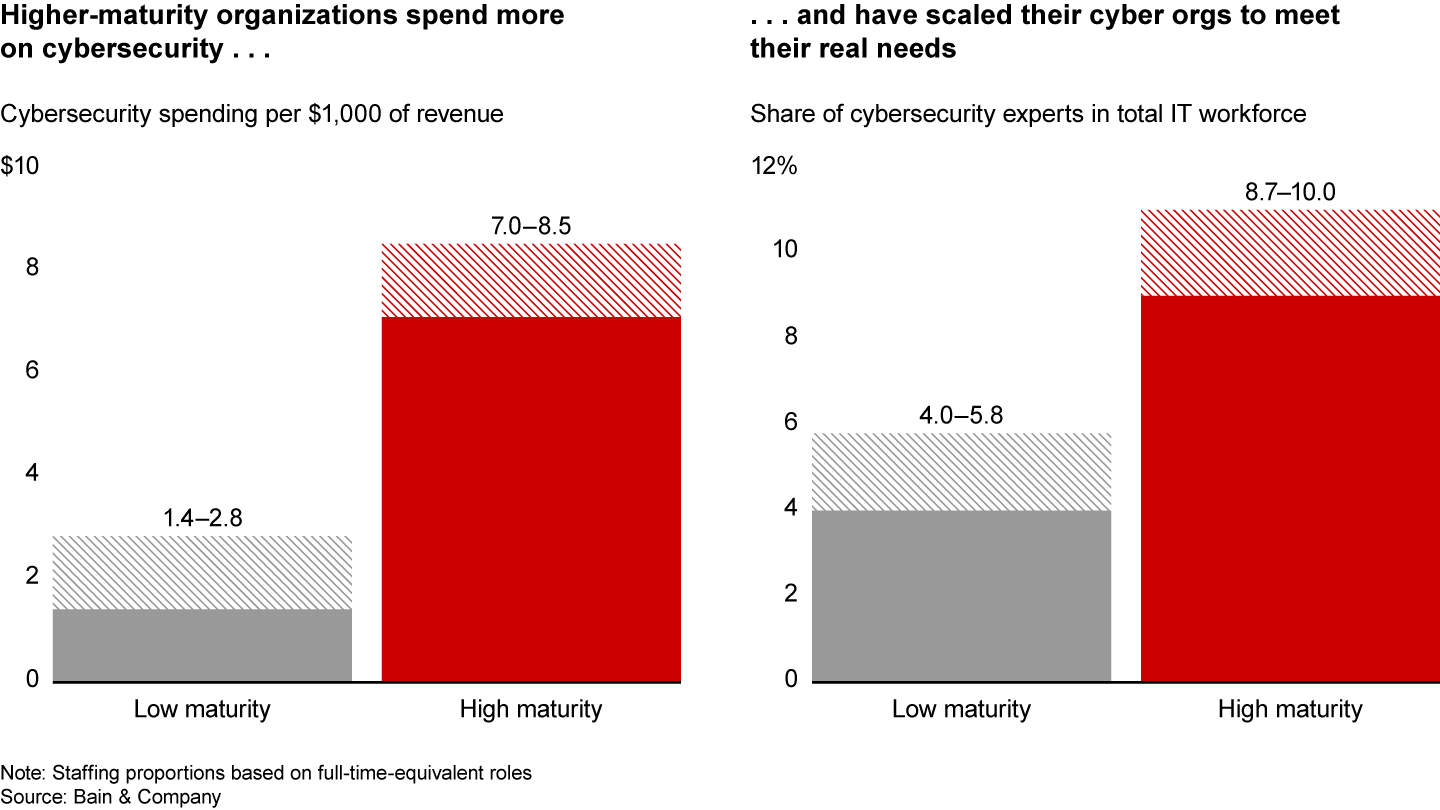
      Underspending and understaffing are hallmarks of a business with low cybersecurity maturity—and higher cybersecurity risk
      Underspending and understaffing are hallmarks of a business with low cybersecurity maturity—and higher cybersecurity risk
      Underspending and understaffing are hallmarks of a business with low cybersecurity maturity—and higher cybersecurity risk

      Amid all this defensive preparation, there should be an understanding that digital assets will be breached at some point, and that business continuity plans will need to be activated so that critical services can continue. That means ensuring that incident response playbooks are fit for purpose and tested.

      Complications for directly exposed companies

      Getting the basics right will be different for companies that still have direct exposure to Russia, including multinationals that have continued to pay local employees after halting operations. This kind of residual involvement is likely to create cybersecurity complications beyond the obvious risk of direct attacks by hacktivists and other disruptive actors.

      For instance, operationally inactive workers still on the payroll may retain access to company laptops. When it comes to rolling out updates to those computers, employers will need to balance the need to remain protected with the need to observe sanctions. Information-sharing policies may also require modification.

      If the Ukraine war stretches on for many months or even years, accompanied by a continuation of sanctions, all companies will need to be on their guard against an increased risk of intellectual property theft, particularly in sectors such as technology, defense, and financial services. Lingering sanctions against Russia could also encourage ransomware attacks, making it particularly vital to heighten oversight of vectors commonly used by ransomware, such as remote desktop sessions.

      How to go beyond the basics

      Industry frameworks such as NIST and ISO 27002 are an essential building block of cybersecurity. But to protect themselves fully amid such global instability, companies need to go beyond checklist-focused implementation of the best practices enshrined in these frameworks.  

      For one thing, the guidance in frameworks is often control oriented and high level; the large amount of room they leave for interpretation makes good cybersecurity hard to define. It doesn’t help that events often move fast on the ground while frameworks are updated infrequently. Nor can frameworks give much guidance on the complex trade-offs that management teams must weigh, such as the right balance between organizational speed and security.

      Many leading companies are seeking greater long-term resilience by also focusing on building strategic cybersecurity capabilities. This holistic approach recognizes that companies need sophisticated, self-evolving capabilities to effectively manage complex and quickly changing cybersecurity risk. 

      A good example of what key capabilities look like in practice can be found in the management of third-party cybersecurity risk in the supply chain, which came to the fore early on in the Russian destabilization of Ukraine. (Microsoft observed supply chain vendors in Ukraine and abroad being targeted in mid-2021.) This is a complex area, with large companies typically having thousands of suppliers. These third parties can hold up supply chains if a cyberattack leaves them unable to operate—and they can also propagate the same issues to their customers.

      Tackling this area of risk successfully requires that companies:

      • identify and classify third parties based on the cybersecurity risk posed and the likely impact (both direct and supply chain related);
      • assess third parties both when they are first selected and on an ongoing basis—with in-house teams or through a new breed of external risk assessment service; and
      • reduce risk to an acceptable level through measures such as informal persuasion, contract stipulations, additional controls, and supply chain diversification to boost continuity.

      This is complicated to do reliably and at scale, which is why many companies end up living with large but unquantified levels of cybersecurity risk. Simply put, there is no shortcut around building the capabilities needed to manage this area of risk effectively. But companies often have more options at their disposal than they realize.

      When one consumer packaged goods company systematically tackled the risk presented by third parties, it uncovered a host of practical ways to strengthen its protection. These included improving contractual language, updating its formal policy on cybersecurity requirements for suppliers, clarifying which suppliers were most important to the business, and implementing risk controls and risk mitigation measures such as tighter third-party access to company systems.

      The effort and investment required to persuade suppliers to improve their cybersecurity can also lead to broader benefits. For instance, measures taken to mitigate third-party cybersecurity disruption risk (such as boosting inventory of essential manufacturing parts in case of a disabling cyberattack on a supplier) can contribute to a companywide push to enhance operational resilience.

      Going beyond the basics is essential if companies are to protect themselves in these hyperconnected and unstable times. Building strong strategic cybersecurity capabilities is the answer.

      The authors would like to thank Salman Faiz for his contribution to this brief.

      Auteurs
      • Headshot of Frank Ford
        Frank Ford
        Partner, London
      • Headshot of Syed Ali
        Syed Ali
        Partner, Houston
      • Headshot of Mark Leggate
        Mark Leggate
        Partner, London
      Contactez-nous
      Synergies sectorielles
      • Cybersecurity
      Expertises fonctionnelles transverses
      • Digital
      • Technologies de l'information
      CIO Insights
      Quantum Computing Moves from Theoretical to Inevitable

      Quantum will likely become part of a mosaic, working with classical computing to solve big problems.

      Voir plus
      CIO Insights
      Four Ways Leaders Can Make AI Redesigns Stick

      As companies redesign to scale AI, these four lessons help leaders ensure their organizations actually live the new operating model.

      Voir plus
      Digital
      Reimagining Merchandising in the Era of Agentic AI

      The future of merchandising is not better analysis, but faster, smarter execution—and agentic AI is what makes that possible.

      Voir plus
      CIO Insights
      The 2026 Retail Executive Agenda

      Here are letters to the C-suite to help strengthen strategy, catalyze collaboration, and expand value creation in the AI age.

      Voir plus
      Cybersecurity
      Generative AI and Cybersecurity: Strengthening Both Defenses and Threats

      Breakthroughs in technologies built on large language models will accelerate the arms race between hackers and companies.

      Voir plus
      First published in juin 2022
      Mots clés
      • CIO Insights
      • Cybersecurity
      • Digital
      • Resilience amid Global Crisis
      • Technologies de l'information

      Comment nous avons aidé nos clients

      A European Banking Giant Rises to the Fintech Challenge

      Lire l’étude de cas

      How a Data-Driven Mindset Powers McAfee’s Growth

      Lire l’étude de cas

      An Appliance Maker Transforms its Technology Architecture and Strategy

      Lire l’étude de cas

      Vous souhaitez continuer cette conversation ?

      Nous aidons des dirigeants du monde entier à matérialiser des impacts et des résultats pérennes et créateurs de valeur dans leurs organisations.

      Les points de vue de Bain : notre perspective sur des problématiques auxquelles sont confrontées les entreprises à travers le monde, envoyés chaque mois dans votre boîte de réception. 

      *J’ai lu la politique de confidentialité et j’accepte les conditions.

      Merci de lire notre politique de confidentialité.
      Bain & Company
      Contactez-nous Sustainability Accessibility Conditions d’utilisation Politique de Confidentialité Cookie Policy Mentions Légales Sitemap Log In

      © 1996-2026 Bain & Company, Inc.

      Contacter Bain

      Comment pouvons-nous vous aider ?

      • Business inquiry
      • Career information
      • Press relations
      • Partnership request
      • Speaker request
      Voir tous les bureaux