Skip to Content
  • Bureaux

    Bureaux

    Amérique du Nord et Amérique du Sud
    • Atlanta
    • Austin
    • Bogota
    • Boston
    • Buenos Aires
    • Chicago
    • Dallas
    • Denver
    • Houston
    • Los Angeles
    • Mexico City
    • Minneapolis
    • Monterrey
    • Montreal
    • New York
    • Rio de Janeiro
    • San Francisco
    • Santiago
    • São Paulo
    • Seattle
    • Silicon Valley
    • Toronto
    • Washington, DC
    Europe, Moyen-Orient et Afrique
    • Amsterdam
    • Athens
    • Berlin
    • Brussels
    • Copenhagen
    • Doha
    • Dubai
    • Dusseldorf
    • Frankfurt
    • Helsinki
    • Istanbul
    • Johannesburg
    • Kyiv
    • Lisbon
    • London
    • Madrid
    • Milan
    • Munich
    • Oslo
    • Paris
    • Riyadh
    • Rome
    • Stockholm
    • Vienna
    • Warsaw
    • Zurich
    Asie et Australie
    • Bangkok
    • Beijing
    • Bengaluru
    • Brisbane
    • Ho Chi Minh City
    • Hong Kong
    • Jakarta
    • Kuala Lumpur
    • Manila
    • Melbourne
    • Mumbai
    • New Delhi
    • Perth
    • Shanghai
    • Singapore
    • Sydney
    • Tokyo
    Voir tous les bureaux
  • Alumni
  • Presse
  • S’abonner
  • Contacter
  • Canada | Français

    Sélectionnez votre région et votre langue

    Global
    • Global (English)
    Amérique du Nord et Amérique du Sud
    • Brazil (Português)
    • Argentina (Español)
    • Canada (Français)
    • Chile (Español)
    • Colombia (Español)
    Europe, Moyen-Orient et Afrique
    • France (Français)
    • DACH Region (Deutsch)
    • Italy (Italiano)
    • Spain (Español)
    • Greece (Elliniká)
    Asie et Australie
    • China (中文版)
    • Korea (한국어)
    • Japan (日本語)
  • Saved items (0)
    Saved items (0)

    You have no saved items.

    Bookmark content that interests you and it will be saved here for you to read or share later.

    Explore Bain Insights
  • Expertises Sectorielles
    Menu principal

    Expertises Sectorielles

    • Aerospace et Défense
    • Agroalimentaire
    • Chimie
    • Infrastructures, BTP et Matériaux de Construction
    • Grande Consommation
    • Services Financiers
    • Santé
    • Engins & Equipements Industriels
    • Media et Divertissement
    • Metals
    • Mining
    • Pétrole & Gaz
    • Papier et Emballage
    • Private Equity
    • Secteur Public
    • Distribution
    • Technologie
    • Télécommunications
    • Transportation
    • Travel & Leisure
    • Utilities & Energies Renouvelables
  • Expertises Fonctionnelles
    Menu principal

    Expertises Fonctionnelles

    • Expérience Client
    • ESG
    • Innovation
    • Fusions et Acquisitions
    • Opérations
    • People & Organization
    • Private Equity
    • Sales & Marketing
    • Stratégie
    • IA, Perspectives et Solutions
    • Technology
    • Transformation
  • Digital
  • Points de Vue
  • About
    Menu principal

    About

    • Notre Activité
    • Nos Valeurs
    • Nos Collaborateurs et Notre Équipe Dirigeante
    • Notre Impact
    • Prix & Récompenses
    • Partenariats Internationaux
    Further: Our global responsibility
    • Sustainability
    • Impact Social
    • World Economic Forum
    Learn more about Further
  • Carrières
    Menu principal

    Carrières

    • Rejoignez-nous
      Carrières
      Rejoignez-nous
      • Find Your Place
      • Nos domaines d’expertise
      • Equipes multidisciplinaires
      • Étudiants
      • Stages et programmes
      • Événements de recrutement
    • La vie chez Bain
      Carrières
      La vie chez Bain
      • Blog: Inside Bain
      • Récits de carrière
      • Nos collaborateurs
      • Nos bureaux
      • Soutenir votre évolution professionnelle
      • Groupes d’affinités
      • Avantages chez Bain
    • Histoires d’impact
    • Notre processus de recrutement
      Carrières
      Notre processus de recrutement
      • Ce que vous pouvez attendre
      • Entretiens
    Trouver un poste
  • Bureaux
    Menu principal

    Bureaux

    • Amérique du Nord et Amérique du Sud
      Bureaux
      Amérique du Nord et Amérique du Sud
      • Atlanta
      • Austin
      • Bogota
      • Boston
      • Buenos Aires
      • Chicago
      • Dallas
      • Denver
      • Houston
      • Los Angeles
      • Mexico City
      • Minneapolis
      • Monterrey
      • Montreal
      • New York
      • Rio de Janeiro
      • San Francisco
      • Santiago
      • São Paulo
      • Seattle
      • Silicon Valley
      • Toronto
      • Washington, DC
    • Europe, Moyen-Orient et Afrique
      Bureaux
      Europe, Moyen-Orient et Afrique
      • Amsterdam
      • Athens
      • Berlin
      • Brussels
      • Copenhagen
      • Doha
      • Dubai
      • Dusseldorf
      • Frankfurt
      • Helsinki
      • Istanbul
      • Johannesburg
      • Kyiv
      • Lisbon
      • London
      • Madrid
      • Milan
      • Munich
      • Oslo
      • Paris
      • Riyadh
      • Rome
      • Stockholm
      • Vienna
      • Warsaw
      • Zurich
    • Asie et Australie
      Bureaux
      Asie et Australie
      • Bangkok
      • Beijing
      • Bengaluru
      • Brisbane
      • Ho Chi Minh City
      • Hong Kong
      • Jakarta
      • Kuala Lumpur
      • Manila
      • Melbourne
      • Mumbai
      • New Delhi
      • Perth
      • Shanghai
      • Singapore
      • Sydney
      • Tokyo
    Voir tous les bureaux
  • Alumni
  • Presse
  • S’abonner
  • Contacter
  • Canada | Français
    Menu principal

    Sélectionnez votre région et votre langue

    • Global
      Sélectionnez votre région et votre langue
      Global
      • Global (English)
    • Amérique du Nord et Amérique du Sud
      Sélectionnez votre région et votre langue
      Amérique du Nord et Amérique du Sud
      • Brazil (Português)
      • Argentina (Español)
      • Canada (Français)
      • Chile (Español)
      • Colombia (Español)
    • Europe, Moyen-Orient et Afrique
      Sélectionnez votre région et votre langue
      Europe, Moyen-Orient et Afrique
      • France (Français)
      • DACH Region (Deutsch)
      • Italy (Italiano)
      • Spain (Español)
      • Greece (Elliniká)
    • Asie et Australie
      Sélectionnez votre région et votre langue
      Asie et Australie
      • China (中文版)
      • Korea (한국어)
      • Japan (日本語)
  • Saved items  (0)
    Menu principal
    Saved items (0)

    You have no saved items.

    Bookmark content that interests you and it will be saved here for you to read or share later.

    Explore Bain Insights
  • Expertises Sectorielles
    • Expertises Sectorielles

      • Aerospace et Défense
      • Agroalimentaire
      • Chimie
      • Infrastructures, BTP et Matériaux de Construction
      • Grande Consommation
      • Services Financiers
      • Santé
      • Engins & Equipements Industriels
      • Media et Divertissement
      • Metals
      • Mining
      • Pétrole & Gaz
      • Papier et Emballage
      • Private Equity
      • Secteur Public
      • Distribution
      • Technologie
      • Télécommunications
      • Transportation
      • Travel & Leisure
      • Utilities & Energies Renouvelables
  • Expertises Fonctionnelles
    • Expertises Fonctionnelles

      • Expérience Client
      • ESG
      • Innovation
      • Fusions et Acquisitions
      • Opérations
      • People & Organization
      • Private Equity
      • Sales & Marketing
      • Stratégie
      • IA, Perspectives et Solutions
      • Technology
      • Transformation
  • Digital
  • Points de Vue
  • Carrières
    Recherches les plus fréquentes
    • Agile
    • Digital
    • Stratégie
    Vos recherches précédentes
      Pages récemment visitées

      Content added to saved items

      Saved items (0)

      Removed from saved items

      Saved items (0)

      Rapport

      Creating Value in Tech through Constant Reinvention

      Creating Value in Tech through Constant Reinvention

      Leading companies find ways to win platform transitions.

      Par David Crawford, Ravi Vijayaraghavan, et Chris Johnson

      • min
      }

      Rapport

      Creating Value in Tech through Constant Reinvention
      en

      This article is Chapter 3 of Bain’s global Technology Report 2020. Explore the contents of the report here or download the PDF to read the full report.

      The largest value-creating transformations in technology involve two things: winning a platform battle, and accelerating growth by either repositioning the core business or extending its capabilities into new domains.

      The highest-valued technology companies are all platform winners that established their successful platforms as a market transition unfolded. There’s Microsoft with Azure and Office 365, Amazon with e-commerce and Amazon Web Services, Google with search and Android, Facebook with social media, Adobe with Creative Cloud, and so on.

      The term “platform” is often used broadly. Here, we use it very specifically to indicate a product or service upon which others build their livelihood—one that attracts an ecosystem of partners and customers who collectively deliver value. The concept is as old as road widths, but is more prevalent in the technology sector than other industries. Now, it’s becoming more critical as abundant foundational infrastructure such as cloud computing and mobile communications has enabled global, interconnected platforms to rapidly scale up.

      The playbook for establishing a successful platform is no secret: mobilize early, offer the best ecosystem economics, win the anchor partners and customers, scale up the business, and extend and deepen customer engagement. However, the specifics of each platform strategy vary, and the journey is fraught with pitfalls. A platform by nature creates so-called network effects that can result in attractive economics and a winner-takes-most dynamic. As a result, platform battles are usually hotly contested, with intense races to scale.

      The key to the other half of the value-creation equation depends on where a technology company falls in its life cycle—disruptor or incumbent. When a company already has a mature platform-based business model, the formula for value creation involves repositioning the core business as the market transition occurs. When a company’s platforms are still nascent and growing, the formula for value creation more often involves extending them into new domains.

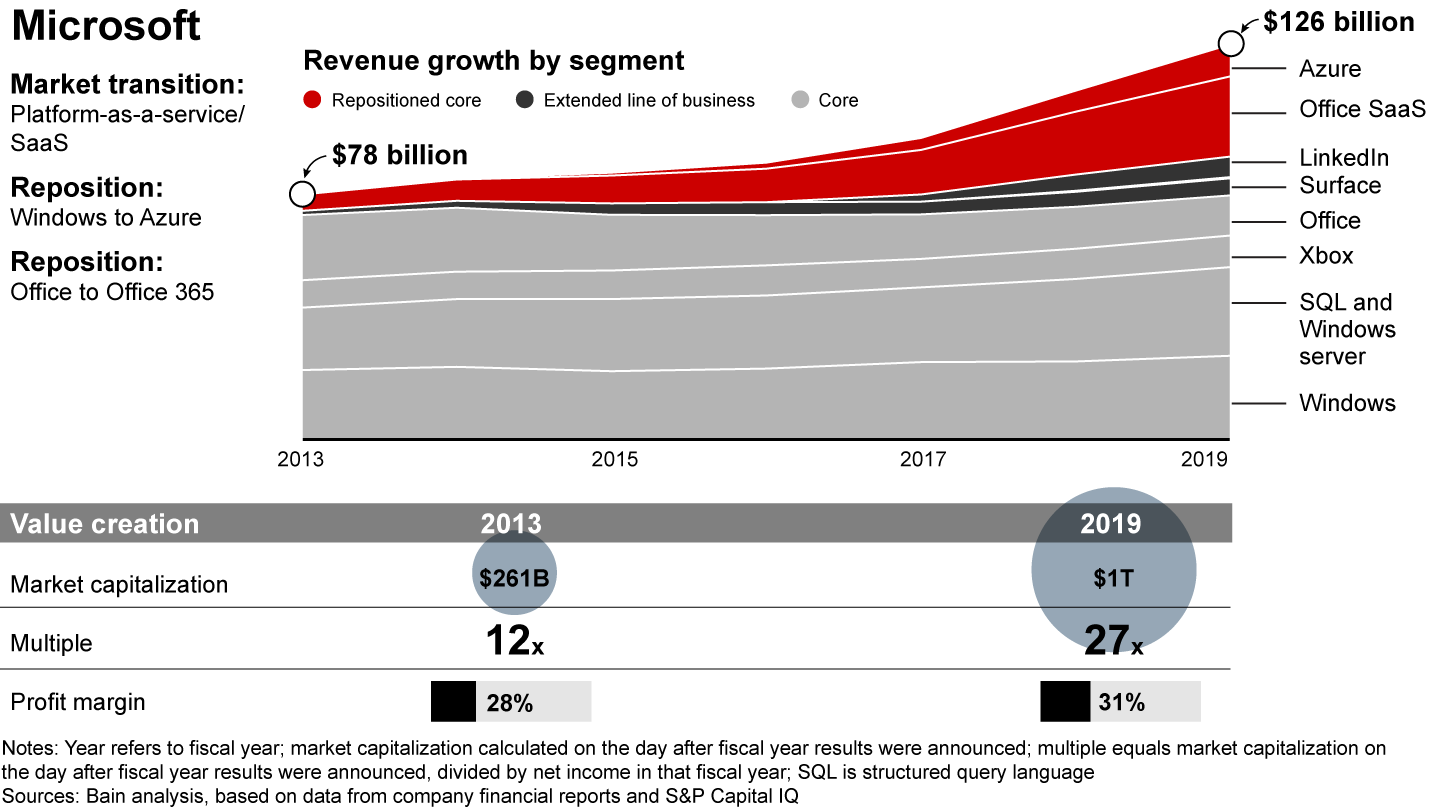
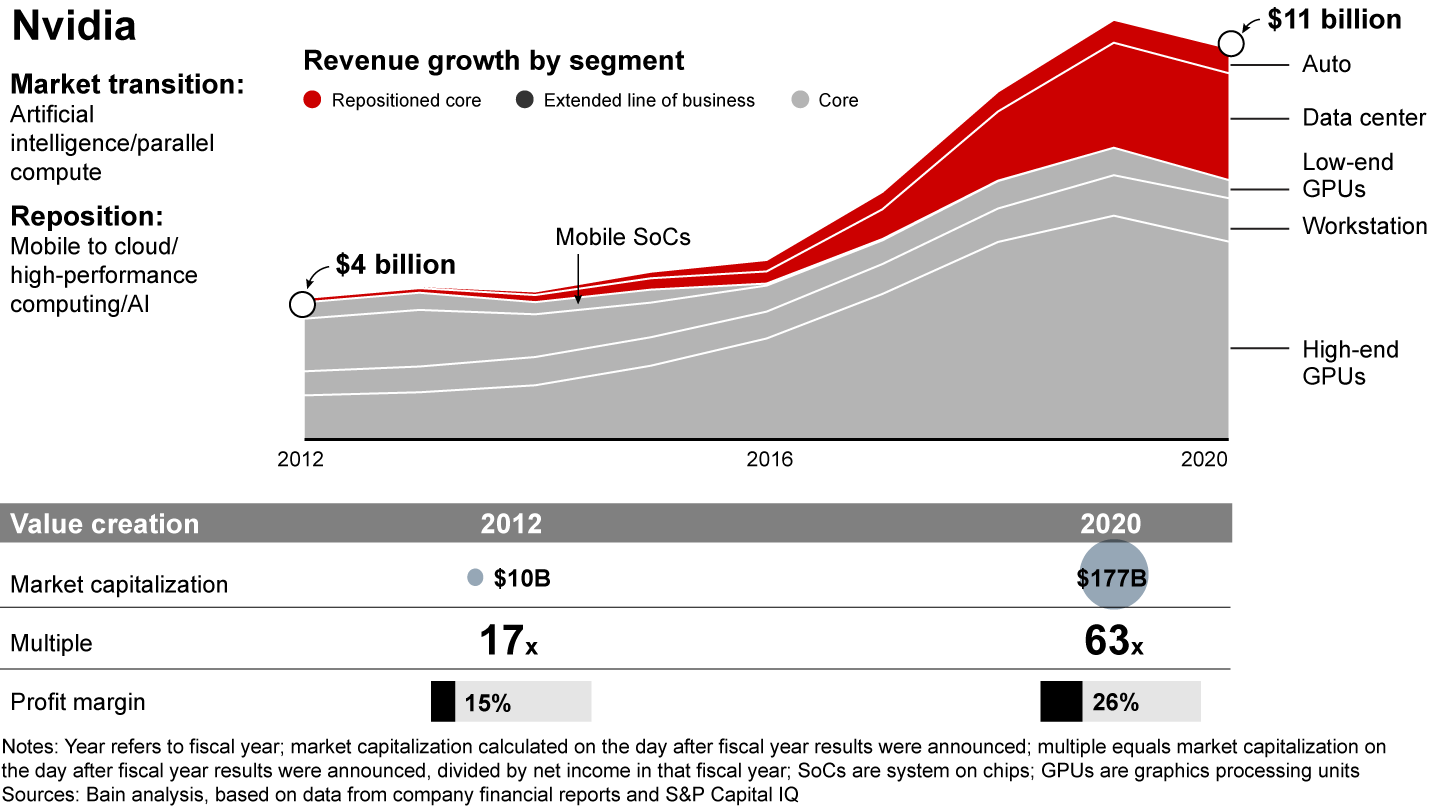
      The core repositioning formula is particularly potent if the market has concluded such a repositioning is unlikely. Examples include Microsoft’s and Adobe’s repositioning around the cloud, and Nvidia’s repositioning from mobile devices to graphics and the data center, as artificial intelligence growth exploded (see Figures 1 through 3).

      Figure 1
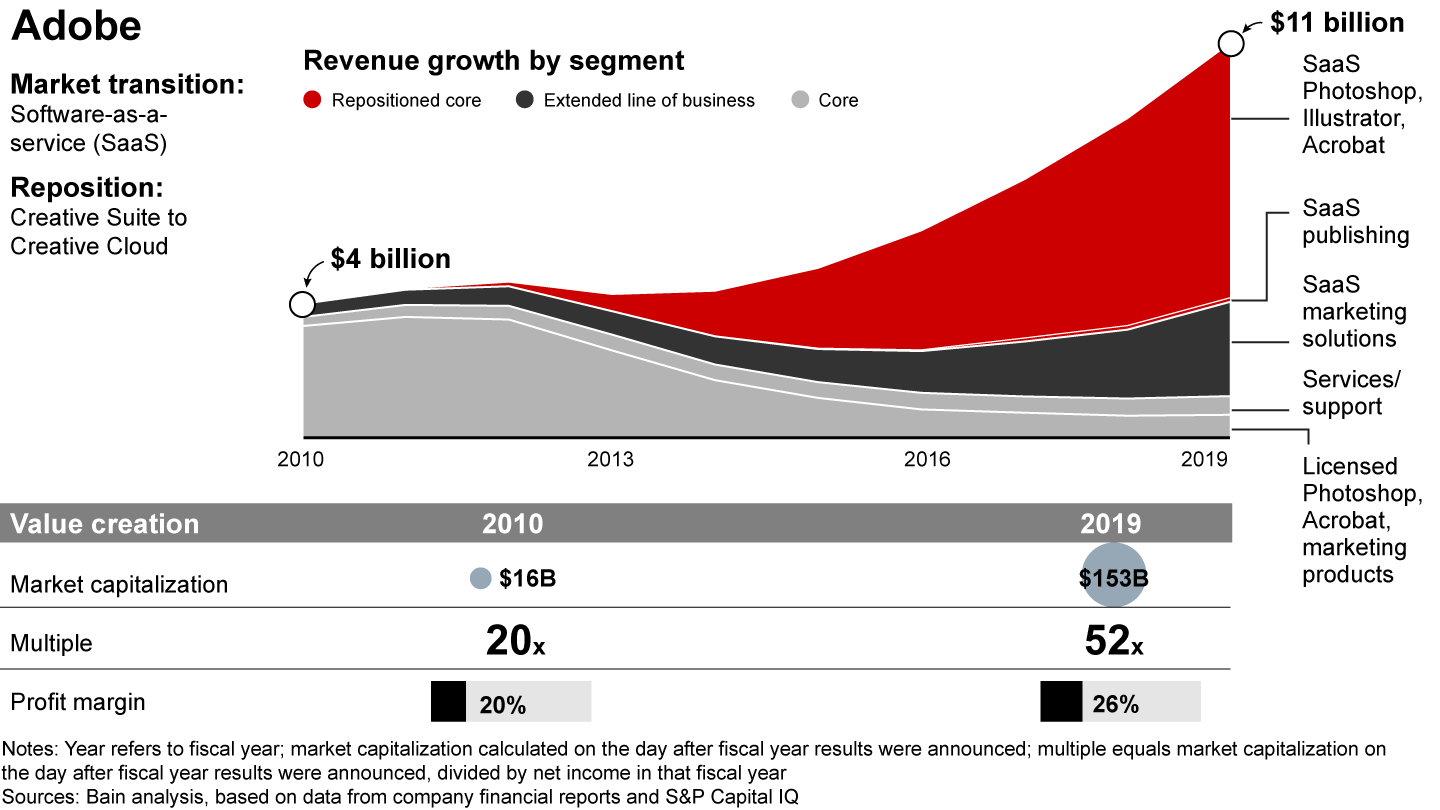
      Some technology leaders navigate market transitions by repositioning their core business
      Chart showing how Adobe navigated market transitions by repositioning its core businesses.
      Chart showing how Adobe navigated market transitions by repositioning its core businesses.
      Figure 2
      Some technology leaders navigate market transitions by repositioning their core business
      Chart showing how Microsoft navigated market transitions by repositioning its core businesses.
      Chart showing how Microsoft navigated market transitions by repositioning its core businesses.
      Figure 3
      Some technology leaders navigate market transitions by repositioning their core business
      Chart showing how Nvidia navigated market transitions by repositioning its core businesses.
      Chart showing how Nvidia navigated market transitions by repositioning its core businesses.

      These transitions can be tricky. The new platform can pose conflicts for the old by cannibalizing the core business and alienating existing partners or customers. The better today’s business is performing, the greater the resistance to change. But waiting until growth slows is often too late.

      Adobe timed the refocus of its core business well. In 2011, the US-based company charged $700 for a copy of its Photoshop software, available only on compact discs. CEO Shantanu Narayen decided to begin switching to a software-as-a-service model in which Adobe licensed a bundle of programs starting at $50 per month, delivered through the cloud. Adobe was making a big bet that its new Creative Cloud would make it a stronger company in the long run, even if it took a hit initially.

      The transition likely gave Adobe executives heartburn. From 2011 to 2014, the company’s total annual revenue declined slightly from $4.2 billion to $4.1 billion, as its boxed software business shrank. But the Creative Cloud quickly began to deliver on its promise. In 2014, Adobe’s annualized recurring revenue was $1.6 billion for the segment that includes Creative Cloud. By 2019, the bet had paid off in a big way. Annualized recurring revenue for the Creative Cloud segment had swelled to $7.3 billion. The company had 89% recurring revenue, and its stock price was trading at more than 50 times its earnings. From 2010 to 2019, Adobe’s market value jumped from $16 billion to $153 billion.

      Of course, many companies have missed the opportunity to refocus their businesses, and ended up worse off. Nokia, for example, was unable to adapt its feature phone business for the smartphone era. In the years following the introduction of the Apple iPhone, Nokia lost billions of dollars in market value and ended up selling its handset unit. 

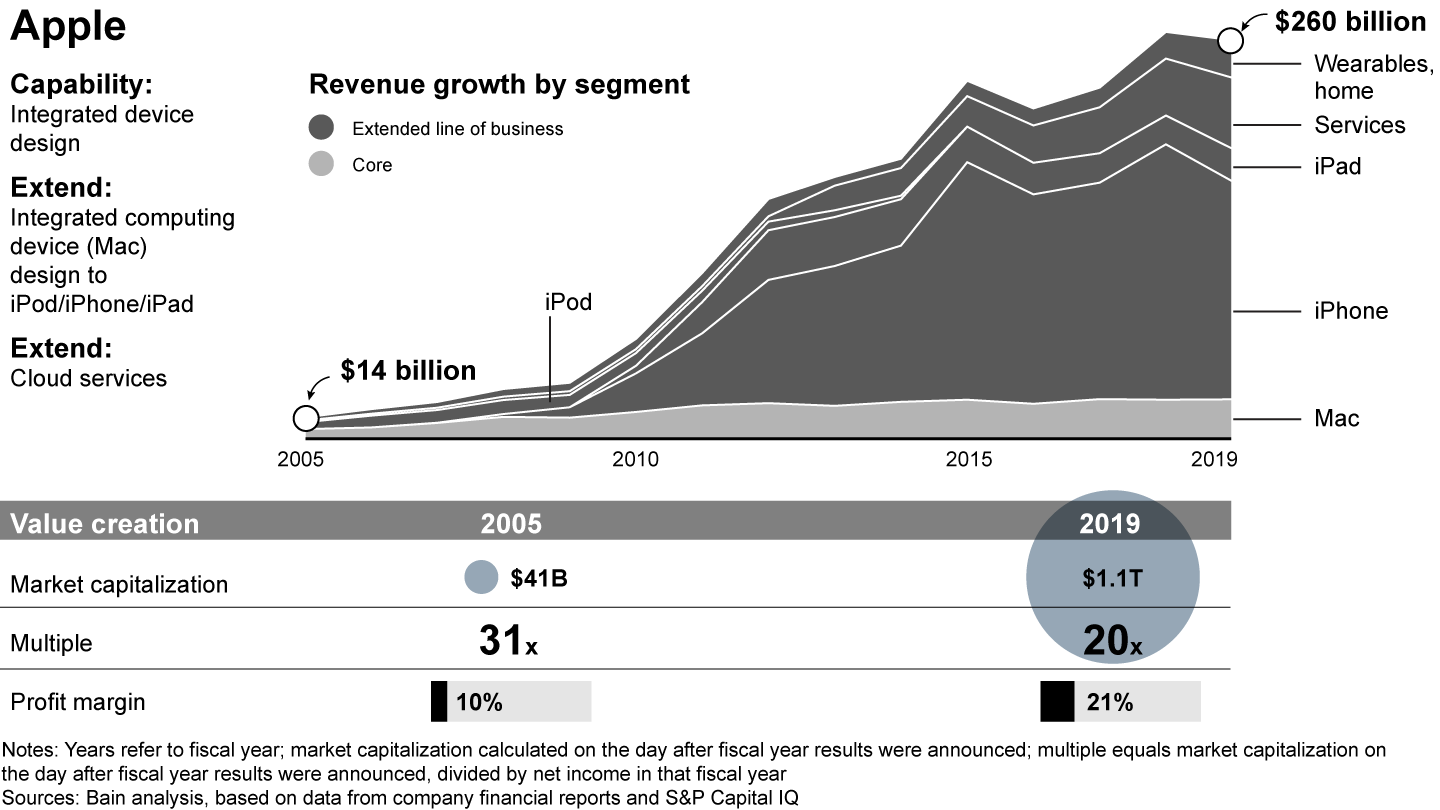
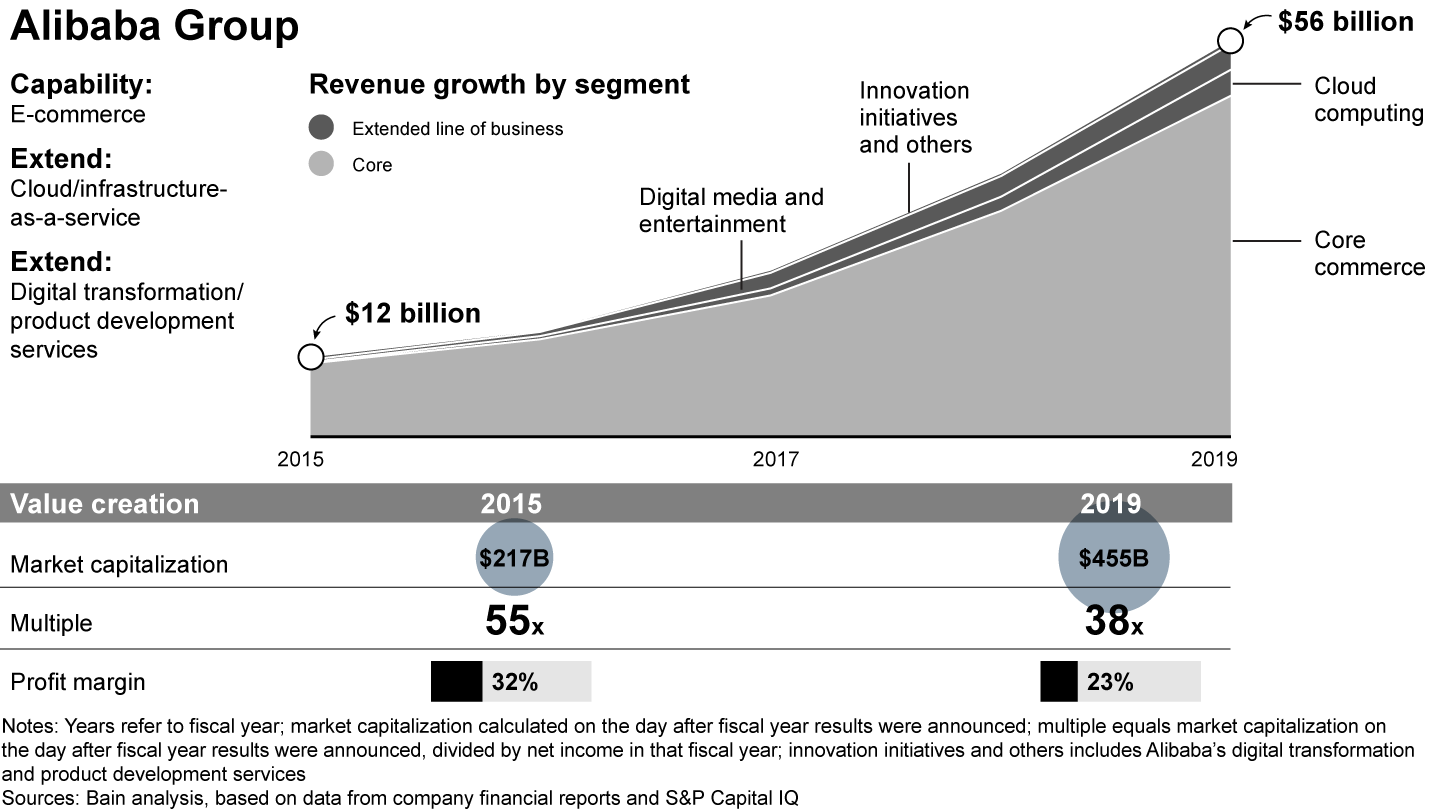
      Technology companies in a high-growth phase face a different set of challenges when trying to extend their capabilities to create new businesses. The trick is to find the sweet spot where the organization’s strengths match a promising market opportunity. Examples include Amazon’s extension into cloud-computing services with AWS; Apple’s extension into mobile media devices, smartphones and media content; and Alibaba Group’s extension into payments, cloud computing and digital transformation of businesses. These companies built on their core strengths to reach new customers, deepen their relationships with existing ones, or accomplish both (see Figures 4 through 6).

      Figure 4
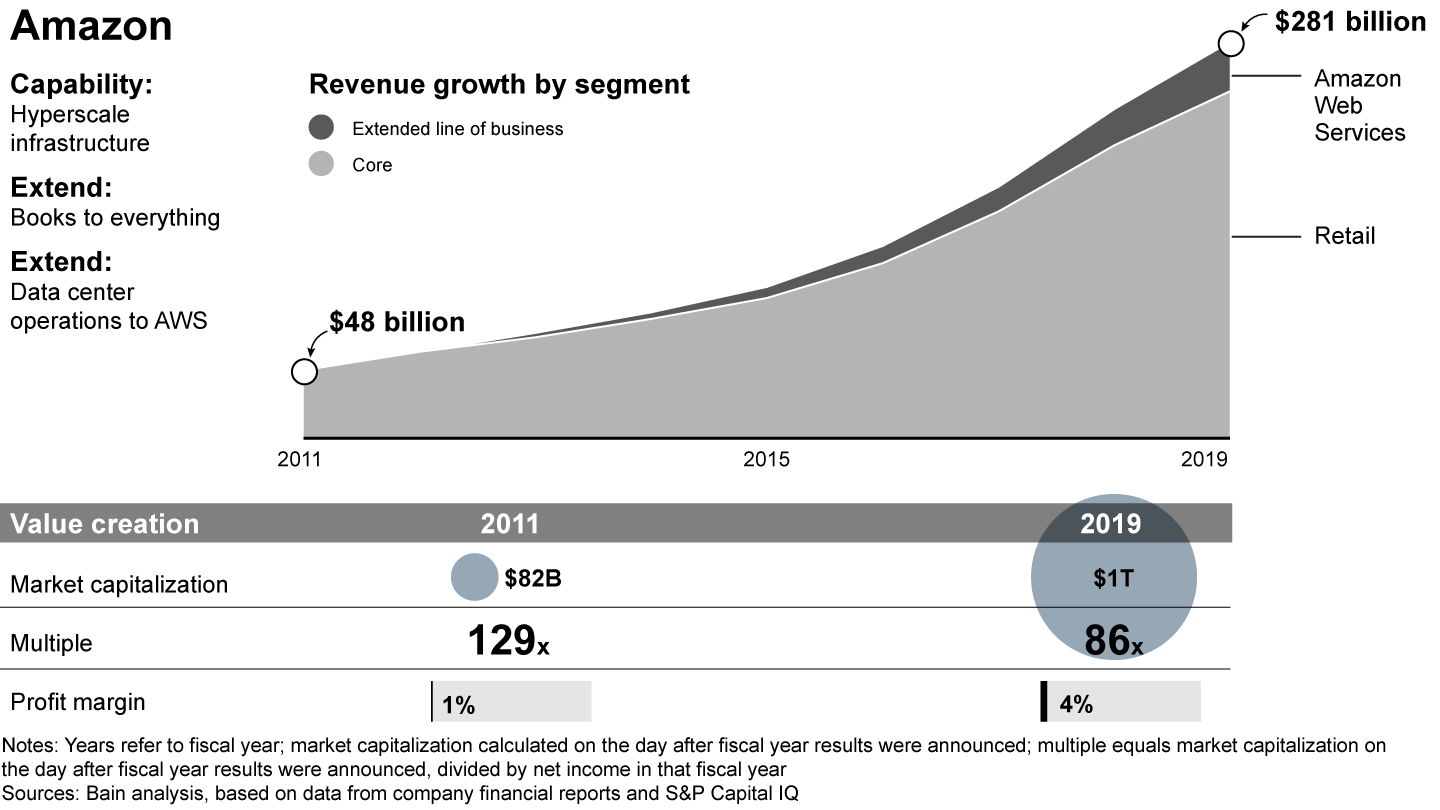
      Some technology leaders extend core capabilities into new domains with low customer conflict
      Chart showing how Amazon extended its core capabilities into new domains with low customer conflict.
      Chart showing how Amazon extended its core capabilities into new domains with low customer conflict.
      Figure 5
      Some technology leaders extend core capabilities into new domains with low customer conflict
      Chart showing how Apple extended its core capabilities into new domains with low customer conflict.
      Chart showing how Apple extended its core capabilities into new domains with low customer conflict.
      Figure 6
      Some technology leaders extend core capabilities into new domains with low customer conflict
      Chart showing how Alibaba Group extended its core capabilities into new domains with low customer conflict.
      Chart showing how Alibaba Group extended its core capabilities into new domains with low customer conflict.

      Alibaba Group has successfully navigated several business extensions. From the start, the China-based company’s main growth engine has been online marketplaces. But five years after the company’s 1999 launch, its leaders took advantage of the organization’s e-commerce know-how and created an online payments service called Alipay. That product was later spun out as Ant Group, now one of the largest financial-technology firms headquartered in China.

      As Alibaba’s popularity grew, it had to build a massive computing infrastructure to handle the millions of transactions on its various e-commerce platforms. Company leaders realized they could turn those assets and their experience into a new business offering third-party cloud-computing services. Alibaba Cloud was born in 2009 and had grown to $3.7 billion in annual revenue a decade later.

      More recently, Alibaba has made a push to help enterprises digitally transform their businesses with the help of its analytic capabilities and expertise spanning e-commerce, cloud computing, financial technology, supply chains, sales and marketing, and consumer insights. Alibaba’s series of business extensions have made it one of the most valuable technology companies in the world, with a market capitalization of $455 billion at the end of its 2019 fiscal year.

      Whether a company needs to reposition or extend its core business, the essential job of management is to deeply understand the transition occurring in its sector and create a plan built around the firm’s strengths. This encompasses not only its strategic products and services, but also its operational capabilities and employees’ skills and expertise. Once the company has lined up its competencies with the sector’s evolution, it can invest strategically in product and service expansions, partnerships, and mergers and acquisitions to navigate the market transition quickly and successfully. 

      Read the Next Chapter

      Beyond Moore’s Law: Capture Value from Data


      Auteurs
      • Headshot of David Crawford
        David Crawford
        Partner, Silicon Valley
      • Headshot of Ravi Vijayaraghavan
        Ravi Vijayaraghavan
        Partner, Singapore
      • Headshot of Chris Johnson
        Chris Johnson
        Alumni, San Francisco
      Contactez-nous
      Synergies sectorielles
      • Software
      • Technologie
      Expertises fonctionnelles transverses
      • Technologies de l'information
      Technology Report
      Five Functions Where AI Is Already Delivering

      Spurred on by early success, companies of all sizes are increasing their spending on generative AI.

      Voir plus
      Technology Report
      Quantum Computing Moves from Theoretical to Inevitable

      Quantum will likely become part of a mosaic, working with classical computing to solve big problems.

      Voir plus
      Technologie
      Software M&A

      The good news: Most deal best practices still apply to AI acquisitions.

      Voir plus
      Technologie
      How Businesses Can Prepare for Post-Quantum Cybersecurity Threats

      Your company will soon face attackers armed with quantum technology. Will you be ready?

      Voir plus
      Technology Report
      Will AI Disrupt Tech’s Most Valuable Companies?

      Hyperscalers and other market leaders have adapted well to technology shifts, but generative AI poses new challenges.

      Voir plus
      First published in octobre 2020
      Mots clés
      • Software
      • Technologie
      • Technologies de l'information
      • Technology Report

      Comment nous avons aidé nos clients

      Helping a Midsize ERP Player Compete against the Giants

      Lire l’étude de cas

      Video: A Marketing Transformation Puts a Software Leader Back on Top

      Lire l’étude de cas

      Aggressively growing an IT service provider with a high-performance culture

      Lire l’étude de cas

      Vous souhaitez continuer cette conversation ?

      Nous aidons des dirigeants du monde entier à matérialiser des impacts et des résultats pérennes et créateurs de valeur dans leurs organisations.

      Les points de vue de Bain : notre perspective sur des problématiques auxquelles sont confrontées les entreprises à travers le monde, envoyés chaque mois dans votre boîte de réception. 

      *J’ai lu la politique de confidentialité et j’accepte les conditions.

      Merci de lire notre politique de confidentialité.
      Bain & Company
      Contactez-nous Sustainability Accessibility Conditions d’utilisation Politique de Confidentialité Cookie Policy Mentions Légales Sitemap Log In

      © 1996-2026 Bain & Company, Inc.

      Contacter Bain

      Comment pouvons-nous vous aider ?

      • Business inquiry
      • Career information
      • Press relations
      • Partnership request
      • Speaker request
      Voir tous les bureaux