

Customer Experience Tools

En Bref
- Among the 20 tools assessed in our global research, the top 3 in adoption are predictive analytics, sensors in products and operations, and personalized experience.
- New tools with the lowest current adoption have high satisfaction rates: delivery drones, episode management and privacy management. Early adopters get excited about the benefits and possible competitive advantage.
- The greatest benefits typically result from major efforts and investment in a handful of tools, not from limited efforts in a broad range.
- Executives are most bullish about three trends: a substantial drop in cash transactions, automated in-store checkout and automatic shipping of products when customers run out.
Explore more insights from Bain's 2020 Customer Experience Tools and Trends survey: Let No Tool Stand Alone.
DiDi Chuxing, the Chinese ride-sharing firm, has more than 450 million users and handles 25 million rides each day. The terabytes of data generated by all those transactions gives DiDi a huge information advantage. Matching the data it collects on every aspect of millions of rides with end-of-ride ratings from customers allows the company to create predictive models: What sorts of experiences typically produce promoters among its customers? Which ones produce detractors? As a result, DiDi doesn’t need to ask all its riders for Net Promoter® feedback; instead, its computer models generate a rating score for almost every ride. Those predictive scores match up very reliably—more than 80% and improving—with what customers say in traditional Net Promoter feedback.

Customer Experience Tools and Trends
Our insights share how the right CX tools make customers’ lives richer and more fulfilling and strengthen a company’s economics by holding down costs and securing new revenue streams.
This gives DiDi two advantages: First, it provides almost instantaneous modeled feedback to its drivers. Second, it instantly identifies situations where there’s some need for relationship or service recovery, triggering an intervention. If DiDi’s algorithms identify a pickup that went awry or a ride that took longer than it should have to reach the destination, the company can issue an apology or a credit before the customer even exits the vehicle. If things went especially well, then DiDi’s app can prompt the customer with ways to tell friends about the ride-sharing service’s benefits.
Richard Hatherall, who leads Bain's Customer Strategy & Marketing practice in Asia-Pacific, discusses three of the most-used customer experience tools and examines what leading companies are doing well to illustrate a blueprint for success.
DiDi’s approach offers one glimpse of how predictive analytics can help figure out whether customers are promoters or detractors, and then close the loop and enable direct action. It’s also emblematic of the Asia-Pacific region’s current lead in adopting advanced tools to improve the customer experience.
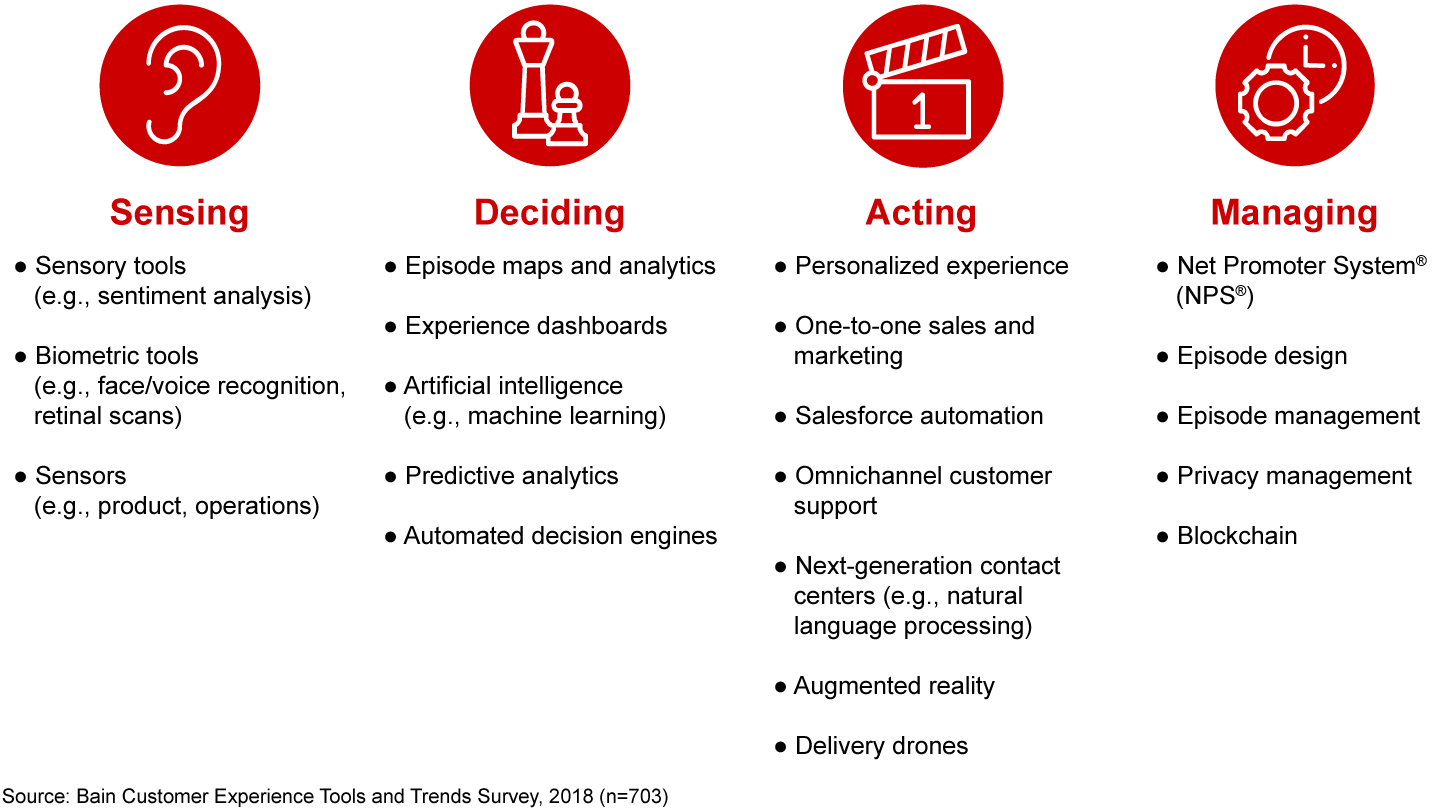
The contours of this landscape emerge from Bain & Company’s first comprehensive analysis of customer experience tools and trends. We surveyed executives at more than 700 companies worldwide about 20 tools used to enhance the customer experience, in four categories: sensing, deciding, acting and managing (see Figure 1). We then asked executives about the likelihood of 25 different trends occurring by 2025 (see below, “Who is most optimistic about future customer experience trends?”). We also identified the leaders in financial performance, as measured by 10% or higher revenue growth over the past five years and high satisfaction with financial results, to see how their responses differed from the average and from the laggards.
Figure 1

Adoption: Universal embrace of a few tools
Among the 20 tools we assessed, the top 3 in global adoption are predictive analytics, sensors in products and operations, and personalized experience. While these three are not the oldest tools, they have become the most widely used across most industries in both consumer and business-to-business markets.
Most large firms, for example, have an analytics group devoted to describing, anticipating and improving customer interactions.
Sensors, meanwhile, have taken on a broad set of applications, from supply chains to warehouses to the Internet of Things. Technology manufacturing firms use sensors in their production processes, telecommunications carriers in their towers and retailers in their inventory control systems.
Turning to personalized experience, this set of tools includes recommendation engines, which many firms deploy for online selling and cross-selling. Personalization will continue to be refined through advances in artificial intelligence (AI), despite privacy concerns that are spurring greater government intervention in how companies use customer data. The toothpaste is out of the tube: More and more customers expect their vendors to provide a highly personalized approach, powered by AI. Dialing in the appropriate level of protection against bias or disclosure—which differs for, say, a retailer and a health insurer—will be crucial for companies pursuing this approach.
Broadly speaking, emerging market companies, particularly in the Asia-Pacific region, lead the way in customer experience tool adoption (see Figure 2). For example, Flipkart, a major online retailer in India, has deployed predictive analytics in some creative ways, including how it delivers service through its contact center. Flipkart’s liberal use of “sale days” causes substantial variation in the volume and type of customer calls from day to day. That made it difficult to staff the contact appropriately. Predictive analytics has improved the accuracy of Flipkart’s forecast of call demand by 30% to 40% per day, which allows the company to adjust staffing levels, and the mix of agents, with greater confidence. Agents are not as rushed, and customers benefit from reduced wait times and a greater chance of resolving the issue in one call. Early results of the contact center changes show that 72% of customers are more likely to recommend Flipkart to a friend or family member.
Figure 2
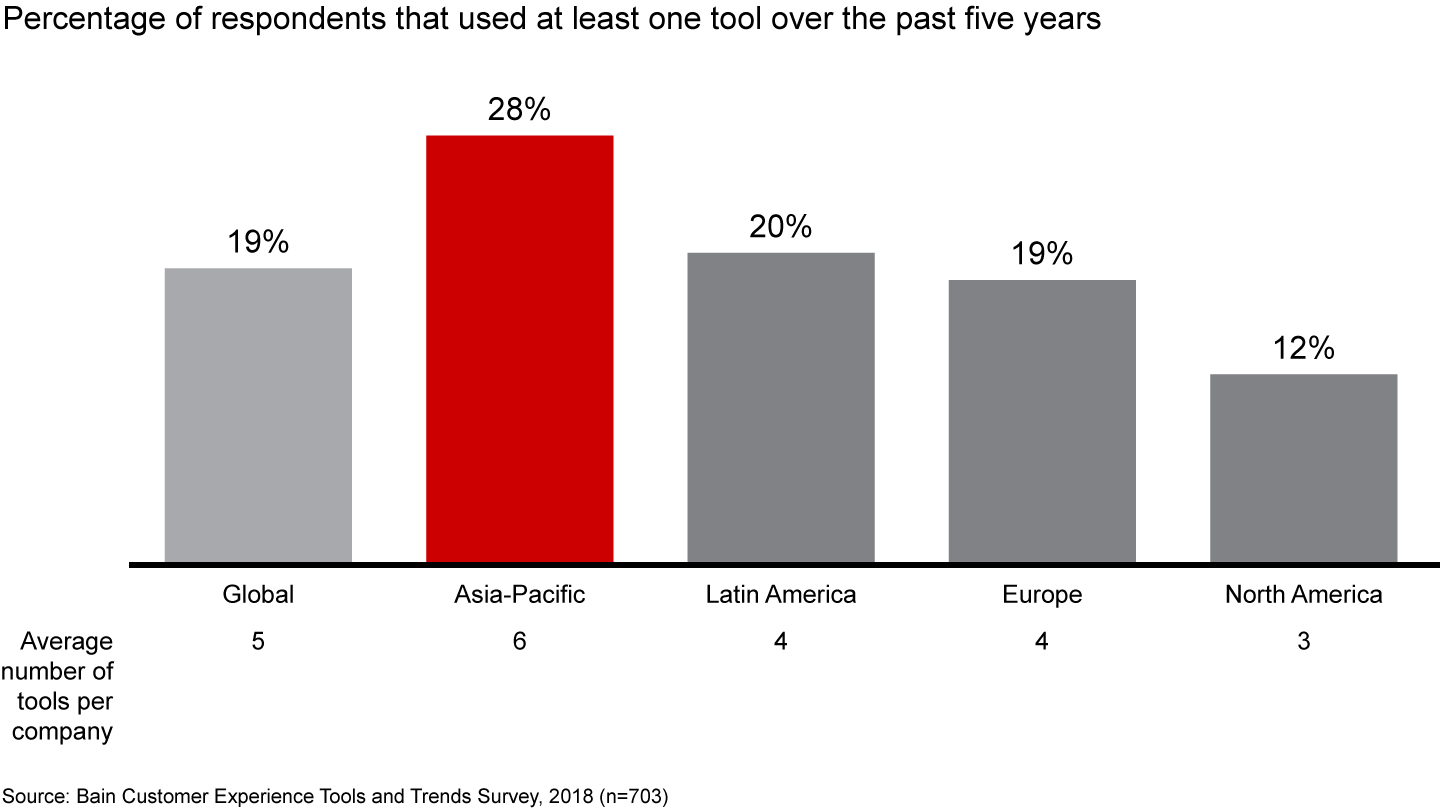

Asia-Pacific companies focus especially on tools that sense customer needs and that automate and simplify decision-making processes. Companies in China, India and other emerging markets tend to be less hampered by legacy IT systems and organizational issues than their older, established-market peers. They have been able to experiment with innovative tools and adopt the latest promising technology from scratch, vs. having to integrate new tools into a rigid technology architecture. In addition, data privacy has been a less volatile issue in many emerging markets, as citizens in those countries have grown accustomed to pervasive government monitoring.
By contrast, many companies in Western and other established markets face the challenge of simplifying their IT architecture and their operating models. Large, complex organizations tend to be saddled with functions and departments that operate in silos. Developing a better customer experience increasingly requires modular, more flexible architecture that can support seamless handoffs from one channel to another, as well as integrate different data sources to assemble a single view of the customer.
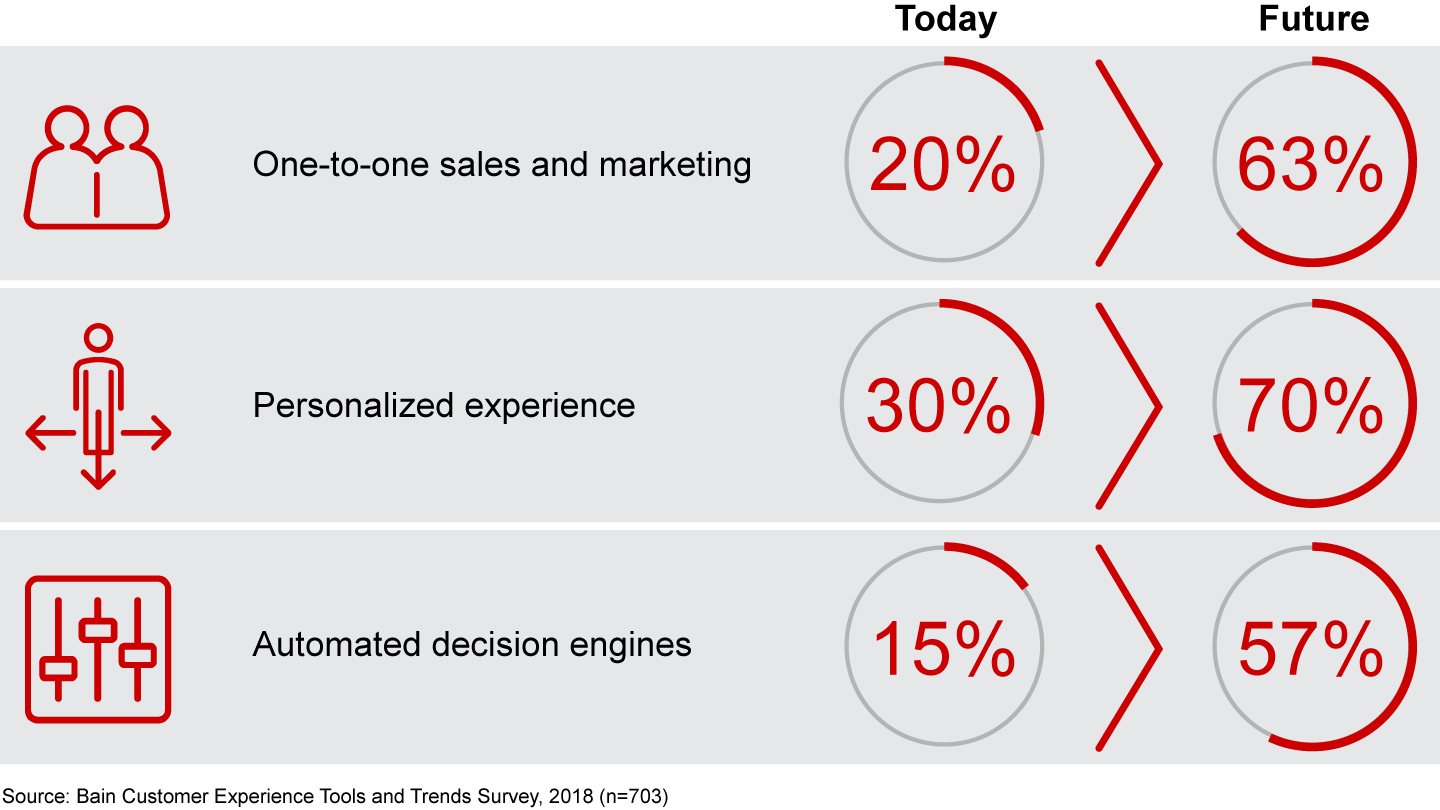
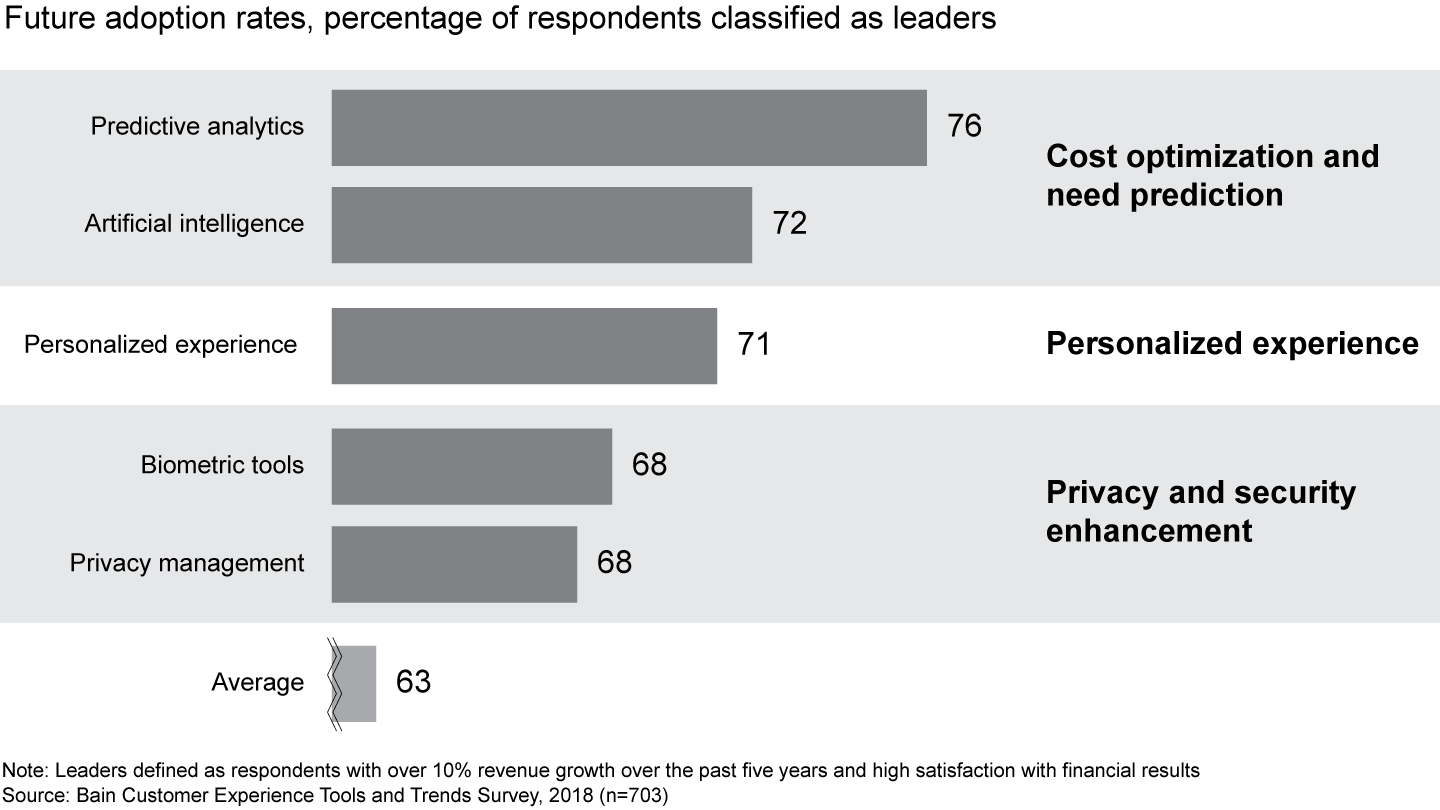
Looking to the near future, respondents expect the same tools that are popular today to continue having high adoption rates over the next three years (see Figure 3). But companies will make personalization a major focus of investment, as one-to-one sales and marketing and a personalized experience are projected to see high growth in adoption (see Figure 4). One-to-one tools will be particularly popular in Europe and Asia-Pacific, and in the financial services, technology, media and telecommunications industries. Respondents in retail and industrial goods and services expect automated decision engines to be the next big thing.
Figure 3
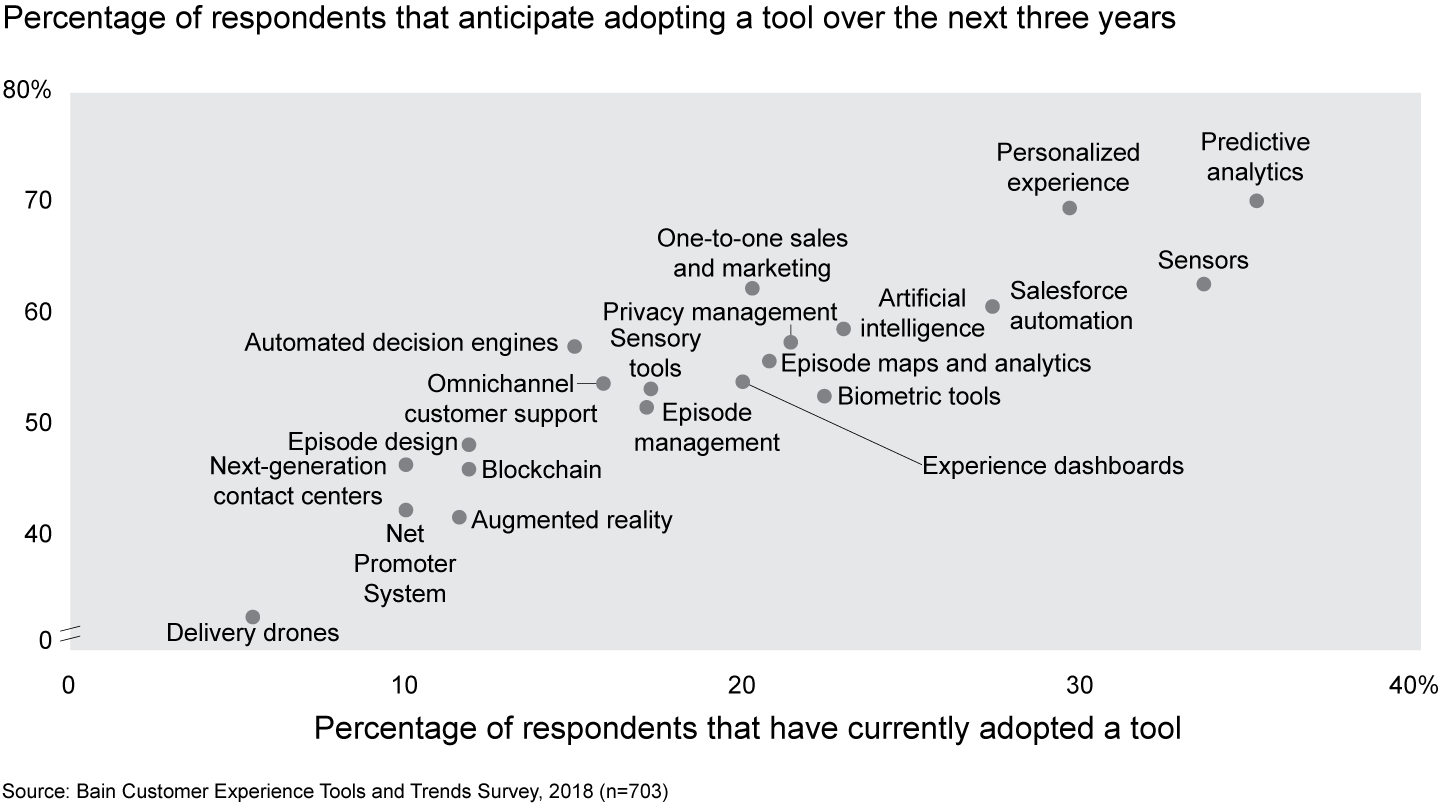

Figure 4

Satisfaction: Familiarity finds the flaws
Simply adopting a tool does not guarantee its effectiveness, of course. The tool must be used in the right way, on the right problems. In fact, according to the research, executives’ satisfaction with each tool is negatively correlated with its rate of adoption, notably on the extremes of adoption (see Figure 5). In other words, some of the most-used tools—personalized experience, predictive analytics and sales-force automation—have the lowest levels of satisfaction.
Figure 5
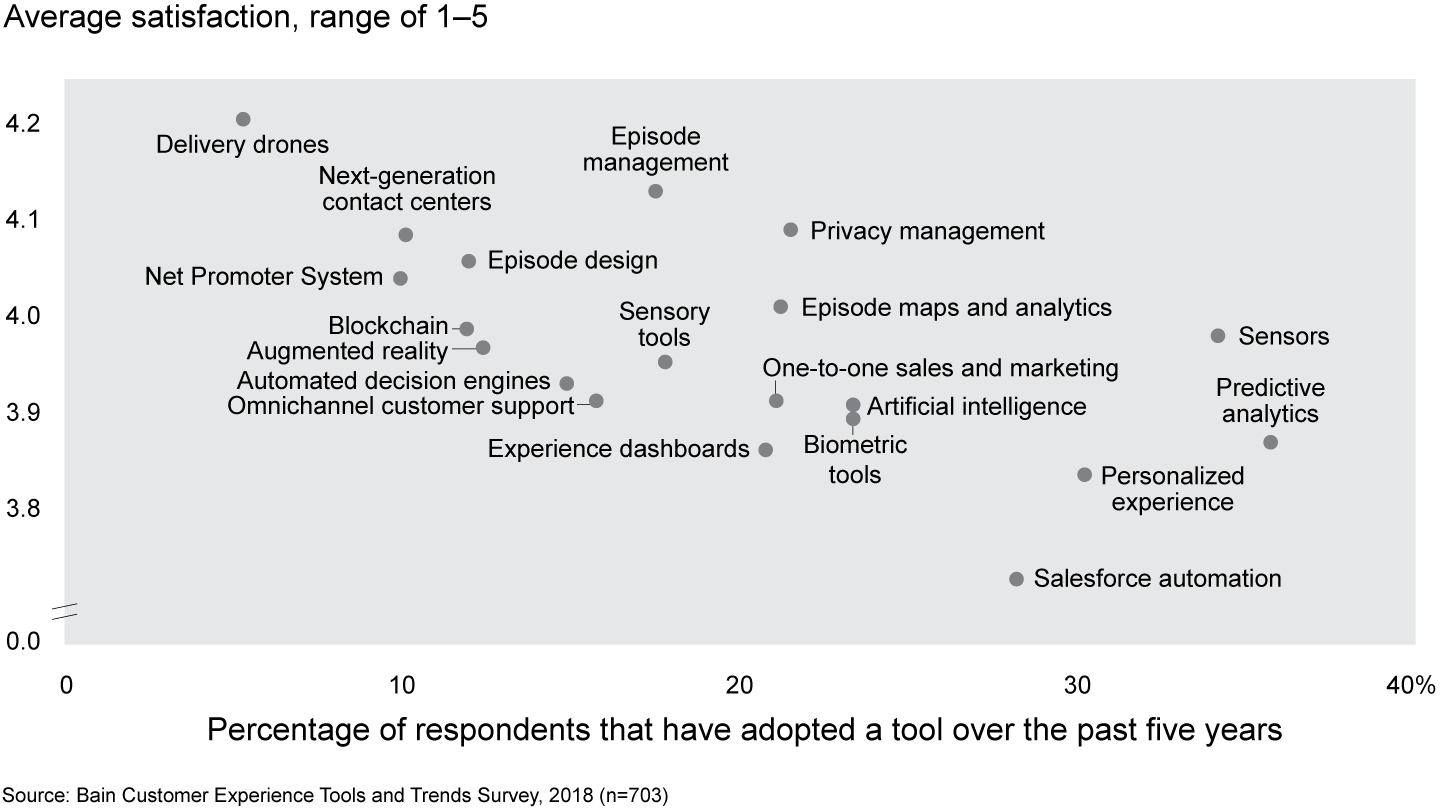

Several factors explain this correlation. As tools become established, users expect more of them. The longer a tool is in place, the more a company relies on it to deliver better results, but eventually users will run up against the tool’s limitations. In addition, as competitors begin using the same tools, they lose their distinctiveness. A few tools such as salesforce automation, moreover, consist of black-box solutions with complex algorithms, which can be frustrating for companies unable to access their inner workings to learn or make adjustments.
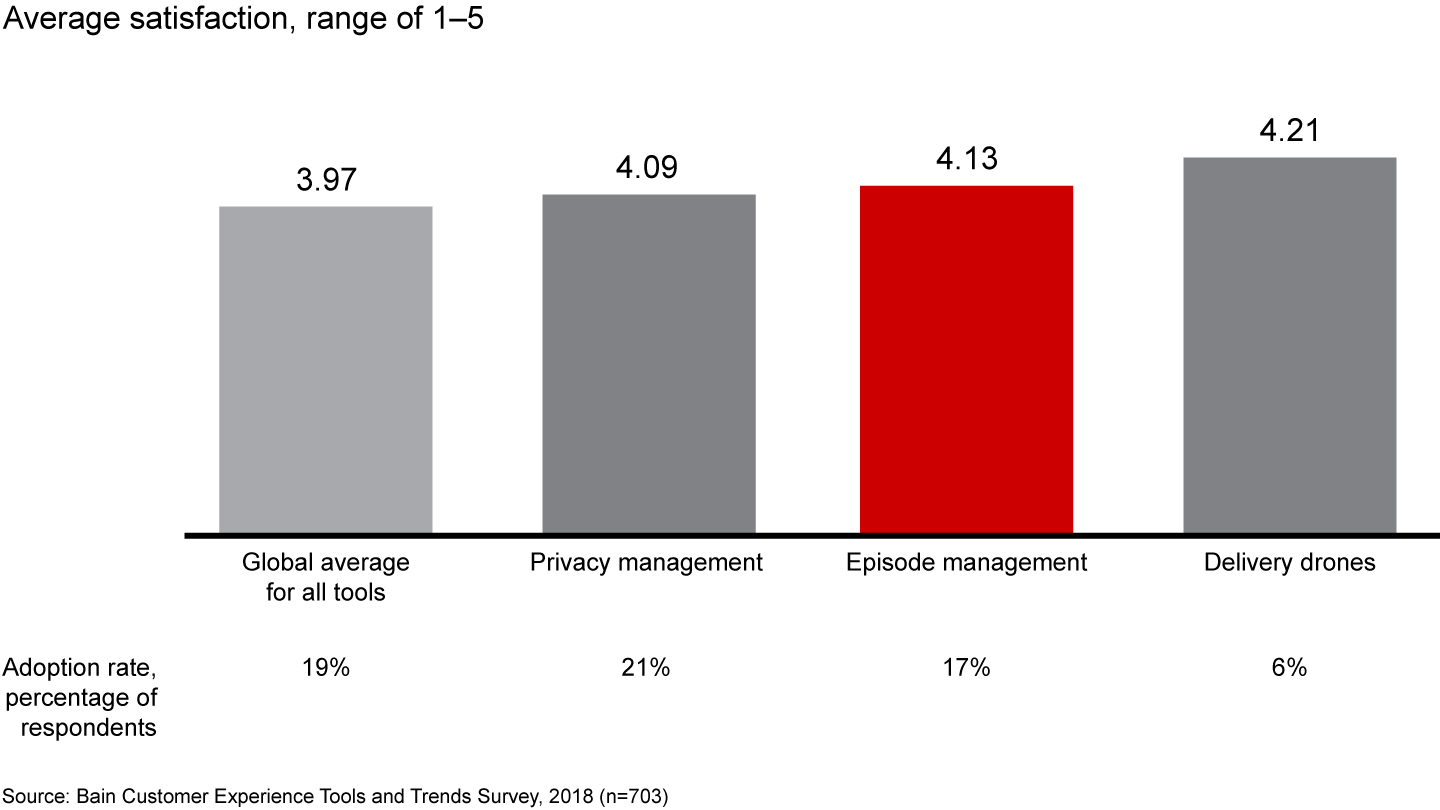
Conversely, the tools with the lowest adoption—delivery drones, episode management and privacy management—currently have high satisfaction rates. Early adopters typically are the most excited by new technology because they have spotted a way to benefit and sometimes, they hope, to create a competitive advantage. Among the early commercial adopters of drones, for instance, are JD.com, China’s second-largest online retailer, which launched a drone-delivery network covering 100 villages in rural China; Domino’s, delivering pizza in rural New Zealand; and Zipline, delivering blood products in Rwanda.
Episode management in particular has proven to be an effective and comprehensive approach for companies looking to create a superior experience (see Figure 6). An episode consists of all the customer-facing and back-office activities involved to fulfill a customer’s need. For instance, the episode “I need to replace a lost credit card” ends successfully when the customer receives and activates the new card, allowing her to make purchases again. The sum of episodes over time comprises the entire experience of dealing with the company. A growing number of companies are managing by episode, rather than around products and functions, in order to strengthen their customer relationships. For example, one European telecommunications carrier designed a new debt-collection episode from scratch. Within four months, dunning calls and bad debt dropped by half, and involuntary churn fell by 15%.
Figure 6

Characteristics of the leaders
When we examine the behavior of the leading firms, we find that they use more customer experience tools and are more satisfied with their tools (see Figure 7). The mix of tools used by the leaders also varies a bit from the rest of the pack. They are differentially investing in tools that produce three outcomes: cost optimization and prediction of customer needs, personalized experience, and privacy and security enhancement (see Figure 8). But the most effective tool, they report, is episode management, and the least effective is salesforce automation.
Figure 7
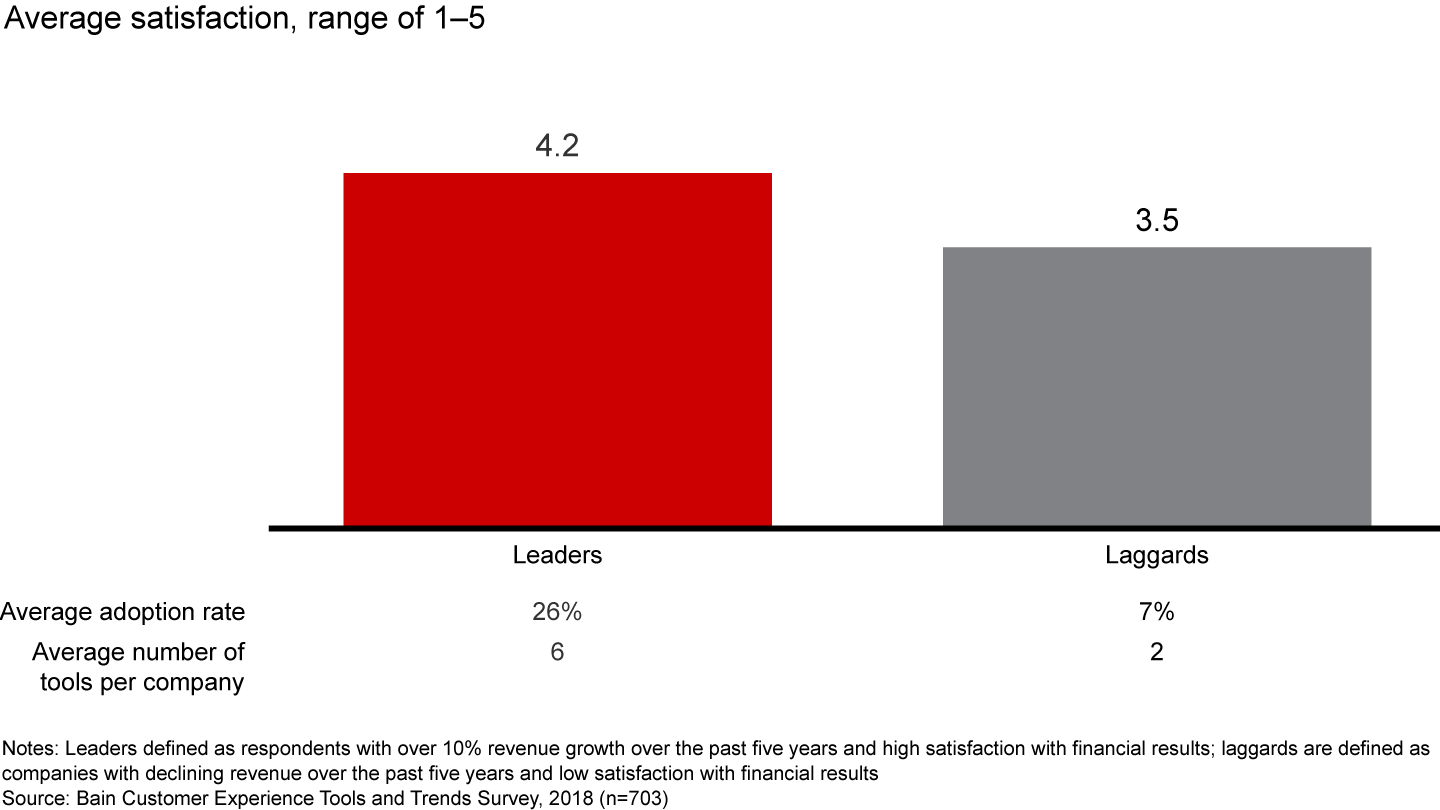

Figure 8

Tool selection: Go all in
The research provides clear evidence that the best outcomes result from major efforts and investment in a handful of tools, not from dabbling in a broad range of tools (see Figure 9). For each tool, we asked how a company implemented it; major adoption efforts yield, on average, higher satisfaction rates than limited efforts—and this applies to every tool.
Figure 9
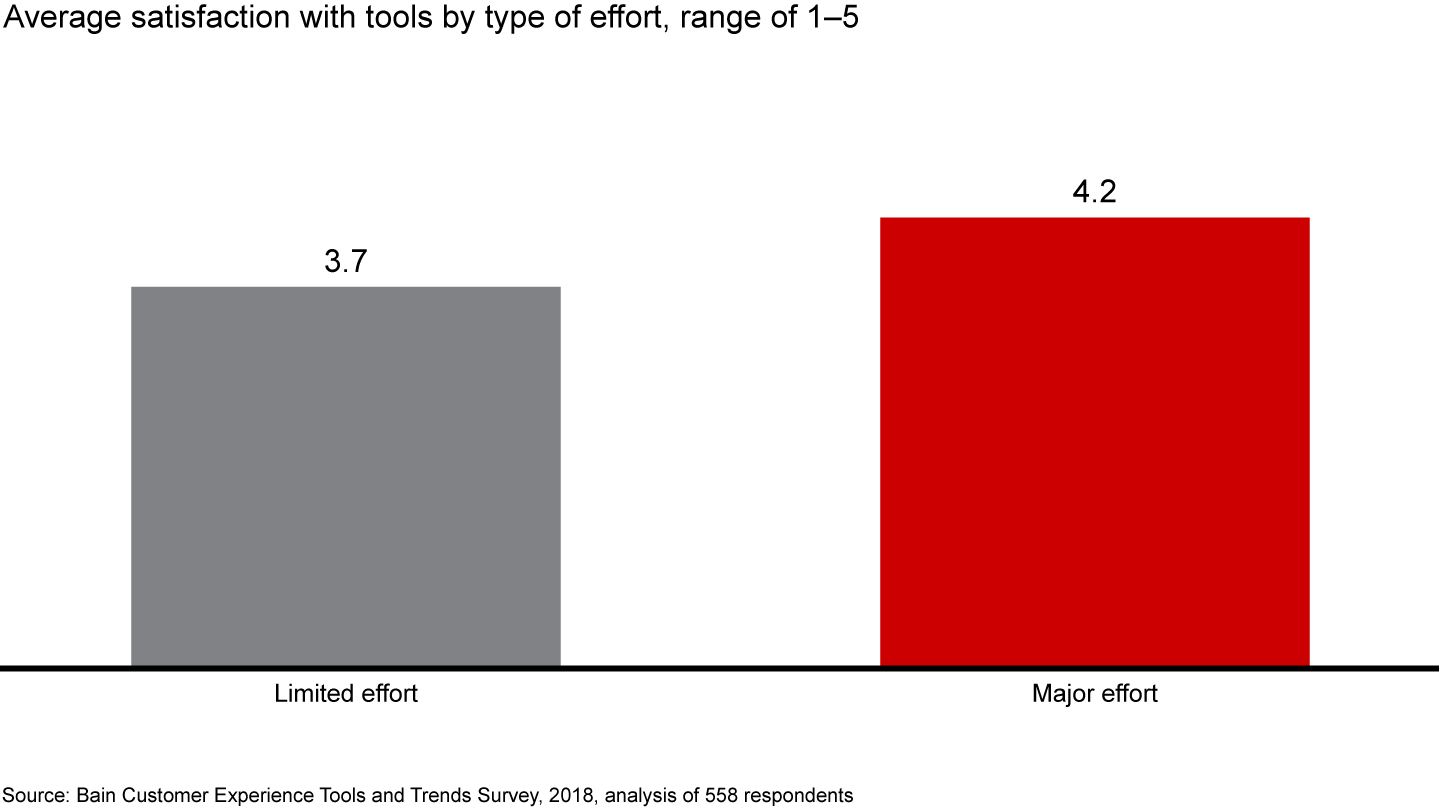

To reap the greatest benefits from a tool, a company must embed it in its operations and ways of working, rather than bolting it on as a separate project or through a separate team. Embedding it is the only way to change behavior in the organization. For instance, embedding AI throughout a call center, which changes how agents work, will yield far greater results than piloting AI to automate sorting in the mail room.
Consider how sportswear giant Adidas has concentrated its resources on a few tools crucial to its business. The Net Promoter System®, for instance, has proven valuable on several fronts, such as aligning the senior team and the entire organization around the consumer’s priorities. In fact, Adidas ties part of all employee bonuses to the brand’s Net Promoter Score® relative to competitors. The company tracks its customer experience Net Promoter Score across the world to quickly identify topics of detraction, teasing out the business impact of the topic, strategic relevance and ease of implementing fixes.
Adidas has also doubled down in personalizing the customer experience. For example, a relatively new mobile app customzes content, product and interactions based on a customer’s personal preferences and behavior. Using Salesforce technology, Adidas marketers can link activity across every channel to make more contextually relevant connections. The Salesforce data management platform detects Adidas products in social feed photos, creating a more tailored campaign for the consumer in that digital realm.
AI is a third area of focus for Adidas, especially in understanding such challenges as what drives demand, in order to better forecast which products to send to thousands of stores. AI handles a much broader set of variables than humans can.
In contrast to leaders such as Adidas, many executives are hoping for quick wins through light deployment of new tools over the next three years. This presents a major risk for the success of these tools. Amazon CEO Jeff Bezos, in his latest letter to shareholders, points out that learning to do something seemingly simple, such as a freestanding handstand, takes about six months of daily practice. His larger business point is that one should not underestimate how much effort it takes to master a discipline. “Unrealistic beliefs on scope—often hidden and undiscussed—kill high standards,” he writes. “To achieve high standards yourself or as part of a team, you need to form and proactively communicate realistic beliefs about how hard something is going to be.”
Making the most of the toolkit
Innovation and experimentation are flourishing in the realm of customer experience. Upstart digital competitors emerge every day, and customers have more choices than ever in most product categories. That intense competition puts a premium on selecting and using customer experience tools effectively. The sizable gap between tool usage and satisfaction that our research found presents an opportunity for companies to improve how they select, manage and innovate with tools. Leading firms get the most out of their tools by following a few principles:
- Clarify the business goals. Senior executives must agree on the type of experience they want to deliver in the future, to meet the needs of the target customer segments better than competitors do. They should articulate how the experience supports and builds the brand. A clear vision sets the stage for the strategy and investment priorities— which aspects of the experience need to improve, and which aspects can become a means of truly delighting customers.
- Choose the best handful of tools for the job. In most cases, a few capabilities will be critical to support the chosen experience. A tool will only improve results to the extent that it helps to fulfill customers’ needs and, ideally, develops an experience that distinguishes the company from the rest of the pack. These are the tools to double down on through outsize investment and resources.
Adapt to competitive shifts. While focusing investment on the few tools that help create or sustain a distinctive value proposition, companies will still need to keep abreast of developments in the broad range of tools. Technological developments, especially in software, happen quickly, so tool experts and senior managers will want to anticipate which new tools may move from the periphery to the heart of an experience.
The tools discussed here are not a panacea, but they do form an arsenal with which companies can arm themselves to compete. The well-equipped, well-trained company raises the odds of executing its customer strategy at a high level today, as well as adapting that strategy to succeed tomorrow.

Customer Experience Tools and Trends 2018
Twenty tools that companies are using to enhance the customer experience.
Who is most optimistic about future customer experience trends?
Our research asked executives at more than 700 companies worldwide which of 25 customer experience trends would take place by 2025. Overall, two groups were most bullish about the trends:
- On average, 63% of the performance leaders agreed that the trends would occur, compared with 52% for all respondents and 40% for laggard firms. Leaders were most enthusiastic about three trends, involving sensors in retailing and biometric payments (see Figure 10).
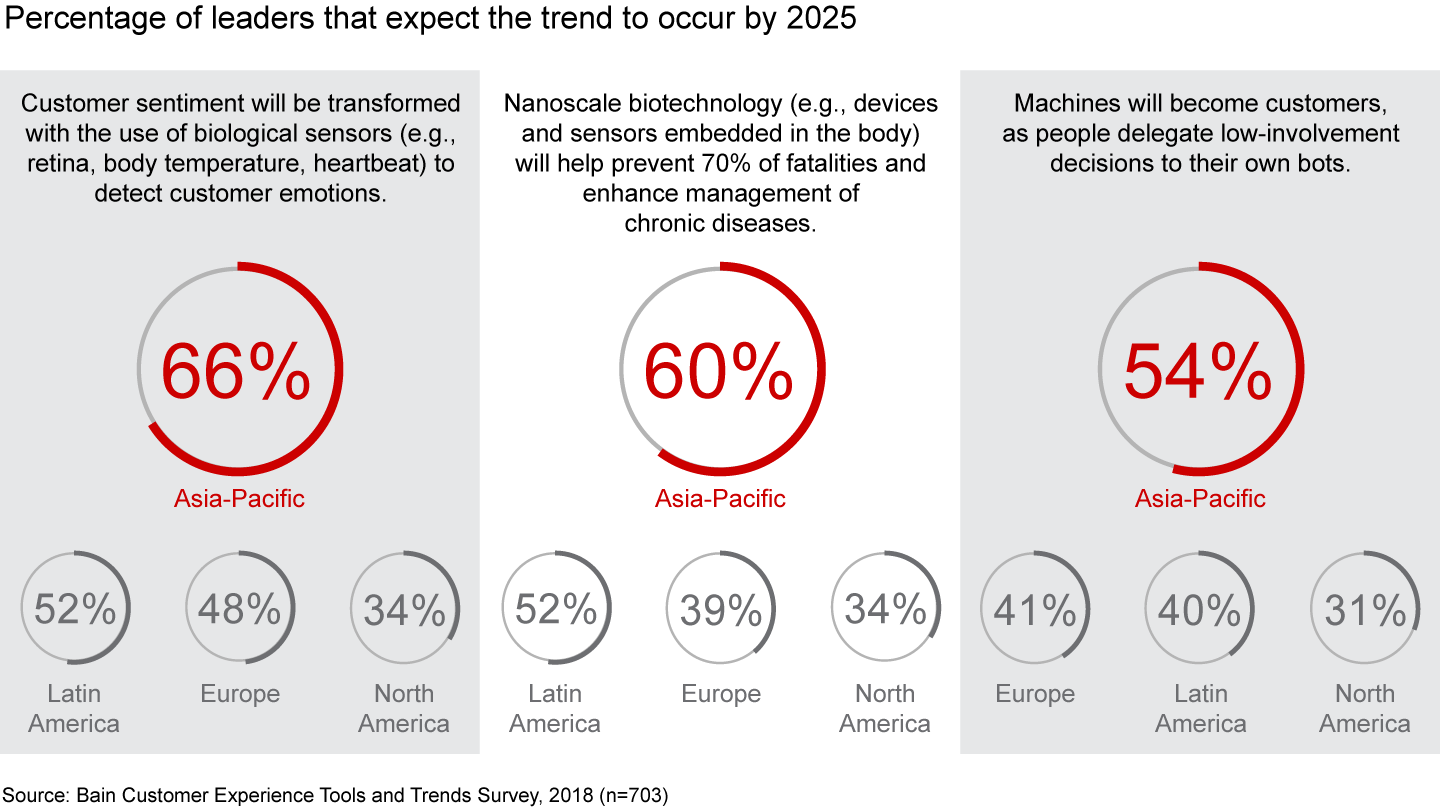
- Asia-Pacific executives were more bullish than their counterparts in other regions, with an average agreement rate of 64%, higher than Latin America (60%), Europe (49%) and North America (46%). Respondents in Asia-Pacific see more blending of digital and human elements in several new arenas (see Figure 11). Compared with other regions, many customers in Asia-Pacific are relatively tech savvy, and also more comfortable with the prospect of technology entering their lives and even their bodies.
Figure 10
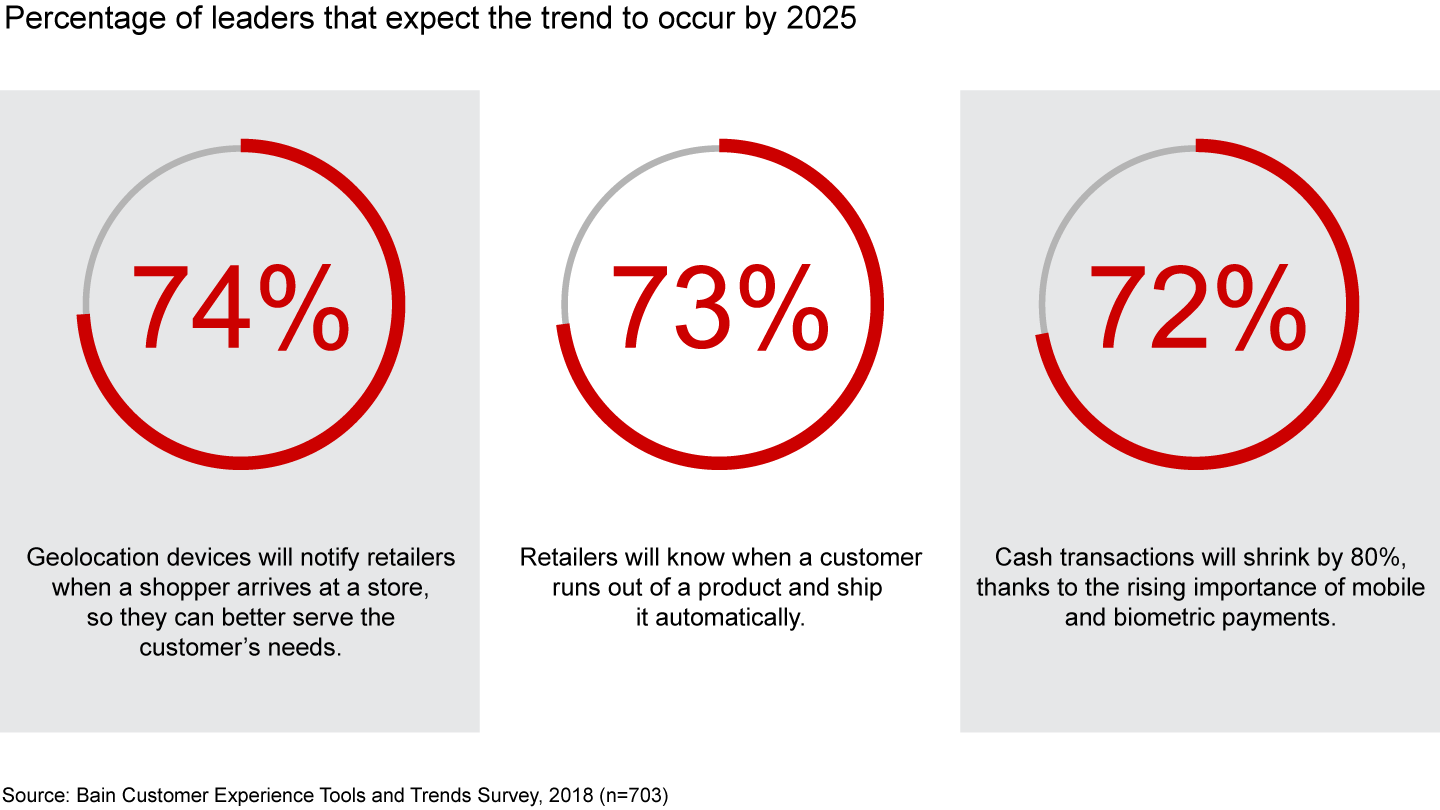

Figure 11

Overall, executives globally are most bullish about three trends that already are well underway and have momentum to expand:
- Cash transactions shrinking by 80%, due to the rising importance of mobile and biometric payments
- In-store checkout being automated, for a “pick up and go” shopping experience
- Retailers knowing when a customer runs out of a product and shipping it automatically
Respondents are most skeptical about the following scenarios:
- Drones executing more than two-thirds of small package deliveries
- Automated comparison engines handling all shopping decisions
- Machines becoming customers, as people delegate low-involvement decisions to their own bots
Whether the trends will materialize as expected is not knowable right now. But they are useful signposts when scanning the horizon for the next big thing for customers.
Below are the 25 trends respondents were asked about
All industries
- Artificial intelligence will handle more than 75% of customer service tasks and processes.
- Customer involvement in complaints and maintenance requests will be reduced to minimal levels, as products will self-report problems.
- More than two-thirds of small package deliveries will be executed by drones.
- More than half of current R&D resources will be reallocated to customer experience innovation.
- Traditional advertising will become obsolete, as personalized experience becomes the primary means for companies to engage consumers.
- Virtual reality will turn the living room into a personalized showroom with products and salespeople.
- Machines will become customers, as people delegate low-involvement decisions to their own bots.
- Payment and billing cycles will compress as transaction costs fall by at least 50%.
- Customer sentiment will be transformed with the use of biological sensors (e.g., retina, body temperature, heartbeat) to detect customer emotions.
Retail
- Advances in virtual home shopping will push online purchases to 80% of total purchases.
- In-store checkout will be automated, making the shopping experience simply “pick up and go.”
- Geolocation devices will notify retailers when a shopper arrives at a store, so they can better serve the customer’s needs.
- Retailers will know when a customer runs out of a product and ship it automatically.
- All shopping decisions will be delegated to automated comparison engines.
Healthcare
- Patients will become even more empowered, as artificial intelligence drives diagnosis in at least 75% of cases.
- Nanoscale biotechnology (e.g., devices and sensors embedded in the body) will help prevent 70% of fatalities and enhance management of chronic diseases.
- Virtual consultations will cut in-person physical health visits by more than 50%.
Financial services
- Banking systems will become much safer (for instance, against the risk of cyberattacks), reinforcing customer loyalty and trust.
- 50% of individual investors will use predictive analytics to identify opportunities and drive investment decisions.
- Health insurance purchases and transactions (e.g., filing a claim) will become effortless, thanks to 100% dematerialization and automated processing.
- 100% of financial transactions will use biometric security as an authorization.
- Cash transactions will shrink by 80%, thanks to the rising importance of mobile and biometric payments.
- Technology firms such as Google, Amazon, Facebook and Apple will become top competitors in the financial services market.
Industrial goods
- Data centralization and analytics will enable the exact matching of supply and demand in commodities and other industrial goods.
- Unplanned downtime will approach zero as sensors enable predictive and preventive maintenance.
Explore the 20 tools


Gerard du Toit is a partner with Bain & Company’s Customer Strategy & Marketing practice, and leads Bain’s customer experience transformation capabilities. Andreas Dullweber leads the practice in Europe, the Middle East and Africa. Richard Hatherall leads the practice in the Asia-Pacific region. Martha Moreau is a director of the practice. They are based, respectively, in Boston, Munich, Hong Kong and Paris.
The authors would like to thank colleagues Basma Abdel Motaal, Saad Agoumi, Suhina Banga, Gokhan Guney and Mira Kalscheuer for their support with the research and John Campbell for his editorial support.
Net Promoter®, Net Promoter System®, Net Promoter Score® and NPS® are registered trademarks of Bain & Company, Inc., Fred Reichheld and Satmetrix Systems, Inc.

Gerard du Toit: Customer Experience Tools and Trends 2018
Bain Partner Gerard du Toit describes the tools that are trending and how companies are using them in the market.
First published in août 2018