

Energy & Natural Resources Report


|
At a Glance
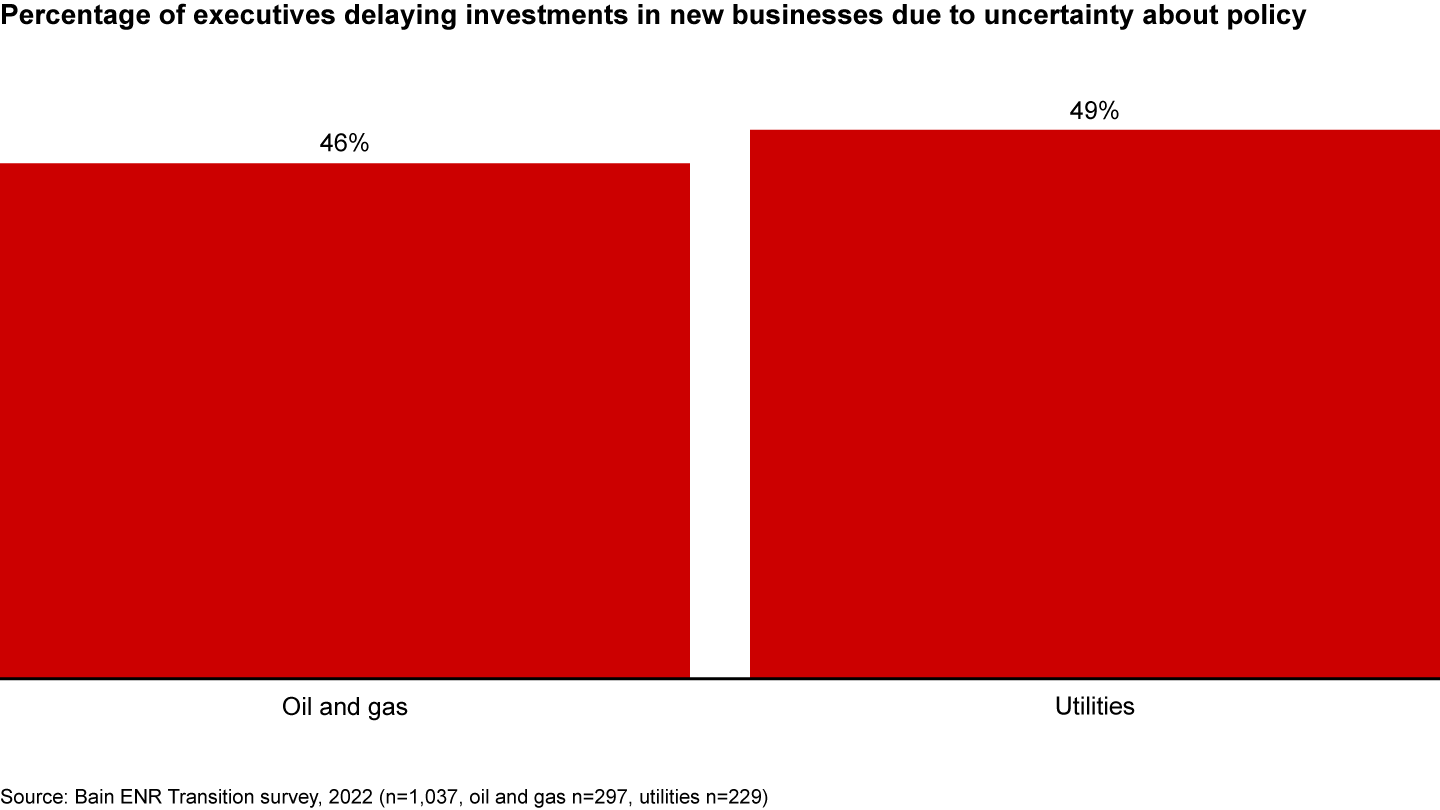
This article is part of Bain’s Energy and Natural Resources Report 2022 Europe’s efforts to reduce dependence on Russian oil and gas have highlighted the issues of energy security and supply to a degree not seen in decades. For many, the impetus to decouple Europe’s energy demand from Russian supply creates a logical incentive to accelerate the energy transition. The European Union’s REPowerEU program, for example, includes a broad collection of measures, including diversifying the supply of natural gas, speeding up electrification of mobility, and improving the electrical system by removing bottlenecks in infrastructure. At the same time, others see the current moment as requiring a step back from the race to decarbonize, encouraging more fossil fuel development and use as a way of offsetting the lost supply of Russian oil and gas—lost, at least, to Western nations imposing sanctions. Some coal share prices rose as much as 400% in the first weeks of the war, as traders prepared for global demand to spike. Most of the energy executives that we speak with agree that the long-term direction is clear: We must continue to decarbonize and create a more sustainable, lower-carbon economy. Everyone seems to agree that’s where we want the world to go by 2050. But 2050 is long way off. The more imminent question is, “How do we navigate the transition in the next 5 to 10 years?” Delivering the energy transition is complexWe’ve already come a long way. In most places, the cost of renewable energy is already competitive with fossil fuel power. With the precipitous fall in battery prices and longer lifetimes, electric vehicles (EVs) have reached lifetime cost parity in key markets. What’s more, energy executives tell us they’re eager to invest more (and more rapidly) in sustainable, lower-carbon assets. They’re under pressure from investors, customers, suppliers, employees (current and future) and a wide range of nongovernmental organizations (NGOs) asking them to lead on climate change. Indeed, with more than $130 trillion of global capital now under management that has agreed to consider carbon in their investment decisions, these companies have little choice but to pursue a more sustainable future, if they want it funded. Executives are focused on decarbonization, but they see the lack of clear and stable government policy as a major barrier to transformational change. In the US, some policies have been enacted, like the 2021 infrastructure package that injected capital to speed up the transition—updating electric grids, adding EV charging stations, investing in green hydrogen and direct air carbon capture. But in general, a lack of comprehensive federal carbon policy dampens the private sector’s ability to invest with confidence in decarbonization; nearly half of executives in utilities, oil, and gas cite policy uncertainty as a reason for delaying investment (see Figure 1). A patchwork of state climate policies remedies this to some extent, but this fragmented landscape isn’t a reliable foundation for the long-term, capital-intensive change that’s required.
Figure 1

Delivering the energy transition requires navigating a complex environment where many parties want to be involved in every decision. Consider the electrification of mobility. The European Union and some states in the US have set target dates to stop selling cars with internal-combustion engines, to speed up adoption of electric vehicles. But auto manufacturers can’t produce more EVs without enough batteries, and the battery makers can’t produce enough batteries without a much larger supply of lithium and more gigafactories to build them. Once the EVs are on the road, who will ensure there are enough charging stations in the right places? And as the charging stations appear, how will the grid be fortified to handle the transmission and distribution of far more electricity than the power utilities were expecting just a few years ago? The lack of coordination across this complex landscape threatens the pace of change required for the energy and resource transition, which explains why it’s ever more important for companies to engage with stakeholders across the value chain. Stakeholders provide the catalystCompanies have always needed to pay attention to stakeholders, but more sophistication is required now. Setting clear targets and showing progress toward them will become more important. Getting this right will go a long way toward giving companies license to transform their business and launch new growth businesses. Getting it wrong can upend companies and risk the wrath of investors and the scorn of consumers.
Policy takers to shapersCoalitions can be catalysts to accelerate the policy changes essential to the transition. We see companies bringing together stakeholders from many groups to send clear messages about climate policy. One international example is the Mission Possible Partnership, a coalition of corporations, investors, and customers focused on aligning supply chains and investment to decarbonize some of the world’s hardest-to-abate sectors, such as cement, steel, and chemicals. Traditional government or corporate affairs approaches may not be enough to manage the complexity of the stakeholder landscape that has emerged around the energy and resource transition. Executives who are able to use coalitions as a catalyst to bring stakeholders together do a few things well:
Corporations can’t plan effectively for the future without clear policy direction, and policy is a team sport. A comprehensive effort to decarbonize the energy and natural resources sectors demands a coordinated approach. Assembling coalitions of stakeholders is the surest way to develop policies and programs that are built to endure and less vulnerable to the winds of political change. Data-rich perspectivesTransition trendsStrategic capabilitiesRead our Energy and Natural Resources Report 2022 |