


M&A Report


|
At a Glance
This article is part of Bain's 2023 M&A Report. The automotive and mobility industry is advancing in different directions as part of a full value chain transformation, and companies are steaming ahead to deliver what we call the “5 Races”:
The changes required to compete in the 5 Races are so broad and dramatic that companies will benefit by not going it alone. On this path, leading companies are quickly leveraging the full array of M&A. That means both traditional acquisitions and mergers, as well as a growing mix of alternative deals. Original equipment manufacturers (OEMs), suppliers, technology companies, and mobility players are forging alliances and partnerships, spinning out divisions, and investing in corporate venture capital (CVC) to get a head start on technology development. Anything is possible (and necessary) depending on a company’s strategy. Let’s look at the range of activities and the strategies behind them. Legacy internal combustion engine component suppliers are consolidating—that is, when regulatory constraints and the ability to implement harvest strategies allow. In partially commoditizing segments, such as lighting, for example, companies can stay profitable from scale synergies and harvest cash to fund the development of next-generation products or build up new engines of growth. Plastic Omnium acquired AMLS and Varroc Lighting Systems to integrate lighting and provide a differentiated offer that meets the growing demands of OEMs, for example. In some areas of the industry, companies are making electric vehicle (EV) adjacency moves, seeking out new profit pools and critical technology control points. This requires not only evaluating what to buy but also how to integrate a new asset. In some cases, such as in EV batteries, the minimum scale needed to play is too large and risky for one player, and many are turning to partnerships. Consider the strategic partnership that allowed British company GKN Automotive to move into the e-drives business: GKN is contributing its expertise in engines and transmissions, while Delta Electronics, based in Taiwan, is manufacturing the power electronics.
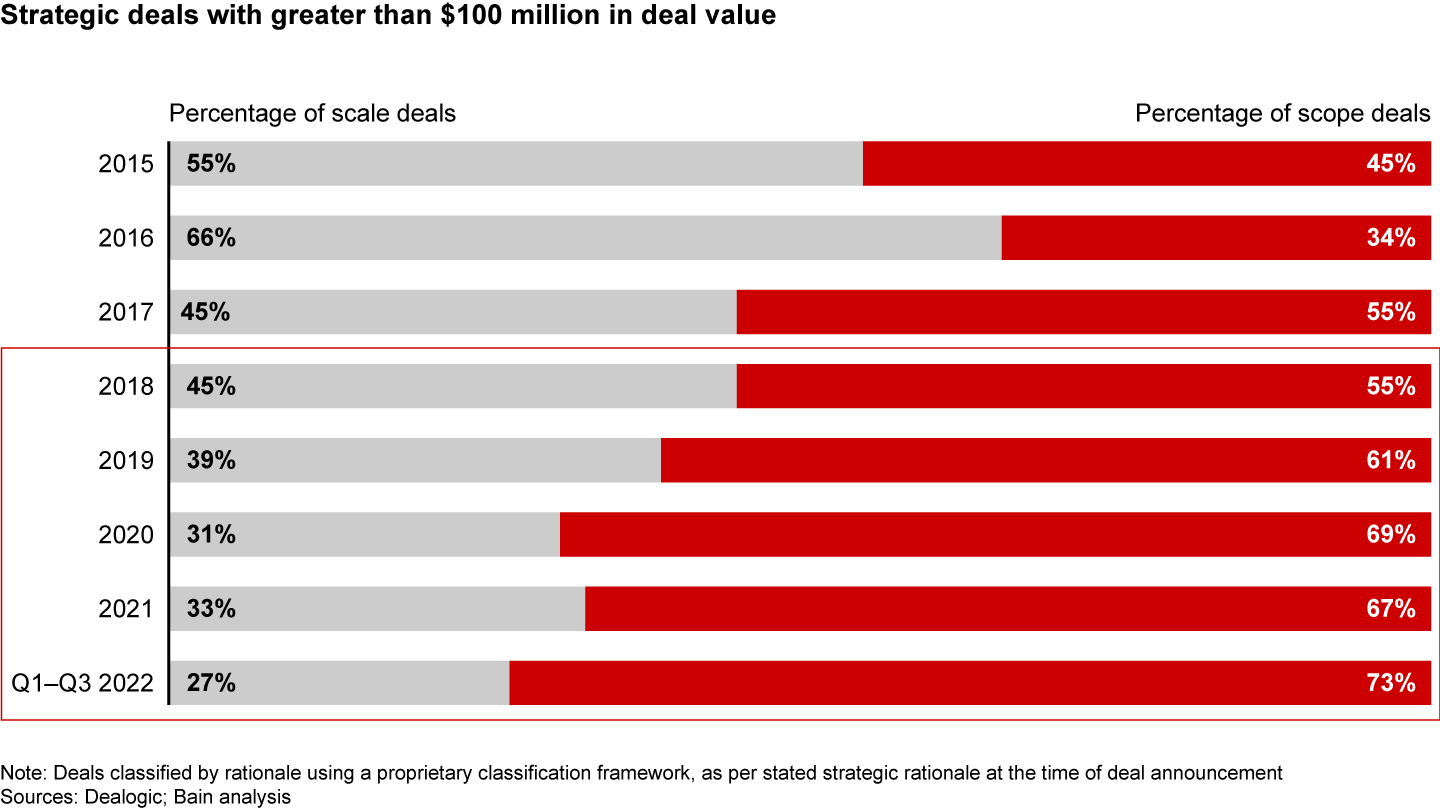
Companies from Ford to Harley-Davidson are also separating electric vehicle assets to get share price appreciation and to access growth capital for the business. That was the objective of Ampere, Renault’s new standalone company for its EV and software activities. The spin-off will allow the company to get better valuation and access to capital, attract talent, and have better focused teams. Renault has carved out its internal combustion engine business to build a 50/50 company with Geely that will be a worldwide automotive supplier producing combustion and hybrid propulsion engines and targeting an annual revenue of €15 billion per year. The intent is to share maintenance and R&D costs, rationalize capacity, and tap the slower-to-decline Chinese market. It’s not as if automotive and mobility companies aren’t engaging in traditional M&A. Similar to their counterparts in other industries, auto companies put deals on pause during Covid-19–plagued 2020. Activity resumed in 2021, a comeback year that saw 64 deals worth a total of $53 billion. Then 2022 brought with it a host of new economic challenges. Overall, deal volume dropped slightly during the first nine months of 2022 compared with the same period a year earlier, with a strong first half that cooled off in the early weeks of the third quarter (see Figure 1). While some scale deals were announced, the majority of the activity, 73%, represented scope deals (see Figure 2).
Figure 1
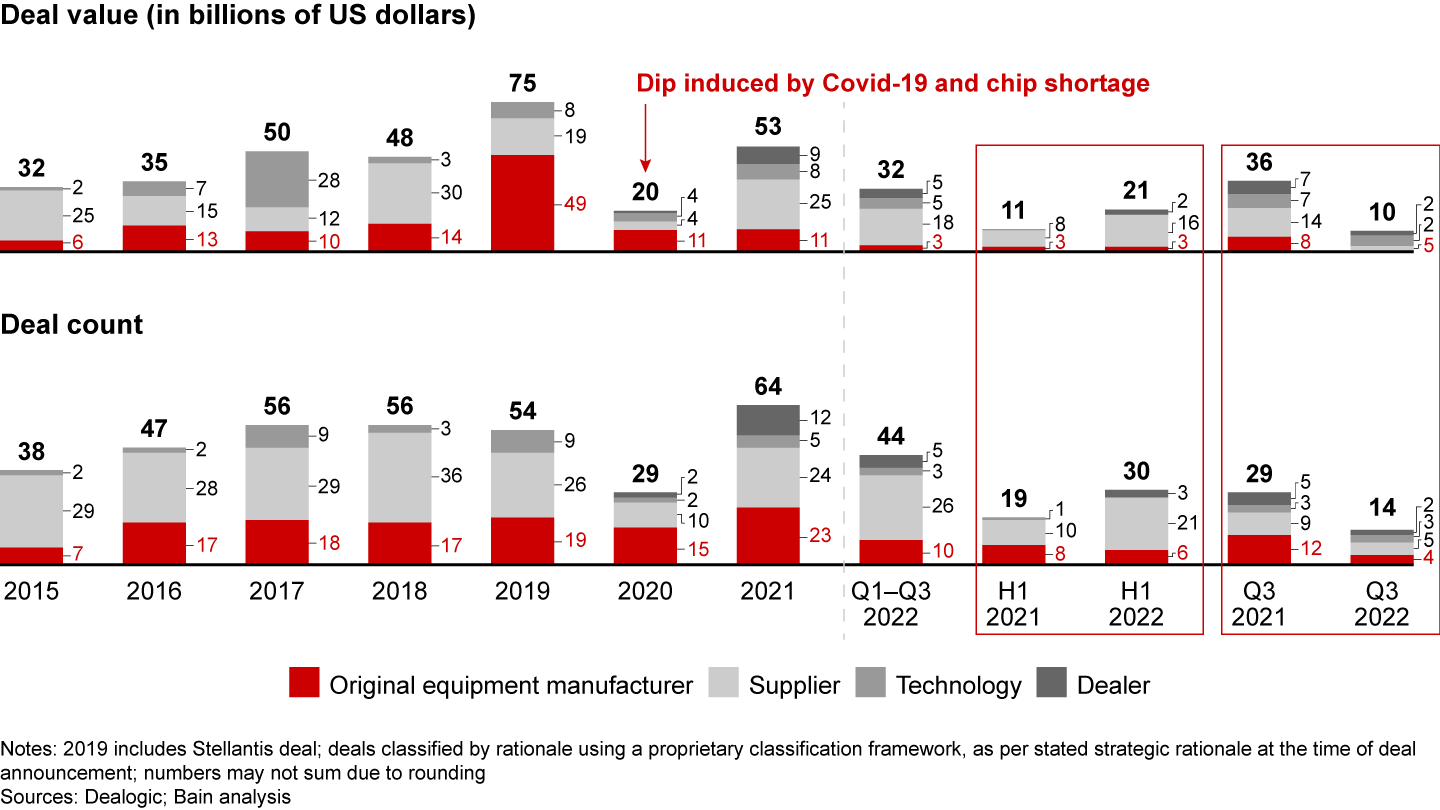

Figure 2

But across the value chain, from suppliers to OEMs to technology companies to dealers, the industry is finding that partnerships can be a suitable option, depending on the situation. For example, joint ventures can be a first step toward reining in noncore assets and sharing risks. Alliances can enable purchasing to cope with increasing market pressures from material costs. Cost synergies, benefiting both companies, have been a key objective of Hino and Traton’s procurement agreement. These alternatives to traditional acquisitions are less binding and can be easier and quicker to set up. They also come with limitations. Among the most important potential shortcoming: a lack of control. In areas with high technology uncertainty and where heavy investments are required, such as autonomous driving, companies are finding that participating in CVC can help them secure early access to technology and accelerate development. Going forward, we expect the number of M&A deals to continue increasing, though likely with a smaller average deal value. As access to financing has tightened with rising interest rates, cash-rich OEMs, major suppliers, and tech companies are expected to account for the largest share of acquisitions. These players see it as a good time to strengthen themselves even more, and there will be affordable targets in the form of companies looking to divest to focus on a core business or revitalize capital structures. Market turbulence will result in more companies falling into distress and becoming potential targets.
This is a decisive time, and companies that make the right decisions now can massively benefit over the long haul. To succeed in this new M&A game, automotive and mobility players must reinforce their M&A capabilities, adjust structures and processes, and build up resources and capabilities for CVC. Five important areas will help ensure M&A success:
Read our 2023 M&A Report |