


Report


|
At a Glance
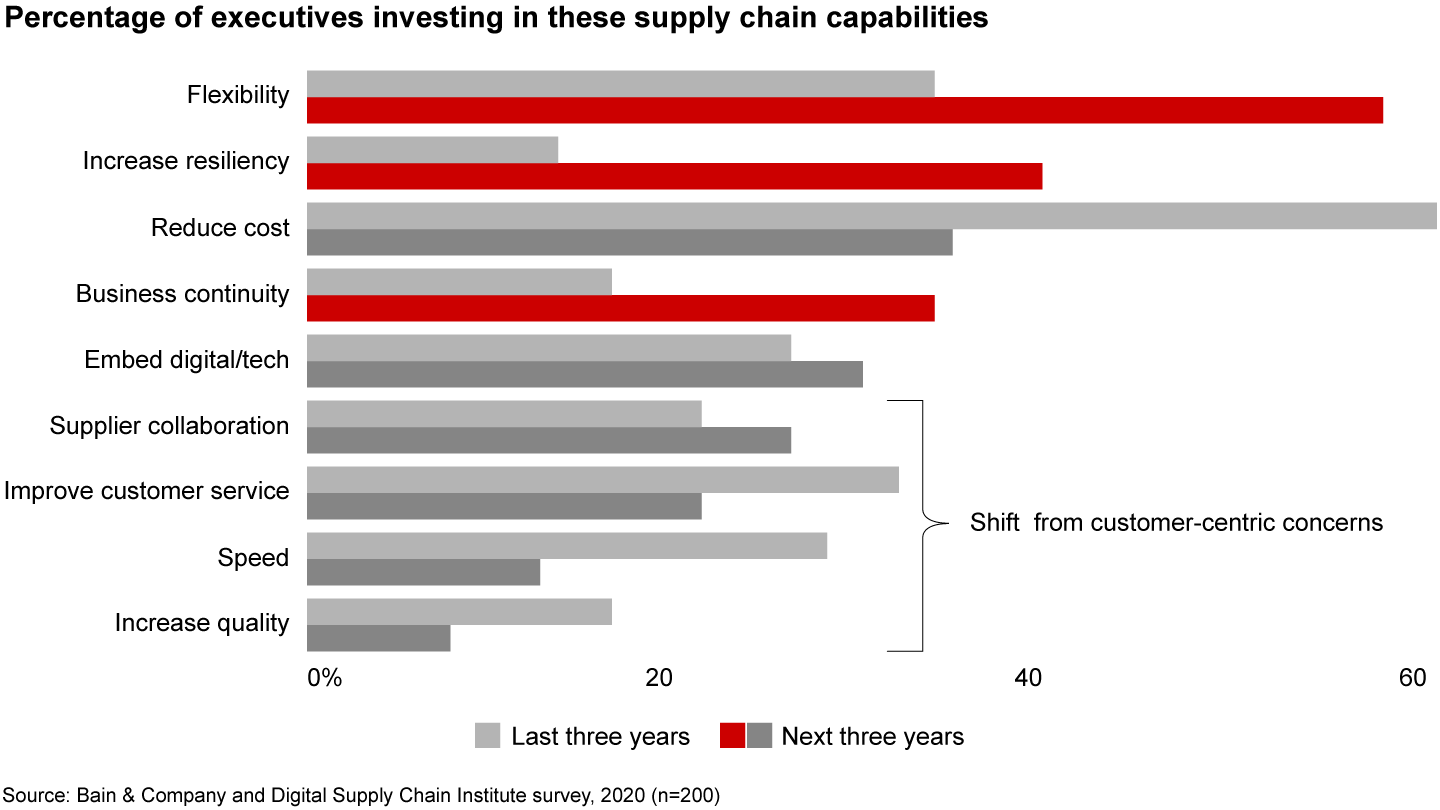
This article is part of Bain's 2021 Energy and Natural Resources Report. For most of their careers, supply chain and operations managers have had a clear mandate: source materials and deliver products at the right levels of quality, for the best available price. In energy and natural resources, that has meant delivering crude oil, natural gas or refined products, chemicals and plastics, mined materials, and agricultural products, all at the right levels of quality and at prices customers will pay. Suddenly, that formula has become much more complicated. Quality and price remain table stakes. But operations are now measured on a broader scorecard, which can include greenhouse gas emissions and other measures of sustainability, resilience to supply and operations disruption, and accountability for the social impacts of their business. Consider the events of just the past year or so. In oil and gas, demand dropped suddenly in the spring of 2020, leaving producers with a glut so large that West Texas Intermediate crude dipped into negative pricing for a day. In agriculture, as lockdowns kept consumers at home, product demand shifted away from food prepared and packaged for out-of-home dining to a new emphasis on products consumed at home. Agricultural companies had to continue to supply the world’s markets while retooling packaging operations and coping with a workforce affected by the virus. These sudden shifts came at almost the same moment that customers, shareholders, and governments were demanding more accountability for carbon emissions, plastic production, and other externalities, not only in a company’s own operations, but for its upstream supply chains and downstream customers. The pandemic sped up this change, and by mid-2020, supply chain executives were already reprioritizing their investments. Bain’s survey of operations executives found that their investments would focus less on cost reduction and speed, and more on resilience and flexibility (see Figure 1).
Figure 1

To help with all of these changes, most companies have been investing in digital improvements, including analytics and automation, drawn at first by the opportunities in cost savings and efficiency. Now they need these investments to deliver the other objectives on their scorecard. New digital capabilitiesThe good news is that by building up the new muscles necessary to thrive in a period of greater scrutiny and more intense competition, companies can turn their operations into a true competitive weapon. An operating model that can balance efficiency with sustainability, transparency, accountability, and resilience is a model that can differentiate a company in its marketplace. Legacy enterprise management tools, while still essential, cannot meet all the needs of a rapidly evolving operations unit. Increasingly, companies will need to adopt and develop the next generation of digital tools that focus on very specific problems, such as transparency and accountability in a supply chain, network optimization, and inventory optimization. Bain research finds that 85% of the companies surveyed said they’re investing in big data and analytics. These tools have already proven themselves: advanced analytics can improve supply chain forecast accuracy by up to 60%. The next wave of capability building needs to close the loop, ensuring that the insights gleaned from analytics are put to work in operations to generate value. An updated digital operating modelApplying digital technology to these four trends makes a big difference, not only for cost, but also in meeting other objectives of the balanced scorecard.
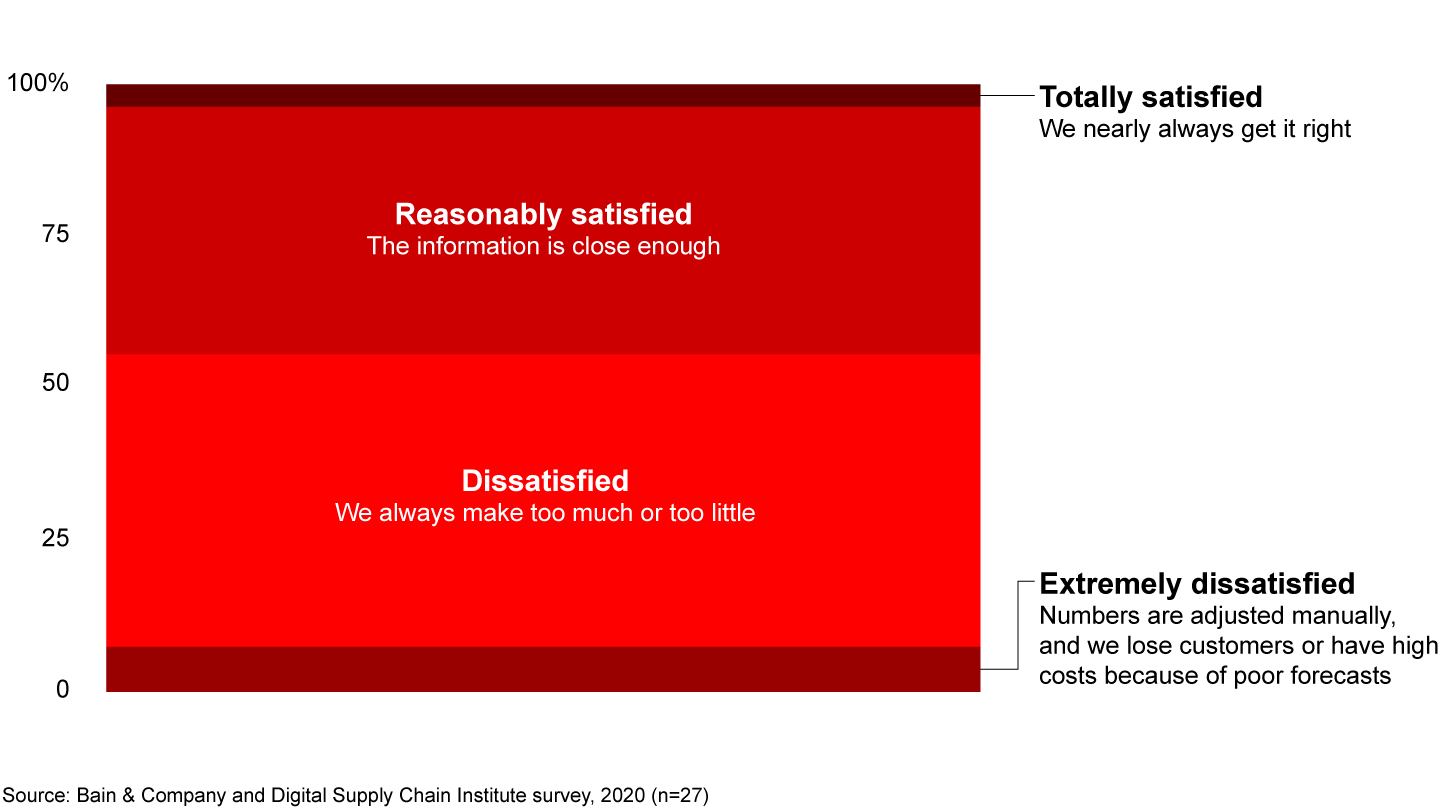
Figure 2

Finally, because operations are increasingly measured against a broader set of requirements, executives need to reexamine their capital investment plans, asking, “What am I getting for this investment, beyond cost savings?” Capital investments also need to deliver efficiency, sustainability, resilience, and agility. (For a detailed look at capital investments, see “Raising Productivity in Energy and Natural Resources Capial Projects.”) If a company’s capital investment decisions are still based only on reducing costs, its investment thesis is failing to keep up with its strategic ambitions. Read our 2021 Energy and Natural Resources ReportMore from the report
|