


Report


|
At a Glance
Insurers around the world are urgently seeking new ways to attract, engage and retain customers. In developed markets, carriers are struggling with sluggish or nonexistent growth. From 2013 to 2017, income from premiums fell at an annual rate of nearly 1% for North American life insurers, while it rose at an annual rate of just 2.2% for property and casualty (P&C) insurers, according to Swiss Re. In Europe, the Middle East and Africa during the same period, premium income grew 2.6% annually for life insurers and 1.1% for P&C insurers. Insurers everywhere are contending with high levels of customer churn, even in most of the faster-growing developing markets of Asia and Latin America. In most markets, customers of established P&C insurers are switching carriers more often than they were three years ago—to other incumbents, insurtechs and insurance providers from other industries, including tech, retail and automotive. The rise of digital platforms has made switching easier and less expensive. Struggling to win and keep customers, and hard-pressed to differentiate themselves from their competitors, insurers are forced to compete on price. As customers flock to digital marketplaces, insurers run the risk of losing control of the customer interface and becoming consigned to the role of wholesale providers of a commoditized service. All this paints a pretty dire picture for insurers. However, there is a way forward, and it involves connectivity, digitalization and a thorough understanding of the next generation of consumers. 
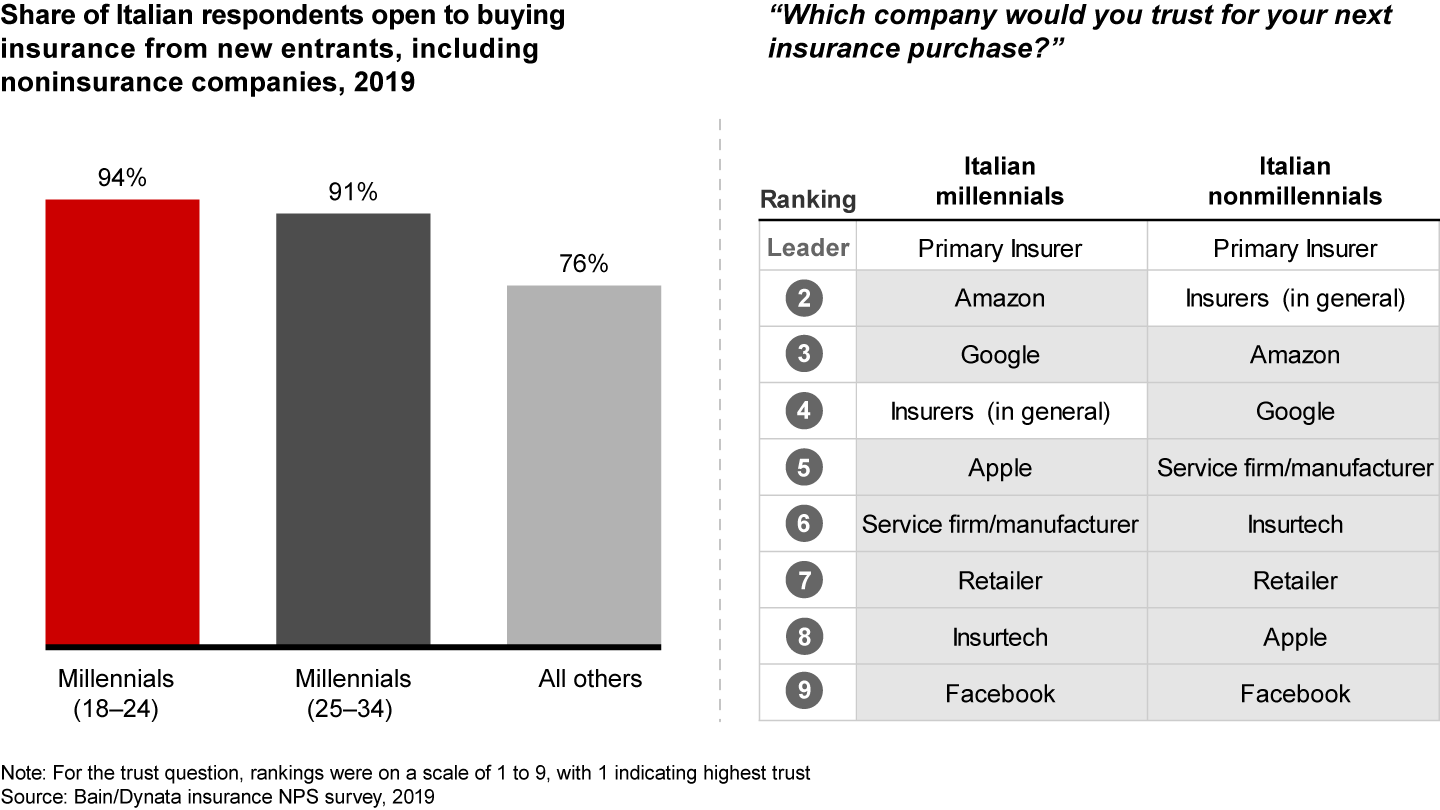
How Connected Devices Are Changing InsuranceAs customer churn rises, smart insurers are focusing on connectivity, digitalization and a thorough understanding of millennials. For connectivity, smart insurers are taking a cue from their own customers, many of whom already use connected devices to monitor their cars, their homes and their health. Worldwide, 39% of insurance customers surveyed by Bain & Company currently use at least one connected device, and about 72% expect to use one in the future. Insurers can use the data collected by these devices to develop products and services that are geared to their customers’ individual needs. They can also offer incentives for good behavior, such as discounts on auto insurance premiums for drivers who regularly stay within the speed limit, or rebates for life and health insurance customers who exercise regularly. These are among the findings of Bain’s fifth global survey of retail insurance customers. Working with Dynata, a leading market research company, we queried more than 167,000 insurance policyholders in 16 countries in the Americas, Europe and Asia-Pacific to learn what they expect of their insurers and how likely they are to recommend their providers to a friend or colleague. We found strong connections between connectivity and loyalty. Many insurers have not seen a significant rise in their Net Promoter Score® (a key indicator of customer loyalty) since Bain’s first global survey in 2014. The flat scores are due in part to rising consumer expectations and to the fact that insurance has long been a low-touch industry. About one-third of customers say they go an entire year without interacting with their provider even once. However, consumers who own at least one connected device interact with their carriers an average of 19 times a year, more than five times the frequency for customers who do not own any connected devices. Customers with connected devices give their insurers higher Net Promoter® ratings, which means they tend to remain longer as customers, buy multiple products and recommend their carrier to a friend or colleague. In other words, connectivity is a big deal for the insurance industry. Our survey shows that customer expectations are changing. Consumers increasingly want their carriers to be part of an ecosystem of providers—made up of both insurers and noninsurers—that help them lead safe and healthy lives. They see connected devices and services playing an important role in these ecosystems. At the same time, customers in many markets are also increasingly open to buying insurance from nontraditional sources, especially big tech companies. These trends are particularly evident among millennials, the large global cohort of consumers 18 to 34 years of age. These young people, who tend to be heavy users of connected devices, make up 37% of the working-age population in the 16 countries we surveyed; in India the figure is 47%. They represent a huge opportunity for insurers, but many carriers find it difficult to attract and keep them as customers. As millennials build careers, form households, have children and acquire wealth, their need for insurance grows. In Asia-Pacific, the younger generation is fueling an expansion in total household wealth that is on pace to outstrip North America’s by 2023, according to projections by Credit Suisse (see the Bain report “Making the Most of Asia-Pacific’s Insurance Boom”). Insurers that successfully target millennials can refresh their customer bases and help fuel organic growth. But doing so requires innovative approaches based on digitalization and connectivity. Millennials, particularly in developed markets, live on their smartphones. They use apps to arrange their daily lives, and they wear devices that monitor everything from the number of steps they take to how rapidly their heart is beating to how many hours they sleep. They own cars that track how safely they drive, and they use apps to control the climate and security of their homes. These young, tech-savvy consumers tend to be fickle. Compared with older customers, they are more likely to switch providers and more open to new entrants, including those from outside the industry. Their loyalty has to be won. Insurers that want to succeed with this cohort will need to redesign and simplify their customer episodes and embrace digital platforms. Andrew Schwedel and Henrik Naujoks explain how connected devices can help insurers interact with customers more deeply, resulting in more consistent and loyal customers. Connecting with customersThe use of connected devices is reaching a tipping point, especially among younger and more affluent customers. Among the various types of connected devices, those that monitor health have the highest penetration across most markets, followed by devices connected to cars and homes. The challenge—and the opportunity—for insurers is figuring out how to use this connectivity to serve their customers better. Because insurers interact with their customers so infrequently, they often lack the quantity and quality of data they need to generate meaningful insights about what their customers want. And, compared with companies in such industries as banking and healthcare, insurers have underinvested in data analytics and IT, when measured against annual revenues, according to Gartner. As insurers step up their commitment to connected devices, they will need to navigate increasingly stringent regulations on data privacy in many markets, and they will have to work to secure their customers’ trust. While a large majority of consumers are willing to share their personal data with insurers, customers in many developed markets are becoming more concerned about how their data is used. When tackling issues such as data sharing, some insurers can draw on almost a decade of experience offering services tied to connected devices. The trend is most advanced among auto insurers. Modern vehicles often come equipped with sensors that collect data on factors such as speed, acceleration and braking patterns, average load weight, fuel usage, and the wear and tear on components. The data can be extracted through such technologies as plug-in dongles, mobile sensors and smartphone-based apps, then transmitted to the insurer. Some insurers have formed partnerships with automotive manufacturers, while others cooperate with specialized tech providers or furnish customers with their own diagnostic plug-ins. By collecting, analyzing and comparing data from a broad customer base, auto insurers can make more informed decisions about underwriting, risk and claims, and can create rewards for customers with good automotive habits, such as regularly maintaining brakes and other critical systems. When connectivity strategies are well-designed and well-executed, both the customer and the insurer benefit. The customer pays lower premiums, and the insurer receives fewer accident claims. While insurers typically apply discounts for good driving when customers renew their policies, some insurtechs have begun offering variants of data-driven pricing. Root Insurance, a US-based insurtech, uses data continuously collected from a driver’s smartphone app during a three-week trial period to calculate premiums for prospective policyholders. Insurers have had less experience—and less success—with offerings tied to so-called smart-home connected devices. Carriers typically offer discounts pegged to devices such as burglar and smoke alarms. In markets where home insurers compete aggressively on price, notably in Asia and Europe, the economics have been challenging, and some carriers have discontinued their smart-home offerings. Despite these early stumbles, other insurers are exploring new ways to meet consumer demand for insurance services linked to smart-home devices. Several carriers have formed ecosystem partnerships with device makers. Italy-based Generali has teamed up with Nest, a device company owned by Alphabet, the parent of Google. Canadian insurer Desjardins has joined with Roost, a Silicon Valley insurtech and maker of telematic devices. Insurers promise their policyholders peace of mind by using data from the devices to help detect and prevent leaks, fires, outages, intrusions and other events that can lead to damages, losses and claims. For connected devices that monitor health and fitness, adoption is spreading rapidly across markets. Health and life insurers have taken notice. Vitality, the pioneering program developed by South African insurer Discovery, promotes behavioral changes such as exercise, weight loss and smoking cessation, which can lead to lower healthcare costs. Discovery shares the savings with its customers through rewards and discounts. Discovery also partners with other carriers to market Vitality around the world. One such partnership, AIA Vitality, which operates across Asia, increased participation by 40% in some markets in 2018, bringing total enrollment in the region to 1.2 million customers. While many insurance customers use connected devices, most of those devices aren’t provided by insurers. They are supplied by tech companies, automakers or device manufacturers. However, our survey reveals that customers are open to insurers being the point of contact for services associated with their devices. Overall, customers look to their insurers to provide device-related services that are natural extensions of core insurance, such as monitoring, prevention and emergency response. The implications for insurers are clear. In an ecosystem of services that relies on connected devices, which company supplies the device is less important than how the data is collected, analyzed and used to create value for the insurer and its customers. Merely handing out free, or discounted, devices is not enough. Insurers need to invest in data collection and analytics, and then leverage the trust of their customers by taking visible steps to protect that data. The threat of new entrantsIncumbent insurers that aim to build a portfolio of services for this new era of connectivity and digitalization start with a significant advantage over their less-established competitors: Their customers trust them. Our survey shows that across all markets, consumers still trust their primary insurance provider the most when purchasing the next insurance product. Primary insurers outrank insurtechs; big techs such as Google, Apple, Facebook and Amazon; retailers; and manufacturers. However, there are reasons for concern. Many customers trust at least one tech company more than they do their primary insurer or insurers in general, especially in emerging markets Overall, insurtechs have yet to cause the massive disruption in the marketplace that many in the industry had feared. Only a small portion of insurtechs worldwide originate and underwrite insurance. Most insurtechs act as digital marketplaces, serve as virtual insurance agents or provide software and analytics to other insurers. And, while churn is high for incumbent insurers, insurtechs aren’t the major beneficiaries. Our survey shows that most customers who switch from a traditional carrier take their business to another incumbent, not an insurtech. (For more on insurtechs, see the Bain Brief “Insurtechs on the Rise.”) Still, incumbent insurers need to remain vigilant. The number of insurtechs has grown rapidly, doubling in five years, and an insurtech may yet achieve the kind of global presence in insurance that fintechs such as Germany’s N26 and the UK’s Revolut have attained in banking. Some insurtechs are already roiling the market on a smaller scale. Acko General Insurance, an Indian insurtech that specializes in automotive insurance, excels at cutting through the complexity that has long bedeviled traditional insurance companies. Acko receives high marks from customers for providing products that are easy to understand, compare, purchase and use. So do US insurtechs Root Insurance and Lemonade Insurance. We asked customers to assess their insurers using the Elements of Value®, a set of 30 fundamental company attributes, identified by Bain, that matter to customers (see “The Elements of Value,” Harvard Business Review, September 2016). Customers give Root top marks for 11 high-value elements (those elements that consumers identify as the most important), and they award Lemonade, which specializes in homeowner's and renter’s insurance, top grades for nine high-value elements. These results are well above the average rating of five high-value elements for incumbent insurers worldwide. (For a detailed analysis of the Elements of Value in insurance, see Bain’s 2018 Customer Behavior and Loyalty in Insurance report, “Customers Know What They Want. Are Insurers Listening?”) Some established insurers have teamed up with insurtechs to capture the attention of millennials by, for example, monitoring and analyzing social media postings for life events that might trigger the need for insurance, such as the birth of a child. Other incumbents have launched their own digital brands, which promote low-cost products and superior customer experiences. Among these so-called digital attacker spin-offs are MassMutual’s Haven Life and Prudential’s LINK. The rise in connectivity and the shift to a platform economy is blurring the boundaries between industries, making it easier for noninsurers to enter the market and vie for control of the crucial customer interface. Our research shows that customers are increasingly open to trying an insurance product from nontraditional players, including big techs. This readiness to embrace digital providers is particularly evident in China, where 22% of the customers of traditional insurers who switched carriers in the past year moved to an insurtech, the highest rate among the countries we surveyed. Zhong An, the online insurer launched in 2013 and backed by Ping An, Tencent and Alibaba, is a vivid example of the growing appeal of digital insurance in China. In 2018, the company served more than 400 million customers and sold more than 6 billion policies—although, granted, many of those policies involved short-term coverage for e-commerce activities. In light of these customer trends, many insurers are offering their products on digital marketplaces, some of which are operated by big tech. Tencent’s WeSure platform, for example, has formed partnerships with more than 20 Chinese and multinational insurers. However, the danger for insurers in these kinds of arrangements is that they lose control of the customer interface (and the profit pools that come with it) and become relegated to the role of behind-the-scenes underwriters of commoditized risk. The specter of big tech extends beyond China. Across markets, consumers surveyed by Bain show keen interest in buying insurance from Amazon, even though the tech giant doesn’t currently sell insurance in most countries. They cite Amazon’s reputation for competitive prices, ease of use and quality of customer service. The business model that could eventually disrupt the insurance industry on a grand scale may be alliances between big tech, insurtechs and traditional insurers. In the past two years, Amazon has invested in Acko, the Indian insurtech, partnered with Spanish insurer Mapfre to sell policies on amazon.es, and joined with Travelers in the US to sell smart-home kits, including security cameras, motion detectors and water sensors. Alphabet, meanwhile, has invested in insurers such as Oscar Health, Lemonade and Collective Health. Becoming simple and digitalWhen developing digital muscles, insurers tend to lag behind other industries and their own customers. Many consumers now opt for digital channels from the moment they start thinking about buying insurance. Their first stop is to search the web, often on a mobile device. All along the customer journey, the share of customers that use digital channels for some or all of their interactions is rising. At the same time, the share of customers that use only offline channels is shrinking, even among nonmillennials. Insurers that sell directly to consumers, without using an agent or other intermediary, are taking the lead in developing digital strategies. These companies often excel at acquiring customers. They raise awareness through heavy advertising on television and online, and they offer low-cost products through easy-to-use digital channels. However, even direct-to-consumer insurers fall short on customer retention. Their price-sensitive customers are likely to switch to other providers offering even better deals. While digital channels are gaining ground, offline means of communication, including talking to an agent by phone or in person, are not going away. Most customers still use both digital and offline channels. For incumbent insurers, the message is clear. Investing in digital channels is not enough, Insurers must create omnichannel experiences that are simple and delightful along the entire customer journey, from research to purchase to service to claims. For insurers that get this right, the rewards can be rich indeed. Delighted customers tend to be loyal customers, and loyal customers tend to buy more products, make more referrals and switch providers less often. In other words, provide your customers with a service that is simple, digital and delightful, and they are more likely to remain your customers. Winning in a connected worldInsurance is on the cusp of a new era, one characterized by customers who are connected by devices, digital platforms, and the quest for products and services that are easy to understand, compare, purchase and use. They are cautiously willing to share with insurers the data from the devices in their homes, in their cars and on their bodies, provided they believe they will receive something of value in return. If an insurer is not delivering value, customers will switch to one that is, most likely to another incumbent, for now. But our survey also shows customers are very open to trying out new entrants, including those from outside the industry. This new era calls for rethinking traditional business models. Insurers need to prepare for digital attackers from inside and outside the industry. Incumbents looking for new engines of growth are facing some major decisions. Should they totally transform their business, should they join forces with an insurtech or a big tech, should they launch their own digital attacker, or should they do all of the above? These choices are likely to weigh on boards of directors in the next 18 to 24 months. Insurers repositioning themselves to thrive in a connected world are taking a comprehensive look at their assumptions and strategies:

1. Serving connected customers
Figure 1
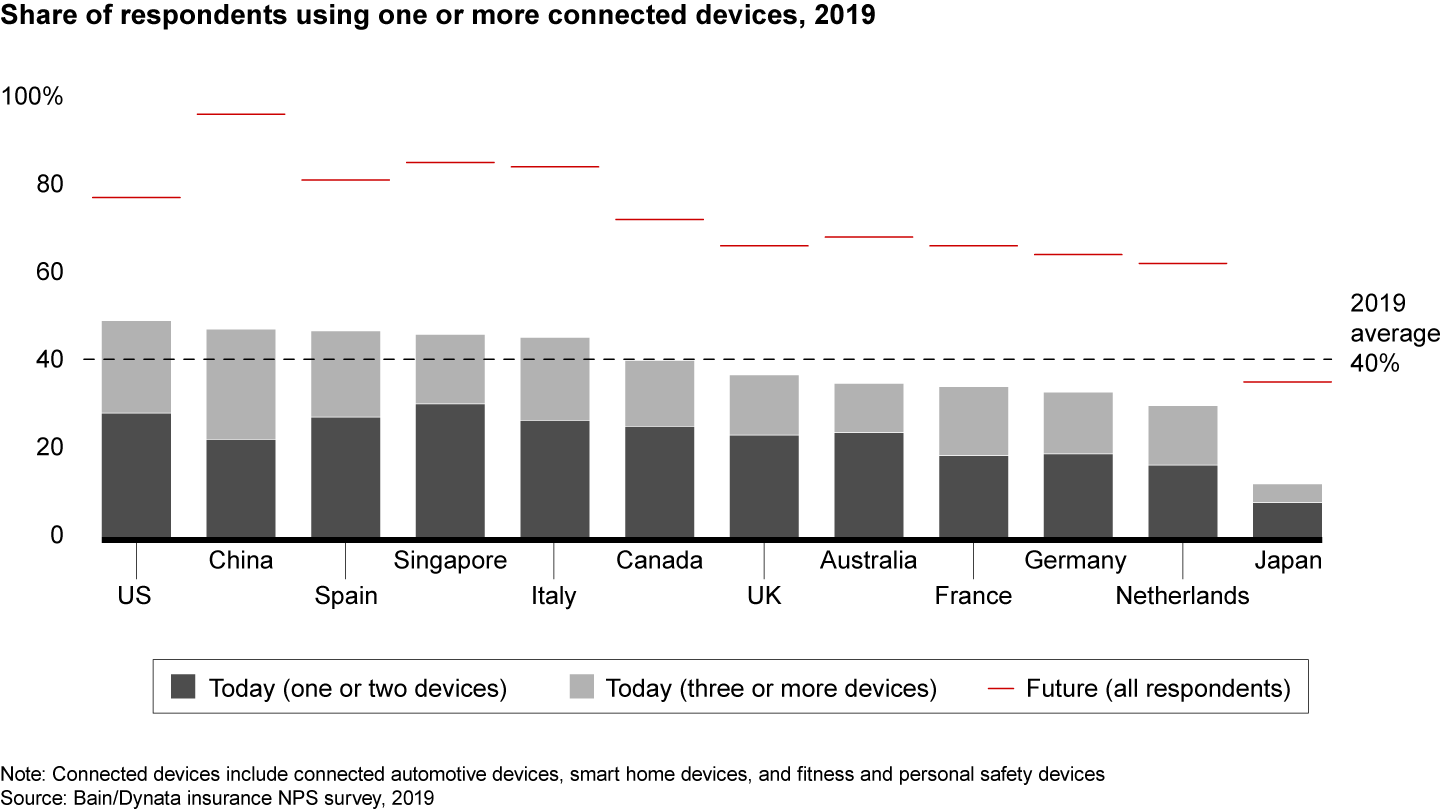

Figure 2
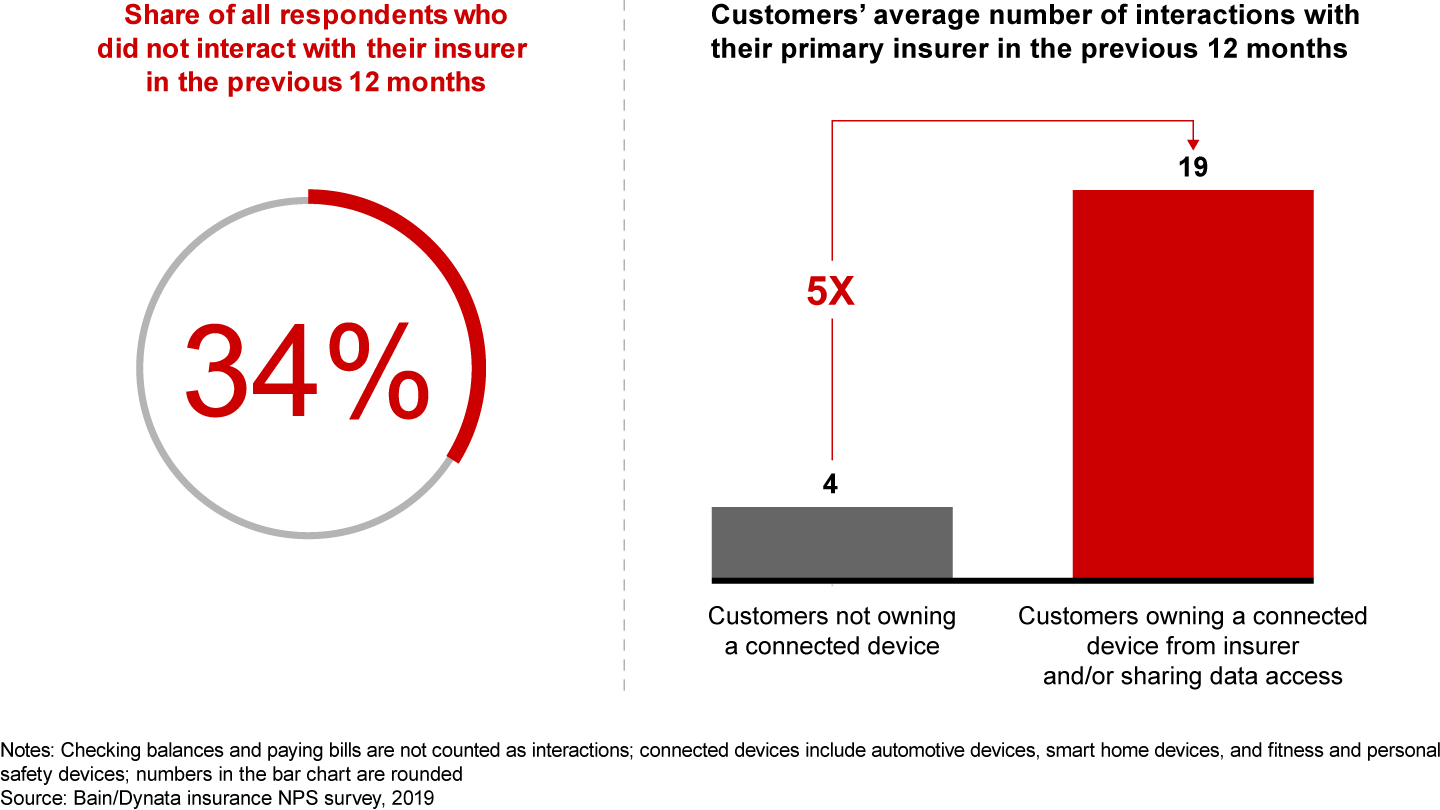

Figure 3
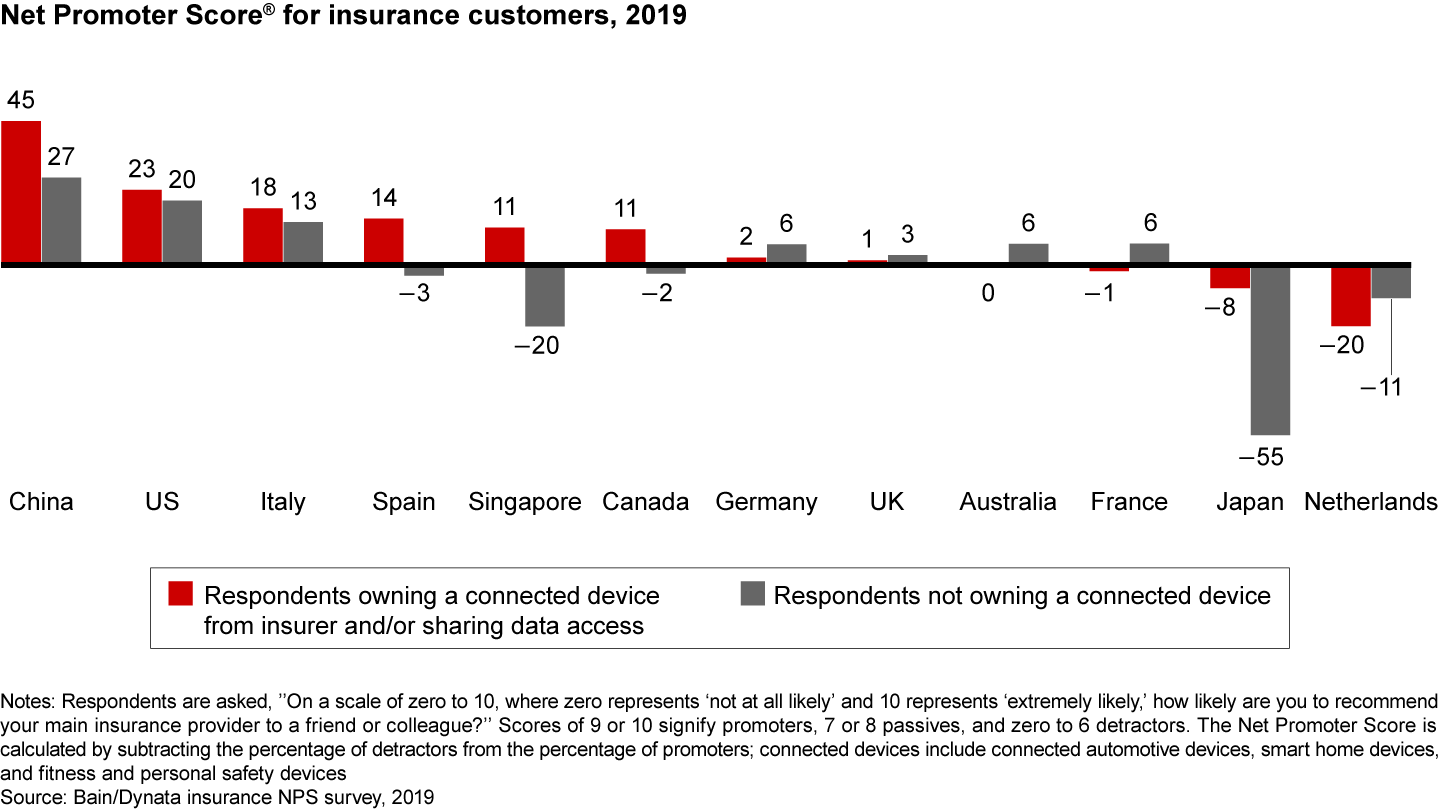

Figure 4
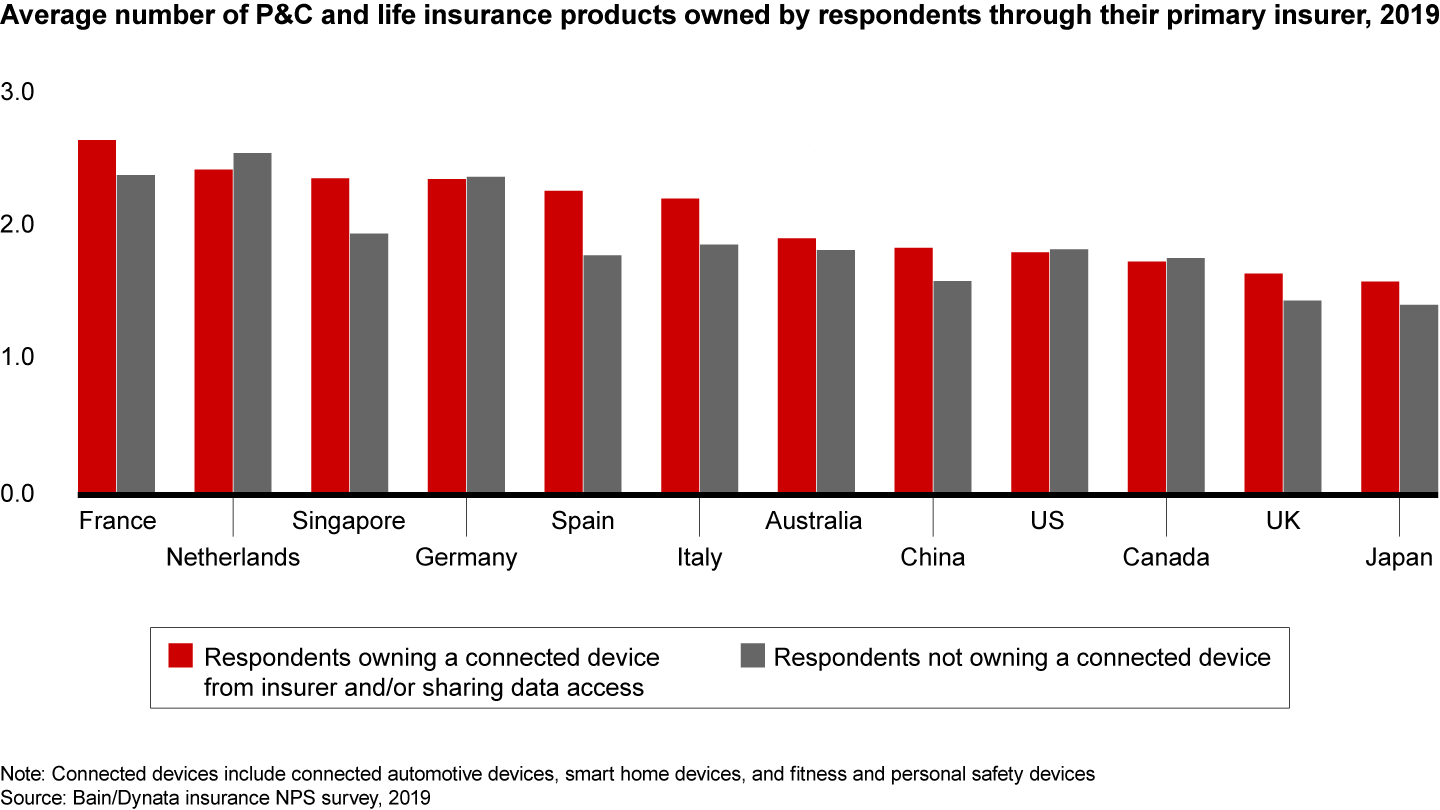

Figure 5
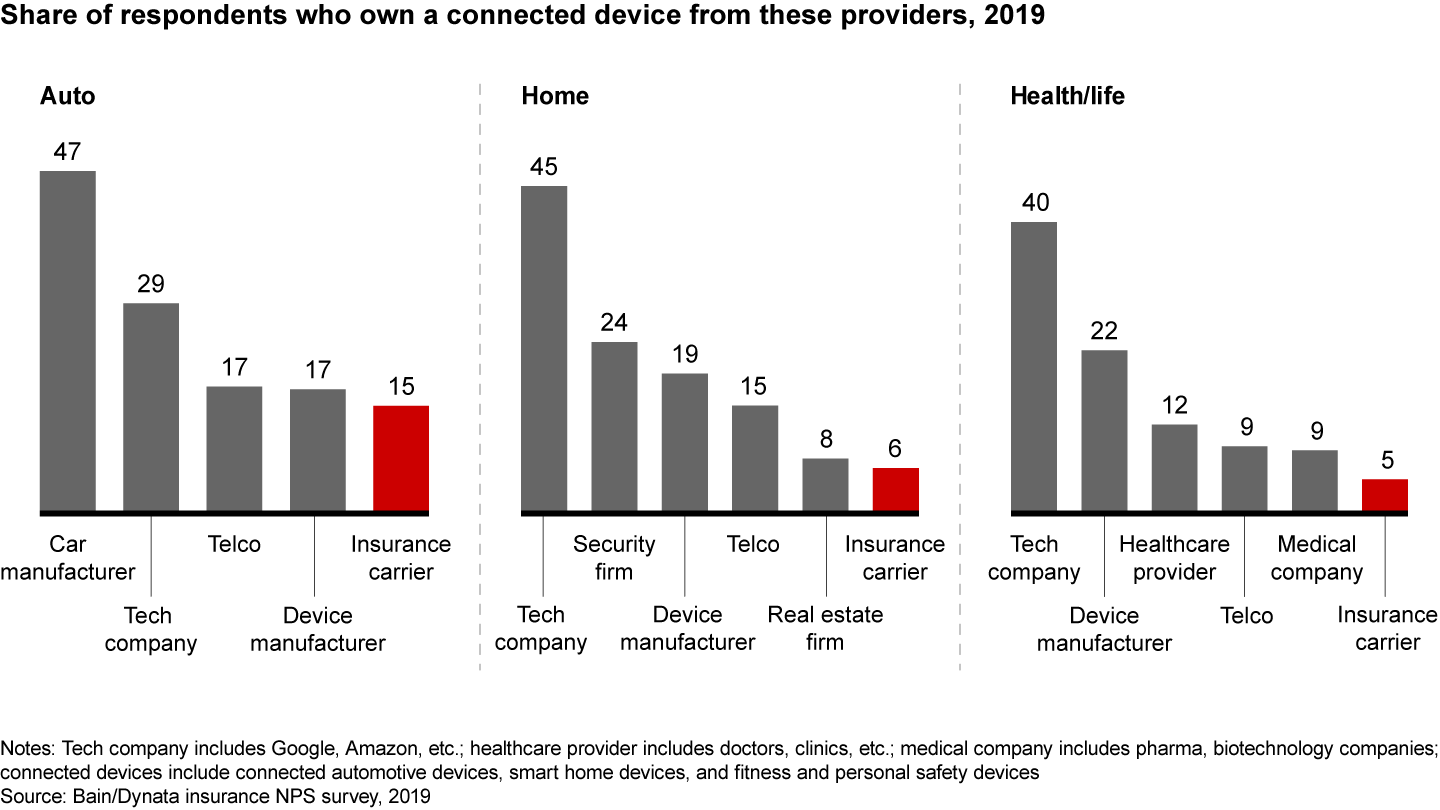

Figure 6
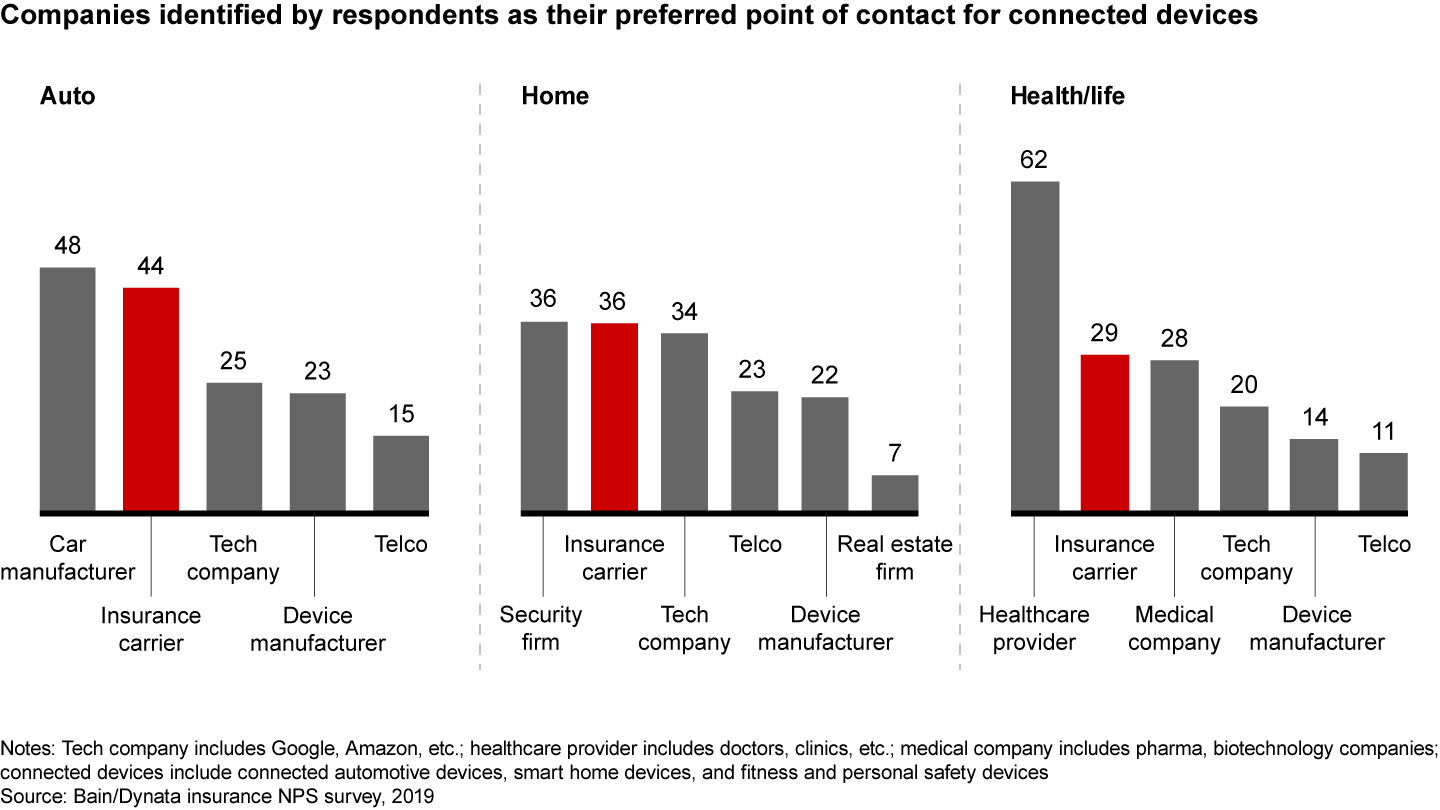

Figure 7
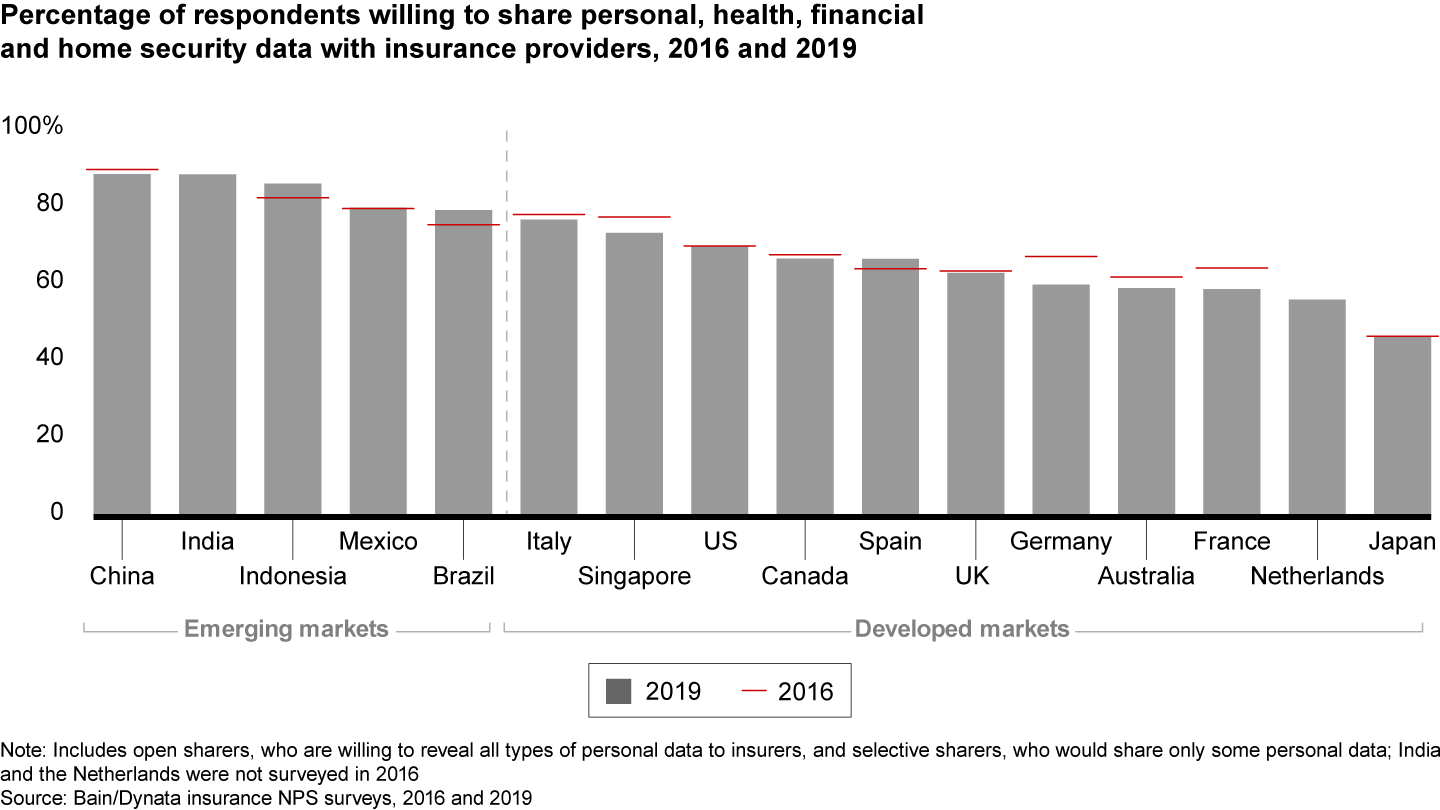

2. Facing the challenge of new entrants
Figure 8
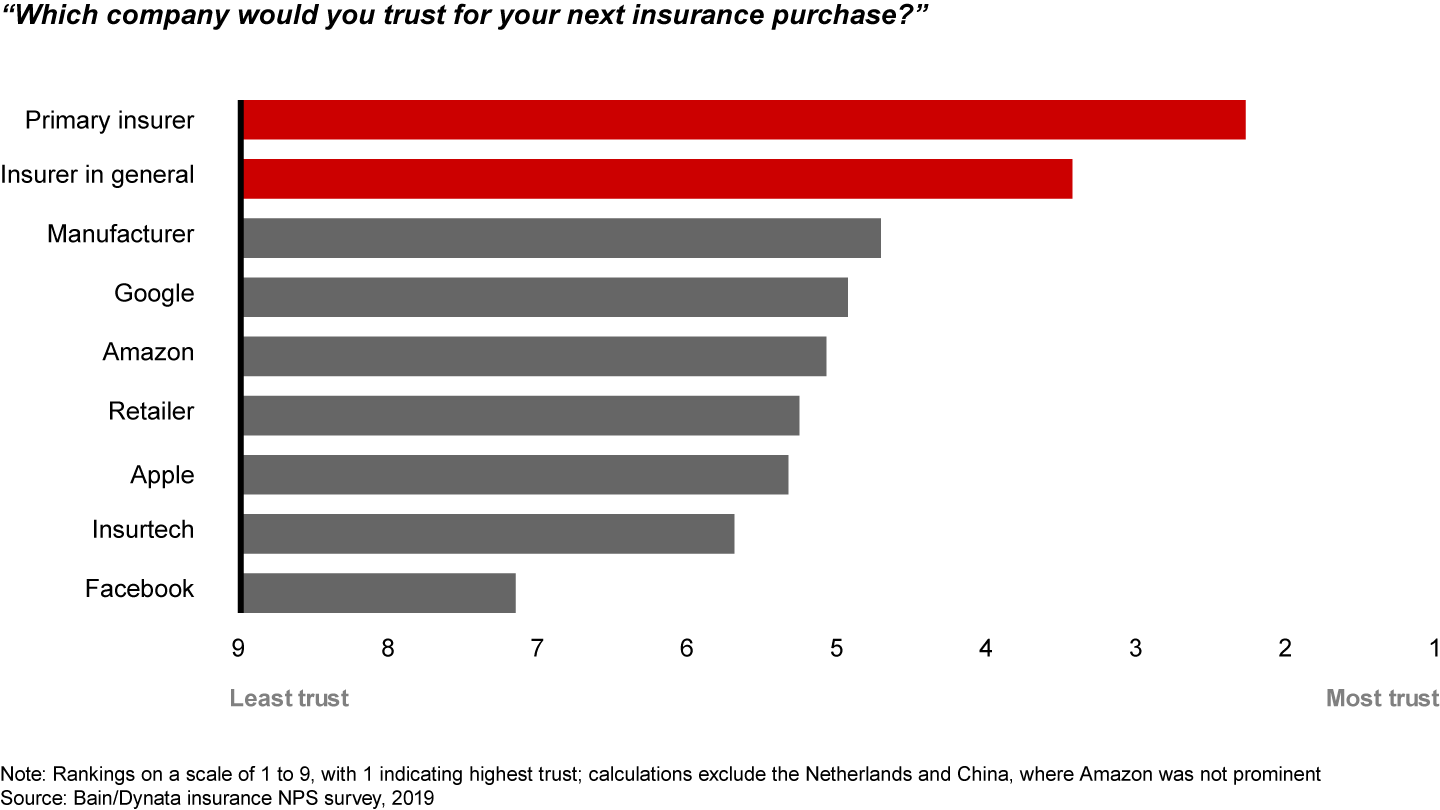

Figure 9
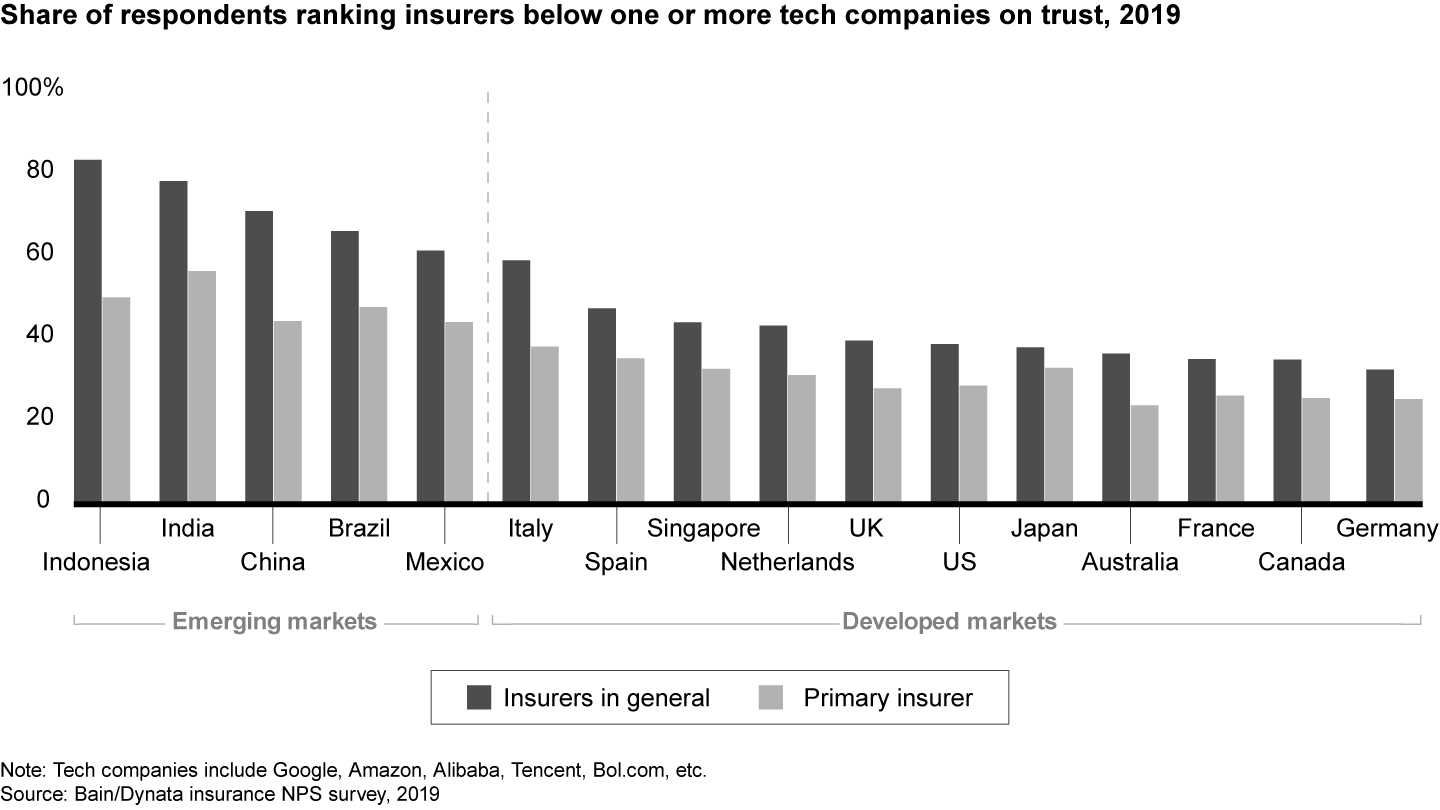

Figure 10
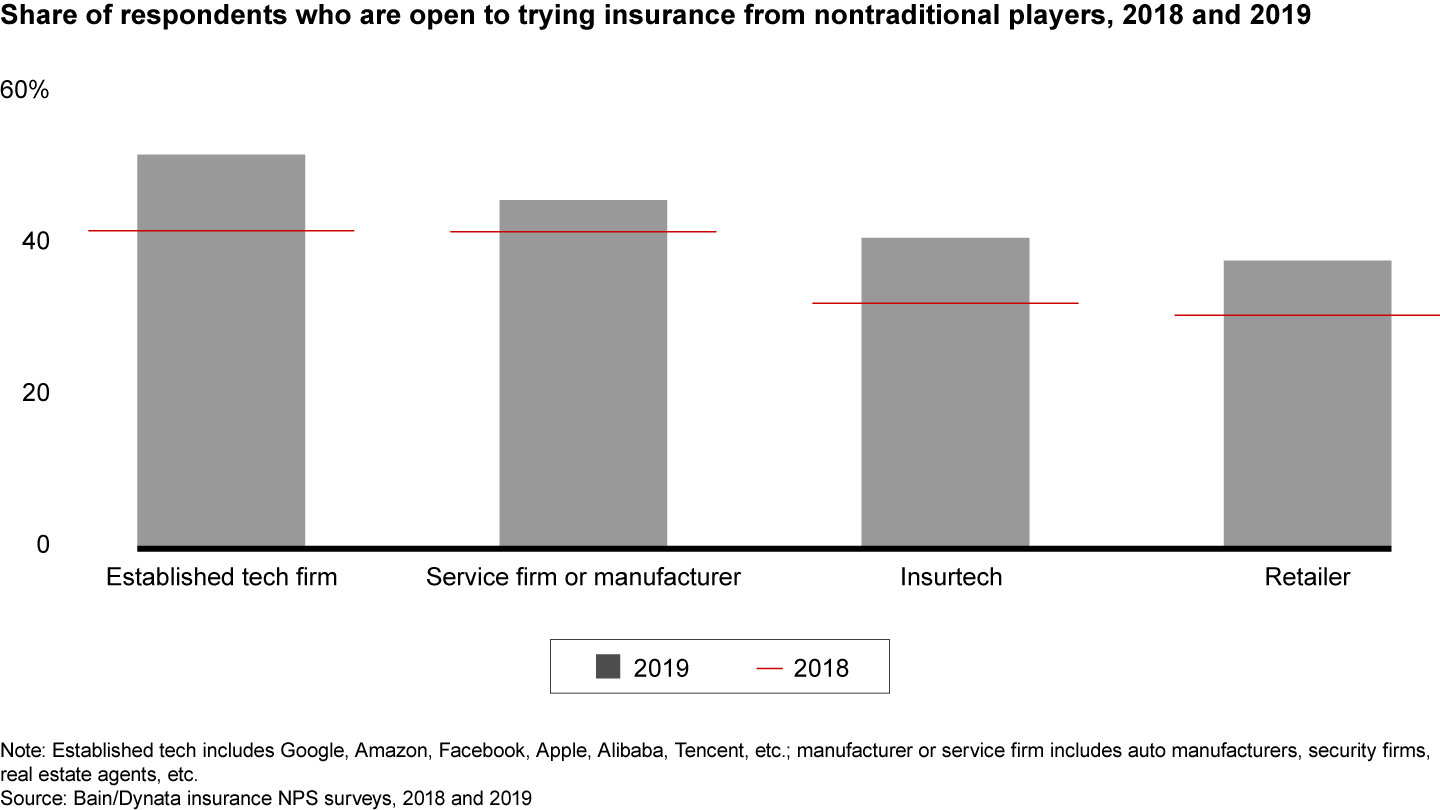

Figure 11
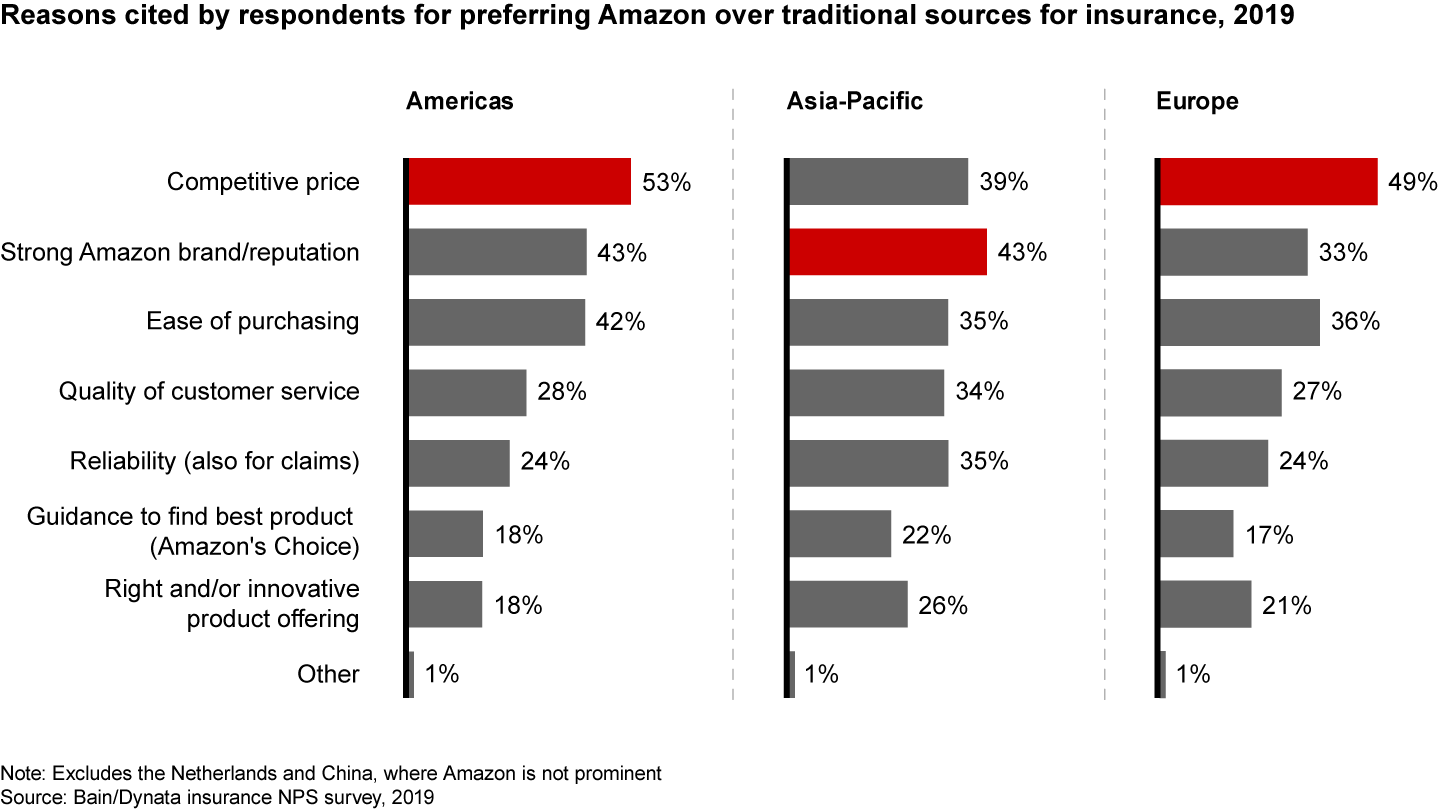

Figure 12
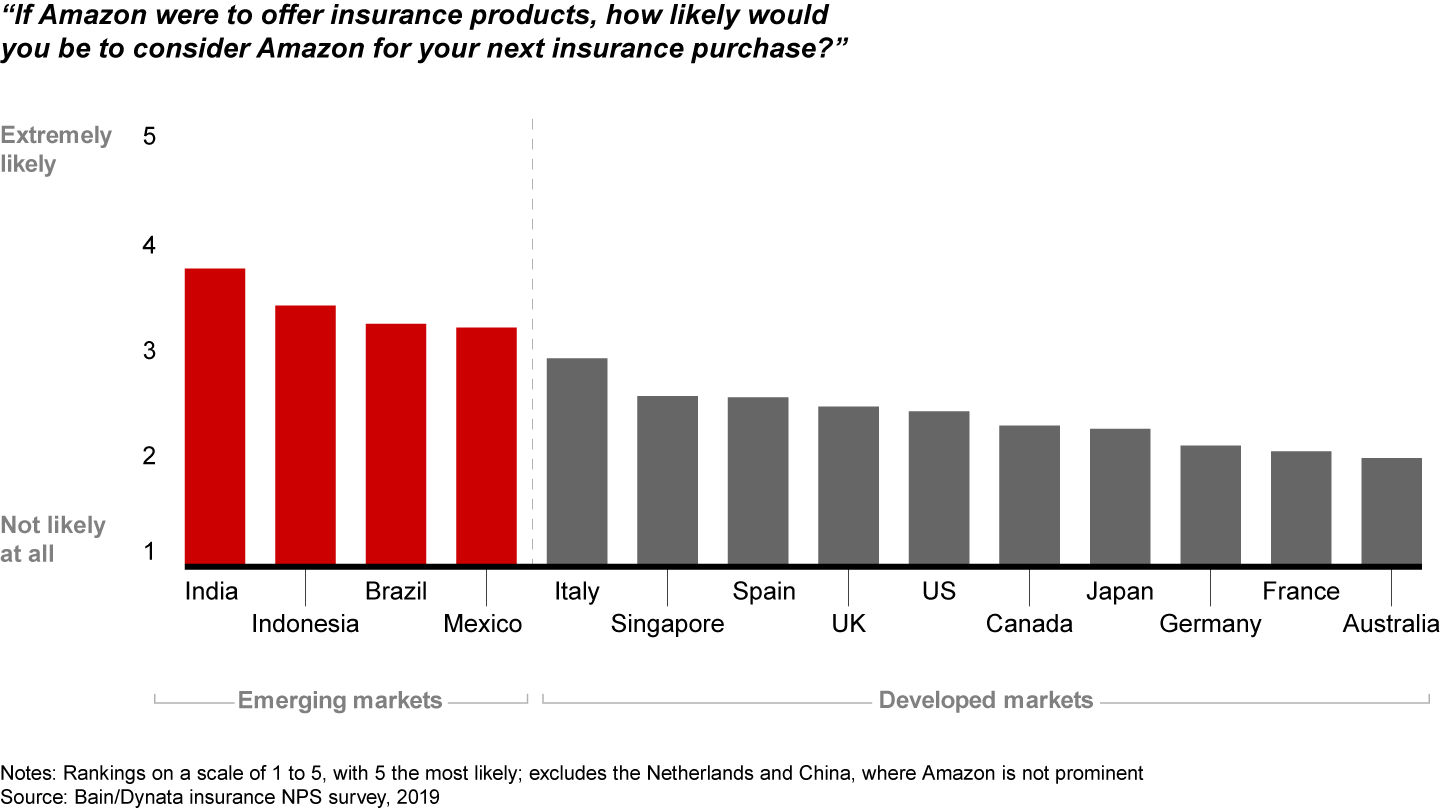

3. Becoming simple and digital
Figure 13
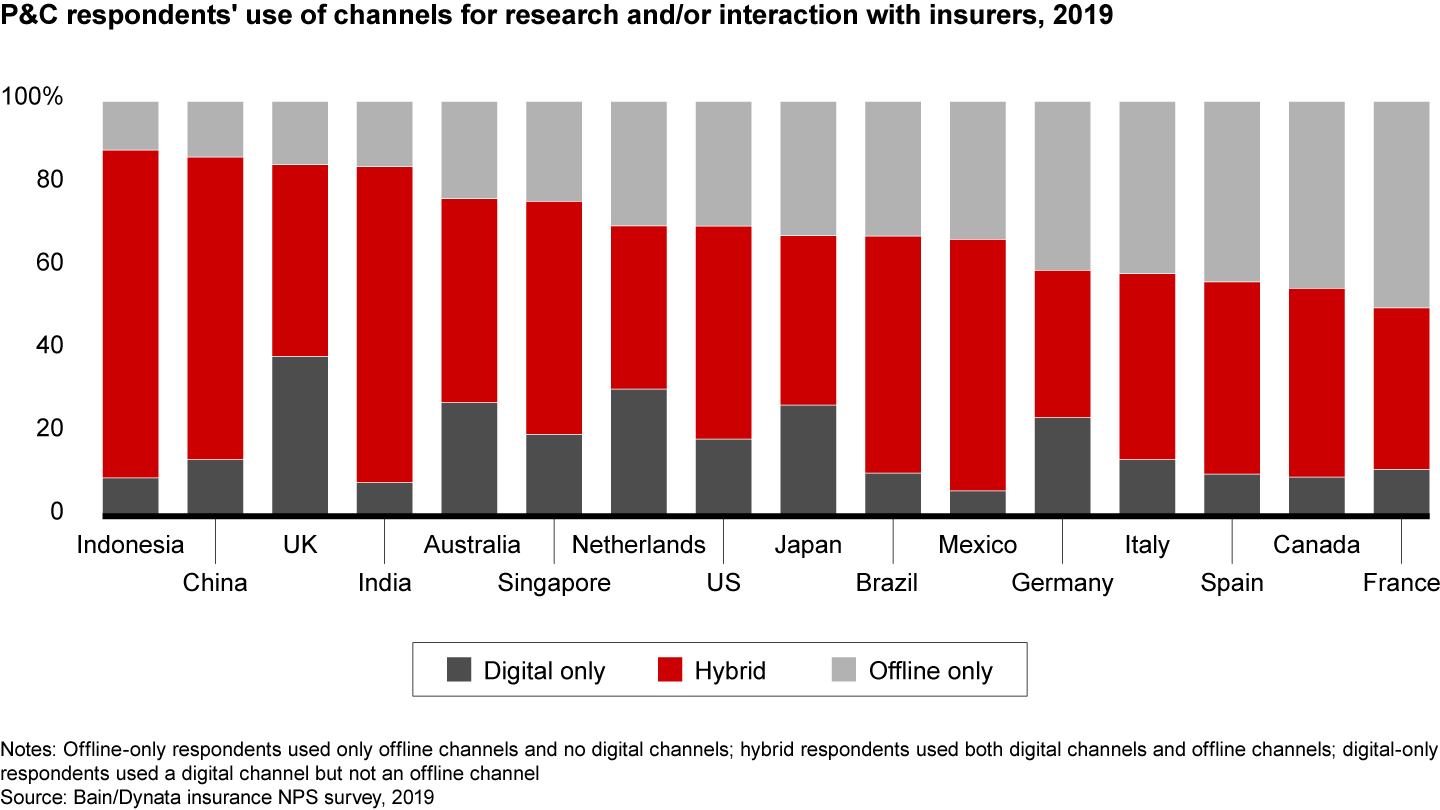

Figure 14
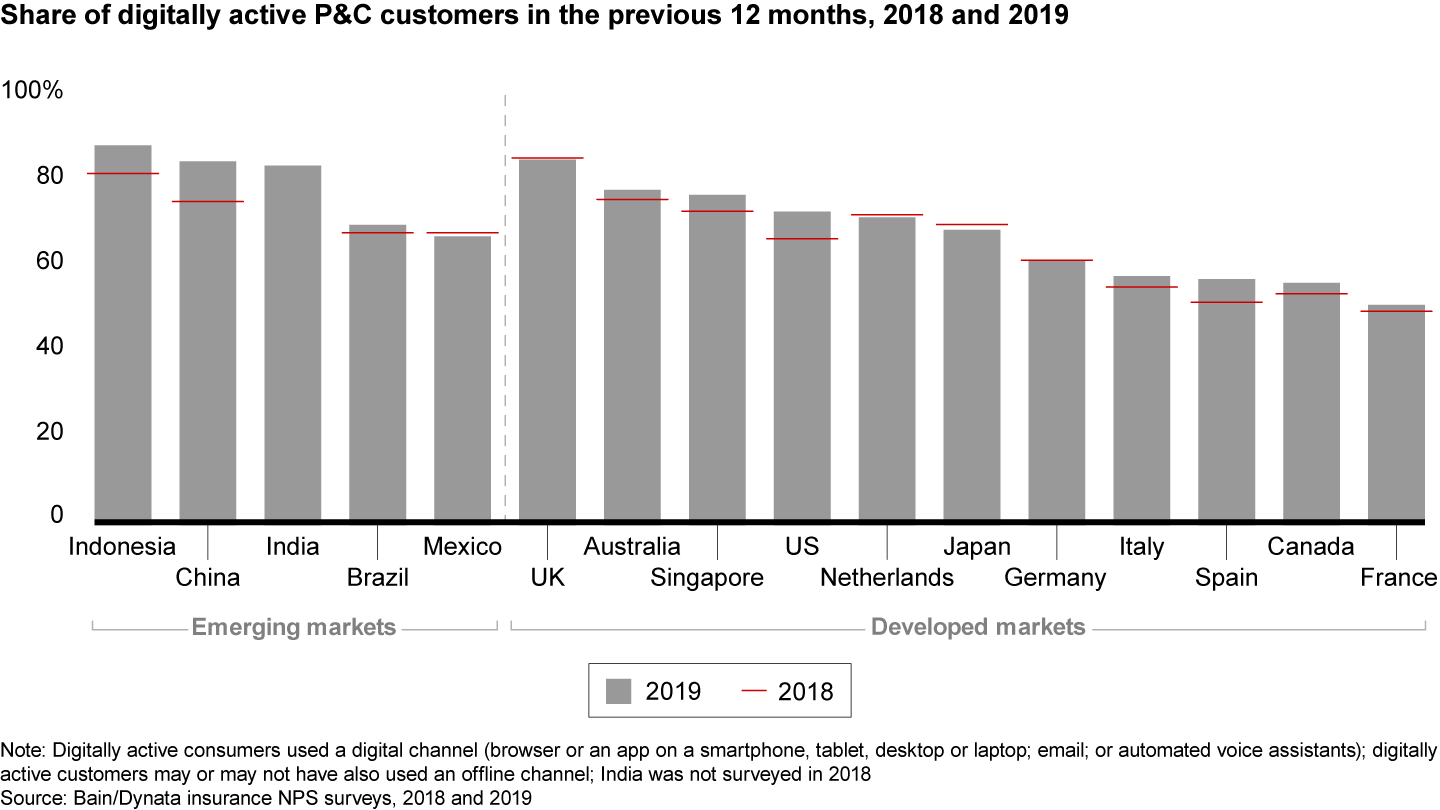

Figure 15
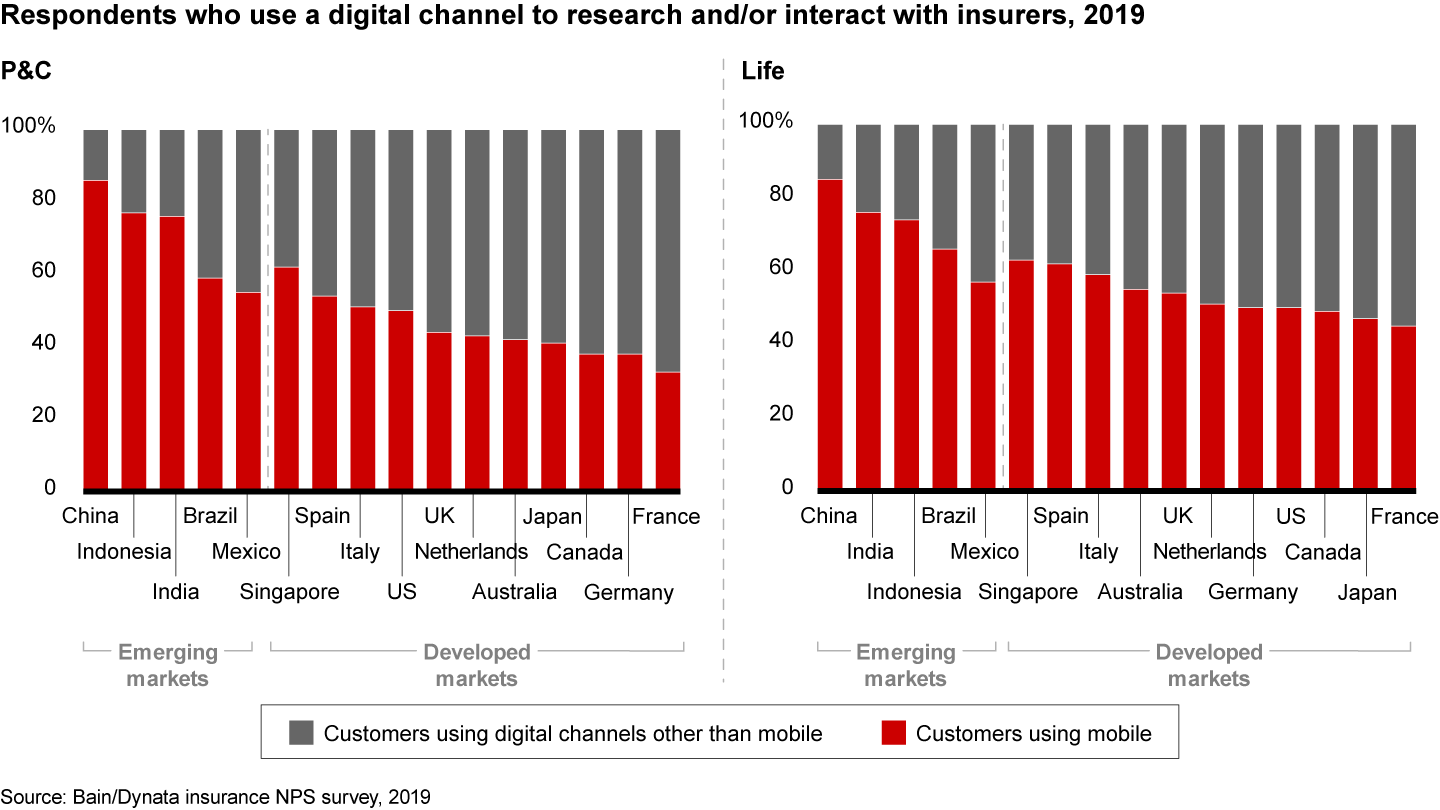

Figure 16
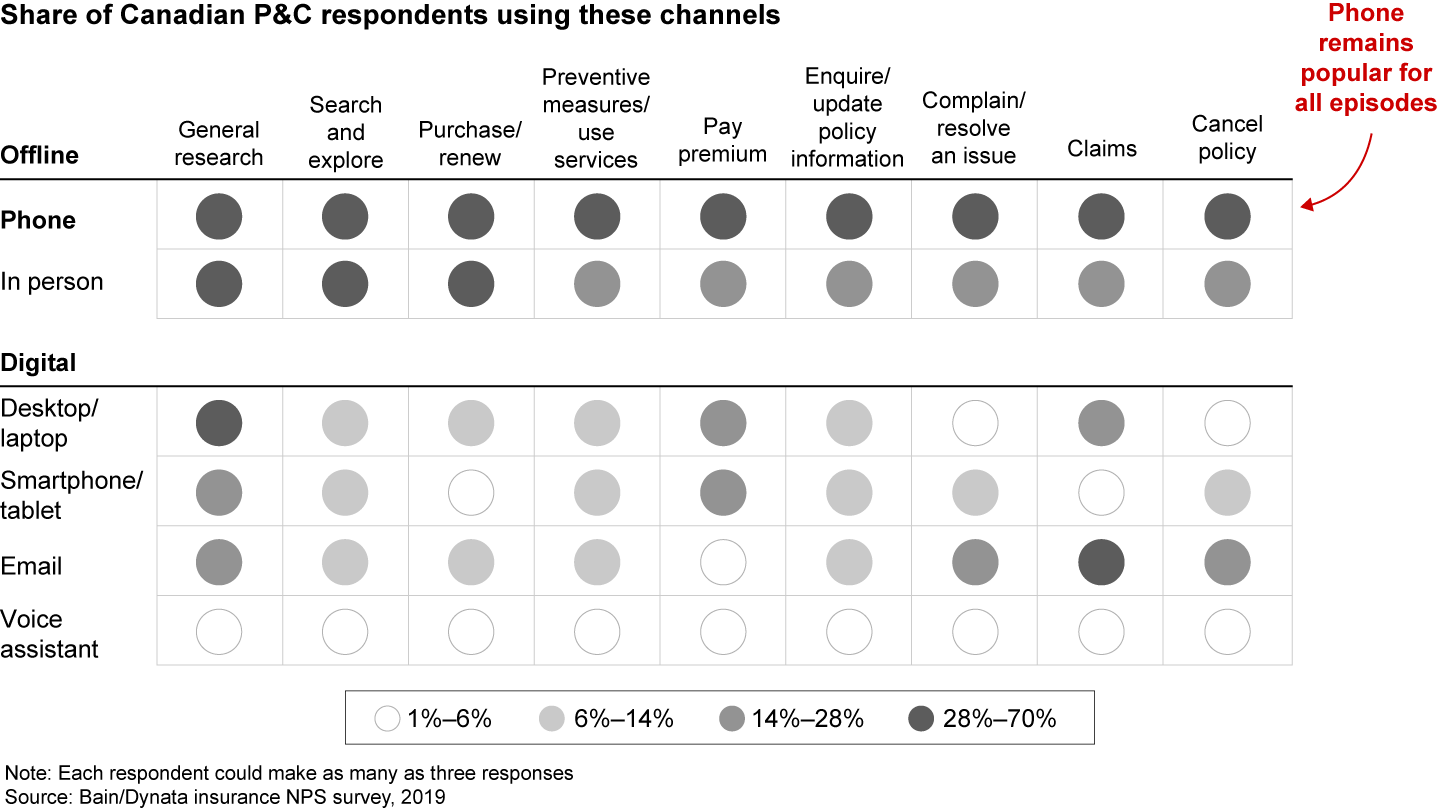

Figure 17
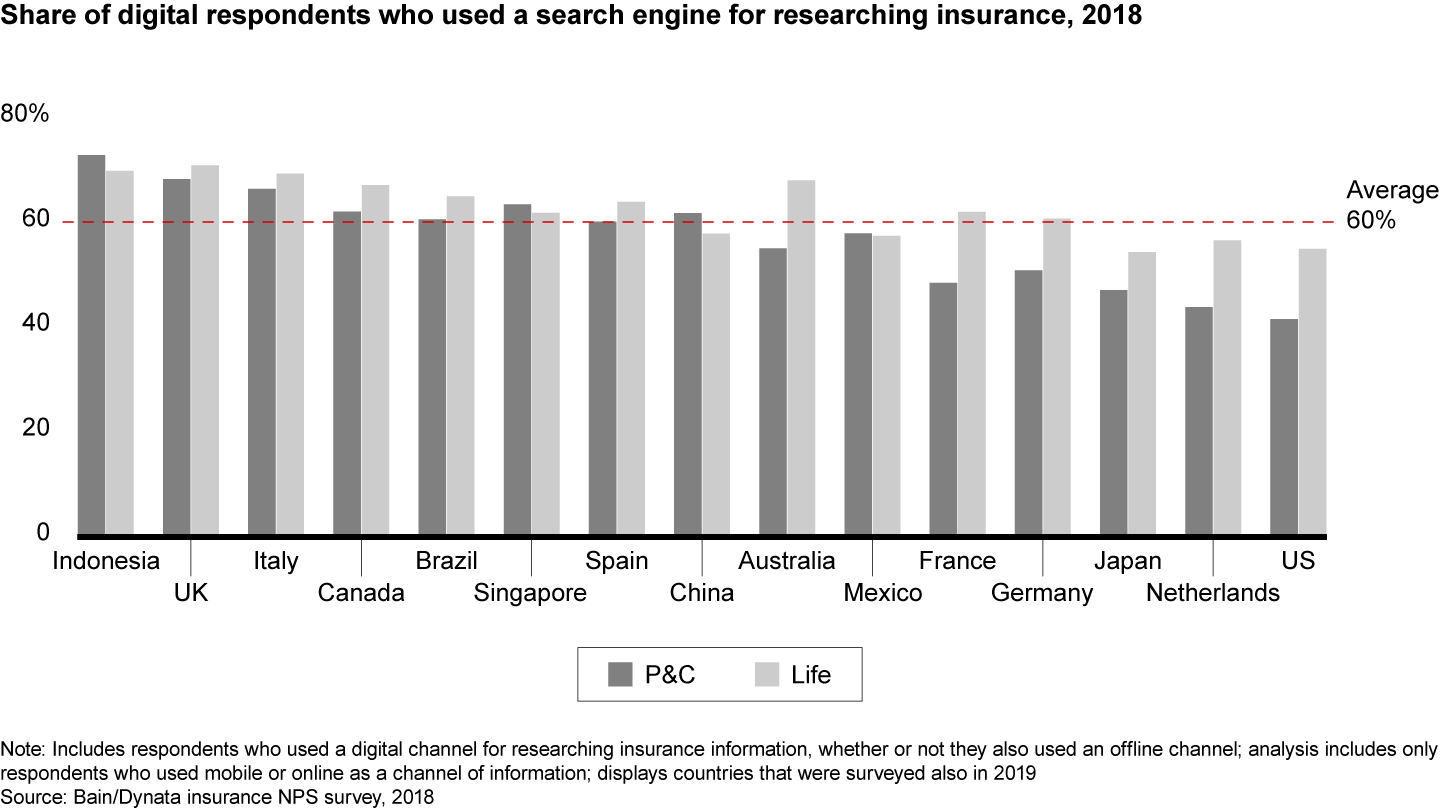

Figure 18
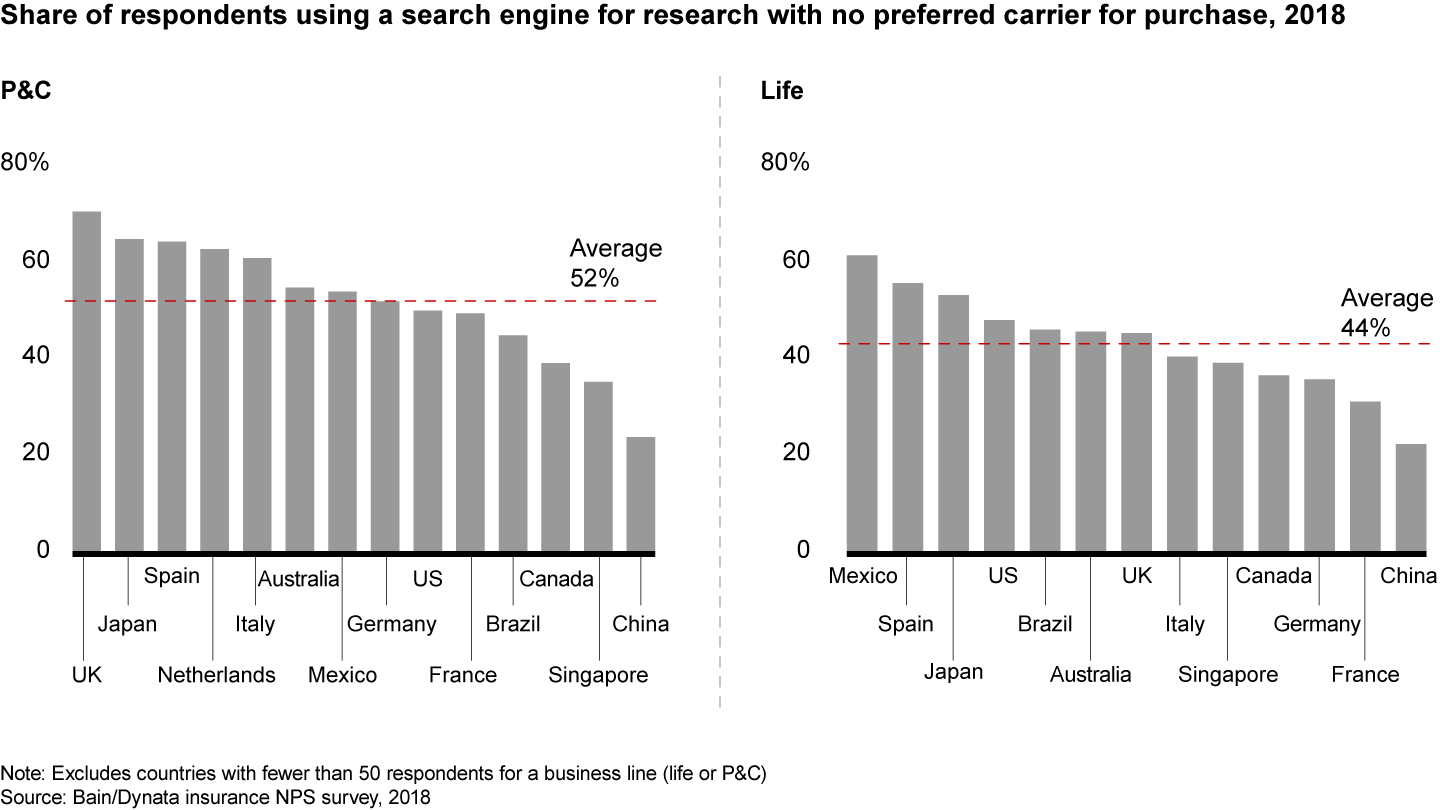

Figure 19
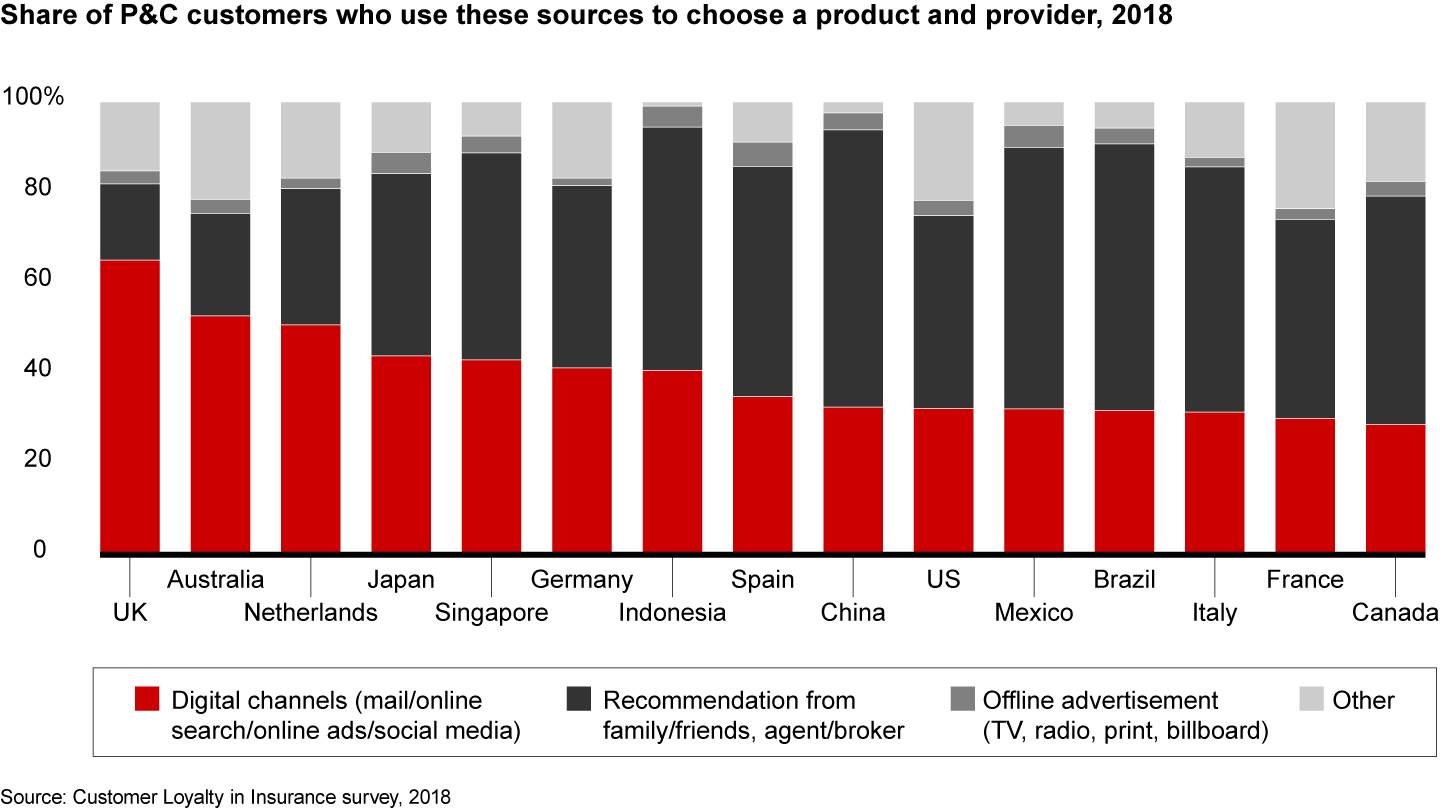

Figure 20
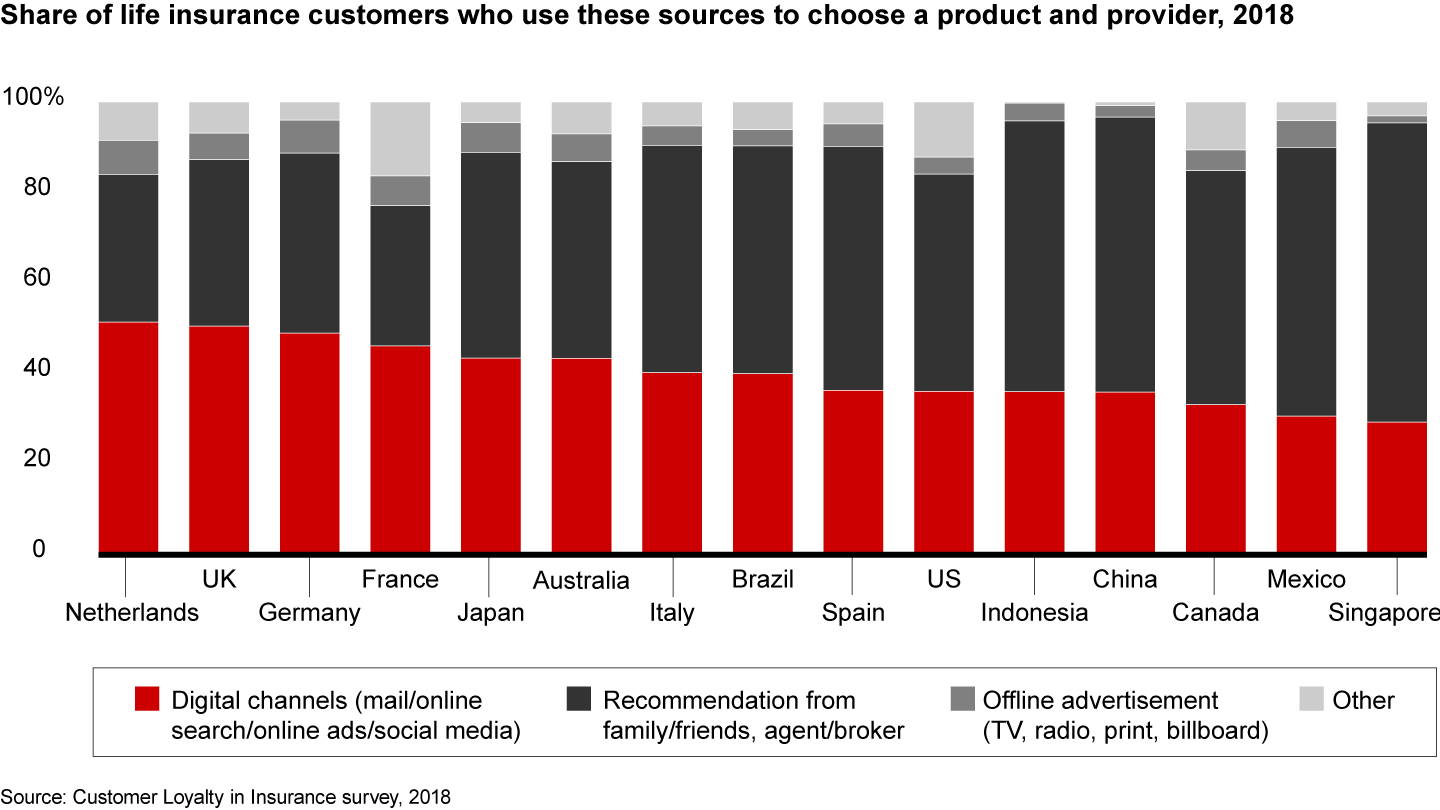

4. Fueling organic growth in sluggish markets
Figure 21
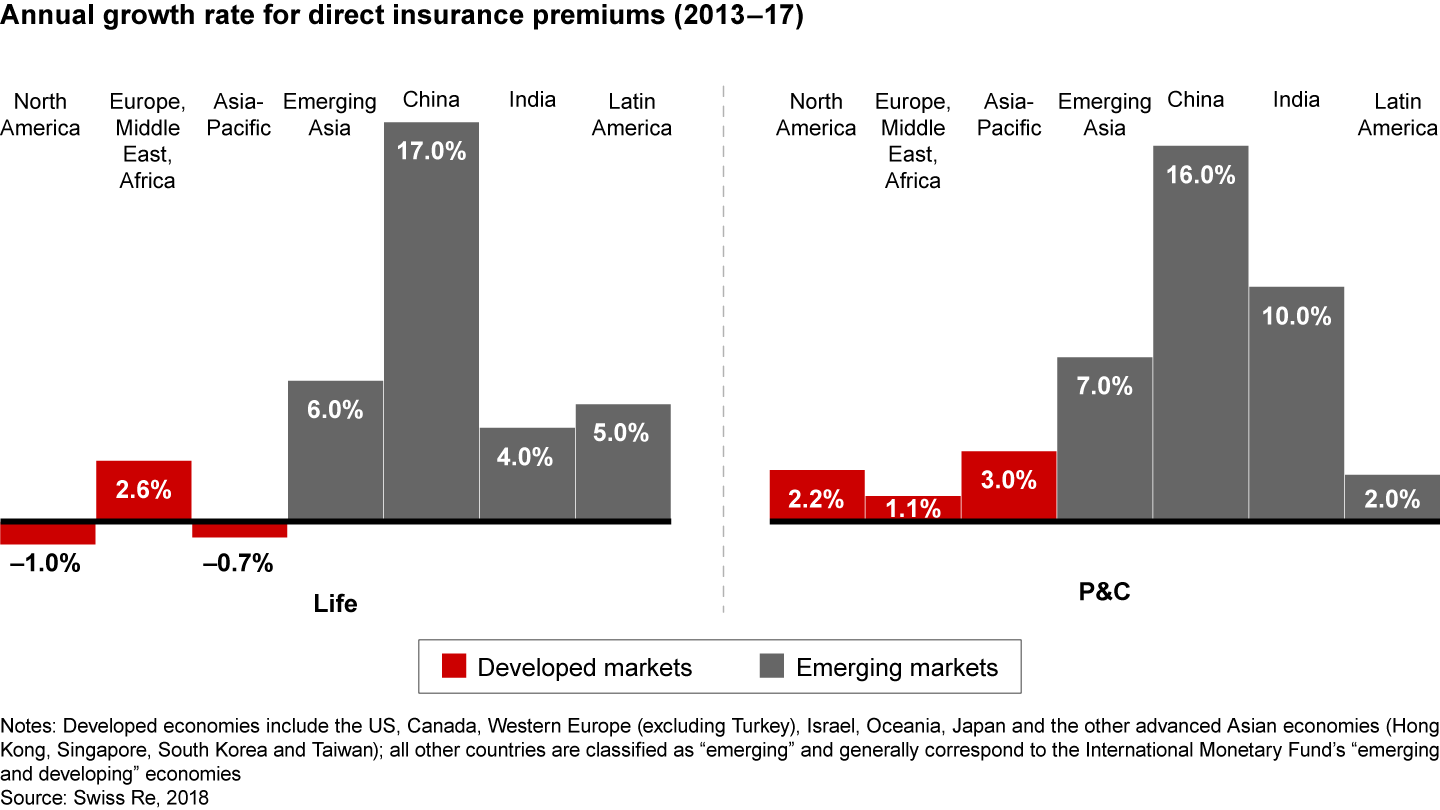

Figure 22
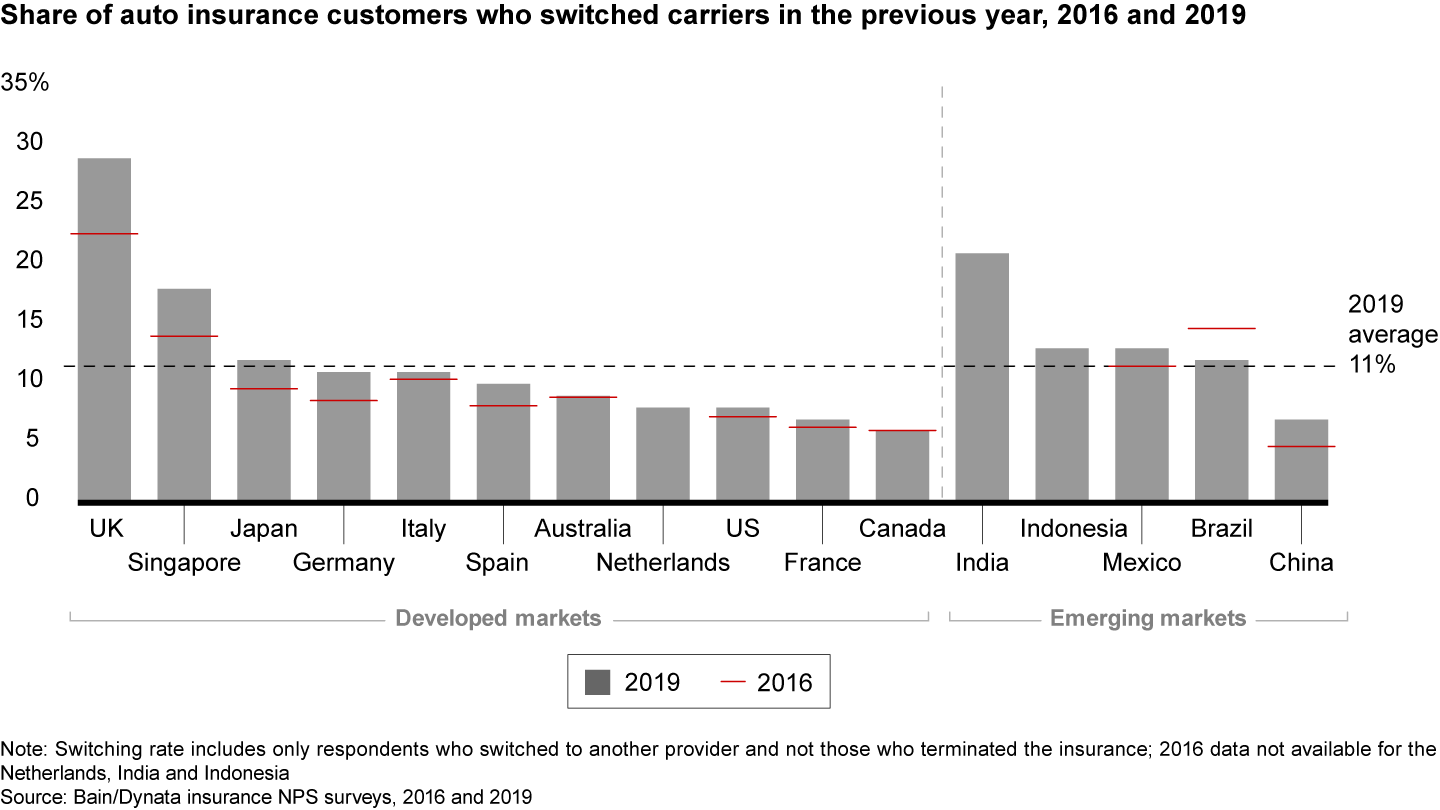

Figure 23

Figure 24

Figure 25
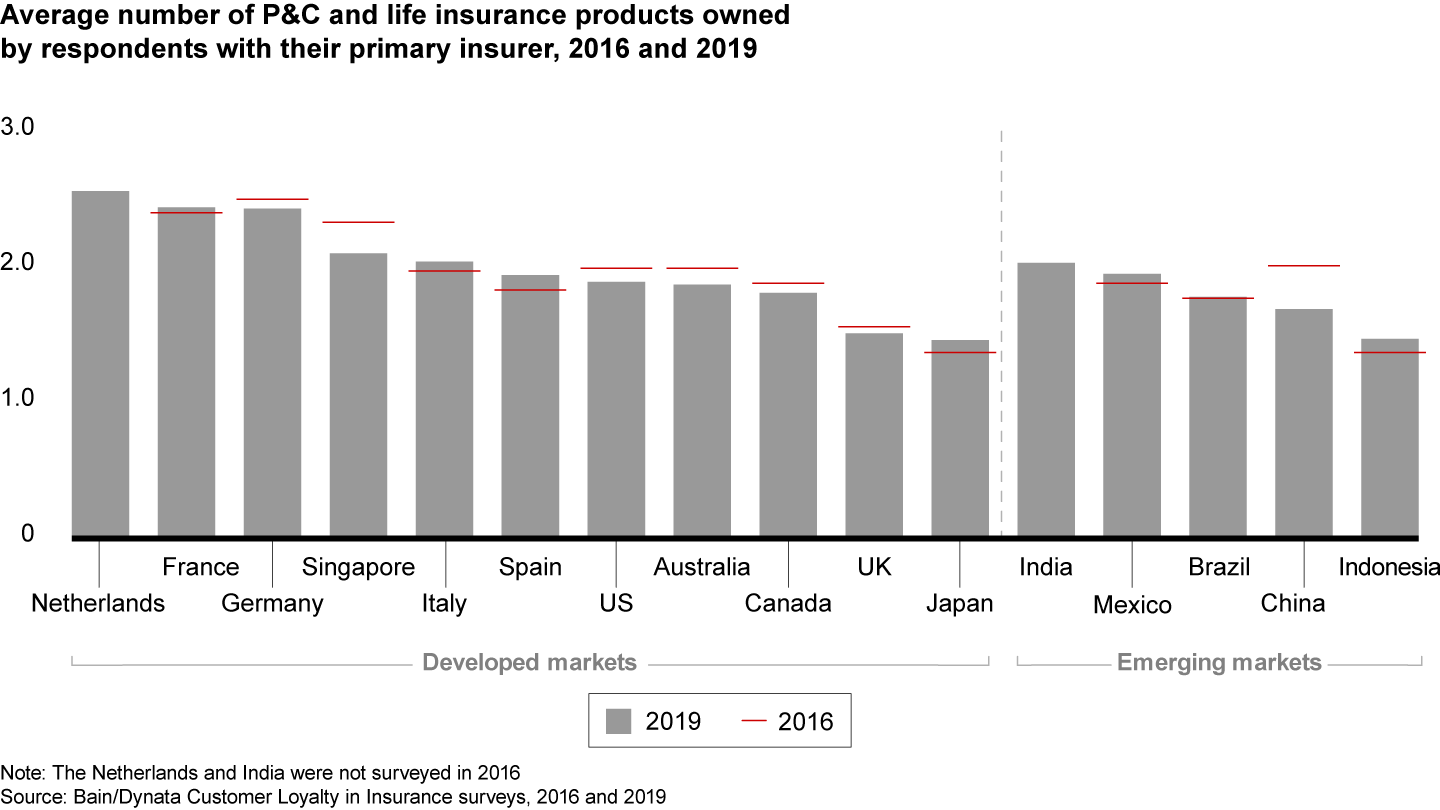

Figure 26
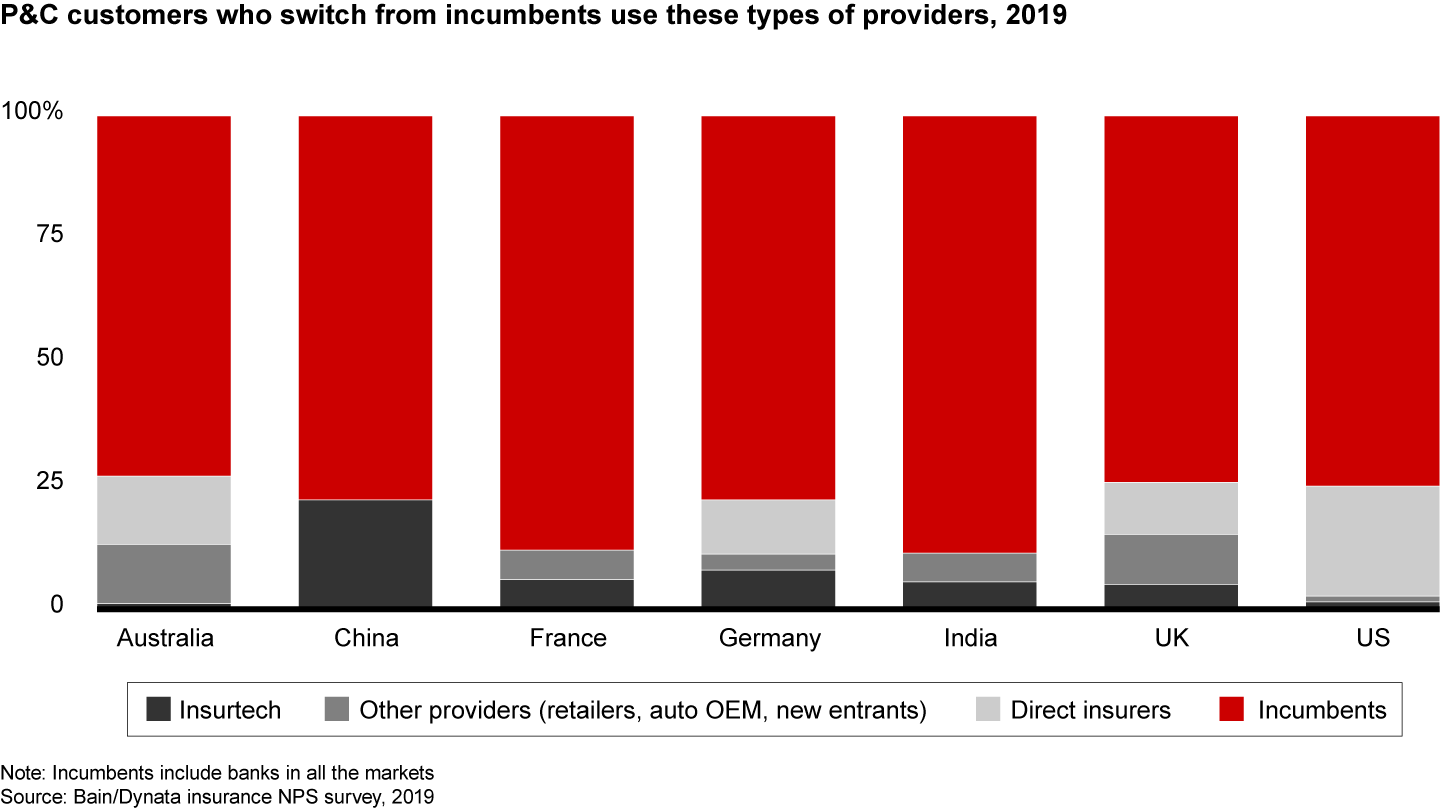

Figure 27
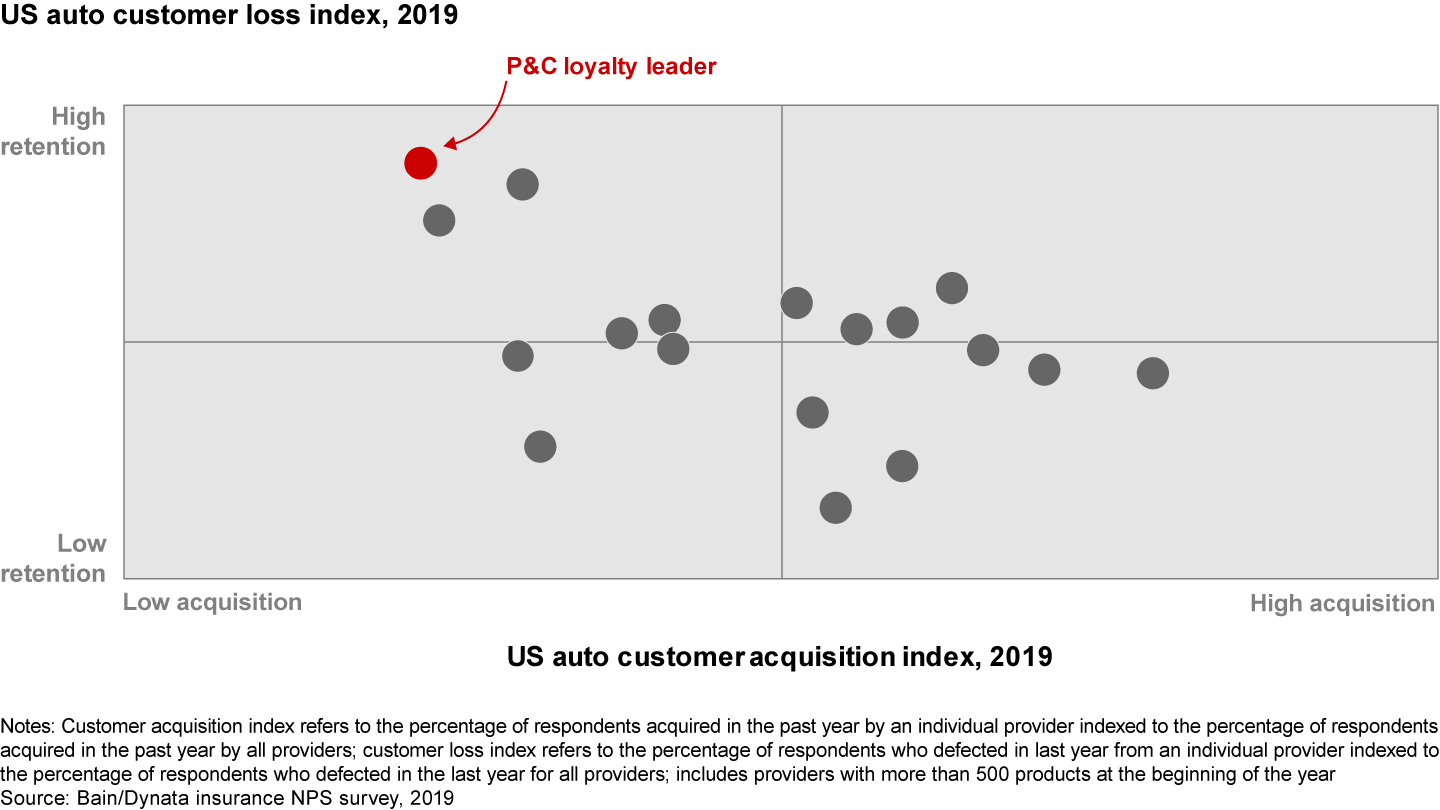

Figure 28


5. Preparing for the next wave
Figure 29
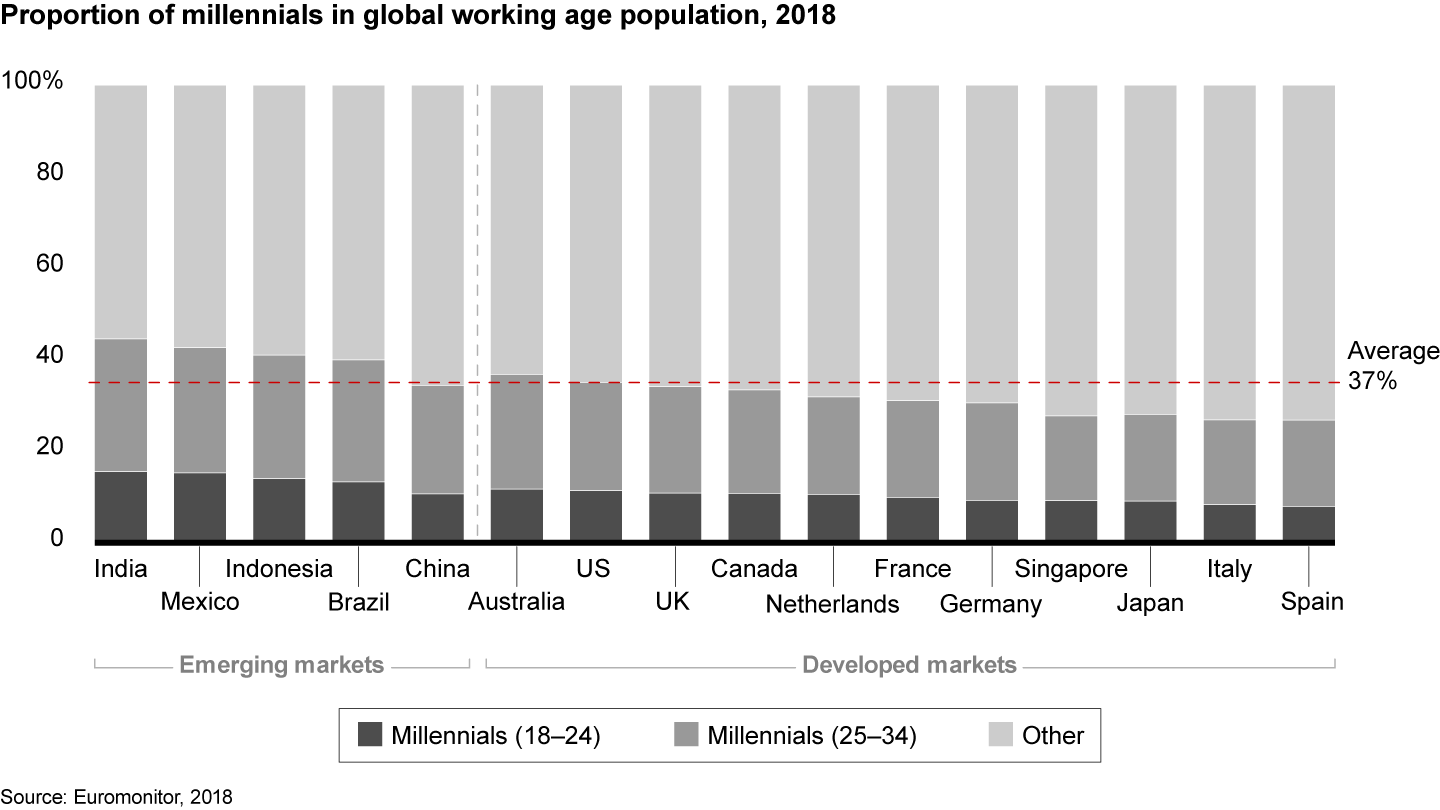

Figure 30
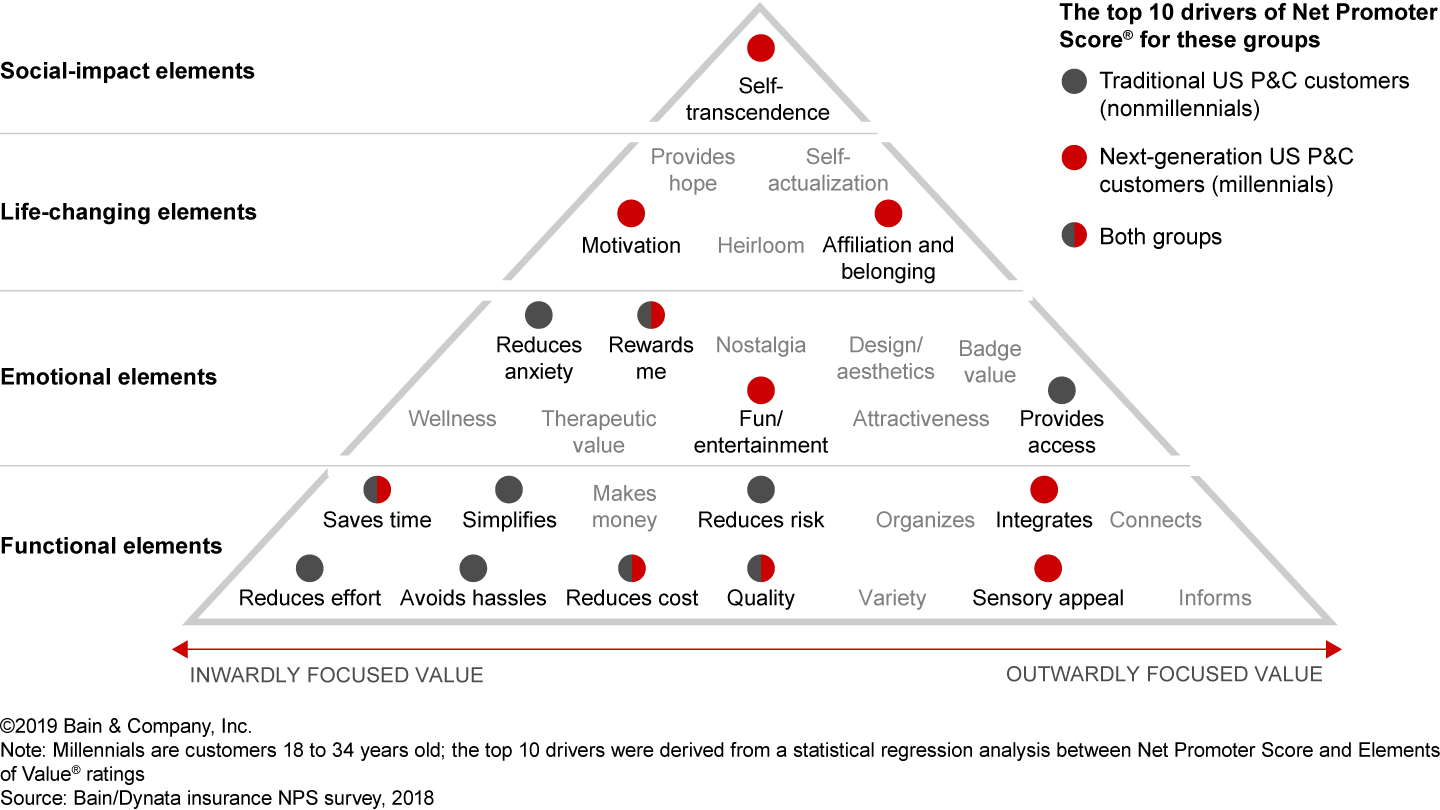

Figure 31
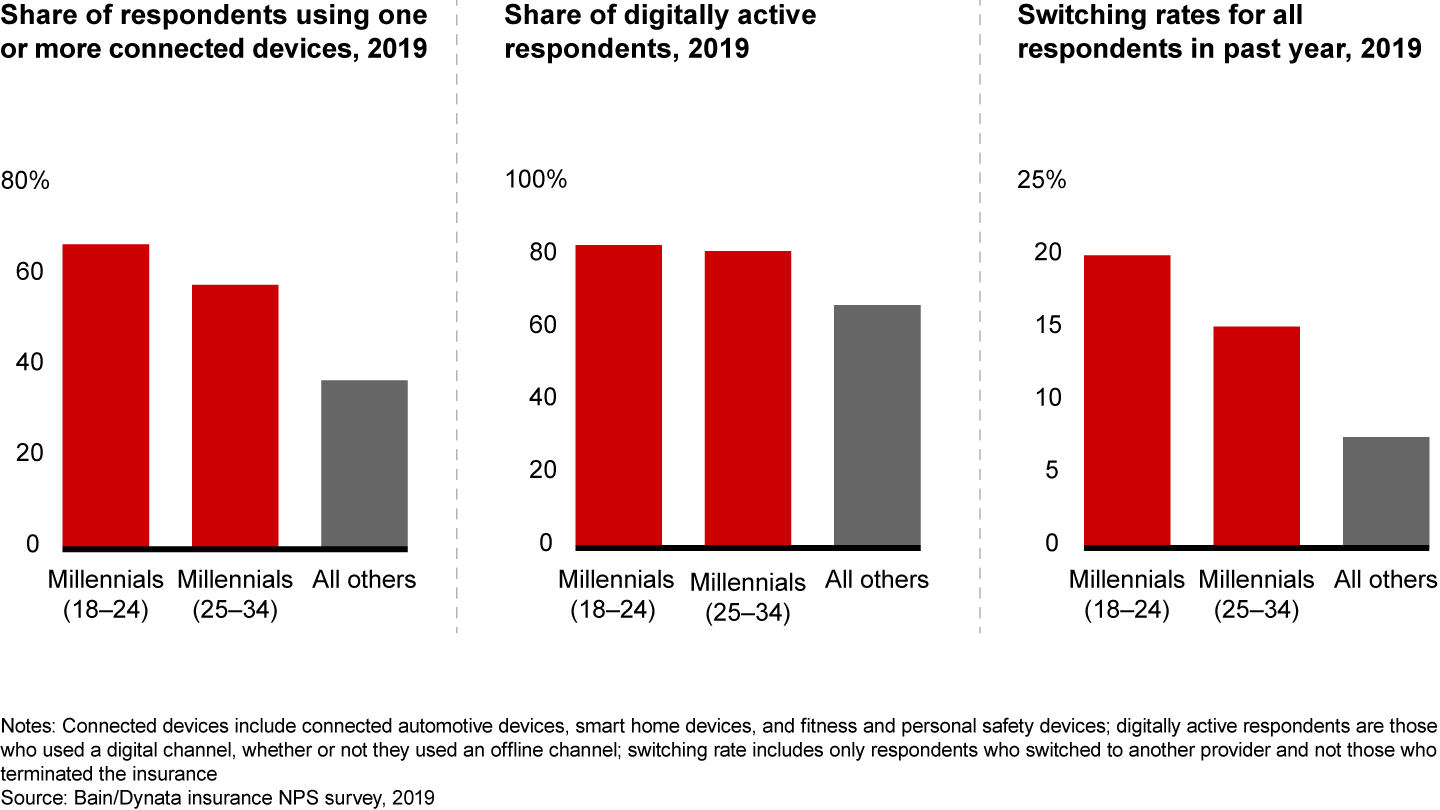

Figure 32
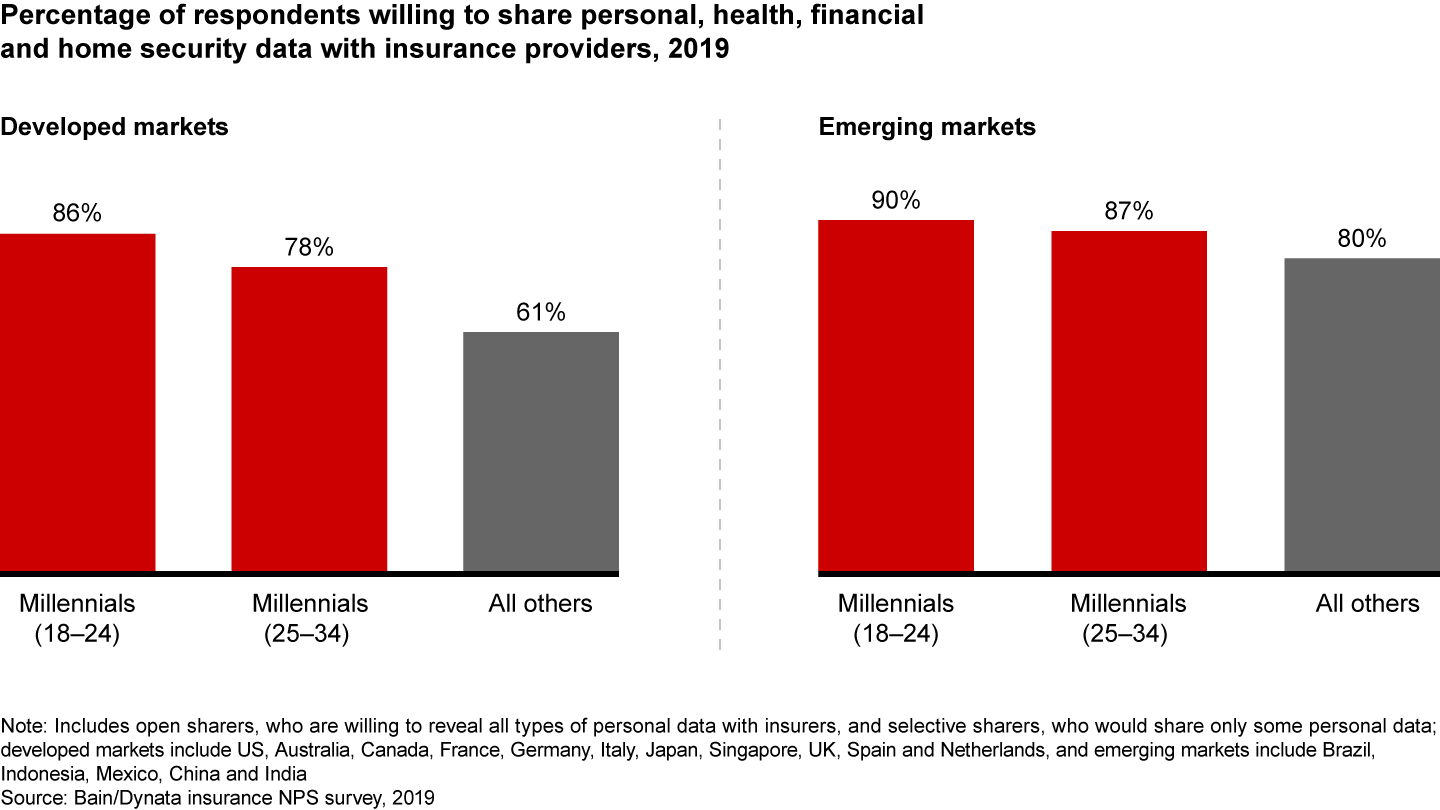

Figure 33

Appendix: MethodologyBain & Company partnered with Dynata, an online global market research company, to survey insurance customers in 16 countries: Australia, Brazil, Canada, China, France, Germany, India, Indonesia, Italy, Japan, Mexico, the Netherlands, Singapore, Spain, the UK and the US. The survey’s purpose was to gauge customers’ loyalty to their main insurance provider in life insurance and property-and-casualty insurance, and to capture the underlying reasons they hold the views they do. Conducted from April to July 2019, the survey polled 167,699 insurance customers. In the Americas, Australia and Europe, for the individual insurance provider analysis, we included only companies for which we received at least 200 valid responses. In Asia and Mexico, we included providers that had at least 100 customer responses. In many instances, sample sizes exceeded these thresholds. For some insurgents, sample size was lower than the threshold. Any reference to millennials in this report means customers 18 to 34 years old. Survey questionsIn the first part of the survey, respondents were asked to list the insurance products they purchased and name the corresponding provider. They were asked to designate their main insurance provider both in P&C and life insurance. They were then routed to either the P&C or life insurance questionnaire. They were asked the following two questions to assess their loyalty to their main insurance provider (either P&C or life insurance): On a scale of zero to 10, where zero represents “not at all likely” and 10 represents “extremely likely,” how likely are you to recommend your main insurance provider to a friend or colleague? Why did you give your main insurance provider the score you did? Ratings of zero to 6 signified detractors, 7 and 8 signified passives, and 9 and 10 signified promoters. The Net Promoter Score was calculated by subtracting the percentage of detractors from the percentage of promoters. In the second part of the survey, we asked which channels respondents used in the past 12 months to gather information about an insurance provider and to interact with a provider for 18 discrete episodes related to researching, purchasing a product, managing contracts, reviewing policies and filing claims. We also asked for the frequency of their interaction with their provider for these episodes. Further, we asked two questions to assess their experience in each episode: Based on your overall experience in each of these interactions, on a scale of zero to 10, where zero represents “not at all likely” and 10 represents “extremely likely,” how likely are you to recommend your main insurance provider to a friend or colleague? Why did you give your main insurance provider the score you did? From the answers to the above question, the episode-level Net Promoter Score was calculated by using the same methodology. In selected markets (US, UK, Germany, Australia, France, China and India) and for a few insurgent players, we also asked consumers to rank the qualities they value most in an insurer. We based our questions on the Elements of Value, 30 fundamental attributes identified by Bain that help companies forge a visceral connection with their customers. We asked respondents to describe their main insurance provider for these 30 discrete elements on a scale of zero to 10, where zero means “does not describe at all” and 10 means “describes completely.” From these customer ratings, we determined how much value a company created both overall and for individual elements. We measured this value creation in two ways. First, we calculated the percentage of responses at each company that received scores of 8 or higher. We labeled this zone as “high-value space.” Second, we counted the number of “high-value elements” at each company, i.e., elements for which half or more of the customer scores were 8 or higher. Then, we asked all customers about switching behavior and the name of their prior provider for auto, home, life protection and life savings products. We also assessed how the product ownership changed in the past year, i.e., how many customers switched to competitors vs. how many new customers were acquired. We analyzed this at an overall market level as well as at a provider level for all products or a business line (P&C or life) or at a product level (auto or home or life protection or life savings). In the next section, we asked customers about their use of connected devices (devices that connect to a customer's smartphone, tablet or voice assistant via the Internet), the number of apps/systems they use to control their connected devices, and their willingness to consolidate these with an insurance provider. Every customer answered detailed questions on auto, home or health connected devices, depending on the type of devices owned. We then asked for the provider of their connected device and app/system, product Net Promoter Score, and the benefits they get using these devices. For all those who do not use connected devices today but are willing to do so in future, we asked for expected benefits and their expected service provider. Further, we asked customers about their openness to purchase insurance products from new entrants (such as established technology companies, insurtechs, service or manufacturing firms, and retailers) and rank the various providers on trust for insurance purchase. We also asked customers for their openness to consider Amazon for their next insurance purchase and why. We also asked customers for their willingness to share personal data with an insurance provider. Finally, we asked customers for their demographic information (income, age, region of residence), family size, education level, employment, key life events, and extent of worry for health, education and financial level of themselves and family members. Statistical significanceThe results of our data analysis are robust both for the measurement of insurance providers’ Net Promoter Score in the different countries and for respondents’ Net Promoter Score for each demographic category. The score measured for each insurance provider is statistically significant to an 80% confidence level, with a one-tailed test ranging from plus- or minus-1.3% for a sample size of 5,102, to plus- or minus-10% for a sample size of 101. AcknowledgmentsThis report was prepared under the leadership of Henrik Naujoks, leader of Bain & Company’s Financial Services practice in Asia-Pacific; Pency Tam, practice principal in the Financial Services practice in Asia-Pacific; Tanja Brettel, practice director in the Financial Services practice in Europe, the Middle East and Africa; and Financial Services partners Andrew Schwedel, Camille Goossens and Harshveer Singh. They were supported by Christy de Gooyer, practice director in the Financial Services practice in the Americas. Team members were Shilpi Gupta, Sonal Chawla, Arti Gupta, Sahiba Gambhir, Praneeth Iragavarapu, Vaibhav Sachdev, Shikhar Sachdeva, Rishabh Vasu, Chinoy Jain, Delphine Otzenberger, Saad Agoumi and Perrine Collet. The authors thank Bain partners in each of the countries covered in the report for their valuable input, and Ron Henkoff for his editorial support. Dynata is one of the world’s leading providers of first-party data contributed by consumers and business professionals. Dynata has the ability to survey more than 60 million people globally and an extensive library of individual profile attributes collected through surveys. The company serves nearly 6,000 market research agencies, media and advertising agencies, consulting firms, investment firms and healthcare and corporate customers in North America, South America, Europe and Asia-Pacific. For more information, go to www.dynata.com. Net Promoter Score®, New Promoter System®, Net Promoter® and NPS® are registered trademarks of Bain & Company, Inc., Fred Reichheld and Satmetrix Systems, Inc. Elements of Value® is a registered trademark of Bain & Company Inc. |