


Brief


|
|
As generative AI permeates insurance company operations, early initiatives suggest that the technology will transform distribution in four ways:
The effects will likely surface in both employee- and digital-led channels (see Figure 1). For example, an Asian financial services firm developed a wealth adviser hub in three months to increase client coverage, improve lead conversion, and shift to more profitable products. Helvetia in Switzerland has launched a direct customer contact service using generative AI to answer customers' questions on insurance and pensions. And HDFC Ergo in India has opened a center to apply generative AI for hyper-personalized customer experiences.
Figure 1
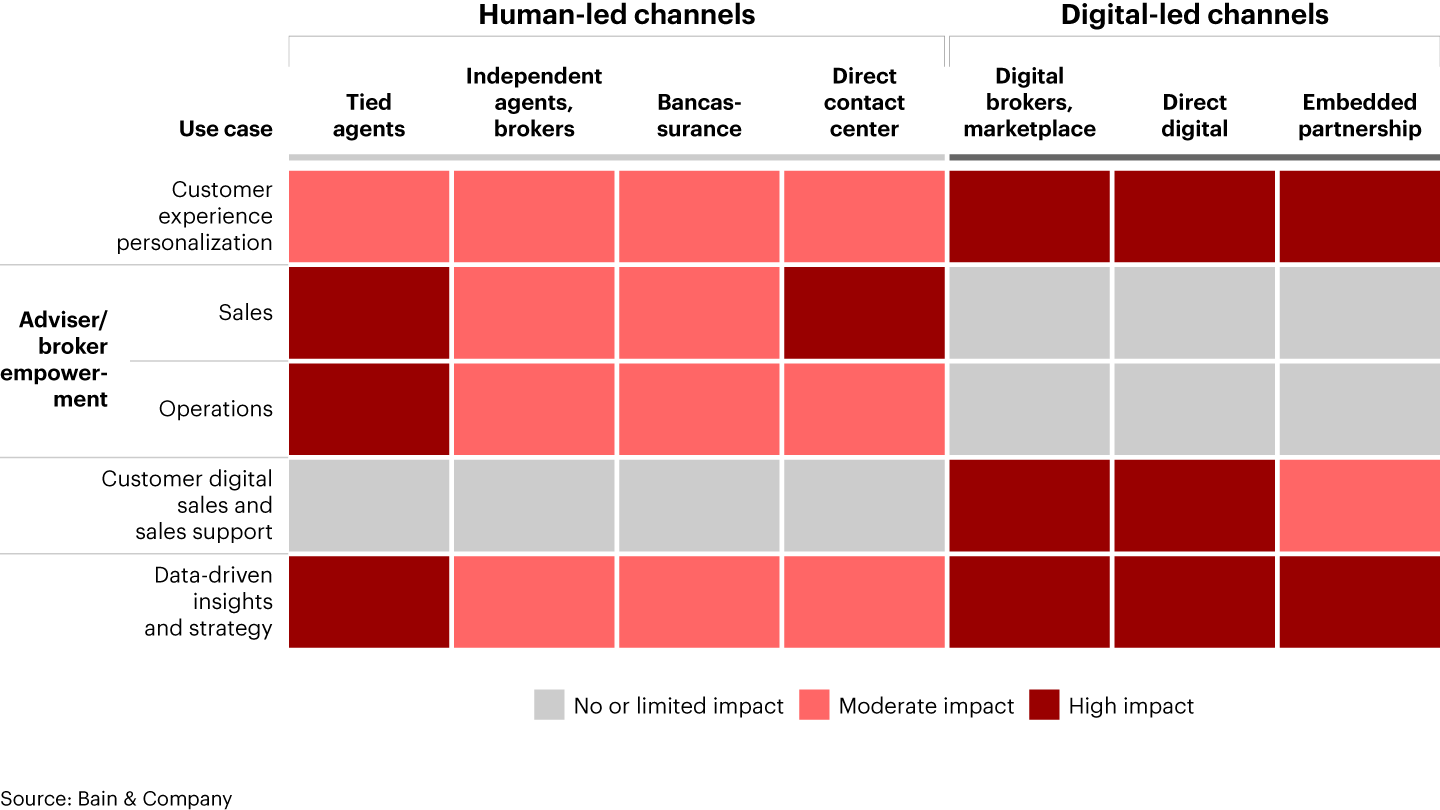

Generative AI applied to distribution should yield more than $50 billion in annual economic benefits, Bain & Company estimates. The benefits will come through three routes:
For an individual insurer, the technology could increase revenues by 15% to 20% and reduce costs by 5% to 15%. Managing the risksAs with any nascent technology, new risks are emerging in areas such as hallucination, data provenance, misinformation, toxicity, and intellectual property ownership. To manage risks, insurers should adopt a responsible AI strategy that relies on successive waves of use cases, testing and learning as they go (see Figure 2).
Figure 2
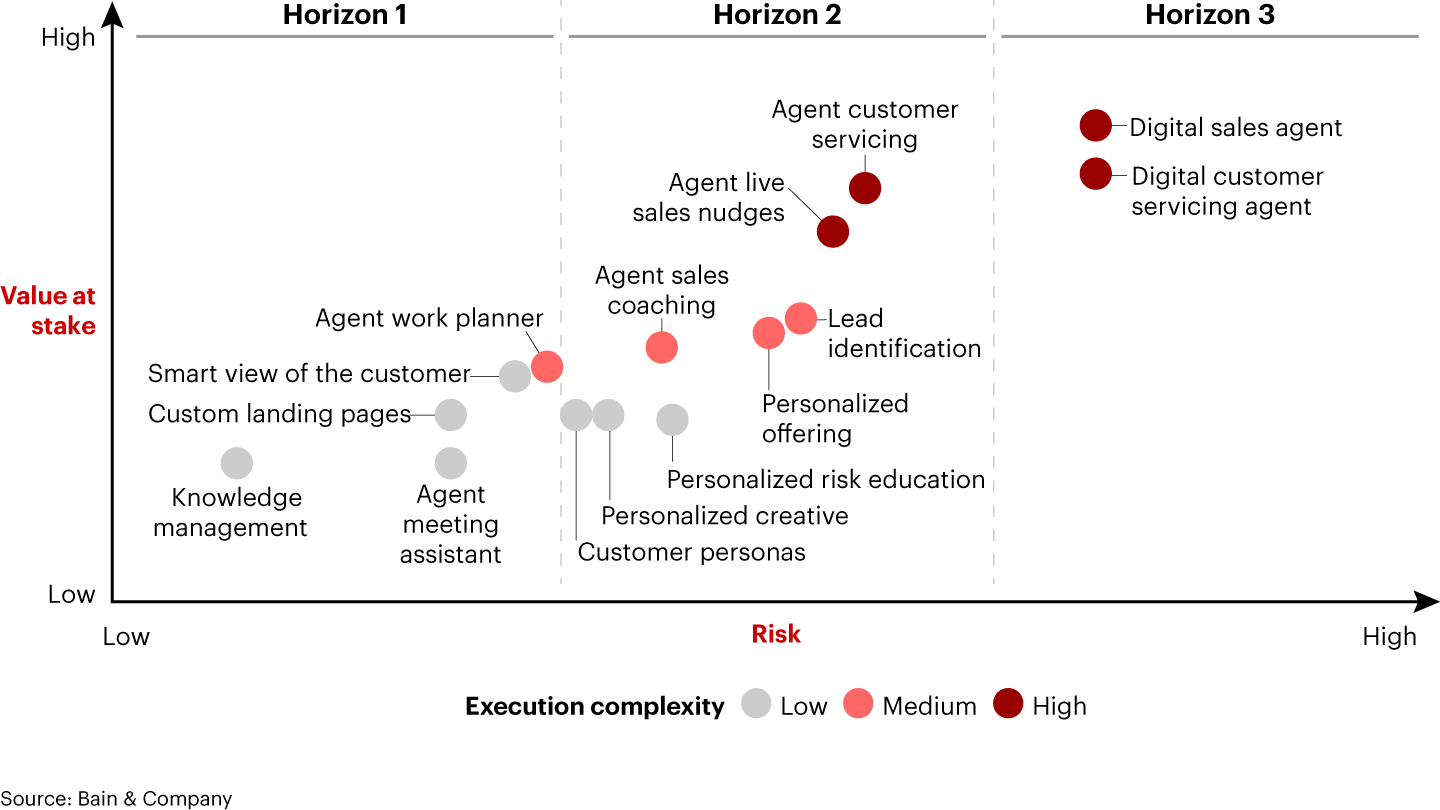

Short-term priorities. An insurer should start with use cases where risk can be managed within existing regulations, and that include human oversight. Invest in incentives, change management, and other ways to spur adoption among the distribution teams. A long-term vision. As the firm builds AI capabilities, it can focus on higher-value, more integrated, sophisticated solutions that redefine business processes and change the role of agents and employees. 
Learn MoreIt’s time to build your business for an AI world. We help you discover AI’s potential at the intersection of strategy and technology, and embed AI in all you do. Let’s turn AI’s promise into performance. Next steps for technology and distribution leadersInsurance executives should plan now to chart a course that can adapt as the technology evolves. Technology leaders should:
Distribution leaders should:
While generative AI is still in early days, insurers cannot afford to wait on the sidelines for another year. Harnessing the technology will require experimentation, training, and new ways of working—all of which take time before the benefits start to accrue. |