


Global Healthcare Private Equity Report


|
At a Glance
This article is part of Bain's 2025 Global Healthcare Private Equity Report. Healthcare private equity (PE) exit deal volume remained low in 2024, down 41% from its 2021 peak (see Figure 1). Interest rates, an uncertain macroeconomic backdrop, and misaligned expectations have resulted in a stalemate between buyers and sellers. Therefore, fewer assets are changing hands, prolonging hold periods and straining funds’ ability to return capital to their limited partners (LPs) (see Figure 2).
Figure 1
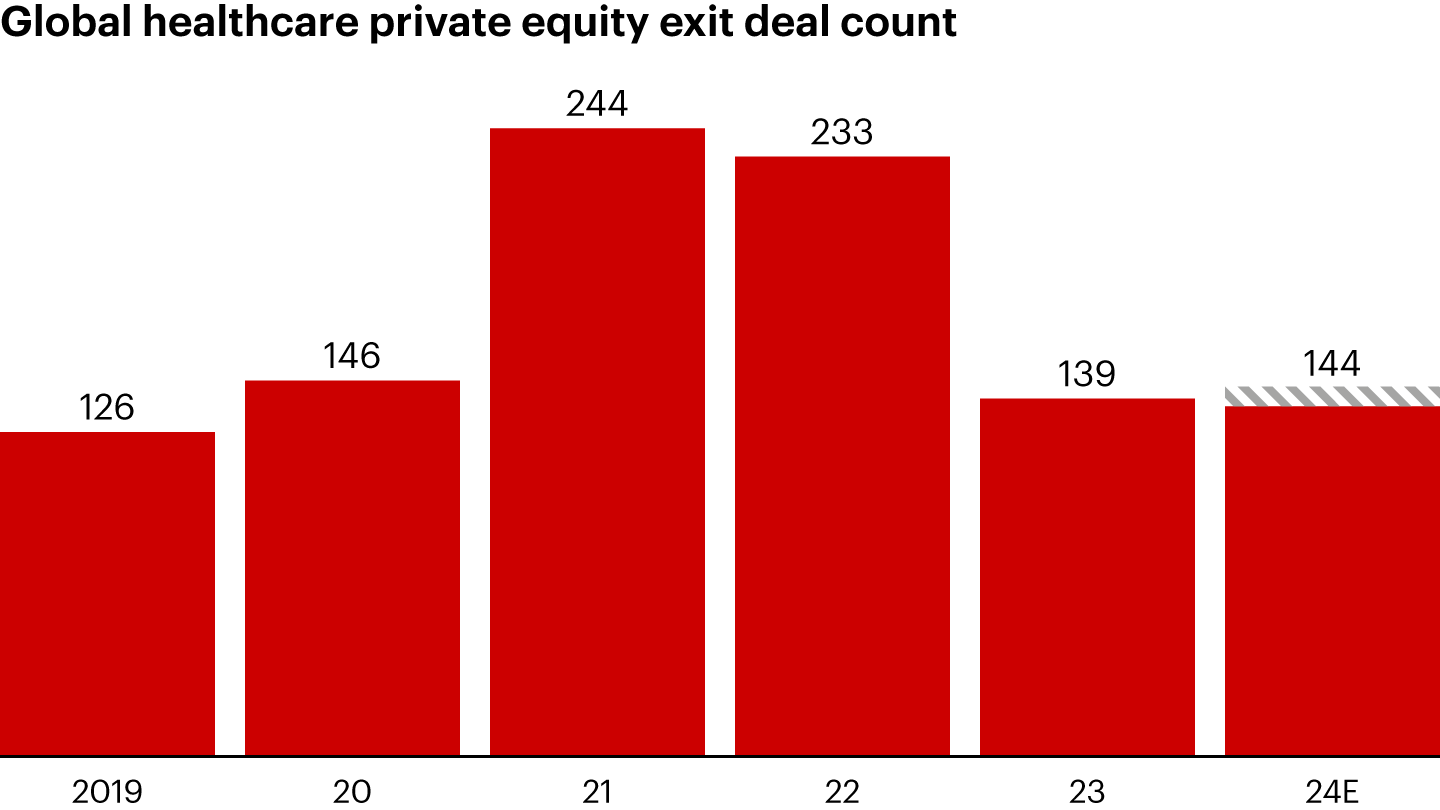

Note: 2024E values are annualized estimates based on actual deal counts through November 30, 2024, and expected deal counts for the remainder of 2024 using historical data from 2019–2023 Sources: Dealogic; Bain analysis
Figure 2
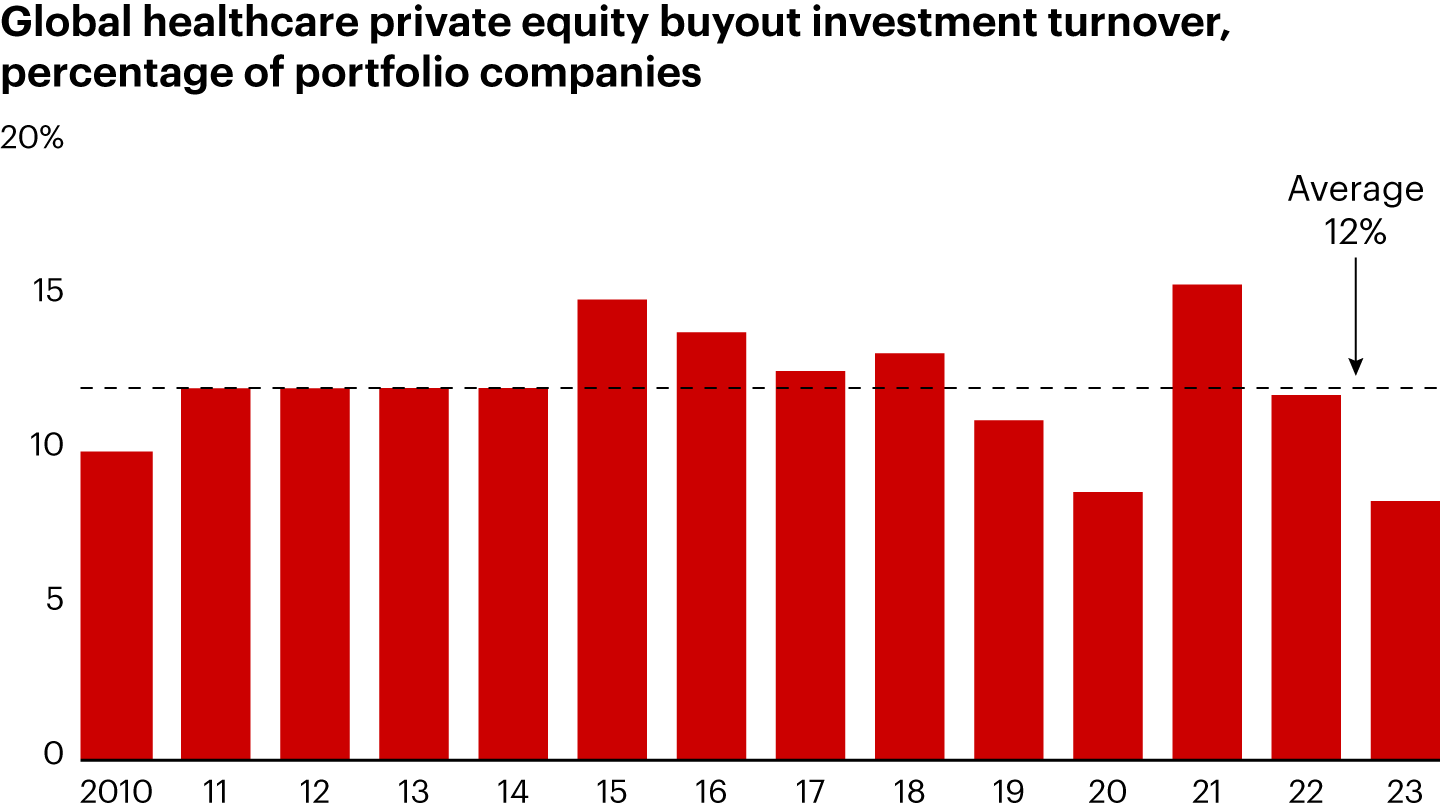

Note: Percentage turnover calculated as count of portfolio companies exited over count of total portfolio companies as of year in question Source: Pitchbook data as of November 30, 2024While multiple expansion propelled almost half of total deal returns historically, this lever is unlikely to power returns in the years ahead to the same degree (Figure 3). Stalling multiples, combined with higher financing costs, means sellers must rethink their deal models to make the math work. To break this logjam and deliver expected returns to LPs, PE sellers must think about value creation in a way they haven’t in the past—both at the time of investment and later in the hold period.
Figure 3
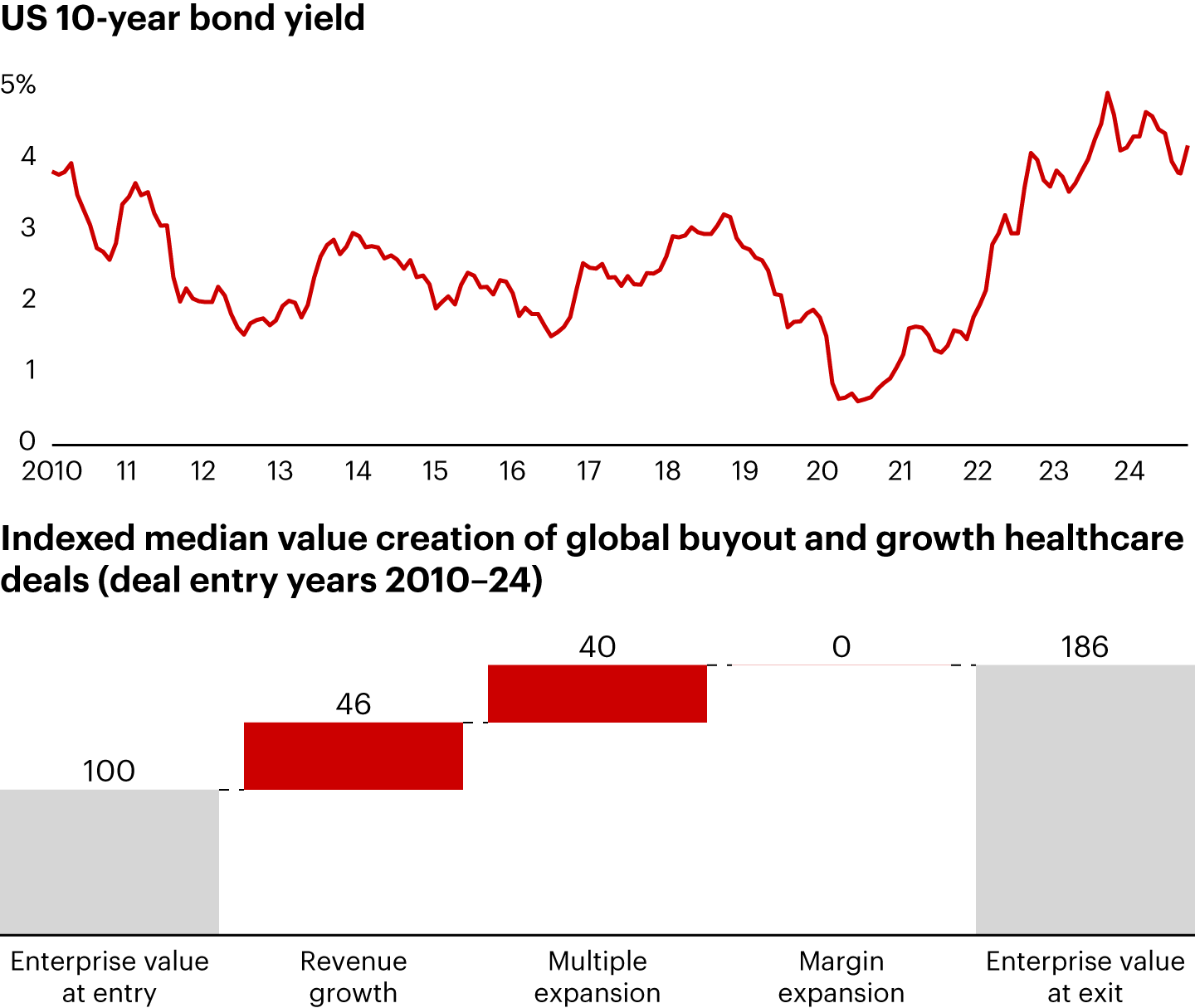

Notes: Enterprise value figures are indexed and should not be used to assess the underlying deals’ performance—that is, a higher indexed enterprise value does not mean a higher deal MOIC; all calculations are in US dollars; deal universe includes fully and partially realized healthcare deals with initial investments in 2010–2024 globally; all equity check sizes; buyout and growth; healthcare includes healthcare IT: software for pharma and biotech, payers, data and analytics, telemedicine and e-health, revenue cycle management, coordination, healthcare workflow management, healthcare payment, workflow and unspecified; sums may not add up due to rounding. Sources: DealEdge.com (data as of November 30, 2024); St. Louis Federal Reserve (data through October 1, 2024)The onus is on sellersTo maximize exit value, ensuring both a successful process and a high price, sellers must change how they approach exits. Winning strategies—and management presentations—should include the following actions:
A strategy for maximizing exit valueProof of past performance and a clear articulation of the asset’s potential boosts conviction that the asking price is justified. When preparing to exit, PE sellers must articulate the asset’s equity story and set the stage for the next owners. Maximizing exit value has always been pertinent to sellers, but the current environment heightens its importance. With the decline in sponsor-to-sponsor healthcare deals over the past few years, sellers have relied on synergies such as cross-selling or go-to-market optimization to create value for strategic buyers. However, as sellers look to revive sponsor-to-sponsor deals, applying exit value maximization (EVM) principles will be critical not just for maximizing exit value, but for closing deals. Implementing this type of exit strategy is not something that can be done on the fly. In fact, successful sellers often begin the process a few years before their target exit so they have time to revisit the original value creation plan, reorient strategic initiatives, and generate preliminary results. To develop an EVM game plan, sellers should keep several guidelines in mind:
The buyer’s role in value creationThis emphasis on value creation applies to buyers as well: It is never too early to start thinking about how to increase value in an asset. Integrating value creation principles into the pre-acquisition diligence can provide a competitive edge throughout the hold period—and enable buyers to hit the ground running on Day 1. Understanding the tactical foundation underlying the value creation levers, as well as the operational complexity involved in realizing them, empowers buyers to assess valuations accurately and with greater confidence. While having a plan for the first 100 days is standard practice, the best buyers start in-depth planning and analysis well before closing the deal. Not zero sum: Sellers and buyers can win togetherMacroeconomic volatility and a tepid exit environment within healthcare PE have put the onus on sellers to prepare their assets for exit by focusing on their equity story. While economic relief may be on the horizon, we are still in a higher interest rate environment, and buyers are more sophisticated than ever—increasing the need for strong data-based equity narratives to bridge potential gaps between parties. Buyers that integrate value creation into their deal theses and diligence processes position themselves to deliver strong returns to LPs and capitalize on the next wave of opportunities. Read our 2025 Global Healthcare Private Equity ReportMore from the report |