


Global Private Equity Report


|
At a Glance
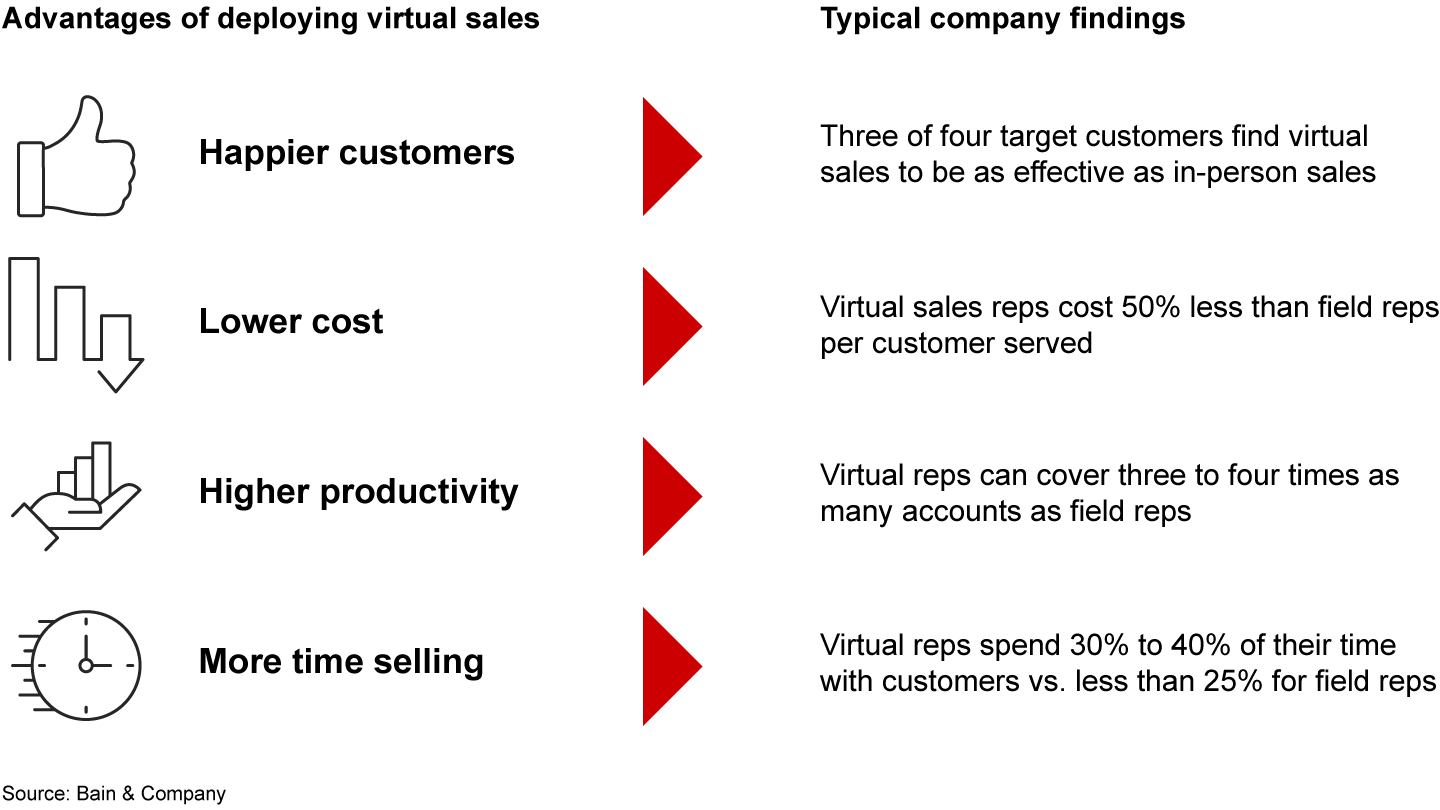
This article is part of Bain's 2021 Global Private Equity Report. There’s no doubt that Covid-19 has changed how most companies think about selling. With commercial organizations around the world forced to work from home, companies have discovered, often to their surprise, that getting on planes and shaking hands isn’t the only way to make a sale―and maybe not even the best way. Zoom meetings and remote demos work just fine much of the time. Many customers, it turns out, actually prefer a virtual approach. Yet it would be a mistake to assume that a few virtual tweaks to a portfolio company’s selling model is enough to create lasting value. The truth is, the most successful virtual strategies are just one part of a disciplined go-to-market model that blends virtual and field sales tactics with a set of prescriptive sales plays designed to focus reps on their most productive opportunities (see Figure 1).
Figure 1

Private equity owners tend to shy away from significant change in the frontline sales organization―especially early on in the ownership period―because they worry about disrupting revenue flows. Particularly in low-growth businesses, a lot of deal teams assume that revenue is what it is: “We’re in a 2% to 3% growth industry and that’s not going to change.” The firms that excel at helping portfolio companies push revenue growth beyond the industry average rely on two linked management approaches that can produce change quickly:
Moving with conviction is the key to making these changes with a minimum of disruption. Firms need to underwrite these moves in due diligence and hit the ground running when the ownership period begins. Change takes time, but virtual and play-based selling can rapidly bring discipline to the most unruly sales organizations, generating measurable results now and building a strong revenue story at exit. Developing a virtual edgeThough Covid-19 has accelerated the adoption of virtual sales, these strategies have been around for years. Traditionally, firms have viewed them as a low-cost way to address and service lower-value accounts. Indeed, within field-dominated sales organizations, virtual sales teams are often seen as second-class citizens. But that was changing even before the pandemic. Armed with increasingly sophisticated and affordable digital tools, B2B companies have been steadily shifting to virtual channels, even for complex buying cycles that require careful choreography (see Figure 2). Companies that do it right are constantly chasing the optimal balance of virtual selling and field sales—one that provides self-service or remote interactions when appropriate and in-person service when high-touch help or expertise makes sense.
Figure 2
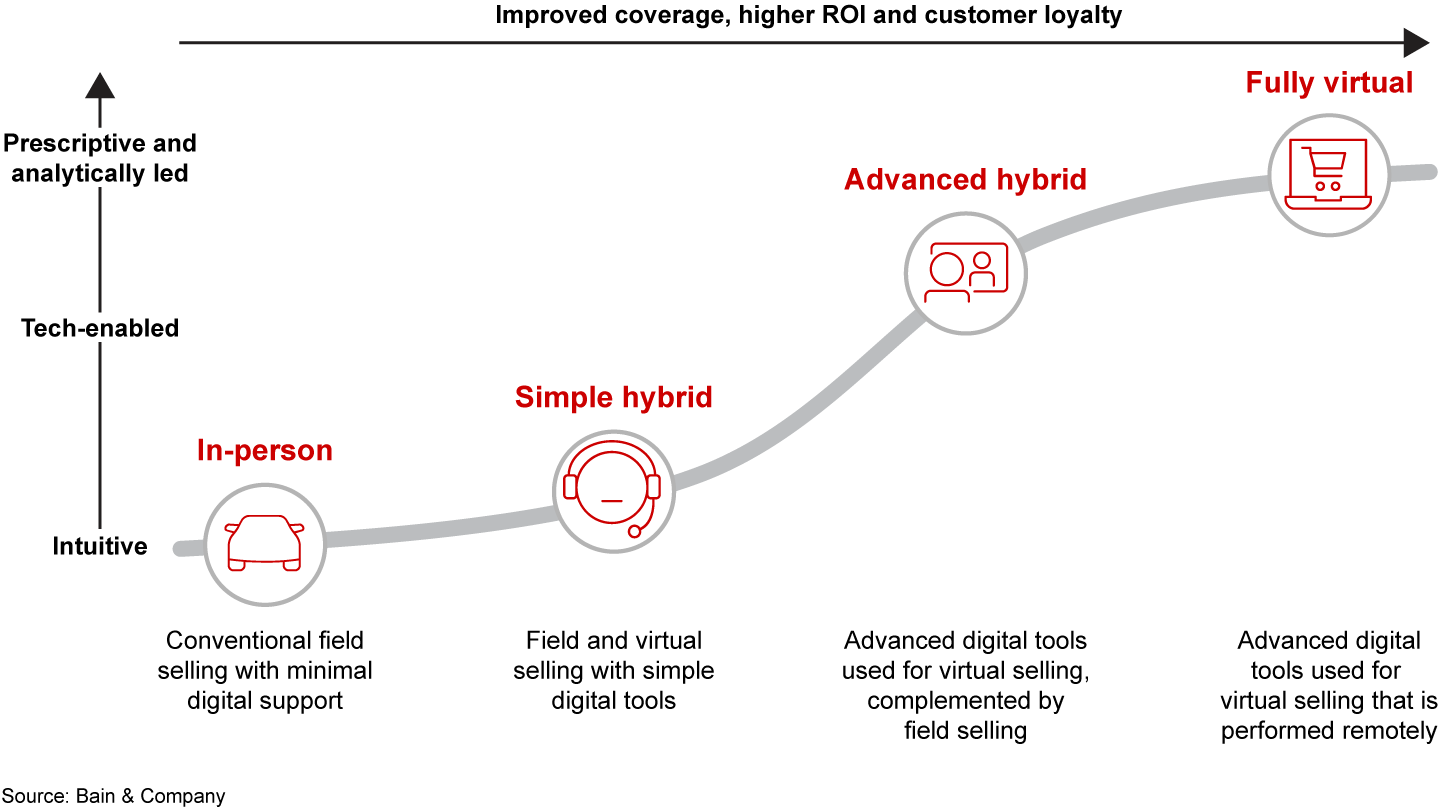

Traditionally, for instance, a sales rep and a product specialist are joined at the hip in selling big-ticket technology systems to enterprise clients. Increasingly, however, companies are keeping the product specialists in-house, allowing managers to assign them on a case-by-case basis to answer questions and do product demos for the most important deals. That makes the entire sales process more nimble and responsive while also trimming cost. For one data storage and solutions business, adopting virtual techniques transformed its ability to cover the market effectively. The company was a mature player in a relatively sleepy sector, so revenue growth depended on expanding share of wallet with existing customers and winning more new accounts. The problem was that sales reps had too many accounts to serve well and were traveling constantly. Only a fifth of their day was actually spent selling. The new owners built a sales model that blended field and virtual tactics. They then deployed inexpensive but powerful technology to increase productivity. Using an analytics tool to prioritize the most promising accounts based on their potential spending, the company trimmed the client list for each field rep by half and reassigned accounts more logically based on geography. It then added a new inside sales development role to support the field by taking over repetitive tasks like quoting and drumming up new leads. Small and midsize customers, meanwhile, shifted to a separate inside sales team. The new inside team got several tools to improve their chances. To make prospecting more productive, the company deployed ZoomInfo linked to a Salesforce CRM system. A sales engagement platform automated customer outreach and made reps smarter by, for instance, keeping track of who downloaded a white paper so they could follow up. The company also invested in a call analytics system to learn from what the most successful sellers were doing. It uses voice recognition technology to analyze which topics reps discuss at which point during a sales call and then compares that data to outcomes to identify winning formulas. So far, so good. The new structure has reduced the field reps’ travel by 60% and dramatically increased the time they can spend with their most important customers. It also opened a new spigot of highly qualified leads to enrich time spent prospecting. Among midmarket and small customers, the virtual model positioned the company to capture a large untapped opportunity while cutting the cost of acquisition significantly. (Inside sales reps cost 50% less per account than field reps.) Most important, it makes the company’s customers happy; when surveyed, three out of four said they prefer a virtual sales channel.
The notion that customers prefer the hand-holding of dedicated salespeople is one of those myths that tend to discourage wider adoption of virtual sales. When Bain teamed with Dynata to survey more than 300 B2B buyers and sellers in the US, UK and Canada, the responses blew up four of these misconceptions.
One challenge that too often gets overlooked amid the myths is change management. Not surprisingly, taking virtual selling up the value chain often requires making sure the executive team knows how to manage the sensitivity this can cause within the organization. In our survey, 55% of sellers at the VP level or below said field reps would be demoralized or quit if asked to change to a primarily virtual model, while only 25% said they would be excited. What’s critical is to involve the sales reps and managers from the start in designing a new model, cocreating a process that raises the company’s sales metabolism. The key message is that deploying the right people through the right channels at the right point in the buying process will result in more sales—and that’s in everybody’s interest. Running the right playWhile getting the mix of virtual and field sales right is essential, it’s not sufficient. Reaching full potential means spelling out in a repeatable way how the model should work depending on the specific circumstances. That’s where prescriptive sales plays come in. New PE owners often find that the typical target company’s approach to sales is too scattershot. Most companies these days spend heavily on their CRM systems and other forms of sales enablement technology, but few use it effectively to build advantage. Instead, salespeople are often overwhelmed with administrative tasks. They spend a fraction of their time on actual selling activities. Coaching is often ad hoc and infrequent. Prescriptive sales plays build the kind of discipline that leads to more consistent execution. A sales play is a targeted program designed to increase the pipeline and revenue for a specific commercial objective (see Figure 3). It sets the cadence of the sale, defining how sales reps, experts and others reach out to customers and in what sequence. The play orchestrates resources across functions, supplying all marketing content, messaging and other sales collateral. It also serves as the basis for regular coaching and evaluation, defining key performance indicators and providing dashboards to monitor them.
Figure 3
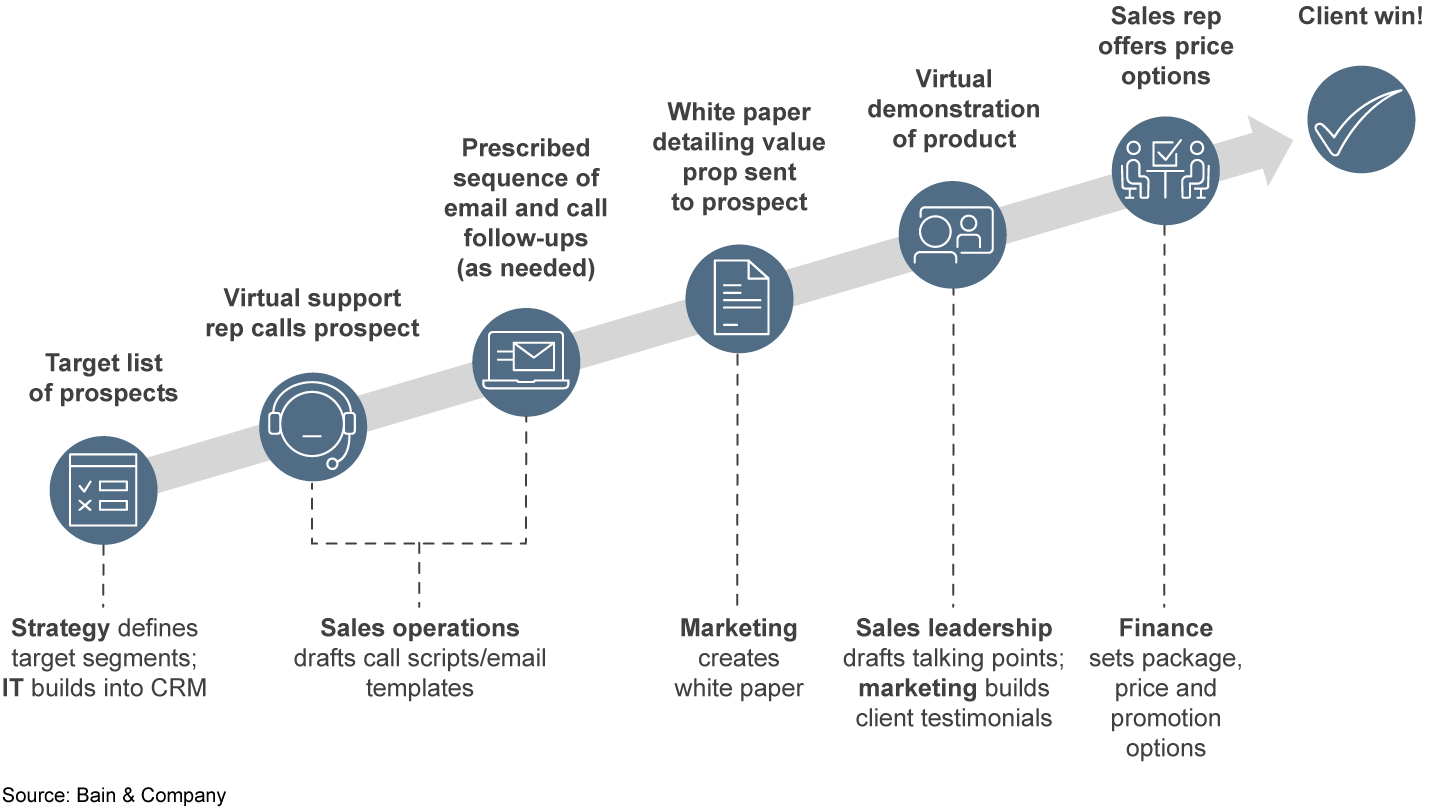

The idea is to create repeatable models that not only can be deployed again and again, but can be readily adapted as conditions change. This unique combination of precision, repeatability and adaptability is a departure for most sales organizations, which historically have relied more on the entrepreneurial spirit of individual sales reps or a handful of vaguely defined campaigns to drive revenue. PE funds have discovered that play-based selling is a repeatable approach they can apply across the portfolio, much as they use proprietary playbooks to cut costs and reconfigure working capital.
When Platinum Equity bought Cision for $2.7 billion in early 2020, accelerating sales momentum was a pivotal part of the deal thesis. Cision’s global cloud-based public relations platform lets clients target journalists and social media influencers from a broad database with multichannel press releases. It then provides analytics to measure results and gain audience insights. Given the size of the deal, Platinum was intent on getting off to a strong start. It partnered quickly with company leadership to help Cision accelerate sales. Central to that effort was a plan to turn Cision’s commercial organization into a “sales play factory.” The goal was to shorten the process of designing plays to a week or two (it can take months at some companies), while constantly honing each play through a regular test-and-learn process (see Figure 4). The company set up a cross-functional team to determine which plays to focus on, the right steps for each play, what marketing content and training materials the team should use, and a list of other elements important to the sale.
Figure 4
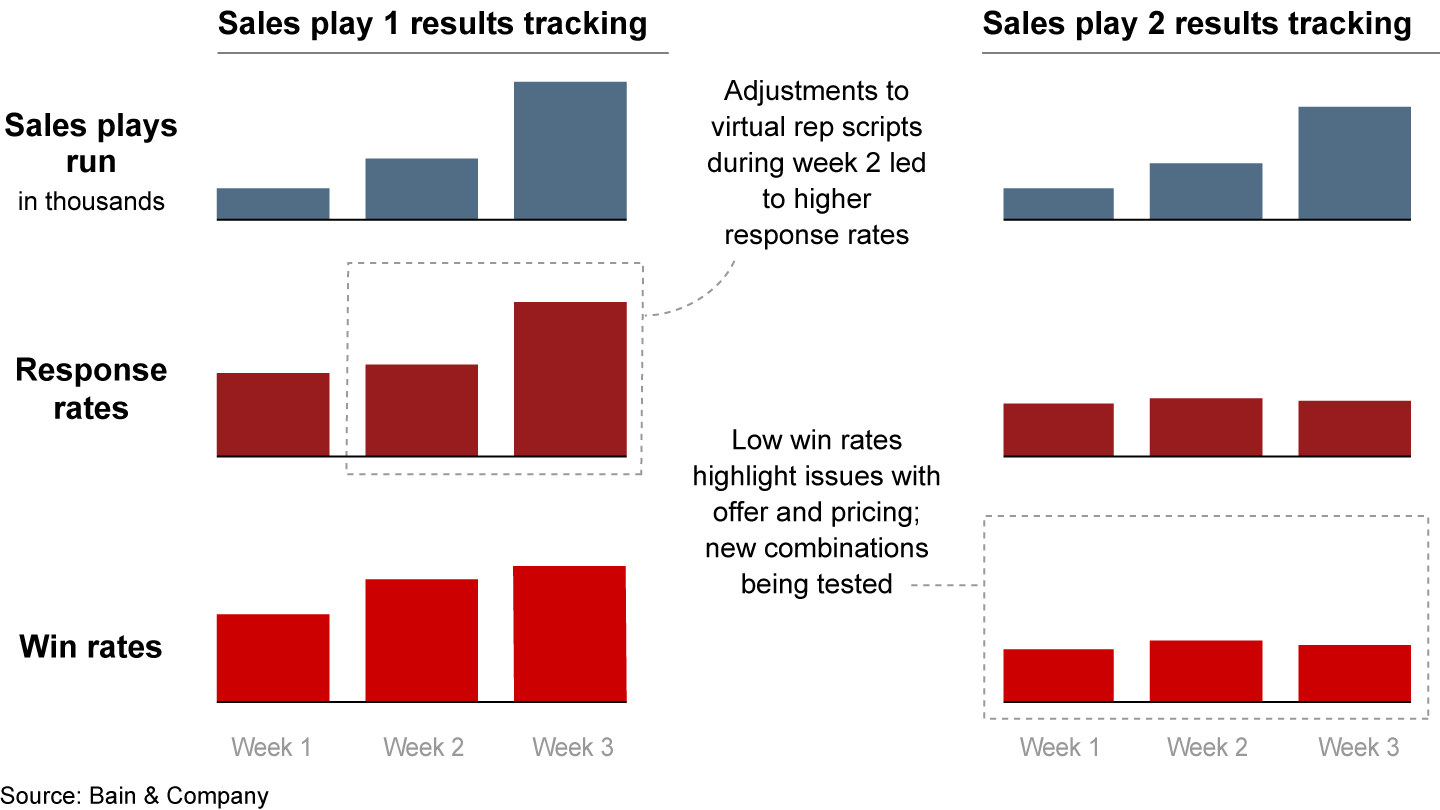

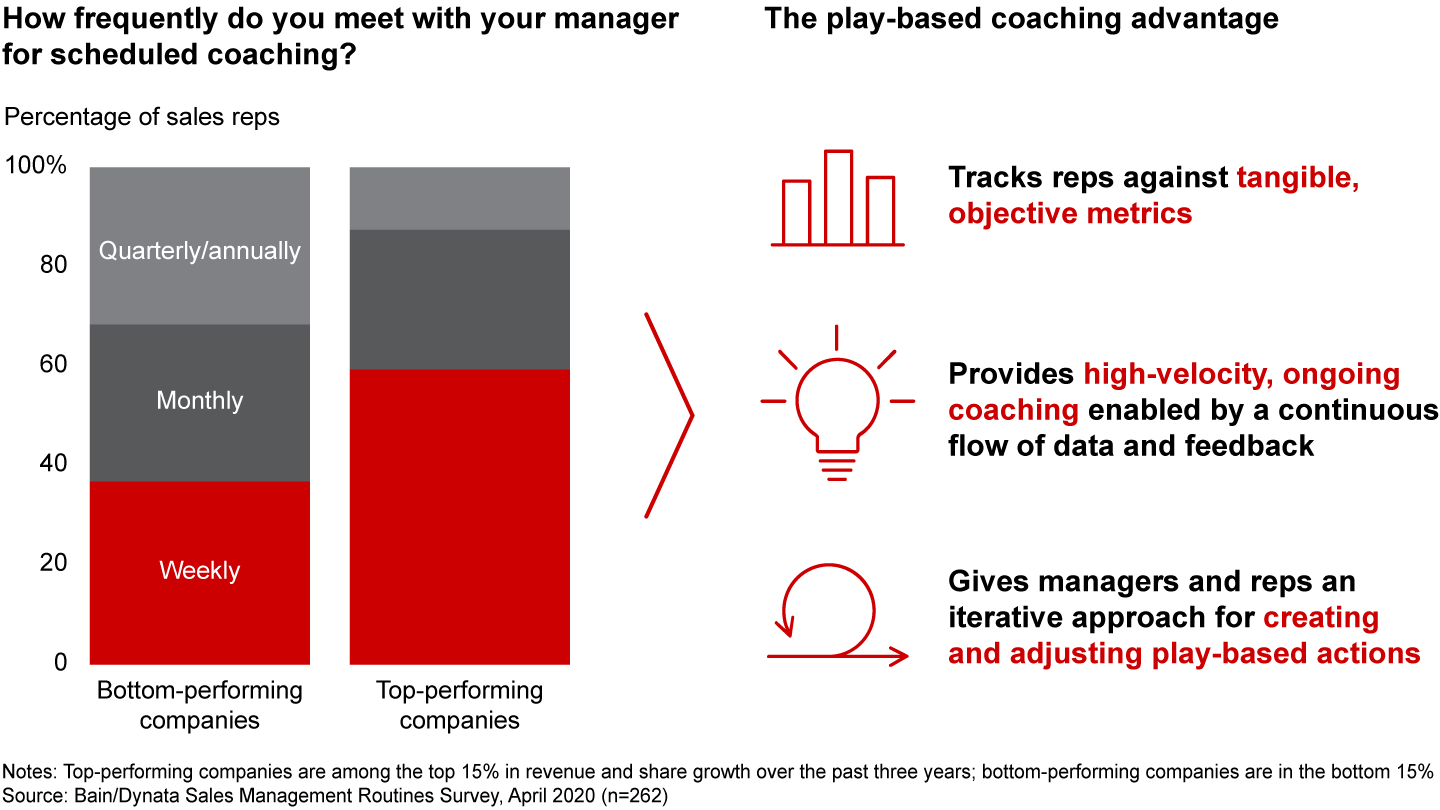
The new system allowed Cision to rapidly deploy plays aimed at engaging new customers, winning back old ones, managing renewals and upselling to new services. The process not only helped sharpen execution but also made the sales team think harder about what customers really wanted from them. When it came to renewals, for instance, the company recognized that it wasn’t enough just to knock on the door once a year and ask customers to reup. Instead, the sales play used advanced analytics and risk-scoring models to identify which customers weren’t getting the most out of their software, and then prompted reps to offer them new training or other forms of help. The result: Renewals jumped 10% to 20% to a new high. Besides adding rigor and consistency to the sales process, the play-based system provided a much richer environment for coaching and learning at Cision. By laying out clear checkpoints and expectations, the system created a regular cadence of high-quality opportunities for managers to review each rep’s progress, solve problems and prod them along when necessary. The test-and-learn emphasis allowed the company to use what it was seeing in the field to adjust plays on the fly. Management instituted nightly debriefs to see what was working or not, and each week the cross-functional team would pull up data to see what resonated with clients and produced better results. All of this led to more productive interactions with customers. Companies that make sales plays work rely on several key enablers:
Figure 5

At a time of unprecedented uncertainty, the right combination of virtual selling and prescriptive sales plays adds clarity. It delivers unambiguous, practical guidance to the front line by identifying the company’s most critical opportunities and laying out the clearest, most efficient path to capturing them. It’s true that changing the status quo isn’t easy. But as new owners, private equity firms have the mandate to get it done across their portfolios—and to get it done quickly. More from the reportRead our 2021 Global Private Equity Report |