
Skip to Content
  • Offices

    Offices

    North & Latin America
    • Atlanta
    • Austin
    • Bogota
    • Boston
    • Buenos Aires
    • Chicago
    • Dallas
    • Denver
    • Houston
    • Los Angeles
    • Mexico City
    • Minneapolis
    • Monterrey
    • Montreal
    • New York
    • Rio de Janeiro
    • San Francisco
    • Santiago
    • São Paulo
    • Seattle
    • Silicon Valley
    • Toronto
    • Washington, DC
    Europe & Africa
    • Amsterdam
    • Athens
    • Berlin
    • Brussels
    • Copenhagen
    • Dusseldorf
    • Frankfurt
    • Helsinki
    • Istanbul
    • Johannesburg
    • Kyiv
    • Lisbon
    • London
    • Madrid
    • Milan
    • Munich
    • Oslo
    • Paris
    • Rome
    • Stockholm
    • Vienna
    • Warsaw
    • Zurich
    Middle East
    • Doha
    • Dubai
    • Riyadh
    Asia & Australia
    • Bangkok
    • Beijing
    • Bengaluru
    • Brisbane
    • Ho Chi Minh City
    • Hong Kong
    • Jakarta
    • Kuala Lumpur
    • Manila
    • Melbourne
    • Mumbai
    • New Delhi
    • Perth
    • Seoul
    • Shanghai
    • Singapore
    • Sydney
    • Tokyo
    See all offices
  • Alumni
  • Media Center
  • Subscribe
  • Contact
  • Argentina | Español

    Select your region and language

    Global
    • Global (English)
    North & Latin America
    • Brazil (Português)
    • Argentina (Español)
    • Canada (Français)
    • Chile (Español)
    • Colombia (Español)
    Europe, Middle East, & Africa
    • France (Français)
    • DACH Region (Deutsch)
    • Italy (Italiano)
    • Spain (Español)
    • Greece (Elliniká)
    Asia & Australia
    • China (中文版)
    • Korea (한국어)
    • Japan (日本語)
  • Saved items (0)
    Saved items (0)

    You have no saved items.

    Bookmark content that interests you and it will be saved here for you to read or share later.

    Explore Bain Insights
  • Industries
    Main menu

    Industries

    • Aeroespacial y Defensa
    • Agroindustria
    • Químicos
    • Construcción e Infraestructura
    • Productos de Consumo
    • Servicios Financieros
    • Salud y Ciencias de la Vida
    • Maquinaria y Equipo Industrial
    • Medios y Entretenimiento
      Industries
      Medios y Entretenimiento
      • Media Lab
    • Metales
    • Minería
    • Petróleo y Gas
    • Papel y Empaque
    • Private Equity
      Industries
      Private Equity
      • Due Diligence
      • Exit Planning
      • Firm Strategy & Operations
      • Portfolio Value Creation
    • Sector Público y Social
    • Retail
    • Tecnología
    • Telecomunicaciones
      Industries
      Telecomunicaciones
      • Capital Expenditure
      • Telco Digital Transformation
    • Transporte
    • Viajes y Turismo
    • Servicios Públicos y Energías Renovables
  • Consulting Services
    Main menu

    Consulting Services

    • Customer Experience
    • Sustainability
    • Innovation
    • M&A
    • Operations
    • People & Organization
    • Private Equity
    • Sales & Marketing
    • Strategy
    • AI, Insights, and Solutions
    • Technology
    • Transformation
  • Digital
  • Insights
    Main menu

    Insights

    • Industry Insights
    • Services Insights
    • Bain Books
    • Webinars
    • Bain Futures
    View all Insights
    Featured topics
    • Tariff Response
    • Artificial Intelligence
    • Thriving in Uncertainty
    • Executive Conversations
    • Macro Trends
    • M&A Report
    • Healthcare Private Equity Report
    • Paper & Packaging Report
    • Technology Report
    • CEO's Guide to Sustainability
    • CEO Insights
    • CFO Insights
    • COO Insights
    • CIO Insights
    • CMO Insights
    View all featured topics
  • About
    Main menu

    About

    • What We Do
    • What We Believe
    • Our People & Leadership
    • Client Results
    • Awards & Recognition
    • Global Affiliations
    Further: Our global responsibility
    • Sustainability
    • Social Impact
    • World Economic Forum
    Learn more about Further
  • Carreras
    Main menu

    Carreras

    • Trabaja con Nosotros
      Carreras
      Trabaja con Nosotros
      • Find Your Place
      • Nuestras Áreas de Trabajo
      • Equipos Integrados
      • Estudiantes
      • Internships & Programs
      • Eventos de Reclutamiento
    • La Vida en Bain
      Carreras
      La Vida en Bain
      • Blog: Inside Bain
      • Historias Profesionales
      • Nuestra Gente
      • Dónde Trabajamos
      • Apoyando tu Crecimiento
      • Grupos de Afinidad
      • Beneficios
    • Impact Stories
    • Nuestro Proceso
      Carreras
      Nuestro Proceso
      • Qué Esperar
      • Entrevistas
    FIND JOBS
  • Offices
    Main menu

    Offices

    • North & Latin America
      Offices
      North & Latin America
      • Atlanta
      • Austin
      • Bogota
      • Boston
      • Buenos Aires
      • Chicago
      • Dallas
      • Denver
      • Houston
      • Los Angeles
      • Mexico City
      • Minneapolis
      • Monterrey
      • Montreal
      • New York
      • Rio de Janeiro
      • San Francisco
      • Santiago
      • São Paulo
      • Seattle
      • Silicon Valley
      • Toronto
      • Washington, DC
    • Europe & Africa
      Offices
      Europe & Africa
      • Amsterdam
      • Athens
      • Berlin
      • Brussels
      • Copenhagen
      • Dusseldorf
      • Frankfurt
      • Helsinki
      • Istanbul
      • Johannesburg
      • Kyiv
      • Lisbon
      • London
      • Madrid
      • Milan
      • Munich
      • Oslo
      • Paris
      • Rome
      • Stockholm
      • Vienna
      • Warsaw
      • Zurich
    • Middle East
      Offices
      Middle East
      • Doha
      • Dubai
      • Riyadh
    • Asia & Australia
      Offices
      Asia & Australia
      • Bangkok
      • Beijing
      • Bengaluru
      • Brisbane
      • Ho Chi Minh City
      • Hong Kong
      • Jakarta
      • Kuala Lumpur
      • Manila
      • Melbourne
      • Mumbai
      • New Delhi
      • Perth
      • Seoul
      • Shanghai
      • Singapore
      • Sydney
      • Tokyo
    See all offices
  • Alumni
  • Media Center
  • Subscribe
  • Contact
  • Argentina | Español
    Main menu

    Select your region and language

    • Global
      Select your region and language
      Global
      • Global (English)
    • North & Latin America
      Select your region and language
      North & Latin America
      • Brazil (Português)
      • Argentina (Español)
      • Canada (Français)
      • Chile (Español)
      • Colombia (Español)
    • Europe, Middle East, & Africa
      Select your region and language
      Europe, Middle East, & Africa
      • France (Français)
      • DACH Region (Deutsch)
      • Italy (Italiano)
      • Spain (Español)
      • Greece (Elliniká)
    • Asia & Australia
      Select your region and language
      Asia & Australia
      • China (中文版)
      • Korea (한국어)
      • Japan (日本語)
  • Saved items  (0)
    Main menu
    Saved items (0)

    You have no saved items.

    Bookmark content that interests you and it will be saved here for you to read or share later.

    Explore Bain Insights
  • Industries
    • Industries

      • Aeroespacial y Defensa
      • Agroindustria
      • Químicos
      • Construcción e Infraestructura
      • Productos de Consumo
      • Servicios Financieros
      • Salud y Ciencias de la Vida
      • Maquinaria y Equipo Industrial
      • Medios y Entretenimiento
      • Metales
      • Minería
      • Petróleo y Gas
      • Papel y Empaque
      • Private Equity
      • Sector Público y Social
      • Retail
      • Tecnología
      • Telecomunicaciones
      • Transporte
      • Viajes y Turismo
      • Servicios Públicos y Energías Renovables
  • Consulting Services
    • Consulting Services

      • Customer Experience
      • Sustainability
      • Innovation
      • M&A
      • Operations
      • People & Organization
      • Private Equity
      • Sales & Marketing
      • Strategy
      • AI, Insights, and Solutions
      • Technology
      • Transformation
  • Digital
  • Insights
    • Insights

      • Industry Insights
      • Services Insights
      • Bain Books
      • Webinars
      • Bain Futures
      View all Insights
      Featured topics
      • Tariff Response
      • Artificial Intelligence
      • Thriving in Uncertainty
      • Executive Conversations
      • Macro Trends
      • M&A Report
      • Healthcare Private Equity Report
      • Paper & Packaging Report
      • Technology Report
      • CEO's Guide to Sustainability
      • CEO Insights
      • CFO Insights
      • COO Insights
      • CIO Insights
      • CMO Insights
      View all featured topics
  • About
    • About

      • What We Do
      • What We Believe
      • Our People & Leadership
      • Client Results
      • Awards & Recognition
      • Global Affiliations
      Further: Our global responsibility
      • Sustainability
      • Social Impact
      • World Economic Forum
      Learn more about Further
  • Carreras
    Popular Searches
    • Agile
    • Digital
    • Strategy
    Your Previous Searches
      Recently Visited Pages

      Content added to saved items

      Saved items (0)

      Removed from saved items

      Saved items (0)

      Report

      Foreign and local brands battle for China's shoppers in a rapidly changing environment

      Foreign and local brands battle for China's shoppers in a rapidly changing environment

      The days of growing a brand just by riding a category wave are coming to an end, especially in top-tier cities. As in more mature markets, brand growth in China will need to come from share gains.

      By Bruno Lannes and Mike Booker

      • min read

      Report

      Foreign and local brands battle for China's shoppers in a rapidly changing environment
      en

      Introduction

      China has become the world’s biggest battleground for consumer goods sales as both foreign and local companies aggressively compete for shoppers with rising incomes. In this follow-up to our report “Growing brands by understanding what Chinese shoppers really do,” published in July 2013, we explore the intensifying battle between foreign and local players in the context of China’s rapidly evolving market. Our discussion builds on our groundbreaking research into the behavior of Chinese shoppers, first presented last year, and in particular, our report on the battle between foreign and local brands (see “What Chinese shoppers really do but will never tell you,” China Shopper Report 2012, Vol. 3).

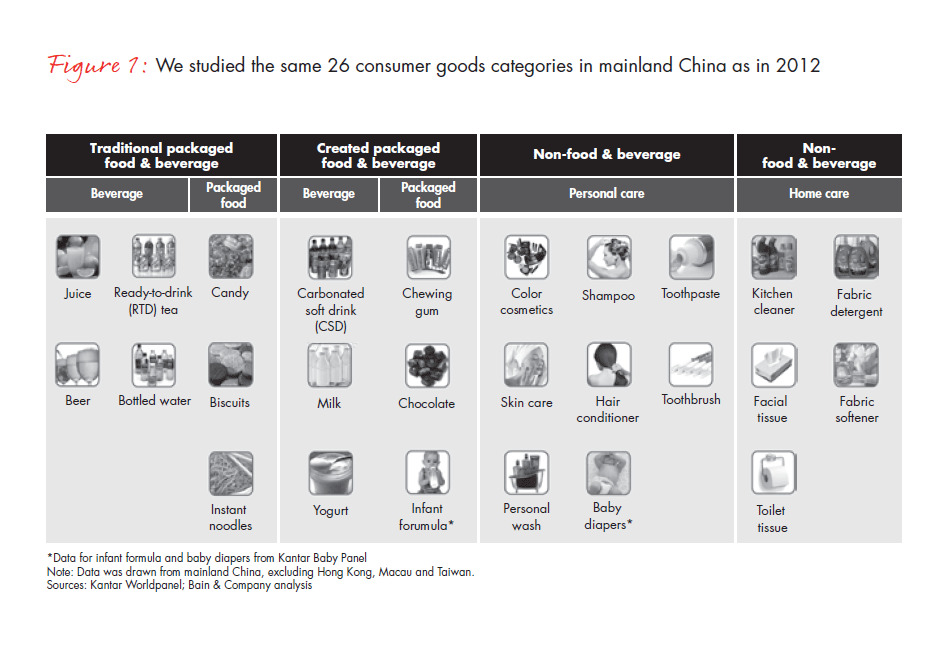
      Our insights are based on a joint study by Bain & Company and Kantar Worldpanel, in which we analyzed the behavior of 40,000 Chinese households from 373 cities in 20 provinces and four major municipalities. Over the past two years, this ongoing study has provided an unprecedented look at how shoppers purchase by region and by city in 26 important consumer products categories ranging from milk to shampoo (see Figure 1). The comprehensive study covers all Chinese city tiers, categories in different development stages and all shoppers’ life stages.

      growing-brands-by-understanding-Chinese-shoppers-vol-2-fig-01_embed

      China’s evolving market

      The market for fast-moving consumer goods (FMCGs) in China is characterized by slowing growth rates overall, but rapid adoption of e-commerce. Each of these developments has major implications for both foreign and local companies.

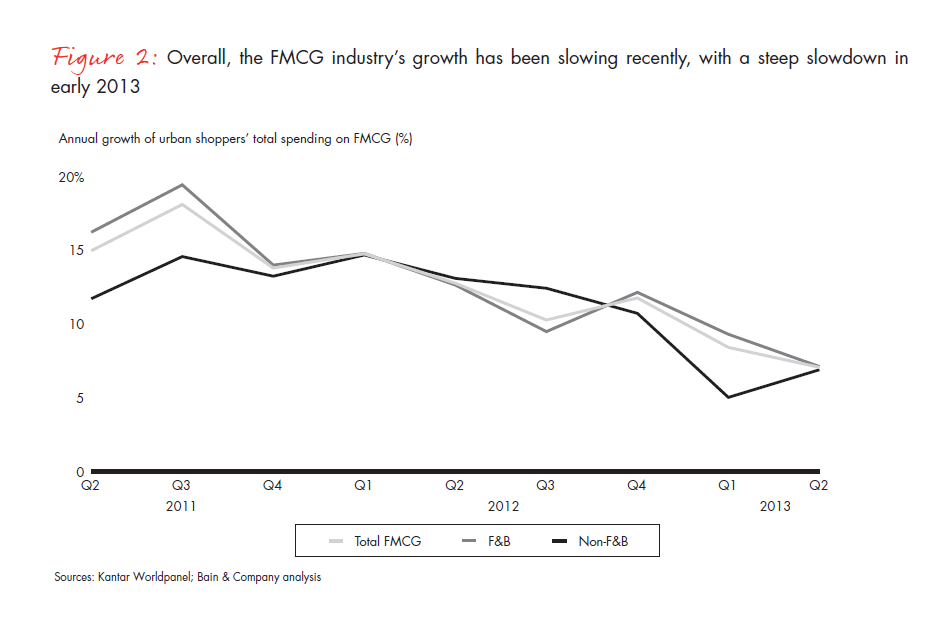
      The overall slowdown in growth rates of FMCG categories that started in the third quarter of 2011 has continued through the second quarter of 2013. This is affecting both food & beverage (F&B) and other categories, and the impact can be observed in most of our selected 26 categories.

      Overall, the growth rates of FMCG categories have declined from approximately 15% in the second quarter of 2011 to 7% in the second quarter of 2013. During this period, the growth rates of F&B categories declined from 16% to 7%, while the growth rates of non-F&B categories declined from 12% to 7% (see Figure 2).

      growing-brands-by-understanding-Chinese-shoppers-vol-2-fig-02_embed

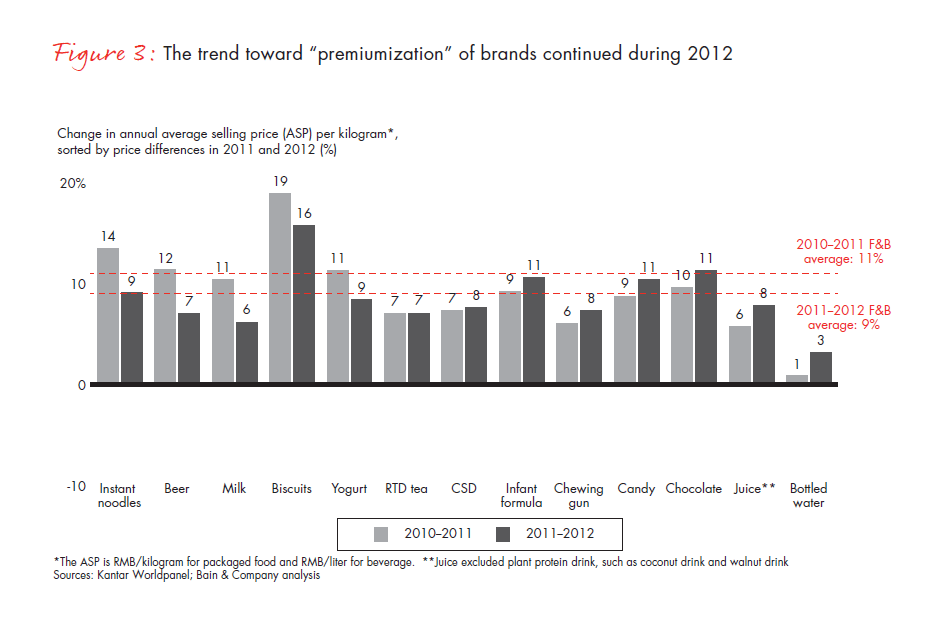
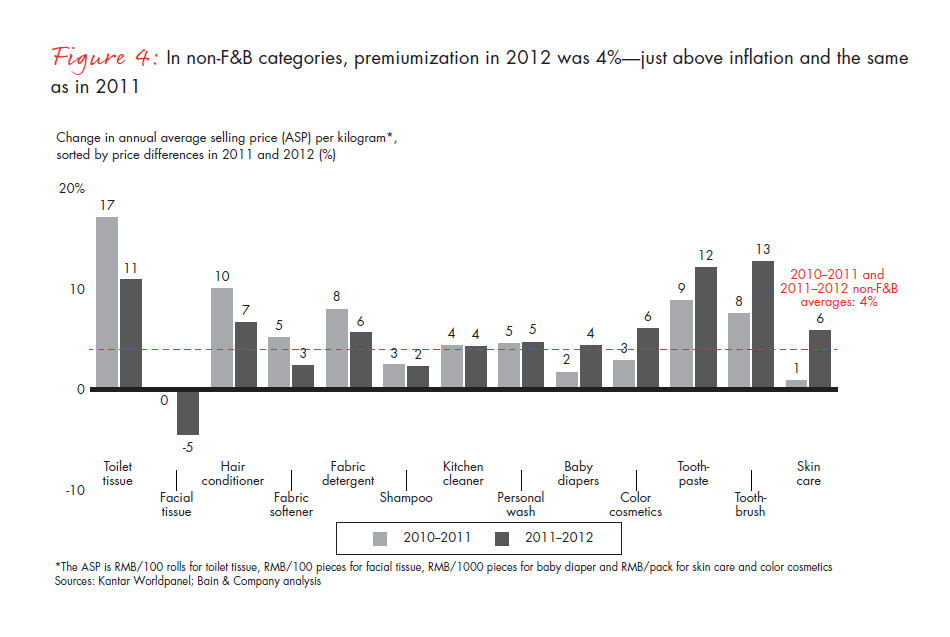
      This slowdown is marginally driven by price, as the trend toward “premiumization” of brands continued during 2012 (through either the launch of premium products or a price increase for existing products). For the 13 F&B categories in the group we studied, the increase in price per unit (in kilograms or liters) between 2011 and 2012 was 9%, compared with 11% between 2010 and 2011 (see Figure 3). For the 13 non-F&B categories, the increase in price per unit between 2011 and 2012 was 4%, which is the same as the percentage change between 2010 and 2011 and a level slightly above inflation (see Figure 4).
      growing-brands-by-understanding-Chinese-shoppers-vol-2-fig-03_embed

      growing-brands-by-understanding-Chinese-shoppers-vol-2-fig-04_embed

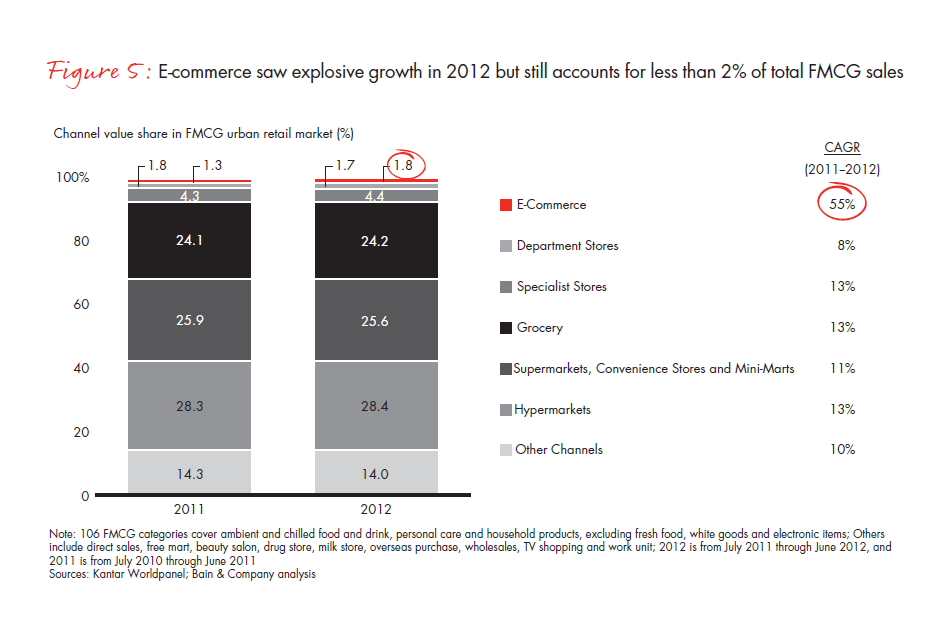
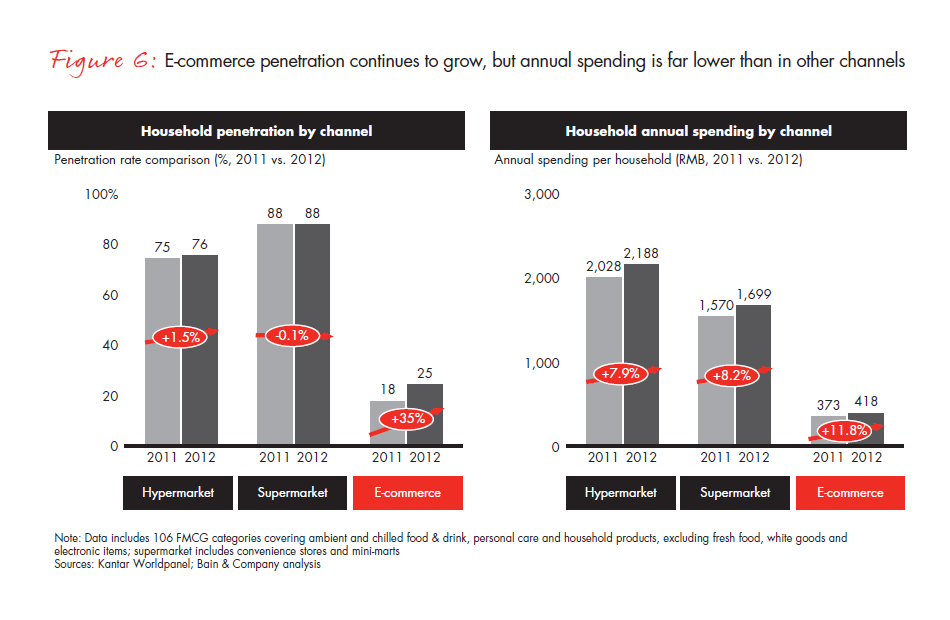
      Although the overall growth rate is slowing, the e-commerce channel is experiencing explosive growth. It is still early days for e-commerce in FMCG categories, as online sales represent approximately 1.8% of total 2012 FMCG sales value, yet the rate of growth is rapid, at approximately 55% from 2011 to 2012 (see Figure 5). E-commerce penetration (the percentage of households that purchased FMCGs online at least once a year) increased from 18% in 2011 to 25% in 2012 (see Figure 6). The average price per item was higher online, although the frequency of purchases was lower than offline.
      growing-brands-by-understanding-Chinese-shoppers-vol-2-fig-05_embed

      growing-brands-by-understanding-Chinese-shoppers-vol-2-fig-06_embed

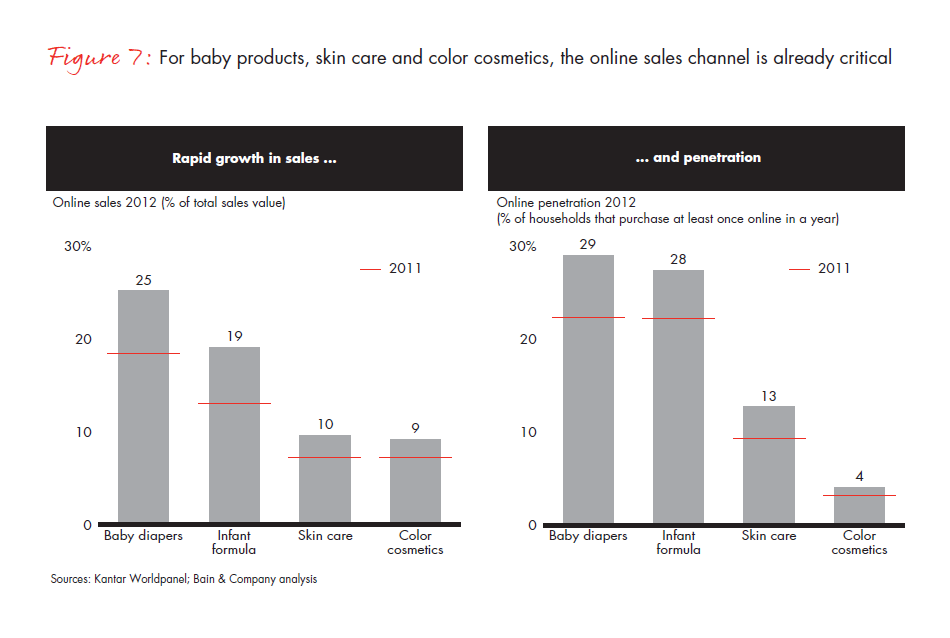
      Online penetration has increased across all 26 categories, and it has reached very high levels in baby products, skin care and color cosmetics. These categories account for approximately 60% of total e-commerce spending. In 2012, online sales represented 25% of total sales value for baby diapers, 19% for infant formula and approximately 10% for skin care and color cosmetics (see Figure 7).

      growing-brands-by-understanding-Chinese-shoppers-vol-2-fig-07_embed

      Typical grocery categories, such as home care and beverage, are still emerging in e-commerce but growing rapidly. For example, the online revenues in the beer category accounted for only approximately 0.16% of the category’s total sales in 2012, but these revenues had a growth rate of 208% from 2011 to 2012.

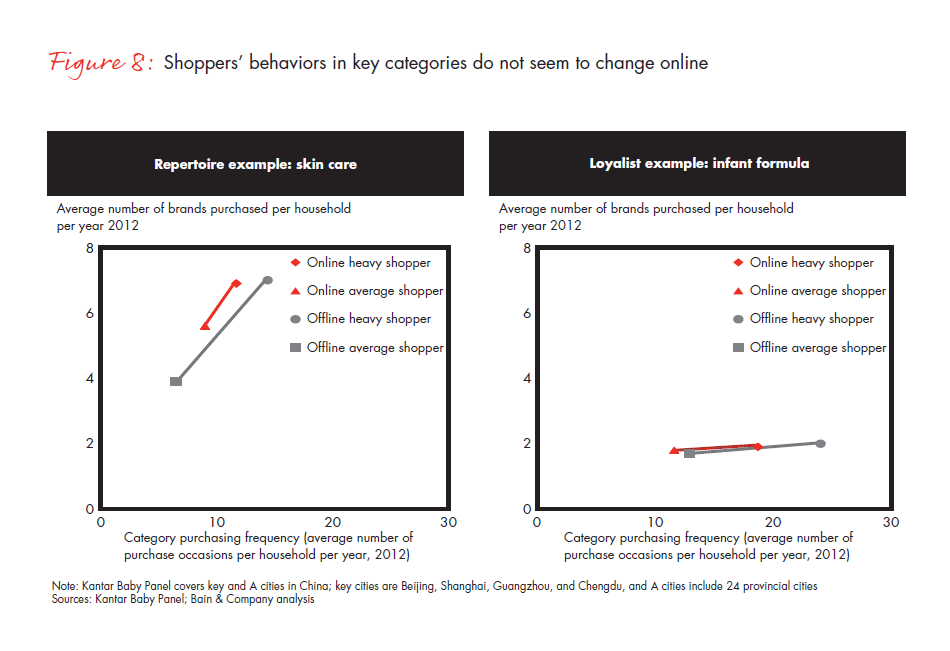
      To conduct an in-depth analysis of shopping behavior online, we selected two categories for which online sales are already significant: skin care and infant formula. In our previous studies, we identified skin care as a category in which shoppers exhibit “repertoire” behavior (the tendency to choose different brands for the same occasion or need) and infant formula as one in which they exhibit “loyalist” behavior (repeatedly buying one brand for a specific need or occasion).

      Our in-depth analysis revealed that shoppers maintained their repertoire or loyalist behavior in these categories in the online channel: shoppers in the skin care category exhibit repertoire behavior online, just as they do offline, and infant formula is a loyalist category in both channels (see Figure 8). In fact, the repertoire nature of the skin care category may be more pronounced online compared with offline, owing to the wider range of choices available and the absence of constraints related to shelf space.

      growing-brands-by-understanding-Chinese-shoppers-vol-2-fig-08_embed

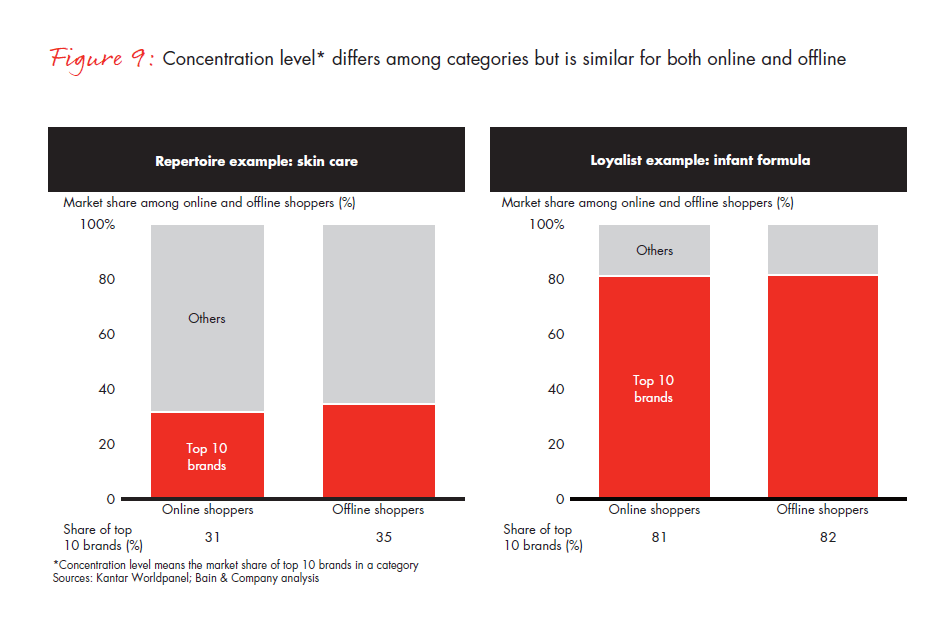
      Consistent with this finding, the online market share concentrated in the top 10 brands is approximately 31% for skin care and approximately 80% for infant formula, which is similar to the levels in stores (see Figure 9). The top 10 brands are similar online and offline in skin care (although in a different order). For infant formula, the top brands differ online because of the recent introduction of online-focused brands such as Karicare, Nutrilon and Friso.

      growing-brands-by-understanding-Chinese-shoppers-vol-2-fig-09_embed

      The state of competition between foreign and Chinese brands

      In the changing environment, Chinese brands have performed better overall than foreign brands in most categories. Increased penetration in all city tiers has been the key driver of local brands’ success.

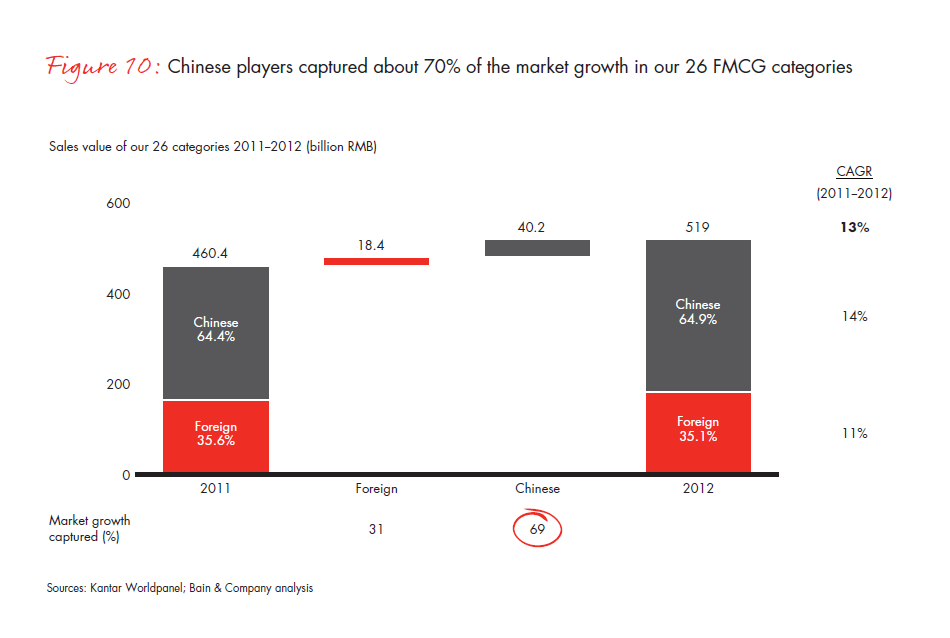
      In 2012, Chinese brands captured approximately 70% of the market growth in our selected 26 categories and increased their market share by 0.5% (see Figure 10).

      growing-brands-by-understanding-Chinese-shoppers-vol-2-fig-10_embed

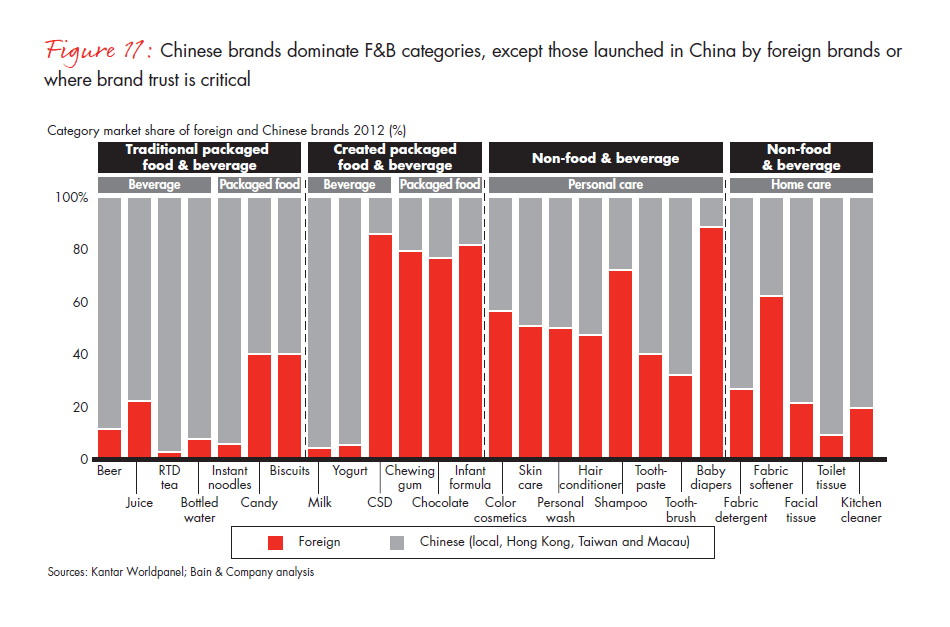
      Chinese brands have dominant share in traditional F&B categories, as would be expected, as well as in home care. They are also very strong in categories that require local agricultural supplies, such as milk and yogurt. Foreign brands dominate categories that they have recently created in China (for example, gum and chocolate), and categories that are health related and for which trust is required (such as infant formula and baby diapers) (see Figure 11).

      growing-brands-by-understanding-Chinese-shoppers-vol-2-fig-11_embed

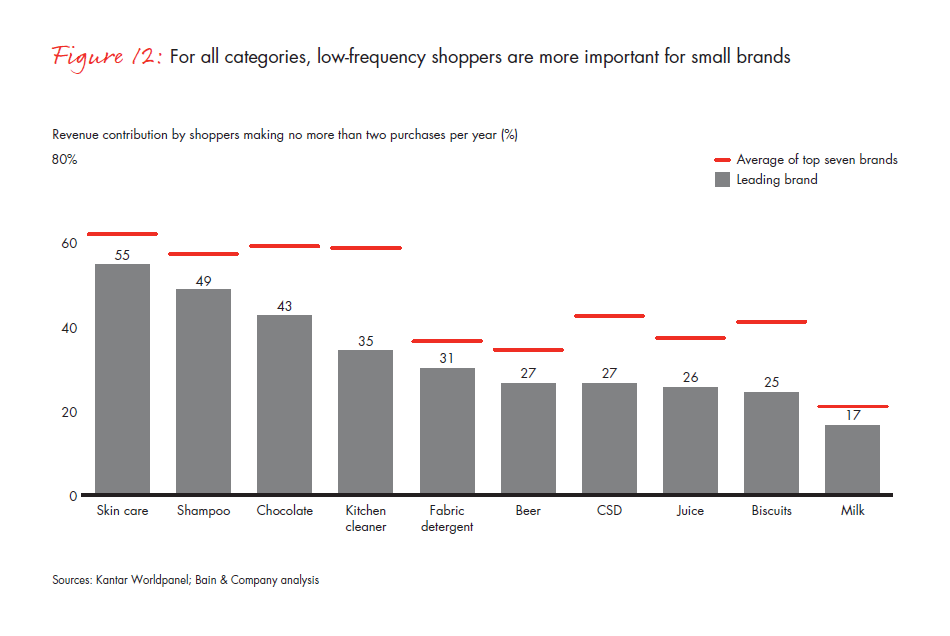
      Local brands as a group gained share in 15 of our 26 categories and lost share in 11, whereas foreign brands experienced corresponding losses and gains (see Figure 12). The gains for local brands (and losses for foreign brands) were especially high in oral care, cosmetics and juice. However, foreign brands as a group gained share in some categories that are dominated by local brands, including bottled water and milk. The 11 categories in which foreign brands gained share include biscuits and fabric softener. Several foreign brands gained share in categories in which local brands gained share overall, although these foreign brands are relatively small.

      growing-brands-by-understanding-chinese-shoppers-fig-12_embed

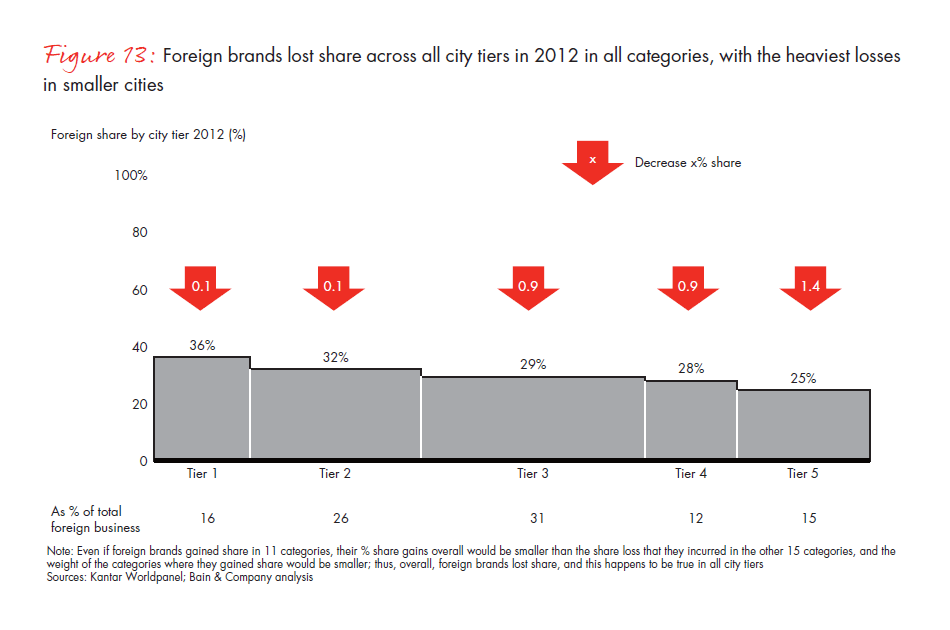
      Foreign brands lost share across all city tiers in 2012 (see Figure 13). At the same time, Chinese brands consistently gained share in all city tiers, especially in tiers 3 through 5. It is important to note that even though foreign brands gained share in 11 categories, their percentage share gain in these categories overall is smaller than the share loss that they incurred in the other 15 categories. The weighting of the categories in which they gained share is also smaller. Consequently, foreign brands lost share overall, and this was the case in all city tiers.

      growing-brands-by-understanding-Chinese-shoppers-vol-2-fig-13_embed

      The share change was mainly driven by penetration gains by Chinese brands. Indeed, Chinese brands increased penetration across all city tiers in 2012. The top five Chinese brands in each category increased penetration in all city tiers, while the top five foreign brands experienced lower penetration rates across city tiers. Foreign brands have traditionally been stronger in top-tier cities, but local brands are now gaining share in these cities by increasing penetration, while also maintaining their strength in lower-tier cities. As we discussed in Volume 1 of our 2013 report, penetration is the key driver of share change, and Chinese brands seem to execute better on that dimension than foreign brands.

      Implications

      The overall slowdown in category growth means that FMCG companies will need to rely increasingly on gains in market share to grow a brand in China. As discussed in Volume 1 of our 2013 report, companies can gain market share by increasing penetration. Our analysis shows that local brands as a group were more successful at increasing penetration in 2012 than foreign brands.

      At the same time, foreign and local FMCG companies must recognize and address the rapidly increasing importance of online sales in many categories. This means marketers should continually enhance their digital capabilities to stay relevant to consumers. For example, driving higher penetration online requires capabilities in website design, fast-changing merchandising and pricing, managing online traffic and conversations, fulfilling orders, building partnerships with key online channel players and managing social media.

      These developments make it critical to drive penetration both online and offline. The approach marketers select should depend on whether a category’s shoppers exhibit stronger repertoire or loyalist behavior:

      • In repertoire categories, marketers often build consideration by investing in social media and traditional national media. For example, Inoherb, a leading local skin care brand online and offline, raised awareness and built its reputation by targeting social-media sites, such as Weibo and WeChat. The company strongly enhanced its brand consideration and penetration by launching a program for online shoppers to test products and share their experiences through blogs and forums. Inoherb has also invested heavily in advertising on CCTV and sponsored popular contests, such as the Dance Congress, a popular televised dance competition that features celebrity participants.
      • In loyalist categories, such as infant formula, marketers leverage social media and consumer word of mouth to achieve brand preference. For example, Friso, the leading infant formula brand online, used consumer word of mouth to become a preferred brand.

      Our findings related to foreign and local FMCG players reinforce a key insight set out in Volume 1 of our 2013 report: The era of growing brands by riding the wave of high growth rates for categories has ended. In most categories, brand growth will primarily depend on gaining market share, which means penetration is paramount.

      As competition intensifies, we expect to see more consolidation in both the retail and FMCG sectors. But this does not mean that multinational companies will absorb local players. In fact, in recent deals between Tesco and China Resources Enterprise, Danone and China Mengniu Dairy, and Pepsi and Master Kong, the local companies have become the dominant partners. Which companies will emerge as market leaders in this wave of consolidation? Inevitably, it will be those that have the clearest understanding of the categories in which they compete and the behavior of Chinese shoppers.

      Acknowledgments

      This report is a joint effort between Bain & Company and Kantar Worldpanel. The authors extend gratitude to all who contributed to this report, in particular Chen Chen, Yifan Yang and Iris Zhou from Bain & Company and Vincent Shao and Lydia Wang from Kantar Worldpanel.

      Bruno Lannes is a partner in Bain’s Shanghai office and leads the firm’s Consumer Products and Retail practices for Greater China. Mike Booker is a partner in Bain’s Singapore office and leads the firm’s Consumer Products and Retail practices for Asia.


      growing-brands-by-understanding-Chinese-shoppers-vol-2-fig-01_full

      growing-brands-by-understanding-Chinese-shoppers-vol-2-fig-02_full

      growing-brands-by-understanding-Chinese-shoppers-vol-2-fig-03_full

      growing-brands-by-understanding-Chinese-shoppers-vol-2-fig-04_full

      growing-brands-by-understanding-Chinese-shoppers-vol-2-fig-05_full

      growing-brands-by-understanding-Chinese-shoppers-vol-2-fig-06_full

      growing-brands-by-understanding-Chinese-shoppers-vol-2-fig-07_full

      growing-brands-by-understanding-Chinese-shoppers-vol-2-fig-08_full

      growing-brands-by-understanding-Chinese-shoppers-vol-2-fig-09_full

      growing-brands-by-understanding-Chinese-shoppers-vol-2-fig-10_full

      growing-brands-by-understanding-Chinese-shoppers-vol-2-fig-11_full

      growing-brands-by-understanding-chinese-shoppers-fig-12_full

      growing-brands-by-understanding-Chinese-shoppers-vol-2-fig-13_full
      Authors
      • Headshot of Bruno Lannes
        Bruno Lannes
        Advisory Partner, Shanghai
      • Headshot of Mike Booker
        Mike Booker
        Advisory Partner, Singapore
      Related Industries
      • Consumer Products
      Consumer Products
      Insurgent Q&A: Chomps Cofounder Rashid Ali

      “Our retail expansion story isn’t about taking share—it’s about growing the category.”

      Read more
      Consumer Products
      Shift to Vertical: David Haines, Group CEO, Flora Food Group

      What does it take to stay connected to your customers when scale and complexity threaten to pull you away? 

      Read more
      Consumer Products
      Consumer Products M&A

      In their quest for profitable growth, more companies are divesting brands or buying insurgents.

      Read more
      Consumer Products
      Exploring AI for Packaging Circularity

      AI is already creating value across the packaging lifecycle, from optimising design and reducing material use to improving sorting and traceability.

      Read more
      Consumer Products
      Insurgent Q&A: GOODLES Cofounder and CEO Jen Zeszut

      “We measure success in tattoos and love letters on our office walls. It’s the best leading indicator for business success.”

      Read more
      First published in octubre 2013
      Tags
      • Consumer Products

      How We've Helped Clients

      A Strategic Separation Enables New Growth for GSK and Haleon

      See more related case studies

      Food Co. jump-starts growth with return to core brands

      See more related case studies

      Focus on core delivers growth for retailer

      See more related case studies

      Want to continue the conversation

      We help global leaders with their organization's most critical issues and opportunities. Together, we create enduring change and results

      Bain Insights. Our perspectives on critical issues global businesses face in today's challenging environment, delivered monthly.

      *I have read and understand Bain’s Privacy Notice.

      Please read and agree to the Privacy Policy.
      Bain & Company
      Contact us Sustainability Accessibility Terms of use Privacy Modern Slavery Act Statement Cookie Policy Sitemap Log In

      © 1996-2026 Bain & Company, Inc.

      Contact Bain

      How can we help you?

      • Business inquiry
      • Career information
      • Press relations
      • Partnership request
      • Speaker request
      See all offices