
Skip to Content
  • Offices

    Offices

    North & Latin America
    • Atlanta
    • Austin
    • Bogota
    • Boston
    • Buenos Aires
    • Chicago
    • Dallas
    • Denver
    • Houston
    • Los Angeles
    • Mexico City
    • Minneapolis
    • Monterrey
    • Montreal
    • New York
    • Rio de Janeiro
    • San Francisco
    • Santiago
    • São Paulo
    • Seattle
    • Silicon Valley
    • Toronto
    • Washington, DC
    Europe & Africa
    • Amsterdam
    • Athens
    • Berlin
    • Brussels
    • Copenhagen
    • Dusseldorf
    • Frankfurt
    • Helsinki
    • Istanbul
    • Johannesburg
    • Kyiv
    • Lisbon
    • London
    • Madrid
    • Milan
    • Munich
    • Oslo
    • Paris
    • Rome
    • Stockholm
    • Vienna
    • Warsaw
    • Zurich
    Middle East
    • Doha
    • Dubai
    • Riyadh
    Asia & Australia
    • Bangkok
    • Beijing
    • Bengaluru
    • Brisbane
    • Ho Chi Minh City
    • Hong Kong
    • Jakarta
    • Kuala Lumpur
    • Manila
    • Melbourne
    • Mumbai
    • New Delhi
    • Perth
    • Seoul
    • Shanghai
    • Singapore
    • Sydney
    • Tokyo
    See all offices
  • Alumni
  • Media Center
  • Subscribe
  • Contact
  • Argentina | Español

    Select your region and language

    Global
    • Global (English)
    North & Latin America
    • Brazil (Português)
    • Argentina (Español)
    • Canada (Français)
    • Chile (Español)
    • Colombia (Español)
    Europe, Middle East, & Africa
    • France (Français)
    • DACH Region (Deutsch)
    • Italy (Italiano)
    • Spain (Español)
    • Greece (Elliniká)
    Asia & Australia
    • China (中文版)
    • Korea (한국어)
    • Japan (日本語)
  • Saved items (0)
    Saved items (0)

    You have no saved items.

    Bookmark content that interests you and it will be saved here for you to read or share later.

    Explore Bain Insights
  • Industries
    Main menu

    Industries

    • Aeroespacial y Defensa
    • Agroindustria
    • Químicos
    • Construcción e Infraestructura
    • Productos de Consumo
    • Servicios Financieros
    • Salud y Ciencias de la Vida
    • Maquinaria y Equipo Industrial
    • Medios y Entretenimiento
      Industries
      Medios y Entretenimiento
      • Media Lab
    • Metales
    • Minería
    • Petróleo y Gas
    • Papel y Empaque
    • Private Equity
      Industries
      Private Equity
      • Due Diligence
      • Exit Planning
      • Firm Strategy & Operations
      • Portfolio Value Creation
    • Sector Público y Social
    • Retail
    • Tecnología
    • Telecomunicaciones
      Industries
      Telecomunicaciones
      • Capital Expenditure
      • Telco Digital Transformation
    • Transporte
    • Viajes y Turismo
    • Servicios Públicos y Energías Renovables
  • Consulting Services
    Main menu

    Consulting Services

    • Customer Experience
    • Sustainability
    • Innovation
    • M&A
    • Operations
    • People & Organization
    • Private Equity
    • Sales & Marketing
    • Strategy
    • AI, Insights, and Solutions
    • Technology
    • Transformation
  • Digital
  • Insights
    Main menu

    Insights

    • Industry Insights
    • Services Insights
    • Bain Books
    • Webinars
    • Bain Futures
    View all Insights
    Featured topics
    • Tariff Response
    • Artificial Intelligence
    • Thriving in Uncertainty
    • Executive Conversations
    • Macro Trends
    • M&A Report
    • Healthcare Private Equity Report
    • Paper & Packaging Report
    • Technology Report
    • CEO's Guide to Sustainability
    • CEO Insights
    • CFO Insights
    • COO Insights
    • CIO Insights
    • CMO Insights
    View all featured topics
  • About
    Main menu

    About

    • What We Do
    • What We Believe
    • Our People & Leadership
    • Client Results
    • Awards & Recognition
    • Global Affiliations
    Further: Our global responsibility
    • Sustainability
    • Social Impact
    • World Economic Forum
    Learn more about Further
  • Carreras
    Main menu

    Carreras

    • Trabaja con Nosotros
      Carreras
      Trabaja con Nosotros
      • Find Your Place
      • Nuestras Áreas de Trabajo
      • Equipos Integrados
      • Estudiantes
      • Internships & Programs
      • Eventos de Reclutamiento
    • La Vida en Bain
      Carreras
      La Vida en Bain
      • Historias Profesionales
      • Nuestra Gente
      • Dónde Trabajamos
      • Apoyando tu Crecimiento
      • Grupos de Afinidad
      • Beneficios
    • Impact Stories
    • Nuestro Proceso
      Carreras
      Nuestro Proceso
      • Qué Esperar
      • Entrevistas
    FIND JOBS
  • Offices
    Main menu

    Offices

    • North & Latin America
      Offices
      North & Latin America
      • Atlanta
      • Austin
      • Bogota
      • Boston
      • Buenos Aires
      • Chicago
      • Dallas
      • Denver
      • Houston
      • Los Angeles
      • Mexico City
      • Minneapolis
      • Monterrey
      • Montreal
      • New York
      • Rio de Janeiro
      • San Francisco
      • Santiago
      • São Paulo
      • Seattle
      • Silicon Valley
      • Toronto
      • Washington, DC
    • Europe & Africa
      Offices
      Europe & Africa
      • Amsterdam
      • Athens
      • Berlin
      • Brussels
      • Copenhagen
      • Dusseldorf
      • Frankfurt
      • Helsinki
      • Istanbul
      • Johannesburg
      • Kyiv
      • Lisbon
      • London
      • Madrid
      • Milan
      • Munich
      • Oslo
      • Paris
      • Rome
      • Stockholm
      • Vienna
      • Warsaw
      • Zurich
    • Middle East
      Offices
      Middle East
      • Doha
      • Dubai
      • Riyadh
    • Asia & Australia
      Offices
      Asia & Australia
      • Bangkok
      • Beijing
      • Bengaluru
      • Brisbane
      • Ho Chi Minh City
      • Hong Kong
      • Jakarta
      • Kuala Lumpur
      • Manila
      • Melbourne
      • Mumbai
      • New Delhi
      • Perth
      • Seoul
      • Shanghai
      • Singapore
      • Sydney
      • Tokyo
    See all offices
  • Alumni
  • Media Center
  • Subscribe
  • Contact
  • Argentina | Español
    Main menu

    Select your region and language

    • Global
      Select your region and language
      Global
      • Global (English)
    • North & Latin America
      Select your region and language
      North & Latin America
      • Brazil (Português)
      • Argentina (Español)
      • Canada (Français)
      • Chile (Español)
      • Colombia (Español)
    • Europe, Middle East, & Africa
      Select your region and language
      Europe, Middle East, & Africa
      • France (Français)
      • DACH Region (Deutsch)
      • Italy (Italiano)
      • Spain (Español)
      • Greece (Elliniká)
    • Asia & Australia
      Select your region and language
      Asia & Australia
      • China (中文版)
      • Korea (한국어)
      • Japan (日本語)
  • Saved items  (0)
    Main menu
    Saved items (0)

    You have no saved items.

    Bookmark content that interests you and it will be saved here for you to read or share later.

    Explore Bain Insights
  • Industries
    • Industries

      • Aeroespacial y Defensa
      • Agroindustria
      • Químicos
      • Construcción e Infraestructura
      • Productos de Consumo
      • Servicios Financieros
      • Salud y Ciencias de la Vida
      • Maquinaria y Equipo Industrial
      • Medios y Entretenimiento
      • Metales
      • Minería
      • Petróleo y Gas
      • Papel y Empaque
      • Private Equity
      • Sector Público y Social
      • Retail
      • Tecnología
      • Telecomunicaciones
      • Transporte
      • Viajes y Turismo
      • Servicios Públicos y Energías Renovables
  • Consulting Services
    • Consulting Services

      • Customer Experience
      • Sustainability
      • Innovation
      • M&A
      • Operations
      • People & Organization
      • Private Equity
      • Sales & Marketing
      • Strategy
      • AI, Insights, and Solutions
      • Technology
      • Transformation
  • Digital
  • Insights
    • Insights

      • Industry Insights
      • Services Insights
      • Bain Books
      • Webinars
      • Bain Futures
      View all Insights
      Featured topics
      • Tariff Response
      • Artificial Intelligence
      • Thriving in Uncertainty
      • Executive Conversations
      • Macro Trends
      • M&A Report
      • Healthcare Private Equity Report
      • Paper & Packaging Report
      • Technology Report
      • CEO's Guide to Sustainability
      • CEO Insights
      • CFO Insights
      • COO Insights
      • CIO Insights
      • CMO Insights
      View all featured topics
  • About
    • About

      • What We Do
      • What We Believe
      • Our People & Leadership
      • Client Results
      • Awards & Recognition
      • Global Affiliations
      Further: Our global responsibility
      • Sustainability
      • Social Impact
      • World Economic Forum
      Learn more about Further
  • Carreras
    Popular Searches
    • Agile
    • Digital
    • Strategy
    Your Previous Searches
      Recently Visited Pages

      Content added to saved items

      Saved items (0)

      Removed from saved items

      Saved items (0)

      The Visionary CEO’s Guide to Sustainability

      Winning in the Energy Transition, One Step at a Time

      Winning in the Energy Transition, One Step at a Time

      Forget 2050. The next 5 to 15 years will make or break the race to net zero.

      By Peter Guarraia, Emily Emmett, Cate Hight, Valeria Sterpos, Brian Murphy, and James Baird

      • min read
      }

      Report

      Winning in the Energy Transition, One Step at a Time
      en
      Executive Summary
      • Surging demand for data center power, rising capital costs, and other factors are intensifying the challenges of the energy transition.
      • Although they remain committed to decarbonization, many companies are focusing on investments with clearer paths to a return.
      • Rather than targeting 2050, emerging energy transition leaders are developing strategies for “203X”—the next 5 to 15 years.
      • To start, they’re evaluating what they know (and don’t) about 203X, identifying their competitive advantages, and assessing their organizational capabilities.

      This article is part of Bain's 2024 CEO Sustainability Guide

      EXPLORE THE REPORT

      As businesses encounter the practical realities of delivering on long-term decarbonization commitments, executives are realizing that success in the energy transition will require a pragmatic, urgent focus on moving from one stepping-stone to the next on the path to net zero.

      It will take change at an unprecedented scale and pace to solve the dual challenge of the energy transition—increasing the world’s energy supply to meet growing demand while curbing carbon emissions. This challenge was daunting even before artificial intelligence began to grow at an explosive rate in late 2022. The resulting surge in demand for data center power, combined with the ongoing effort to “electrify everything,” will put immense pressure on electrical grids in the coming years while complicating decarbonization efforts. At the same time, rising capital costs, geopolitical tensions, supply chain constraints, and regulatory complexity are only exacerbating the challenge.

      As energy transition initiatives accelerated in recent years, many investors and companies anchored their efforts around the distant-future goal of achieving net-zero carbon emissions by 2050, operating on the assumption that immediate steps were needed in order to achieve that end goal. However, as they’ve ramped up decarbonization investments, many companies have found out the hard way that it’s possible to lose a lot of money between now and 2050. Although most remain committed to decarbonization, companies are increasingly focusing on transition-related investments with clearer paths to generating a return.

      Still, it remains unclear what the mix of energy generation sources and emissions abatement technologies will look like in a net-zero end state, with a range of potential combinations (see Figure 1). The pace and roadmap for reaching that end state are even more opaque.

      Figure 1
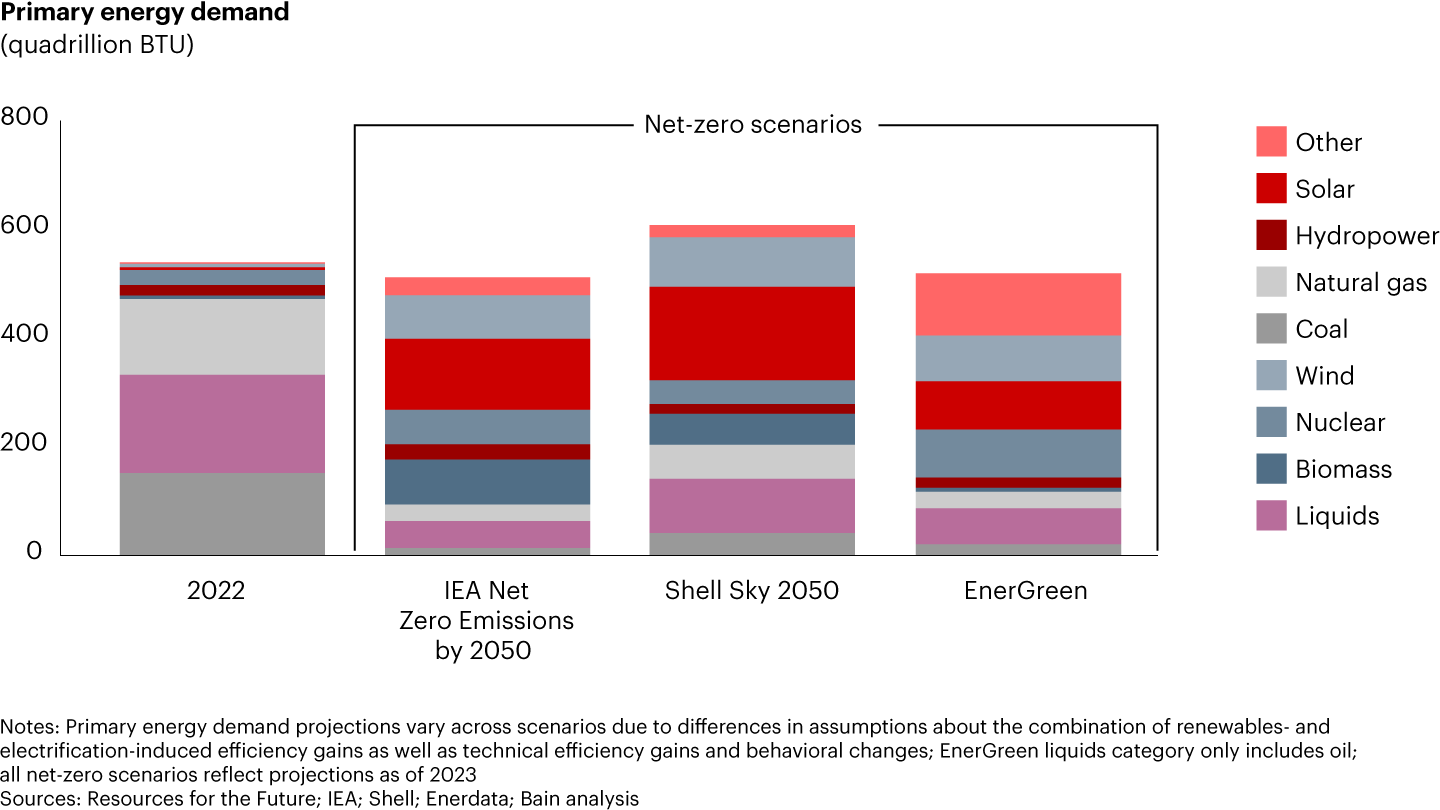
      The mix of energy generation sources to achieve net-zero emissions could vary

      It’s understandable that executives would have reservations about making investment and business decisions based on an uncertain future that’s more than 25 years away, possibly long after their tenures have ended. But a better way is emerging. Some companies are refocusing on strategic and financial fundamentals that explicitly recognize the dual challenge imperative but prioritize practical execution in the near term. Rather than taking a 2050 lens, they’re developing an energy transition strategy geared toward winning in the next 5 to 15 years—a less rigid, but more pressing and actionable, time horizon that we’re calling “203X.”

      These companies are discovering that focusing on 203X is powerful and pragmatic. It inspires them to imagine what’s possible while holding them accountable for what’s practical. It doesn’t downplay the urgency to act; it highlights it. Success in a very different future demands having the conviction to make bold moves now to secure advantages—geographic, technological, competitive—that will be meaningful in 203X and beyond.

      Going forward, navigating the energy transition will require continually forecasting 5 to 15 years ahead, mapping key stepping-stones, and dynamically adjusting strategy in a thoughtful, balanced way. This approach can mitigate uncertainties that paralyze action, highlight potential disruptions to guard against, and empower resilient decision making.

      Developing a stepping-stone strategy

      Even when companies recognize the benefits of a stepping-stone approach to the energy transition, many aren’t sure how to start. Emerging leaders are forming their strategy by focusing on three things.

      1. Get clear on what you know and what you don’t. Anchoring on 203X instead of 2050 helps narrow strategic considerations to a more manageable number and focus the conversation. Leading companies contemplate the industry variables likely to remain relatively steady between now and 203X, as well as the “known unknowns” that they’ll need to develop resilience against. By identifying the external factors that could affect their strategy and grouping these factors by their degree of predictability, organizations can develop a plan that prioritizes investments based on a range of possible outcomes. This can illuminate potential pathways to capitalize—and their trade-offs.

      Executives may be surprised by how much they can project with reasonable confidence within the 203X window, such as the relatively predictable development speed of energy technology (constrained by physics) and the relatively defined speed and scale limitations of infrastructure construction. Essentially, this means companies will be operating within today’s parameters for much of 203X. That should feel freeing for executives’ energy transition decision making. Although they can’t ignore long-term technology trends, some things that might be possible by 2050 are off the table (for now).

      Meanwhile, identifying unknowns, such as the future cost of capital, can make the strategy adaptable to less predictable external disruptions. It also helps avoid irreversible commitments that depend on a worldview that may change.

      As part of a durable and resilient strategy, companies should continuously consider and plan for uncertainties, including extreme-but-plausible scenarios where the range of outcomes can be estimated. History has shown that certain disruptive events will happen, even if executives don’t know when or how significant they’ll be (think weather or wars that hobble energy supply chains). Once the range of plausible scenarios is understood, companies can define and track key signposts that would trigger strategic adjustments.

      Maersk, the global shipping and logistics company, has launched the first vessels in a planned fleet of around 25 container ships that can sail on green methanol in addition to biodiesel and conventional bunker fuel. Maersk has also begun retrofitting existing ships with the same dual-fuel engines. This move gives the company optionality as green methanol technology matures, plus resilience against the pace of its production, while helping fulfill the company’s 2030 carbon-reduction goals on the path to its 2040 net-zero emissions target.

      2. Identify the most relevant ways to win. Succeeding in the energy transition will likely require a portfolio of strategic advantages that, together, will allow companies to navigate even the most dramatic shifts in the landscape. Emerging leaders are evaluating their companies against 12 potential competitive levers and leaning into the ones that are most relevant or important to their business model (see Figure 2).

      Figure 2
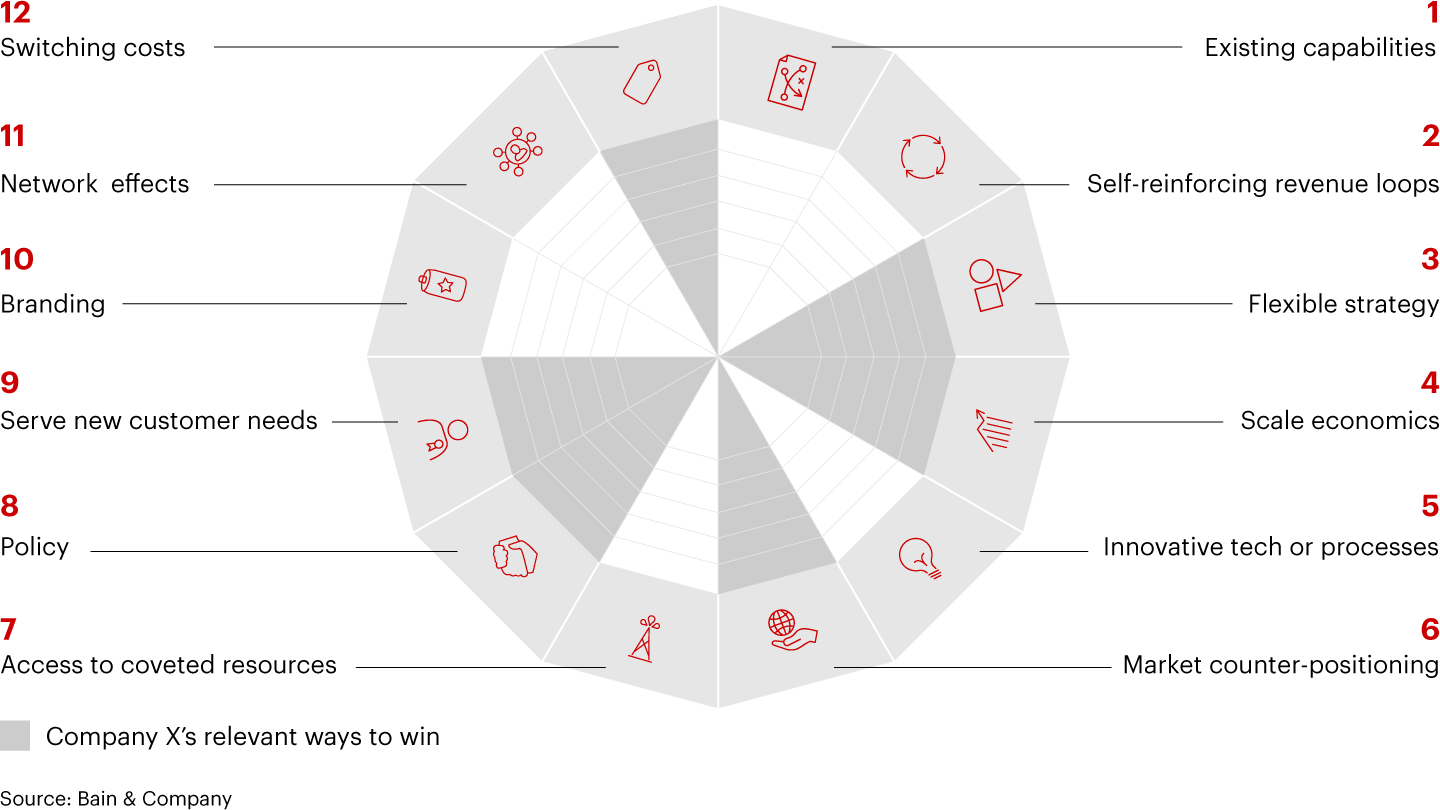
      Succeeding in the energy transition requires identifying your company’s strongest competitive levers among 12 potential ways to win

      These companies are also trying to anticipate which approaches their competitors are pursuing, or are most likely to pursue, and how those choices may affect them.

      A prudent portfolio of competitive levers focuses on a few priority areas while recognizing crucial interdependencies. For example, innovative technology may be relevant, but if the technology requires resources that are constrained, securing coveted access will also be critical to the company’s success.

      3. Assess performance and capabilities across key levers. Leading companies conduct an honest assessment of their current performance across the chosen strategic areas of focus. It’s crucial to be realistic about which capability gaps to close and how. Thoughtful investment of scarce internal resources will be essential, and acquisitions and partnerships may be an important part of succeeding in the energy transition.

      By marrying the short list of competitive levers with an assessment of performance and capabilities in those areas, companies can build a robust execution roadmap (see Figure 3).

      Figure 3
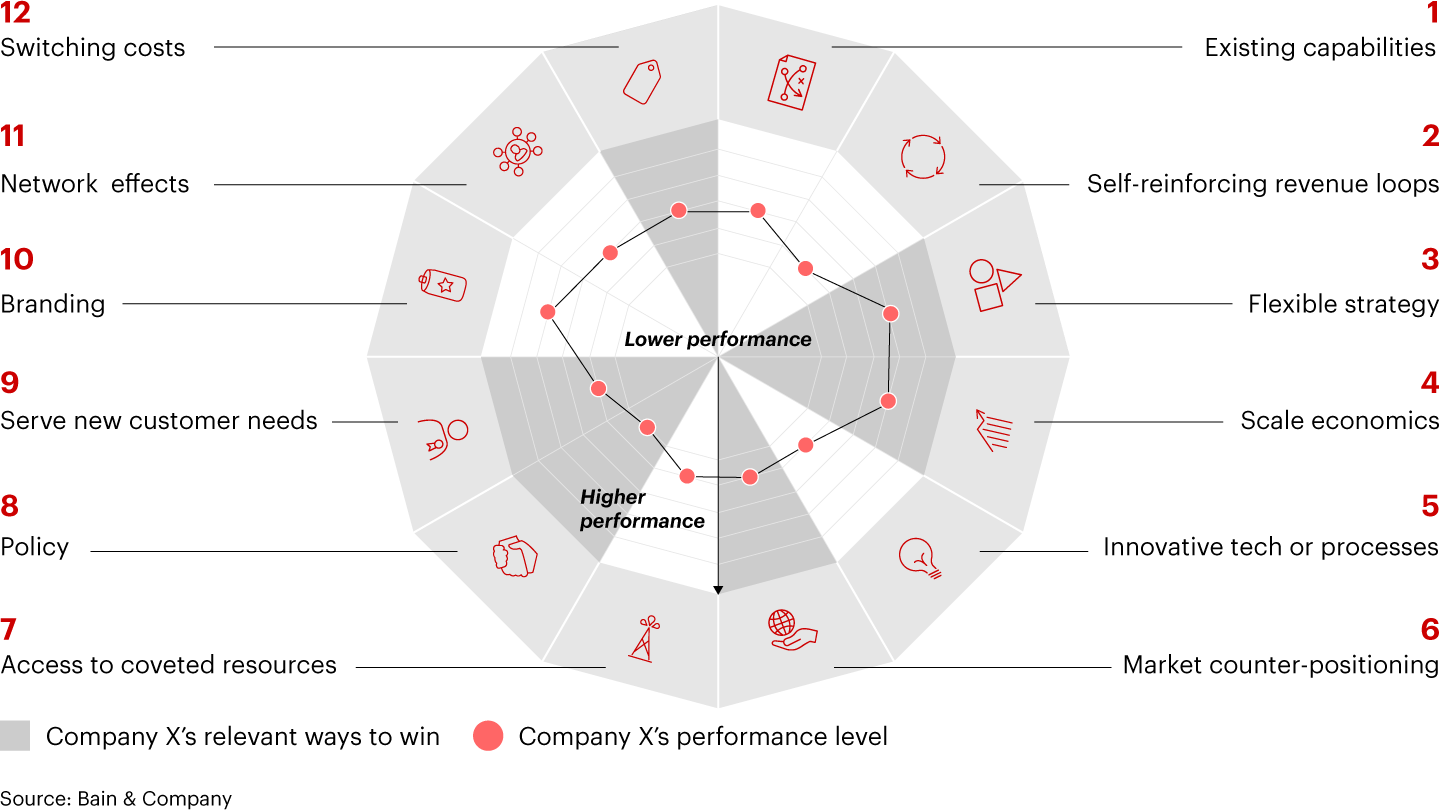
      Assessing performance across potential competitive levers can guide a company’s energy transition roadmap

      With electric vehicle sales rising, a chemical manufacturer looked to capitalize on surging demand for critical battery materials. The company assessed technology and market trends, and it ran potential scenarios to help identify its key strategic choices. For example, what’s the right mix for its portfolio of product types and battery chemistries, as well as resource types and locations? Where should it locate its resource base and processing operations? Which customers and value chain intermediaries should it focus on, and how would that differ from its current customer base?

      The assessment helped the company develop a 10-year growth strategy with clear short-term priorities (e.g., supplier relationships, production expansion, technology roadmaps) and a set of signposts to monitor that would prompt updates to the strategy (e.g., technology advances, government incentives for EVs). Despite the variability in material prices and fluctuations in near-term EV demand, the company’s flexible long-term strategy enables it to adapt nimbly to such headwinds.  

      Or consider how one retail energy firm is transforming itself into a consumer-centric services company. Faced with diminished growth prospects in its core business, customer demand for sustainability, and competition from residential solar and other new energy products, the firm needed to evolve. The leadership team recognized this, but some members were skeptical the company could execute such a pivot, given the organization’s limited success entering new markets in the past.

      To succeed this time, the company developed a long-term growth strategy with a clear roadmap. It conducted detailed market assessments for potential new businesses, defined the uncertainties most likely to affect the company’s strategy, and stress-tested the organization’s capabilities by simulating potential disruption scenarios. The company also ran a series of “micro-battles”: discrete, time-boxed initiatives that rapidly bring strategic choices to action and formulate ways to scale the results. Through this effort, the company established a repeatable, structured model for evaluating and scaling new businesses. Ultimately, the company projects its new strategy could deliver hundreds of millions of dollars in EBITDA in the coming years.

      Seizing the moment

      We’re in an unprecedented moment in history, facing tremendous challenges but also incredible opportunities. Emerging leaders know that success in the energy transition requires preparedness and durability. They’re developing strategies that capitalize on known factors or those they can reasonably constrain, while becoming adaptable to those they cannot. Above all, they’re moving quickly to capture advantages that will define their strategic position in 203X and beyond.

      The authors wish to thank Annabell Marlen Hillenbrand, Ellyn Gray, and Hannah Bingley for their contributions to this article.

      Read the Next Section

      All Together Now: Partnerships Are Key to Circularity

      Read our 2024 CEO Sustainability Guide

      EXPORE THE REPORT DOWNLOAD THE PDF

      More from the report

      • Four Questions for Every CEO

      • What Consumers Want

      • Selling Sustainability in B2B

      • Accelerating Decarbonization

      • AI and Sustainability

      • Voice of the CFO

      • Energy

      • Circularity

      • Food

      Authors
      • Headshot of Peter Guarraia
        Peter Guarraia
        Alumni, Houston
      • Headshot of Emily Emmett
        Emily Emmett
        Partner, Houston
      • Headshot of Cate Hight
        Cate Hight
        Partner, Washington, DC
      • Headshot of Valeria Sterpos
        Valeria Sterpos
        Partner, Milan
      • Headshot of Brian Murphy
        Brian Murphy
        Partner, Perth
      • Headshot of James Baird
        James Baird
        Alumni, Houston
      Related Industries
      • Advanced Manufacturing & Services
      • Agribusiness
      • Chemicals
      • Energy & Natural Resources
      • Oil & Gas
      • Utilities & Renewables
      Related Consulting Services
      • Sustainability
      How We Can Help
      • Climate Change
      CEO's Guide to Sustainability
      Building Resilience in Your Business Strategy: Four Imperatives for Leaders

      Traditional approaches to resilience don’t rise to today’s challenges.

      Read more
      CEO's Guide to Sustainability
      From Sustainability Commitments to Impact: Four Pragmatic Questions for Visionary CEOs

      Amid competing priorities, CEOs and consumers still say sustainability matters. By acting now, companies can set the stage for profitable growth.

      Read more
      Energy & Natural Resources
      Business Breakthrough Barometer 2025

      The annual pulse check from leading businesses on the pace of the net-zero transition.

      Read more
      Climate Change
      Financing Climate Solutions in Brazil

      A study conducted by Bain, in partnership with BNDES, highlights both the challenges and the opportunities to accelerate the climate transition.

      Read more
      Sustainability
      How AI Is Starting to Transform Circular Packaging

      There are 15 AI use cases companies across the value chain can use today to accelerate circularity.

      Read more
      First published in septiembre 2024
      Tags
      • Advanced Manufacturing & Services
      • Agribusiness
      • CEO's Guide to Sustainability
      • Chemicals
      • Climate Change
      • Energy & Natural Resources
      • Oil & Gas
      • Sustainability
      • Utilities & Renewables

      How We've Helped Clients

      An OFS captures post-merger growth synergies

      See more related case studies

      Constructing a best-in-class global procurement organization

      See more related case studies

      Broader market plus tighter sales strategy equals big success for a portfolio company

      See more related case studies

      Want to continue the conversation

      We help global leaders with their organization's most critical issues and opportunities. Together, we create enduring change and results

      Bain Insights. Our perspectives on critical issues global businesses face in today's challenging environment, delivered monthly.

      *I have read and understand Bain’s Privacy Notice.

      Please read and agree to the Privacy Policy.
      Bain & Company
      Contact us Sustainability Accessibility Terms of use Privacy Modern Slavery Act Statement Cookie Policy Sitemap Log In

      © 1996-2026 Bain & Company, Inc.

      Contact Bain

      How can we help you?

      • Business inquiry
      • Career information
      • Press relations
      • Partnership request
      • Speaker request
      See all offices