

Brief

The idea that consumers would add a car to their online shopping carts was once unfathomable.
As online sales have become more routine—and amid a dramatic push to avoid in-person purchasing during the Covid-19 pandemic—there’s a new reality today. Customers expect to not only explore detailed car configurations online, but they want to buy there as well.
However, focusing solely on e-commerce lacks the nuance of what today’s auto buyers prefer. There are, and always will be, a few vital things that web browsing doesn’t offer.
For most, buying a car is a significant investment that requires a high level of trust. Many customers still would not consider a purchase this large without some level of physical interaction. In fact, more than 80% of car buyers consider the test drive to be an important factor in their decision, according to new research by Bain & Company, and about 70% find physical interaction with a local representative increases trust.
As a result, the customer journey is more complicated than a simple “add to cart.” While customers predominantly collect information online and make many decisions before entering a dealership for the first time, a car sale hinges on multiple channels across a longer user journey. The transaction doesn’t happen all at once—our research shows the process is typically eight to ten weeks. A car buyer will visit multiple websites and dealerships before finally making a purchase.
To account for this, and keep up with consumer preferences and behaviour, automakers must invest in a robust omnichannel sales strategy. Combining offline and online channels will create an optimised customer experience and, in turn, a competitive advantage for manufacturers.
All signs point to omnichannel
Today, car buyers have multiple online and offline touchpoints throughout the buying process. Before ever stepping into a dealership or showroom, it’s very likely that the customer has done a significant amount of online research. This includes multiple visits to the car manufacturer’s and dealer’s websites, testing or advice websites, and apps, as well as social media channels.
Still, most drivers prefer test driving a car, speaking to a dealer in person, and closing the deal face to face. For many, their online journey will lead them offline, where the purchase will finally be made.
Bain recently surveyed 1,500 car buyers across three key markets: the US, Germany, and China. These markets offer a variety of global perspectives, with auto industries in different stages of development.
Most notably, car ownership in China has boomed over the past two decades, and the country has nearly twice as many touchpoints in the sales process as Germany. Both the US and German markets are more mature, though the European market is more saturated with dealerships than the US market.
Bain’s survey offers five revealing insights from these three markets about customer expectations across channels:
1. Car sales are a true omnichannel play with new customer expectations, especially ensuring “one price” across all channels
Car buyers average more than 20 online and offline touchpoints while researching cars (see Figure 1). Although they have twice as many online touchpoints as offline, both carry significant weight in a buyer’s decision. As they navigate these channels, more than 50% of survey respondents agree that a consistent price across all channels is important—no matter where the sale happens.
Figure 1
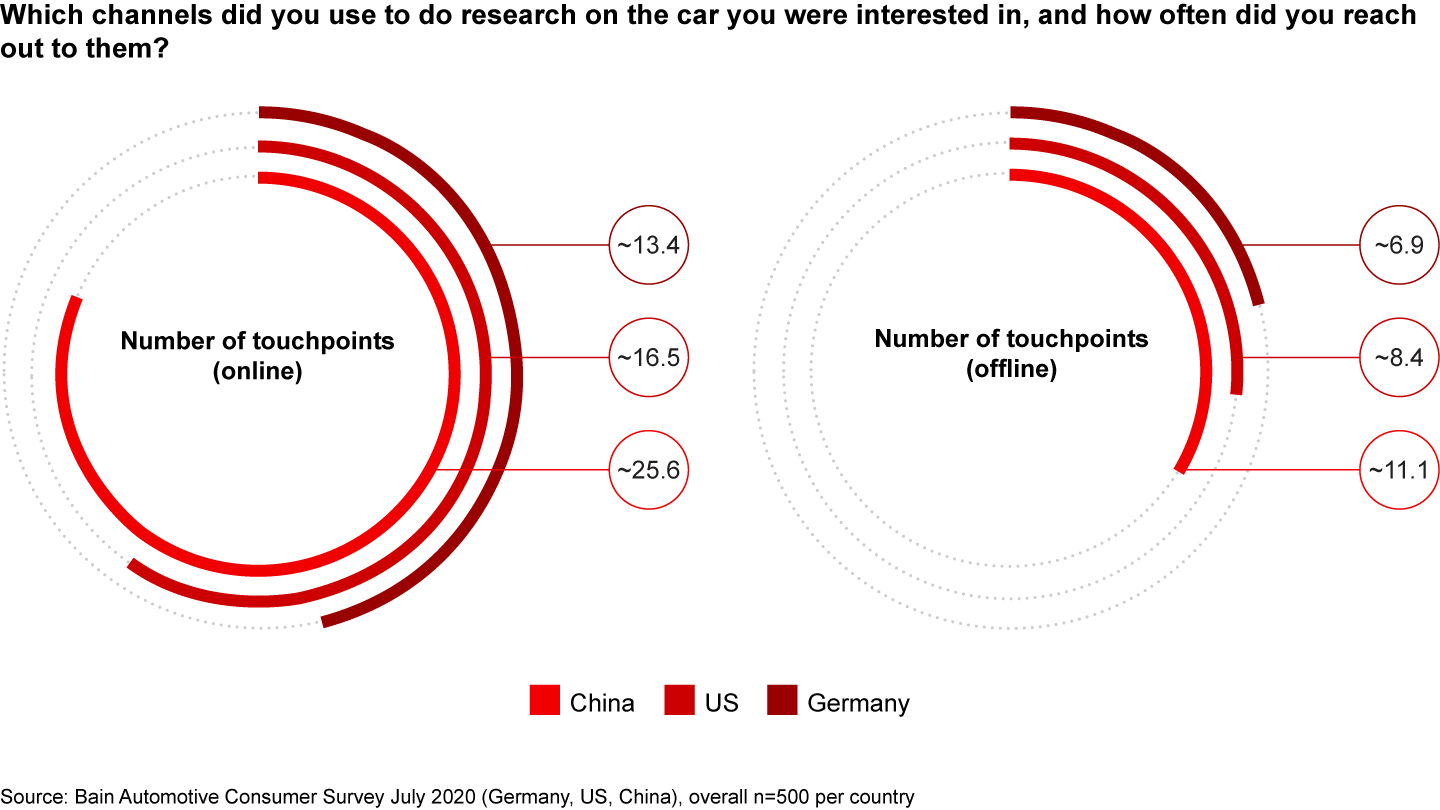

Other key features of the omnichannel experience include users being recognised across all channels, receiving targeted or personalised offers, and being able to opt for longer tutorials or explanations. At the same time, carmakers can focus the user journey for those who have already decided, and they can be present and approachable across several channels, such as video chat, online chat, or telephone.
2. Buying a car online is more acceptable now, especially for younger generations
Once they have decided on a vehicle, almost a third of survey respondents would consider buying the car online. Enthusiasm for buying a car online without physical touchpoints is highest among US customers, outpacing German customers by 16 percentage points and Chinese customers by 11 percentage points.
Among all demographics, customers say they’d buy online if they had the chance to interact with their dealer in person beforehand. Premium car buyers (those considering brands like Mercedes, BMW, Audi, and Lexus) are also slightly more likely to use online channels.
Perhaps not surprisingly, not only are younger consumers generally online more, but they’re also more likely to feel comfortable closing the deal online.
3. Physical dealerships are still important
While there may be far more online touchpoints than in-person interactions, car buyers still consider dealers to be an important source of information when researching a car. In fact, car dealers are a channel that more than 80% of respondents use in their deliberation. That includes both trips to the dealership and the dealer’s website (see Figure 2).
Figure 2
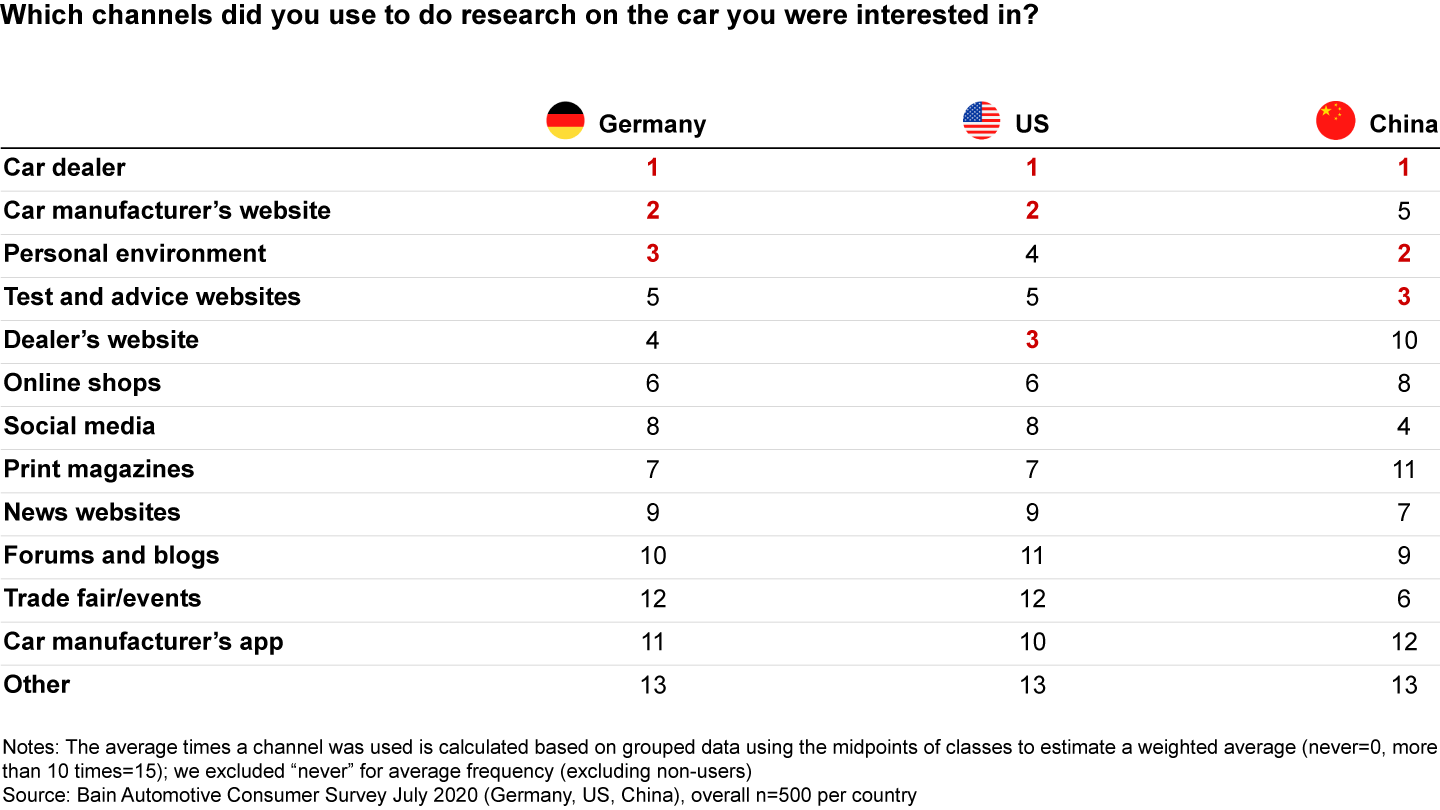

When it comes to brick-and-mortar dealerships, car buyers still make in-person visits—an average of two to three times—for test drives, configuration support, and negotiation.
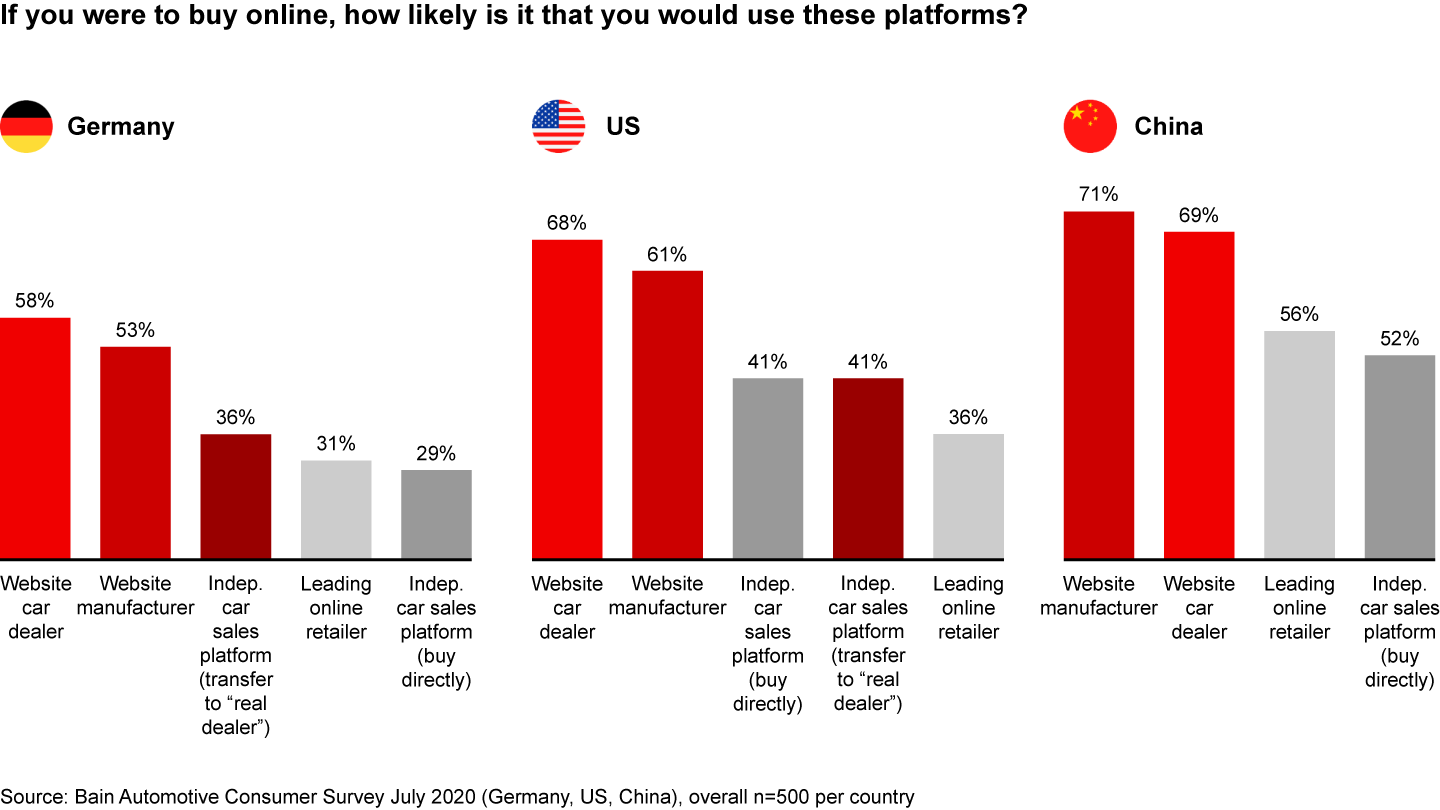
At point of sale, more than 70% of survey respondents value the opportunity to close the deal with a real person—partially because some consumers want to negotiate a discount face to face. When asked where they would buy online if they were forced to, the majority said they would prefer to make the purchase from the dealer’s website. The car manufacturer’s website came second. In the US and Germany, the third preference was an independent car sales platform while online retailers like Amazon came in third for Chinese consumers. Specialised car e-commerce sites like Carvana ranked lowest.
4. Buyers of internal combustion engine cars come to a dealership with their decision already made
Whether it’s personal experience with a family car, the result of months of online research, or just a general preference for a certain look, most customers of internal combustion engine cars have a high affinity to one brand when starting the buyer journey. Many will come to the dealership fully decided on budget, brand, and model, and they aren’t likely to be sold on a different choice.
This means that the role of the traditional car “salesperson” at a brick-and-mortar dealership shifts to become more of an adviser who explains the car’s features, especially technologically advanced features like driver-assistance or infotainment systems. Salespeople support a final configuration that is suited for a customer’s needs, as opposed to selling customers on a vehicle they aren’t considering or haven’t researched.
5. The purchase journey for electric vehicles is quite different, creating new opportunities for carmakers and dealers
Car buyers in the US and Germany are less familiar with battery electric vehicles (BEVs)—three in five say they are unfamiliar with existing car options—so many don’t have a preference for a brand or model. This creates a significant opportunity for carmakers to win new customers for their BEVs. The opportunity is even larger in US and German markets, where twice as many consumers as their Chinese counterparts lack a brand preference among BEVs.
BEV buyers first look for information online. Original equipment manufacturers (OEMs) and dealers that provide the right information in the most convenient and understandable way, paired with attractive and convenient offers, have a good opportunity to attract new buyers.
But the physical dealership still plays a role in the BEV customer journey. Because most buyers are unfamiliar with many details of electric vehicle offerings, they have more questions, such as how to charge the vehicle at home, how long the battery will last, and what the residual value might be. Such buyers find critical value in a well-trained adviser. Also, they value the availability of a local resource should they face an issue with the car.
So, the race is open: While several carmakers try to push BEV sales, relying heavily on online approaches, dealers with physical representation have strong assets they can leverage.
Making the transformation to omnichannel sales
Given these trends, it’s clear that automakers need to make an omnichannel sales model happen now—and do it right to remain competitive. But for manufacturers to successfully transition into true omnichannel sales, they’ll need to take five pivotal steps.
Get serious about omnichannel sales—now
For most consumers, the process of buying a car starts with online research to consider their options and develop preferences. The second half of their journey usually takes them to a physical dealership, where they can test drive the car and close the deal in person. Moving forward, car sales will be a true omnichannel play.
Automakers can benefit from evaluating their omnichannel touchpoints for ease and consistency. Mapping the customer journey from the web to the sale creates the seamless experience that car buyers have come to expect in an age of speed and convenience. Unified IDs across channels help recognise buyers and enable automakers to use knowledge from all channels about cars the buyer already owns, the buyer’s preferences, driving patterns, and the size of their family, so that the buyer can receive the best and most fitting offer. The ability to tailor a sales journey to different customer types and needs is key in reaching broader demographics. Additionally, dynamic options like length of explanations and tutorials and various outreach methods are important to meet the customers’ ever-increasing expectations.
Given the importance of dealers and their dealer-specific websites, car manufacturers need to find creative ways to create a seamless brand and product experience that extends from their own websites to dealers’ websites.
The best omnichannel players provide such high levels of service, not only on their online channels but by bridging the gap to their offline dealerships. They provide consistent service online and offline.
Crack the channel pricing
More than half of consumers across all three geographies said they’d prefer to have a single price across all channels and are more likely to close a deal if they feel the price is consistent online and offline. Additionally, younger generations (ages 18–49) would be more willing to buy their car online if they knew the price was the same as at a dealership (and across all dealerships).
If online and offline prices are not consistent, automakers create intra-channel competition as opposed to a seamless purchase journey.
Achieving consistent prices across different channels is hard, however, in a world with independent dealers. Automakers must either find creative solutions or adapt their distribution and retail setup (where legally feasible) to leverage more franchised agents or retail.
Work with the dealers
Despite the introduction of digital channels and online sales platforms, dealers and their physical representatives remain an integral part of the car-buying process for many consumers—and the most-used channel across all geographies (see Figure 3).
Figure 3

Dealers and the services they provide remain hard to replace. Some surveyed car buyers said that virtual reality–enabled test drives would be useful in addition to a real test drive—not in place of one. Notably, that percentage jumps to nearly half (44%) among prospective Chinese car buyers, who are also more eager to use virtual reality in place of a live test drive. (One potential solution: virtual test drives first, complemented with at-home test drives, with cars delivered directly to customers to try out.) A large share of respondents further says that they would rather buy a car from a person, in person, because they trust people more than an anonymous online platform (and because they want a person to turn to if they have an issue with the car).
One thing is very clear: Dealers and their physical locations remain invaluable and irreplaceable for years to come, even if they may not be required in the endgame. Manufacturers should consider dealers their “boots on the ground,” meeting face to face with customers and cementing purchases. Automakers therefore need to continue to work with dealers on a credible sales model to keep them motivated and on board—even when distribution models change. This becomes a more viable strategy, especially in over-dealered Europe, as the number of dealers decreases over time.
Redesign the manufacturer operating model and pricing competence
Shifting focus to a new sales model or strategy inevitably requires changes in the operating model of carmakers.
Manufacturers must upskill their HQ and national sales companies (or importers) in retail and pricing competence. That includes training in customer service, understanding customers’ needs, and an ability to navigate the last mile of a deal.
They need to rethink internal structures and incentive systems and cater everything to delivery of the perfect omnichannel sales experience. This implies changes in legal contracts as well as IT and data infrastructure.
Use data
Perhaps most importantly, carmakers need to consider new touchpoints and the generated customer data as an opportunity.
The automakers and dealers that best understand their customers will be able to make better offers and communicate those offers in a more targeted way, at the right time. Leveraging all available data points is key. Automakers and dealers thus need to overinvest in data collection and storage—and ensure that they develop the capability to analyse that data and make the best use of it. Changes in a car buyer’s life situation (e.g., the birth of the first baby) or driving patterns (e.g., a move to the suburbs and consequent shift in driving patterns) should be analysed, and implications on recommendations for new cars, aftersales services, or mobility solutions should be drawn.
Omnichannel manufacturers get the competitive edge now while targeting a direct-to-consumer future
All told, the average car shopping window across both online and offline channels is about two months. Manufacturers should be involved in every step of that process, ensuring the most seamless experience from start to finish. Guiding a car buyer from research to purchase will create a competitive advantage for manufacturers that implement true omnichannel sales processes quickly.
Manufacturers should plan for a future with a direct-to-consumer model that’s rooted in online sales. The winners will implement innovative retail models, such as delivering a vehicle to a person’s home for the test drive or allowing a two-week window for returns. In the end, we expect dealers, agents, and service providers to serve in fulfilment roles while OEMs retain full control over vehicle pricing.
First published in octubre 2021