

Retail Holiday Newsletter

Executive Summary
- In Bain’s third Retail Holiday Newsletter of 2024, we preview the world’s biggest shopping event, China’s Singles Day, through the lens of generative AI’s rollout in Chinese retail.
- Amid tough economic conditions, retailers can gain an edge by using AI to deepen customer engagement, turbocharge productivity and cost savings, and find new growth beyond trade.
- China’s prowess in e-commerce and research, coupled with unusually high consumer trust in AI, suggests the new technology could grow rapidly in Chinese retail.
After making its Singles Day debut in 2023, generative artificial intelligence is set to play a bigger role in the 2024 edition of the world’s biggest shopping event, which begins in October and hits a crescendo on November 11.
This time last year, the technology was still at an early stage of deployment. For instance, the Alibaba marketplace Taobao used Singles Day 2023 to formally launch Wenwen, an AI chatbot that offers shoppers personalized guidance (including advice on navigating the annual avalanche of Singles Day discount offers). Wenwen had made its beta testing debut in September, only weeks beforehand.
In 2024, generative AI is much less of a novelty. Our latest research ahead of this year’s Singles Day shows that generative AI retail tools, while used by only 12% of shoppers in the previous six months, are gaining real traction with the young, with 23% penetration among Gen Z shoppers over the same period, for instance. Across all ages, Chinese shoppers are most likely to have used generative AI in the areas of visual search (beginning a search with an image rather than a text-based query), customer service chatbots, and voice-activated search and shopping (see Figure 1).
Figure 1
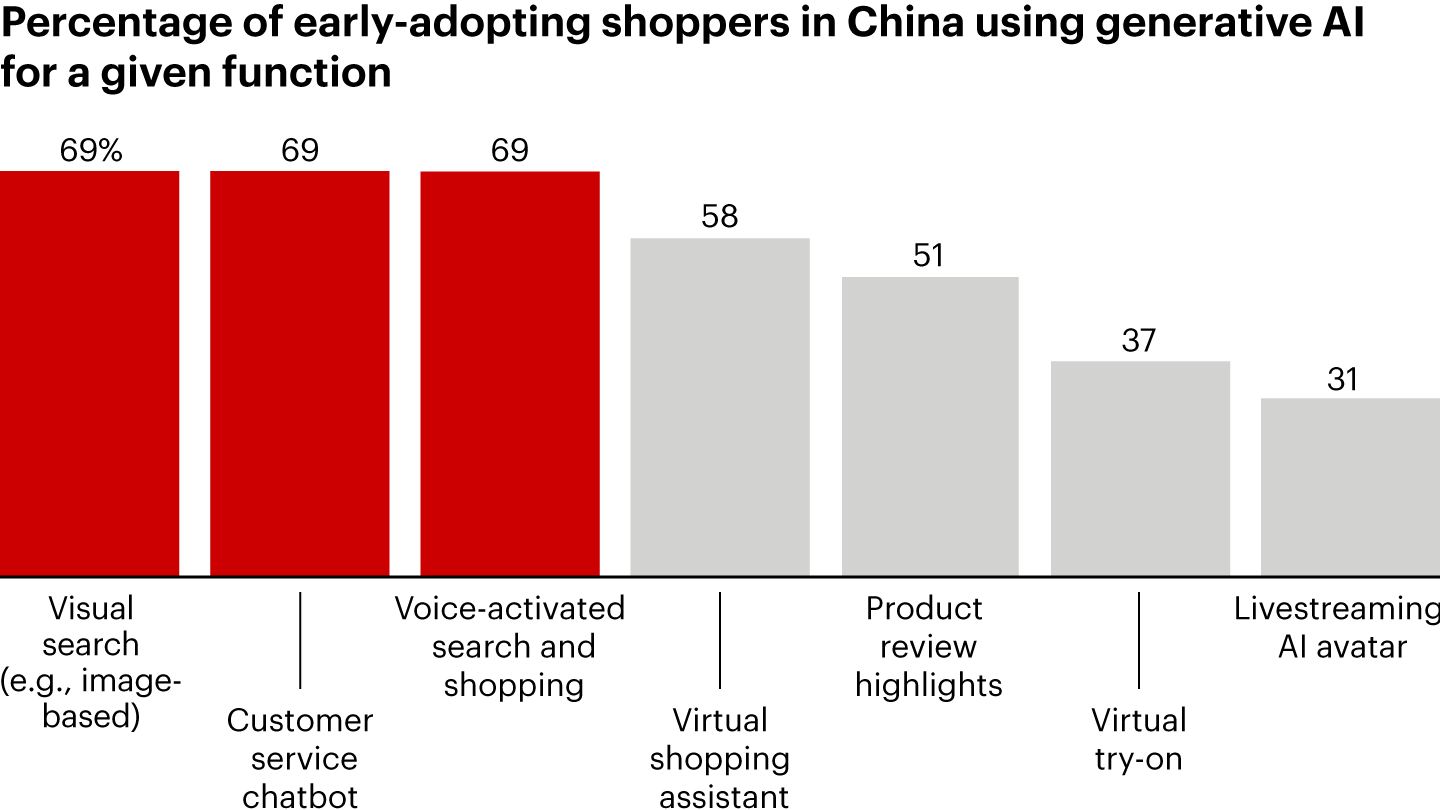

Note: Early-adopting shoppers in China refers to those who said they had used one or more generative AI shopping tools in the last six months
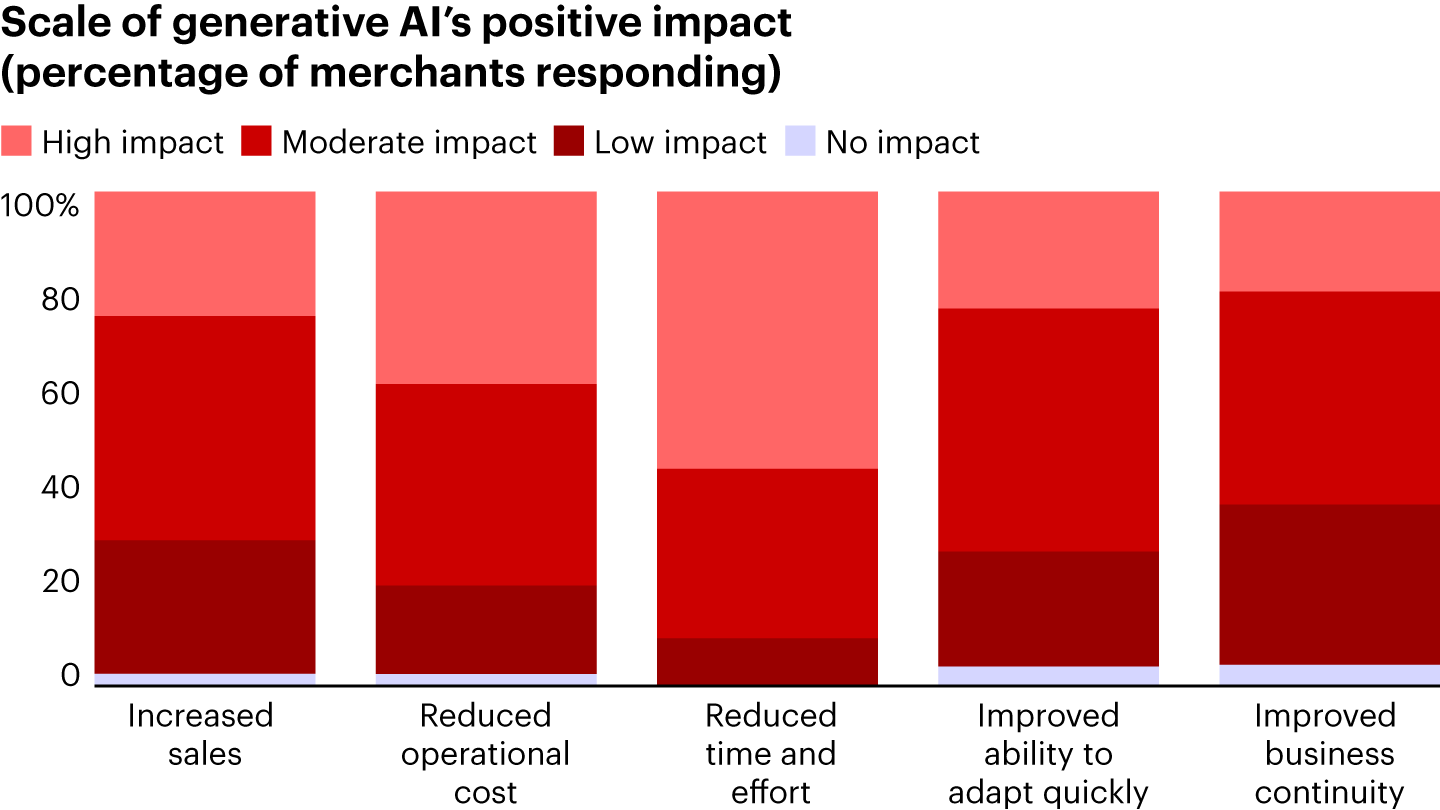
Source: Bain China Consumer Survey, August 2024 (n=3,000)Merchants trading on China’s giant e-commerce platforms are embracing AI even more enthusiastically than Gen Z shoppers: 52% of the merchants we surveyed have used at least one generative AI–enabled tool. Slightly more than half have used generative AI–powered customer service chatbot tools. About one in three have used AI to generate content. Crucially, most early adopting merchants say AI tools have had a moderately to highly positive impact in areas such as sales, operational costs, and workforce productivity (see Figure 2).
Figure 2

As adoption grew after Singles Day 2023, retailers have been busy polishing their generative AI tools and adding new ones. In March, for instance, JD.com launched an enhanced suite of AI-powered solutions designed to cut merchants’ operational costs by as much as 50%. The solutions include an assistant to accelerate online store launches and a realistic avatar generator to enable round-the-clock interactive shopping livestreams. JD.com founder Richard Liu was even turned into a lifelike automated presenter to promote the company’s AI-driven virtual host technology, with care taken to mimic the nuances of his Suqian accent and characteristic “finger twiddles.”
Big players in Chinese retail have also poured money into Chinese AI start-ups. For instance, Alibaba—which, like Amazon, runs a leading cloud computing business—invested about $800 million during its 2024 fiscal year in Moonshot AI, creator of the Kimi chatbot, in addition to nurturing its own large language model, Tongyi Qianwen. Since 2023, about 40% of Alibaba’s deals have focused on AI. While JD.com has been investing smaller sums in the new technology than Alibaba, AI was a theme in 50% of its deals over the same period.
AI’s increasing prominence across Chinese retail offers a timely boost to a maturing industry. The challenges retailers face in China are well known, and are unlikely to be solved immediately by stimulus measures. These challenges include slower retail sales growth, price stagnation, falling property prices, youth unemployment, and fragile consumer confidence. Shoppers increasingly want value, switching to cheaper brands or hunting for the best deals across platforms. Amid such pressure, generative AI gives Chinese retailers access to a powerful new tool for increasing sales and lowering costs.
Yet the stakes reach well beyond Singles Day and the next few quarters. Retailers that master generative AI in three key areas in the coming months—deepening customer engagement, turbocharging productivity and cost savings, and finding new growth beyond trade—could build a lasting strategic advantage. And while the adoption of AI shopping tools is less advanced in China than in the US, executive teams around the world will be watching keenly to see if Chinese retail ends up doing in generative AI what it did in e-commerce—accelerate from a relatively slow start to become a pacesetter for the global industry.
Singles Day 2024: Underlining the need for gen AI
In our last three annual Singles Day previews, we’ve anticipated and tracked the festival’s evolution. Over that three-year period, the era of high-double-digit increases in Singles Day gross merchandise value (GMV)—a headline measure of revenue—came to an end. Economic headwinds began to blow, forcing retailers to focus more on sustainable growth, profitability, and customer loyalty, rather than a win-at-all-costs obsession with the top line.
As expected, that structural slowdown came close to outright stagnation during the 2023 Singles Day promotional period, with GMV increasing by a record-low 2%. However, even that meager growth was inflated by the growth of e-commerce based on newer livestreaming and short video e-commerce channels (which have themselves been maturing). For “traditional” e-commerce, GMV fell 1% year over year (see Figure 3).
Figure 3
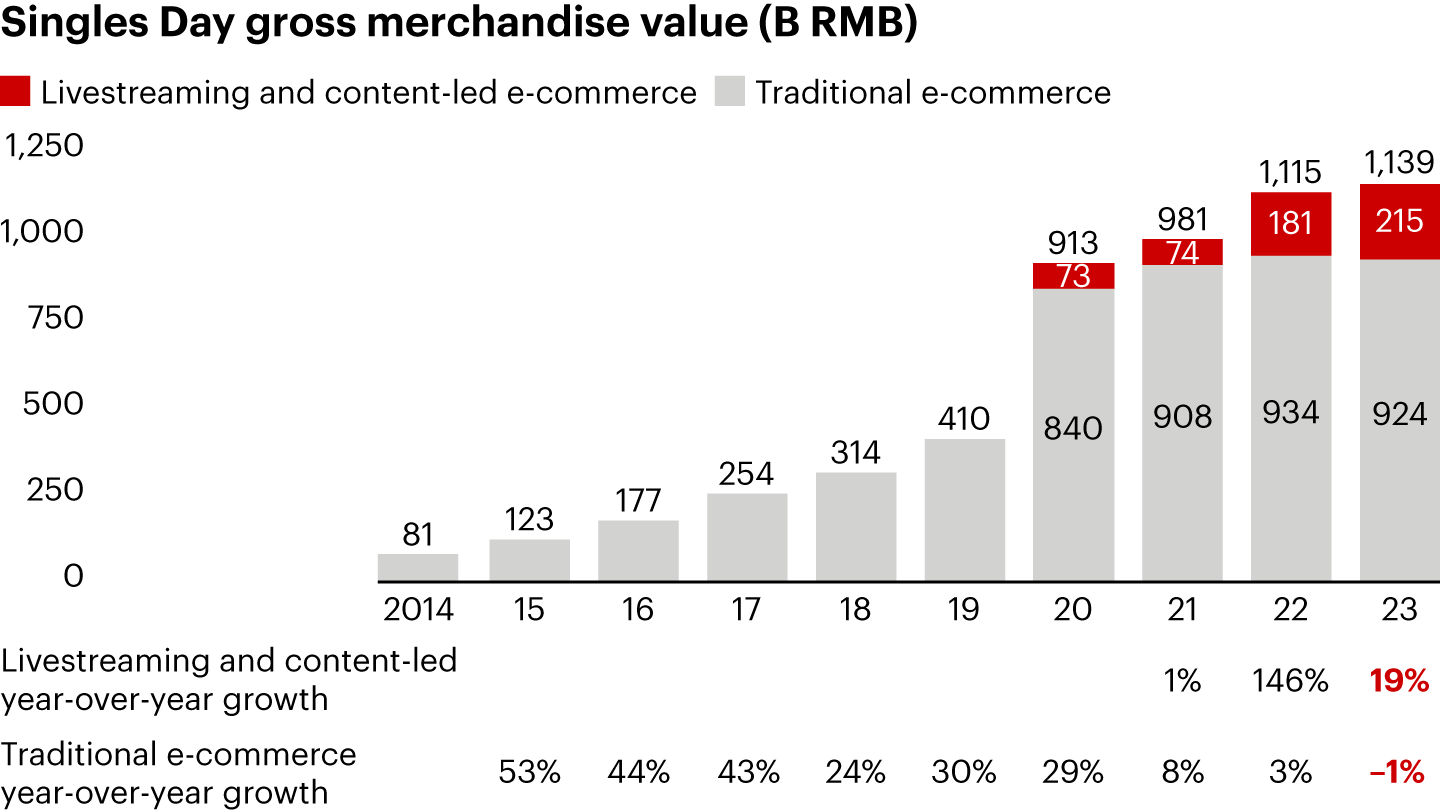

Notes: From 2020, Singles Day GMV covers November 1–11, not just November 11, with growth measured against the same extended period in the preceding year; 2021 traditional e-commerce GMV restated by excluding Diantao GMV to avoid double counting; livestreaming and content-led GMV includes major platforms such as Douyin, Diantao, and Kuaishou, with about 80% of GMV generated from livestreaming activities (or more)
Sources: Syntun; Bain analysisThis year, the Singles Day event, also known as Double 11, could be an even more muted affair. For one thing, the 2024 installment of the 618 festival, a smaller discounting set piece held each June, saw GMV fall 7%, according to retail data provider Syntun, in spite of deals that included discounts of up to 20% on iPhones.
In our Singles Day survey, carried out before a barrage of stimulus measures were announced this fall, 49% of shoppers said they are excited by the event, down from 53% in 2023 and 76% in 2021. About three-quarters of respondents said they’ll spend the same amount or less on Singles Day promotions in 2024, broadly in line with last year’s findings. One common theme we heard was that some shoppers want to limit their Singles Day spending to household products only. Shoppers who plan to maintain their Singles Day spending are also motivated by hope that this year’s deals will be as attractive as 2023’s.
AI-powered imperatives for Singles Day and beyond
Given the lingering economic challenges, it’s vital that Chinese retailers deepen customer engagement to increase sales—or even just maintain sales—during and after the Singles Day promotional period. AI tools can energize that customer retention effort, enabling e-commerce players to hyper-personalize their engagement with consumers and create bespoke shopping experiences for them.
Leading players are already starting to unlock their potential in these areas, and not just with chatbots and personalized livestreaming avatars. Enhancements such as SEO-friendly automation of product pages and AI-written summaries of customer reviews should help to maximize short-term sales and loyalty. Virtual try-on—through services such as Taobao’s AI fitting room—is just one of the other ways that AI is being deployed to retain and nurture customer relationships.
The prospect of further Singles Day GMV stagnation also highlights the need for Chinese retailers to turbocharge productivity and cost savings so they can tell a positive profit story against what’s likely to remain a challenging sales backdrop. For instance, generative AI has massively expanded cost-saving automation possibilities in previously labor-intensive areas of marketing, such as the creation of product photos and descriptions, as well as in merchandising and software engineering.
A big part of the AI productivity opportunity involves helping frontline staff to be more effective through smart automated assistance that gives them more capacity to get things done. That’s one area where US retailers have perhaps made more publicly demonstrable progress than their Chinese counterparts—so far, at least. For instance, Target has rapidly rolled out Store Companion, a generative AI–powered chatbot that assists employees with process-related queries to provide better, faster customer service.
To satisfy these two strategic imperatives—deepening connection with shoppers and turbocharging productivity and cost savings—Chinese retailers need to transition faster from AI experimentation to deployment at scale. That’s a challenge faced by retail executive teams around the world, of course. But it should be worth the investment. Our experience advising on generative AI globally suggests many retailers should be able to increase revenue by 5% to 10% overall through AI-powered personalization initiatives and achieve productivity gains of 30% to 40% in marketing, 25% to 30% in software development, and 5% to 25% from using generative AI to reshape the way employees work on the front line, in warehouses, and at HQ (see the Bain Brief “Retail and Gen AI: Now Scale Those Terrific Early Returns”).
Longer term, Chinese retailers must also consider how they can use AI to find new growth beyond trade as the technology starts to open up adjacencies to traditional buying and selling that could extend their already diverse activities. On the flip side of that imperative, they also need to scan the horizon for early signs of non-retail insurgents using AI to muscle in on key parts of the shopping journey (such as the inspiration and curation stages) and thereby disintermediate today’s e-commerce players. “Innovate to defend” should be the incumbent’s mantra.
Can Chinese retailers narrow the gap with the US?
For all the recent AI activity, Chinese retail still trails the US in funding and adopting the new technology. Consider Amazon. Two-thirds of its deals since the start of 2023 have involved AI, including its $4 billion investment in Anthropic, creator of the Claude family of AI models. US companies attract the vast majority of global generative AI start-up funding, although China’s share has increased to 8% to 9% thanks to big investment rounds at the likes of Moonshot AI.
But while the whole world is trying to catch up with the US on AI, Chinese retailers can draw on formidable local advantages that, at the very least, offset the local complications of operating in China (such as being blocked from ChatGPT’s foundational models, the most popular choice for formal generative AI usage by US businesses). E-commerce penetration rates are very high in China. China’s enviable e-commerce infrastructure—particularly its vast ecosystems of consumers, retailers, and partners—should accelerate adoption as familiarity with AI builds. The country’s AI research and development is also notably strong, leading the world in AI-related patent filings.
What’s more, our Singles Day research shows that working-age early adopters in China are broadly satisfied with their experience of using AI tools in shopping, with strong enthusiasm among millennials (manifested in a Net Promoter ScoreSM of 47) counteracting a more ambivalent response among Generation X. The reasons Chinese shoppers gave for using generative AI tools included speed and efficiency, improved customer experience, and personalization. With AI tools poised to become faster, slicker, and even more tailored, Chinese shoppers should continue to receive valuable benefits from AI as it matures.
Strikingly, our research also shows that Chinese consumers are 45% more trusting of AI than their counterparts in the US, and 40% more than Europeans (see Figure 4). This finding shouldn’t be overinterpreted. For one thing, it’s important to note that Chinese shoppers aren’t immune to the AI privacy concerns that are being raised in many other countries. But that outsized expression of trust certainly suggests that there’s potential for rapid AI growth in Chinese retail.
Figure 4
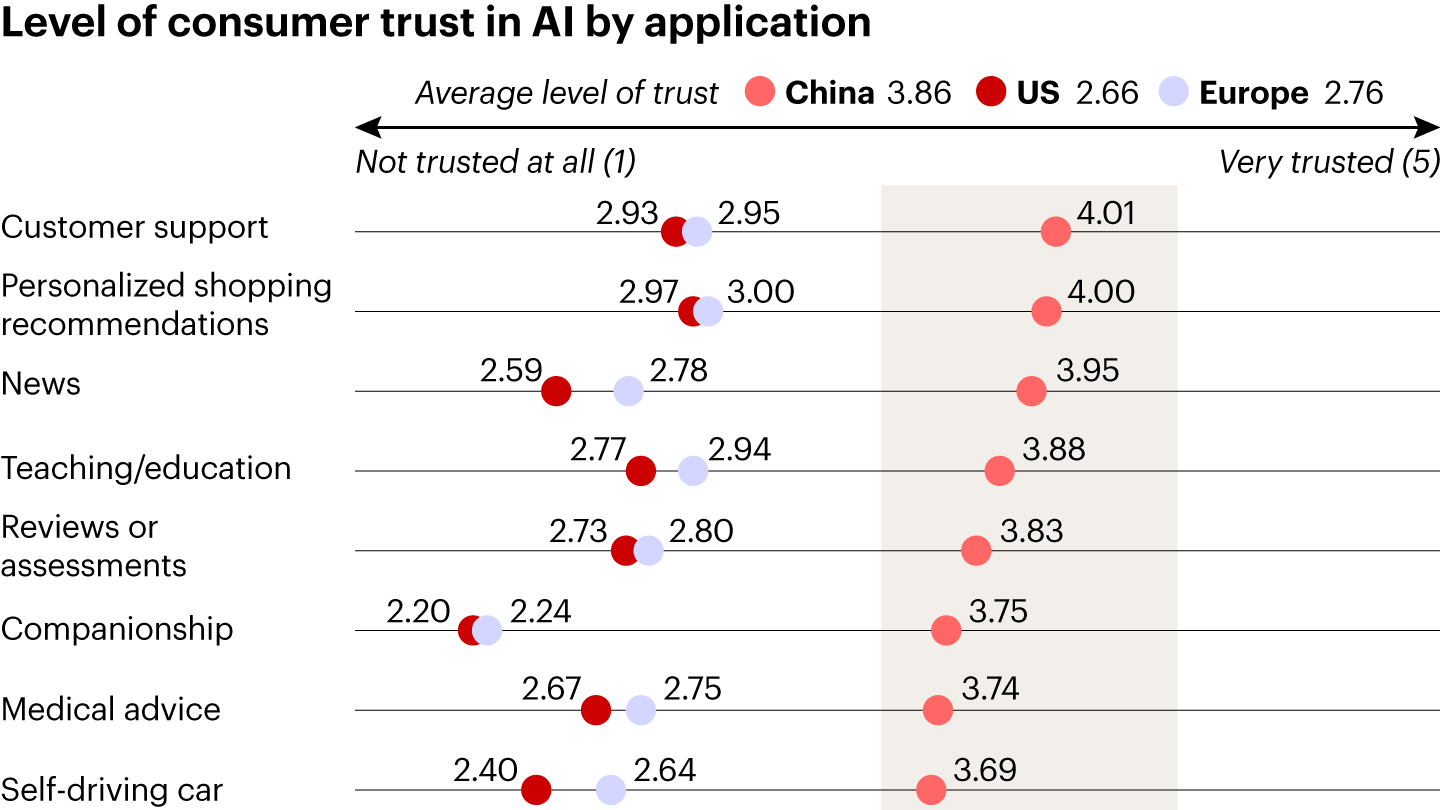

Note: All scores are weighted averages
Sources: Bain China Consumer Survey, August 2024 (n=3,000); Bain US Consumer Survey, April 2024 (n=1,499); Bain Europe Consumer Survey, April 2024 (n=9,000; UK, France, Germany, Italy, Spain, Poland)Questions for executive teams scaling AI
As the retail landscape in China rapidly evolves, generative AI presents a huge opportunity for businesses to enhance their operations, customer experience, and overall competitiveness. As executive teams focus on scaling up adoption to harness the technology’s full potential, we find it can be helpful for them to reflect on questions in six key areas.
- Do we have a roadmap and governance process that balances value, feasibility, risk, technological readiness, foundational vs. process-specific investments, and build vs. buy options?
- When we launch AI products and solutions, does our approach to tech product management, as well as Agile and engineering processes, maximize the chances of success? How can we improve?
- Do we have adequate tech and data foundations in the following areas: common AI and machine learning platforms; shared datasets, models, and components; roadmaps for operational systems that take advantage of AI capabilities; and the handling of unstructured data assets such as images?
- How strong is our approach to risk, responsible AI, and governance? Is it fully integrated into product/engineering processes and automated as much as possible?
- Does our workforce see the empowerment and value that AI can bring? Do employees have self-service tools that teach them to use AI confidently? Do they get to hear about AI adoption successes?
- Will our strategy—coupled with the way we work and the current state of our corporate ecosystem—allow us to take full advantage of AI and its likely development?
After its Singles Day debut last year, generative AI could exert a greater influence on winners and losers during this year’s festival. That would be only a taste of its transformative power, however. As adoption scales up, retailers can gain a lasting competitive edge that extends well beyond the world’s biggest shopping event.
First published in octubre 2024