
Skip to Content
  • Offices

    Offices

    North & Latin America
    • Atlanta
    • Austin
    • Bogota
    • Boston
    • Buenos Aires
    • Chicago
    • Dallas
    • Denver
    • Houston
    • Los Angeles
    • Mexico City
    • Minneapolis
    • Monterrey
    • Montreal
    • New York
    • Rio de Janeiro
    • San Francisco
    • Santiago
    • São Paulo
    • Seattle
    • Silicon Valley
    • Toronto
    • Washington, DC
    Europe & Africa
    • Amsterdam
    • Athens
    • Berlin
    • Brussels
    • Copenhagen
    • Dusseldorf
    • Frankfurt
    • Helsinki
    • Istanbul
    • Johannesburg
    • Kyiv
    • Lisbon
    • London
    • Madrid
    • Milan
    • Munich
    • Oslo
    • Paris
    • Rome
    • Stockholm
    • Vienna
    • Warsaw
    • Zurich
    Middle East
    • Doha
    • Dubai
    • Riyadh
    Asia & Australia
    • Bangkok
    • Beijing
    • Bengaluru
    • Brisbane
    • Ho Chi Minh City
    • Hong Kong
    • Jakarta
    • Kuala Lumpur
    • Manila
    • Melbourne
    • Mumbai
    • New Delhi
    • Perth
    • Seoul
    • Shanghai
    • Singapore
    • Sydney
    • Tokyo
    See all offices
  • Alumni
  • Media Center
  • Subscribe
  • Contact
  • Chile | Español

    Select your region and language

    Global
    • Global (English)
    North & Latin America
    • Brazil (Português)
    • Argentina (Español)
    • Canada (Français)
    • Chile (Español)
    • Colombia (Español)
    Europe, Middle East, & Africa
    • France (Français)
    • DACH Region (Deutsch)
    • Italy (Italiano)
    • Spain (Español)
    • Greece (Elliniká)
    Asia & Australia
    • China (中文版)
    • Korea (한국어)
    • Japan (日本語)
  • Saved items (0)
    Saved items (0)

    You have no saved items.

    Bookmark content that interests you and it will be saved here for you to read or share later.

    Explore Bain Insights
  • Industries
    Main menu

    Industries

    • Aeroespacial y Defensa
    • Agroindustria
    • Químicos
    • Construcción e Infraestructura
    • Productos de Consumo
    • Servicios Financieros
    • Salud y Ciencias de la Vida
    • Maquinaria y Equipo Industrial
    • Medios y Entretenimiento
      Industries
      Medios y Entretenimiento
      • Media Lab
    • Metales
    • Minería
    • Petróleo y Gas
    • Papel y Empaque
    • Private Equity
      Industries
      Private Equity
      • Due Diligence
      • Exit Planning
      • Firm Strategy & Operations
      • Portfolio Value Creation
    • Sector Público y Social
    • Retail
    • Tecnología
    • Telecomunicaciones
      Industries
      Telecomunicaciones
      • Capital Expenditure
      • Telco Digital Transformation
    • Transporte
    • Viajes y Turismo
    • Servicios Públicos y Energías Renovables
  • Consulting Services
    Main menu

    Consulting Services

    • Customer Experience
    • Sustainability
    • Innovation
    • M&A
    • Operations
    • People & Organization
    • Private Equity
    • Sales & Marketing
    • Strategy
    • AI, Insights, and Solutions
    • Technology
    • Transformation
  • Digital
  • Insights
    Main menu

    Insights

    • Industry Insights
    • Services Insights
    • Bain Books
    • Webinars
    • Bain Futures
    View all Insights
    Featured topics
    • Tariff Response
    • Artificial Intelligence
    • Thriving in Uncertainty
    • Executive Conversations
    • Macro Trends
    • M&A Report
    • Healthcare Private Equity Report
    • Paper & Packaging Report
    • Technology Report
    • CEO's Guide to Sustainability
    • CEO Insights
    • CFO Insights
    • COO Insights
    • CIO Insights
    • CMO Insights
    View all featured topics
  • About
    Main menu

    About

    • What We Do
    • What We Believe
    • Our People & Leadership
    • Client Results
    • Awards & Recognition
    • Global Affiliations
    Further: Our global responsibility
    • Sustainability
    • Social Impact
    • World Economic Forum
    Learn more about Further
  • Carreras
    Main menu

    Carreras

    • Trabaja con Nosotros
      Carreras
      Trabaja con Nosotros
      • Find Your Place
      • Nuestras Áreas de Trabajo
      • Equipos Integrados
      • Estudiantes
      • Internships & Programs
      • Eventos de Reclutamiento
    • La Vida en Bain
      Carreras
      La Vida en Bain
      • Blog: Inside Bain
      • Historias Profesionales
      • Nuestra Gente
      • Dónde Trabajamos
      • Apoyando tu Crecimiento
      • Grupos de Afinidad
      • Beneficios
    • Impact Stories
    • Nuestro Proceso
      Carreras
      Nuestro Proceso
      • Qué Esperar
      • Entrevistas
    FIND JOBS
  • Offices
    Main menu

    Offices

    • North & Latin America
      Offices
      North & Latin America
      • Atlanta
      • Austin
      • Bogota
      • Boston
      • Buenos Aires
      • Chicago
      • Dallas
      • Denver
      • Houston
      • Los Angeles
      • Mexico City
      • Minneapolis
      • Monterrey
      • Montreal
      • New York
      • Rio de Janeiro
      • San Francisco
      • Santiago
      • São Paulo
      • Seattle
      • Silicon Valley
      • Toronto
      • Washington, DC
    • Europe & Africa
      Offices
      Europe & Africa
      • Amsterdam
      • Athens
      • Berlin
      • Brussels
      • Copenhagen
      • Dusseldorf
      • Frankfurt
      • Helsinki
      • Istanbul
      • Johannesburg
      • Kyiv
      • Lisbon
      • London
      • Madrid
      • Milan
      • Munich
      • Oslo
      • Paris
      • Rome
      • Stockholm
      • Vienna
      • Warsaw
      • Zurich
    • Middle East
      Offices
      Middle East
      • Doha
      • Dubai
      • Riyadh
    • Asia & Australia
      Offices
      Asia & Australia
      • Bangkok
      • Beijing
      • Bengaluru
      • Brisbane
      • Ho Chi Minh City
      • Hong Kong
      • Jakarta
      • Kuala Lumpur
      • Manila
      • Melbourne
      • Mumbai
      • New Delhi
      • Perth
      • Seoul
      • Shanghai
      • Singapore
      • Sydney
      • Tokyo
    See all offices
  • Alumni
  • Media Center
  • Subscribe
  • Contact
  • Chile | Español
    Main menu

    Select your region and language

    • Global
      Select your region and language
      Global
      • Global (English)
    • North & Latin America
      Select your region and language
      North & Latin America
      • Brazil (Português)
      • Argentina (Español)
      • Canada (Français)
      • Chile (Español)
      • Colombia (Español)
    • Europe, Middle East, & Africa
      Select your region and language
      Europe, Middle East, & Africa
      • France (Français)
      • DACH Region (Deutsch)
      • Italy (Italiano)
      • Spain (Español)
      • Greece (Elliniká)
    • Asia & Australia
      Select your region and language
      Asia & Australia
      • China (中文版)
      • Korea (한국어)
      • Japan (日本語)
  • Saved items  (0)
    Main menu
    Saved items (0)

    You have no saved items.

    Bookmark content that interests you and it will be saved here for you to read or share later.

    Explore Bain Insights
  • Industries
    • Industries

      • Aeroespacial y Defensa
      • Agroindustria
      • Químicos
      • Construcción e Infraestructura
      • Productos de Consumo
      • Servicios Financieros
      • Salud y Ciencias de la Vida
      • Maquinaria y Equipo Industrial
      • Medios y Entretenimiento
      • Metales
      • Minería
      • Petróleo y Gas
      • Papel y Empaque
      • Private Equity
      • Sector Público y Social
      • Retail
      • Tecnología
      • Telecomunicaciones
      • Transporte
      • Viajes y Turismo
      • Servicios Públicos y Energías Renovables
  • Consulting Services
    • Consulting Services

      • Customer Experience
      • Sustainability
      • Innovation
      • M&A
      • Operations
      • People & Organization
      • Private Equity
      • Sales & Marketing
      • Strategy
      • AI, Insights, and Solutions
      • Technology
      • Transformation
  • Digital
  • Insights
    • Insights

      • Industry Insights
      • Services Insights
      • Bain Books
      • Webinars
      • Bain Futures
      View all Insights
      Featured topics
      • Tariff Response
      • Artificial Intelligence
      • Thriving in Uncertainty
      • Executive Conversations
      • Macro Trends
      • M&A Report
      • Healthcare Private Equity Report
      • Paper & Packaging Report
      • Technology Report
      • CEO's Guide to Sustainability
      • CEO Insights
      • CFO Insights
      • COO Insights
      • CIO Insights
      • CMO Insights
      View all featured topics
  • About
    • About

      • What We Do
      • What We Believe
      • Our People & Leadership
      • Client Results
      • Awards & Recognition
      • Global Affiliations
      Further: Our global responsibility
      • Sustainability
      • Social Impact
      • World Economic Forum
      Learn more about Further
  • Carreras
    Popular Searches
    • Agile
    • Digital
    • Strategy
    Your Previous Searches
      Recently Visited Pages

      Content added to saved items

      Saved items (0)

      Removed from saved items

      Saved items (0)

      Brief

      Preparing for the Coming Wave of Consolidation in Midstream Oil and Gas

      Preparing for the Coming Wave of Consolidation in Midstream Oil and Gas

      Falling oil and gas prices have put the brakes on the infrastructure supercycle and highlighted the imperative for M&A among midstream companies in North America.

      By Whit Keuer and Mile Milisavljevic

      • min read
      }

      Brief

      Preparing for the Coming Wave of Consolidation in Midstream Oil and Gas
      en

      The rapid growth of oil and gas production in North America between 2009 and 2014 spurred a cycle of historic demand for midstream infrastructure: the gathering, processing and pipelines that bring crude or natural gas liquids from the wellhead to distribution centers or refineries. For midstream companies, capital expenditure as a percentage of enterprise value increased from 15% between 2004 and 2007 to about 75% for projects forecast between 2013 and 2015. To fund this expansion, the number of master limited partnerships (MLPs) exploded, with market capitalization increasing from $60 billion in 2005 to more than $350 billion by 2014. In this infrastructure supercycle, midstream companies were sprinting to catch up with the shale gas and tight oil supply shocks, and to alleviate bottlenecks.

      However, the dramatic fall in oil and gas prices beginning in the summer of 2014 has changed the trajectory of midstream. Oil and natural gas prices have fallen by half, which leaves North American operators with about $90 billion less to invest in production growth. As a result, upstream operators have cut capital expenditures for 2015 by 15% to 20%, with more cuts likely. Rigs have been idled, and production growth will slow. US crude and condensate production was forecast to grow by 2 million barrels per day, up to a total of more than 10 million barrels per day, between 2014 and 2016, but analysts have cut projections by 60% to 70%, to only 400,000 to 700,000 barrels per day. Midstream companies may continue to invest in their Capex commitments through 2015, and some valuations still reflect investors’ expectations for rapid growth. But 2015 could be the peak, and we expect Capex to slow by 2016. As midstream companies learn more about operators’ Capex cuts and reduce their own capital plans accordingly, equity valuations will likely come under pressure.

      Against this backdrop, we see midstream companies taking immediate action to lower costs and defer Capex. But executives should not lose sight of the opportunity this downturn presents to establish and extend leadership positions. Experience in other sectors in oil and gas, including exploration and production (E&P) and oilfield services, and in other industries shows that downturns create extraordinary threats and opportunities, often reshuffling the leader board. Bain found that during the 2001–2003 downturn, sustained value creators across industries grew their earnings 4.5 times faster than their peers, compared with only 1.5 times faster during the subsequent economic growth cycle through 2008. The gains or losses built during these periods tend to endure, with major gains more likely to be sustained through the next boom cycle. Preparing for bold moves such as game-changing acquisitions and partnerships can help unlock new growth. In midstream, we see three groups of players that should be preparing for this next phase: established leaders, financially strong competitors and followers.

      Mile Milisavljevic, a principal in Bain's Oil and Gas practice, discusses how companies are positioning themselves for long-term growth by taking advantage of the rapid decline in oil and gas prices. 

      The coming wave of M&A

      Four trends signal an approaching wave of consolidation among midstream players.

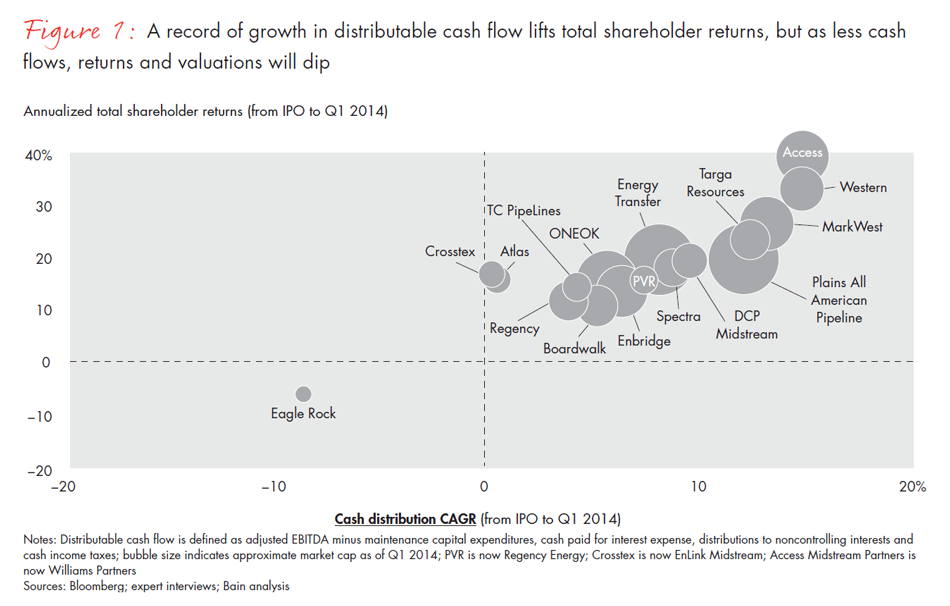
      • Rapid growth slowing for large midstream companies. Strong growth and a proven record for distributable cash flow growth—at least 5% to 7% as a minimum and up to 15% growth for leaders—have buoyed midstream companies’ valuations and returns to shareholders (see Figure 1). But as we come to the end of the rapid growth cycle, investors will adjust their expectations and valuations will decline. With fewer organic growth opportunities, midstream executives will look to M&A.
      • Fragmented industry. The boom of recent years drew new capital into the sector as upstream companies spun off their midstream operations. As a result, the number of midstream companies increased rapidly, with 104 publicly traded MLPs launched between 2005 and 2014, compared with 37 in the prior 10 years (1995 to 2004).
      • Consolidation phase in many basins. As revenue pools decrease, companies create value by building scale and reducing costs. Some of the largest basins, such as Fayetteville and Barnett, have already passed the rapid capital build-out phase and have entered a period in which assets are being managed for cash. Similar trends are unfolding throughout North American shale plays.
      • Financial models coming under pressure. As prices drop, valuations decline, joint ventures dry up and investment distribution models become less sustainable with high investment distribution rights requirements.
      preparing-for-midstream-ma-fig01_embed

      Charting a strategic path

      Business downturns affect every company differently. The moves available to any individual company depend on its strategic position and access to financial capital.

      • Strategic position. Companies must assess their strategic position for each basin in which they work. As operators curtail Capex, midstream companies will feel the heat in their operations in the more expensive areas—those with complex geology, water challenges or other complications. For example, in the Bakken, which is better positioned than most non- OPEC plays at $50 per barrel, all plays in Tier 3 and most in Tier 2 will become unprofitable, leading companies to focus on Tier-1 opportunities.
      • Financial resources. Equity markets are tightening, with valuations falling for gas processors as well as for companies with commodity exposure, declining growth prospects or assets close to the wellhead, which have indirect exposure to crude price fluctuations.

      In each company, executives must consider the most attractive assets and companies to target in order to extend a leadership position or establish new ones. They also must consider how to finance the transaction.

      Established leaders are looking to extend their strong strategic positions, but even they are likely to encounter some challenges in the capital markets as they try to fund transactions. As buyers evaluate which assets to target, they should consider deals that do one of three things to create synergy.

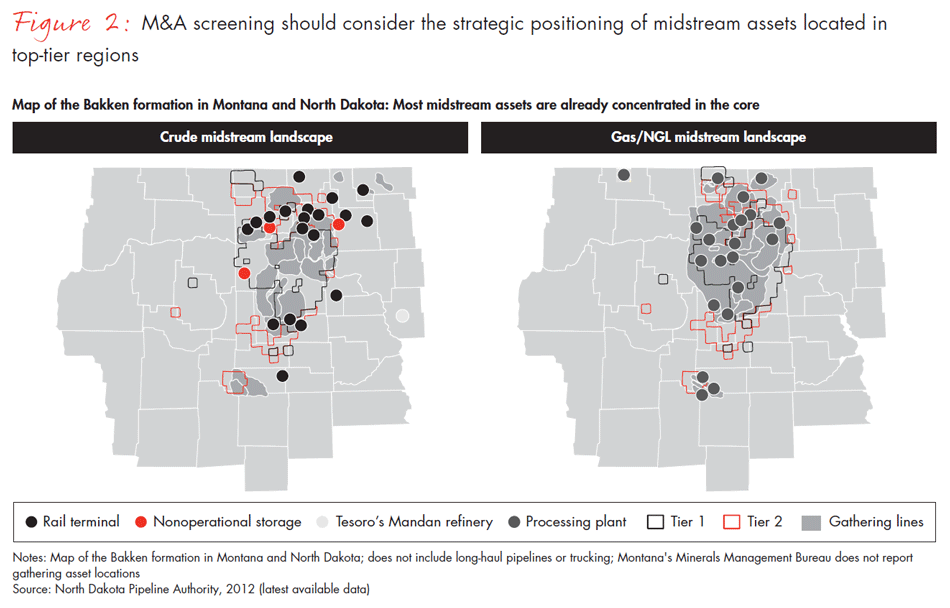
      • Enhance scale or scope in a basin by expanding along the value chain and integrating those acquisitions with their existing asset base to provide a more comprehensive end-to-end solution to their customers, the operators. For example, they might add fractionation and export in a basin where they already have gathering and processing assets. Any analysis will have to consider the current level of midstream infrastructure in top-tier regions of basins (see Figure 2).
      • Create potential for future growth by taking a longer-term view on oil and gas prices, building a portfolio of positions in multiple regions that could be profitable with oil prices in the $60 to $70 range. Many of the larger midstream companies, recognizing the geological uncertainty of shale plays, have established positions in multiple basins.
      • Pursue entity-level transactions—that is, buy whole companies or complete operational units to build scale and reduce total costs per unit of production through lower procurement and lower selling, general and administrative costs.
      preparing-for-midstream-ma-fig02_embed

      Historically, equity has been a key source of M&A financing for midstream companies. As midstream companies grew using MLP models, their investment distribution rights drove outsized profits for their general partners. However, for some of the largest midstream companies, this model is becoming a financial burden. As the portion of income distributed through investment distribution rights grows, the cost of equity increases and the company becomes less competitive. Empirical evidence suggests these distribution rights can account for as much as 2% in the cost of equity difference. Given the importance of equity in M&A financing, several companies have taken steps to improve the cost of equity by either eliminating these rights, resetting their values or restructuring to traditional corporations.

      Financially strong players may not be as competitive in their basins, but they have access to low-cost capital and other capabilities. The strategic imperative for these companies is to establish leadership positions in core areas by taking several actions.

      • Choose and develop basins to aggressively establish leadership positions. Whereas established leaders will integrate vertically, financially strong players should build up horizontal elements of a value chain first, usually by acquiring assets rather than whole companies. They can find opportunities from E&P companies that may be divesting their midstream assets to shore up their balance sheets and cash flow, or by consolidating assets from other midstream companies with smaller positions, targeting those that will help them expand their systems and take advantage of network effects.
      • Protect and grow customers, pricing not only for today, but also for the future. Segmenting customers and identifying their key needs helps companies focus their investments while building trust and confidence during turmoil. In particular, this is an opportunity to extend relationships with E&P customers who face their own uncertainties.
      • Keep the core tight by managing performance and complexity. While companies in this group typically don’t have to enforce financial discipline, they should not waste a good crisis. They should tighten up general and administrative expenses and the supply chain, and ensure that new growth doesn’t add unnecessary costs or complexity.

      Followers, the third group, include companies that need to strengthen their strategic positions by focusing on their core assets and reducing costs.

      • Focus on core assets by shedding fringe positions. This also will shore up the balance sheet and improve cash flow.
      • Reduce costs and complexity—but be sure to preserve key capabilities and avoid cutting too deeply. Opportunities vary, but most companies start by simplifying administrative costs and move out from there to other areas. Carefully managing supply chains can yield savings of more than 10%. Renegotiating supplier contracts can reduce procurement expenses by up to 40%. Inventory management remains crucial: During the boom, speed was essential; now cost is king, so consider reusing and selling back equipment. Manage demand for new equipment and extend the life of current equipment to the extent that safety rules allow. Finally, enforce compliance with purchasing and use guidelines, which are often overlooked during boom times.

      Executives should remember that experience matters a lot in M&A, and those who develop a repeatable model for implementing their deal strategies generally come out winners. This includes developing a deal thesis, a detailed rationale for the agreement and terms of success. Successful dealmakers conduct the proper financial, commercial and technical due diligence and then rigorously manage synergy targets.

      In the current price environment, executives instinctually focus on cost reduction. It may be difficult to draw back from the moment’s price fluctuations and look at the bigger picture. But long-term success in midstream depends now on shifting course and taking advantage of this moment to improve strategic position for the years ahead.

      Whit Keuer and Mile Milisavljevic are principals with Bain in Dallas and Houston, respectively.


      preparing-for-midstream-ma-fig01_full

      preparing-for-midstream-ma-fig02_full
      Authors
      • Headshot of Whit Keuer
        Whit Keuer
        Partner, Dallas
      Related Industries
      • Energy & Natural Resources
      • Oil & Gas
      Oil & Gas
      Steering Through the Oil Storm

      Oil and gas industry executives cannot control prices, but they can take action to be in a better position when the upturn comes.

      Read more
      Mergers and Acquisitions
      Breaking Out of the No-Growth Trap

      Many companies are holding on to their cash or returning it to shareholders when they could be investing in growth.

      Read more
      Oil & Gas
      When a New Organizational Structure Isn’t Enough: How to Truly Live Your Operating Model

      The goal of any organizational redesign is for people to work differently, but that only happens if leaders invest in changing the work itself.

      Read more
      Oil & Gas
      Oil & Gas M&A

      Why some companies are winning by a wider margin.

      Read more
      Oil & Gas
      Fueling the Future: How Business, Finance, and Policy Can Accelerate the Clean Fuels Market

      Why global clean fuel ambitions are outpacing investment, and what leaders must do to unlock capital and scale viable projects.

      Read more
      First published in marzo 2015
      Tags
      • Energy & Natural Resources
      • Oil & Gas

      How We've Helped Clients

      An Oil and Gas Leader Creates a New Clean Energy Business

      See more related case studies

      Centralization boosts performance for an energy giant

      See more related case studies

      Forecast backs a bet on shale services

      See more related case studies

      Want to continue the conversation

      We help global leaders with their organization's most critical issues and opportunities. Together, we create enduring change and results

      Bain Insights. Our perspectives on critical issues global businesses face in today's challenging environment, delivered monthly.

      *I have read and understand Bain’s Privacy Notice.

      Please read and agree to the Privacy Policy.
      Bain & Company
      Contact us Sustainability Accessibility Terms of use Privacy Modern Slavery Act Statement Cookie Policy Sitemap Log In

      © 1996-2026 Bain & Company, Inc.

      Contact Bain

      How can we help you?

      • Business inquiry
      • Career information
      • Press relations
      • Partnership request
      • Speaker request
      See all offices