
Skip to Content
  • Offices

    Offices

    North & Latin America
    • Atlanta
    • Austin
    • Bogota
    • Boston
    • Buenos Aires
    • Chicago
    • Dallas
    • Denver
    • Houston
    • Los Angeles
    • Mexico City
    • Minneapolis
    • Monterrey
    • Montreal
    • New York
    • Rio de Janeiro
    • San Francisco
    • Santiago
    • São Paulo
    • Seattle
    • Silicon Valley
    • Toronto
    • Washington, DC
    Europe & Africa
    • Amsterdam
    • Athens
    • Berlin
    • Brussels
    • Copenhagen
    • Dusseldorf
    • Frankfurt
    • Helsinki
    • Istanbul
    • Johannesburg
    • Kyiv
    • Lisbon
    • London
    • Madrid
    • Milan
    • Munich
    • Oslo
    • Paris
    • Rome
    • Stockholm
    • Vienna
    • Warsaw
    • Zurich
    Middle East
    • Doha
    • Dubai
    • Riyadh
    Asia & Australia
    • Bangkok
    • Beijing
    • Bengaluru
    • Brisbane
    • Ho Chi Minh City
    • Hong Kong
    • Jakarta
    • Kuala Lumpur
    • Manila
    • Melbourne
    • Mumbai
    • New Delhi
    • Perth
    • Seoul
    • Shanghai
    • Singapore
    • Sydney
    • Tokyo
    See all offices
  • Alumni
  • Media Center
  • Subscribe
  • Contact
  • Chile | Español

    Select your region and language

    Global
    • Global (English)
    North & Latin America
    • Brazil (Português)
    • Argentina (Español)
    • Canada (Français)
    • Chile (Español)
    • Colombia (Español)
    Europe, Middle East, & Africa
    • France (Français)
    • DACH Region (Deutsch)
    • Italy (Italiano)
    • Spain (Español)
    • Greece (Elliniká)
    Asia & Australia
    • China (中文版)
    • Korea (한국어)
    • Japan (日本語)
  • Saved items (0)
    Saved items (0)

    You have no saved items.

    Bookmark content that interests you and it will be saved here for you to read or share later.

    Explore Bain Insights
  • Industries
    Main menu

    Industries

    • Aeroespacial y Defensa
    • Agroindustria
    • Químicos
    • Construcción e Infraestructura
    • Productos de Consumo
    • Servicios Financieros
    • Salud y Ciencias de la Vida
    • Maquinaria y Equipo Industrial
    • Medios y Entretenimiento
      Industries
      Medios y Entretenimiento
      • Media Lab
    • Metales
    • Minería
    • Petróleo y Gas
    • Papel y Empaque
    • Private Equity
      Industries
      Private Equity
      • Due Diligence
      • Exit Planning
      • Firm Strategy & Operations
      • Portfolio Value Creation
    • Sector Público y Social
    • Retail
    • Tecnología
    • Telecomunicaciones
      Industries
      Telecomunicaciones
      • Capital Expenditure
      • Telco Digital Transformation
    • Transporte
    • Viajes y Turismo
    • Servicios Públicos y Energías Renovables
  • Consulting Services
    Main menu

    Consulting Services

    • Customer Experience
    • Sustainability
    • Innovation
    • M&A
    • Operations
    • People & Organization
    • Private Equity
    • Sales & Marketing
    • Strategy
    • AI, Insights, and Solutions
    • Technology
    • Transformation
  • Digital
  • Insights
    Main menu

    Insights

    • Industry Insights
    • Services Insights
    • Bain Books
    • Webinars
    • Bain Futures
    View all Insights
    Featured topics
    • Tariff Response
    • Artificial Intelligence
    • Thriving in Uncertainty
    • Executive Conversations
    • Macro Trends
    • M&A Report
    • Healthcare Private Equity Report
    • Paper & Packaging Report
    • Technology Report
    • CEO's Guide to Sustainability
    • CEO Insights
    • CFO Insights
    • COO Insights
    • CIO Insights
    • CMO Insights
    View all featured topics
  • About
    Main menu

    About

    • What We Do
    • What We Believe
    • Our People & Leadership
    • Client Results
    • Awards & Recognition
    • Global Affiliations
    Further: Our global responsibility
    • Sustainability
    • Social Impact
    • World Economic Forum
    Learn more about Further
  • Carreras
    Main menu

    Carreras

    • Trabaja con Nosotros
      Carreras
      Trabaja con Nosotros
      • Find Your Place
      • Nuestras Áreas de Trabajo
      • Equipos Integrados
      • Estudiantes
      • Internships & Programs
      • Eventos de Reclutamiento
    • La Vida en Bain
      Carreras
      La Vida en Bain
      • Historias Profesionales
      • Nuestra Gente
      • Dónde Trabajamos
      • Apoyando tu Crecimiento
      • Grupos de Afinidad
      • Beneficios
    • Impact Stories
    • Nuestro Proceso
      Carreras
      Nuestro Proceso
      • Qué Esperar
      • Entrevistas
    FIND JOBS
  • Offices
    Main menu

    Offices

    • North & Latin America
      Offices
      North & Latin America
      • Atlanta
      • Austin
      • Bogota
      • Boston
      • Buenos Aires
      • Chicago
      • Dallas
      • Denver
      • Houston
      • Los Angeles
      • Mexico City
      • Minneapolis
      • Monterrey
      • Montreal
      • New York
      • Rio de Janeiro
      • San Francisco
      • Santiago
      • São Paulo
      • Seattle
      • Silicon Valley
      • Toronto
      • Washington, DC
    • Europe & Africa
      Offices
      Europe & Africa
      • Amsterdam
      • Athens
      • Berlin
      • Brussels
      • Copenhagen
      • Dusseldorf
      • Frankfurt
      • Helsinki
      • Istanbul
      • Johannesburg
      • Kyiv
      • Lisbon
      • London
      • Madrid
      • Milan
      • Munich
      • Oslo
      • Paris
      • Rome
      • Stockholm
      • Vienna
      • Warsaw
      • Zurich
    • Middle East
      Offices
      Middle East
      • Doha
      • Dubai
      • Riyadh
    • Asia & Australia
      Offices
      Asia & Australia
      • Bangkok
      • Beijing
      • Bengaluru
      • Brisbane
      • Ho Chi Minh City
      • Hong Kong
      • Jakarta
      • Kuala Lumpur
      • Manila
      • Melbourne
      • Mumbai
      • New Delhi
      • Perth
      • Seoul
      • Shanghai
      • Singapore
      • Sydney
      • Tokyo
    See all offices
  • Alumni
  • Media Center
  • Subscribe
  • Contact
  • Chile | Español
    Main menu

    Select your region and language

    • Global
      Select your region and language
      Global
      • Global (English)
    • North & Latin America
      Select your region and language
      North & Latin America
      • Brazil (Português)
      • Argentina (Español)
      • Canada (Français)
      • Chile (Español)
      • Colombia (Español)
    • Europe, Middle East, & Africa
      Select your region and language
      Europe, Middle East, & Africa
      • France (Français)
      • DACH Region (Deutsch)
      • Italy (Italiano)
      • Spain (Español)
      • Greece (Elliniká)
    • Asia & Australia
      Select your region and language
      Asia & Australia
      • China (中文版)
      • Korea (한국어)
      • Japan (日本語)
  • Saved items  (0)
    Main menu
    Saved items (0)

    You have no saved items.

    Bookmark content that interests you and it will be saved here for you to read or share later.

    Explore Bain Insights
  • Industries
    • Industries

      • Aeroespacial y Defensa
      • Agroindustria
      • Químicos
      • Construcción e Infraestructura
      • Productos de Consumo
      • Servicios Financieros
      • Salud y Ciencias de la Vida
      • Maquinaria y Equipo Industrial
      • Medios y Entretenimiento
      • Metales
      • Minería
      • Petróleo y Gas
      • Papel y Empaque
      • Private Equity
      • Sector Público y Social
      • Retail
      • Tecnología
      • Telecomunicaciones
      • Transporte
      • Viajes y Turismo
      • Servicios Públicos y Energías Renovables
  • Consulting Services
    • Consulting Services

      • Customer Experience
      • Sustainability
      • Innovation
      • M&A
      • Operations
      • People & Organization
      • Private Equity
      • Sales & Marketing
      • Strategy
      • AI, Insights, and Solutions
      • Technology
      • Transformation
  • Digital
  • Insights
    • Insights

      • Industry Insights
      • Services Insights
      • Bain Books
      • Webinars
      • Bain Futures
      View all Insights
      Featured topics
      • Tariff Response
      • Artificial Intelligence
      • Thriving in Uncertainty
      • Executive Conversations
      • Macro Trends
      • M&A Report
      • Healthcare Private Equity Report
      • Paper & Packaging Report
      • Technology Report
      • CEO's Guide to Sustainability
      • CEO Insights
      • CFO Insights
      • COO Insights
      • CIO Insights
      • CMO Insights
      View all featured topics
  • About
    • About

      • What We Do
      • What We Believe
      • Our People & Leadership
      • Client Results
      • Awards & Recognition
      • Global Affiliations
      Further: Our global responsibility
      • Sustainability
      • Social Impact
      • World Economic Forum
      Learn more about Further
  • Carreras
    Popular Searches
    • Agile
    • Digital
    • Strategy
    Your Previous Searches
      Recently Visited Pages

      Content added to saved items

      Saved items (0)

      Removed from saved items

      Saved items (0)

      Brief

      The Customer Advocacy Office: FAQs

      The Customer Advocacy Office: FAQs

      Common questions and answers about a Net Promoter System’s central team.

      By Rob Markey

      • min read

      Brief

      The Customer Advocacy Office: FAQs
      en

      Most Net Promoter® companies create some sort of customer advocacy office (CAO) to launch and lead the implementation of their systems. I argued in the previous issue of Loyalty Insights that a CAO is an essential support for the successful execution of Net Promoter. CAO team members play three key roles:

      • They ensure rigor, discipline and consistency in gathering and analyzing customer feedback.
      • They address issues that cut across individual functions and business units.
      • They channel the voice of the customer into the everyday workings of the organization.

      But what does this new team look like, and how does it function? Who should serve on it, and to whom should it report? What follows are the questions about CAOs we encounter most frequently in our work with clients, along with answers reflecting the experience of veteran Net Promoter companies.


      Q. In our company, the business units are responsible for many of the tasks you assign to the CAO. What’s the right distribution of responsibilities between the CAO and the business units?

      Every company has its own operating model, which defines (among other things) the role of the corporate center vis-à-vis the business units. So the precise division of responsibilities depends on that. Like finance, IT and other enterprise-wide functions, the CAO can be a valuable resource for the business units, ensuring consistent methodologies in implementing Net Promoter and helping the businesses take on as much day-to-day responsibility as they can.

      Q. Can’t we just take our existing market research team and add these roles to their responsibilities? We could provide them with another staff member or two.

      In our experience, this approach has rarely been successful. Here’s why: Most market research teams have skill sets suited to only a small subset of the Net Promoter SystemSM (NPS®). That skill set might actually hinder them from doing a good job on the system’s other components. The integration of Net Promoter feedback into the daily work of frontline employees, the creation of closed loops, the need to integrate feedback data with operational data such as customer records—all these require skills not generally associated with the market research function. Even the priorities are likely to be different. For instance, most market research puts a high value on anonymity. With NPS feedback, anonymity is a barrier to success. So if you do take this approach, you will have to find ways to work around these obstacles.

      Q. How many people should serve on the CAO team?

      The answer naturally depends on how large and complex your company is, and on what roles the CAO will be playing. If the organization has more than $1 billion in revenue, and if the CAO takes on the roles described here, the team will often include four or five people plus the leader. Each team member typically has a specific job, such as working with IT to build the necessary technical infrastructure or creating and implementing the request-for-feedback methodology. Whatever their jobs, team members should be skilled, inspiring people, individuals who themselves have a lot of credibility and can bring that to the program.

      Q. To whom should the CAO report?

      CAOs typically report to the chief marketing officer, the chief financial officer or (if there is one) the chief transformation officer. We’ve seen many other variations as well. Success seems to depend less on which function the organization reports to than on meeting certain criteria:

      First, the executive to whom it reports should be no more than one level away from the C-suite. This individual will have to sit down with the executive committee or business-unit presidents and lead dialogs about investment priorities. He or she will have to marshal resources to support the Net Promoter System and so should be familiar with the company’s budgeting and resource allocation processes. Executives overseeing NPS often find they must push back when midlevel colleagues argue (for example) that referrals can’t be measured and so shouldn’t figure in the business case for the system. If they are too far removed from top management, they may not get the support and encouragement they need in these internal debates.

      Second, these executives need passion—passion about the core mission of using NPS to develop a customer-centric culture and drive profitable, sustainable growth. They’ll need to pursue these objectives aggressively. They’ll have to fight for resources as necessary and ensure that people follow through on their commitments. You can’t do all that effectively unless you’re deeply committed to the NPS enterprise. (We’ll address other questions about the individual characteristics of the CAO’s leader in a future article.)

      Third, the reporting relationship should be tailored to conditions in your company, both cultural and political. In some companies the CAO reports to a particular business unit because most of what matters in those companies takes place in that business unit. In other companies it reports to finance, because finance acts as the arbiter of investment decisions and because customer economics need to become more deeply ingrained in the company’s analytic toolkit. At still other companies, locating the CAO within marketing or sales is the right answer. So there is no single “correct” reporting line, just these guidelines. Moreover, the best place for it to report may vary over time as the Net Promoter System matures and the emphasis needs to change.

      Q. I’m worried that the CAO will be seen as just one more bureaucracy. How can we avoid that?

      Successful implementation of the Net Promoter System involves developing, implementing and then practicing a large number of processes, all of them consistent over time and across the entire organization. Well-defined processes ensure the reliability of the feedback and consistent follow-through with customers. They are essential to the adoption of the mindset necessary to change a culture. But any company adopting a set of processes that must be executed in a particular way runs the risk of alienating employees. People may feel that the whole thing is too bureaucratic and too focused on rules and procedures.

      So companies must adapt the system to local conditions in individual functions and business units. Doing so will help people in those units make the processes their own. It will help them feel that the system is central to their own success. The challenge is to strike a balance between consistency and follow-through on the one hand—both of which need to be pushed from the center— and flexibility and adaptation on the other.

      One step toward creating the right balance is to ensure that leaders in different parts of the organization contribute to and help shape the implementation of NPS across the company. Involvement will help them develop an appreciation for which parts of the system need to be consistent and which can be customized. A second step: The CAO itself needs to build its credibility and reputation for success by beginning implementation in the functions or business units that are most influential, that have the strongest leadership and that are most likely to demonstrate success. In effect, early successes create Promoters for the Net Promoter System— people who can help sway their more reluctant or skeptical colleagues.

      A third step toward creating the right balance is to identify the most important risks to success and then design implementation steps to minimize those risks. Risk mitigation is a central element of Bain’s Results Delivery® toolkit. For example, a company might need to acknowledge that certain skills—the ability to conduct follow-up calls, say—aren’t widely shared in the organization. It must then plan for a high degree of coaching and training to help people overcome their fear of making these calls and develop their skills in conducting them successfully. Another key element of Results Delivery is what’s known as a sponsorship spine. The company creates an unbroken chain, from the senior leadership to the front line, consisting of people who understand the intent behind NPS and the mechanisms by which it is implemented—and who have a direct line of communication to the CAO for identifying issues that need to be addressed. A final step toward balance: celebrating successes rather than punishing noncompliance. At least in the early days, a CAO should concentrate on acknowledging and rewarding compliance rather than on penalizing people for noncompliance. Team members can celebrate wins, single out heroes, circulate stories of delighted customers. The CAO’s default approach should always be, “How can we make it easier and more desirable for people to comply with our requests?” It’s always better to provide tools, training and support rather than rules, policies and penalties.

      Q. Isn’t there a risk that people in the business units will abdicate their own responsibility for building customer loyalty?

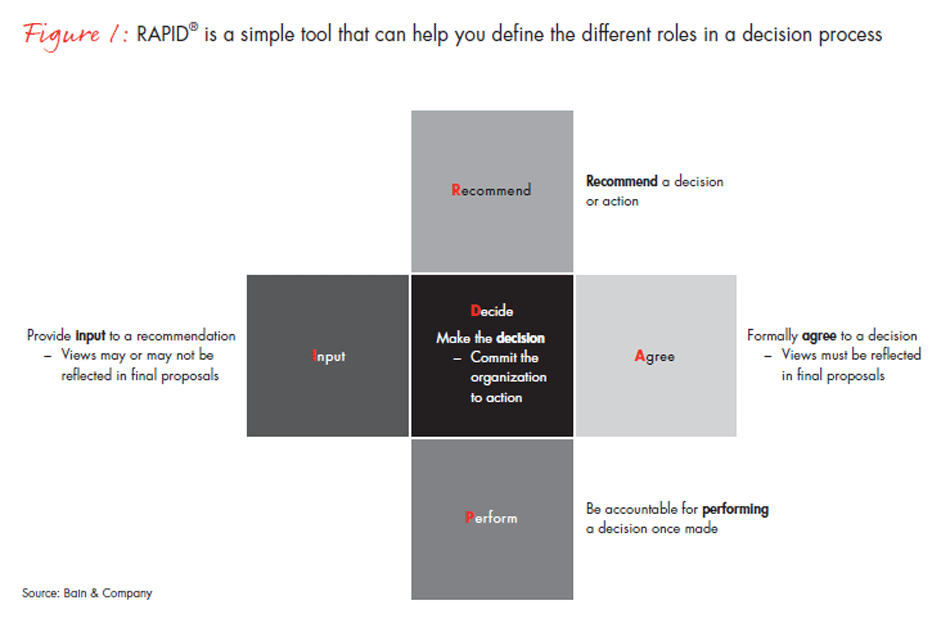
      There is a risk. But it helps greatly to clarify decision roles and accountabilities using a decision-rights tool such as RAPID® (see Figure 1). It must be clear to people in the businesses that the central group is responsible for facilitating their success but is not responsible for the scores generated by Net Promoter feedback or for their business results. Senior leaders may need to underscore that point for business-unit leaders, and business-unit leaders may need to underscore it for their own direct reports: Responsibility for improving customer relationships or maintaining the value of products has not moved. The finance team isn’t responsible for sales growth; instead, it is responsible for facilitating the development of business cases designed to achieve sales growth. The CAO’s role is analogous.

      the-customer-advocacy-office-faq-fig01_embed

      One way to keep the business units involved is through people who act as liaisons with the central CAO. It’s sort of like IT—there’s a central IT organization, but there are people in each business unit who are responsible for interfacing with that organization to make sure the central group’s capabilities match the unit’s needs. Sometimes those people have dotted-line accountability to the business unit and solid-line accountability to IT; sometimes it’s the reverse. The customer advocate position can be structured either way.

      Q. How much authority should the CAO have?

      The CAO is entrusted with launching a new system of management, one that will eventually transform the company. So it must have the authority to develop methods and standards that ensure the program’s success. A highly effective CAO can be a catalyst for change and a facilitator of improved business results throughout the company. It’s the rare organization—particularly among large organizations—that successfully changes its culture using the Net Promoter System without the benefit of a group of skilled people playing these roles.

      Net Promoter® and NPS® are registered trademarks of Bain & Company, Inc., Fred Reichheld and Satmetrix Systems, Inc.

      Net Promoter SystemSM is a trademark of Bain & Company, Inc., Fred Reichheld and Satmetrix Systems, Inc.

      RAPID® and Results Delivery® are registered trademarks of Bain & Company, Inc.


      the-customer-advocacy-office-faq-fig01_full
      Authors
      • Headshot of Rob Markey
        Rob Markey
        Advisory Partner, Boston
      Related Consulting Services
      • Net Promoter System®
      • Sales and Marketing
      How We Can Help
      • Net Promoter®
      Sales and Marketing
      The Value of Prototypes

      Creating a pilot or prototype is an essential part of designing a robust, scalable Net Promoter System.

      Read more
      Net Promoter System®
      The Essential Role of a Customer Advocacy Office

      It takes more than a CEO to create a customer-centric business.

      Read more
      Loyalty
      Net Promoter for People: Give Employees a Voice, Get Their Best

      Net Promoter® for People is about empowering employees to bring energy, enthusiasm and creativity to delight customers.

      Read more
      Loyalty
      After Years of Customer Loyalty Programs in Insurance, What Works, and What’s Next?

      Based on Bain’s 10 years of research, five themes describe the progress and challenges of earning customers’ advocacy in an increasingly digital experience.

      Read more
      Net Promoter System®
      How Banks Can Tease Out the Loyalty Metrics That Matter

      Measuring performance on the key episodes for a bank’s customers allows the bank to focus on investments that will improve loyalty—and its economics.

      Read more
      First published in agosto 2014
      Tags
      • Loyalty
      • Net Promoter System®
      • Net Promoter®
      • Sales and Marketing

      How We've Helped Clients

      Resetting Shared Services to Save $75 Million

      See more related case studies

      Transformation sparks financial leader's turnaround

      See more related case studies

      Turning around a pioneering service for working parents with sick children

      See more related case studies

      Want to continue the conversation

      We help global leaders with their organization's most critical issues and opportunities. Together, we create enduring change and results

      Bain Insights. Our perspectives on critical issues global businesses face in today's challenging environment, delivered monthly.

      *I have read and understand Bain’s Privacy Notice.

      Please read and agree to the Privacy Policy.
      Bain & Company
      Contact us Sustainability Accessibility Terms of use Privacy Modern Slavery Act Statement Cookie Policy Sitemap Log In

      © 1996-2026 Bain & Company, Inc.

      Contact Bain

      How can we help you?

      • Business inquiry
      • Career information
      • Press relations
      • Partnership request
      • Speaker request
      See all offices