
Skip to Content
  • Offices

    Offices

    North & Latin America
    • Atlanta
    • Austin
    • Bogota
    • Boston
    • Buenos Aires
    • Chicago
    • Dallas
    • Denver
    • Houston
    • Los Angeles
    • Mexico City
    • Minneapolis
    • Monterrey
    • Montreal
    • New York
    • Rio de Janeiro
    • San Francisco
    • Santiago
    • São Paulo
    • Seattle
    • Silicon Valley
    • Toronto
    • Washington, DC
    Europe & Africa
    • Amsterdam
    • Athens
    • Berlin
    • Brussels
    • Copenhagen
    • Dusseldorf
    • Frankfurt
    • Helsinki
    • Istanbul
    • Johannesburg
    • Kyiv
    • Lisbon
    • London
    • Madrid
    • Milan
    • Munich
    • Oslo
    • Paris
    • Rome
    • Stockholm
    • Vienna
    • Warsaw
    • Zurich
    Middle East
    • Doha
    • Dubai
    • Riyadh
    Asia & Australia
    • Bangkok
    • Beijing
    • Bengaluru
    • Brisbane
    • Ho Chi Minh City
    • Hong Kong
    • Jakarta
    • Kuala Lumpur
    • Manila
    • Melbourne
    • Mumbai
    • New Delhi
    • Perth
    • Shanghai
    • Singapore
    • Sydney
    • Tokyo
    See all offices
  • Alumni
  • Media Center
  • Subscribe
  • Contact
  • Colombia | Español

    Select your region and language

    Global
    • Global (English)
    North & Latin America
    • Brazil (Português)
    • Argentina (Español)
    • Canada (Français)
    • Chile (Español)
    • Colombia (Español)
    Europe, Middle East, & Africa
    • France (Français)
    • DACH Region (Deutsch)
    • Italy (Italiano)
    • Spain (Español)
    • Greece (Elliniká)
    Asia & Australia
    • China (中文版)
    • Korea (한국어)
    • Japan (日本語)
  • Saved items (0)
    Saved items (0)

    You have no saved items.

    Bookmark content that interests you and it will be saved here for you to read or share later.

    Explore Bain Insights
  • Industries
    Main menu

    Industries

    • Aeroespacial y Defensa
    • Agroindustria
    • Químicos
    • Construcción e Infraestructura
    • Productos de Consumo
    • Servicios Financieros
    • Salud y Ciencias de la Vida
    • Maquinaria y Equipo Industrial
    • Medios y Entretenimiento
      Industries
      Medios y Entretenimiento
      • Media Lab
    • Metales
    • Minería
    • Petróleo y Gas
    • Papel y Empaque
    • Private Equity
      Industries
      Private Equity
      • Due Diligence
      • Exit Planning
      • Firm Strategy & Operations
      • Portfolio Value Creation
    • Sector Público y Social
    • Retail
    • Tecnología
    • Telecomunicaciones
      Industries
      Telecomunicaciones
      • Capital Expenditure
      • Telco Digital Transformation
    • Transporte
    • Viajes y Turismo
    • Servicios Públicos y Energías Renovables
  • Consulting Services
    Main menu

    Consulting Services

    • Customer Experience
    • Sustainability
    • Innovation
    • M&A
    • Operations
    • People & Organization
    • Private Equity
    • Sales & Marketing
    • Strategy
    • AI, Insights, and Solutions
    • Technology
    • Transformation
  • Digital
  • Insights
    Main menu

    Insights

    • Industry Insights
    • Services Insights
    • Bain Books
    • Webinars
    • Bain Futures
    View all Insights
    Featured topics
    • Tariff Response
    • Artificial Intelligence
    • Thriving in Uncertainty
    • Executive Conversations
    • Macro Trends
    • M&A Report
    • Healthcare Private Equity Report
    • Paper & Packaging Report
    • Technology Report
    • CEO's Guide to Sustainability
    • CEO Insights
    • CFO Insights
    • COO Insights
    • CIO Insights
    • CMO Insights
    View all featured topics
  • About
    Main menu

    About

    • What We Do
    • What We Believe
    • Our People & Leadership
    • Client Results
    • Awards & Recognition
    • Global Affiliations
    Further: Our global responsibility
    • Sustainability
    • Social Impact
    • World Economic Forum
    Learn more about Further
  • Carreras
    Main menu

    Carreras

    • Trabaja con Nosotros
      Carreras
      Trabaja con Nosotros
      • Find Your Place
      • Nuestras Áreas de Trabajo
      • Equipos Integrados
      • Estudiantes
      • Internships & Programs
      • Eventos de Reclutamiento
    • La Vida en Bain
      Carreras
      La Vida en Bain
      • Blog: Inside Bain
      • Historias Profesionales
      • Nuestra Gente
      • Dónde Trabajamos
      • Apoyando tu Crecimiento
      • Grupos de Afinidad
      • Beneficios
    • Impact Stories
    • Nuestro Proceso
      Carreras
      Nuestro Proceso
      • Qué Esperar
      • Entrevistas
    FIND JOBS
  • Offices
    Main menu

    Offices

    • North & Latin America
      Offices
      North & Latin America
      • Atlanta
      • Austin
      • Bogota
      • Boston
      • Buenos Aires
      • Chicago
      • Dallas
      • Denver
      • Houston
      • Los Angeles
      • Mexico City
      • Minneapolis
      • Monterrey
      • Montreal
      • New York
      • Rio de Janeiro
      • San Francisco
      • Santiago
      • São Paulo
      • Seattle
      • Silicon Valley
      • Toronto
      • Washington, DC
    • Europe & Africa
      Offices
      Europe & Africa
      • Amsterdam
      • Athens
      • Berlin
      • Brussels
      • Copenhagen
      • Dusseldorf
      • Frankfurt
      • Helsinki
      • Istanbul
      • Johannesburg
      • Kyiv
      • Lisbon
      • London
      • Madrid
      • Milan
      • Munich
      • Oslo
      • Paris
      • Rome
      • Stockholm
      • Vienna
      • Warsaw
      • Zurich
    • Middle East
      Offices
      Middle East
      • Doha
      • Dubai
      • Riyadh
    • Asia & Australia
      Offices
      Asia & Australia
      • Bangkok
      • Beijing
      • Bengaluru
      • Brisbane
      • Ho Chi Minh City
      • Hong Kong
      • Jakarta
      • Kuala Lumpur
      • Manila
      • Melbourne
      • Mumbai
      • New Delhi
      • Perth
      • Shanghai
      • Singapore
      • Sydney
      • Tokyo
    See all offices
  • Alumni
  • Media Center
  • Subscribe
  • Contact
  • Colombia | Español
    Main menu

    Select your region and language

    • Global
      Select your region and language
      Global
      • Global (English)
    • North & Latin America
      Select your region and language
      North & Latin America
      • Brazil (Português)
      • Argentina (Español)
      • Canada (Français)
      • Chile (Español)
      • Colombia (Español)
    • Europe, Middle East, & Africa
      Select your region and language
      Europe, Middle East, & Africa
      • France (Français)
      • DACH Region (Deutsch)
      • Italy (Italiano)
      • Spain (Español)
      • Greece (Elliniká)
    • Asia & Australia
      Select your region and language
      Asia & Australia
      • China (中文版)
      • Korea (한국어)
      • Japan (日本語)
  • Saved items  (0)
    Main menu
    Saved items (0)

    You have no saved items.

    Bookmark content that interests you and it will be saved here for you to read or share later.

    Explore Bain Insights
  • Industries
    • Industries

      • Aeroespacial y Defensa
      • Agroindustria
      • Químicos
      • Construcción e Infraestructura
      • Productos de Consumo
      • Servicios Financieros
      • Salud y Ciencias de la Vida
      • Maquinaria y Equipo Industrial
      • Medios y Entretenimiento
      • Metales
      • Minería
      • Petróleo y Gas
      • Papel y Empaque
      • Private Equity
      • Sector Público y Social
      • Retail
      • Tecnología
      • Telecomunicaciones
      • Transporte
      • Viajes y Turismo
      • Servicios Públicos y Energías Renovables
  • Consulting Services
    • Consulting Services

      • Customer Experience
      • Sustainability
      • Innovation
      • M&A
      • Operations
      • People & Organization
      • Private Equity
      • Sales & Marketing
      • Strategy
      • AI, Insights, and Solutions
      • Technology
      • Transformation
  • Digital
  • Insights
    • Insights

      • Industry Insights
      • Services Insights
      • Bain Books
      • Webinars
      • Bain Futures
      View all Insights
      Featured topics
      • Tariff Response
      • Artificial Intelligence
      • Thriving in Uncertainty
      • Executive Conversations
      • Macro Trends
      • M&A Report
      • Healthcare Private Equity Report
      • Paper & Packaging Report
      • Technology Report
      • CEO's Guide to Sustainability
      • CEO Insights
      • CFO Insights
      • COO Insights
      • CIO Insights
      • CMO Insights
      View all featured topics
  • About
    • About

      • What We Do
      • What We Believe
      • Our People & Leadership
      • Client Results
      • Awards & Recognition
      • Global Affiliations
      Further: Our global responsibility
      • Sustainability
      • Social Impact
      • World Economic Forum
      Learn more about Further
  • Carreras
    Popular Searches
    • Agile
    • Digital
    • Strategy
    Your Previous Searches
      Recently Visited Pages

      Content added to saved items

      Saved items (0)

      Removed from saved items

      Saved items (0)

      Report

      Private Equity’s New Take on Diversification: Don’t Stray Too Far

      Private Equity’s New Take on Diversification: Don’t Stray Too Far

      Funds that stay close to the core have a leg up.

      By Hugh MacArthur, Rebecca Burack, Christophe De Vusser, Kiki Yang, Graham Rose, and Brenda Rainey

      • min read
      }

      Report

      Private Equity’s New Take on Diversification: Don’t Stray Too Far
      en

      This article is part of Bain’s 2019 Global Private Equity Report. This section looks at how GPs are exploring adjacent investment strategies that take advantage of existing capabilities, while resisting the temptation to stray too far afield. Explore the contents of the report here or download the PDF to read the full report.

      Given the amount of capital gushing into private equity, it’s not surprising that PE firms are diversifying their fund offerings by launching new strategies. The question is whether this wave of diversification can produce better results than the last one. History has shown that expanding thoughtfully into the right adjacencies can deliver great results. But devoting time, capital and talent to strategies that stray too far afield can quickly sap performance.

      The first wave: A step too far

      In the mid-1990s, the industry faced a similar challenge in putting excess capital to work. As institutions and other large investors scoured the investment landscape for returns, they increased allocations to alternative investments, including private equity. Larger PE funds eagerly took advantage of the situation by branching into different geographies and asset classes. This opened up new fee and revenue streams, and allowed the funds to offer talented associates new opportunities.

      Funds first expanded geographically, typically by crossing the Atlantic from the US to Europe, then extending into Asia and other regions by the early 2000s (see Figure 2.12). Larger firms next began to experiment with asset class diversification, creating growth and venture capital funds, real estate funds, mezzanine financing and distressed debt vehicles.

      Figure 2.12
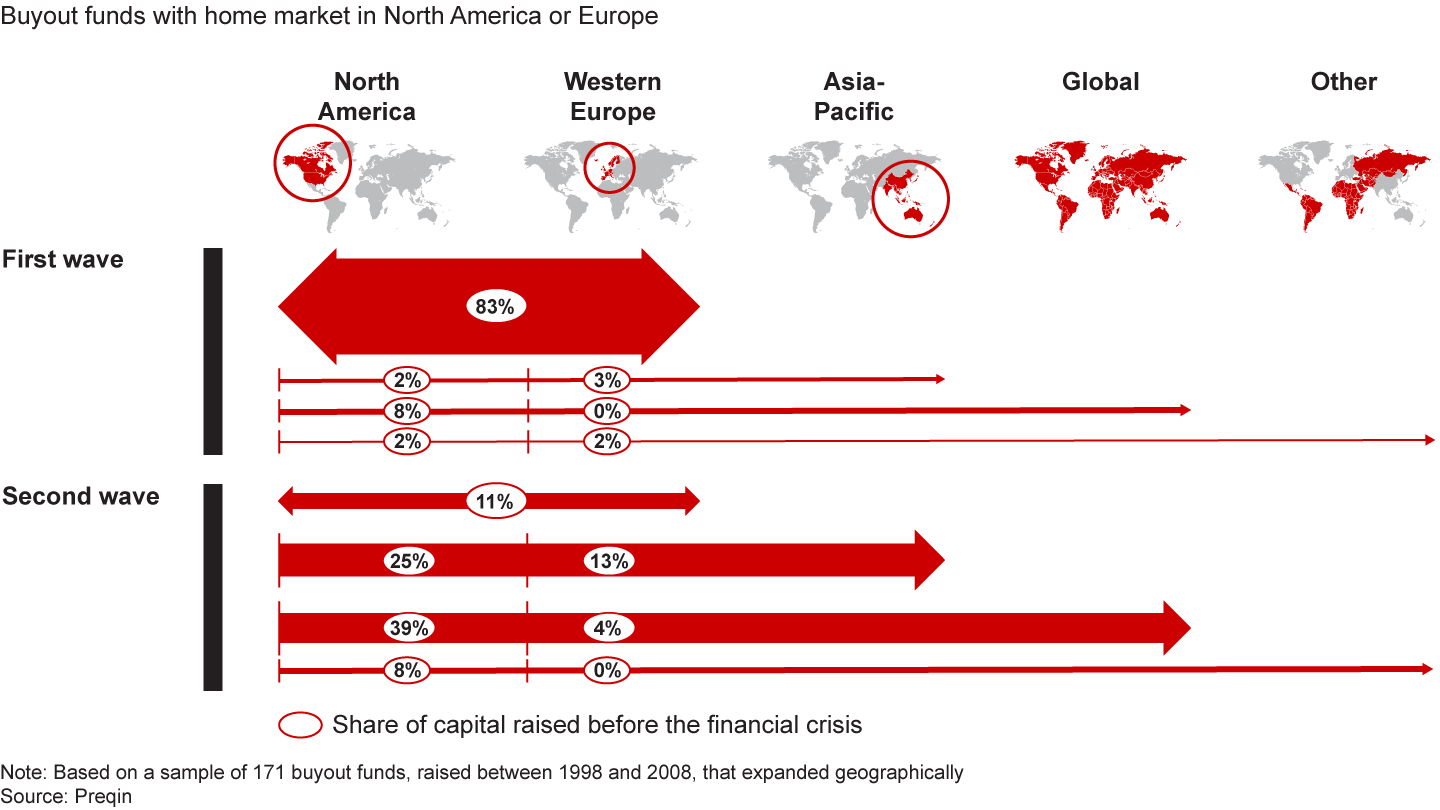
      Geographic adjacencies started with transatlantic expansions, followed by Asian and global targets
      Geographic adjacencies started with transatlantic expansions, followed by Asian and global targets
      Geographic adjacencies started with transatlantic expansions, followed by Asian and global targets

      The Carlyle Group exemplified these ambitious expansions. From its core investing in heavily regulated sectors, such as the defense industry, Carlyle diversified geographically and then across asset classes, including venture capital, real estate, leveraged finance, high-yield debt, infrastructure and a hedge fund. The financial crisis took a toll on parts of Carlyle (as it did on most PE firms), but the firm remains one of the industry’s largest, with more than $210 billion under management today.

      Many other PE firms found it more challenging to succeed in new geographies and especially in different asset classes. Credit, infrastructure, real estate and hedge funds held much appeal, in part because they were less correlated with equity markets and offered new pools of opportunity. But critically, most of these asset classes also required buyout investors to get up to speed on very different capabilities, and they offered few synergies. Compared with buyouts, most of these adjacent asset classes had a different investment thesis, virtually no deal-sourcing overlap, little staff or support-function cost sharing, and a different LP risk profile.

      To complicate matters, PE firms found that many of these adjacencies offered lower margins than their core buyout business. Some came with lower fees, and others did not live up to performance targets. Inherently lower returns for LPs made it difficult to apply the same fee structures as for traditional buyouts. To create attractive total economics and pay for investment teams, PE firms needed to scale up some of these new products well beyond what they might do in buyouts. That, in turn, threatened to change the nature of the firm.

      For large firms that ultimately went public, like KKR, Blackstone and Apollo, the shift in ownership intensified the need to produce recurring, predictable streams of fees and capital gains. Expanding at scale in different asset classes became an imperative. And today, buyouts represent a minority of their assets under management.

      As other firms pursued diversification, however, the combination of different capabilities and lower returns wasn’t always worth the trade-off. When the global financial crisis hit, money dried up, causing funds to retrench from adjacencies that did not work well—either because of a lack of strategic rationale or because an asset class struggled overall. Of the 100 buyout firms that added adjacencies before 2008 (roughly 1 in 10 firms active then), 20% stopped raising capital after the crisis, and nearly 65% of those left had to pull out from at least one of their asset classes (see Figure 2.13).

      Figure 2.13
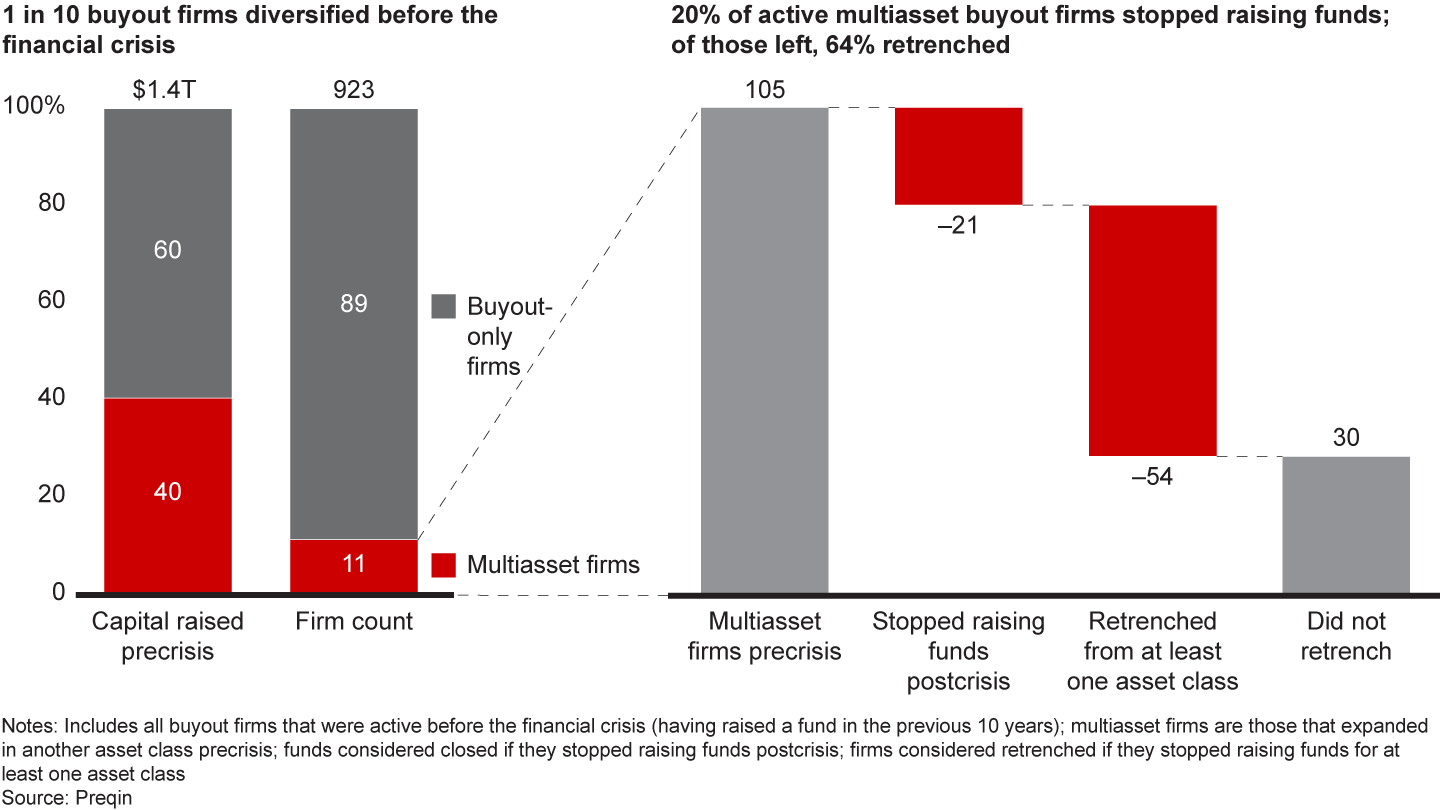
      The financial crisis caused many failures and retrenchments in private equity
      The financial crisis caused many failures and retrenchments in private equity
      The financial crisis caused many failures and retrenchments in private equity

      Diversification, it became clear, was trickier to navigate than anticipated. Succeeding in any business that’s far from a company’s core capabilities presents a stiff challenge—and private equity is no different.

      To test this point, we looked at a sample of funds launched between 1998 and 2013 by 184 buyout firms for which we had performance data, each of which had raised at least $1.5 billion during that period. We found that, when it comes to maintaining a high level of returns, staying close to the core definitely matters. Our study defined “core/near-in” firms as those that dedicated at least 90% of their raised capital to buyouts and less than 5% to adjacencies (including infrastructure, real estate and debt). We compared them to firms that moved further away from the core (dedicating more than 5% to adjacencies). The results: On average, 28% of core/near-in firms’ buyout funds generated top-quartile IRR performance, vs. 21% for firms that moved further afield (see Figure 2.14).

      Figure 2.14
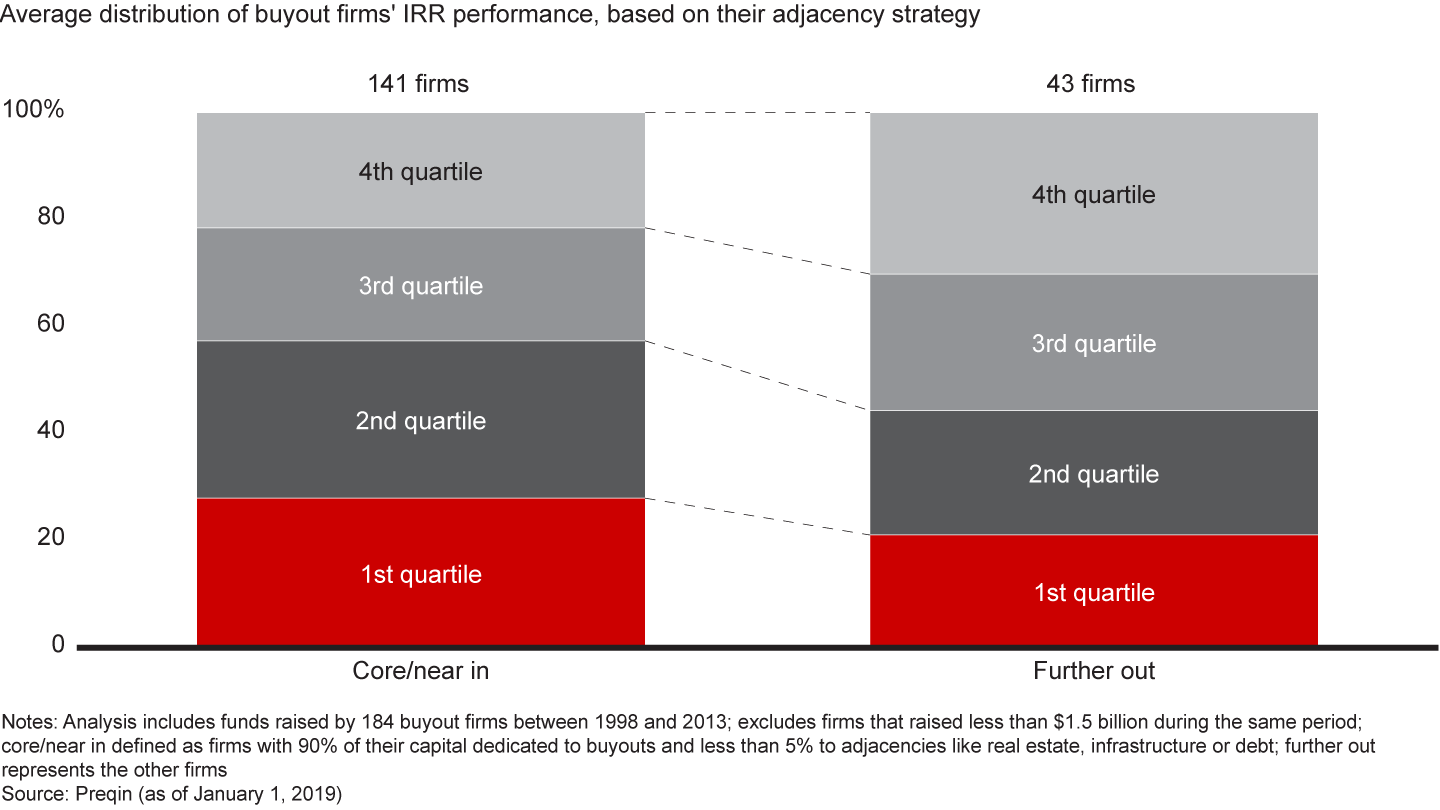
      Strategies close to the core yield higher performance
      Strategies close to the core yield higher performance
      Strategies close to the core yield higher performance

      The IRR gap for geographic diversification is more muted, because making such moves is generally easier than crossing asset types. But expanding into a new country or region does require developing or acquiring a local network, as well as transferring certain capabilities. And the mixed IRR record that we identified still serves as a caution: Firms need to be clear on what they excel at and exactly how their strengths could transfer to adjacent spaces.

      Insights in Your Inbox

      Get Our Latest Private Equity Insights

      Receive Bain’s landmark Global Private Equity Report each February, plus the latest insights and developments in private equity throughout the year.

      The new wave: Closer to the core

      With a record amount of capital flowing into private equity in recent years, GPs again face the question of how to deploy more capital through diversification. While a few firms, such as Hellman & Friedman, remain fully committed to funding their core buyout strategy, not many can achieve such massive scale in one asset class. As a result, a new wave of PE products is finding favor with both GPs and LPs.

      Top performers are considering adjacencies that are one step removed from the core, rather than two or three steps removed. The best options take advantage of existing platforms, investment themes and expertise. They’re more closely related to what PE buyout firms know how to do, and they also hold the prospect of higher margins for the GP and better net returns for LPs. In other words, these new products are a different way to play a familiar song.

      The experience of Vista Equity Partners illustrates successful diversification close to the core business. Founded in 2000, Vista invests almost exclusively in software, data and technology-enabled enterprises. In 2017, it closed an $11 billion core fund, which was oversubscribed by almost 40%, and is currently targeting $16 billion for its successor. Along the way, Vista added several adjacencies that were slight variations on its core business model. In 2009, it founded a small- and midcap fund to tap into the North American middle market. In 2013, the firm raised a direct-lending fund to invest in the debt of the companies it buys, and it is now reportedly raising a $3 billion long-hold equity fund.

      There are any number of ways for firms to diversify, but several stand out in today’s market (see Figure 2.15):

      • Long-hold funds have a life span of up to 15 years or so, offering a number of benefits. Extending a fund’s holding period allows PE firms to better align with the longer investment horizon of sovereign wealth funds and pension funds. It also provides access to a larger pool of target companies and allows for flexibility on exit timing with fewer distractions. These funds represent a small but growing share of total capital. CVC Capital Partners, for example, is raising its second long-hold fund with a hard cap of €5 billion, aiming for a 12% to 14% IRR, compared with the 20% target of its mainstream fund.
      • Growth equity funds target minority stakes in growing companies, usually in a specific sector such as technology or healthcare. Though the field is getting more crowded, growth equity has been attractive given buyout-like returns, strong deal flow and less competition than for other types of assets. Here, a traditional buyout firm can transfer many of its core capabilities. Most common in Asia, growth equity has been making inroads in the US and Europe of late. (See “Growth Equity: A Risk/Return Profile That’s Hard to Ignore.”)
      • Sector funds focus exclusively on one sector in which the PE firm has notable strengths. These funds allow firms to take advantage of their expertise and network in a defined part of the investing landscape. TPG, for instance, is currently raising $2.5 billion for a healthcare sidecar fund after completing multiple deals in that space. This move should allow TPG to focus on the full healthcare value chain while giving it the flexibility to write smaller checks, which is not always possible with large buyout funds.
      • Mid-market funds target companies whose enterprise value typically ranges between $50 million and $500 million, allowing the firm to tap opportunities that would be out of scope for a large buyout fund. For instance, the EQT Mid Market fund invests in middle-market buyouts and growth equity investments.

      All of the options described here have implications for a PE firm’s operating model, especially in terms of retaining talent, communicating an adjacency play to LPs, avoiding cannibalization of the firm’s traditional buyout funds and sorting out which deal belongs in which bucket.

      Figure 2.15
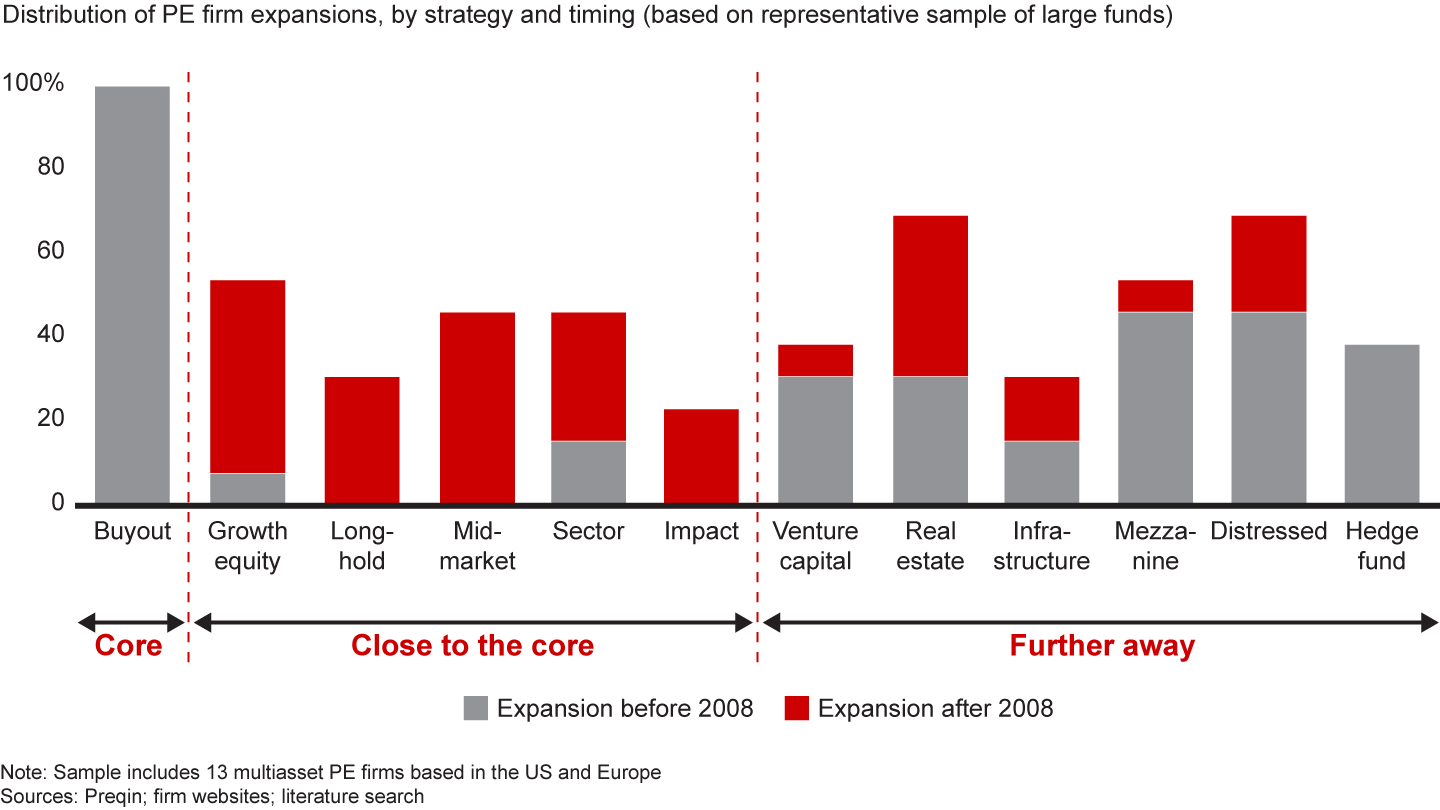
      The new wave of adjacencies aim to stay closer to the core
      The new wave of adjacencies aim to stay closer to the core
      The new wave of adjacencies aim to stay closer to the core

      Key questions for GPs

      It is too early to tell how much capital these vehicles will attract, or the level of returns they will generate. Still, for PE funds aiming to expand their hunting ground without straying too far from their core, they are viable options worth considering. Success will likely flow from careful assessment of three factors: Does the opportunity leverage existing capabilities? Can these adjacencies deliver good returns? And can we scale up the platform or product?

      The first wave of adjacencies worked for a subset of investors that figured out how to overcome the challenges of new asset classes, but many firms proved less successful. Learning from this experience, GPs need to thoroughly assess not only the attractiveness of the opportunity but also their ability to compete. And there must be a strong strategic rationale for expansion, convincingly communicated to LPs so that they don’t perceive expansion as drifting strategy. Only a rigorous review of a GP’s strengths from a strategy perspective can unlock the right moves. This second wave of adjacencies is a more disciplined attempt to stay closer to core capabilities, creating products that LPs want and GPs can execute on with higher odds of success.

      With this in mind, GPs committed to adjacency expansion should ask themselves a few key questions:

      • Do we have the resident capabilities to execute well on this product today, or can we add them easily?
      • Does the asset class leverage our cost structure?
      • Do our customers—our LPs—want these new products?
      • Can we provide the products through the same channels?
      • Have we set appropriate expectations for the expansion, both for returns and for investments?

      Clear-eyed answers to these questions will determine whether, and which, adjacencies make sense. The past failures and retrenchments serve as a reminder that investing too far afield risks distracting GPs from their core buyout funds. Instead, a repeatable model consists of understanding which strengths a fund can export and thoughtfully mapping those strengths to the right opportunities (see Figure 2.16). Adjacency expansion will remain a popular tack among funds looking for alternative routes to put their capital to work. Funds that leverage their strengths in a disciplined, structured way stand the best chance of reaping healthy profits from expansion.

      Figure 2.16
      PE funds with successful expansions have identified the unique assets, expertise and capabilities they can leverage
      PE funds with successful expansions have identified the unique assets, expertise and capabilities they can leverage
      PE funds with successful expansions have identified the unique assets, expertise and capabilities they can leverage
      Related Reading

      Growth Equity: A Risk/Return Profile That’s Hard to Ignore

      PE firms can achieve impressive performance without the need for heavy leverage.

      This article is part of Bain’s 2019 Global Private Equity Report. Explore the contents of the report here or download the PDF to read the full report.

      Read the Next Section

      Advanced Analytics: A Powerful Edge, but It’s Not for Amateurs

      Authors
      • Headshot of Hugh MacArthur
        Hugh MacArthur
        Partner, Boston
      • Headshot of Rebecca Burack
        Rebecca Burack
        Partner, Boston
      • Headshot of Christophe De Vusser
        Christophe De Vusser
        Worldwide Managing Partner, New York
      • Headshot of Kiki Yang
        Kiki Yang
        Partner, Hong Kong
      • Headshot of Graham Rose
        Graham Rose
        Partner, Boston
      • Headshot of Brenda Rainey
        Brenda Rainey
        Executive Vice President, Boston
      Related Industries
      • Private Equity
      Related Consulting Services
      • Strategy
      How We Can Help
      • Firm Strategy & Operations
      Private Equity
      Private Equity: Still Booming, but Is the Cycle Near Its End?

      Deal count declines, but value jumps to a five-year record.

      Read more
      Private Equity
      Advanced Analytics: A Powerful Edge, but It’s Not for Amateurs

      As innovation triggers an explosion of options, expertise becomes paramount.

      Read more
      Private Equity
      Public Vs. Private Assets: The Big Switch

      The pendulum has swung in favor of private—will it swing back?

      Read more
      Private Equity
      Spotlight on Private Equity in China: The Case for Caution

      China's bubble may be ready to burst.

      Read more
      Private Equity
      Spotting the Downturn Early and Coming Out Ahead with Gryphon’s David Andrews

      We ask the co-CEO of Gryphon Investors how he spotted one of the harshest cycles in the industry’s history and when he thinks it may finally break.

      Read more
      First published in febrero 2019
      Tags
      • Firm Strategy & Operations
      • Private Equity
      • Strategy

      Want to continue the conversation

      We help global leaders with their organization's most critical issues and opportunities. Together, we create enduring change and results

      Bain Insights. Our perspectives on critical issues global businesses face in today's challenging environment, delivered monthly.

      *I have read and understand Bain’s Privacy Notice.

      Please read and agree to the Privacy Policy.
      Bain & Company
      Contact us Sustainability Accessibility Terms of use Privacy Modern Slavery Act Statement Cookie Policy Sitemap Log In

      © 1996-2026 Bain & Company, Inc.

      Contact Bain

      How can we help you?

      • Business inquiry
      • Career information
      • Press relations
      • Partnership request
      • Speaker request
      See all offices