Skip to Content
  • Offices

    Offices

    North & Latin America
    • Atlanta
    • Austin
    • Bogota
    • Boston
    • Buenos Aires
    • Chicago
    • Dallas
    • Denver
    • Houston
    • Los Angeles
    • Mexico City
    • Minneapolis
    • Monterrey
    • Montreal
    • New York
    • Rio de Janeiro
    • San Francisco
    • Santiago
    • São Paulo
    • Seattle
    • Silicon Valley
    • Toronto
    • Washington, DC
    Europe & Africa
    • Amsterdam
    • Athens
    • Berlin
    • Brussels
    • Copenhagen
    • Dusseldorf
    • Frankfurt
    • Helsinki
    • Istanbul
    • Johannesburg
    • Kyiv
    • Lisbon
    • London
    • Madrid
    • Milan
    • Munich
    • Oslo
    • Paris
    • Rome
    • Stockholm
    • Vienna
    • Warsaw
    • Zurich
    Middle East
    • Doha
    • Dubai
    • Riyadh
    Asia & Australia
    • Bangkok
    • Beijing
    • Bengaluru
    • Brisbane
    • Ho Chi Minh City
    • Hong Kong
    • Jakarta
    • Kuala Lumpur
    • Manila
    • Melbourne
    • Mumbai
    • New Delhi
    • Perth
    • Shanghai
    • Singapore
    • Sydney
    • Tokyo
    See all offices
  • Alumni
  • Media Center
  • Subscribe
  • Contact
  • Colombia | Español

    Select your region and language

    Global
    • Global (English)
    North & Latin America
    • Brazil (Português)
    • Argentina (Español)
    • Canada (Français)
    • Chile (Español)
    • Colombia (Español)
    Europe, Middle East, & Africa
    • France (Français)
    • DACH Region (Deutsch)
    • Italy (Italiano)
    • Spain (Español)
    • Greece (Elliniká)
    Asia & Australia
    • China (中文版)
    • Korea (한국어)
    • Japan (日本語)
  • Saved items (0)
    Saved items (0)

    You have no saved items.

    Bookmark content that interests you and it will be saved here for you to read or share later.

    Explore Bain Insights
  • Industries
    Main menu

    Industries

    • Aeroespacial y Defensa
    • Agroindustria
    • Químicos
    • Construcción e Infraestructura
    • Productos de Consumo
    • Servicios Financieros
    • Salud y Ciencias de la Vida
    • Maquinaria y Equipo Industrial
    • Medios y Entretenimiento
      Industries
      Medios y Entretenimiento
      • Media Lab
    • Metales
    • Minería
    • Petróleo y Gas
    • Papel y Empaque
    • Private Equity
      Industries
      Private Equity
      • Due Diligence
      • Exit Planning
      • Firm Strategy & Operations
      • Portfolio Value Creation
    • Sector Público y Social
    • Retail
    • Tecnología
    • Telecomunicaciones
      Industries
      Telecomunicaciones
      • Capital Expenditure
      • Telco Digital Transformation
    • Transporte
    • Viajes y Turismo
    • Servicios Públicos y Energías Renovables
  • Consulting Services
    Main menu

    Consulting Services

    • Customer Experience
    • Sustainability
    • Innovation
    • M&A
    • Operations
    • People & Organization
    • Private Equity
    • Sales & Marketing
    • Strategy
    • AI, Insights, and Solutions
    • Technology
    • Transformation
  • Digital
  • Insights
    Main menu

    Insights

    • Industry Insights
    • Services Insights
    • Bain Books
    • Webinars
    • Bain Futures
    View all Insights
    Featured topics
    • Tariff Response
    • Artificial Intelligence
    • Thriving in Uncertainty
    • Executive Conversations
    • Macro Trends
    • M&A Report
    • Healthcare Private Equity Report
    • Paper & Packaging Report
    • Technology Report
    • CEO's Guide to Sustainability
    • CEO Insights
    • CFO Insights
    • COO Insights
    • CIO Insights
    • CMO Insights
    View all featured topics
  • About
    Main menu

    About

    • What We Do
    • What We Believe
    • Our People & Leadership
    • Client Results
    • Awards & Recognition
    • Global Affiliations
    Further: Our global responsibility
    • Sustainability
    • Social Impact
    • World Economic Forum
    Learn more about Further
  • Carreras
    Main menu

    Carreras

    • Trabaja con Nosotros
      Carreras
      Trabaja con Nosotros
      • Find Your Place
      • Nuestras Áreas de Trabajo
      • Equipos Integrados
      • Estudiantes
      • Internships & Programs
      • Eventos de Reclutamiento
    • La Vida en Bain
      Carreras
      La Vida en Bain
      • Historias Profesionales
      • Nuestra Gente
      • Dónde Trabajamos
      • Apoyando tu Crecimiento
      • Grupos de Afinidad
      • Beneficios
    • Impact Stories
    • Nuestro Proceso
      Carreras
      Nuestro Proceso
      • Qué Esperar
      • Entrevistas
    FIND JOBS
  • Offices
    Main menu

    Offices

    • North & Latin America
      Offices
      North & Latin America
      • Atlanta
      • Austin
      • Bogota
      • Boston
      • Buenos Aires
      • Chicago
      • Dallas
      • Denver
      • Houston
      • Los Angeles
      • Mexico City
      • Minneapolis
      • Monterrey
      • Montreal
      • New York
      • Rio de Janeiro
      • San Francisco
      • Santiago
      • São Paulo
      • Seattle
      • Silicon Valley
      • Toronto
      • Washington, DC
    • Europe & Africa
      Offices
      Europe & Africa
      • Amsterdam
      • Athens
      • Berlin
      • Brussels
      • Copenhagen
      • Dusseldorf
      • Frankfurt
      • Helsinki
      • Istanbul
      • Johannesburg
      • Kyiv
      • Lisbon
      • London
      • Madrid
      • Milan
      • Munich
      • Oslo
      • Paris
      • Rome
      • Stockholm
      • Vienna
      • Warsaw
      • Zurich
    • Middle East
      Offices
      Middle East
      • Doha
      • Dubai
      • Riyadh
    • Asia & Australia
      Offices
      Asia & Australia
      • Bangkok
      • Beijing
      • Bengaluru
      • Brisbane
      • Ho Chi Minh City
      • Hong Kong
      • Jakarta
      • Kuala Lumpur
      • Manila
      • Melbourne
      • Mumbai
      • New Delhi
      • Perth
      • Shanghai
      • Singapore
      • Sydney
      • Tokyo
    See all offices
  • Alumni
  • Media Center
  • Subscribe
  • Contact
  • Colombia | Español
    Main menu

    Select your region and language

    • Global
      Select your region and language
      Global
      • Global (English)
    • North & Latin America
      Select your region and language
      North & Latin America
      • Brazil (Português)
      • Argentina (Español)
      • Canada (Français)
      • Chile (Español)
      • Colombia (Español)
    • Europe, Middle East, & Africa
      Select your region and language
      Europe, Middle East, & Africa
      • France (Français)
      • DACH Region (Deutsch)
      • Italy (Italiano)
      • Spain (Español)
      • Greece (Elliniká)
    • Asia & Australia
      Select your region and language
      Asia & Australia
      • China (中文版)
      • Korea (한국어)
      • Japan (日本語)
  • Saved items  (0)
    Main menu
    Saved items (0)

    You have no saved items.

    Bookmark content that interests you and it will be saved here for you to read or share later.

    Explore Bain Insights
  • Industries
    • Industries

      • Aeroespacial y Defensa
      • Agroindustria
      • Químicos
      • Construcción e Infraestructura
      • Productos de Consumo
      • Servicios Financieros
      • Salud y Ciencias de la Vida
      • Maquinaria y Equipo Industrial
      • Medios y Entretenimiento
      • Metales
      • Minería
      • Petróleo y Gas
      • Papel y Empaque
      • Private Equity
      • Sector Público y Social
      • Retail
      • Tecnología
      • Telecomunicaciones
      • Transporte
      • Viajes y Turismo
      • Servicios Públicos y Energías Renovables
  • Consulting Services
    • Consulting Services

      • Customer Experience
      • Sustainability
      • Innovation
      • M&A
      • Operations
      • People & Organization
      • Private Equity
      • Sales & Marketing
      • Strategy
      • AI, Insights, and Solutions
      • Technology
      • Transformation
  • Digital
  • Insights
    • Insights

      • Industry Insights
      • Services Insights
      • Bain Books
      • Webinars
      • Bain Futures
      View all Insights
      Featured topics
      • Tariff Response
      • Artificial Intelligence
      • Thriving in Uncertainty
      • Executive Conversations
      • Macro Trends
      • M&A Report
      • Healthcare Private Equity Report
      • Paper & Packaging Report
      • Technology Report
      • CEO's Guide to Sustainability
      • CEO Insights
      • CFO Insights
      • COO Insights
      • CIO Insights
      • CMO Insights
      View all featured topics
  • About
    • About

      • What We Do
      • What We Believe
      • Our People & Leadership
      • Client Results
      • Awards & Recognition
      • Global Affiliations
      Further: Our global responsibility
      • Sustainability
      • Social Impact
      • World Economic Forum
      Learn more about Further
  • Carreras
    Popular Searches
    • Agile
    • Digital
    • Strategy
    Your Previous Searches
      Recently Visited Pages

      Content added to saved items

      Saved items (0)

      Removed from saved items

      Saved items (0)

      Brief

      China's Mobility Industry Picks Up Speed

      China's Mobility Industry Picks Up Speed

      What are the big consequences of e-hailing, bike sharing and other mobility options?

      By Raymond Tsang, Pierre-Henri Boutot and Dorothy Cai

      • min read
      }

      Brief

      China's Mobility Industry Picks Up Speed
      en

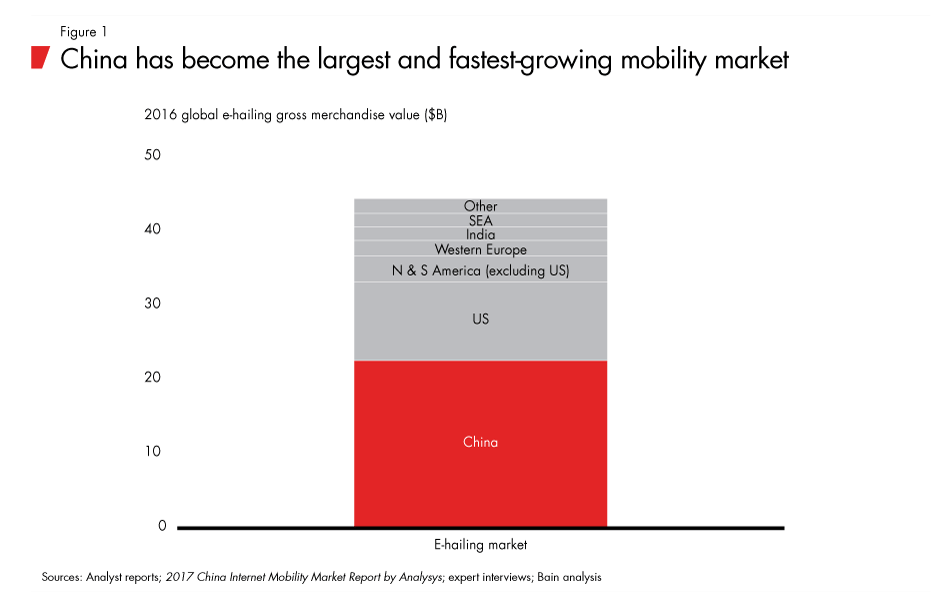
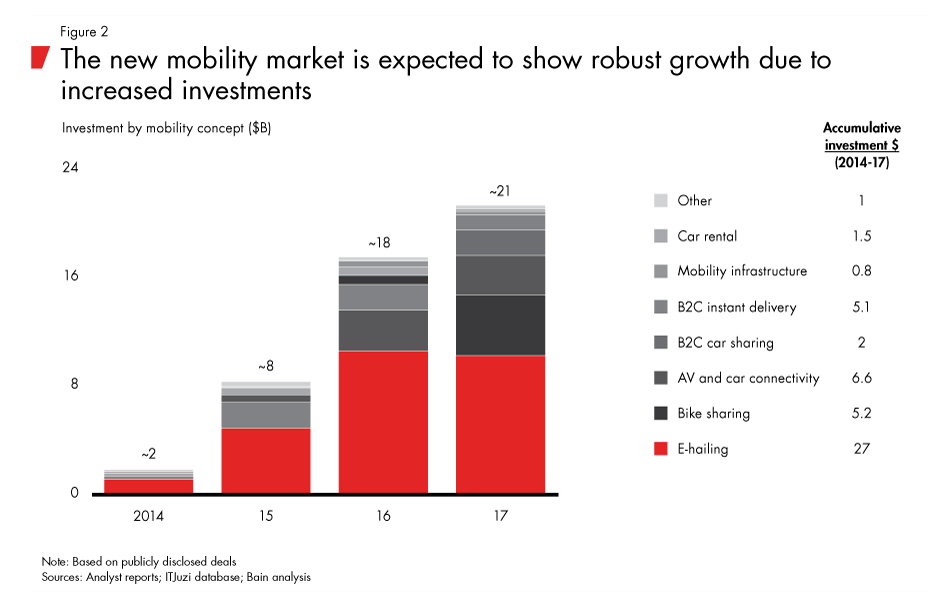
      China has quickly emerged as the world’s largest mobility market. Innovations in automotive, technology and e-commerce are rapidly converging in new, unexpected ways. Chinese consumers, who lead most other countries in digital adoption, are willing to try new options that are becoming available at a record pace and are upending the definition of mobility. Consider that China’s market for e-hailing—ordering car rides electronically from a mobile phone—now totals about $23 billion, more than the rest of the world combined (see Figure 1). This mobility market is expected to maintain its robust growth, fueled by $50 billion in investments from 2014 to 2017 (see Figure 2).
      china-mobility-fig01_embed

      china-mobility-fig02_embed

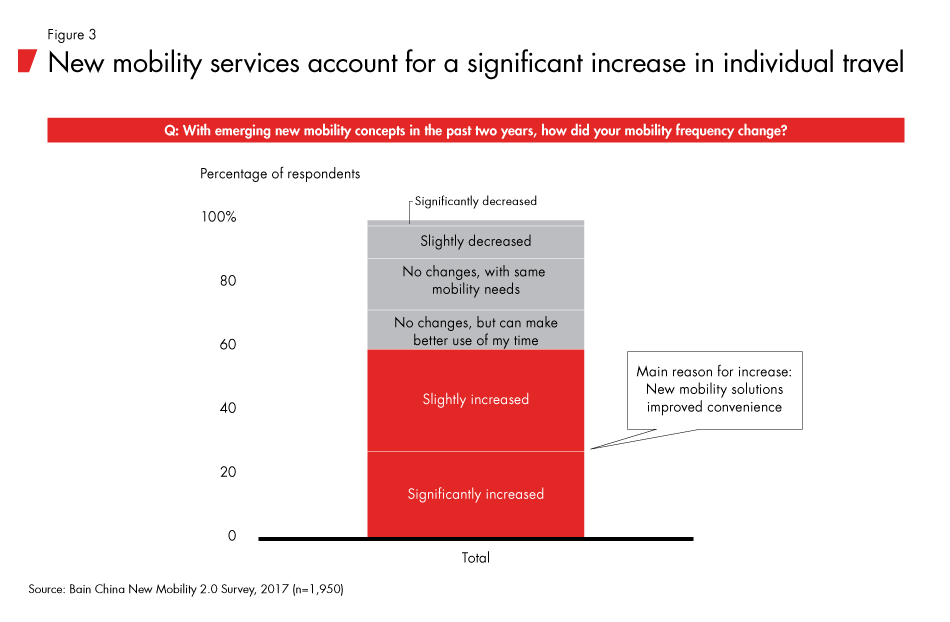
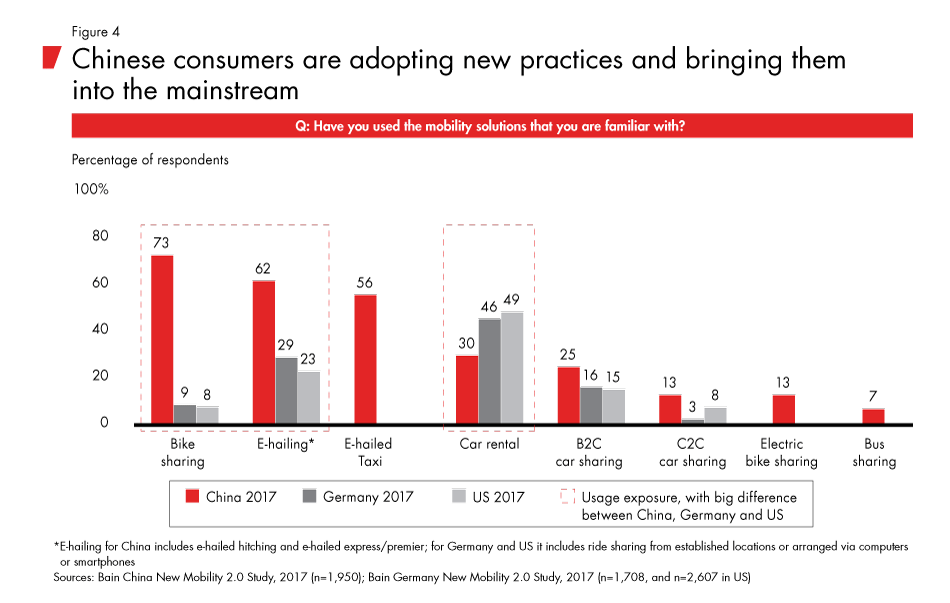
      We wanted to understand the dimensions of this huge shift and its potential implications across industries, so we surveyed nearly 2,000 Chinese consumers in Tier-1, Tier-2 and Tier-3 cities (see the sidebar "How big and how fast?"). We learned that 60% of respondents increased their mobility frequency in the past two years, with new mobility services accounting for a significant part of that increase (see Figure 3). Chinese consumers adopt new practices as soon as they are introduced and bring them into the mainstream. While bike sharing, the most popular solution, was used by 73% of respondents, e-hailing was second—62% of respondents used this growing alternative. As an indication of how prevalent these two mobility solutions have become, compare how widely they are used in China vs. Germany and the US. We conducted similar studies of consumers in those countries. In Germany, only 29% had used e-hailing and 9% had tried bike sharing. In the US, 23% had relied on e-hailing and 8% had used bike sharing. However, Chinese consumers are less likely than their German or US counterparts to use such traditional mobility solutions as car rentals (see Figure 4).

      Mobility’s upward trajectory

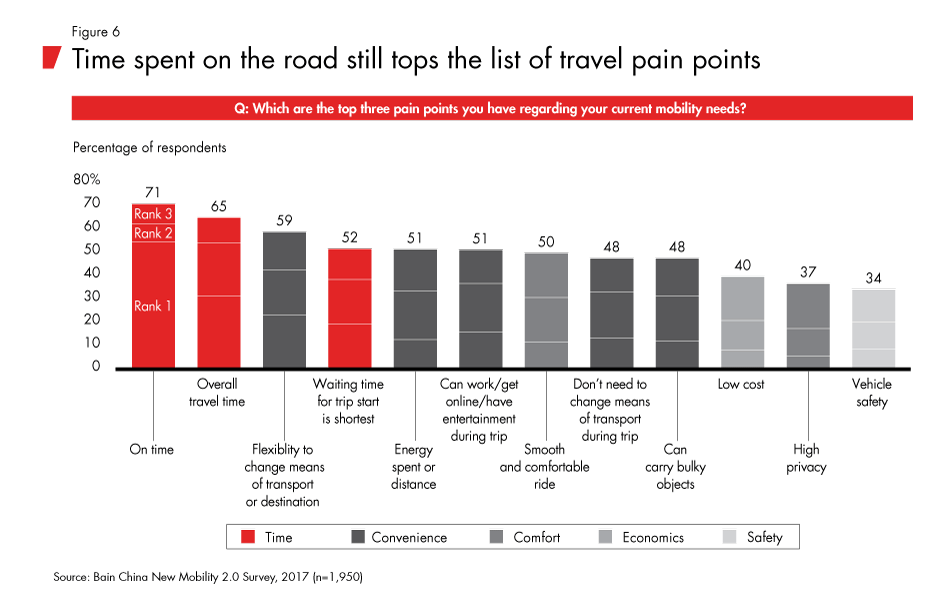
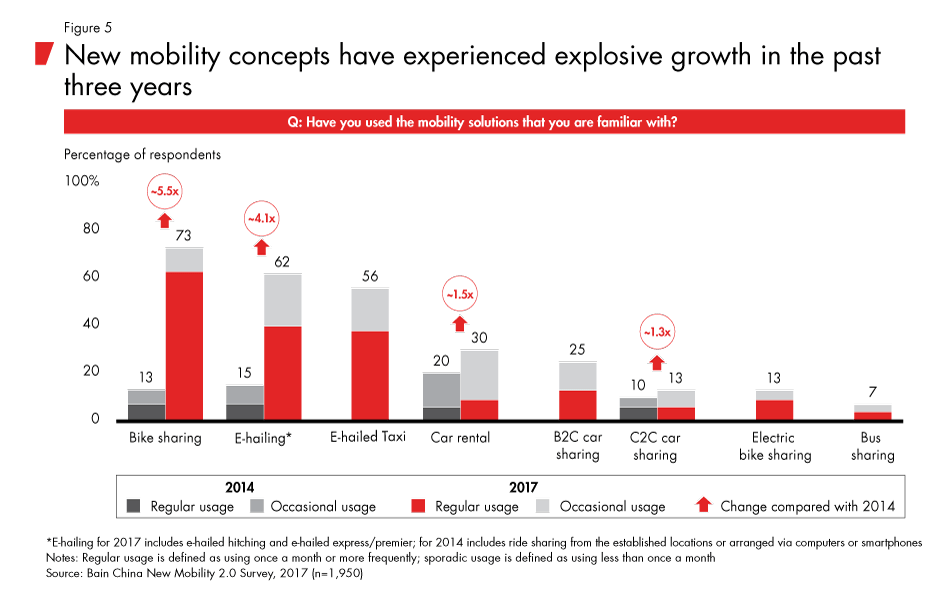
      By our estimates, bike sharing has grown more than fivefold and e-hailing fourfold since their introduction (see Figure 5). Part of that explosive growth is due to the popularity of mobile payments. Chinese consumers began paying with mobile phones in earnest in 2014. Today the value of mobile payments made in China is 60 times more than in the US. The other force contributing to the rise in mobility solutions: the major traffic delays on roads and highways in China’s top-tier cities. In fact, when we asked consumers to name their top travel pain points, time spent on the road topped the list (see Figure 6). With technology integration, government support and the emergence of new options such as B2C car sharing, China’s mobility industry is likely to continue on its upward trajectory.
      china-mobility_fig03_embed

      china-mobility-fig04_embed

      china-mobility-fig05_embed

      china-mobility-fig06_embed

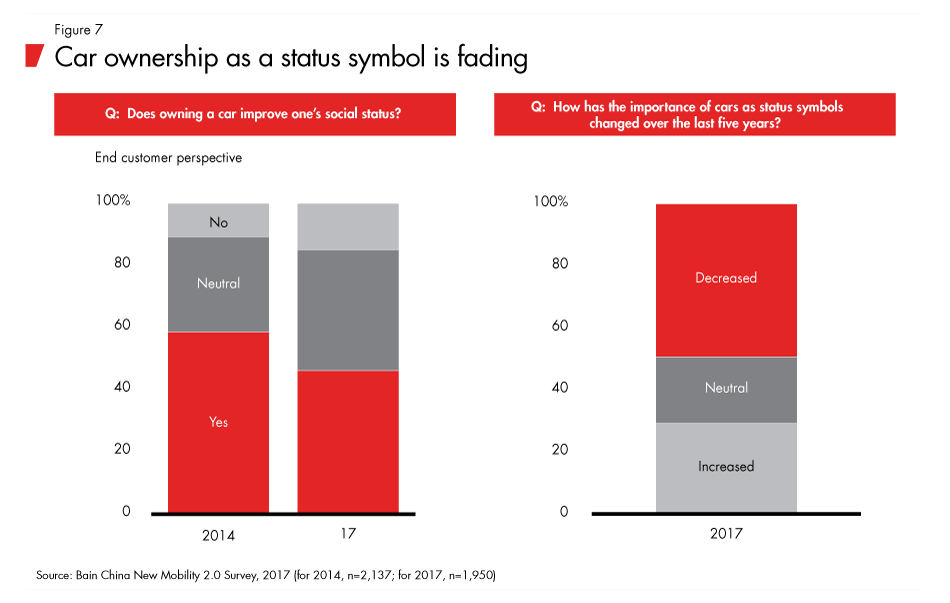
      Given these newly available transportation options, the formidable traffic congestion and the financial costs of car ownership, more Chinese consumers are turning their backs on buying cars (see the sidebar "A disaffection with car ownership?") Cars have long been equated with social status in China, yet less than 50% of our survey participants feel that owning a car improves one’s social status. That is smaller than the portion of consumers who felt cars improved social status in a similar study Bain conducted in 2014. Nearly half the people in our recent survey indicated that owning a car has decreased as a status symbol in the past five years (see Figure 7).

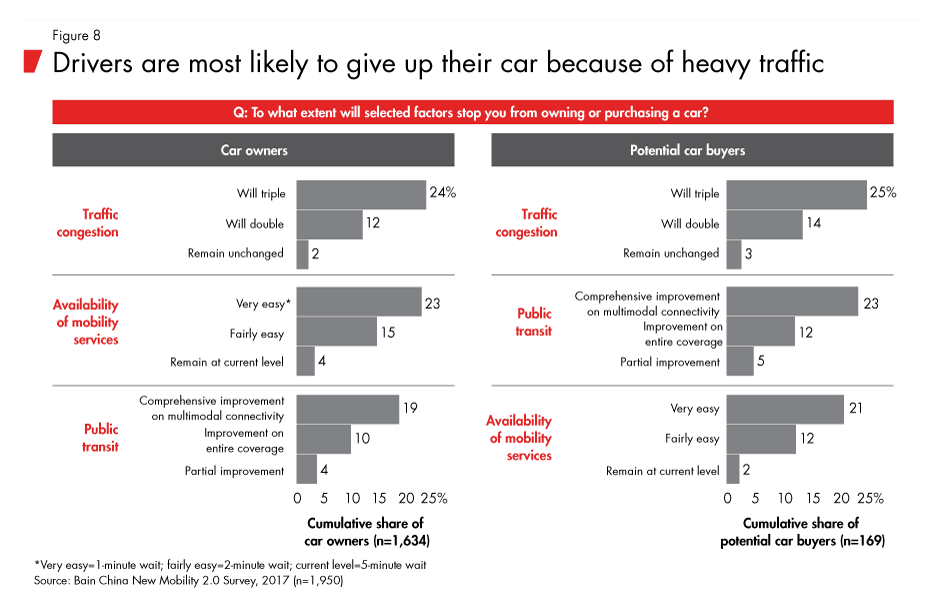
      Both car owners and potential car owners agree on the specific factors that will persuade them to either give up their car or make them avoid buying one in the future. Heavy traffic tops the list for both groups (see Figure 8). In almost equal measure—24% vs. 25%—car owners and potential car owners say they would not buy a car if China’s traffic congestion tripled in the coming years. The availability of very easy mobility services would lead 23% of car owners and 21% of potential car owners to avoid purchasing a car. Meanwhile, the long waits that are commonplace in multimodal public transit are another big factor. Our survey found that 19% of car owners and 23% of potential owners would not buy a car if multimodal connectivity in public transit were comprehensively improved.
      china-mobility-fig07_embed

      china-mobility-fig08_embed


      An industry in transition

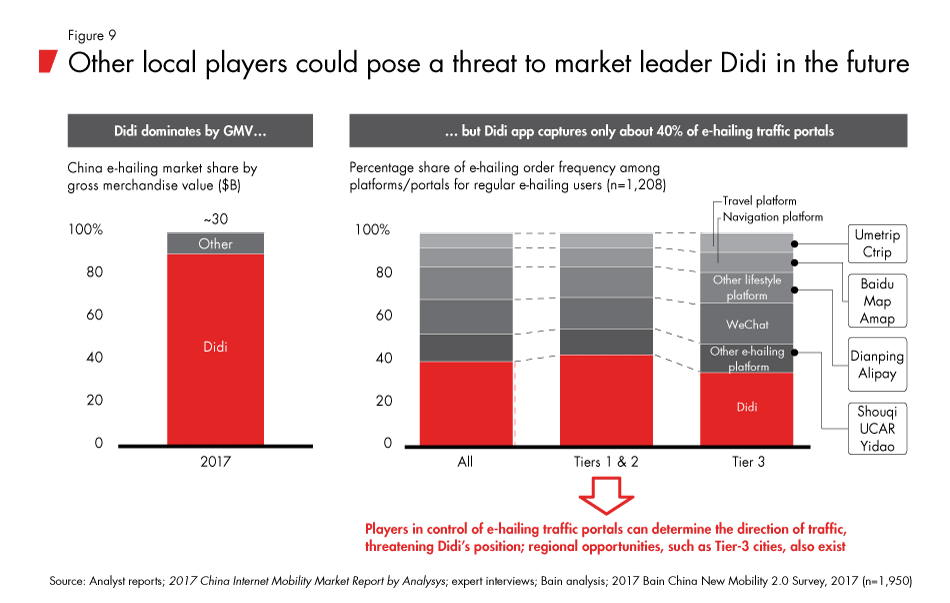
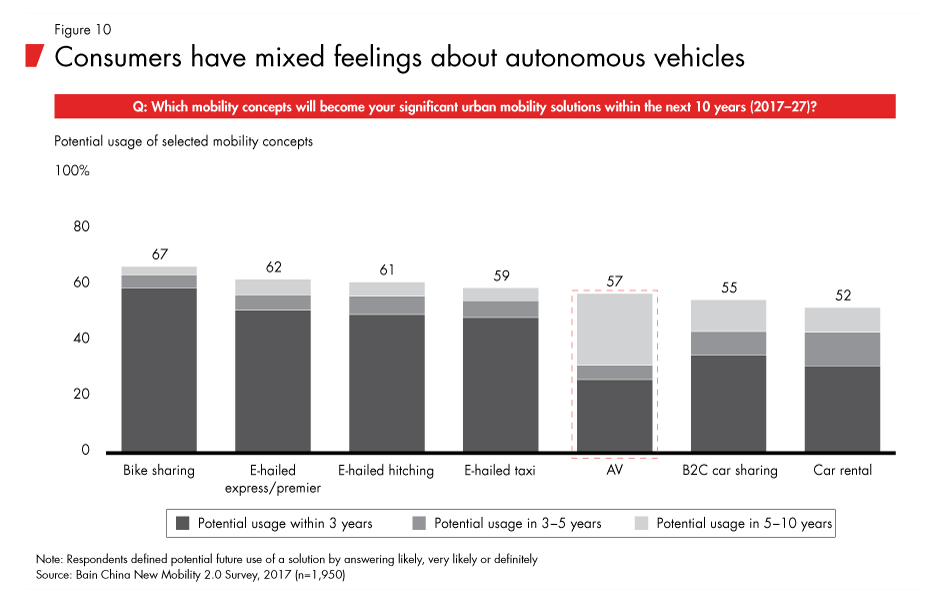
      As China’s mobility ecosystem expands, it is likely to change its shape. For example, Didi, the major e-hailing player, now captures 90% of all e-hailing trips and 40% of the volume among e-hailing traffic portals, according to our survey (see Figure 9). A number of factors could alter that situation, everything from the emergence of local and regional players to a consolidation among traffic portals to a rise in the use of such options as WeChat and other social commerce platforms. Already, as many as 50% of all e-hailed rides are ordered from platforms such as WeChat, Dianping and Alipay. This opens up the opportunity for competing e-hailing players to catch up if they form the right partnerships with these or other lifestyle portals. Another major change: the coming introduction of autonomous vehicles. Among our survey participants, 26% said they expect autonomous vehicles to be a significant urban mobility solution within three years (see Figure 10). Indeed, e-hailing companies and others in China’s booming mobility industry are likely to amass fleets of autonomous vehicles in the years ahead.

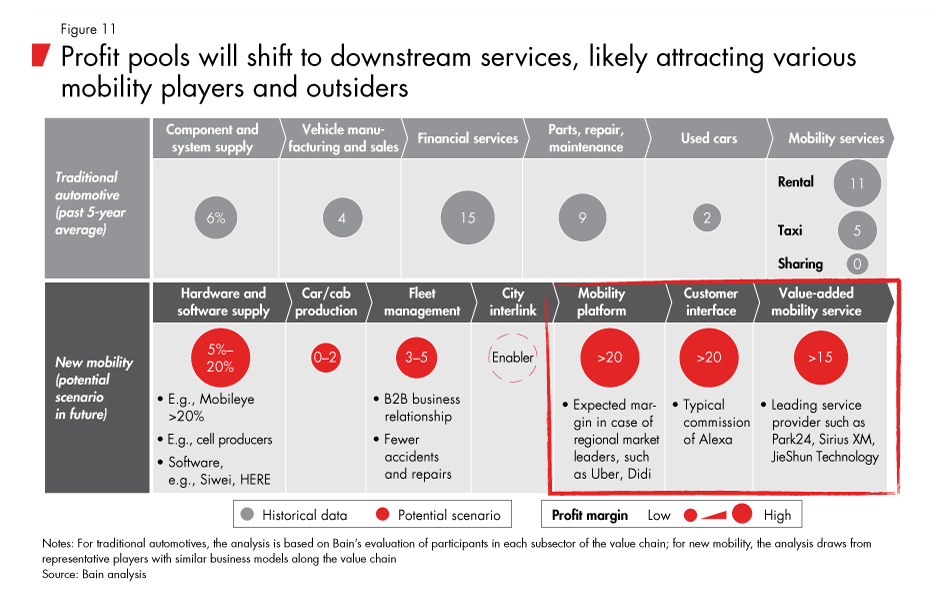
      As the industry achieves scale and the market becomes rationalized, we envision a scenario in which profit pools could shift away from original equipment manufacturers (OEMs) to downstream services, with mobility platforms and customer interfaces reaping margins of more than 20% and value-added service providers achieving more than 15% margins (see Figure 11).
      china-mobility-fig09_embed

      china-mobility-fig10_embed

      china-mobility-fig11_embed


      What this means for OEMs

      A potential profit pool shift is among the many important changes facing OEMs. For example, traditionally, an automaker’s business model focused on designing, manufacturing and selling cars. Now, the new mobility trends are requiring OEMs to rethink that business model. Long accustomed to keeping product development and other capabilities in-house, OEMs will need to partner with service providers and others in the value chain—to capture their share of the growing profit pool by finding new revenue streams to compensate for slower growth in car sales. By partnering with the likes of Baidu, Alibaba and Tencent, for example, OEMs could access vastly more consumer data. Knowing consumers’ profiles in great detail—who they are, what they like, where they go for meals and so on—will allow automakers to better understand consumers’ commute occasions and behaviors. It positions them to form alliances to provide location-based advertising or other innovative services or products, expanding their role in the mobility ecosystem to boost revenues and profits.

      OEMs are already moving in this direction. Many of them have launched or piloted their form of mobility business—Daimler has Car2Go, BMW has ReachNow, SAIC has EVCard and Ford has a shuttle-sharing service, Chariot. Meanwhile, some OEMs have formed partnerships with mobility platforms such as Didi to offer customized vehicles for their fleets.

      OEMs will need to get ahead of other big changes, too. For example, with the rise of e-hailing and other new mobility options, consumers are more and more likely to view cars as commodities. In fact, our study found that when e-hailing, consumers tend to care most about the cost, waiting time and driver ratings—and much less about the brand of the car in which they travel. This is a shift with huge potential implications for OEMs that for decades have worked hard to build and maintain differentiated brands. Another significant consideration: With mobility platforms such as Didi and emerging corporate car sharing companies about to make up a growing segment of the market for vehicles, more OEMs may soon be required to customize cars for these new and important customers—even as they learn how to sell to a different customer base.

      For their part, e-hailing and car sharing services need to prepare for the many ways they are likely to be affected by the mobility ecosystem as it evolves. A single example: The e-hailing business, which now depends on individual drivers, will become completely transformed with the expected arrival of autonomous vehicles. Like OEMs, these players could adapt their business model to leverage the explosive growth of consumer data to deliver location-based advertising. Or, there may be a market for integrated commute-planning platforms that seamlessly help commuters plan the most efficient travel using all modes of transportation. For all players, getting ahead of these shifts means not only understanding how an existing business model is affected and how to mitigate the risks, but also evaluating the potential opportunities.

      The mobility ecosystem is growing and taking shape, and as it does, one message is becoming clear. Outpacing rivals will mean creating the right alliances to build the needed capabilities while carefully managing the risks that are inherent with any new and dynamic industry. In the world’s largest mobility market, no company will be able to win alone.


      How big and how fast?

      To track the rapidly emerging mobility industry, Bain & Company is surveying thousands of consumers in the US, Germany and China every three years. We ask consumers about their experience using different mobility options, their willingness to try new solutions such as autonomous vehicles and their views of car ownership, among other issues. The results paint a clear picture of an industry that is quickly growing, especially in China. In our 2014 study, the mobility industry in both Germany and the US outpaced China. However, in our most recent survey, conducted in 2017, it is clear how speedily China has grown to dwarf those markets. In fact, China’s e-hailing market alone is larger than that of the rest of the world combined. We estimate that e-hailing volume will grow eleven-fold from 2015 to 2020 to total $72 billion.


      A disaffection with car ownership?

      In 2014, we asked more than 2,000 Chinese consumers in Tier-1, -2 and -3 cities if owning a car improves one’s social status. At the time, almost 60% agreed. In three short years, car ownership has lost some of its luster. In our 2017 survey, less than 50% said that owning a car improves social status. Commute time—a function of China’s worsening traffic congestion—is the top concern. In addition to tracking the slowing growth of car ownership in China, our continuing research has helped illustrate other dimensions of mobility. Our analysis of publicly disclosed deals shows that investment in the mobility industry rose from around $2 billion in 2014 to around $21 billion in 2017. The e-hailing market grew from $5 billion with 30 million users in 2014 to $30 billion with 217 million users in 2017. The market for unlocked shared bikes, which was nonexistent in 2014, now totals 120 million monthly active bikes.

      Raymond Tsang leads Bain & Company’s Automotive practice in Asia-Pacific. He is based in Shanghai. Pierre-Henri Boutot is a Bain partner based in Hong Kong. Dorothy Cai is a partner in the firm’s Toronto office.


      china-mobility-fig01_full

      china-mobility-fig02_full

      china-mobility_fig03_full

      china-mobility-fig04_full

      china-mobility-fig05_full

      china-mobility-fig06_full

      china-mobility-fig07_full

      china-mobility-fig08_full

      china-mobility-fig09_full

      china-mobility-fig10_full

      china-mobility-fig11_full
      Authors
      • Headshot of Raymond Tsang
        Raymond Tsang
        Partner, Hong Kong
      • Headshot of Pierre-Henri Boutot
        Pierre-Henri Boutot
        Partner, Hong Kong
      • Headshot of Dorothy Cai
        Dorothy Cai
        Alumni, Shanghai
      Related Industries
      • Advanced Manufacturing & Services
      Utilities & Renewables
      Electric Vehicles for Smarter Cities: The Future of Energy and Mobility

      Public and private sectors can adapt three principles to converge mobility and energy, enabling cities to provide several benefits to citizens.

      Read more
      Advanced Manufacturing & Services
      Technology in Building Products: Turn Cost into Value

      Bain experts reveal how companies in the building products industry are unlocking growth with bold tech investments.

      Read more
      Advanced Manufacturing & Services
      Defense M&A

      Bold moves will determine the winners as a continent rearms.

      Read more
      Advanced Manufacturing & Services
      Building Products M&A

      Why more companies are acquiring for scope.

      Read more
      Advanced Manufacturing & Services
      Automotive & Mobility M&A

      As pressure to scale mounts, leaders are consolidating and buying technology.

      Read more
      First published in mayo 2018
      Tags
      • Advanced Manufacturing & Services

      How We've Helped Clients

      Supply Chain Security Mitigates a Sovereign Wealth Fund’s Construction Disruptions

      See more related case studies

      How an Airline Used a Global Stall to Give Procurement a Lift

      See more related case studies

      An auctioneer makes a winning online bid

      See more related case studies

      Want to continue the conversation

      We help global leaders with their organization's most critical issues and opportunities. Together, we create enduring change and results

      Bain Insights. Our perspectives on critical issues global businesses face in today's challenging environment, delivered monthly.

      *I have read and understand Bain’s Privacy Notice.

      Please read and agree to the Privacy Policy.
      Bain & Company
      Contact us Sustainability Accessibility Terms of use Privacy Modern Slavery Act Statement Cookie Policy Sitemap Log In

      © 1996-2026 Bain & Company, Inc.

      Contact Bain

      How can we help you?

      • Business inquiry
      • Career information
      • Press relations
      • Partnership request
      • Speaker request
      See all offices