
Skip to Content
  • Offices

    Offices

    North & Latin America
    • Atlanta
    • Austin
    • Bogota
    • Boston
    • Buenos Aires
    • Chicago
    • Dallas
    • Denver
    • Houston
    • Los Angeles
    • Mexico City
    • Minneapolis
    • Monterrey
    • Montreal
    • New York
    • Rio de Janeiro
    • San Francisco
    • Santiago
    • São Paulo
    • Seattle
    • Silicon Valley
    • Toronto
    • Washington, DC
    Europe & Africa
    • Amsterdam
    • Athens
    • Berlin
    • Brussels
    • Copenhagen
    • Dusseldorf
    • Frankfurt
    • Helsinki
    • Istanbul
    • Johannesburg
    • Kyiv
    • Lisbon
    • London
    • Madrid
    • Milan
    • Munich
    • Oslo
    • Paris
    • Rome
    • Stockholm
    • Vienna
    • Warsaw
    • Zurich
    Middle East
    • Doha
    • Dubai
    • Riyadh
    Asia & Australia
    • Bangkok
    • Beijing
    • Bengaluru
    • Brisbane
    • Ho Chi Minh City
    • Hong Kong
    • Jakarta
    • Kuala Lumpur
    • Manila
    • Melbourne
    • Mumbai
    • New Delhi
    • Perth
    • Shanghai
    • Singapore
    • Sydney
    • Tokyo
    See all offices
  • Alumni
  • Media Center
  • Subscribe
  • Contact
  • Colombia | Español

    Select your region and language

    Global
    • Global (English)
    North & Latin America
    • Brazil (Português)
    • Argentina (Español)
    • Canada (Français)
    • Chile (Español)
    • Colombia (Español)
    Europe, Middle East, & Africa
    • France (Français)
    • DACH Region (Deutsch)
    • Italy (Italiano)
    • Spain (Español)
    • Greece (Elliniká)
    Asia & Australia
    • China (中文版)
    • Korea (한국어)
    • Japan (日本語)
  • Saved items (0)
    Saved items (0)

    You have no saved items.

    Bookmark content that interests you and it will be saved here for you to read or share later.

    Explore Bain Insights
  • Industries
    Main menu

    Industries

    • Aeroespacial y Defensa
    • Agroindustria
    • Químicos
    • Construcción e Infraestructura
    • Productos de Consumo
    • Servicios Financieros
    • Salud y Ciencias de la Vida
    • Maquinaria y Equipo Industrial
    • Medios y Entretenimiento
      Industries
      Medios y Entretenimiento
      • Media Lab
    • Metales
    • Minería
    • Petróleo y Gas
    • Papel y Empaque
    • Private Equity
      Industries
      Private Equity
      • Due Diligence
      • Exit Planning
      • Firm Strategy & Operations
      • Portfolio Value Creation
    • Sector Público y Social
    • Retail
    • Tecnología
    • Telecomunicaciones
      Industries
      Telecomunicaciones
      • Capital Expenditure
      • Telco Digital Transformation
    • Transporte
    • Viajes y Turismo
    • Servicios Públicos y Energías Renovables
  • Consulting Services
    Main menu

    Consulting Services

    • Customer Experience
    • Sustainability
    • Innovation
    • M&A
    • Operations
    • People & Organization
    • Private Equity
    • Sales & Marketing
    • Strategy
    • AI, Insights, and Solutions
    • Technology
    • Transformation
  • Digital
  • Insights
    Main menu

    Insights

    • Industry Insights
    • Services Insights
    • Bain Books
    • Webinars
    • Bain Futures
    View all Insights
    Featured topics
    • Tariff Response
    • Artificial Intelligence
    • Thriving in Uncertainty
    • Executive Conversations
    • Macro Trends
    • M&A Report
    • Healthcare Private Equity Report
    • Paper & Packaging Report
    • Technology Report
    • CEO's Guide to Sustainability
    • CEO Insights
    • CFO Insights
    • COO Insights
    • CIO Insights
    • CMO Insights
    View all featured topics
  • About
    Main menu

    About

    • What We Do
    • What We Believe
    • Our People & Leadership
    • Client Results
    • Awards & Recognition
    • Global Affiliations
    Further: Our global responsibility
    • Sustainability
    • Social Impact
    • World Economic Forum
    Learn more about Further
  • Carreras
    Main menu

    Carreras

    • Trabaja con Nosotros
      Carreras
      Trabaja con Nosotros
      • Find Your Place
      • Nuestras Áreas de Trabajo
      • Equipos Integrados
      • Estudiantes
      • Internships & Programs
      • Eventos de Reclutamiento
    • La Vida en Bain
      Carreras
      La Vida en Bain
      • Historias Profesionales
      • Nuestra Gente
      • Dónde Trabajamos
      • Apoyando tu Crecimiento
      • Grupos de Afinidad
      • Beneficios
    • Impact Stories
    • Nuestro Proceso
      Carreras
      Nuestro Proceso
      • Qué Esperar
      • Entrevistas
    FIND JOBS
  • Offices
    Main menu

    Offices

    • North & Latin America
      Offices
      North & Latin America
      • Atlanta
      • Austin
      • Bogota
      • Boston
      • Buenos Aires
      • Chicago
      • Dallas
      • Denver
      • Houston
      • Los Angeles
      • Mexico City
      • Minneapolis
      • Monterrey
      • Montreal
      • New York
      • Rio de Janeiro
      • San Francisco
      • Santiago
      • São Paulo
      • Seattle
      • Silicon Valley
      • Toronto
      • Washington, DC
    • Europe & Africa
      Offices
      Europe & Africa
      • Amsterdam
      • Athens
      • Berlin
      • Brussels
      • Copenhagen
      • Dusseldorf
      • Frankfurt
      • Helsinki
      • Istanbul
      • Johannesburg
      • Kyiv
      • Lisbon
      • London
      • Madrid
      • Milan
      • Munich
      • Oslo
      • Paris
      • Rome
      • Stockholm
      • Vienna
      • Warsaw
      • Zurich
    • Middle East
      Offices
      Middle East
      • Doha
      • Dubai
      • Riyadh
    • Asia & Australia
      Offices
      Asia & Australia
      • Bangkok
      • Beijing
      • Bengaluru
      • Brisbane
      • Ho Chi Minh City
      • Hong Kong
      • Jakarta
      • Kuala Lumpur
      • Manila
      • Melbourne
      • Mumbai
      • New Delhi
      • Perth
      • Shanghai
      • Singapore
      • Sydney
      • Tokyo
    See all offices
  • Alumni
  • Media Center
  • Subscribe
  • Contact
  • Colombia | Español
    Main menu

    Select your region and language

    • Global
      Select your region and language
      Global
      • Global (English)
    • North & Latin America
      Select your region and language
      North & Latin America
      • Brazil (Português)
      • Argentina (Español)
      • Canada (Français)
      • Chile (Español)
      • Colombia (Español)
    • Europe, Middle East, & Africa
      Select your region and language
      Europe, Middle East, & Africa
      • France (Français)
      • DACH Region (Deutsch)
      • Italy (Italiano)
      • Spain (Español)
      • Greece (Elliniká)
    • Asia & Australia
      Select your region and language
      Asia & Australia
      • China (中文版)
      • Korea (한국어)
      • Japan (日本語)
  • Saved items  (0)
    Main menu
    Saved items (0)

    You have no saved items.

    Bookmark content that interests you and it will be saved here for you to read or share later.

    Explore Bain Insights
  • Industries
    • Industries

      • Aeroespacial y Defensa
      • Agroindustria
      • Químicos
      • Construcción e Infraestructura
      • Productos de Consumo
      • Servicios Financieros
      • Salud y Ciencias de la Vida
      • Maquinaria y Equipo Industrial
      • Medios y Entretenimiento
      • Metales
      • Minería
      • Petróleo y Gas
      • Papel y Empaque
      • Private Equity
      • Sector Público y Social
      • Retail
      • Tecnología
      • Telecomunicaciones
      • Transporte
      • Viajes y Turismo
      • Servicios Públicos y Energías Renovables
  • Consulting Services
    • Consulting Services

      • Customer Experience
      • Sustainability
      • Innovation
      • M&A
      • Operations
      • People & Organization
      • Private Equity
      • Sales & Marketing
      • Strategy
      • AI, Insights, and Solutions
      • Technology
      • Transformation
  • Digital
  • Insights
    • Insights

      • Industry Insights
      • Services Insights
      • Bain Books
      • Webinars
      • Bain Futures
      View all Insights
      Featured topics
      • Tariff Response
      • Artificial Intelligence
      • Thriving in Uncertainty
      • Executive Conversations
      • Macro Trends
      • M&A Report
      • Healthcare Private Equity Report
      • Paper & Packaging Report
      • Technology Report
      • CEO's Guide to Sustainability
      • CEO Insights
      • CFO Insights
      • COO Insights
      • CIO Insights
      • CMO Insights
      View all featured topics
  • About
    • About

      • What We Do
      • What We Believe
      • Our People & Leadership
      • Client Results
      • Awards & Recognition
      • Global Affiliations
      Further: Our global responsibility
      • Sustainability
      • Social Impact
      • World Economic Forum
      Learn more about Further
  • Carreras
    Popular Searches
    • Agile
    • Digital
    • Strategy
    Your Previous Searches
      Recently Visited Pages

      Content added to saved items

      Saved items (0)

      Removed from saved items

      Saved items (0)

      Brief

      Closing the Public-Private Environmental Transparency Gap

      Closing the Public-Private Environmental Transparency Gap

      New CDP data confirms that private companies trail public counterparts when it comes to reporting greenhouse gas emissions and climate risks.

      By Marc Lino, Phillip Doolan, Pratima Divgi, and Radhika Mehrotra

      • min read
      }

      Brief

      Closing the Public-Private Environmental Transparency Gap
      en
      Executive Summary
      • Despite growing pressure from investors, customers, and regulators, private companies trail public companies by a wide margin in reporting on environmental impacts.
      • Private companies tracked by CDP cite resource constraints, capability gaps, and a lack of urgency from leadership as challenges to better reporting.
      • Yet as demands for transparency build, the most proactive firms aren’t standing still. They are developing clear, pragmatic strategies to measure and mitigate impacts one step at a time.

      It’s no secret that private companies trail their public counterparts when it comes to tracking and reporting on environmental impacts. But recent data collected by CDP, a nonprofit group that runs the world’s largest environmental disclosure system, helps quantify how wide the public-private gap really is.

      Written in collaboration with

      Written in collaboration with

      CDP_Wordmark_Off-White_RGB-248x65.jpg


      More than 13,000 companies, a third of which are public entities, report to CDP on environmental and climate impacts. Yet while the 4,400 public companies in CDP’s database cover 64% of global public market capitalization, the 8,700 private companies that report represent a tiny fraction of private market capitalization globally (see Figure 1).

      Figure 1
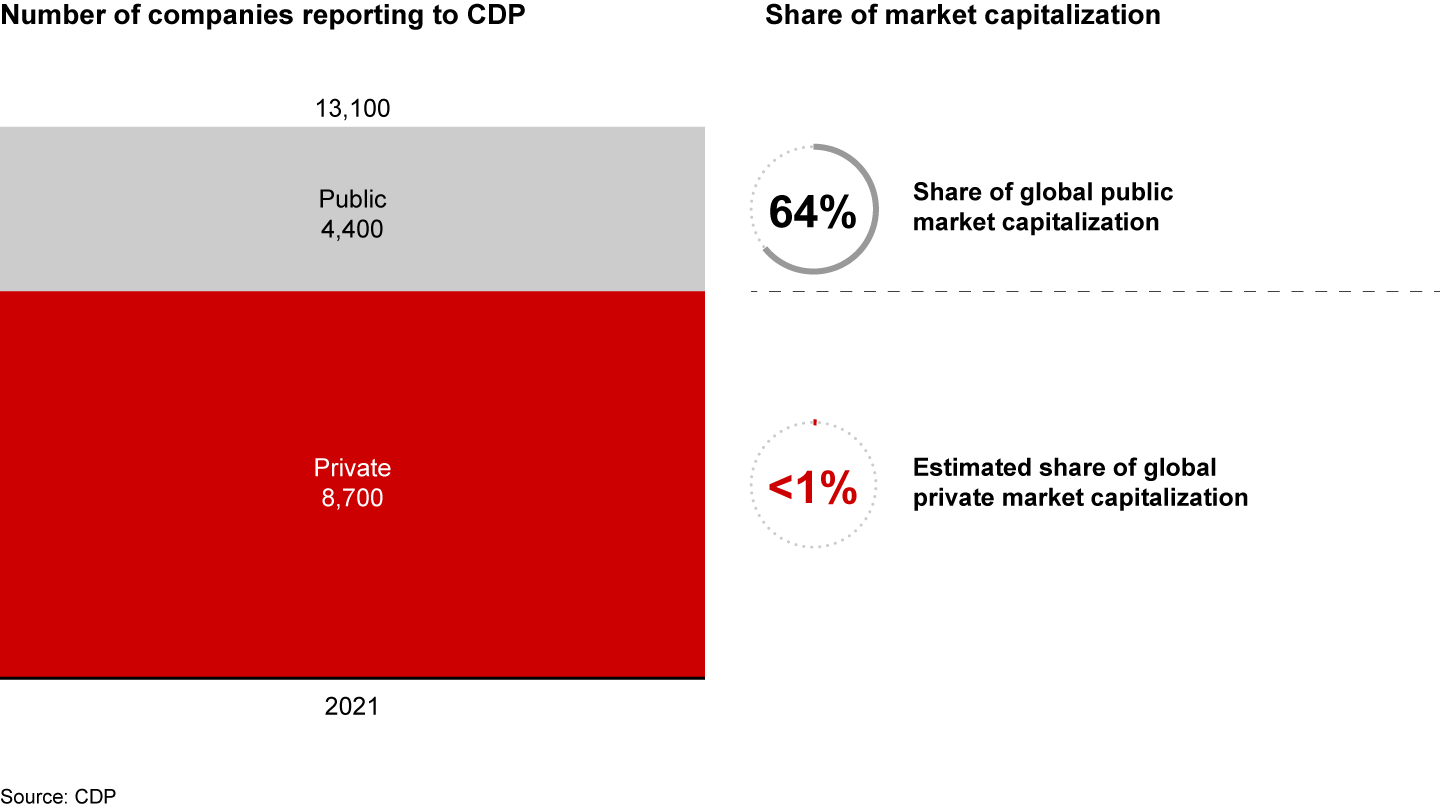
      Public companies representing close to two-thirds of global market capitalization report to CDP, but only a small fraction of private companies do

      Data from CDP’s Climate Change 2021 Questionnaire, analyzed in conjunction with Bain & Company, shows that those private companies are far less likely than their public counterparts to report on greenhouse gas emissions. Only 49% of them report on Scope 1 and 2 emissions, compared with 88% of public companies. And just 29% report on any Scope 3 emissions vs. 70% of the public cohort (see Figure 2). The effective coverage of Scope 3 emissions reporting is probably much lower, as many public and private companies are not yet reporting comprehensively on all 15 categories of Scope 3 emissions.

      Figure 2
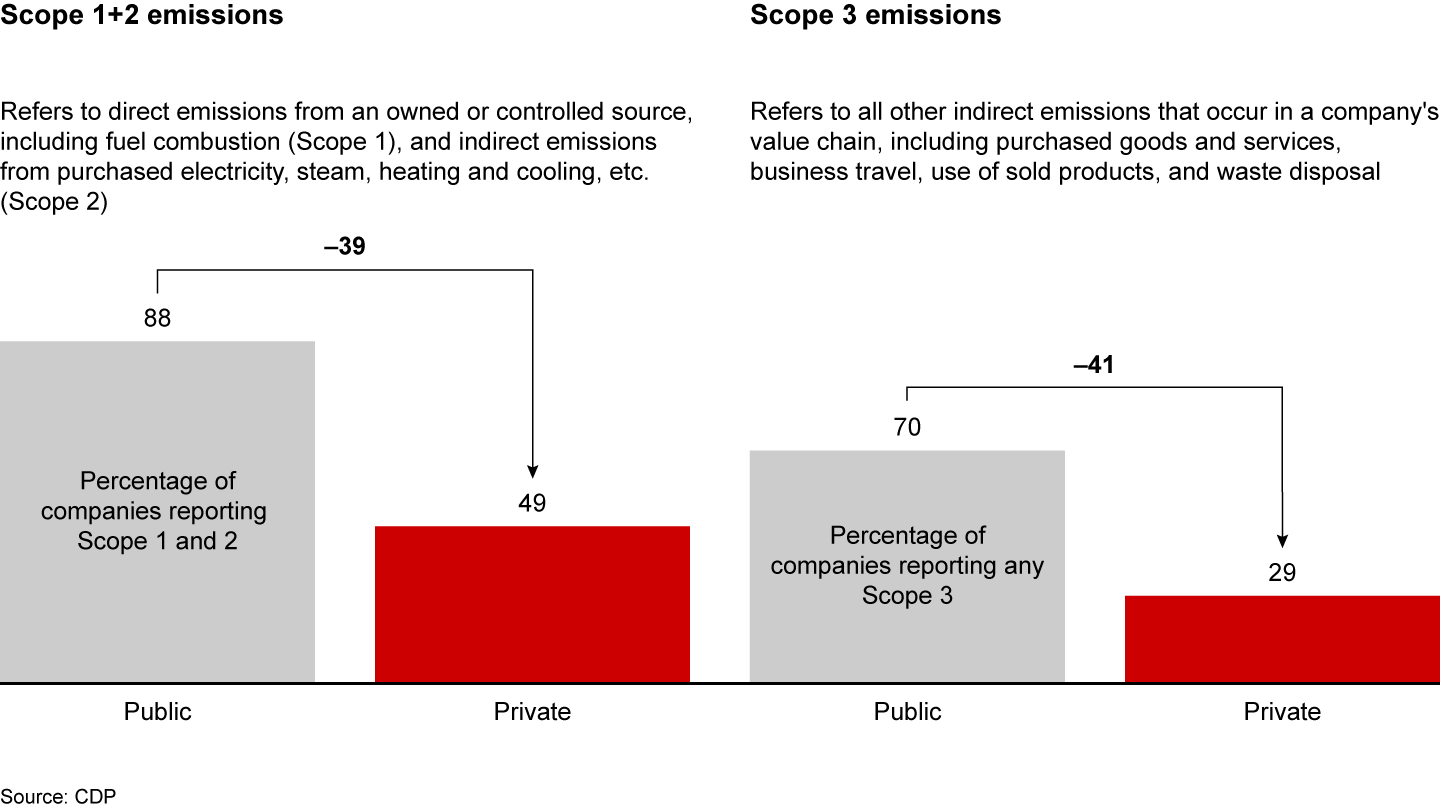
      The gap between public and private companies is wide when it comes to emissions reporting

      The gap also extends to ambition. While 73% of public companies actively set emissions reduction targets, just 37% of the private enterprises do. Larger private companies (those with more than $100 million in revenue) perform somewhat better than smaller companies in this planning function. But still only 51% of them reported setting any targets (see Figure 3).

      Figure 3
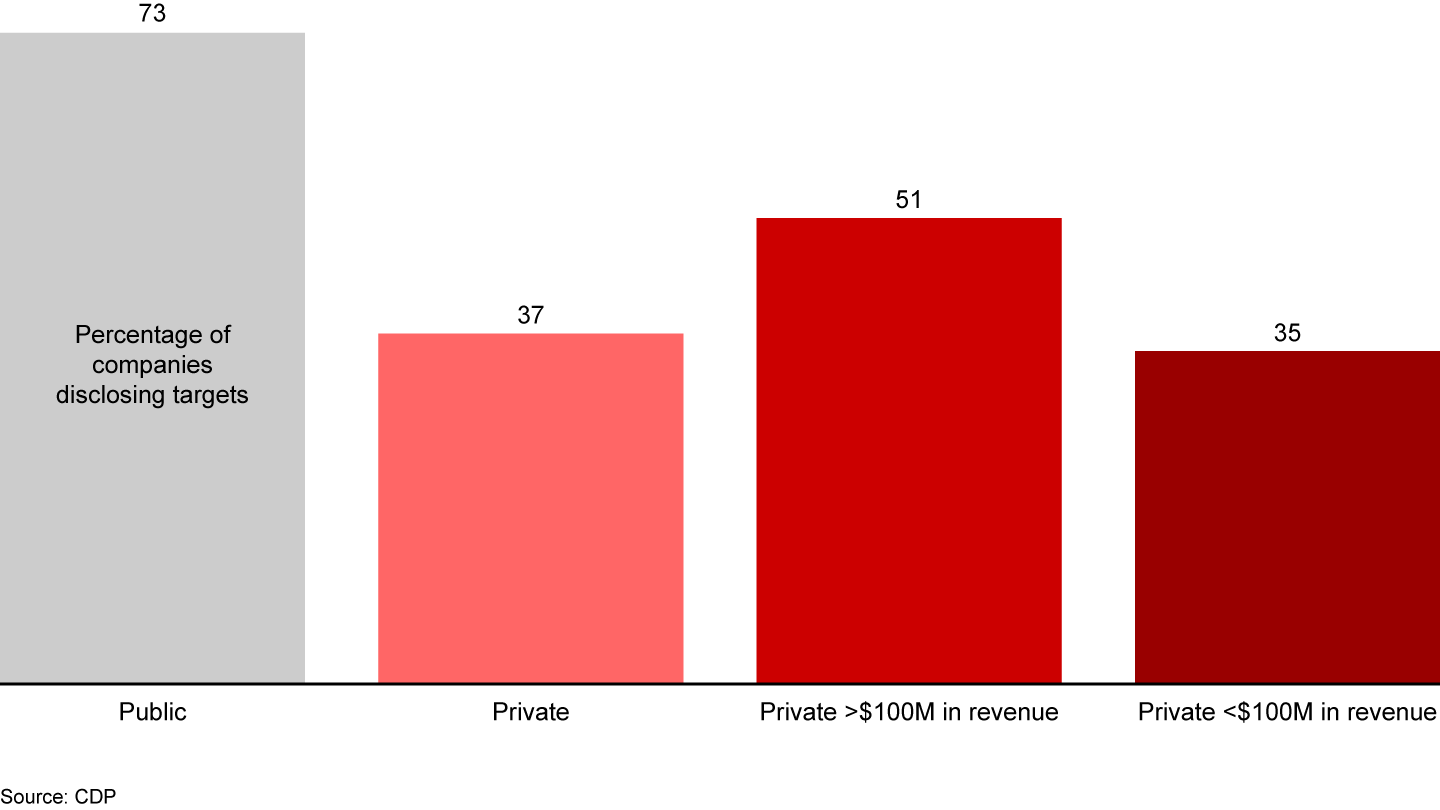
      Public companies are far more likely than private ones to set emissions targets, although large private companies score better than small ones

      Private companies aren’t ignoring the climate issue. Many have taken important steps toward institutionalizing oversight of their climate-related performance. A full 88% say they have appointed someone with responsibility for climate strategy, and 70% have established board-level oversight.

      But many still have work to do when it comes to translating oversight into meaningful action (see Figure 4). Close to 70% of private companies say their strategy is influenced by climate-related issues, but only 44% have identified material risks related to their environmental impact (compared with 76% for public companies). And though 59% of public companies reporting to CDP have put management incentives in place aimed at improving environmental impact, only 30% of private companies have done so. Based on current plans for implementing incentives, 81% of public companies will have such plans in place in two years’ time vs. 66% of private companies.

      Figure 4
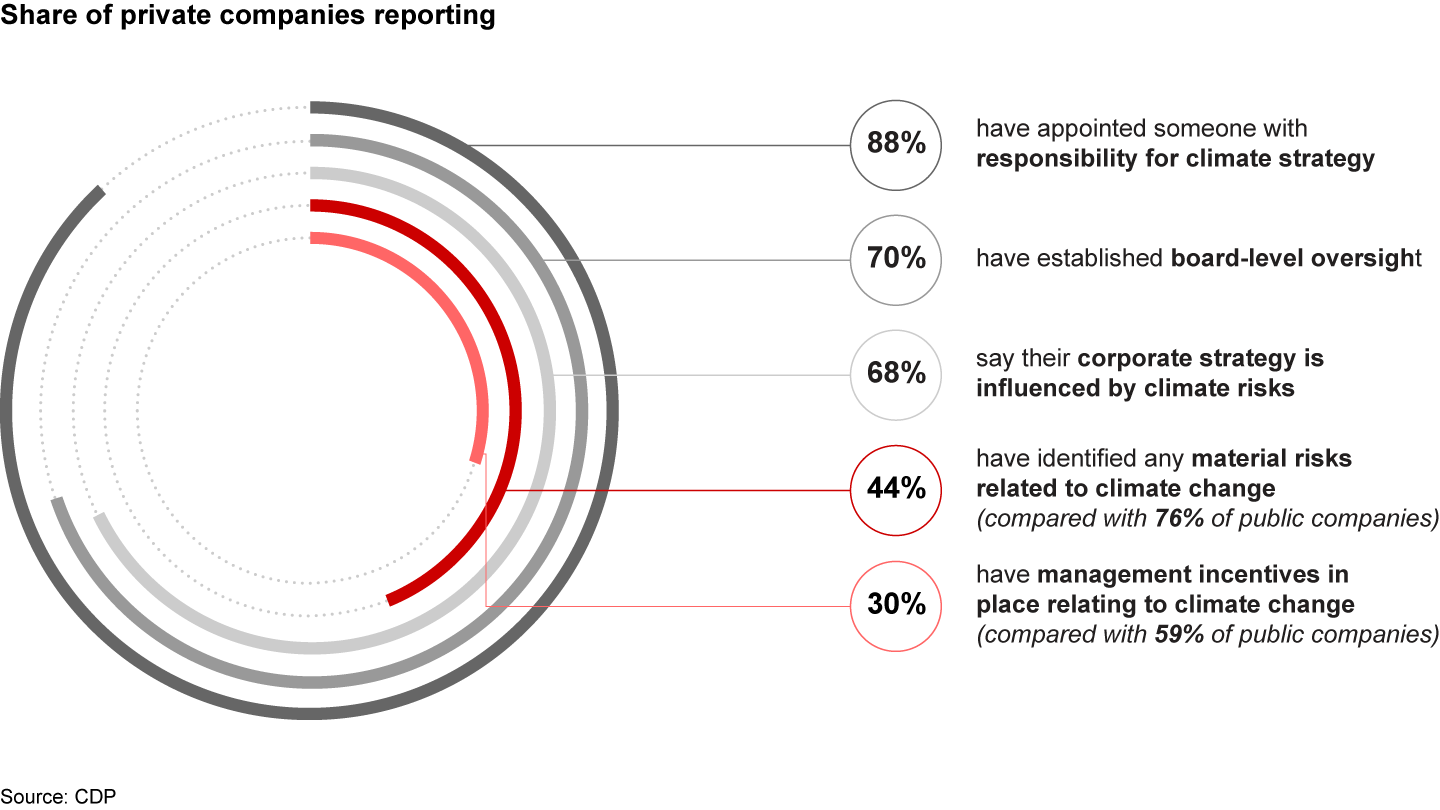
      A majority of private companies have assigned oversight for climate strategy, but far fewer are identifying risks or incentivizing action

      For those working toward a future of net-zero emissions, these findings help quantify the scope of the challenge ahead. They highlight how difficult it will be for the corporate world to mitigate climate-related impacts without broad participation across both sectors of the global economy.

      In an oft-quoted speech at the COP26 conference in Glasgow, BlackRock Chairman Larry Fink gave voice to another issue compounding this challenge when he suggested that companies hoping to avoid the costs associated with climate reporting and action will intentionally take fossil fuel-related assets private to escape public scrutiny. Consider that fewer than 10% of the public companies reporting to CDP in 2016 had gone private by 2021. But once they were in private hands, 85% of them had stopped reporting to CDP.

      While some owners will be tempted by what Fink colorfully called “the biggest capital market arbitrage in our lifetime,” the reporting gap between public and private companies also stems from a mix of resource constraints, capability gaps, and a lack of urgency from leadership. As noted above, smaller companies are skewing the private sector numbers downward as these enterprises are the least likely to have the wherewithal to make investments in tracking and reporting. They cite more pressing business concerns, lack of resources, and scant top-level sponsorship as reasons for not having begun measuring to date. A lack of a standardized reporting mechanisms hasn’t helped.

      But the market pressures being brought to bear on public companies—pressure from customers, investors, and regulators to increase transparency and boost performance—are rapidly extending across the reporting gap. As a recent survey conducted by Bain and the Institutional Limited Partners Association (ILPA) shows, 70% of the institutions that private markets rely on most for capital have adopted environmental, social, and governance (ESG) policies, and 85% of those have carried out or are implementing policies aimed specifically at private equity investments. A full 93% said they would walk away from an investment if it posed an ESG concern, and 80% expect to ramp up requests for ESG reporting from general partners (GPs) over the next three years.

      What these numbers suggest is that even the small- and medium-sized companies populating private equity portfolios are increasingly coming under scrutiny from investors. Regulators, too, are turning up the heat. Mandatory carbon reporting is already being rolled out in the European Union (EU), and regulators in North America are also mulling new rules to boost reporting requirements.

      At the same time, consumers and employees are loudly expressing their concerns when it comes to climate change. Consumers are increasingly shifting purchases to companies that offer environmentally friendly products and can demonstrate adherence to ESG policies. Top talent is likewise gravitating to companies that take sustainability and fairness seriously. Strong performance, in other words, is increasingly tied up in providing evidence of ESG-related performance through consistent and reliable tracking and reporting.

      Those forces—especially regulation—are likely to be the most powerful factors in closing the reporting gap between public and private companies. But it will also be critical for reporting itself to mature. The Bain-ILPA study shows that a lack of specific data standards and best practices related to ESG is clearly hampering PE investors’ ability to consistently evaluate ESG performance across their portfolios. CDP finds that private companies are generally enthusiastic about seeking solutions and are responsive to reporting requests, especially from investors. Finding easier ways to comply appears to be the bigger conundrum.

      Yet leading private companies are making strong progress, anyway. They are focusing on what they can do now, despite the hurdles, and taking practical steps to get the ball rolling. The firms looking to get a better handle on how and where to reduce greenhouse gas emissions, for instance, are:

      • Developing a carbon baseline to establish a starting point and identify where the company’s biggest sources of greenhouse gas emissions come from.
      • Establishing a focused plan by laying out both a long-term ambition and a short-term, high-impact set of initiatives to establish momentum and build credibility.
      • Communicating the ambition. As with any critical shift in how a company operates, communication and buy-in starts at the top and cascades down through the organization. It’s up to leadership to model a serious commitment to pushing toward net-zero.
      • Tracking progress against it. In the spirit of you can’t manage what you can’t measure, reporting and transparency are essential. Establishing a dashboard and metrics to track progress will accelerate change and give the company a means to trumpet success.

      Establishing a practical, credible roadmap for reducing emissions and mitigating other environmental impacts can be a difficult undertaking, especially for a company with complex industrial assets or a global supply chain. But as the need grows, an ecosystem of support is expanding rapidly. Third-party services are emerging to help companies identify and measure output in real time. Others allow investors (as well as suppliers, customers, and other stakeholders) to request sustainability ratings for individual companies and their supply chains, as well as clarify material sustainability themes.

      CDP is one such organization that is collaborating with both LPs and GPs to expand the scope of its disclosure infrastructure. That will facilitate disclosures from portfolio companies, establish transparency, and manage environmental performance. Working with investors with over $2.3 trillion in assets under management, CDP has created the first-ever standardized climate change disclosure platform specifically aimed at private markets. It includes a mechanism for modeling emissions based on reported input data.

      There will always be market players who try to escape scrutiny around their environmental footprint. But many private companies are simply searching for the best, most economical ways to measure their environmental impacts and mitigate them. New tools and methodologies are emerging every day. Investors, customers, employees, and regulators are all letting private companies know that now is the time to start putting those tools to work.

      The authors would like to thank Michael Galeski of CDP for his contributions to this brief.

      About The Bridgespan Group

      The Bridgespan Group is a global nonprofit that collaborates with social change organizations, philanthropists, and impact investors to make the world more equitable and just.

      Authors
      • Headshot of Marc Lino
        Marc Lino
        Partner, Dubai
      • Headshot of Phillip Doolan
        Phillip Doolan
        Alumni, Copenhagen
      • Pratima Divgi
        Head of Capital Markets, CDP North America, Toronto
      • Headshot of Radhika  Mehrotra
        Radhika Mehrotra
        Associate Director, Capital Markets, CDP North America, New York
      Related Industries
      • Private Equity
      Related Consulting Services
      • Sustainability
      How We Can Help
      • Sustainability in Private Equity
      Private Equity
      Sustainability Value Creation

      A framework for driving financial value through sustainability in private markets.

      Read more
      World Economic Forum
      Circular Business Models Unlock New Profit and Growth

      Companies are using circular strategies to reap economic benefits.

      Read more
      Private Equity
      What Kind of AI Cycle Are We Actually In?

      The question for investors is not whether AI will boom or bust, but who may be unwittingly subsidizing the buildout.

      Read more
      Sustainability in Private Equity
      Climate Week NYC 2025: Sustainability Integrates into the Core

      Leaders shift from pledges to practical solutions, revealing how energy, finance, manufacturing, and food systems are turning sustainability into strategy.

      Read more
      Sustainability
      How AI Is Starting to Transform Circular Packaging

      There are 15 AI use cases companies across the value chain can use today to accelerate circularity.

      Read more
      First published in mayo 2022
      Tags
      • Private Equity
      • Sustainability
      • Sustainability in Private Equity
      • World Economic Forum

      How We've Helped Clients

      Rapid Tech Due Diligence Helped a Private Equity Firm Invest with Confidence

      See more related case studies

      A Powerful Carbon Accounting Platform Helps IndustrialCo Optimize Its ESG Strategy

      See more related case studies

      How an Asian State-Linked Investment Fund Became a Sustainability Leader

      See more related case studies

      Want to continue the conversation

      We help global leaders with their organization's most critical issues and opportunities. Together, we create enduring change and results

      Bain Insights. Our perspectives on critical issues global businesses face in today's challenging environment, delivered monthly.

      *I have read and understand Bain’s Privacy Notice.

      Please read and agree to the Privacy Policy.
      Bain & Company
      Contact us Sustainability Accessibility Terms of use Privacy Modern Slavery Act Statement Cookie Policy Sitemap Log In

      © 1996-2026 Bain & Company, Inc.

      Contact Bain

      How can we help you?

      • Business inquiry
      • Career information
      • Press relations
      • Partnership request
      • Speaker request
      See all offices