

Brief

Executive Summary
- The global shift to a low-carbon economy has significant implications for refiners, which must make long-term investments based on their expectations of demand for their products.
- The transportation sector, with its appetite for gasoline and diesel, has long been the main customer for refiners. As transportation becomes more efficient and more electrified, refiners will want to shift production to petrochemicals, which are experiencing robust demand from developing markets.
- Digital technology could help refiners make their work environments more efficient, reliable and safe. But only a small percentage of executives say they are pleased with the results of their digital initiatives today, suggesting there’s much more work to be done.
- Refiners can make better investment decisions by planning around three likely scenarios for the evolution of energy markets: Oil and Gas Superabundance, Market Montage and Green Transformation.
When Bain & Company surveyed the major issues facing oil refiners two years ago, we saw several key trends: volatility in the oil supply, a global pool of crude that was getting heavier and more acidic, volume and growth concentrating in Asia, and mounting environmental restrictions on fuel emissions. These factors clearly benefited larger and more complex refineries, such as those coming online in Asia and the Middle East. (For more, see the Bain Brief “Full-Potential Oil Refining in a Challenging Environment.”)
Today, refiners continue to grapple with these challenges, as well as two other global trends: the growing urgency of the energy transition and the adoption of digital technologies in all aspects of business.
The transition to a low-carbon economy poses challenges for all energy companies, but particularly for refiners, which must not only reduce their own carbon footprint but also serve as a catalyst to help others reduce theirs. As refiners pursue low-carbon solutions, they will adopt new processes and capabilities, such as the direct hydrogenation of bio streams, and eventually waste streams, at the refinery; the development of low-emission fuels; the production of green hydrogen for use as fuel; the use of residual heat for residential applications; and the effective implementation of carbon capture and storage. Leaders will do more than simply comply with environmental regulations—they will tap their best talent and resources to guide their companies and their customers to a low-carbon economy.
Digital appears as both an opportunity and a threat, with promises of optimized production, safer and more reliable work environments, transparent supply chains and more efficient back-office functions. But so far, the track record for digital initiatives in the energy sector is mixed. Only a small percentage of executives say they are pleased with the results of their digital initiatives, while far more report settling for mediocre performance. Many executives have tempered their enthusiasm, but refiners shouldn't back away from the opportunities. Digital technologies—including advanced analytics, Industry 4.0 systems, machine learning and artificial intelligence (AI)—may be more challenging to implement than anticipated. But their long-term potential is likely to reward organizations with the persistence to identify the most promising applications and develop the capabilities to make the most of them.
Three scenarios for energy transition
Refiners need a clear strategy to navigate the energy transition, one that prepares them for market shifts caused by these changes. Bain’s recent research on integrated energy markets analyzed ways that several sources of disruption—including the geopolitics of the global oil supply, competition from renewables and associated technologies, attitudes toward carbon policy, and changes in mobility—could influence total demand for oil and gas by 2030. (For more, see the Bain Brief “Managing the Energy Transition: Three Scenarios for Planning.”) Based on this research, we defined three supply-and-demand scenarios: Oil and Gas Superabundance, Market Montage and Green Transformation. Several interesting patterns emerged (see Figure 1):
- Renewables grow very strongly in every scenario.
- In at least one scenario, total oil demand is lower than it is today, reflecting peak demand.
- Global demand for transportation fuels varies dramatically, from 8% lower to 26% higher than today.
- Global demand for petrochemicals manufactured from oil could grow between 25% and 30%, making it the most robust sector across all three scenarios.
Figure 1
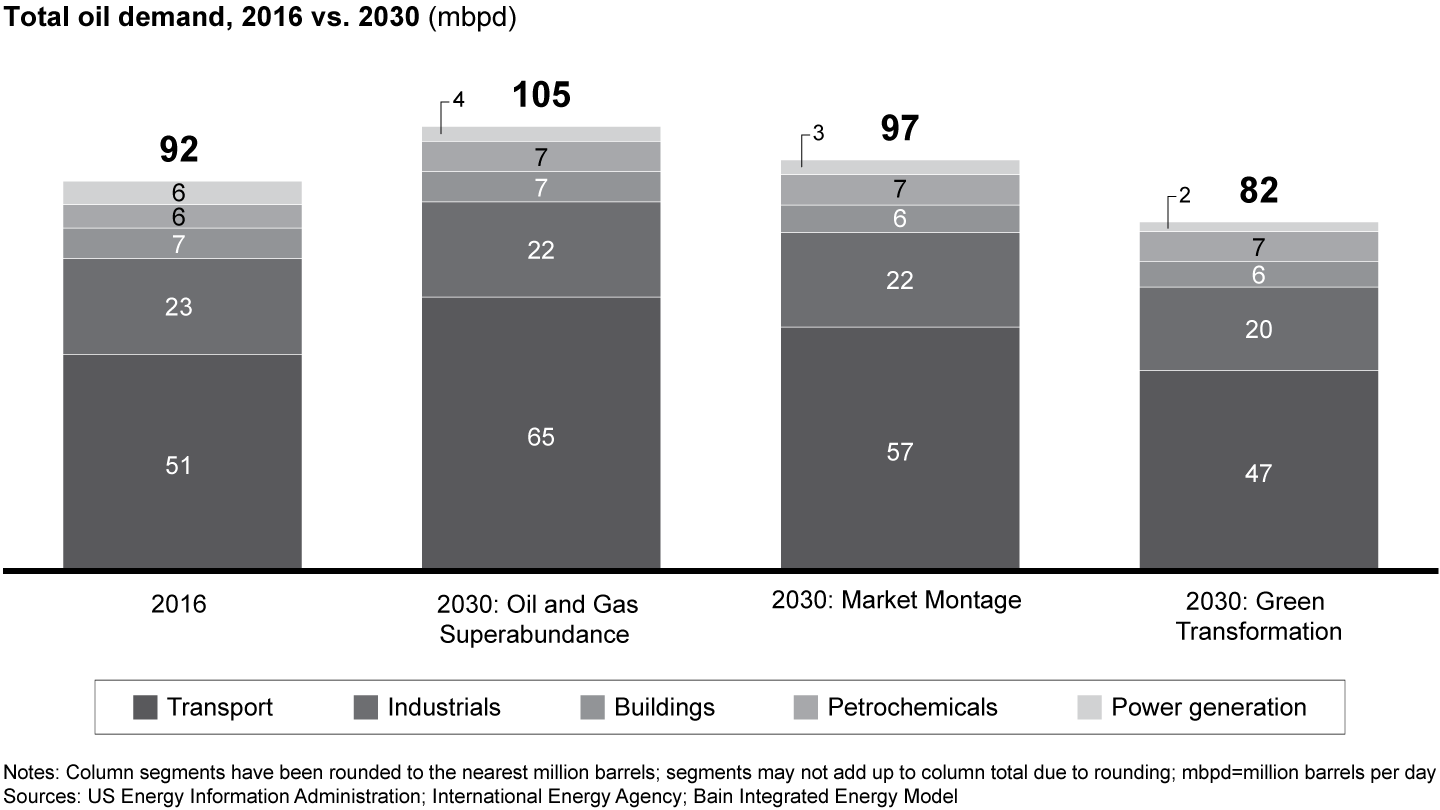

Interestingly, over the past two decades, the 10-year forecasts for the growth of renewables came in about 30% lower than what actually occurred—suggesting that even the greenest forecasts may underestimate the potential for a lower-carbon sector.
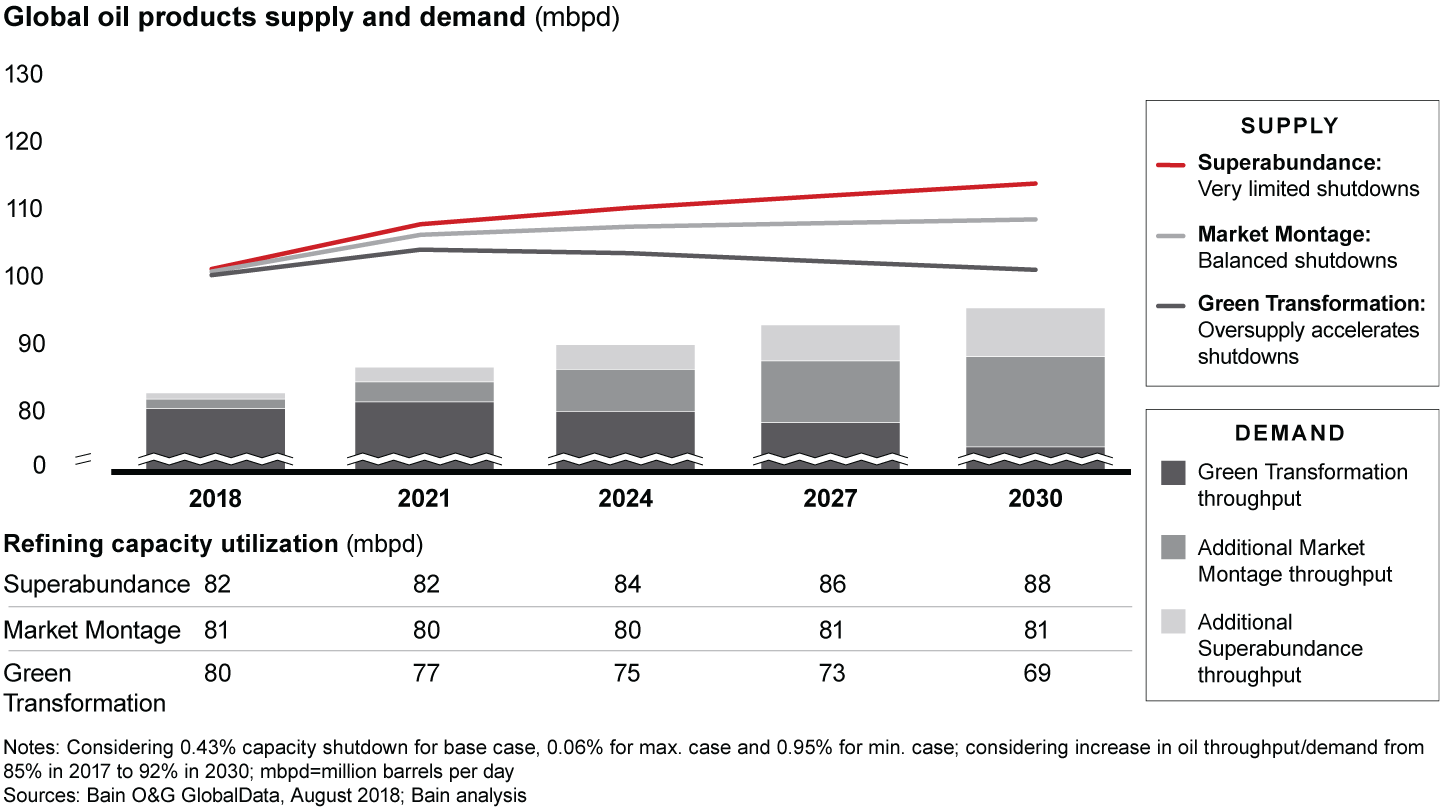
This has important implications for refiners: In Bain’s Green Transformation scenario, demand declines so rapidly that even an acceleration in refinery shutdowns will not prevent utilization rates from falling to as low as 70% by the end of the next decade (see Figure 2). A battle for survival among refiners already appears to be underway, especially in regions where peak demand will hit soonest, like North America and Europe. A recent poll among European refining executives corroborates this view: Four-fifths think that only a few will survive by 2030. And, true to Darwinian principles, the survivors may not be the strongest but the most adaptable. For refiners, adaptability entails having a robust long-term strategy that clearly states the company’s role in the energy transition, while charting a clear course for excellence in the key aspects of the business. Refiners must look beyond maximizing profits. Given the uncertainty ahead, they should prioritize plant upgrades that don’t consume too much capital and are flexible enough to deal with the different scenarios.
Figure 2

Capturing the opportunities of digitalization
Digitalization can differentiate the companies that deploy it successfully and quickly, while increasing competitive pressure on refiners that fall behind.
Among the many potential benefits are:
- improved margins through real-time optimization systems that seamlessly integrate process control and production planning;
- more efficient processes from adding AI on top of traditional control systems;
- more reliable plants with lower levels of downtime, thanks to predictive maintenance solutions that rely on AI and machine learning;
- better transparency and streamlined transactions in the supply chain through the use of blockchain, which could also eliminate several types of middlemen; and
- zero-based redesign of support functions simplified by AI, automation and blockchain.
But taming digital technologies isn’t easy. Bain’s research on digital transformations finds that only 5% of companies say they achieved or exceeded expectations, and 75% say they have settled for diluted value and mediocre performance. Our 2018 report with the World Economic Forum, The Digital Enterprise: Moving from Experimentation to Transformation, noted that executives are particularly frustrated by a lack of focus in digital initiatives: too much going on, too little coordination. This has left doubts about the value of these programs and uncertainty about the appropriate levels of funding. Our study also found that, even with well-focused initiatives, most companies were unprepared to scale up from their pilot programs.
Companies frequently charge in, intrigued by the possibilities of digital and encouraged by vendors, adding sensors to critical equipment, purchasing systems and staffing up an advanced analytics team. Many find that they still cannot access the right data to glean meaningful insights, and the frontline operators don’t trust the outcomes. Learnings are not as transferable as hoped, given many different types of equipment, data and connectivity across facilities. Executives don’t know which external partners could be most helpful, and hiring more analytics talent runs into budget constraints—particularly since it’s often unclear which of several digital initiatives is more important than the others. Should they invest in warehouse robotics, better e-commerce systems or drones to supervise hazardous conditions?
One large refiner faced several implementation difficulties with its digitalization efforts. First, in terms of data, it found that its critical assets were not sufficiently monitored, reports generated by service providers didn’t provide the raw data required for processing, some data had no digital coding process, and there were several internal inconsistencies between the enterprise resource planning system and manual reports. Second, teams resisted sharing data with other areas in the organization and were reluctant to embrace a new operating model required by the digital solution. The refiner also lacked a standardized IT architecture across the business and an enterprise-wide view on service and solution delivery. Contractors were locked in for long periods and not set up to deliver in an agile, iterative model. To rescue its digital transformation, the refiner developed a more structured implementation plan that included a new operating model more friendly to digital solutions and new methods of working across silos.
Evaluating players and positions
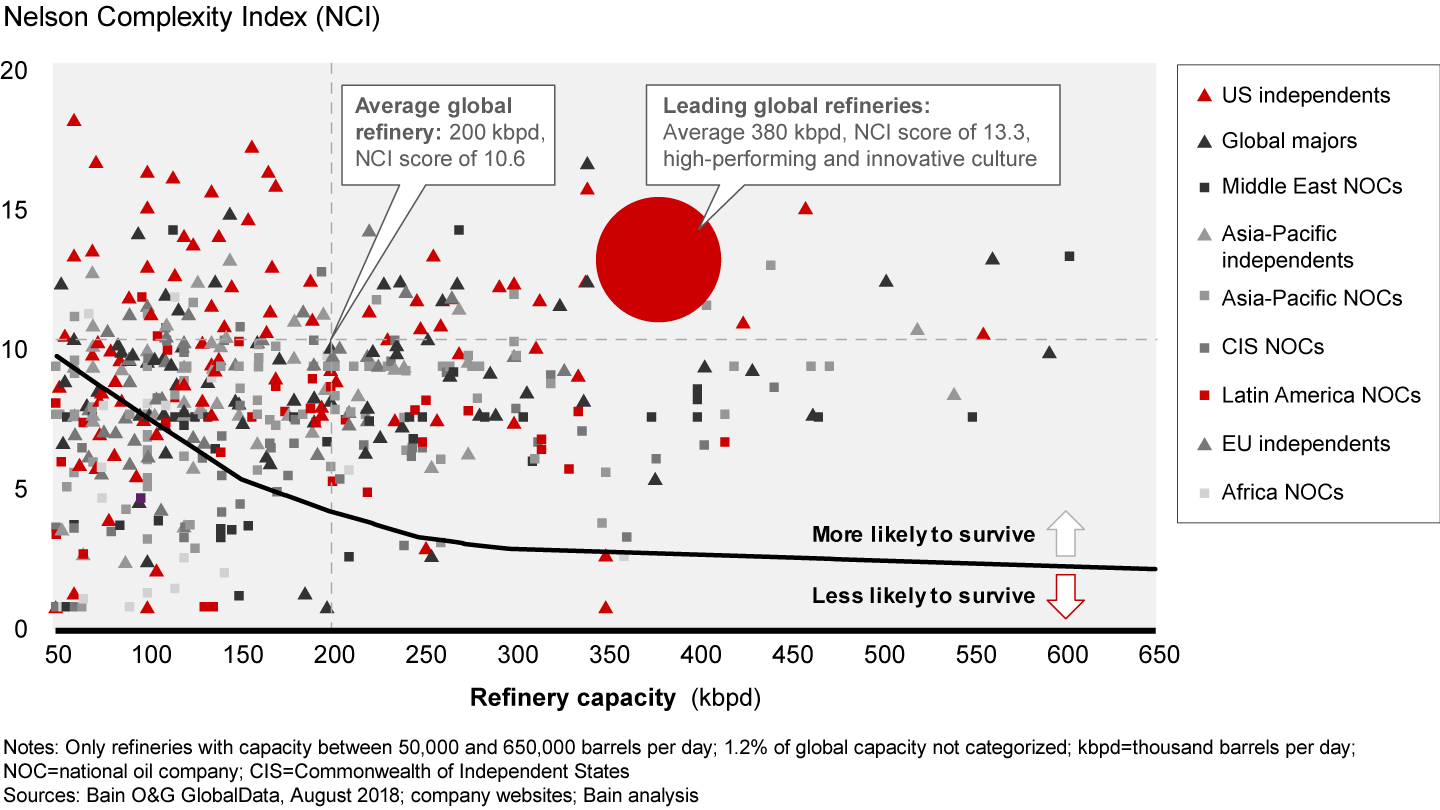
These global trends affect the entire sector, with some segments and refiners feeling them more than others. To assess the relative strength of more than 400 refineries, we plotted the capacity of each against the Nelson Complexity Index (see Figure 3). For refiners whose NCI score and scale place them below the line, it could be very difficult to thrive in a competitive market. The best refineries in the world are not only about the hardware, with capacities around 380,000 barrels per day. They are also about the “software”—a high-performance culture that emphasizes continuous improvement, reliability, energy efficiency, innovation and technology.
Figure 3

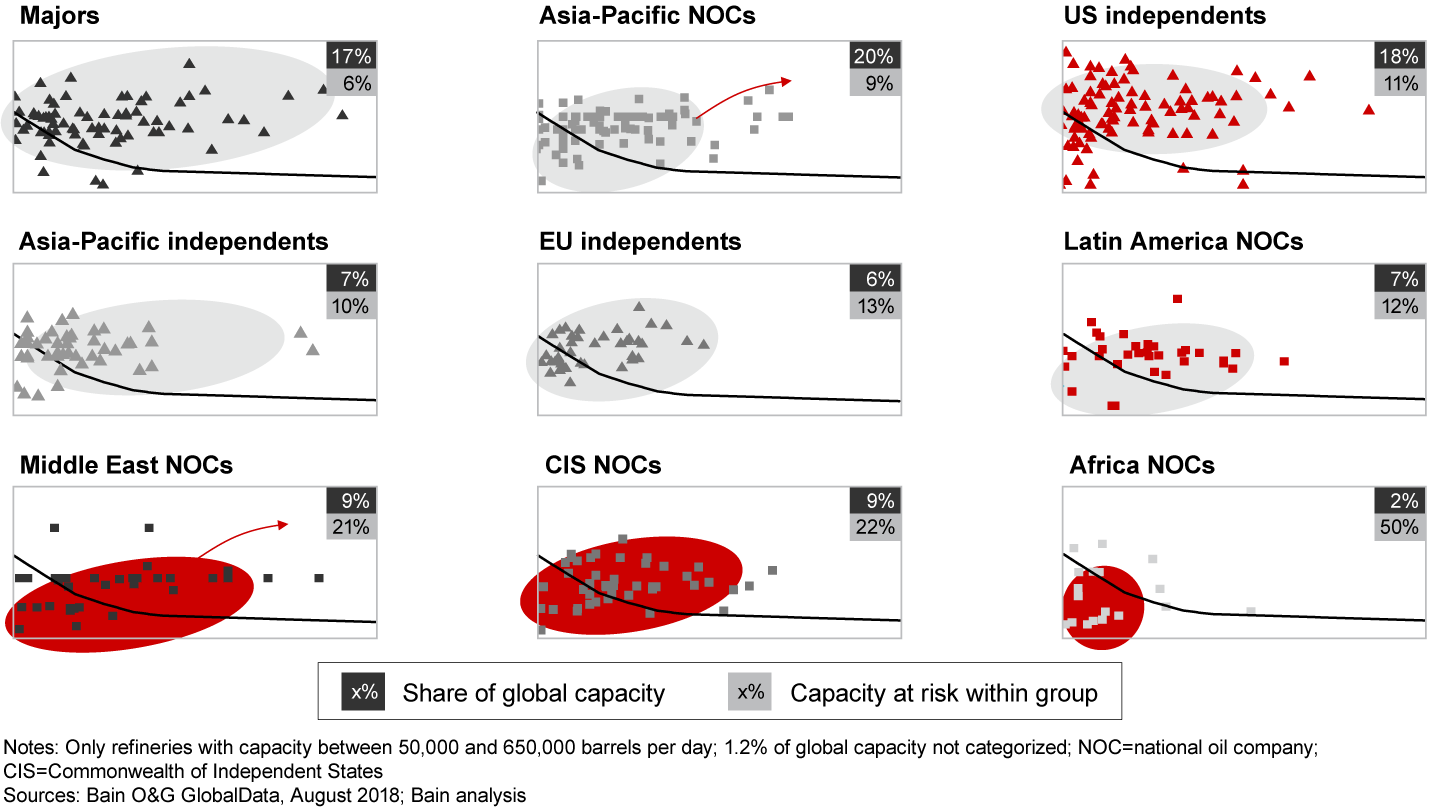
The major oil companies and US independent refiners lead the industry, controlling more than a third of global capacity (see Figure 4). Only 6% of the refining assets of the majors fall under the curve. Regionally, Europe, Latin America, the Commonwealth of Independent States and Africa are particularly challenged, while the Middle East and Asia-Pacific are upgrading their portfolios, making them more competitive.
Figure 4

Toward full potential
As the conditions for the refining industry become more challenging, even the most advantaged companies will have to strive harder to achieve and maintain their full potential. A well-structured plan can help companies pursue excellence by improving their capabilities. While individual conditions and requirements vary widely from one refiner to another, leaders will succeed in four critical areas.
- Develop a high-performance culture. Across industries, a culture that inspires and spurs performance makes companies 3.7 times more likely to be top performers. In refining, high performance starts with the decision to achieve operational excellence. Leaders continuously look to improve plant reliability, energy efficiency, frontline labor productivity, SG&A optimization and working-capital management. Many refiners have focused on these tasks in recent years, but a large gap remains between the most- and least-efficient players. Leading performers use a system that clearly describes what excellence looks like, how to achieve it and how to improve on it. (For more, see the Bain Brief “What ‘Good’ Looks Like: Creating an Operational Excellence Management System.”)
- Embrace the transition to digital. Across industries, digital has become the necessary step to achieve state-of-the-art performance. Tackling a digital transformation requires a sustained commitment from the organization, from planning the transformation all the way through to its execution inside and outside the company. (For more, see the Bain Brief “Orchestrating a Successful Digital Transformation.”)
- Take a comprehensive approach to refining margin. The volatility implied in the three scenarios we describe makes it difficult to evaluate capital investments, even for small debottlenecks. Advanced simulations can help refiners to better assess crude diet changes, product slate optimizations, and opportunities for debottlenecking and upgrades. Also, the latest generation of simulators and tools for linear optimization give refiners a more comprehensive view of the integrated value chain and the best ways to enhance margins, from oil sourcing to dynamic pricing and product mix changes. Choosing the right tools can be challenging, but it is essential. And investments here can generate a value comparable to plant upgrades without the hefty capital spending (or at least minimizing it).
- Think through your next plant upgrade and new builds. No refinery is likely to survive the next business cycle without some level of upgrades, even if just to meet cleaner fuel specifications. Refiners should determine which mixes are accessible to them within each scenario, in terms of heat or power generation, light-duty vehicles, heavy road transportation, aviation and marine uses, and chemicals. Most refiners will increase the proportion of petrochemicals in their product slates, with no shortage of options available, including high-olefins fluid catalytic cracking (FCC), high-severity FCC, deep catalytic cracking, isocracking and mixed-feed steam cracking. Ultimately, market potential and the ability to remain flexible should guide these decisions, especially in regions like Western Europe, where petrochemical demand will not be as dynamic as in the Asia-Pacific region. Since demand for transportation fuels and petrochemicals appears destined to continue to rise in Asia-Pacific in even the weakest growth scenarios, refiners there should consider investing in technologies that could leapfrog them to more advanced positions, like oil-to-chemicals and other setups more aligned with a low-carbon future.
The refining sector is poised to enter a cycle of natural selection that will separate the fittest from the rest, based on how well they adapt to the upcoming energy transition and whether they are able to capture the benefits of digital technology. Even the strongest players may find themselves challenged to maintain a competitive edge as they evaluate and implement an array of new technology initiatives, and work to position the industry as a facilitator of a low-carbon energy sector. In the short term, refiners may get a boost from new regulations that mandate cleaner fuels, which will require many ships to switch to diesel. But over the longer term, a structured approach to identify the highest-value opportunities will increase their odds for success.
José de Sá, Diego Garcia, Francesco Cigala and Tiziano Rivolta are partners with Bain’s Global Energy & Natural Resources practice, working with the oil and gas sector. José is based in Rio de Janeiro, Diego is in Buenos Aires, Francesco is in Kuala Lumpur and Tiziano is in Milan.

Full Potential Oil Refining in a Challenging Environment
Refiners have enjoyed comparatively good times as the rest of the oil industry suffered, but they should prepare for a more competitive season ahead.

Managing the Energy Transition: Three Scenarios for Planning
A new era of hypercompetitiveness will redefine business boundaries as it threatens to strand legacy assets.

The Digital Enterprise
Moving from experimentation to transformation.

What "good" looks like: Creating an operational excellence management system
The right set of rules, implemented with accountability, can guide companies on their journeys toward operational excellence.

Orchestrating a Successful Digital Transformation
Few companies succeed in transforming themselves for the digital age. Here’s how the leaders beat the odds.
First published in marzo 2019