

Report

Family philanthropy in India is not new and continues to be deeply ingrained in the country’s customs and traditions. In fact, many of India’s eminent families have contributed to the nation’s independence movement and growth, with family businesses and entrepreneurial contributions to the Swadeshi movement’s calling for national independence and the use of domestically produced goods. Many prominent Indian-family-owned businesses found their genesis in the “Made in India” movement of the 1900s. These families continue to create economic opportunities, invest in philanthropic initiatives, and chart a course that has been and continues to be key to India achieving its potential.
Written in collaboration with
Written in collaboration with
Family philanthropy has many dimensions and is shaped by various considerations. Dasra, through its close work with more than 300 families over the past 22 years, has experienced the multifaceted nature of family giving and has partnered with several such givers in their philanthropic journey. Philanthropic capital in this space is primarily funded by personal family wealth, and family givers are individuals or families who self-identify as such. They give either in a personal capacity or through self-identified “family foundations.” They also tend to be deeply engaged and personally involved, participate formally in their foundations’ operations, embed their values in their giving approach, and seek to build their family’s legacy.
Building on India’s family values, a deep sense of community, and nation-building ethos, scaling up domestic family philanthropy is critical to accelerating the development sector and to India achieving its Sustainable Development Goals (SDGs).
Private philanthropy has grown rapidly in India, despite the pandemic
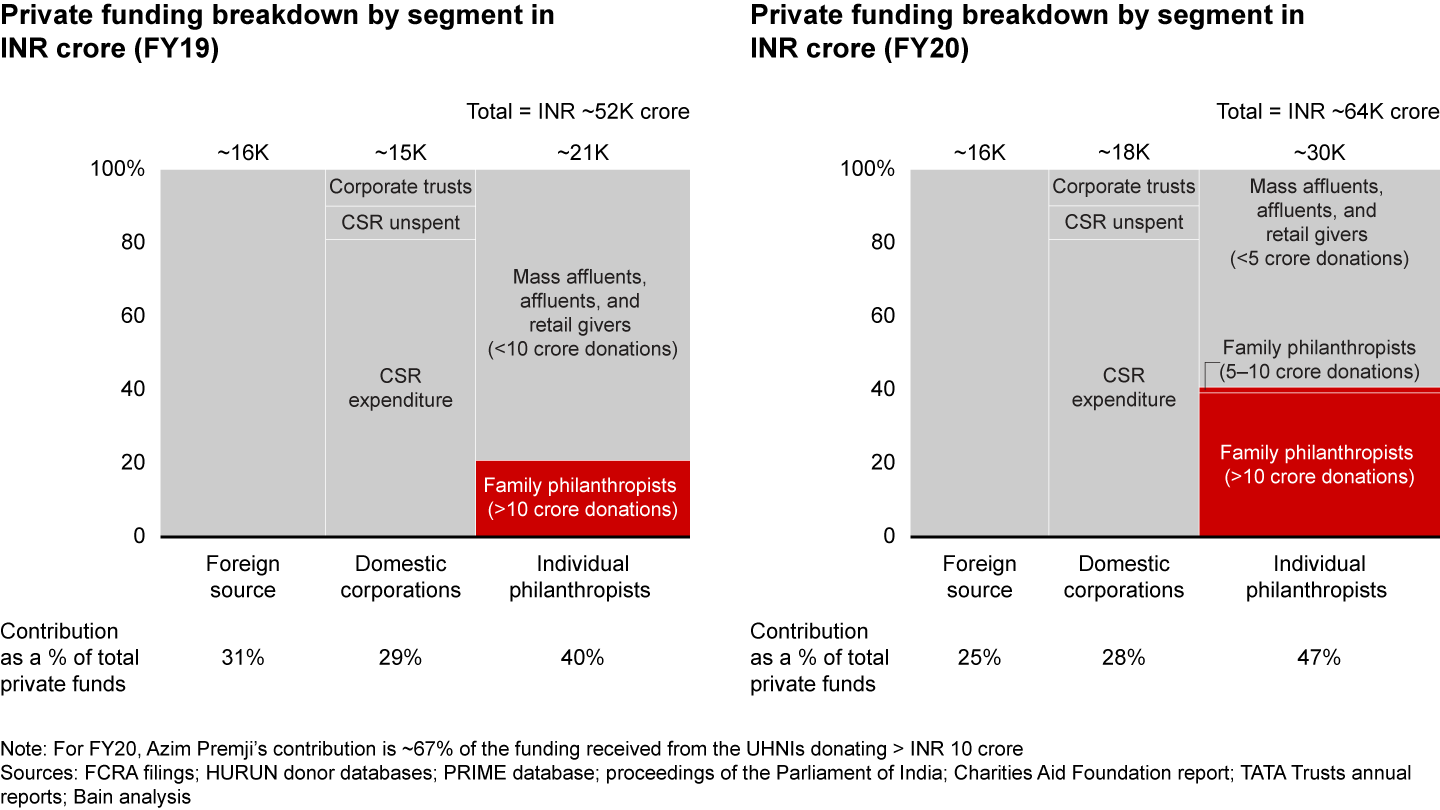
Philanthropy in India continues to grow. In fiscal year 2020, private-sector funding totalled about INR 64,000 crore—close to 23% more than in fiscal year 2019 (~INR 52,000 crore).
Private-sector funding stems from four sources: foreign, corporate, retail, and high-net-worth individuals (HNIs) or families. Foreign contributions account for a quarter of all funding. Domestic corporation donations—also known as Corporate Social Responsibility (CSR) funding—account for 28% of funding. Retail investors (<INR 5 crore donations each) account for another 28%. The balance (about 20%) comes from family philanthropy.
Family philanthropy is also the biggest source of growth, accounting for almost two-thirds of the increase in funding since FY19 (see Figure 1).
Figure 1

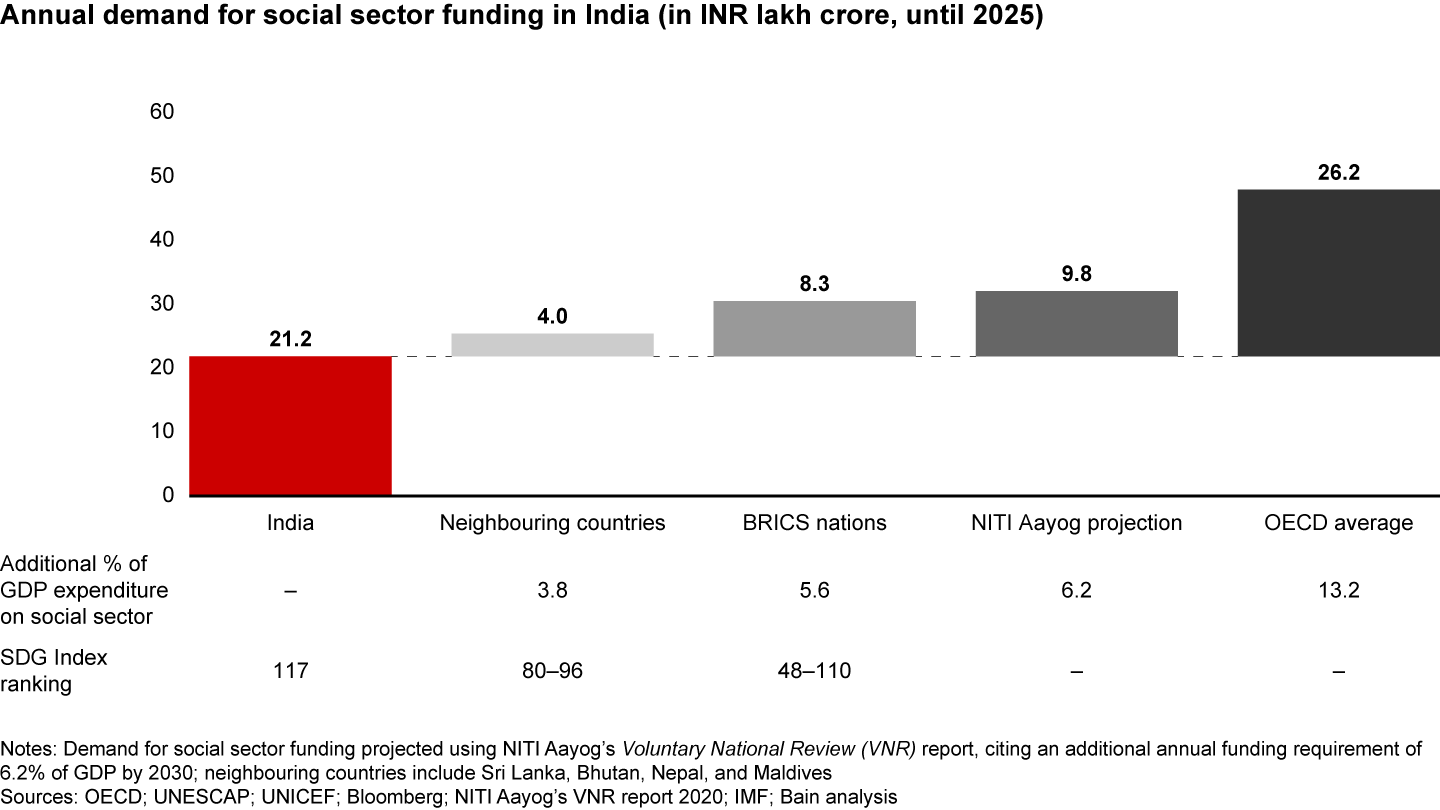
Despite this growth in funding, the social sector remains underserved. Compared with other BRICS countries, India underspends on the social sector—reflected in its relatively poor ranking (117th) on the Sustainable Development Report. Central government spending on the top 10 social programmes accounted for the vast majority of overall public funding for the social sector, with a contribution of INR 3.2 lakh crore for FY20. State funds for the social sector have historically been about four times that of central government, suggesting total public spending on the social sector of approximately INR 15 lakh crore for FY20. Historically, India has a structural spending gap of about 5% to 6% of GDP, relative to BRICS. Given this gap and the pandemic-induced setback to the social sector, India will continue to face a significant annual funding deficit in the near term (see Figure 2).
Figure 2

Family philanthropy has growth potential, whereas other philanthropy sources are constrained
Domestic corporations have seen a decline in profitability during the past year. (Domestic corporate giving includes CSR donations and the contribution from trusts and foundations, dominated by Tata Trusts.) Listed companies’ profitability declined by 62% in the months immediately following India’s initial Covid-19 lockdowns. Therefore, the corpus available for CSR, which grew by 17% from 2014 to 2019, is expected to decline by 5% in 2021. Compounding this challenge, the CSR corpus has shifted away from traditional nonprofits and sectors to Prime Minister’s Citizen Assistance and Relief in Emergency Situations (PM Cares) and other Covid-19 relief initiatives.
According to the “ResiLens Stress Test” conducted by Dasra on 125 nongovernmental organisations (NGOs), one in two NGOs has an income base that is more than 60% restricted. With funding challenges and long-term CSR partners altering their funding arrangements, these NGOs—already reeling under the impact of reduced foreign funding due to stringent Foreign Contribution Regulation Act (FCRA) rules—found themselves struggling to remain secure.
International nonprofit contributions had already declined by nearly 30% over the past five years, driven by changes in regulations governing such contributions under the FCRA of 2010. This part of the ecosystem is unlikely to make up for shortfalls elsewhere.
The pandemic-driven economic slowdown will likely drive a reduction in individual private giving (with the exception of family philanthropy). First advance estimates by the Ministry of Statistics and Programme Implementation (MoSPI) suggest that Indians are likely to see a decline of 5.4% in their per capita income (from INR 1.32 lakhs to INR 1.27 lakhs) in FY21. This decline will cascade into their charitable giving. Family philanthropy has proven resilient throughout the pandemic. The wealth of billionaires in India grew by 35% between April and July 2020, according to the Billionaires Insights 2020 report published by UBS and PwC.
Vanessa D’Souza, CEO of the Society for Nutrition Education and Health Action (SNEHA), believes family philanthropy donors are more reliable and flexible than CSR donors: “When one of our major CSR funders—about 10% of our annual budget—who was committed in an MOU with us just suddenly gave us two months’ notice, stating inability to fund beyond the period, individual philanthropists helped us.”
Forbes Marshall and its promoter family understood there was an immediate need to focus on migrant workers: augmenting existing systems and advocating for far-reaching, sustainable change. Thereon, they evolved a set of practices and initiatives to effect changes in their own company processes, and they shared these with like-minded companies at various forums. Along with other industry leaders, they realised the need for industry—a significant employer of informal workers—to take affirmative action. They connected with the Pune business community to identify like-minded business leaders committed to promoting greater dignity and equity for informal workers. This resulted in the June 2020 creation of a multi stakeholder initiative, called “The Social Compact”, consisting of business leaders, nonprofit leaders, and academia, and facilitating greater industry accountability toward the group of informal workers. A pilot group of companies is now working to improve their own informal worker practices, after which the techniques that emerge from these pilots will be leveraged to drive adoption by a wider set of industry players.
Family philanthropy has many benefits
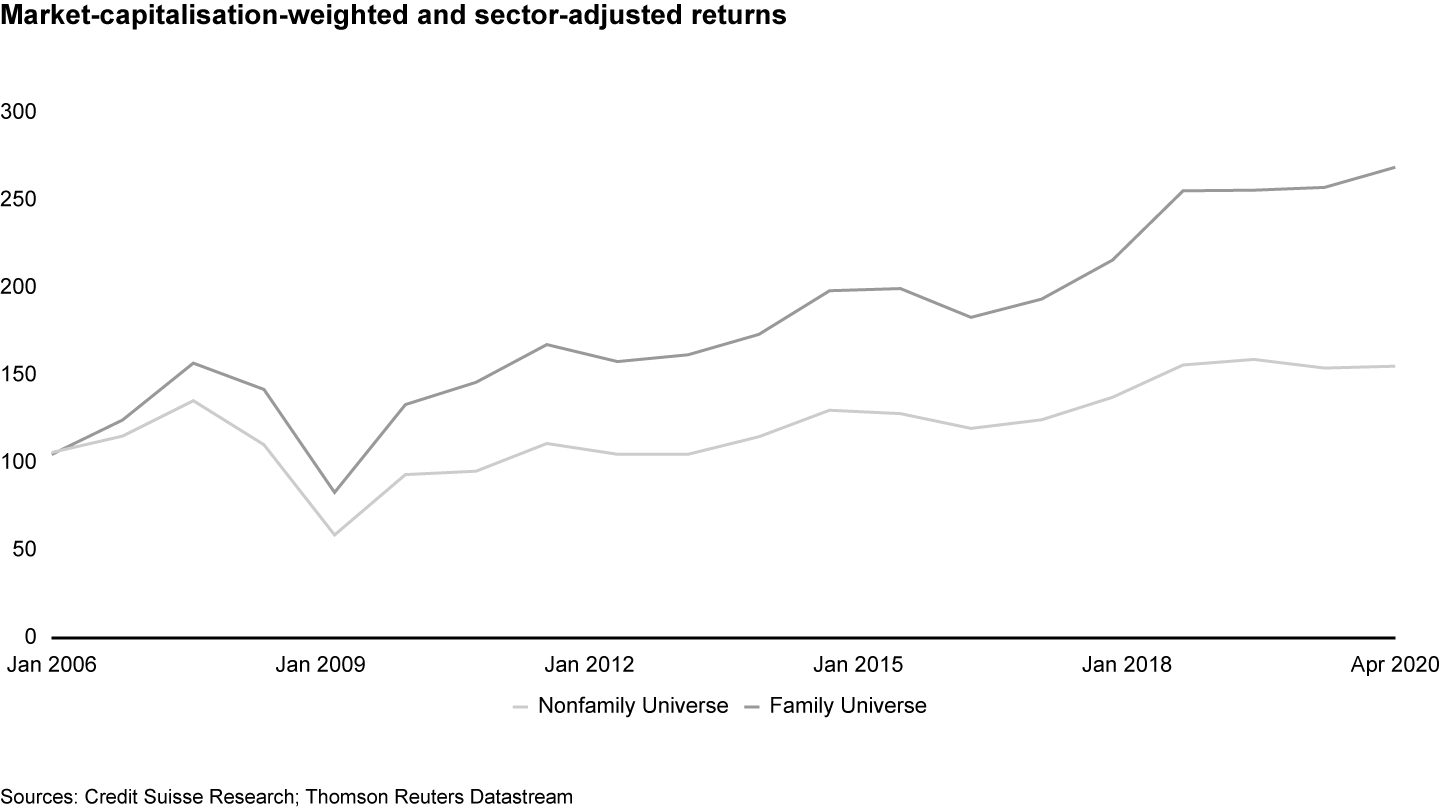
Family businesses have outperformed nonfamily businesses for more than a decade (see Figure 3). The result of this business performance has been the creation of new wealth. According to Edelweiss’ The Family Wealth Report 2018, India has nearly 150,000 ultra-high-net-worth families holding a cumulative net worth of about INR 140 lakh crore. This cohort is expected to grow to 400,000 families with a net worth of almost INR 360 lakh crore by 2025.
Figure 3

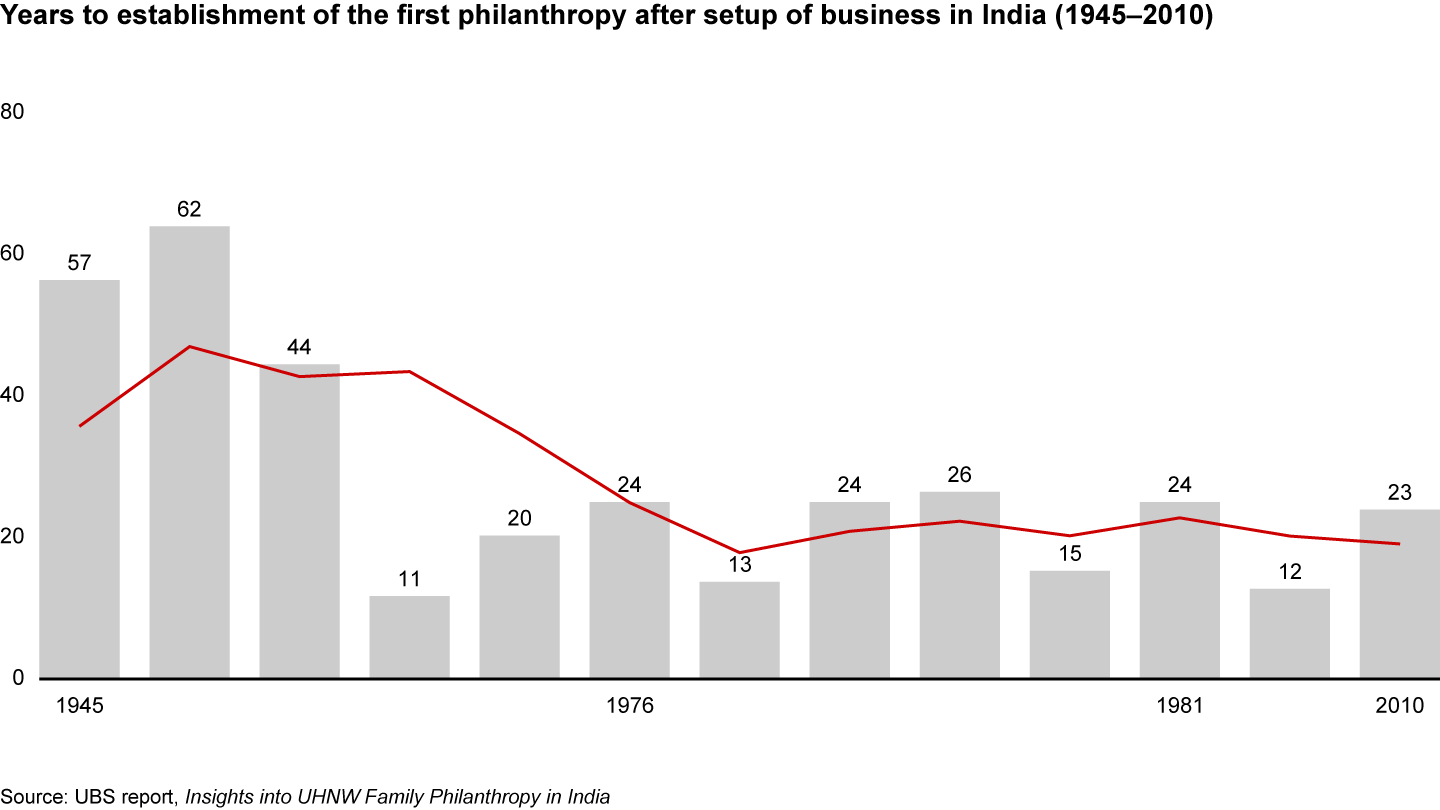
Families are also giving back to society sooner. The Insights into UHNW Family Philanthropy in India report by UBS suggests that the time needed for such families to create their first foundation for philanthropic giving dropped from 30 to 50 years in the 1950s to 15 to 20 years in the 2010s (see Figure 4).
Figure 4

Families’ interest in philanthropic activities is also deepening. Research by Edelweiss suggests 95% of family business owners have philanthropic interests and commitments. PwC suggests that these interests and activities are not limited to capital but indicate a significantly deeper commitment. Approximately 90% of such families in India are engaged in activity in addition to giving money—a significantly higher portion than the global average of 68%.
Family philanthropy has fewer constraints than other sources, enabling a broader impact on the social sector. These donors have a greater ability to innovate, influence public policy, build institutional capacity, and experiment with new forms of funding.
Rumana Hamied of Cipla Foundation highlights how CSR positively influences family giving to become more sustained and strategic: “The impact-driven, process-led approach of CSR can inform the flexibility and risk-taking of family giving, making it more robust. It gives philanthropists like me the confidence to invest in long-term social change while giving to causes that speak to my heart.”
Family philanthropists also show greater flexibility in funding and capability building relative to other sources. Capability funding in the nonprofit sector is under pressure. CSR regulations limit nonprofits to spending no more than 5% on administration and capability building. A recent amendment to the FCRA caps NGO administrative expenses at 20% of their total foreign funding used in the year.
The FCRA of 2010 is the law that regulates foreign contributions to India and their use. The 2020 amendment discourages soliciting foreign contributions and collaborations, provides for stricter penal provisions against NGOs, and detrimentally affects organisations working on non-programmatic work, such as advocacy and capacity building.
Family philanthropists distinguish themselves by demonstrating a great deal of flexibility in such cases. Manasi Kirloskar of Caring with Colour says, “I strongly believe in strong processes running a successful organisation and have developed strong systems to ensure timely execution of programmes/projects, quality checks, and human resource development.”
“Family givers are more supportive and open to giving irrespective of the top line that allows social enterprises in the middle of the value chain to scale,” says Neelam Chhiber of Industree.
Family philanthropists can also go far beyond grant-making. Most funders come with extensive and technical knowledge in their respective fields, have deep networks across functions and industries, and exert influence on change makers at the highest levels. Consequently, givers often prioritise their personal engagement with their nonprofit partners by giving their time, skills, or voice. For instance, some participate in a fiduciary capacity as board members for their nonprofit partners, and others advocate for causes they support, while many choose to leverage their technical knowledge and networks to provide advisory support or raise additional capital.
Family philanthropy has biases: cause, geography, and mode of engagement
Family philanthropy has its biases. Education- and health-focused funding dwarf other causes (see Figure 5). This bias is especially stark given India lags in several sectors. India is further behind on gender equality indicators than on indicators related to health and education, which receive a significantly higher share of domestic philanthropic funding compared with gender equality. The personal experiences of wealthy donors are a key factor in this bias.
Figure 5
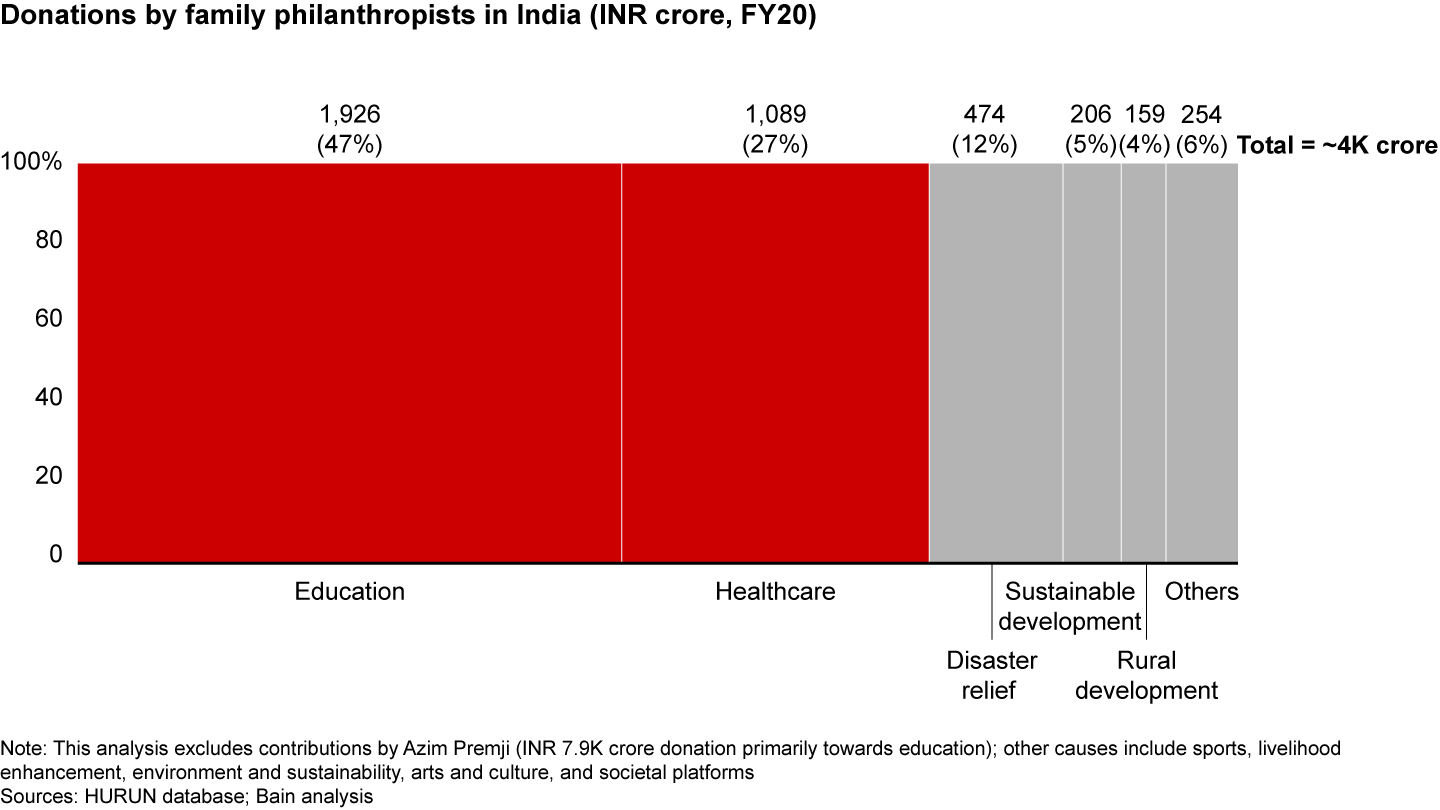

However, such cause biases exist across the space—from foreign funders, bi-lateral and multi-lateral agencies providing overseas development assistance (ODA) to homegrown corporate givers and foundations who also demonstrate a preference for funding health and education initiatives.
While we see this cause bias amongst family givers as well, they often play an important role in supplying risk capital to underrepresented areas within the broader health and education sub-sectors. They help support innovation that enables effective interventions or NGOs to leapfrog and scale intersectional themes such as gender in healthcare and horizontals such as data, technology, and talent to enable greater impact and efficiency.
Vidhi Shanghvi of the Shantilal Shanghvi Foundation works in a highly underrepresented area. She emphasises, “While the pandemic exposed various inequities in society, access to mental healthcare services was key among them.” Accordingly, she swiftly adapted to address the sense of urgency by launching interventions to plug service gaps in the mental health value chain.
Wealth is also concentrated in a few cities. Unsurprisingly, most wealthy families are based in Mumbai, Delhi, and Bangalore. These areas account for 77% of ultra-high-net-worth individual (UHNI) wealth and 85% of total actual donations, leaving a greater need in “aspirational districts.” For example, Odisha (a relatively underperforming state) has SDG India Index composite scores of 61 and 40 for health and education, respectively, whereas Maharashtra (a better-performing state) scores 76 and 65, respectively. This divergence of outcomes mirrors an unequal distribution of resources.
A majority (60%) of family philanthropists engage with nonprofits through grant-making. This trend creates a unique challenge. Not all NGOs can absorb scale funding of the sort offered by these families, given that only a handful of NGOs in India have an annual operating budget of more than INR 5 crore, according to a study by Ashoka University’s Centre of Social Impact and Philanthropy (CSIP) (the average annual budget of NGOs in India is less than 60 lakh crore). Such grant-making behaviour is better suited when the nonprofit ecosystem is more sophisticated and has a larger scale.
Potential for family philanthropy growth is immense
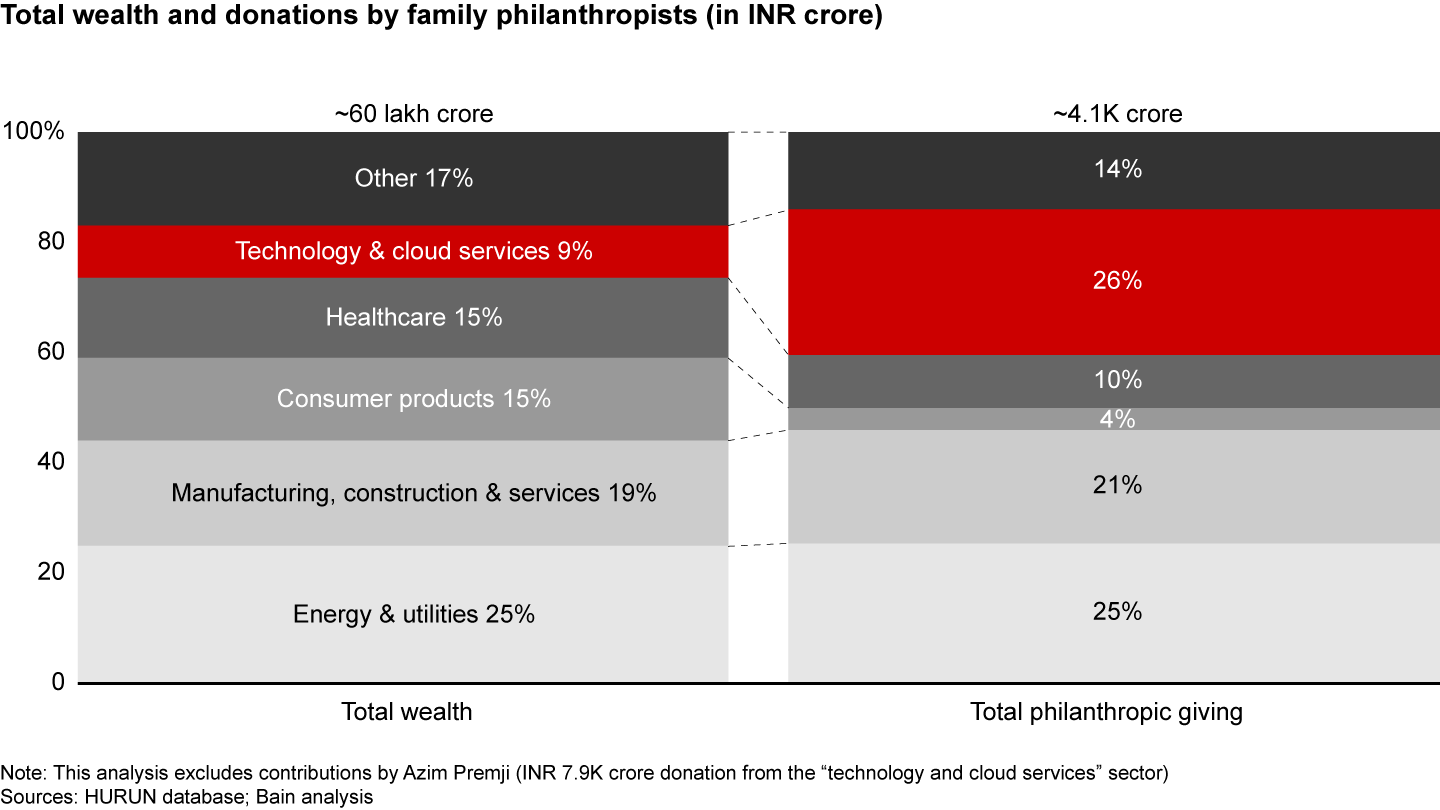
Family wealth generated in India cuts across sectors, but not all sectors benefit equally. Technology accounts for about 9% of family net worth but is the focus of about a quarter (26%) of all family philanthropy giving (see Figure 6).
Figure 6

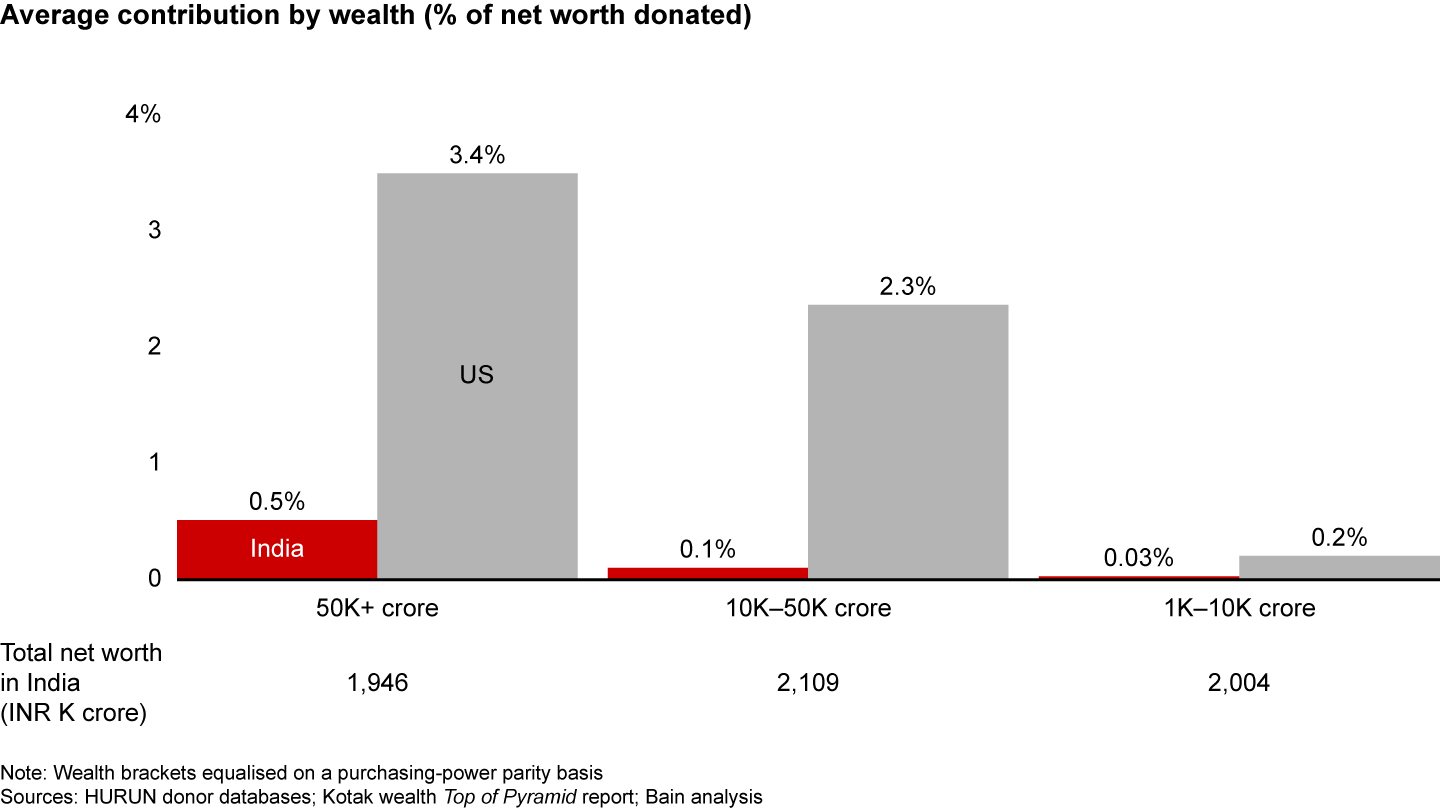
Indian philanthropists also donate a smaller portion of their wealth relative to countries such as the US, creating substantial room for growth (see Figure 7). This difference is in part a result of the tax advantages that philanthropy confers to donors in the context of estate and inheritance taxes in other countries. India does not offer such benefits.
Figure 7

The need for advisory support is more palpable given that contemporary givers and next-generation givers are highly engaged philanthropists. They are initiating philanthropic work earlier in their lives, demonstrating active involvement in social impact, and leaning into nontraditional forms and avenues of giving to include underrepresented and untapped areas. In addition to this dynamism, they are also thinking through their spheres of work in the long run. Raj Mariwala, a staunch advocate in the mental health space, used a two-pronged approach by immediately calling on all partners to take measures to keep employees safe and repurpose funding as they wished; while also reckoning with the long-term mental health and psychosocial consequences of Covid-19.
If unlocked, family philanthropy can be truly transformational for India
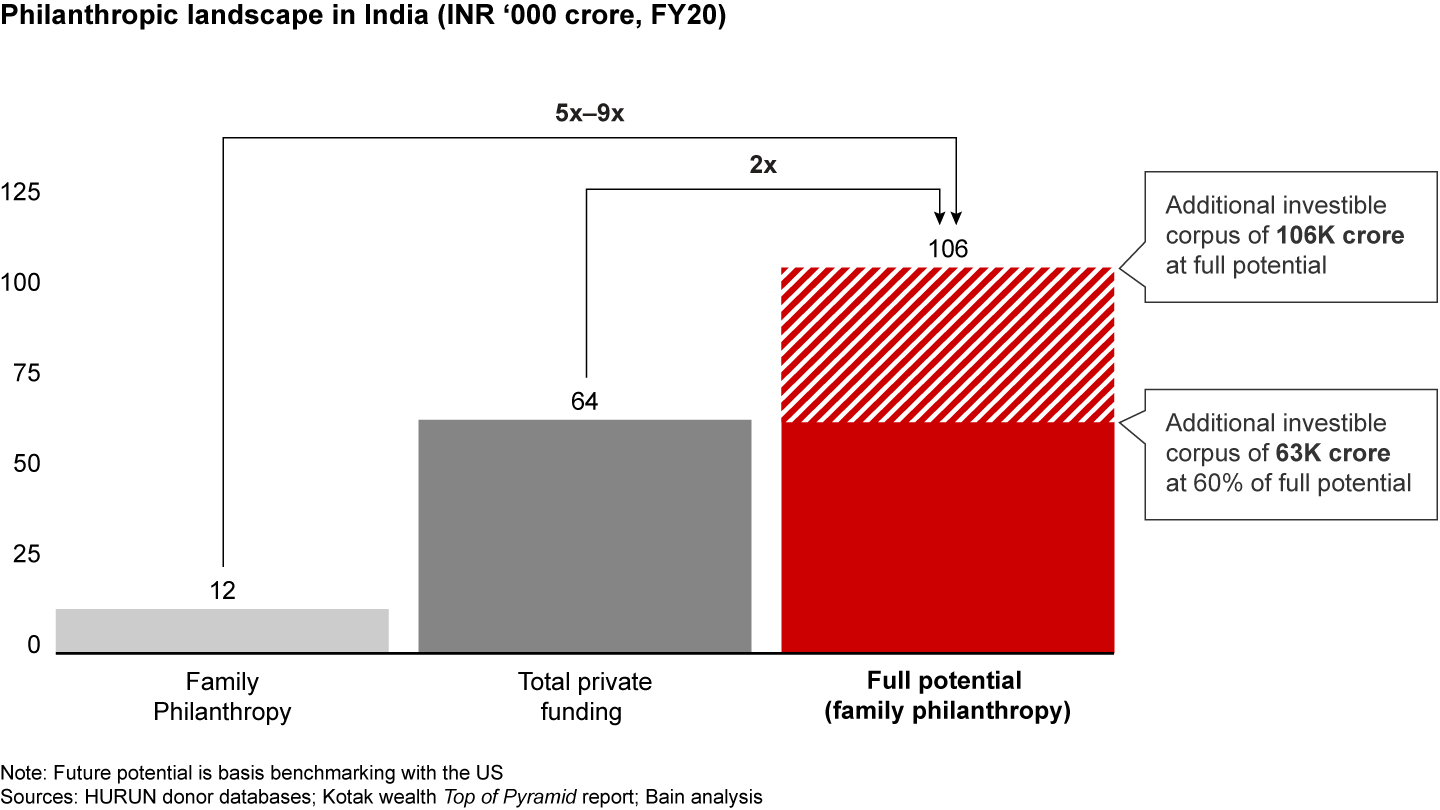
The depth of India’s wealth is expanding, with an increasing number of Indian ultra-high-net-worth families (see Figure 8). If these families start giving in line with their global peers (2% to 3% of their wealth), family philanthropy could generate an additional annual investible corpus of INR 60,000 to 100,000 crore for the nonprofit sector.
Figure 8
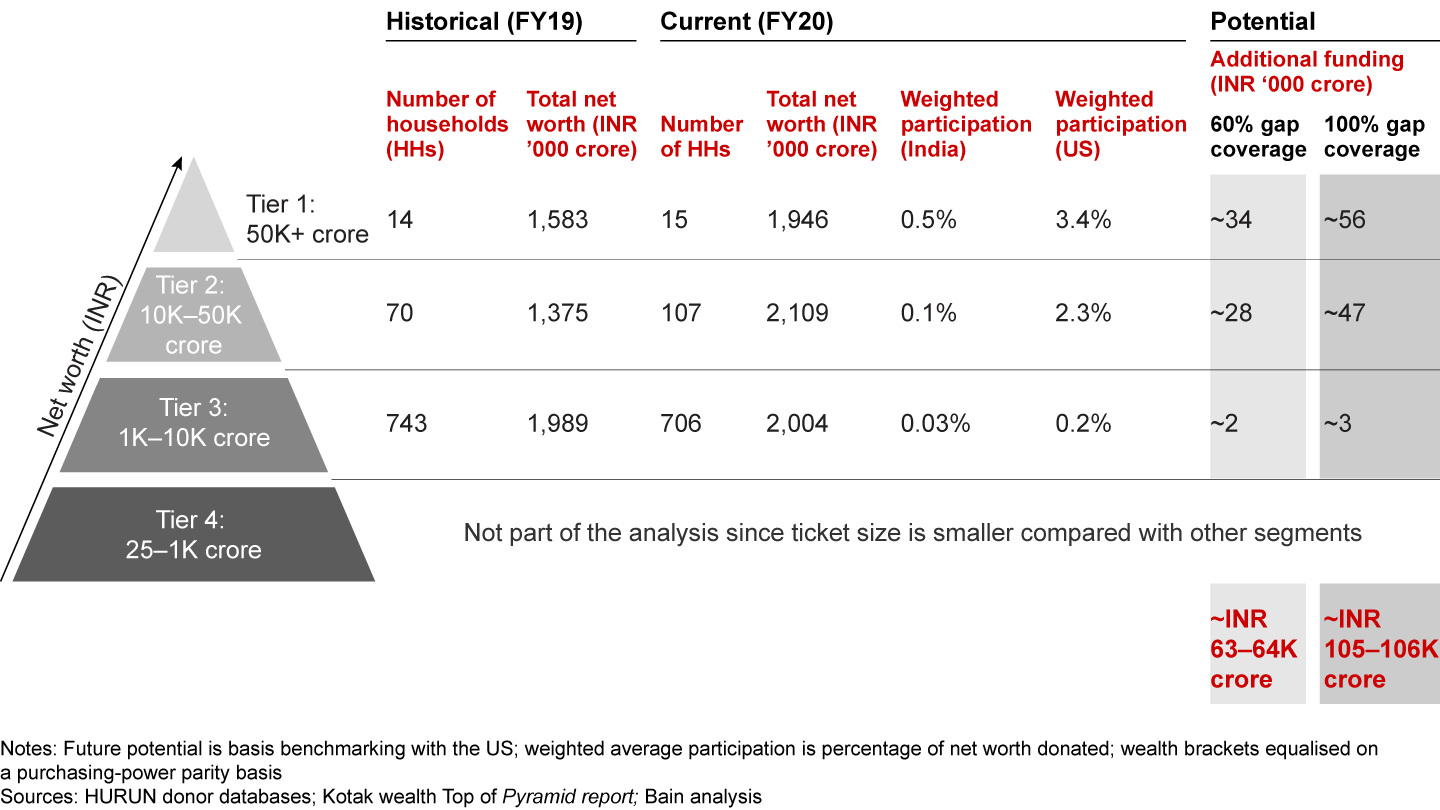

Such giving would be transformational, more than quintupling current family philanthropic giving (INR 12,000 crore in FY20) and nearly doubling the size of nonprofit private funding in India (see Figure 9).
Figure 9

Understanding how to unlock this corpus is key, but equally important is planning for formalised support that family givers are bound to need as they enter philanthropy. Many new givers, particularly those with large giving capacities, will opt to establish foundations that they own and operate—70 of the top 100 large givers have their own foundations. To do so, they will require hands-on support, not just to navigate the legal and regulatory field when setting up these institutions but also to design and deploy their philanthropy strategies. The time is ripe for advisers to enter this space to help family givers navigate the waters.
2021 tailwinds for family philanthropy in India
India’s family values, deep sense of community, and nation building are cornerstones to scaling up family philanthropy and accelerating India’s development sector in achieving its SDGs. Family philanthropy has many dimensions, and there are no clear boundaries in India between what constitutes family philanthropy and what does not. However, over the past 22 years, and working closely with over 300 families, Dasra has identified the following factors as shaping family giving and hence family philanthropy: the extent to which the family identifies its “family self” in its philanthropy, is personally involved, leverages its influence, drives intent, establishes legacy, and sustains assets from family sources. These are the 2021 tailwinds in family philanthropy:
1. Collaboration paradox
The pandemic has seen a rise in collaboration between funders, government, and NGOs, resulting in the co-creation of solutions to complex social issues such as hunger, migration, and vulnerable workers. Greater familiarity and trust-building efforts have resulted in greater openness to collaboration. Although collaboration among funders and NGOs is mainly issue-based, there is an emerging interest in aggregating, better coordinating, and considering a systems approach. Unique challenges and opportunities arise when family philanthropy opens up to collaboration. The complexity entails trusting nonfamily partners, sectoral diversity, engaging government and grantees as key stakeholders, and even navigating differences within their families.
In 2020, leading families have overcome these obstacles and seeded two collaborative platforms focused on vulnerable workers—Social Compact and The Migrants Resilience Collaborative—to engage families and their influence on platforms for systems change.
“We need a new social contract for India which fundamentally reforms our labour markets, attracts people to cities where we ensure healthy living conditions, and creates economic opportunities in rural India.”
2. Giving capacity
Family philanthropy continues to range from larger own-and-operate foundations to smaller grantmaking to NGOs. Families with greater than INR 25,000 crore net worth are typically establishing foundations that they own and operate. However, focusing on unlocking other families could accelerate much-needed grant-making for NGOs. Even if these families increased their giving from 0.1% of net worth twofold, this could unlock significant funding for NGOs. However, the sector’s absorption capacity is limited.
Increasing domestic family philanthropy among givers could bring much-needed flexibility and innovation to emerging community-based organisations that have suffered from the newly introduced FCRA regulations and diverted CSR funds.
“Even if giving were to double, many NGOs would find it hard to absorb additional capital. This also contributes to a trust deficit in the NGO space.”
3. Proximate power
Given that wealth is concentrated in cities, family giving has brought about geographic concentration, leading to significant skews in fund flows and resulting in limited family philanthropy to rural “aspirational districts” and beyond tier-1 cities. Nurturing city circles to solve local issues can prove to be a catalytic model, especially when led by the influence and credibility of local champions. Tier-2 and tier-3 cities and beyond need properly structured mechanisms to enhance family giving. These cities are growth engines for the future in both business and philanthropy.
International cities such as California’s Bay Area (San Francisco and Palo Alto), New York City, Chicago, Houston, and London also have a strong concentration of new wealth actively contributing to India. Engaging these Indian diaspora givers into a city-level community of givers could strengthen their giving by creating safe learning spaces that interact in local India-based giving, nurturing a global ecosystem of family philanthropy for India. Over 2,700 Indian diaspora in the US and the UK have a cumulative net worth of $46 billion and a potential giving gap of $300 million annually (based on the US average of 1% of net worth for annual giving).
4. Asset growth
Despite the pandemic, established business families have seen their wealth multiply, and a slew of “unicorns” have accumulated new wealth, increasing the family giving potential in India. Now that India is home to 37 unicorns, we see greater potential for entrepreneurship to fuel family philanthropy. However, the sector needs to be better primed to channel it effectively.
“Indian philanthropy has no unifying platforms—it can be very opaque. There is a need to fund and support common infrastructure for philanthropy.”
5. “Now” generations
The average age of giving in India is dipping every year: the new average is 66, indicating an earlier induction into philanthropy and the advance of a “learning” mindset, demonstrated by young professionals and “NowGen” givers, who enter the social impact sector with a greater impact and risk appetite. It also highlights the entrance of younger wealth generators, especially technology-based entrepreneurs.
The induction of younger generations into philanthropy is taking place earlier in families. This younger generation of leaders is bringing new ideas, new operating processes, and a willingness to shape nascent sectors like mental health. These new philanthropists confront initial intergenerational friction, but ultimately their engagement will provide refreshed approaches to philanthropic giving, with higher representation of underfunded issues and needs. This desire to include their time and skills in philanthropy ensures that family-level engagement will evolve and need facilitation.
Conclusion
2020 has been a year of hard truths, which has uncovered deep fault lines around the inequities seeping across our nation. This is a wake-up call to reimagine our approach towards strategic and collaborative philanthropy and the impact it can have. The case for family philanthropy is clear and so is its transformational potential.
Arpan Sheth is a partner in Bain & Company’s Mumbai office. He serves as the Global Capability Leader for our Vector Solutions Group, as well as India’s Private Equity and Alternative Investor practices. Dinkar Ayilavarapu is a partner in Bain & Company’s New Delhi Office. He is a key member of Bain’s Results Delivery and Technology, Media, and Telecommunications practices in the Asia-Pacific region. Rukmini Pandit is a key member of the Family Philanthropy team at Dasra, where she works closely with families shaping their giving journeys to support high impact social change. Medha Maria Sinha is part of the Strategic Philanthropy team at Dasra where she engages with families, corporates, and foundations, supporting on corporate and personal giving.
First published in marzo 2021