
Skip to Content
  • Offices

    Offices

    North & Latin America
    • Atlanta
    • Austin
    • Bogota
    • Boston
    • Buenos Aires
    • Chicago
    • Dallas
    • Denver
    • Houston
    • Los Angeles
    • Mexico City
    • Minneapolis
    • Monterrey
    • Montreal
    • New York
    • Rio de Janeiro
    • San Francisco
    • Santiago
    • São Paulo
    • Seattle
    • Silicon Valley
    • Toronto
    • Washington, DC
    Europe & Africa
    • Amsterdam
    • Athens
    • Berlin
    • Brussels
    • Copenhagen
    • Dusseldorf
    • Frankfurt
    • Helsinki
    • Istanbul
    • Johannesburg
    • Kyiv
    • Lisbon
    • London
    • Madrid
    • Milan
    • Munich
    • Oslo
    • Paris
    • Rome
    • Stockholm
    • Vienna
    • Warsaw
    • Zurich
    Middle East
    • Doha
    • Dubai
    • Riyadh
    Asia & Australia
    • Bangkok
    • Beijing
    • Bengaluru
    • Brisbane
    • Ho Chi Minh City
    • Hong Kong
    • Jakarta
    • Kuala Lumpur
    • Manila
    • Melbourne
    • Mumbai
    • New Delhi
    • Perth
    • Shanghai
    • Singapore
    • Sydney
    • Tokyo
    See all offices
  • Alumni
  • Media Center
  • Subscribe
  • Contact
  • Spain | Español

    Select your region and language

    Global
    • Global (English)
    North & Latin America
    • Brazil (Português)
    • Argentina (Español)
    • Canada (Français)
    • Chile (Español)
    • Colombia (Español)
    Europe, Middle East, & Africa
    • France (Français)
    • DACH Region (Deutsch)
    • Italy (Italiano)
    • Spain (Español)
    • Greece (Elliniká)
    Asia & Australia
    • China (中文版)
    • Korea (한국어)
    • Japan (日本語)
  • Saved items (0)
    Saved items (0)

    You have no saved items.

    Bookmark content that interests you and it will be saved here for you to read or share later.

    Explore Bain Insights
  • Industries
    Main menu

    Industries

    • Aeroespacial y Defensa
    • Agroindustria
    • Químicos
    • Construcción e Infraestructura
    • Productos de Consumo
    • Servicios Financieros
    • Salud y Ciencias de la Vida
    • Maquinaria y Equipo Industrial
    • Medios y Entretenimiento
      Industries
      Medios y Entretenimiento
      • Media Lab
    • Metales
    • Minería
    • Petróleo y Gas
    • Papel y Empaque
    • Private Equity
      Industries
      Private Equity
      • Due Diligence
      • Exit Planning
      • Firm Strategy & Operations
      • Portfolio Value Creation
    • Sector Público y Social
    • Retail
    • Tecnología
    • Telecomunicaciones
      Industries
      Telecomunicaciones
      • Capital Expenditure
      • Telco Digital Transformation
    • Transporte
    • Viajes y Turismo
    • Servicios Públicos y Energías Renovables
  • Consulting Services
    Main menu

    Consulting Services

    • Customer Experience
    • Sustainability
    • Innovation
    • M&A
    • Operations
    • People & Organization
    • Private Equity
    • Sales & Marketing
    • Strategy
    • AI, Insights, and Solutions
    • Technology
    • Transformation
  • Digital
  • Insights
    Main menu

    Insights

    • Industry Insights
    • Services Insights
    • Bain Books
    • Webinars
    • Bain Futures
    View all Insights
    Featured topics
    • Tariff Response
    • Artificial Intelligence
    • Thriving in Uncertainty
    • Executive Conversations
    • Macro Trends
    • M&A Report
    • Healthcare Private Equity Report
    • Paper & Packaging Report
    • Technology Report
    • CEO's Guide to Sustainability
    • CEO Insights
    • CFO Insights
    • COO Insights
    • CIO Insights
    • CMO Insights
    View all featured topics
  • About
    Main menu

    About

    • What We Do
    • What We Believe
    • Our People & Leadership
    • Client Results
    • Awards & Recognition
    • Global Affiliations
    Further: Our global responsibility
    • Sustainability
    • Social Impact
    • World Economic Forum
    Learn more about Further
  • Carreras
    Main menu

    Carreras

    • Trabaja con Nosotros
      Carreras
      Trabaja con Nosotros
      • Find Your Place
      • Nuestras Áreas de Trabajo
      • Equipos Integrados
      • Estudiantes
      • Internships & Programs
      • Eventos de Reclutamiento
    • La Vida en Bain
      Carreras
      La Vida en Bain
      • Blog: Inside Bain
      • Historias Profesionales
      • Nuestra Gente
      • Dónde Trabajamos
      • Apoyando tu Crecimiento
      • Grupos de Afinidad
      • Beneficios
    • Impact Stories
    • Nuestro Proceso
      Carreras
      Nuestro Proceso
      • Qué Esperar
      • Entrevistas
    FIND JOBS
  • Offices
    Main menu

    Offices

    • North & Latin America
      Offices
      North & Latin America
      • Atlanta
      • Austin
      • Bogota
      • Boston
      • Buenos Aires
      • Chicago
      • Dallas
      • Denver
      • Houston
      • Los Angeles
      • Mexico City
      • Minneapolis
      • Monterrey
      • Montreal
      • New York
      • Rio de Janeiro
      • San Francisco
      • Santiago
      • São Paulo
      • Seattle
      • Silicon Valley
      • Toronto
      • Washington, DC
    • Europe & Africa
      Offices
      Europe & Africa
      • Amsterdam
      • Athens
      • Berlin
      • Brussels
      • Copenhagen
      • Dusseldorf
      • Frankfurt
      • Helsinki
      • Istanbul
      • Johannesburg
      • Kyiv
      • Lisbon
      • London
      • Madrid
      • Milan
      • Munich
      • Oslo
      • Paris
      • Rome
      • Stockholm
      • Vienna
      • Warsaw
      • Zurich
    • Middle East
      Offices
      Middle East
      • Doha
      • Dubai
      • Riyadh
    • Asia & Australia
      Offices
      Asia & Australia
      • Bangkok
      • Beijing
      • Bengaluru
      • Brisbane
      • Ho Chi Minh City
      • Hong Kong
      • Jakarta
      • Kuala Lumpur
      • Manila
      • Melbourne
      • Mumbai
      • New Delhi
      • Perth
      • Shanghai
      • Singapore
      • Sydney
      • Tokyo
    See all offices
  • Alumni
  • Media Center
  • Subscribe
  • Contact
  • Spain | Español
    Main menu

    Select your region and language

    • Global
      Select your region and language
      Global
      • Global (English)
    • North & Latin America
      Select your region and language
      North & Latin America
      • Brazil (Português)
      • Argentina (Español)
      • Canada (Français)
      • Chile (Español)
      • Colombia (Español)
    • Europe, Middle East, & Africa
      Select your region and language
      Europe, Middle East, & Africa
      • France (Français)
      • DACH Region (Deutsch)
      • Italy (Italiano)
      • Spain (Español)
      • Greece (Elliniká)
    • Asia & Australia
      Select your region and language
      Asia & Australia
      • China (中文版)
      • Korea (한국어)
      • Japan (日本語)
  • Saved items  (0)
    Main menu
    Saved items (0)

    You have no saved items.

    Bookmark content that interests you and it will be saved here for you to read or share later.

    Explore Bain Insights
  • Industries
    • Industries

      • Aeroespacial y Defensa
      • Agroindustria
      • Químicos
      • Construcción e Infraestructura
      • Productos de Consumo
      • Servicios Financieros
      • Salud y Ciencias de la Vida
      • Maquinaria y Equipo Industrial
      • Medios y Entretenimiento
      • Metales
      • Minería
      • Petróleo y Gas
      • Papel y Empaque
      • Private Equity
      • Sector Público y Social
      • Retail
      • Tecnología
      • Telecomunicaciones
      • Transporte
      • Viajes y Turismo
      • Servicios Públicos y Energías Renovables
  • Consulting Services
    • Consulting Services

      • Customer Experience
      • Sustainability
      • Innovation
      • M&A
      • Operations
      • People & Organization
      • Private Equity
      • Sales & Marketing
      • Strategy
      • AI, Insights, and Solutions
      • Technology
      • Transformation
  • Digital
  • Insights
    • Insights

      • Industry Insights
      • Services Insights
      • Bain Books
      • Webinars
      • Bain Futures
      View all Insights
      Featured topics
      • Tariff Response
      • Artificial Intelligence
      • Thriving in Uncertainty
      • Executive Conversations
      • Macro Trends
      • M&A Report
      • Healthcare Private Equity Report
      • Paper & Packaging Report
      • Technology Report
      • CEO's Guide to Sustainability
      • CEO Insights
      • CFO Insights
      • COO Insights
      • CIO Insights
      • CMO Insights
      View all featured topics
  • About
    • About

      • What We Do
      • What We Believe
      • Our People & Leadership
      • Client Results
      • Awards & Recognition
      • Global Affiliations
      Further: Our global responsibility
      • Sustainability
      • Social Impact
      • World Economic Forum
      Learn more about Further
  • Carreras
    Popular Searches
    • Agile
    • Digital
    • Strategy
    Your Previous Searches
      Recently Visited Pages

      Content added to saved items

      Saved items (0)

      Removed from saved items

      Saved items (0)

      Brief

      Healthcare IT Spending: Innovation, Integration, and AI

      Healthcare IT Spending: Innovation, Integration, and AI

      Providers and payers are more willing to experiment with advanced technologies.

      By Eric Berger, Caitlin Dowling, Aaron Feinberg, and Rebecca Hammond

      • min read
      }

      Brief

      Healthcare IT Spending: Innovation, Integration, and AI
      en
      Executive Summary
      • Post-pandemic, providers and payers increased their IT spending to fuel innovation and improve operations, emphasizing return on investment.
      • Cybersecurity concerns and rising threats are expected to shape investment choices and vendor selection.
      • Vendors should focus on easy integration into providers’ existing systems, and they should direct their offerings to payers that streamline tech stacks and manage complexity.
      • Adoption of generative AI has accelerated, though barriers to broader implementation persist, such as regulatory issues and the need for robust governance frameworks.

      While healthcare providers and payers experienced the effects of the Covid-19 pandemic and its aftermath differently from a financial perspective, both sectors confronted operational disruption and labor challenges. Providers, given the limited options to meet community care needs during the crisis, turned to technology, spurring critical IT projects and transformation at a pace previously thought unfeasible. Payers, historically conservative and inclined toward more incremental change, embraced innovation, including virtual care, to meet member needs.

      Written in collaboration with

      Written in collaboration with

      KLAS_logo_2021-arch_blue_200x55.png


      Though the focus on return on investment (ROI) has since increased, providers and payers alike appear willing to experiment, particularly with solutions that leverage advanced technologies, such as artificial intelligence (AI) and natural language processing, to improve outcomes (see Figure 1).

      Figure 1
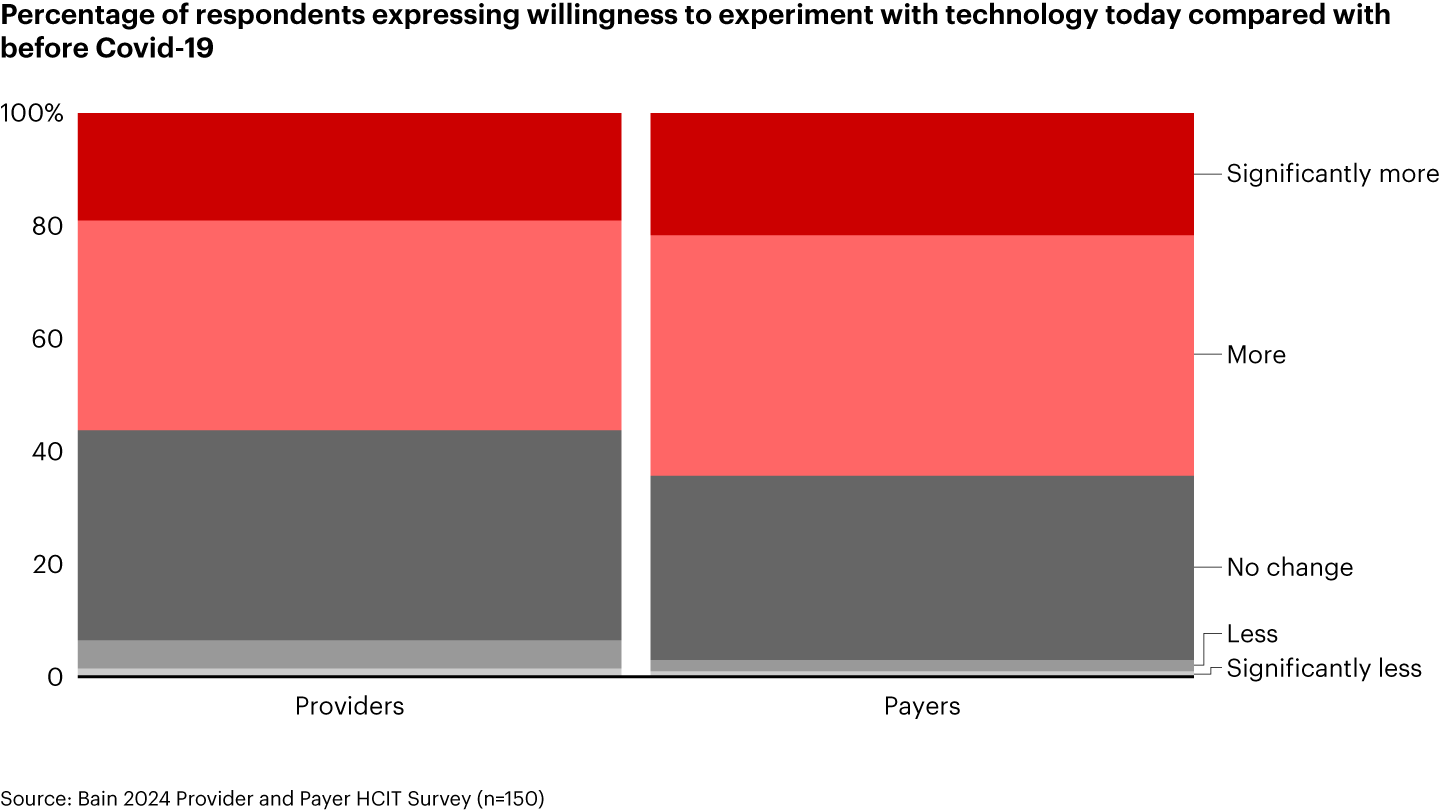
      Post-pandemic, providers and payers are inclined to experiment with technology

      Consistent with our findings over the past several years, providers and payers place a premium on technology; in our survey of 150 US providers and payers, about 75% of respondents cite increased IT investments over the past year. We expect this trend to continue (see Figure 2). Provider organizations emphasize digital transformation aimed at optimizing operations and reducing clinician burden. Payer IT efforts seek to improve payments via risk adjustment and quality programs, and they seek to lower medical loss ratios by optimizing payment integrity.

      Figure 2
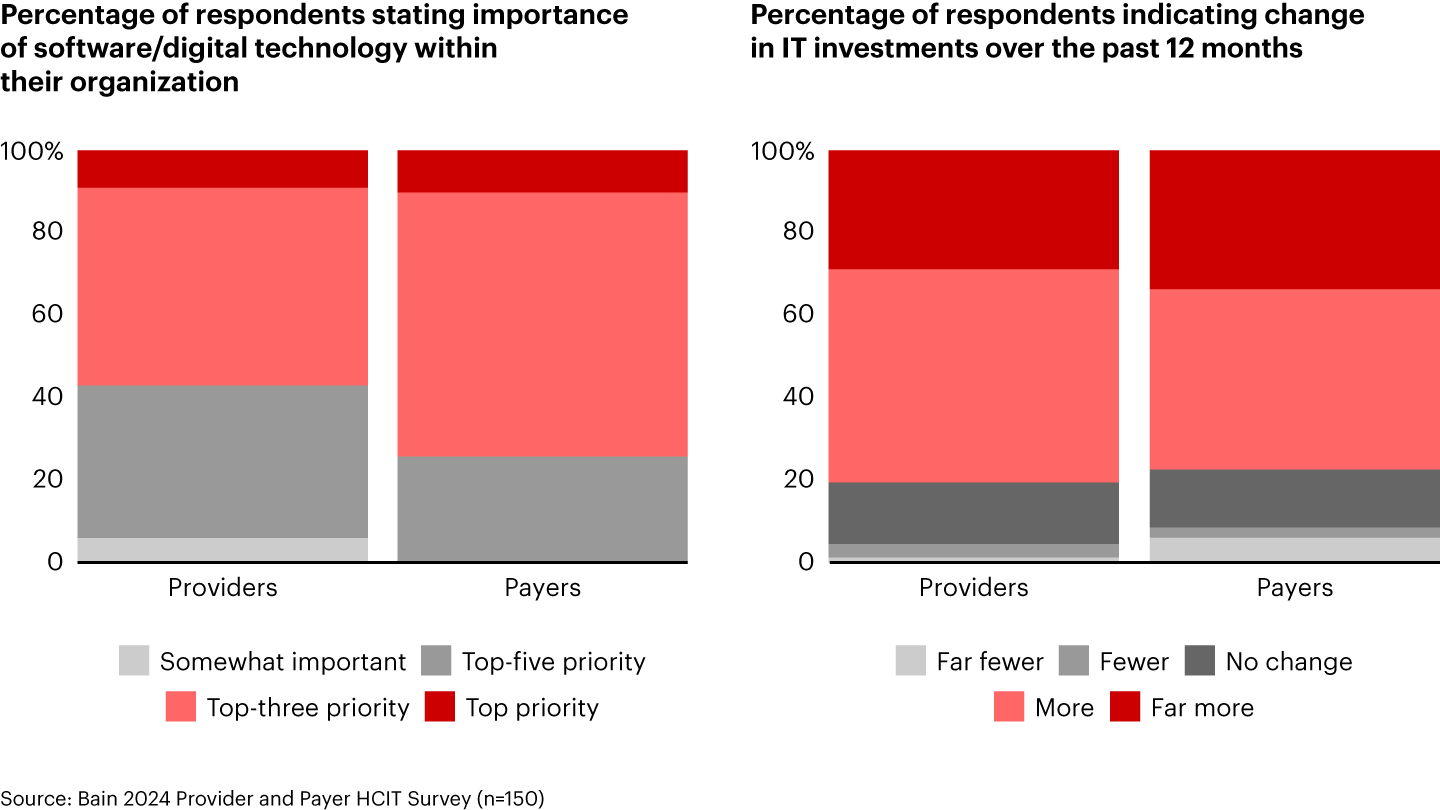
      IT is a high priority for providers and payers, with most saying they have increased spending

      The cyberattack on health claims–processing giant Change Healthcare in February 2024 influenced near-term IT priorities for providers and payers, as roughly 70% of organizations in our survey report being directly affected by the incident. While cybersecurity was already top of mind for most organizations, they are allocating greater efforts and spending to this area, including auditing internal systems and third-party solutions and building redundancy to mitigate future risks.

      Where providers are investing

      While the range of provider technology investments is broad, several categories stand out, including IT infrastructure and services such as cybersecurity, clinical workflow optimization, data platforms and interoperability, and revenue cycle management (RCM). IT infrastructure and services emerged as a top priority as providers seek to strengthen cybersecurity to mitigate the risk and impact of attacks and improve the integration of current IT applications. Efforts here have been amplified by the Change Healthcare incident, which highlighted the importance of robust cybersecurity measures. The incident also spurred board directors to review single points of vulnerability within the IT stack, with organizations allocating a budget toward developing greater redundancy around critical systems (see Figure 3).

      Figure 3
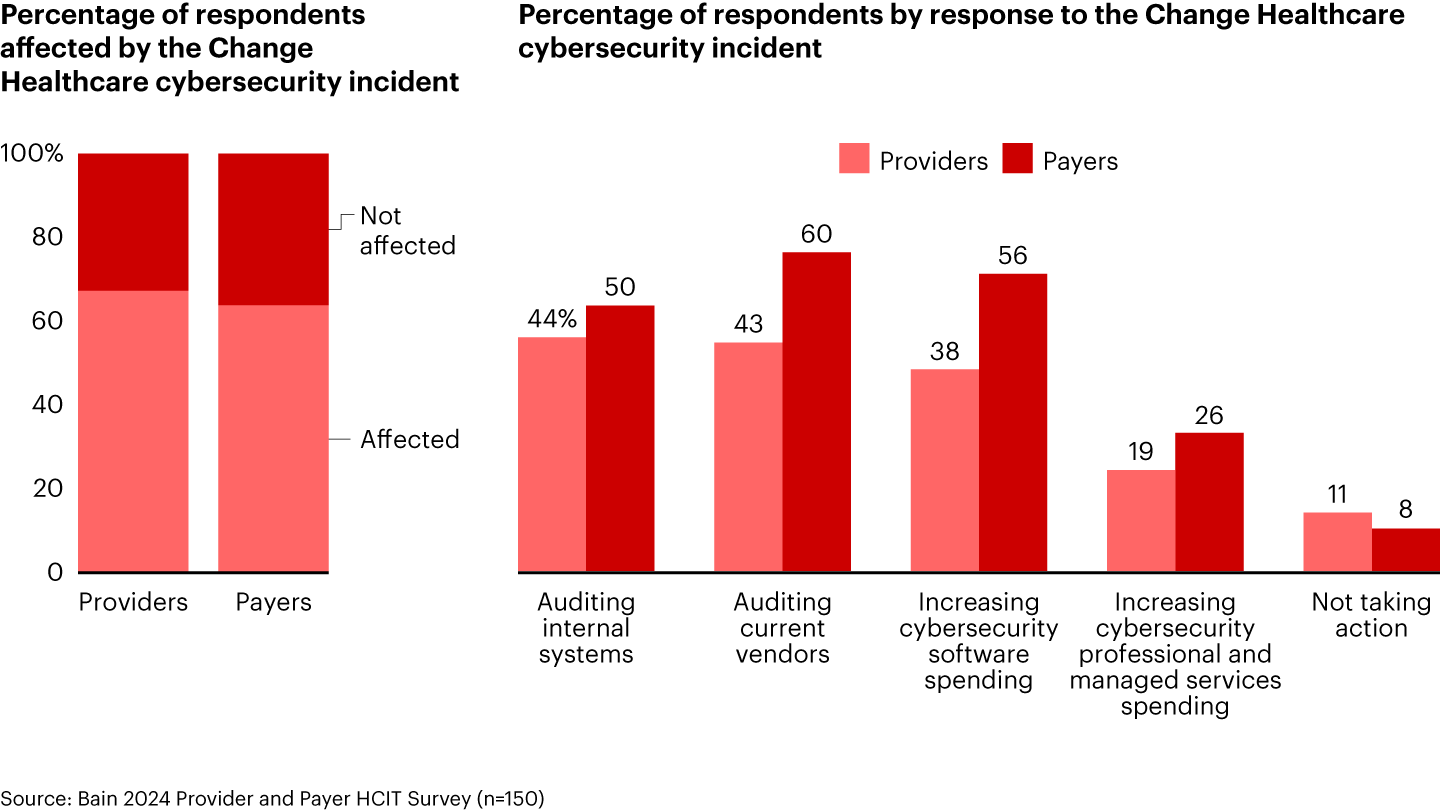
      Following the Change Healthcare cybersecurity incident, organizations are strengthening their IT infrastructure against threats

      Clinical workflow optimization remains a high priority as providers seek to streamline processes, reduce administrative burden, and increase utilization of labor, capital equipment, and facilities (see Figure 4). Within this category, patient flow solutions stood out.

      Figure 4
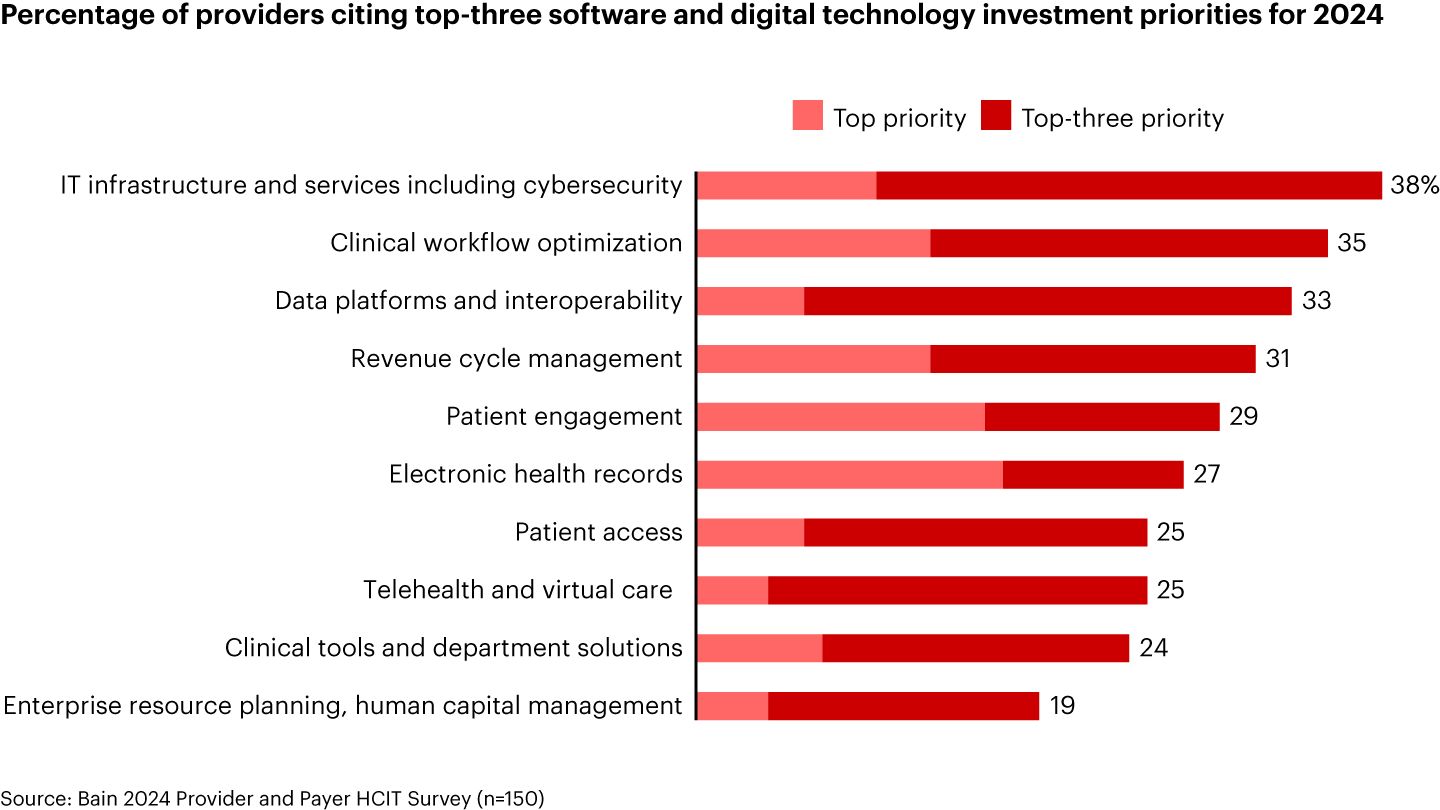
      IT infrastructure and services and clinical workflow optimization are providers’ highest priorities

      Another area drawing provider attention is data and analytics platforms. But while providers see the value of data-driven decision making, for many organizations, data quality and governance are not sufficiently robust to realize that promise. The prospect of more powerful solutions enabled by AI and machine learning (ML) has spurred a push to improve data quality to support clinical decision making and nonclinical use cases, such as patient outreach and leakage prevention.

      RCM is once again a high priority given its ROI. In a challenging operating environment, providers want to ensure they get paid for their services, grow and retain patient populations, and manage RCM labor costs.

      Cost management and electronic health records (EHR) integration and systems interoperability remain provider IT pain points. Providers cited costs as their biggest challenge in 2023 as well, highlighting a persistent problem (see Figure 5).

      Figure 5
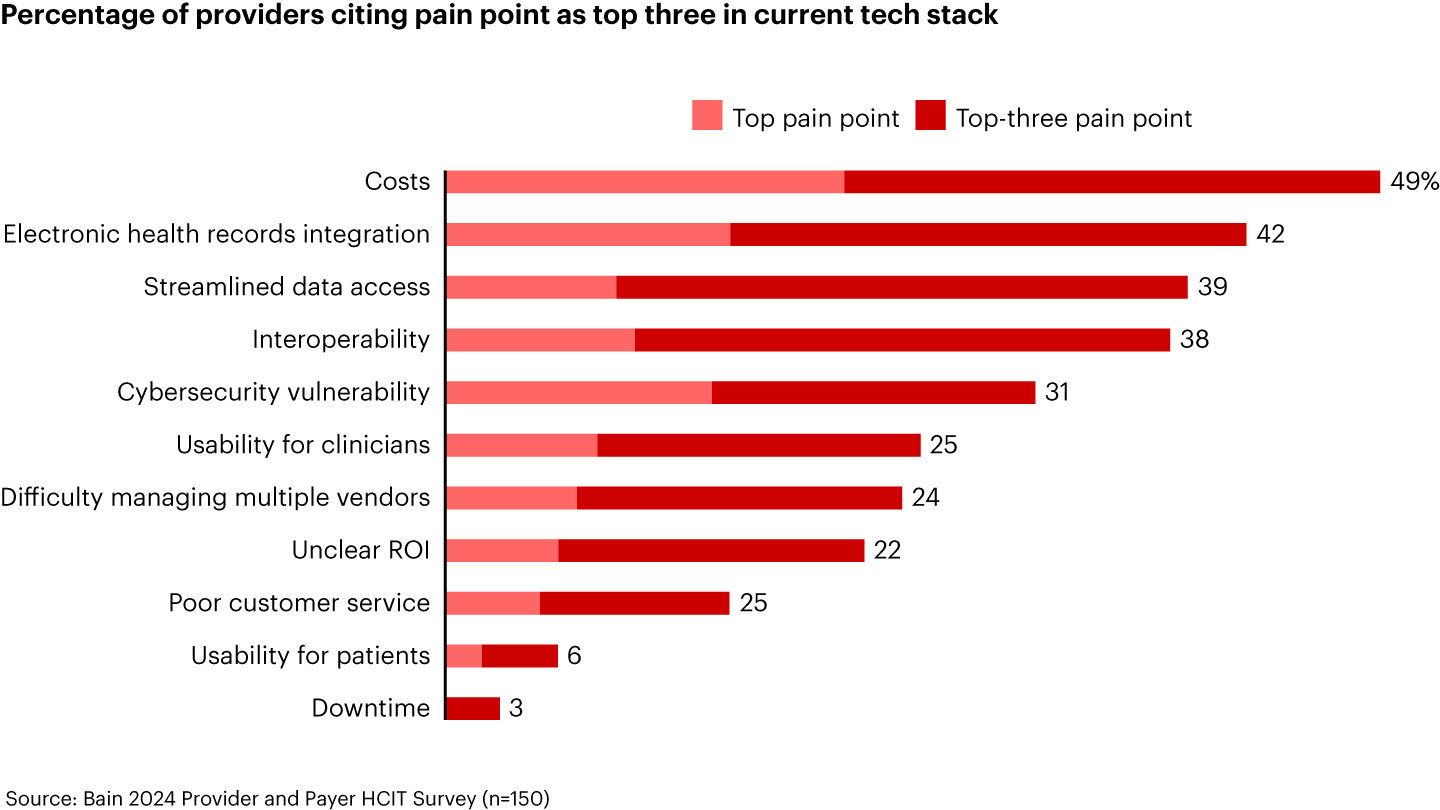
      Providers are concerned most about costs and electronic health records integration

      New technology purchases require a clear ROI, and providers want to realize significant value in the first year. Given the high cost of integration, ROI is critical in the case of new vendors. These concerns translate into vendor selection, with providers favoring current vendors, particularly their EHR vendors. This trend is especially evident among users of Epic’s EHR system.

      Despite a bias toward “good enough” solutions from current EHR suppliers, most providers remain open to buying solutions from other vendors. This occurs especially in categories that deliver high ROI or that feature rapid innovation. In these circumstances, providers will often consult their EHR vendor’s product roadmap before selecting a third-party solution and cite EHR integration as a key purchase criterion. Non-EHR software vendors should pay close attention to the roadmaps of the key vendors given the pivotal role that EHR vendors play in new software purchases and the risk of providers reverting to EHR-native solutions as those solutions mature.

      Where payers are investing

      Payer organizations are prioritizing IT investments in care coordination and utilization management as well as in claims processing and payments. Care coordination and utilization management tools are essential for payers to control costs and improve member outcomes. These tools enable payers to identify high-risk members, align care across providers and settings, and monitor utilization to ensure appropriate and cost-effective care.

      Claims processing and payments play a big role in ensuring that outlays are appropriate and accurate relative to services rendered and care delivered. To achieve these aims, payers are investing in provider payment tools, modernizing their core administrative processing system infrastructure, and purchasing more payment integrity solutions, both pre-pay and post-pay (see Figure 6).

      Figure 6
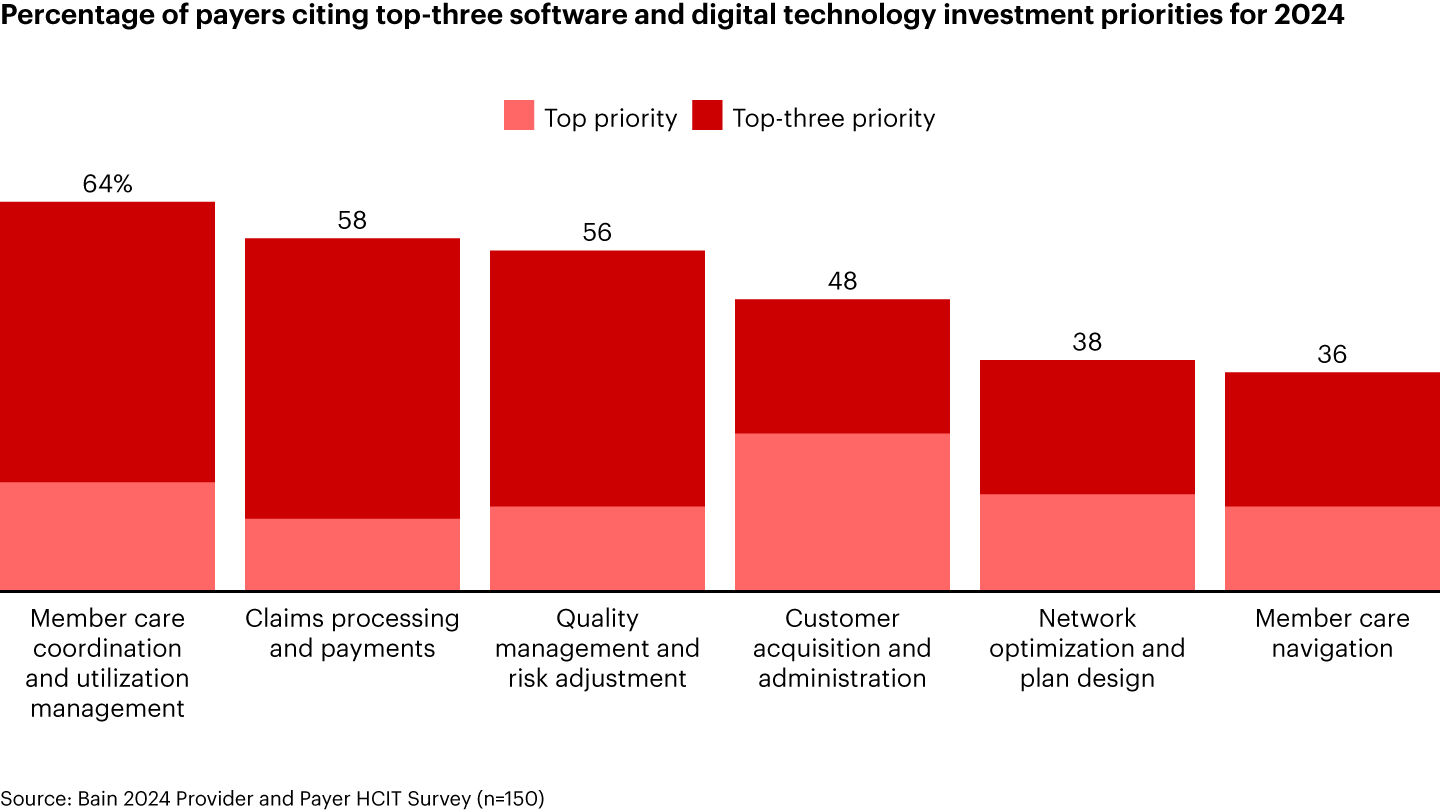
      Payers cite member care coordination, claims processing, and quality management as top investment priorities

      Legacy technology is cited by more than 65% of payers as a key problem. Aging infrastructure limits scalability and flexibility; maintaining these systems imposes significant cost. While legacy tech has been a long-standing issue for payers, significant system modernization entails a multiyear effort and poses operational risk that many chief information officers are loath to assume. Moreover, many organizations take a piecemeal approach to modernization and are reluctant to invest in technology infrastructure without a clearly articulated ROI.

      Cybersecurity has emerged as an imperative for payers as well, with IT leaders citing cybersecurity as a reason for increased technology investment—and a consistent issue. Ensuring robust cybersecurity measures is crucial to protecting sensitive data, maintaining regulatory compliance, and safeguarding against breaches (see Figure 7).

      Figure 7
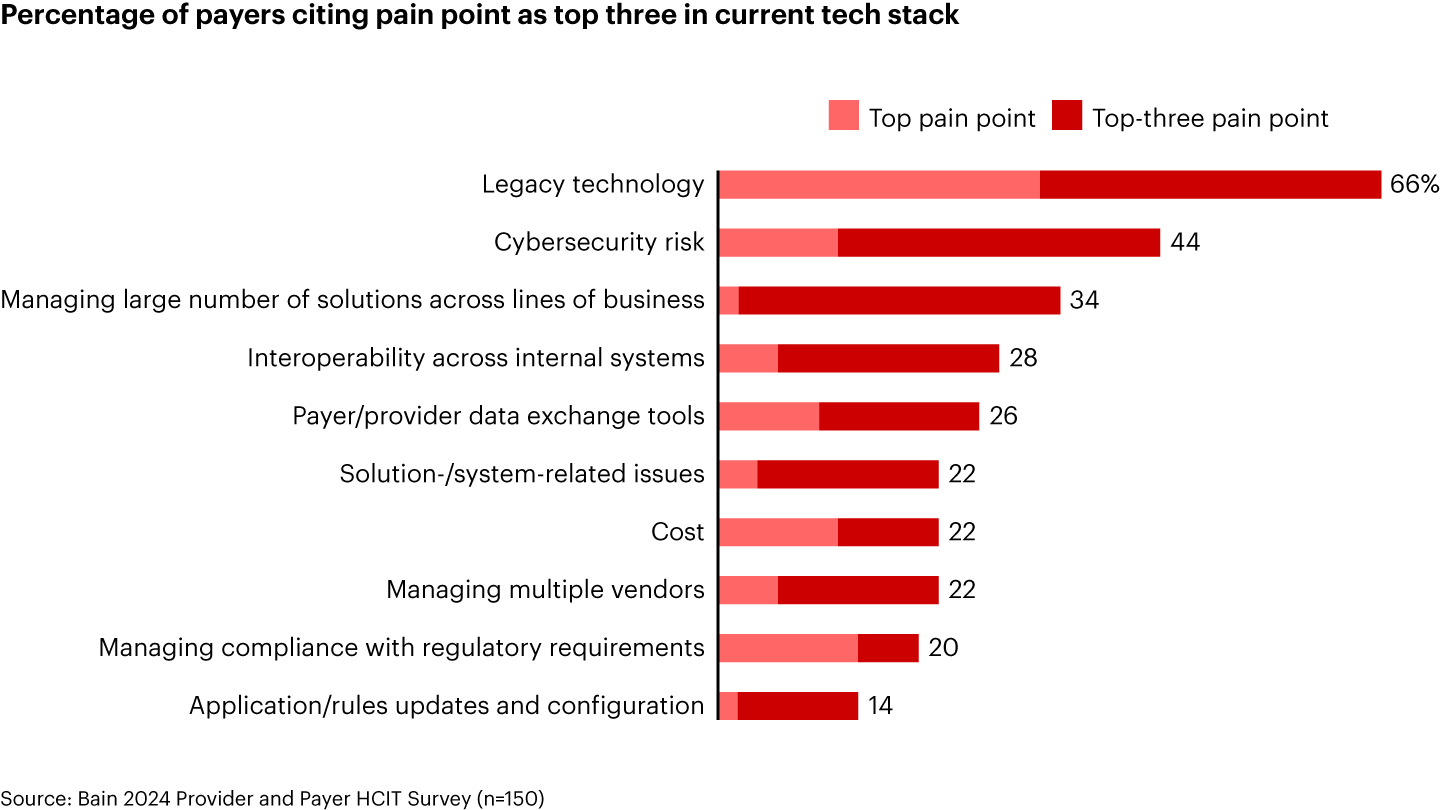
      Payers struggle most with legacy technology and cybersecurity risk

      In navigating new priorities and addressing existing vulnerabilities, payers seek to avoid further complexity within their IT architectures. Approximately 60% of payer respondents cite streamlining tech stacks or prioritizing existing vendors over introducing new point-solution vendors. This approach aims to enhance system cohesion, reduce complexity, and ensure cost-effective IT management. While national payers are more likely than others to develop solutions in-house, a growing number of organizations want to adopt third-party solutions and outsource certain functions, particularly in areas such as quality management and risk adjustment.

      AI gains attention and adoption

      AI technologies have made inroads across healthcare, with providers and payers exploring AI-supported solutions to enhance decision making, improve operational efficiency, and deliver care and engagement. Providers have made strides over the past year, with about 15% of providers in our survey saying they have an AI strategy today compared with around 5% in 2023. Payers are at a roughly equivalent place in terms of AI strategy definition when one controls for organization size—roughly 25% say they have an established AI strategy in 2024. And a healthy majority of both types of organizations are optimistic about implementing generative AI (see Figure 8).

      Figure 8
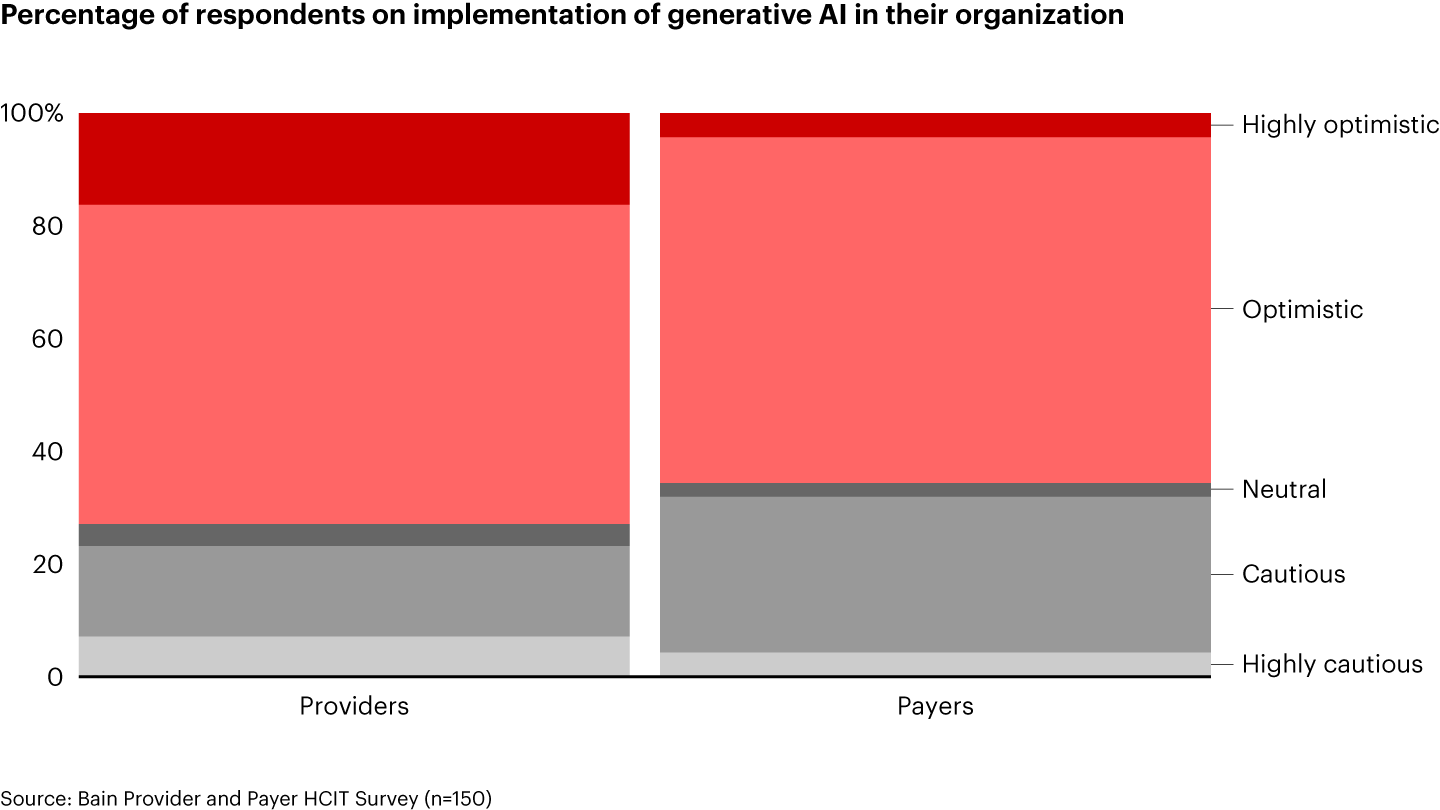
      Providers and payers are optimistic about implementing generative AI

      Providers have begun to pilot generative AI in clinical applications, including clinical documentation and decision support tools. Early trials appear promising, suggesting that AI-powered tools may someday be able to analyze large volumes of data, identify patterns and trends, and generate actionable insights. Pilots around ambient clinical documentation have been particularly successful in reducing clinician administrative burden and improving the patient experience.

      Payers are deploying AI-powered analytics, predictive modeling, and ML algorithms to identify cost-saving opportunities, optimize resource allocation, and enhance member engagement. They cite contact center and member chatbot support as the first generative AI use cases gaining traction. These deployments aim to mitigate the impact of contact center labor pressures and can help raise staff skills and deliver more tailored, empathetic communications to members.

      However, despite its potential, several barriers hinder more widespread adoption of AI (see Figure 9). Providers and payers cite regulatory and legal considerations, cost, and accuracy (such as AI hallucinations) as main hurdles to implementation. Additionally, there is a growing need for robust governance frameworks, transparency, and accountability mechanisms to ensure responsible and ethical use of AI in healthcare.

      Figure 9
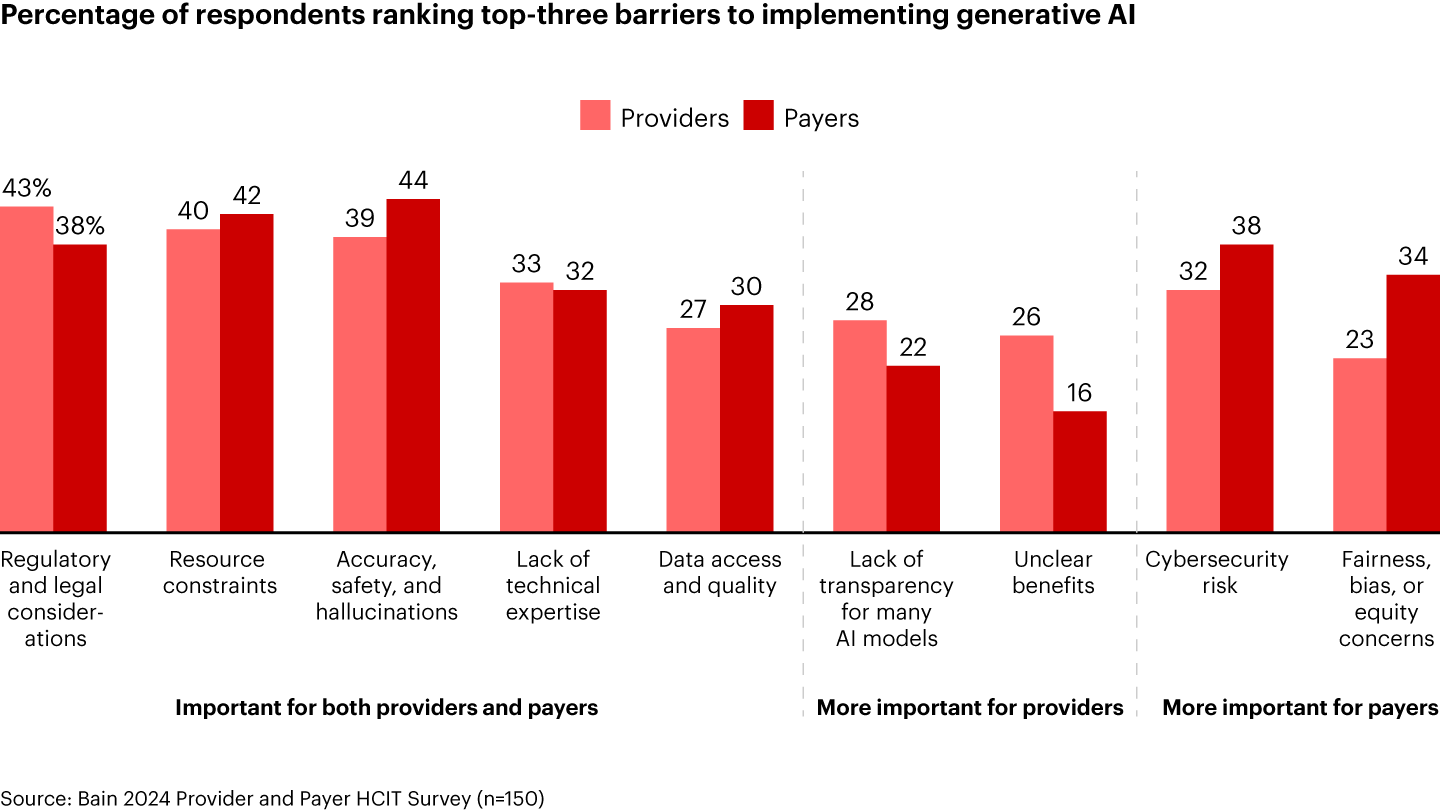
      Certain barriers hinder widespread adoption of generative AI

      A robust IT investment outlook

      Amid diverse approaches to IT investment, healthcare providers and payers are doubling down on their commitment to investing in IT solutions, with a renewed focus on cybersecurity.

      Providers grapple with budget challenges and the need to integrate new solutions with EHRs and other suites. To address these obstacles, they are concentrating on solutions that offer clear, rapid ROI and that have proven integration.

      Payers are dealing with legacy tech stacks, many of which require significant spending and manual effort to maintain. Organizations hope to streamline their tech stacks and often favor existing vendors that offer cost-effective solutions with reliable cybersecurity.

      AI tools have great potential to improve outcomes in the four quadrants of healthcare’s quadruple aims: enhancing the patient experience, improving population health, reducing cost, and improving the provider experience. In the years ahead, AI looks set to deliver value on each of these fronts, though the journey will be gradual.

      About KLAS Research

      KLAS is a research and insights firm on a global mission to improve healthcare. Working with thousands of healthcare professionals and clinicians, KLAS gathers data and insights on software and services to deliver timely reports and performance data that represent provider and payer voices and act as catalysts for improving vendor performance. The KLAS research team publishes reports covering the most pressing questions facing healthcare technology today, including emerging technology insights, that provide early insights on the future of healthcare technology solutions. KLAS also fosters measurement and collaboration between healthcare providers and payers and best practice adoption. Learn more at https://klasresearch.com/.

      Authors
      • Headshot of Eric Berger
        Eric Berger
        Alumni, Boston
      • Headshot of Caitlin Dowling
        Caitlin Dowling
        Partner, New York
      • Headshot of Aaron Feinberg
        Aaron Feinberg
        Partner, New York
      • Rebecca Hammond
        Chief Delivery Officer, KLAS Research, Salt Lake City
      Contact us
      Related Industries
      • Healthcare & Life Sciences
      • Healthcare Providers and Services
      • Private Equity
      Private Equity
      Takeaways from Bain’s 2024 Healthcare Private Equity Report

      Bain partners Nirad Jain and Kara Murphy share key insights from our annual report.

      Read more
      Private Equity
      Healthcare IT Hits a Speed Bump

      Despite the slowdown in dealmaking in 2023, healthcare IT retains its appeal to private equity investors.

      Read more
      Private Equity
      Inside Bain’s 2023 Healthcare Provider IT Report

      Bain partners and industry experts share key insights from our annual Healthcare Provider IT Report.

      Read more
      Private Equity
      2023 Healthcare Provider IT Report: Doubling Down on Innovation

      Health system IT leaders are using emerging technologies to address labor shortages and financial pressures.

      Read more
      Private Equity
      Takeaways from Bain's 2023 Global Healthcare Private Equity and M&A Report

      Bain's Nirad Jain and Kara Murphy share insights from our annual report.

      Read more
      First published in septiembre 2024
      Tags
      • Healthcare & Life Sciences
      • Healthcare Providers and Services
      • Private Equity

      How We've Helped Clients

      A Medical Imaging Company’s CX Overhaul Boosts Customer Satisfaction and Revenue

      Read case study

      Pharma oncology growth strategy

      Read case study

      Review focuses biotech on portfolio potential

      Read case study

      Ready to talk?

      We work with ambitious leaders who want to define the future, not hide from it. Together, we achieve extraordinary outcomes.

      Stay ahead in a rapidly changing world. Subscribe to Bain Insights, our monthly look at the critical issues facing global businesses.

      *I have read and understand Bain’s Privacy Notice.

      Please read and agree to the Privacy Policy.
      Bain & Company
      Contact us Sustainability Accessibility Terms of use Privacy Modern Slavery Act Statement Cookie Policy Sitemap Log In

      © 1996-2026 Bain & Company, Inc.

      Contact Bain

      How can we help you?

      • Business inquiry
      • Career information
      • Press relations
      • Partnership request
      • Speaker request
      See all offices