

The Visionary CEO’s Guide to Sustainability

Executive Summary
- Businesses are facing many new societal expectations and stakeholder demands, and business leaders increasingly recognize the urgency of social issues.
- These new expectations and demands create real risks for companies but also present opportunities for new avenues of value creation that deliver economically sustainable business results while also addressing important social concerns.
- Leading companies are applying a social lens to uncover ways of strengthening their businesses while creating value for employees, customers, suppliers, local communities, and society at large.
- Learning to see the business through a social lens means evaluating company performance across stakeholders to discover new opportunities for value creation.
This article is part of Bain’s 2023 CEO Sustainability Guide
Attitudes and expectations about the role of business in society are changing dramatically. The impact of business on the environment (and the consequences of that impact for humanity) are issues of vital importance to many corporate constituencies. Today, however, many more purely social concerns are coming strongly to the fore.
Among employees, new patterns of working and the growing presence of automation and AI are creating insecurity and anxiety, even as labor markets are sometimes empowering workers to make new demands. More and more customers (particularly millennials and members of Gen Z) now make decisions about what products to buy or not to buy based on companies’ performance not only on environmental issues but also on social ones—such as labor standards; human rights; diversity, equity, and inclusion (DEI); health; and product safety. And the public at large increasingly believes that businesses need to do more to address social issues.
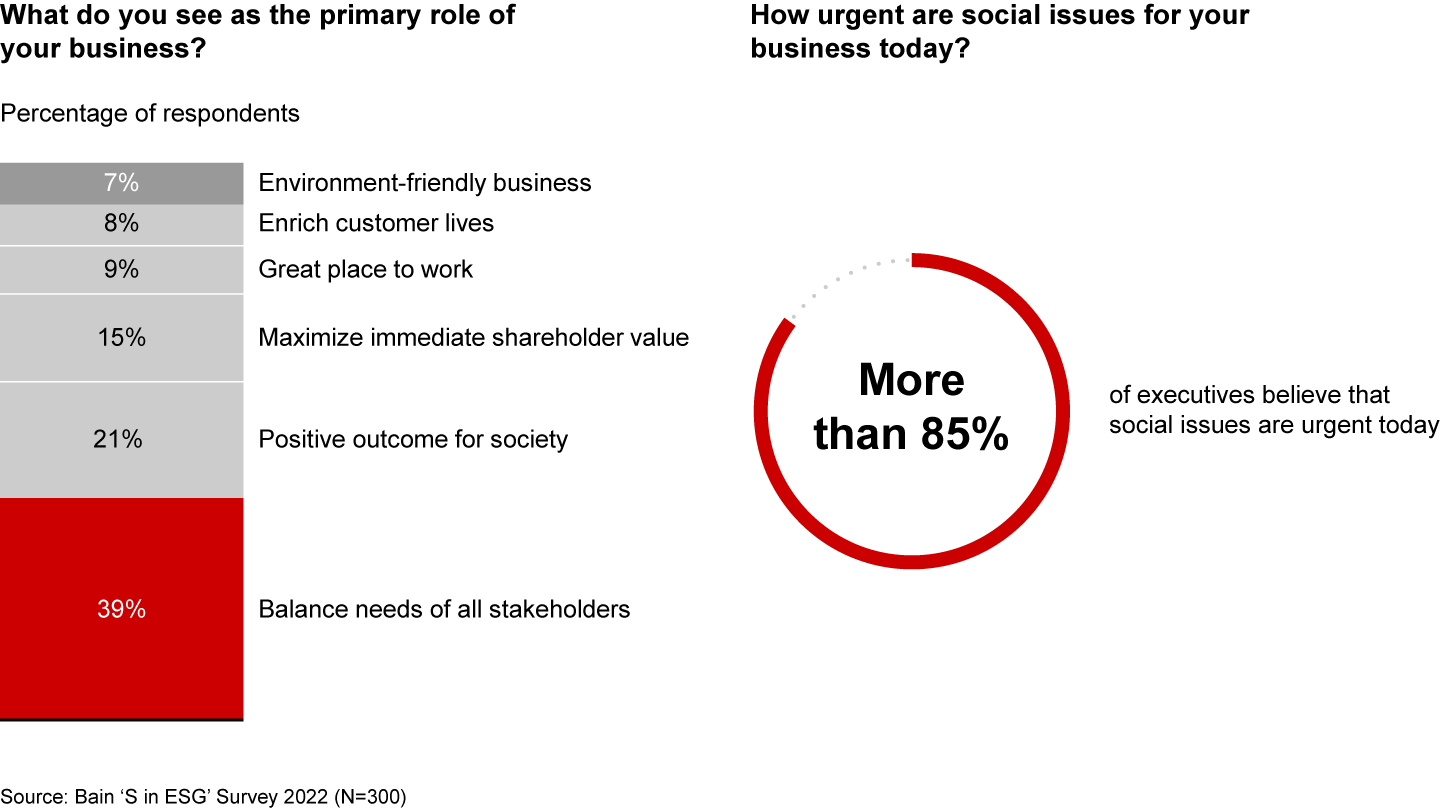
Business leaders have clearly gotten the message from these corporate stakeholders. In a Bain survey asking global CEOs what they see as the primary role of their businesses, 60% said either “balancing the needs of all stakeholders” or creating “positive outcomes for society.” And more than 85% of these business leaders called social issues urgent concerns for their companies (see Figure 1).
Figure 1

The reasons for this sense of urgency are not hard to understand. Companies face serious reputational and other risks if they violate the new societal expectations for business (not to mention laws and regulations governing corporate behavior). But fear of adverse consequences is far from the only reason for companies to pay increased attention to the social component of environmental, social, and corporate governance efforts. For as many leading companies are discovering, applying a social lens to a business can open up new opportunities for value creation—delivering real, economically sustainable business results while creating substantial benefits for employees, customers, suppliers, local communities, and society at large.
The business case for social
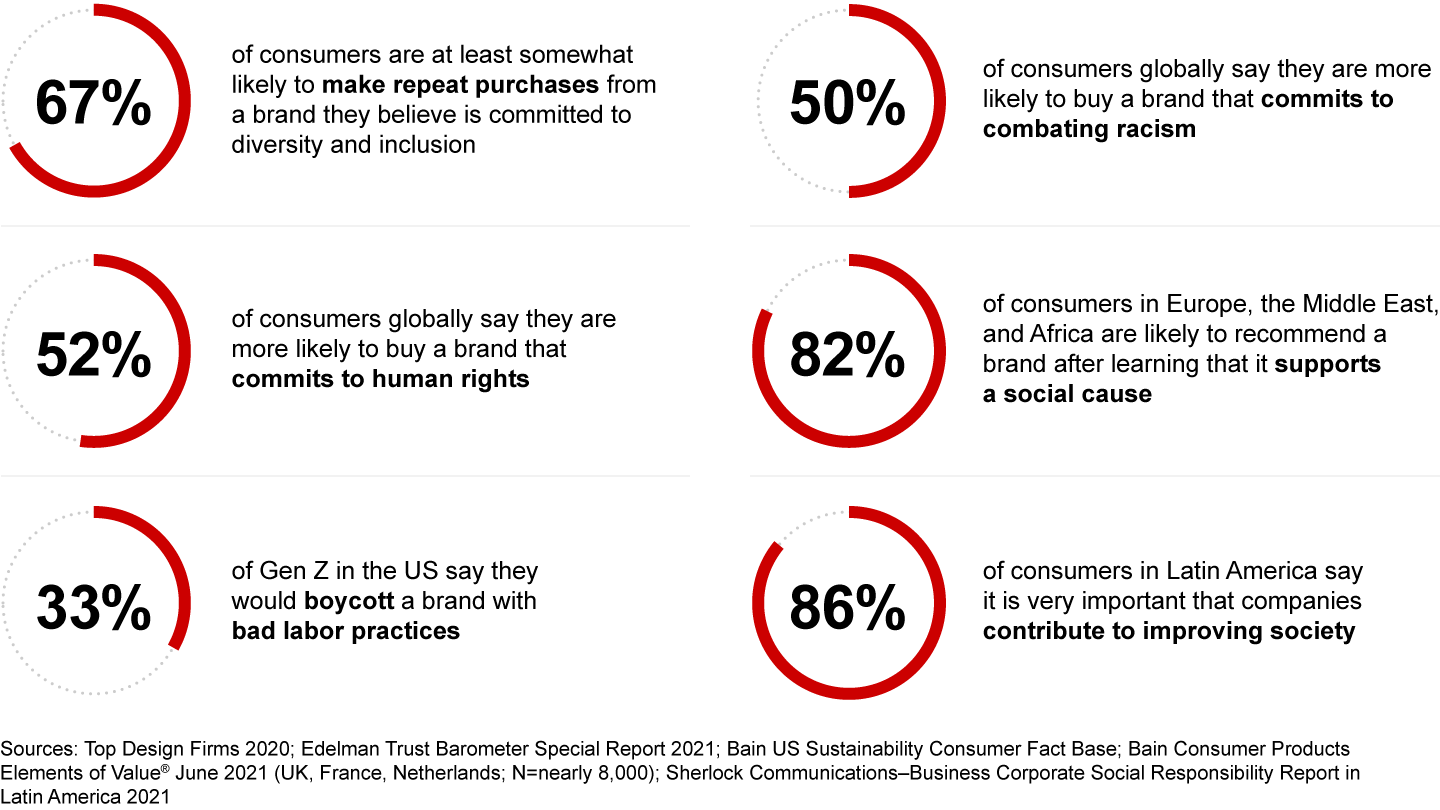
To focus for a moment on just one group of stakeholders and how they are changing expectations for companies on social issues: Customers all over the world are making it clear that they care about the social ramifications of their brand and product choices. While such concerns are not entirely new, they have become quite wide-ranging (see Figure 2).
Figure 2

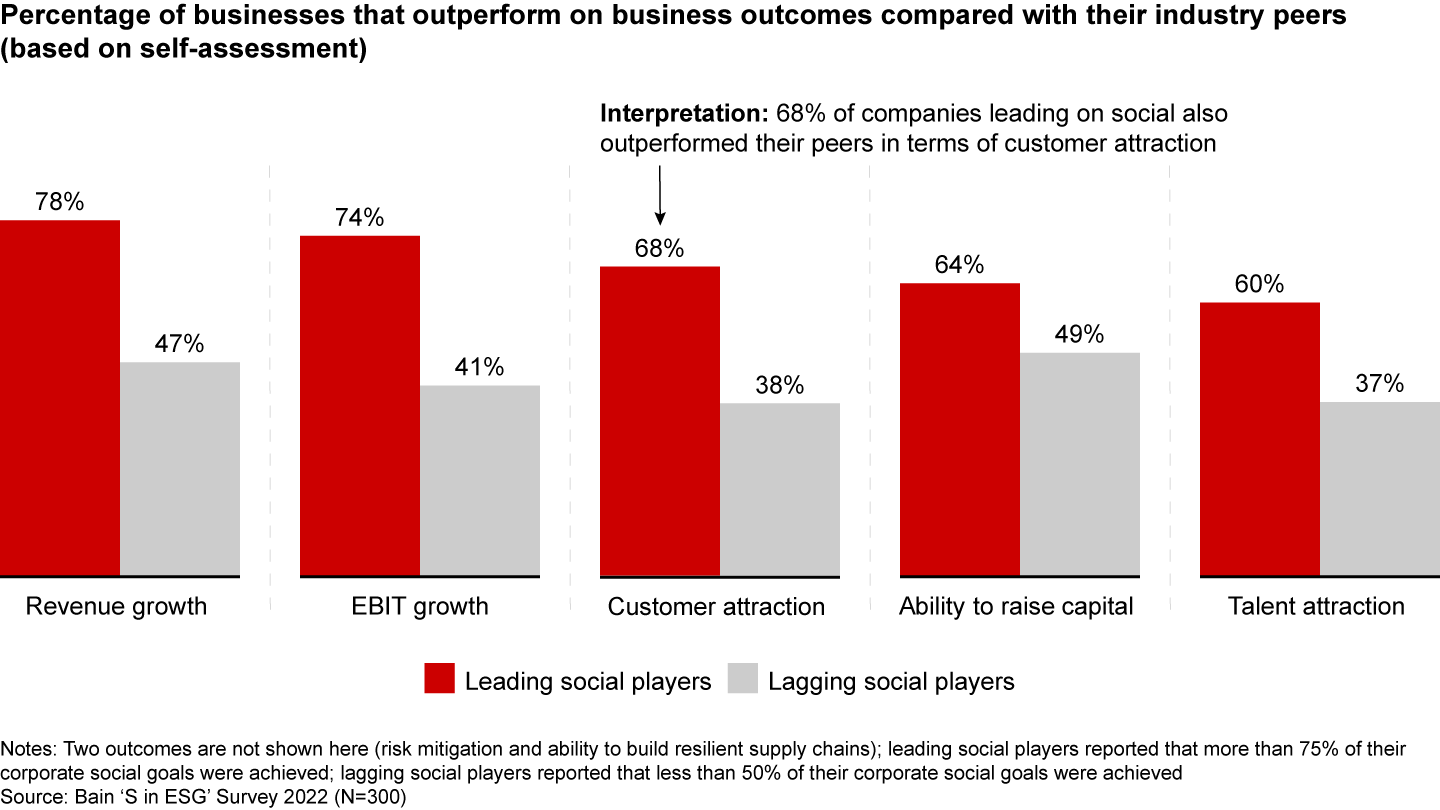
Most business leaders are well aware of the risks of violating the new social expectations for business. Certainly, they do not want to find their brands and companies attacked on social media or named in the press in damaging contexts. And in the EU, in particular, companies now face risk from new regulatory standards on issues such as human rights in their extended supply chains. But as we found in surveying nearly 300 senior executives, companies that have taken the lead in addressing social issues report that doing so drives better business outcomes in a variety of ways (see Figure 3).
Figure 3

The question, of course, is how exactly to transform action on social issues into economically sustainable business performance. To put it another way, how can companies discover where might lie the previously unrealized opportunities for value creation through an increased focus on social?
Applying a social lens to your business: Four areas of opportunity
As noted above, the category social contains a wide range of issues on which companies today may be expected to respond. The issues for a particular company that will have potential for creating value for particular stakeholders will vary by organization and business context. Any company, however, can begin uncovering the opportunities by applying a social lens to its relationship with four critical groups of stakeholders—namely, local communities, customers, employees, and suppliers—and identifying actions that both address social issues for these stakeholders and deliver results for the business. What follows are examples of such actions, and of companies that have taken them with impressive results.
Improving social and economic conditions in local communities: Communities where companies operate are increasingly critical stakeholders for business. Some companies are looking at these stakeholders through a social lens and discovering how to materially improve conditions in their communities in ways that boost business performance.
- Health insurer Humana’s Bold Goal initiative aims to build a sustainable system of working with partners to help address the social determinants of health in local communities. Bold Goal currently targets 20 communities for reduction in the number of unhealthy days that residents experience, addressing social determinants of health such as food insecurity. As part of Bold Goal, Humana has partnered with Walgreens Healthcare Clinics in certain areas to screen patients for food insecurity and offer resources such as healthy food kits and help with federal assistance applications. On average, residents of Bold Goal communities experience fewer unhealthy days than those in non–Bold Goal communities. Fewer unhealthy days for community members mean lower hospitalization rates (increasing cost savings potential for Humana over the long term), and solutions focused on social determinants of health help improve communities along other, more purely social dimensions.
- In 2019, Roger Hochschild, the CEO of Discover Financial Services, which is headquartered in the suburbs of Chicago, made the contrarian decision to locate a new call center in a low-income, majority-Black neighborhood on Chicago’s South Side. Hochschild figured that Chatham, a traditionally middle-class neighborhood that had been ravaged by white flight and divestment in the post–World War II era, was a place where an infusion of new jobs could make an enormous difference for an entire community. Today, the call center not only employs more than 500 people (roughly 90% of whom are Black, with the company aiming to have 80% of employees be people who live within five miles of the site) at a starting wage of $18 per hour but also houses a community center for the neighborhood. Within its first year of operations, the Chatham call center exceeded customer satisfaction goals, performing at an industry-leading level, and it had the highest employee retention rates of all Discover Financial customer care centers across the US.
Identifying new sources of customer value: Applying a social lens to customers and markets can reveal opportunities to create value for whole new customer segments, including in underserved markets. Many new purpose-driven insurgent brands are tapping into this particular opportunity in niche markets, but established players are also doing so with large customer segments.
- In financial services, customers who pay the highest fees are often those least able to afford them. As part of its plan to “democratize access to financial services,” PayPal found a way to both address a social injustice and attract new customers. After deciding not to charge a monthly fee or require a minimum transaction amount, PayPal, in the five years after its 2015 IPO, saw its number of active user accounts grow from 179 million to 377 million, while average annual transactions per user increased from 27.5 to 40.9. Meanwhile, PayPal’s small to medium business lending division, which relies not on credit scores but on a proprietary algorithm to look at a merchant’s history on PayPal to determine whether to issue a loan, reached more than $10 billion in loans to more than 225,000 small businesses in 2019.
- In retail, Bodega Aurrerá, known for offering the lowest prices possible to customers, targets low-income consumers in Mexico. Established as a chain in 1970 and later acquired by Walmart, Bodega Aurrerá has multiple formats that help it serve both small rural locations as well as lower-income urban areas. Bodega Aurrerá stores have been Walmart Mexico’s main vehicle for growth, accounting for more than 90% of new store openings since 2006. The company’s brand symbol—Mamá Lucha, a cartoon character who battles high prices—is widely recognized in the market. Bodega Aurrerá ranked as the third most valuable brand in Mexico in 2023, with a $6.2 billion brand value, behind only Telcel (telecommunications) and Corona beer.
Investing in current and future workforces: Given the challenges companies now face in attracting and retaining the right talent, businesses need to shift from being talent takers to talent makers. And making this shift can go hand in hand with pursuing a social agenda for talent. Consider, for example, that 70% of employees are likely to change jobs for a company known to invest in employee learning and development, making investment in upskilling or reskilling a way for businesses to create new opportunities for lower-skilled, lower-paid workers while future-proofing their own talent pools. This is an especially acute issue for energy companies facing the implications of a just transition to green energy for their employees.
- Enel, the second-largest power company in the world by revenue, is reskilling and redeploying workers in coal-fired power plants. Forty-five percent of Enel employees who left coal-fired plants in 2022 attended upskilling and reskilling programs (about 90 hours per employee) and have been redeployed. Reskilling employees is part of Enel’s public commitment to making the transition to a greener economy “as equitable and inclusive as possible … [by] creating opportunities for decent work and ensuring that no one is left behind.”
Other companies are applying a talent maker lens to address acute talent needs while also pursuing DEI goals.
- To tackle the pilot shortage in the airline industry, United Airlines launched its own pilot academy, the United Aviate Academy, in 2022, with a goal of training 5,000 new pilots by 2030 (part of a long-term pilot recruitment strategy of adding at least 10,000 pilots by the end of 2029). The flight deck in the airline industry has historically been a white male preserve, but in the academy’s first class, 80% of students are women or from underrepresented racial or ethnic groups.
Enhancing supply chain resilience by building socially responsible supplier relationships: Besides being subject to increased stakeholder scrutiny on issues such as trade practices and human rights, supply chains now face operational disruptions from a variety of factors, including the recent pandemic, war, political unrest, and global and regional economic shifts. By examining their supply chains through a social lens, companies can work effectively with suppliers to ensure fair and equitable practices while also making their end-to-end supply chains more resilient.
- Peet’s “Las Hermanas” coffee is named for an all-women’s cooperative that grows and mills its own coffee in the highlands of Nicaragua. To meet Peet's standards, the women of Las Hermanas invest heavily in training and education, operating their own cupping (quality control) lab to monitor all aspects of production and cup quality. As a result of Peet's yearly purchases, these producers have been able to secure loans and obtain additional low-interest, pre-harvest financing, helping the cooperative to progress from subsistence farming to economic sustainability. Meanwhile, Peet’s has differentiated itself in the marketplace with several environmental certifications as well as a direct trade program in which it collaborates with the farmers from whom it buys on community projects in their local areas.
- Olam, the Singapore-listed food and agribusiness company, sources from many smallholders across multiple supply chains and geographies whose income from crop and livestock production can fail to cover basic family needs. One of Olam’s many initiatives to help such farmers increase their incomes from farming is Olam Direct, a smartphone app that enables farmers to sell directly to Olam. The farmers get better prices as well as access to digital content on topics such as weather forecasting and planting strategies, pest alerts, and ongoing training to improve productivity and sustainability. More than 90,000 farmers across 12 countries are registered users of Olam Direct.
Getting started
Learning to apply a social lens to a company’s many activities and stakeholders, not just to avoid risks but to uncover new opportunities for value creation, can seem daunting. It requires taking a genuinely fresh look both inside and outside the organization to determine where a company may have had blind spots and thinking creatively about social issues in terms not just of obligations but of opportunities. The important thing, however, is to start somewhere, keeping in mind that attending to social concerns involving one group of stakeholders can have beneficial spillover effects with others—for example, as when upskilling employees in changing industries helps keep jobs in communities that depend on them.
To assess where you are starting from, we have compiled a checklist of questions that business leaders can ask regarding the four groups of stakeholders on which we have mainly focused.
- Community: Do the communities we do business in see us as a positive force? If our business doubled (or if it disappeared), how would these communities assess the gains (or loss)?
- Customers: Who does not have easy access to our products or services? How might we expand our offerings to attract new, often overlooked customer groups with economically viable value propositions?
- Employees: What can we do to become a talent maker vs. a talent taker to create opportunities for employees while developing the pipeline we need for long-term business growth?
- Suppliers: How equipped are my suppliers to meet new criteria for socially responsible practices? Am I doing my part to influence their practices and build resilience in my supply chain?
- All stakeholders: Do our communities, customers, employees, and suppliers see us the way we see ourselves? Would they say we are living up to our declared purpose and values?
No matter where these questions take you, they can set you on a path to new and better outcomes for your company, your stakeholders, and society as a whole.
Read our 2023 CEO Sustainability Guide
Introduction
Levers of Change: Technology, Behavior, Policy
Sector Perspectives
Making It Happen
First published in noviembre 2023