Skip to Content
  • Offices

    Offices

    North & Latin America
    • Atlanta
    • Austin
    • Bogota
    • Boston
    • Buenos Aires
    • Chicago
    • Dallas
    • Denver
    • Houston
    • Los Angeles
    • Mexico City
    • Minneapolis
    • Monterrey
    • Montreal
    • New York
    • Rio de Janeiro
    • San Francisco
    • Santiago
    • São Paulo
    • Seattle
    • Silicon Valley
    • Toronto
    • Washington, DC
    Europe & Africa
    • Amsterdam
    • Athens
    • Berlin
    • Brussels
    • Copenhagen
    • Dusseldorf
    • Frankfurt
    • Helsinki
    • Istanbul
    • Johannesburg
    • Kyiv
    • Lisbon
    • London
    • Madrid
    • Milan
    • Munich
    • Oslo
    • Paris
    • Rome
    • Stockholm
    • Vienna
    • Warsaw
    • Zurich
    Middle East
    • Doha
    • Dubai
    • Riyadh
    Asia & Australia
    • Bangkok
    • Beijing
    • Bengaluru
    • Brisbane
    • Ho Chi Minh City
    • Hong Kong
    • Jakarta
    • Kuala Lumpur
    • Manila
    • Melbourne
    • Mumbai
    • New Delhi
    • Perth
    • Shanghai
    • Singapore
    • Sydney
    • Tokyo
    See all offices
  • Alumni
  • Media Center
  • Subscribe
  • Contact
  • Spain | Español

    Select your region and language

    Global
    • Global (English)
    North & Latin America
    • Brazil (Português)
    • Argentina (Español)
    • Canada (Français)
    • Chile (Español)
    • Colombia (Español)
    Europe, Middle East, & Africa
    • France (Français)
    • DACH Region (Deutsch)
    • Italy (Italiano)
    • Spain (Español)
    • Greece (Elliniká)
    Asia & Australia
    • China (中文版)
    • Korea (한국어)
    • Japan (日本語)
  • Saved items (0)
    Saved items (0)

    You have no saved items.

    Bookmark content that interests you and it will be saved here for you to read or share later.

    Explore Bain Insights
  • Industries
    Main menu

    Industries

    • Aeroespacial y Defensa
    • Agroindustria
    • Químicos
    • Construcción e Infraestructura
    • Productos de Consumo
    • Servicios Financieros
    • Salud y Ciencias de la Vida
    • Maquinaria y Equipo Industrial
    • Medios y Entretenimiento
      Industries
      Medios y Entretenimiento
      • Media Lab
    • Metales
    • Minería
    • Petróleo y Gas
    • Papel y Empaque
    • Private Equity
      Industries
      Private Equity
      • Due Diligence
      • Exit Planning
      • Firm Strategy & Operations
      • Portfolio Value Creation
    • Sector Público y Social
    • Retail
    • Tecnología
    • Telecomunicaciones
      Industries
      Telecomunicaciones
      • Capital Expenditure
      • Telco Digital Transformation
    • Transporte
    • Viajes y Turismo
    • Servicios Públicos y Energías Renovables
  • Consulting Services
    Main menu

    Consulting Services

    • Customer Experience
    • Sustainability
    • Innovation
    • M&A
    • Operations
    • People & Organization
    • Private Equity
    • Sales & Marketing
    • Strategy
    • AI, Insights, and Solutions
    • Technology
    • Transformation
  • Digital
  • Insights
    Main menu

    Insights

    • Industry Insights
    • Services Insights
    • Bain Books
    • Webinars
    • Bain Futures
    View all Insights
    Featured topics
    • Tariff Response
    • Artificial Intelligence
    • Thriving in Uncertainty
    • Executive Conversations
    • Macro Trends
    • M&A Report
    • Healthcare Private Equity Report
    • Paper & Packaging Report
    • Technology Report
    • CEO's Guide to Sustainability
    • CEO Insights
    • CFO Insights
    • COO Insights
    • CIO Insights
    • CMO Insights
    View all featured topics
  • About
    Main menu

    About

    • What We Do
    • What We Believe
    • Our People & Leadership
    • Client Results
    • Awards & Recognition
    • Global Affiliations
    Further: Our global responsibility
    • Sustainability
    • Social Impact
    • World Economic Forum
    Learn more about Further
  • Carreras
    Main menu

    Carreras

    • Trabaja con Nosotros
      Carreras
      Trabaja con Nosotros
      • Find Your Place
      • Nuestras Áreas de Trabajo
      • Equipos Integrados
      • Estudiantes
      • Internships & Programs
      • Eventos de Reclutamiento
    • La Vida en Bain
      Carreras
      La Vida en Bain
      • Historias Profesionales
      • Nuestra Gente
      • Dónde Trabajamos
      • Apoyando tu Crecimiento
      • Grupos de Afinidad
      • Beneficios
    • Impact Stories
    • Nuestro Proceso
      Carreras
      Nuestro Proceso
      • Qué Esperar
      • Entrevistas
    FIND JOBS
  • Offices
    Main menu

    Offices

    • North & Latin America
      Offices
      North & Latin America
      • Atlanta
      • Austin
      • Bogota
      • Boston
      • Buenos Aires
      • Chicago
      • Dallas
      • Denver
      • Houston
      • Los Angeles
      • Mexico City
      • Minneapolis
      • Monterrey
      • Montreal
      • New York
      • Rio de Janeiro
      • San Francisco
      • Santiago
      • São Paulo
      • Seattle
      • Silicon Valley
      • Toronto
      • Washington, DC
    • Europe & Africa
      Offices
      Europe & Africa
      • Amsterdam
      • Athens
      • Berlin
      • Brussels
      • Copenhagen
      • Dusseldorf
      • Frankfurt
      • Helsinki
      • Istanbul
      • Johannesburg
      • Kyiv
      • Lisbon
      • London
      • Madrid
      • Milan
      • Munich
      • Oslo
      • Paris
      • Rome
      • Stockholm
      • Vienna
      • Warsaw
      • Zurich
    • Middle East
      Offices
      Middle East
      • Doha
      • Dubai
      • Riyadh
    • Asia & Australia
      Offices
      Asia & Australia
      • Bangkok
      • Beijing
      • Bengaluru
      • Brisbane
      • Ho Chi Minh City
      • Hong Kong
      • Jakarta
      • Kuala Lumpur
      • Manila
      • Melbourne
      • Mumbai
      • New Delhi
      • Perth
      • Shanghai
      • Singapore
      • Sydney
      • Tokyo
    See all offices
  • Alumni
  • Media Center
  • Subscribe
  • Contact
  • Spain | Español
    Main menu

    Select your region and language

    • Global
      Select your region and language
      Global
      • Global (English)
    • North & Latin America
      Select your region and language
      North & Latin America
      • Brazil (Português)
      • Argentina (Español)
      • Canada (Français)
      • Chile (Español)
      • Colombia (Español)
    • Europe, Middle East, & Africa
      Select your region and language
      Europe, Middle East, & Africa
      • France (Français)
      • DACH Region (Deutsch)
      • Italy (Italiano)
      • Spain (Español)
      • Greece (Elliniká)
    • Asia & Australia
      Select your region and language
      Asia & Australia
      • China (中文版)
      • Korea (한국어)
      • Japan (日本語)
  • Saved items  (0)
    Main menu
    Saved items (0)

    You have no saved items.

    Bookmark content that interests you and it will be saved here for you to read or share later.

    Explore Bain Insights
  • Industries
    • Industries

      • Aeroespacial y Defensa
      • Agroindustria
      • Químicos
      • Construcción e Infraestructura
      • Productos de Consumo
      • Servicios Financieros
      • Salud y Ciencias de la Vida
      • Maquinaria y Equipo Industrial
      • Medios y Entretenimiento
      • Metales
      • Minería
      • Petróleo y Gas
      • Papel y Empaque
      • Private Equity
      • Sector Público y Social
      • Retail
      • Tecnología
      • Telecomunicaciones
      • Transporte
      • Viajes y Turismo
      • Servicios Públicos y Energías Renovables
  • Consulting Services
    • Consulting Services

      • Customer Experience
      • Sustainability
      • Innovation
      • M&A
      • Operations
      • People & Organization
      • Private Equity
      • Sales & Marketing
      • Strategy
      • AI, Insights, and Solutions
      • Technology
      • Transformation
  • Digital
  • Insights
    • Insights

      • Industry Insights
      • Services Insights
      • Bain Books
      • Webinars
      • Bain Futures
      View all Insights
      Featured topics
      • Tariff Response
      • Artificial Intelligence
      • Thriving in Uncertainty
      • Executive Conversations
      • Macro Trends
      • M&A Report
      • Healthcare Private Equity Report
      • Paper & Packaging Report
      • Technology Report
      • CEO's Guide to Sustainability
      • CEO Insights
      • CFO Insights
      • COO Insights
      • CIO Insights
      • CMO Insights
      View all featured topics
  • About
    • About

      • What We Do
      • What We Believe
      • Our People & Leadership
      • Client Results
      • Awards & Recognition
      • Global Affiliations
      Further: Our global responsibility
      • Sustainability
      • Social Impact
      • World Economic Forum
      Learn more about Further
  • Carreras
    Popular Searches
    • Agile
    • Digital
    • Strategy
    Your Previous Searches
      Recently Visited Pages

      Content added to saved items

      Saved items (0)

      Removed from saved items

      Saved items (0)

      Brief

      Private Asset Investing Desperately Needs New Market Infrastructure

      Private Asset Investing Desperately Needs New Market Infrastructure

      Firms need to build robust digital infrastructure to keep up with demand from individuals.

      By Thomas Olsen, Daniel Jones, Antonio Rodrigues, Brenda Rainey, and Markus Habbel

      • min read
      }

      Brief

      Private Asset Investing Desperately Needs New Market Infrastructure
      en
      Executive Summary
      • Many wealthy investors want to increase their holdings of private alternative assets, with between $8 trillion and $12 trillion in household funds available for such assets. Private equity firms and asset and wealth managers are eager to expand their business with individuals.
      • For this market to thrive, the current model must evolve into a robust digital system that can efficiently support individual investors at scale.
      • Five business archetypes are emerging to overcome the current barriers of high administrative costs, illiquidity, a difficult collateral process for lending, and high minimum investment size.
      • The largest wealth and asset managers will likely catalyze developments and can seize a first-mover advantage. Other firms can thrive as challengers or fast followers.

      Soon after the financial panic of 1792, 24 stockbrokers and merchants gathered on Wall Street in New York to sign a two-sentence document (in dubious lore, they were shaded by a buttonwood tree). The rules and boundaries they agreed on aimed to reestablish trust in the marketplace and marked the origin of the New York Stock Exchange.

      Similar to the Buttonwood Agreement, most financial market milestones have hinged on a solid payment structure and an ecosystem of participants, customers, and regulators. The same economic logic applies in the quest to build a robust, digital infrastructure that will replace today’s bespoke model for private alternative assets. A new system is necessary to meet the large, growing demand for such assets among individuals, and also stands to benefit private equity firms, wealth managers, other providers, and large institutional investors.

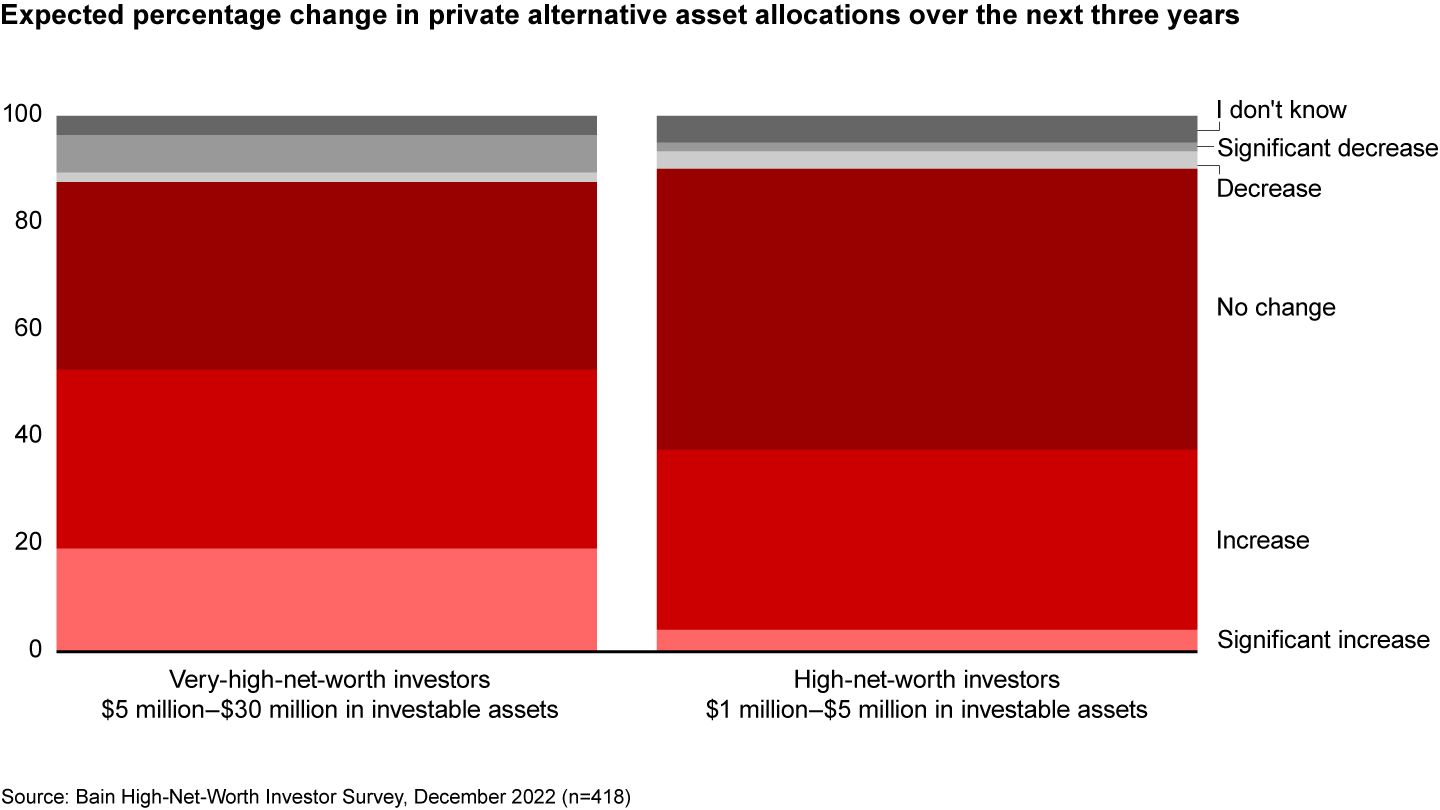
      Private assets under management are highly concentrated in pension funds and other institutions that invest through private equity partnerships. But while individuals account for just 16% of such assets globally, they hold roughly 50% of global wealth. About 38% of high-net-worth individuals and 53% of very-high-net-worth individuals would like to increase their allocation of private alternative assets (see Figures 1 and 2). They’re looking for greater diversification, and some have noticed family offices allocating a greater share of portfolios to private assets.

      Figure 1
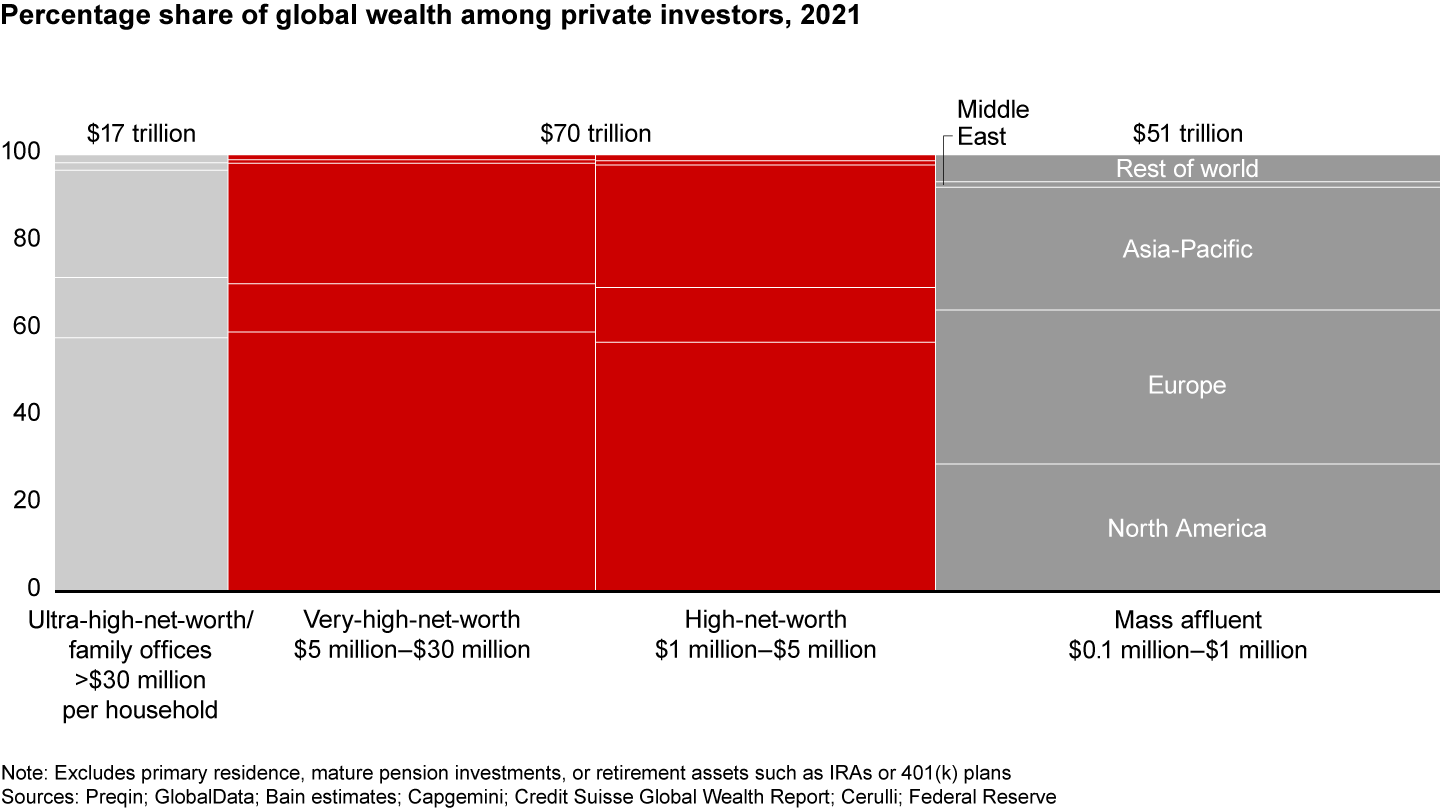
      Global investors holding $70 trillion in wealth are the biggest underserved candidates for private alternative assets
      Figure 2
      Many individual investors globally want to increase their allocation in private alternative assets

      What needs to change

      Unlike in public markets, private markets have only limited electronic infrastructure or standards to support transactions, collateralization, administration, registry, and reporting at any scale. Private markets also generally lack transparency on performance, cost, and underlying investments. The current system was designed for large institutional investments with bespoke and manual processes, which, despite their inefficiency, have not created significant problems. However, the lack of a digital, streamlined industrial model makes broad distribution to individuals almost impossible. Building a new industrial model is the answer, but it will entail changes along the industry’s value chain (see Figure 3).

      Figure 3
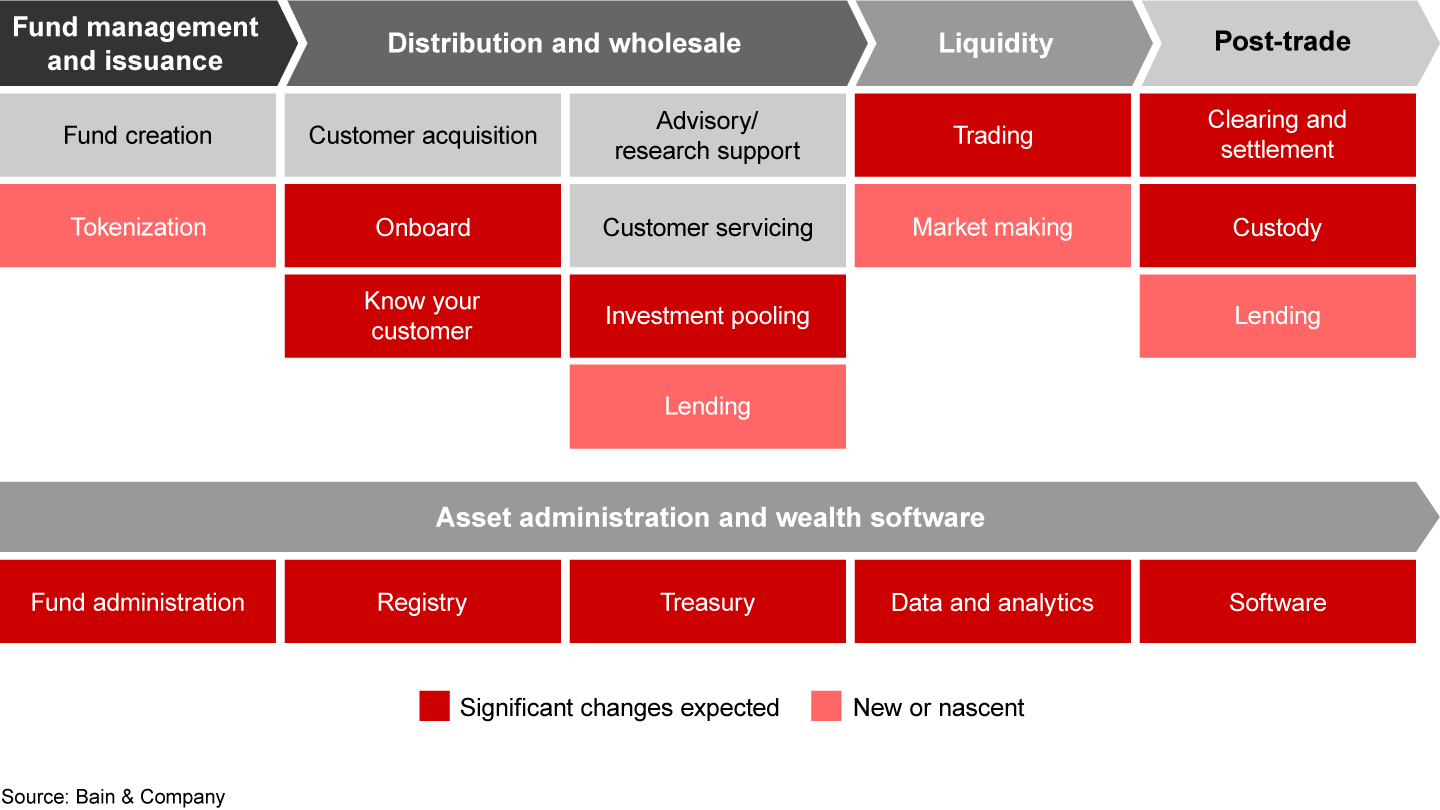
      Delivering private alternative investments at scale requires new infrastructure and workflows

      Developing new distribution methods for these assets will also require firms to overcome other barriers as well. To start, private assets are illiquid and have unpredictable cash flows. In addition, managers offering private fund investments struggle to efficiently offer credit using those investments as collateral because they lack established processes and workflows. Moreover, many financial advisors don’t have deep knowledge of private investments, so they don’t offer these assets to clients. Advisers thus will need education and compliance oversight to become comfortable with the attendant risk.

      Related Brief

      For Digital Assets, Private Markets Offer the Greatest Opportunities

      Four emerging business models hold promise by tapping the benefits of distributed ledger technology.

      Five emerging archetypes

      Several models have emerged to address these barriers. Each has different features and operational and strategic implications for the companies involved.

      “Walled-garden” intermediated feeder funds. Some wealth managers can distribute private assets by enrolling existing clients in feeder funds. While this closed architecture limits the scalability of the model, it’s relatively straightforward for large wealth managers with broad capabilities, including Fidelity, Goldman Sachs, UBS, and Morgan Stanley. This model can also provide an early edge that will be hard for smaller firms to replicate. Keeping the business in-house could be easier than coordinating with third parties. And the model gives large firms control in the absence of a market infrastructure. We estimate that firms using this model currently manage more than $300 billion of assets.

      Direct-to-consumer feeder funds. Feeder funds on digital platforms, which can be tokenized, sell directly to investors. Securitize, for instance, helps asset managers such as KKR and Hamilton Lane bring private assets onto a blockchain via its end-to-end tokenization platform and regulated secondary exchange. Access to customers could be tricky for this model. Most high-net-worth client assets are held by wealth managers, making it difficult for direct-to-consumer funds to dislodge those assets and scale up. And existing wealth management channels offer services that many investors value, such as advice, portfolio management, credit, and reporting.

      Platform partnerships. Platform partners work with wealth managers to develop a curated set of private investment options that wealth managers can sell to their clients. iCapital, for instance, is a financial technology company with a platform that provides alternative investment solutions to investment professionals. An early entrant, it has rapidly scaled up a two-sided market of general partners and potential limited partner investors. iCapital’s market making, along with a sophisticated online portal and technology, has attracted wealth managers seeking to provide access to private assets.

      Emerging market infrastructure. Regulated trading venues have emerged to facilitate transactions and liquidity of private alternative asset funds, or similar vehicles such as feeder funds. ADDX is one company providing a regulated platform for the offering, settlement, custody, and secondary trading of digital securities. By operating an integrated suite compliant with regional securities laws, ADDX has built an institutional-grade platform attractive to large funds. And its user-friendly portal has attracted investors.

      Industry-level market infrastructure and standards. In this open architecture model, separate parties provide trading, settlement/clearing, and transfer/registry for private assets, akin to public market infrastructure. For instance, private companies and their shareholders can list their shares on Nasdaq Private Market’s platform for institutional investors and family offices to purchase. The platform provides distribution of shares, and infrastructure for trading, clearing, and settling accounts.

      Related Report

      Why Private Equity Is Targeting Individual Investors

      Retail investors account for half of all wealth globally. No wonder alternative funds have them in their sights.

      A likely market evolution

      While multiple archetypes will likely coexist for years, we expect platform partnerships to further develop and proliferate in the medium term. Firms that run platforms, such as iCapital, or large traditional asset management companies, will partner with alternative asset managers, exchanges, and custodians to distribute private assets to individual investors.  

      Over the longer term, we expect a more efficient, shared, open-market infrastructure to take root. Reaching full potential in this market will require a coordinated approach. The future market structure will likely include some combination of distributed ledger technology models and data standards, which can yield efficiencies across the value chain, evolving regulations, and traditional, centralized infrastructure akin to today’s public markets.

      Across all of these archetypes, private alternative assets will need to adopt a range of new features to serve different client segments and needs, along with a digital infrastructure that will make new features feasible. But product and feature innovation will depend on the establishment of standards and infrastructure (see Figure 4).

      Figure 4
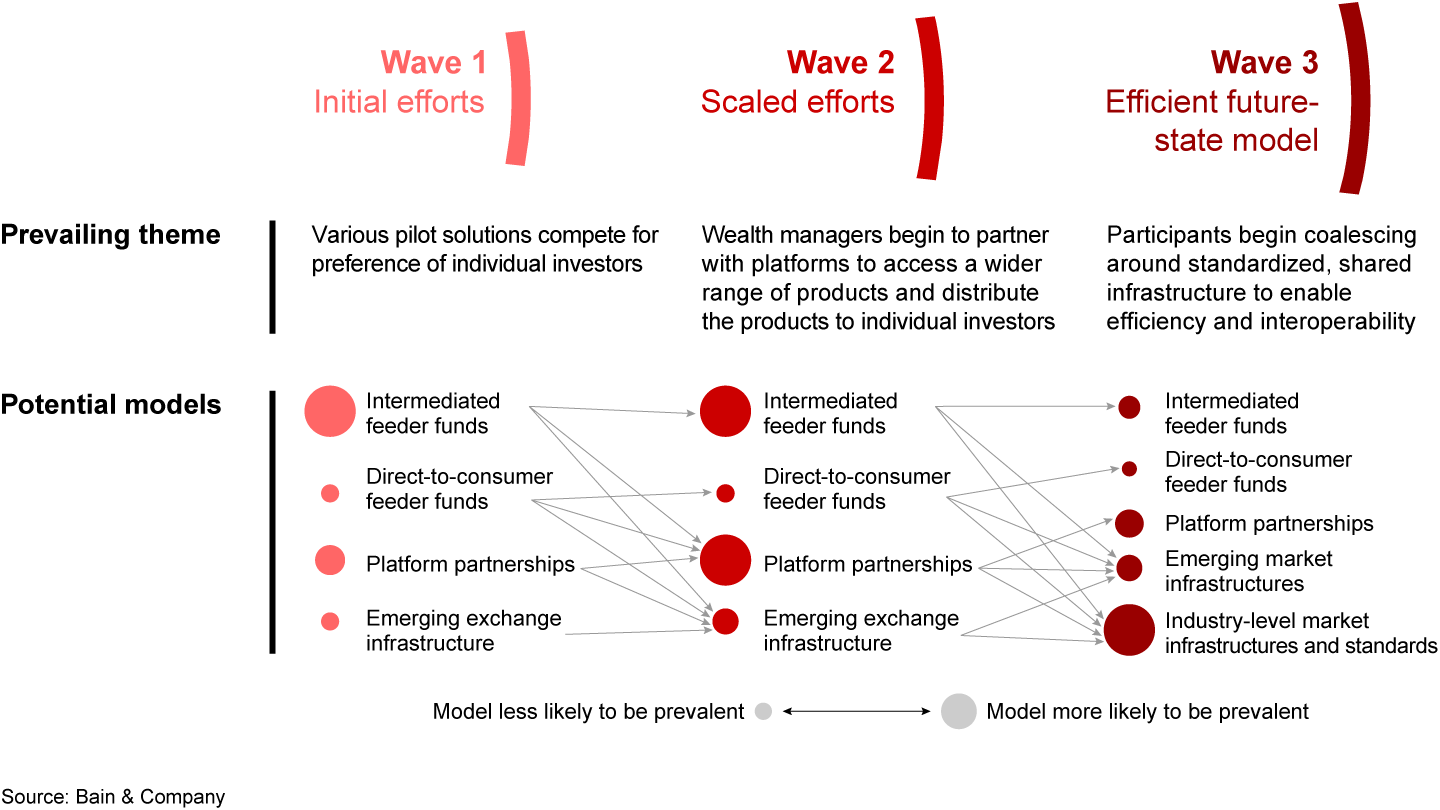
      The predominant archetypes for private alternative assets will evolve

      At a minimum, a system that appeals to more investors and asset managers should incorporate several common characteristics. As noted above, initial investment levels will have to be lowered. Creating a predictable cadence for capital calls will make cash flow easier for many clients. Structured liquidity mechanisms will provide a transparent and reliable secondary market via monthly or quarterly tenders, which would work for most individual investors. Allowing assets to serve as collateral and enable lending are important features for individual investors, and lending generates net interest income for wealth managers. And subscribing to a fund, tax documentation, and reporting should be automated and digital (see Figure 5).

      Figure 5
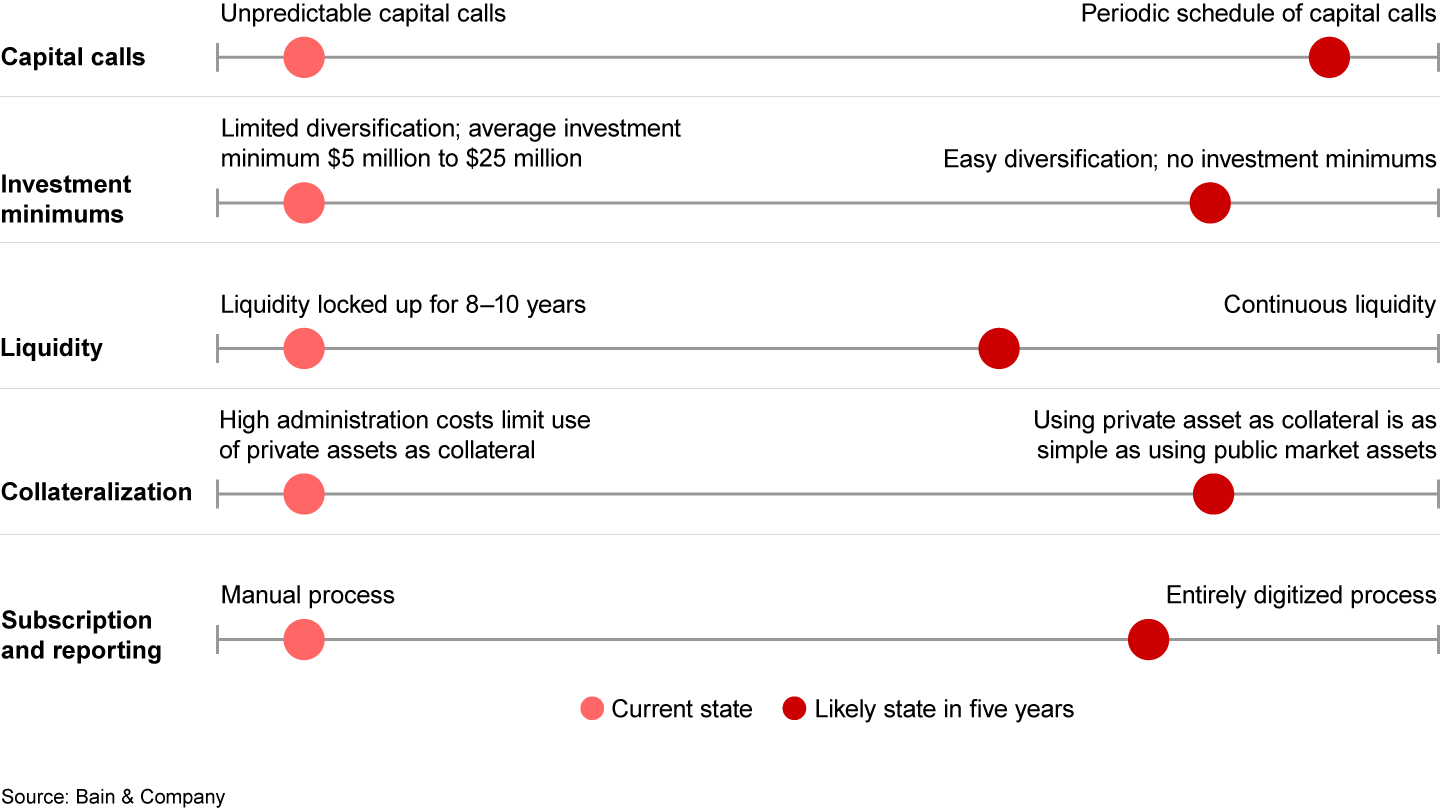
      Some features of private alternative investments will need to change to accommodate more individual investors

      The biggest choice for companies is which archetype to pursue. Once that’s determined, further choices include:

      • Target customers: Which wealth segments to target? Which formats and features are most appropriate for each segment?
      • Product design and regulation: What product structure? What liquidity features? How could assets be used for loan collateral?
      • Workflow and operations: How to develop and implement end-to-end models? What mix of technology platforms to use?
      • Go-to-market approach: How to educate financial advisers and clients? How to trade off walled-garden models vs. industry-level models?

      As with other market infrastructure developments, the largest wealth and asset managers will likely catalyze and shape the development of the private asset market—and can seize first-mover advantages. Custodians, exchanges, fintechs, data providers, and smaller firms can also thrive as challengers or fast followers, as new digital market infrastructure evolves and enables innovation and growth.

      Besides the desire among asset managers for growing their client base, millions of accredited and qualified individual investors crave private alternative assets, if only companies and regulators can collaborate to create structures as robust and transparent as public markets. The supply and demand imperatives are clear; what’s missing is the plumbing and the standards, just as in 1792.

      Authors
      • Headshot of Thomas Olsen
        Thomas Olsen
        Partner, New York
      • Headshot of Daniel Jones
        Daniel Jones
        Partner, New York
      • Headshot of Antonio Rodrigues
        Antonio Rodrigues
        Advisory Partner, Toronto
      • Headshot of Brenda Rainey
        Brenda Rainey
        Executive Vice President, Boston
      • Headshot of Markus Habbel
        Markus Habbel
        Partner, Zurich
      Contact us
      Related Industries
      • Digital Assets and Blockchain
      • Financial Services
      • Market Infrastructure
      • Private Equity
      • Wealth & Asset Management
      Related Consulting Services
      • Digital
      • Web3
      Private Equity
      Inside the Race to Retail Capital with Moonfare’s Steffen Pauls

      We asked the CEO of Moonfare what it takes to get ordinary investors up to speed and investing in private equity with confidence.

      Read more
      Private Equity
      Inside the Race to Tokenize Capital with HgCapital Trust’s Jim Strang

      We consider whether the launch of a few tokenized funds amounts to an interesting experiment on the blockchain or the beginning of a powerful secular trend.

      Read more
      Financial Services
      How Tokenization Can Fuel a $400 Billion Opportunity in Distributing Alternative Investments to Individuals

      Tokenization could revolutionize access to alternatives, unlocking revenues for managers and distributors while enabling higher-quality portfolios for wealthy individuals.

      Read more
      Financial Services
      From Niche to Utility: Stablecoins Move toward the Financial Mainstream

      Widespread adoption depends on regulatory clarity, a compelling value proposition, and seamless integration with legacy systems.

      Read more
      Financial Services
      Avoiding Wipeout: How to Ride the Wave of Private Markets

      Companies will need to develop new capabilities to succeed in the fast-growing private assets market.

      Read more
      First published in julio 2023
      Tags
      • Digital
      • Digital Assets and Blockchain
      • Financial Services
      • Market Infrastructure
      • Private Equity
      • Wealth & Asset Management
      • Web3

      How We've Helped Clients

      A Procurement Transformation Turns Cost Control into a Competitive Advantage

      Read case study

      Blockchain-enabled Payment Flows: A Payments Company Reviews its Strategy

      Read case study

      Strategic refocus for global wealth management company

      Read case study

      Ready to talk?

      We work with ambitious leaders who want to define the future, not hide from it. Together, we achieve extraordinary outcomes.

      Stay ahead in a rapidly changing world. Subscribe to Bain Insights, our monthly look at the critical issues facing global businesses.

      *I have read and understand Bain’s Privacy Notice.

      Please read and agree to the Privacy Policy.
      Bain & Company
      Contact us Sustainability Accessibility Terms of use Privacy Modern Slavery Act Statement Cookie Policy Sitemap Log In

      © 1996-2026 Bain & Company, Inc.

      Contact Bain

      How can we help you?

      • Business inquiry
      • Career information
      • Press relations
      • Partnership request
      • Speaker request
      See all offices