
Skip to Content
  • Offices

    Offices

    North & Latin America
    • Atlanta
    • Austin
    • Bogota
    • Boston
    • Buenos Aires
    • Chicago
    • Dallas
    • Denver
    • Houston
    • Los Angeles
    • Mexico City
    • Minneapolis
    • Monterrey
    • Montreal
    • New York
    • Rio de Janeiro
    • San Francisco
    • Santiago
    • São Paulo
    • Seattle
    • Silicon Valley
    • Toronto
    • Washington, DC
    Europe & Africa
    • Amsterdam
    • Athens
    • Berlin
    • Brussels
    • Copenhagen
    • Dusseldorf
    • Frankfurt
    • Helsinki
    • Istanbul
    • Johannesburg
    • Kyiv
    • Lisbon
    • London
    • Madrid
    • Milan
    • Munich
    • Oslo
    • Paris
    • Rome
    • Stockholm
    • Vienna
    • Warsaw
    • Zurich
    Middle East
    • Doha
    • Dubai
    • Riyadh
    Asia & Australia
    • Bangkok
    • Beijing
    • Bengaluru
    • Brisbane
    • Ho Chi Minh City
    • Hong Kong
    • Jakarta
    • Kuala Lumpur
    • Manila
    • Melbourne
    • Mumbai
    • New Delhi
    • Perth
    • Shanghai
    • Singapore
    • Sydney
    • Tokyo
    See all offices
  • Alumni
  • Media Center
  • Subscribe
  • Contact
  • Spain | Español

    Select your region and language

    Global
    • Global (English)
    North & Latin America
    • Brazil (Português)
    • Argentina (Español)
    • Canada (Français)
    • Chile (Español)
    • Colombia (Español)
    Europe, Middle East, & Africa
    • France (Français)
    • DACH Region (Deutsch)
    • Italy (Italiano)
    • Spain (Español)
    • Greece (Elliniká)
    Asia & Australia
    • China (中文版)
    • Korea (한국어)
    • Japan (日本語)
  • Saved items (0)
    Saved items (0)

    You have no saved items.

    Bookmark content that interests you and it will be saved here for you to read or share later.

    Explore Bain Insights
  • Industries
    Main menu

    Industries

    • Aeroespacial y Defensa
    • Agroindustria
    • Químicos
    • Construcción e Infraestructura
    • Productos de Consumo
    • Servicios Financieros
    • Salud y Ciencias de la Vida
    • Maquinaria y Equipo Industrial
    • Medios y Entretenimiento
      Industries
      Medios y Entretenimiento
      • Media Lab
    • Metales
    • Minería
    • Petróleo y Gas
    • Papel y Empaque
    • Private Equity
      Industries
      Private Equity
      • Due Diligence
      • Exit Planning
      • Firm Strategy & Operations
      • Portfolio Value Creation
    • Sector Público y Social
    • Retail
    • Tecnología
    • Telecomunicaciones
      Industries
      Telecomunicaciones
      • Capital Expenditure
      • Telco Digital Transformation
    • Transporte
    • Viajes y Turismo
    • Servicios Públicos y Energías Renovables
  • Consulting Services
    Main menu

    Consulting Services

    • Customer Experience
    • Sustainability
    • Innovation
    • M&A
    • Operations
    • People & Organization
    • Private Equity
    • Sales & Marketing
    • Strategy
    • AI, Insights, and Solutions
    • Technology
    • Transformation
  • Digital
  • Insights
    Main menu

    Insights

    • Industry Insights
    • Services Insights
    • Bain Books
    • Webinars
    • Bain Futures
    View all Insights
    Featured topics
    • Tariff Response
    • Artificial Intelligence
    • Thriving in Uncertainty
    • Executive Conversations
    • Macro Trends
    • M&A Report
    • Healthcare Private Equity Report
    • Paper & Packaging Report
    • Technology Report
    • CEO's Guide to Sustainability
    • CEO Insights
    • CFO Insights
    • COO Insights
    • CIO Insights
    • CMO Insights
    View all featured topics
  • About
    Main menu

    About

    • What We Do
    • What We Believe
    • Our People & Leadership
    • Client Results
    • Awards & Recognition
    • Global Affiliations
    Further: Our global responsibility
    • Sustainability
    • Social Impact
    • World Economic Forum
    Learn more about Further
  • Carreras
    Main menu

    Carreras

    • Trabaja con Nosotros
      Carreras
      Trabaja con Nosotros
      • Find Your Place
      • Nuestras Áreas de Trabajo
      • Equipos Integrados
      • Estudiantes
      • Internships & Programs
      • Eventos de Reclutamiento
    • La Vida en Bain
      Carreras
      La Vida en Bain
      • Blog: Inside Bain
      • Historias Profesionales
      • Nuestra Gente
      • Dónde Trabajamos
      • Apoyando tu Crecimiento
      • Grupos de Afinidad
      • Beneficios
    • Impact Stories
    • Nuestro Proceso
      Carreras
      Nuestro Proceso
      • Qué Esperar
      • Entrevistas
    FIND JOBS
  • Offices
    Main menu

    Offices

    • North & Latin America
      Offices
      North & Latin America
      • Atlanta
      • Austin
      • Bogota
      • Boston
      • Buenos Aires
      • Chicago
      • Dallas
      • Denver
      • Houston
      • Los Angeles
      • Mexico City
      • Minneapolis
      • Monterrey
      • Montreal
      • New York
      • Rio de Janeiro
      • San Francisco
      • Santiago
      • São Paulo
      • Seattle
      • Silicon Valley
      • Toronto
      • Washington, DC
    • Europe & Africa
      Offices
      Europe & Africa
      • Amsterdam
      • Athens
      • Berlin
      • Brussels
      • Copenhagen
      • Dusseldorf
      • Frankfurt
      • Helsinki
      • Istanbul
      • Johannesburg
      • Kyiv
      • Lisbon
      • London
      • Madrid
      • Milan
      • Munich
      • Oslo
      • Paris
      • Rome
      • Stockholm
      • Vienna
      • Warsaw
      • Zurich
    • Middle East
      Offices
      Middle East
      • Doha
      • Dubai
      • Riyadh
    • Asia & Australia
      Offices
      Asia & Australia
      • Bangkok
      • Beijing
      • Bengaluru
      • Brisbane
      • Ho Chi Minh City
      • Hong Kong
      • Jakarta
      • Kuala Lumpur
      • Manila
      • Melbourne
      • Mumbai
      • New Delhi
      • Perth
      • Shanghai
      • Singapore
      • Sydney
      • Tokyo
    See all offices
  • Alumni
  • Media Center
  • Subscribe
  • Contact
  • Spain | Español
    Main menu

    Select your region and language

    • Global
      Select your region and language
      Global
      • Global (English)
    • North & Latin America
      Select your region and language
      North & Latin America
      • Brazil (Português)
      • Argentina (Español)
      • Canada (Français)
      • Chile (Español)
      • Colombia (Español)
    • Europe, Middle East, & Africa
      Select your region and language
      Europe, Middle East, & Africa
      • France (Français)
      • DACH Region (Deutsch)
      • Italy (Italiano)
      • Spain (Español)
      • Greece (Elliniká)
    • Asia & Australia
      Select your region and language
      Asia & Australia
      • China (中文版)
      • Korea (한국어)
      • Japan (日本語)
  • Saved items  (0)
    Main menu
    Saved items (0)

    You have no saved items.

    Bookmark content that interests you and it will be saved here for you to read or share later.

    Explore Bain Insights
  • Industries
    • Industries

      • Aeroespacial y Defensa
      • Agroindustria
      • Químicos
      • Construcción e Infraestructura
      • Productos de Consumo
      • Servicios Financieros
      • Salud y Ciencias de la Vida
      • Maquinaria y Equipo Industrial
      • Medios y Entretenimiento
      • Metales
      • Minería
      • Petróleo y Gas
      • Papel y Empaque
      • Private Equity
      • Sector Público y Social
      • Retail
      • Tecnología
      • Telecomunicaciones
      • Transporte
      • Viajes y Turismo
      • Servicios Públicos y Energías Renovables
  • Consulting Services
    • Consulting Services

      • Customer Experience
      • Sustainability
      • Innovation
      • M&A
      • Operations
      • People & Organization
      • Private Equity
      • Sales & Marketing
      • Strategy
      • AI, Insights, and Solutions
      • Technology
      • Transformation
  • Digital
  • Insights
    • Insights

      • Industry Insights
      • Services Insights
      • Bain Books
      • Webinars
      • Bain Futures
      View all Insights
      Featured topics
      • Tariff Response
      • Artificial Intelligence
      • Thriving in Uncertainty
      • Executive Conversations
      • Macro Trends
      • M&A Report
      • Healthcare Private Equity Report
      • Paper & Packaging Report
      • Technology Report
      • CEO's Guide to Sustainability
      • CEO Insights
      • CFO Insights
      • COO Insights
      • CIO Insights
      • CMO Insights
      View all featured topics
  • About
    • About

      • What We Do
      • What We Believe
      • Our People & Leadership
      • Client Results
      • Awards & Recognition
      • Global Affiliations
      Further: Our global responsibility
      • Sustainability
      • Social Impact
      • World Economic Forum
      Learn more about Further
  • Carreras
    Popular Searches
    • Agile
    • Digital
    • Strategy
    Your Previous Searches
      Recently Visited Pages

      Content added to saved items

      Saved items (0)

      Removed from saved items

      Saved items (0)

      Brief

      Supply Chain Lessons from Covid-19: Time to Refocus on Resilience

      Supply Chain Lessons from Covid-19: Time to Refocus on Resilience

      Amid crisis and disruption, supply networks designed for low-cost and minimal inventory pose a major risk.

      By Olaf Schatteman, Drew Woodhouse, and Joe Terino

      • min read
      }

      Brief

      Supply Chain Lessons from Covid-19: Time to Refocus on Resilience
      en
      Executive Summary
      • Flexible supply networks help companies minimize the risk of disruption in times of stress.
      • Investments in supply chain resilience can deliver a 15% to 25% improvement in plant output and a 20% to 30% rise in customer satisfaction, Bain’s experience shows.
      • Advanced analytics can improve supply forecast accuracy by 20% to 60%.

      It happened faster than anyone could imagine. As China sent workers home and shuttered businesses in January to contain the coronavirus outbreak, the steady flow of vital parts to global supply chains slowed or stopped. The unexpected disruption sent shock waves through boardrooms around the world, just as the Covid-19 pandemic began to spread.

      For Our Clients

      Macro Surveillance Platform

      For more detail on the business implications of coronavirus from Bain’s Macro Trends Group, log on to the Macro Surveillance Platform. Learn more about the platform >

      Confronted with an unprecedented public health crisis, companies everywhere have rightly concentrated first on ensuring employee safety and supporting their local communities. Manufacturers in critical industries scrambled to find alternative suppliers to keep factories running. Now, as some regions move past the most acute phase of the pandemic and start to plan for recovery, leadership teams are taking a hard look at supply chain reliability and risk.

      The Covid-19 outbreak isn’t an isolated event. Disruptions are increasing in frequency and magnitude, including geopolitical events, climate-related disasters and public health crises. Brexit and the US–China trade war are recent examples. For decades, low-cost supply and minimal inventory were the key tenets of supply chain management. But in an increasingly turbulent world, supply networks that are overly dependent on the lowest-cost supplier and minimal inventory levels can rapidly imperil the business (see Figure 1).

      Figure 1
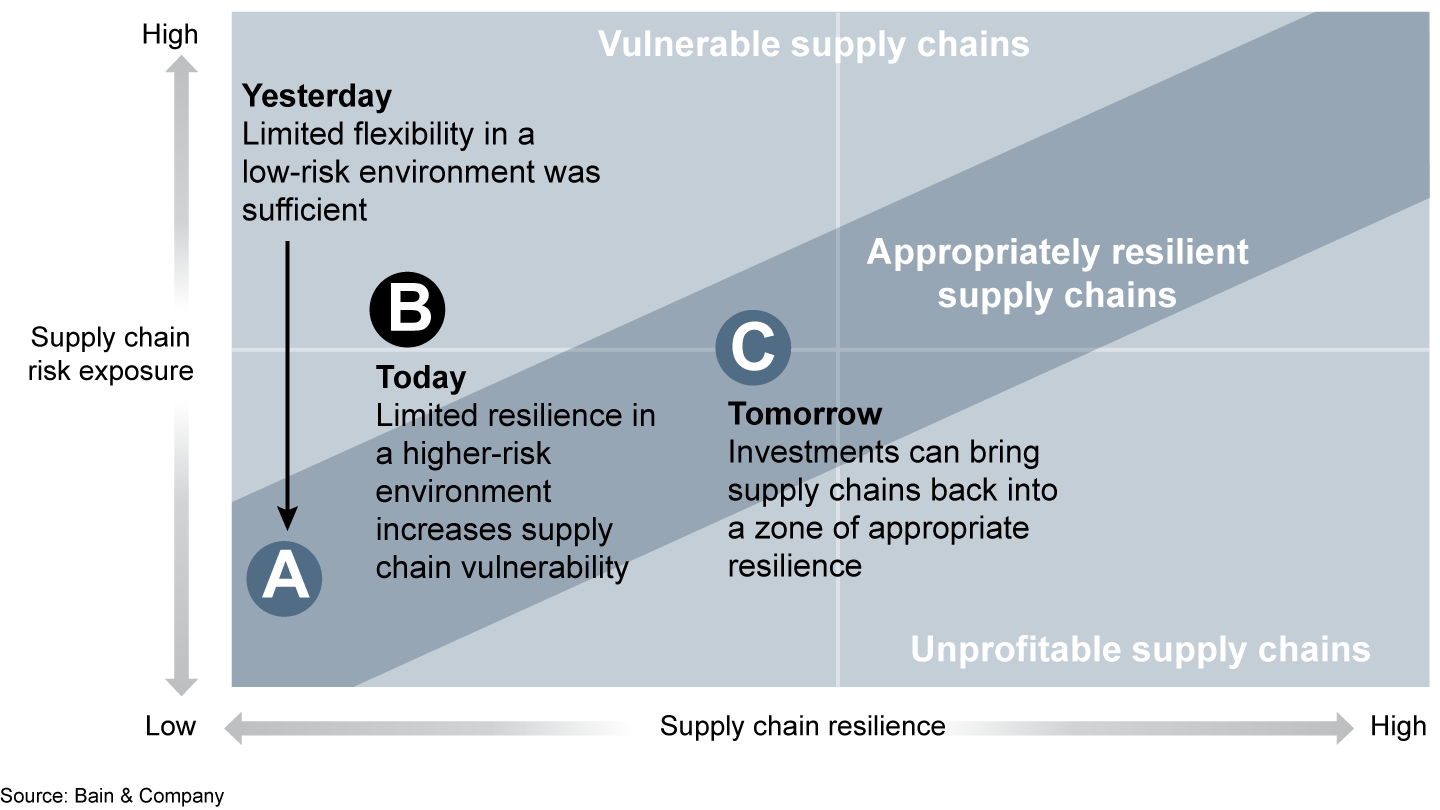
      A growing number of risks threaten supply chains today, but investments can restore resilience

      When US–China trade tensions flared last year, leading companies already started to rethink the cost of network risk and invest in more resilient supply chains. Flexible networks help companies adjust quickly in times of stress. They also help production teams pivot nimbly to meet changing market demand, a significant competitive edge.

      Bain analysis shows that companies with resilient supply chains grow faster because they can move rapidly to meet customers’ needs when market demand shifts. They increase their perfect order rate by 20% to 40% and customer satisfaction by as much as 30%. Importantly, flexible supply chains cut costs and improve cash flow, in part through a 10% to 40% increase in inventory turns. Finally, leaders reduce disruption by building buffers throughout the supply network and invest in advanced analytics to improve planning and forecasting accuracy (see Figure 2).

      Figure 2
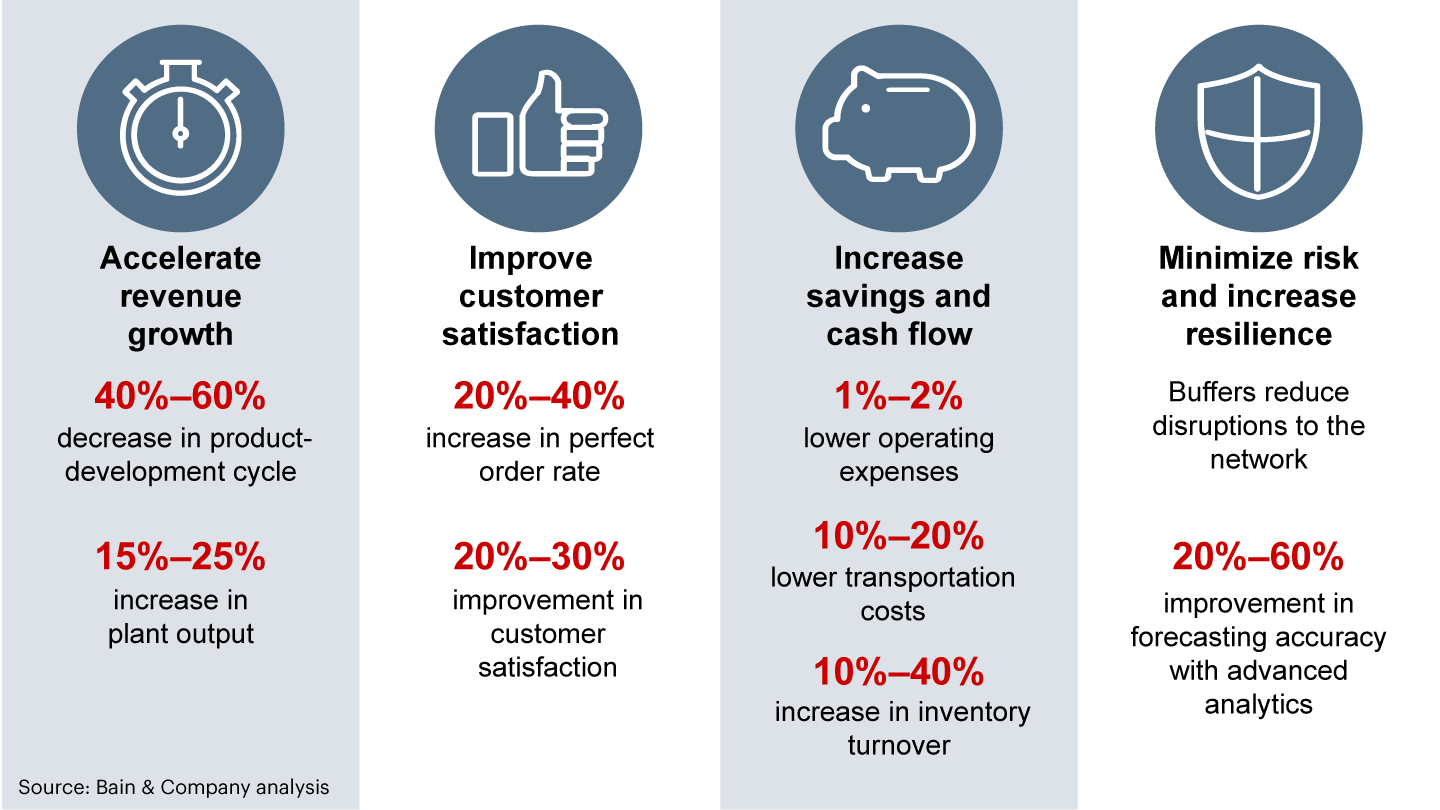
      Resilient supply chains build competitive advantage

      Cost vs. resilience

      Once the pandemic passes and the global economy begins to function normally, many senior executives might assume they should manage their global supply networks as in the past, with the lowest-cost supply and minimal inventory levels. While that approach worked in a stable global economy, it now brings increased risk. The assumptions about supply chain management have shifted.

      Leadership teams that have suffered a sudden shortfall in raw materials or parts know how costly it can be. A global electronics manufacturer suffered a 16% drop in revenue and a 66% decrease in net income in 2016, when a series of earthquakes in Kumamoto, Japan, cut off the supply of parts. And for one global automaker dependent on parts produced in Thailand, the floods of 2011 resulted in a 5% drop in global output, equivalent to $5 billion in lost sales (see Figure 3).

      Figure 3
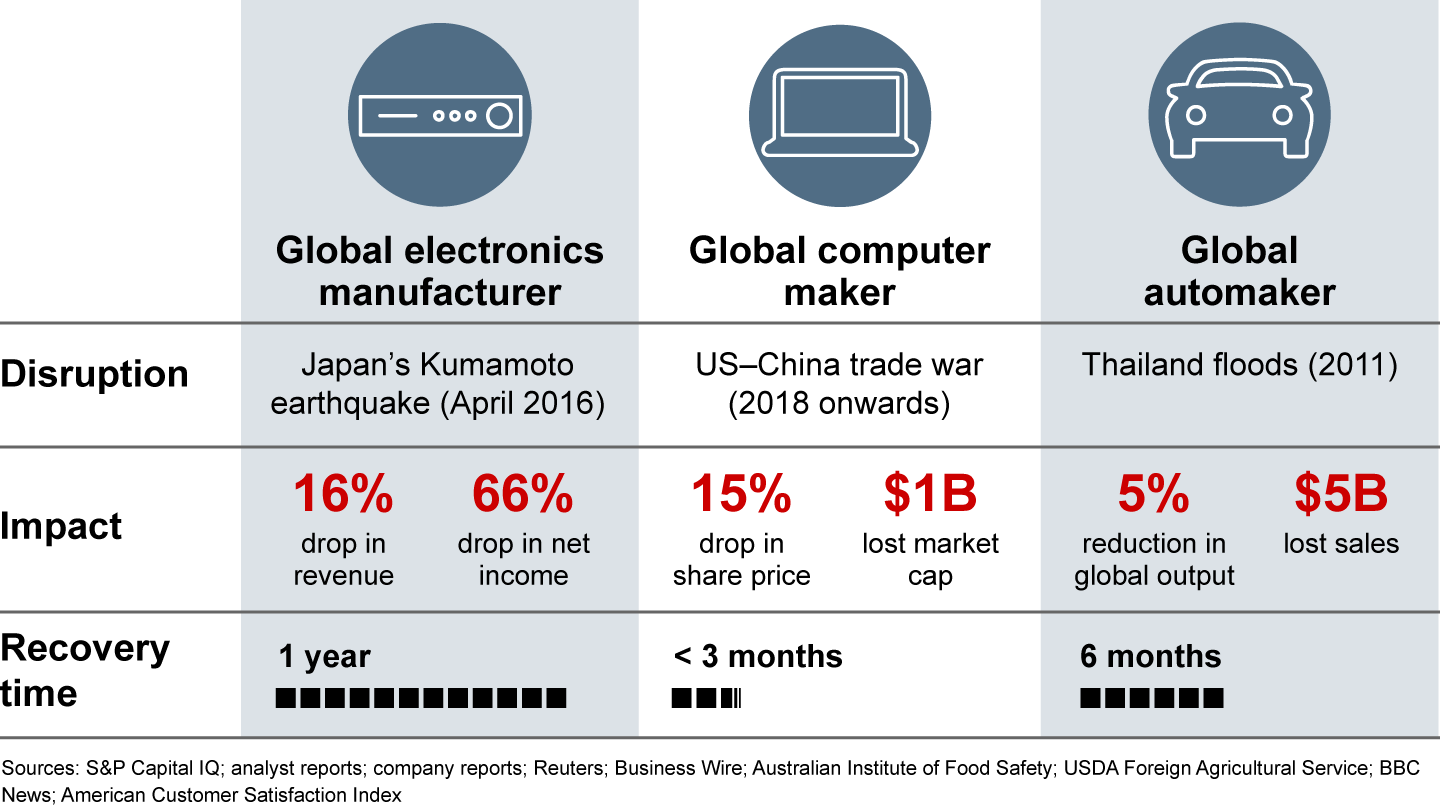
      Supply chain disruptions are costly

      Successful companies are investing in supply chain resilience to minimize those risks and to benefit from improved efficiencies. Take the example of Procter & Gamble, which deployed a cloud-based platform to provide real-time information on production and external demand to its supply chain control tower. That strategy helped minimize the fallout when Hurricane Sandy slammed into New Jersey in 2012, disrupting production at a factory producing 91% of its perfumes. Insights generated by advanced analytics helped the company make the right decisions quickly, limiting the plant’s downtime to 2½ days. Learning from that experience, P&G used digital tools to prepare for Hurricane Irma’s landfall in Florida in 2017 and predicted which suppliers, plants and distribution centers were likely to suffer damage. That allowed the company to prepare contingency plans and relocate inventory. As a result, the company avoided the disruption and financial loss other companies suffered.

      Toyota also has invested in new capabilities to improve supply chain resilience. Working with its partners, the company created a database to visualize supply networks for each component. If disaster strikes, Toyota can immediately identify the parts at risk. The database identifies components that are supplied by only one manufacturer and are difficult to replace. The company then decreases dependence on solo providers by reducing the number of unique designs and sharing equipment specifications with parts production facilities and suppliers.

      Competitive edge

      In our experience, companies that invest in supply chain resilience reduce product development cycles by 40% to 60%. As production teams adjust faster to changes in market demand, revenue growth accelerates. Companies with flexible supply chains expand output capacity 15% to 25% by optimizing operations.

      A global footwear maker, for instance, invested in a highly flexible supply chain that enables it to meet growing market demand for customization. Customers design one-of-a-kind shoes online, and the company delivers them in under 10 days. To achieve that speed, the company partnered with robotics and automation companies that can manufacture the bottom part of a shoe in 2.5 minutes, compared with 50 minutes previously.

      The Covid-19 crisis has thrown a spotlight on companies that already have flexible production lines. The fashion industry couldn’t be further removed from the production of disinfectants and medical gear. But when the spread of Covid-19 overwhelmed the French and Italian healthcare system and medical supplies ran short, nimble luxury goods manufacturers overhauled operations to make the urgently needed items. Within 72 hours of the French government’s call for business to pitch in, LVMH’s perfume factories were producing hand sanitizer. Giorgio Armani, Gucci and Prada repurposed their designer clothing factories in Italy to churn out medical overalls, and Burberry harnessed a trench coat plant to make face masks and nonsurgical gowns. It was more than a feat of factory retooling. Flexible supply chains played a critical role, including rapid raw material sourcing, product design, development and testing, and distribution.

      Getting started

      Leaders invest in five capabilities to create resilient supply chains: 

      Network agility. Reacting quickly to disruption requires a flexible ecosystem of suppliers and partners that can handle sudden shortfalls or even produce new products. That means setting up alternative manufacturing sites and assembly nodes and making the most of Industry 4.0 tools to optimize cost, improve visibility across the network and accelerate reaction times. Leaders develop tailored solutions for each segment of their supply chains to boost performance and cut costs. Those dependent on offshore production move some manufacturing onshore or closer to their core markets. Toyota reduces risk by having one supplier produce 60% of the needed parts, and two additional suppliers each produce 20%.

      Digital collaboration. Cloud-based supply chain applications and collaborative platforms and tools enhance information sharing. They also improve the quality and speed of decision making within an organization and with suppliers and other external partners in a secure environment. Amid the Covid-19 pandemic, manufacturers have demanded greater visibility into the supply chains of their suppliers—a practice worth continuing. Leaders are applying automation and robotics to make their supply chain more autonomous and adding suppliers in their home markets to ensure business continuity.

      Real-time network visibility. Control tower solutions that integrate data across the entire supply chain, 5G technology and blockchain offer leadership teams real-time visibility. Companies can better calibrate supply with forecast demand by comparing internal production capacity data with real-time demand signals such as weather data.

      Rapid generation of insights. Leadership teams can stay a step ahead of supply chain disruptions by improving their ability to rapidly analyze internal data and external sources of big data. That means harnessing machine learning and artificial intelligence for predictive and prescriptive analytics. Those tools can deploy early-warning technologies, model risk scenarios and develop preprogrammed responses. Increased risk of disruption also requires updated planning parameters and objectives, since old assumptions are no longer valid.

      Empowered teams. Decentralized teams can react quickly to insights generated by advanced analytics and create the rapid-recovery capabilities that will help companies navigate smoothly in times of disruption.

      The frequency and intensity of shocks to the global economy are increasing. The Covid-19 outbreak has exposed just how vulnerable far-flung supply chains have become. What long passed for adequate flexibility is now subpar. Companies that begin investing today in a resilient supply chain will be best positioned to weather the next event that obstructs the global flow of goods.

      Latest Insights

      Operations Excellence

      Companies with best-in-class operations have a strong competitive edge. Bain's insights on operational excellence help leadership teams transform supply chains, procurement strategy, and manufacturing capabilities into strategic weapons.

      Related Insights

      Coronavirus

      The global Covid-19 pandemic has extracted a terrible human toll and spurred sweeping changes in the world economy. Across industries, executives have begun reassessing their strategies and repositioning their companies to thrive now and in the world beyond coronavirus.

      Olaf Schatteman, Drew Woodhouse and Joe Terino are partners with Bain & Company’s Performance Improvement practice. Olaf and Drew are based in Bain’s Sydney office, and Joe is based in the Boston office.


      Authors
      • Headshot of Olaf Schatteman
        Olaf Schatteman
        Alumni, Sydney
      • Headshot of Drew Woodhouse
        Drew Woodhouse
        Partner, Sydney
      • Joe Terino
        Alumni, Boston
      Contact us
      Related Consulting Services
      • AI, Insights, and Solutions
      • Digital
      • Operations
      • Performance Improvement
      • Supply Chain
      COO insights
      AI Is Revolutionizing Industrial Operations

      Supply chain planning, procurement enhancements, manufacturing optimization, and engineering augmentation are emerging AI opportunities.

      Read more
      Coronavirus
      Covid-19 Exposed the Fragility of Global Supply Chains

      Leading manufacturers are investing to improve network flexibility and resilience.

      Read more
      Performance Improvement
      It's Time to Build Resilience into Retail and Consumer Goods Supply Chains

      Reeling from Covid-19 disruptions, leaders are investing to improve speed and agility.

      Read more
      Coronavirus
      Generating Value While Restarting Your Supply Chain

      Covid-19 exposed the vulnerability of many supply chains. Fixing them affordably requires strategic focus.

      Read more
      Performance Improvement
      Digital Operations: Don’t Depart without a Strategy

      Industry 4.0 leaders set clear goals to achieve speed, agility and efficiency.

      Read more
      First published in abril 2020
      Tags
      • AI, Insights, and Solutions
      • COO insights
      • Coronavirus
      • Digital
      • Operations
      • Performance Improvement
      • Supply Chain

      How We've Helped Clients

      Turning bottlenecks into growth opportunities

      Read case study

      Bain and Bosch Connected Industry Team Up to Help Automaker Build a New Plant Based on Industry 4.0 Technology

      Read case study

      Carmaker shifts its production model

      Read case study

      Ready to talk?

      We work with ambitious leaders who want to define the future, not hide from it. Together, we achieve extraordinary outcomes.

      Stay ahead in a rapidly changing world. Subscribe to Bain Insights, our monthly look at the critical issues facing global businesses.

      *I have read and understand Bain’s Privacy Notice.

      Please read and agree to the Privacy Policy.
      Bain & Company
      Contact us Sustainability Accessibility Terms of use Privacy Modern Slavery Act Statement Cookie Policy Sitemap Log In

      © 1996-2026 Bain & Company, Inc.

      Contact Bain

      How can we help you?

      • Business inquiry
      • Career information
      • Press relations
      • Partnership request
      • Speaker request
      See all offices