
Skip to Content
  • Offices

    Offices

    North & Latin America
    • Atlanta
    • Austin
    • Bogota
    • Boston
    • Buenos Aires
    • Chicago
    • Dallas
    • Denver
    • Houston
    • Los Angeles
    • Mexico City
    • Minneapolis
    • Monterrey
    • Montreal
    • New York
    • Rio de Janeiro
    • San Francisco
    • Santiago
    • São Paulo
    • Seattle
    • Silicon Valley
    • Toronto
    • Washington, DC
    Europe & Africa
    • Amsterdam
    • Athens
    • Berlin
    • Brussels
    • Copenhagen
    • Dusseldorf
    • Frankfurt
    • Helsinki
    • Istanbul
    • Johannesburg
    • Kyiv
    • Lisbon
    • London
    • Madrid
    • Milan
    • Munich
    • Oslo
    • Paris
    • Rome
    • Stockholm
    • Vienna
    • Warsaw
    • Zurich
    Middle East
    • Doha
    • Dubai
    • Riyadh
    Asia & Australia
    • Bangkok
    • Beijing
    • Bengaluru
    • Brisbane
    • Ho Chi Minh City
    • Hong Kong
    • Jakarta
    • Kuala Lumpur
    • Manila
    • Melbourne
    • Mumbai
    • New Delhi
    • Perth
    • Shanghai
    • Singapore
    • Sydney
    • Tokyo
    See all offices
  • Alumni
  • Media Center
  • Subscribe
  • Contact
  • Spain | Español

    Select your region and language

    Global
    • Global (English)
    North & Latin America
    • Brazil (Português)
    • Argentina (Español)
    • Canada (Français)
    • Chile (Español)
    • Colombia (Español)
    Europe, Middle East, & Africa
    • France (Français)
    • DACH Region (Deutsch)
    • Italy (Italiano)
    • Spain (Español)
    • Greece (Elliniká)
    Asia & Australia
    • China (中文版)
    • Korea (한국어)
    • Japan (日本語)
  • Saved items (0)
    Saved items (0)

    You have no saved items.

    Bookmark content that interests you and it will be saved here for you to read or share later.

    Explore Bain Insights
  • Industries
    Main menu

    Industries

    • Aeroespacial y Defensa
    • Agroindustria
    • Químicos
    • Construcción e Infraestructura
    • Productos de Consumo
    • Servicios Financieros
    • Salud y Ciencias de la Vida
    • Maquinaria y Equipo Industrial
    • Medios y Entretenimiento
      Industries
      Medios y Entretenimiento
      • Media Lab
    • Metales
    • Minería
    • Petróleo y Gas
    • Papel y Empaque
    • Private Equity
      Industries
      Private Equity
      • Due Diligence
      • Exit Planning
      • Firm Strategy & Operations
      • Portfolio Value Creation
    • Sector Público y Social
    • Retail
    • Tecnología
    • Telecomunicaciones
      Industries
      Telecomunicaciones
      • Capital Expenditure
      • Telco Digital Transformation
    • Transporte
    • Viajes y Turismo
    • Servicios Públicos y Energías Renovables
  • Consulting Services
    Main menu

    Consulting Services

    • Customer Experience
    • Sustainability
    • Innovation
    • M&A
    • Operations
    • People & Organization
    • Private Equity
    • Sales & Marketing
    • Strategy
    • AI, Insights, and Solutions
    • Technology
    • Transformation
  • Digital
  • Insights
    Main menu

    Insights

    • Industry Insights
    • Services Insights
    • Bain Books
    • Webinars
    • Bain Futures
    View all Insights
    Featured topics
    • Tariff Response
    • Artificial Intelligence
    • Thriving in Uncertainty
    • Executive Conversations
    • Macro Trends
    • M&A Report
    • Healthcare Private Equity Report
    • Paper & Packaging Report
    • Technology Report
    • CEO's Guide to Sustainability
    • CEO Insights
    • CFO Insights
    • COO Insights
    • CIO Insights
    • CMO Insights
    View all featured topics
  • About
    Main menu

    About

    • What We Do
    • What We Believe
    • Our People & Leadership
    • Client Results
    • Awards & Recognition
    • Global Affiliations
    Further: Our global responsibility
    • Sustainability
    • Social Impact
    • World Economic Forum
    Learn more about Further
  • Carreras
    Main menu

    Carreras

    • Trabaja con Nosotros
      Carreras
      Trabaja con Nosotros
      • Find Your Place
      • Nuestras Áreas de Trabajo
      • Equipos Integrados
      • Estudiantes
      • Internships & Programs
      • Eventos de Reclutamiento
    • La Vida en Bain
      Carreras
      La Vida en Bain
      • Blog: Inside Bain
      • Historias Profesionales
      • Nuestra Gente
      • Dónde Trabajamos
      • Apoyando tu Crecimiento
      • Grupos de Afinidad
      • Beneficios
    • Impact Stories
    • Nuestro Proceso
      Carreras
      Nuestro Proceso
      • Qué Esperar
      • Entrevistas
    FIND JOBS
  • Offices
    Main menu

    Offices

    • North & Latin America
      Offices
      North & Latin America
      • Atlanta
      • Austin
      • Bogota
      • Boston
      • Buenos Aires
      • Chicago
      • Dallas
      • Denver
      • Houston
      • Los Angeles
      • Mexico City
      • Minneapolis
      • Monterrey
      • Montreal
      • New York
      • Rio de Janeiro
      • San Francisco
      • Santiago
      • São Paulo
      • Seattle
      • Silicon Valley
      • Toronto
      • Washington, DC
    • Europe & Africa
      Offices
      Europe & Africa
      • Amsterdam
      • Athens
      • Berlin
      • Brussels
      • Copenhagen
      • Dusseldorf
      • Frankfurt
      • Helsinki
      • Istanbul
      • Johannesburg
      • Kyiv
      • Lisbon
      • London
      • Madrid
      • Milan
      • Munich
      • Oslo
      • Paris
      • Rome
      • Stockholm
      • Vienna
      • Warsaw
      • Zurich
    • Middle East
      Offices
      Middle East
      • Doha
      • Dubai
      • Riyadh
    • Asia & Australia
      Offices
      Asia & Australia
      • Bangkok
      • Beijing
      • Bengaluru
      • Brisbane
      • Ho Chi Minh City
      • Hong Kong
      • Jakarta
      • Kuala Lumpur
      • Manila
      • Melbourne
      • Mumbai
      • New Delhi
      • Perth
      • Shanghai
      • Singapore
      • Sydney
      • Tokyo
    See all offices
  • Alumni
  • Media Center
  • Subscribe
  • Contact
  • Spain | Español
    Main menu

    Select your region and language

    • Global
      Select your region and language
      Global
      • Global (English)
    • North & Latin America
      Select your region and language
      North & Latin America
      • Brazil (Português)
      • Argentina (Español)
      • Canada (Français)
      • Chile (Español)
      • Colombia (Español)
    • Europe, Middle East, & Africa
      Select your region and language
      Europe, Middle East, & Africa
      • France (Français)
      • DACH Region (Deutsch)
      • Italy (Italiano)
      • Spain (Español)
      • Greece (Elliniká)
    • Asia & Australia
      Select your region and language
      Asia & Australia
      • China (中文版)
      • Korea (한국어)
      • Japan (日本語)
  • Saved items  (0)
    Main menu
    Saved items (0)

    You have no saved items.

    Bookmark content that interests you and it will be saved here for you to read or share later.

    Explore Bain Insights
  • Industries
    • Industries

      • Aeroespacial y Defensa
      • Agroindustria
      • Químicos
      • Construcción e Infraestructura
      • Productos de Consumo
      • Servicios Financieros
      • Salud y Ciencias de la Vida
      • Maquinaria y Equipo Industrial
      • Medios y Entretenimiento
      • Metales
      • Minería
      • Petróleo y Gas
      • Papel y Empaque
      • Private Equity
      • Sector Público y Social
      • Retail
      • Tecnología
      • Telecomunicaciones
      • Transporte
      • Viajes y Turismo
      • Servicios Públicos y Energías Renovables
  • Consulting Services
    • Consulting Services

      • Customer Experience
      • Sustainability
      • Innovation
      • M&A
      • Operations
      • People & Organization
      • Private Equity
      • Sales & Marketing
      • Strategy
      • AI, Insights, and Solutions
      • Technology
      • Transformation
  • Digital
  • Insights
    • Insights

      • Industry Insights
      • Services Insights
      • Bain Books
      • Webinars
      • Bain Futures
      View all Insights
      Featured topics
      • Tariff Response
      • Artificial Intelligence
      • Thriving in Uncertainty
      • Executive Conversations
      • Macro Trends
      • M&A Report
      • Healthcare Private Equity Report
      • Paper & Packaging Report
      • Technology Report
      • CEO's Guide to Sustainability
      • CEO Insights
      • CFO Insights
      • COO Insights
      • CIO Insights
      • CMO Insights
      View all featured topics
  • About
    • About

      • What We Do
      • What We Believe
      • Our People & Leadership
      • Client Results
      • Awards & Recognition
      • Global Affiliations
      Further: Our global responsibility
      • Sustainability
      • Social Impact
      • World Economic Forum
      Learn more about Further
  • Carreras
    Popular Searches
    • Agile
    • Digital
    • Strategy
    Your Previous Searches
      Recently Visited Pages

      Content added to saved items

      Saved items (0)

      Removed from saved items

      Saved items (0)

      Brief

      Winning Companies Invest in Healthy Life Years

      Winning Companies Invest in Healthy Life Years

      Healthy life years will become the new currency for economic prosperity.

      By Norbert Hueltenschmidt and Karan Singh

      • min read
      }

      Brief

      Winning Companies Invest in Healthy Life Years
      en

      When literacy rates became a useful predictor of a nation’s economic prospects, the world changed. Societies realized that investing in education not only improved the lives of their citizens, it also lifted GDP, and governments got on board.

      Something similar is happening with healthy living. Analysis shows a strong correlation between healthy life expectancy and the World Economic Forum’s global competitiveness index. As that recognition spreads, healthy life years (HLY)1 will become the new currency of economic growth and prosperity.

      The changes will be massive. Companies and governments have long viewed health as a cost, not an investment. But as healthcare costs continue to outpace GDP in many countries, businesses have come to realize that investing in health is actually an economic imperative. Investing in the right areas can pay off for all stakeholders.

      Over the past 100 years, total life expectancy has increased by more than 50%. However, although we live longer, we do not live healthier. In fact, for every year we live longer, we live only 0.8 years in a healthy state. And when individuals live longer in a state of disability, it adds up to big costs for companies and economies.

      This becomes a worldwide issue as urbanization and industrialization export an unhealthy, sedentary and high-stress lifestyle from the West to economies around the world. For example, in China, the prevalence of diabetes has increased nearly ten-fold in the past three decades, putting it nearly on par with the United States.

      The global price tag of non-communicable diseases (NCDs) such as cancer, diabetes, heart and lung disease, and mental illness is enormous—an approaching tsunami of NCDs. Over the next 15 years, the cumulative direct and indirect costs of these diseases will amount to about five times the costs caused by the global financial crisis in the 15 years following 2008.2 In contrast, maximizing HLY can have a positive effect on a country’s economic prosperity. Populations that live longer in a healthy state can be more productive over a longer time period and consume more during that extended life. Furthermore, a healthy population can work more years before retirement, resulting in less drain on social welfare programs or company retiree medical benefits.

      As for emerging markets, decades of data show that countries actually become healthy before they become wealthy. Health increasingly drives socioeconomic growth and prosperity. So when countries invest in population health—including sanitation, education, healthcare, key areas of prevention—they reap economic benefits both in the short and long term.

      How can a company such as yours create more healthy life years? You may feel you have been doing almost everything imaginable with wellness programs, incentives for healthy living and benefits that require employees to take responsibility for their own health. But the influence of companies on health goes beyond workforce health programs. It is important to ask the following questions:

      • What is the impact of your operations on the health of your community?
      • What is the health footprint of your product portfolio?
      • Where does health create opportunities for growth?

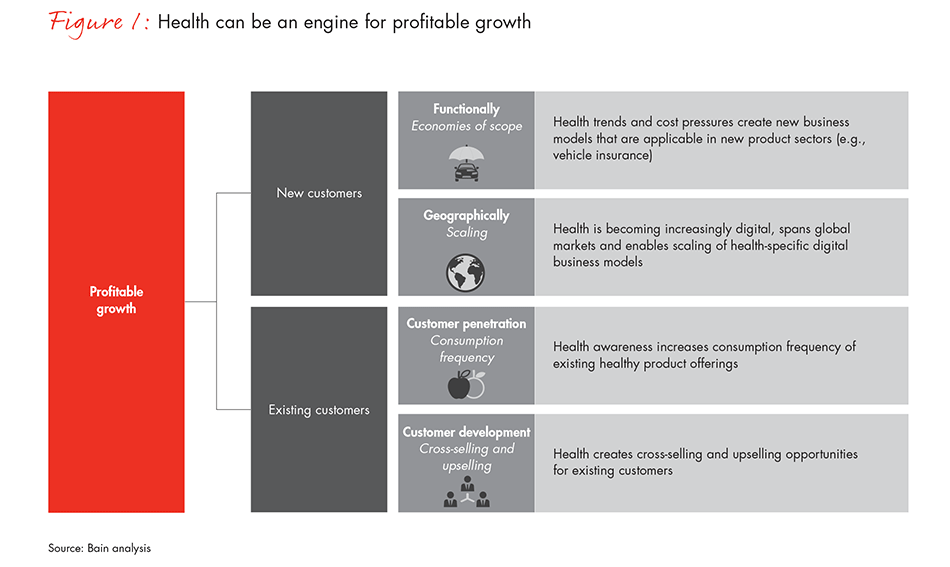
      Health can be an engine for profitable growth, either by creating more business with existing customers or by winning new customers (see Figure 1). South African insurer Vitality was able to extend its behavioral science-based approach from health insurance to other product sectors such as vehicle or life insurance, and Under Armour, via upselling and cross-selling, moved from sporting apparel manufacturer into offering fitness-related apps and smart clothing.

      winning-companies-invest-healthy-life-years-fig01_embed

      While there are some opportunities in which investments pay off directly, there comes a point when an individual company cannot do this alone. One thing we have learned from our work with the World Economic Forum is that creating healthy life years requires partnerships, often between the public and the private sectors. As you look for sustainable growth opportunities, you will need to gather new ideas and look for partnerships in sectors beyond traditional healthcare, with potential investments at the individual, employer and population levels.

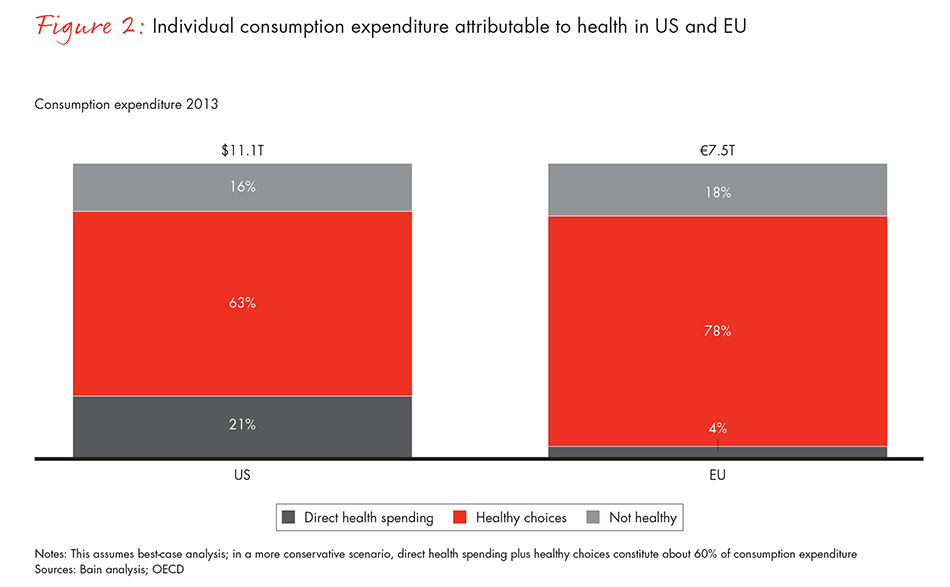
      This shift in perspective can create significant new markets. Right now in the EU, direct health spending is 4% of household consumption expenditure (see Figure 2). However, healthy living touches upon all aspects of our lives—what we eat, where we live and what we do in our free time. Based on our analyses, household health-related expenditures can reach 80% or more of total expenditure—€6.2 trillion in the EU and $9.3 trillion in the US. The share of this 80%-plus that is not direct health spending includes products where healthy living can be a choice, ranging from food to housing to clothes to leisure activities.

      winning-companies-invest-healthy-life-years-fig02_embed

      Because the implications of creating a healthier population are so significant, we mapped out the systemic impact of efforts to maximize HLY. Based on population data and pilot projects developed by insurers, we identified nine inflection points or milestones in which interventions can change an individual’s health status for better or worse. These points include promoting healthy pregnancies, balanced nutrition in childhood, health literacy, adequate vaccination and healthy body weight, as well as creating health-enabling environments, high compliance rates with treatment, adequate social engagement and a sense of self-efficacy.

      By investing in keeping people healthy during these key milestones, you can raise both the return on health (ROH) and the return on investment (ROI). For example, a 10-year study by the University of Southern California of more than 3,000 children living in Southern California found that those who lived closer to parks had a much lower body mass index (BMI) at the age of 18 than those who lived farther away. In this case, children with lower BMI were less likely to be obese, a high ROH, and their proximity to parks increased the demand for activity, which yielded a greater ROI for recreation programs. Additional ROI could accrue to developers and planners if parents are willing to pay a real estate premium for access to a healthy community in much the same way that they are willing to pay for access to good schools. Even modest amounts of investment can be enough to create an increase in HLY. For example, Singapore’s Health Promotion Board provides grants for healthier cooking oil used in meals outside the home, a move it expects to significantly reduce the number of cases of coronary heart disease by 2020, resulting in more than 1,800 additional healthy life years and a population-based ROI of 1,100%.

      The nine inflection points vary in their relevance for different industries. Opportunities range from building health-enabling infrastructure such as parks to technology that facilitates the compliant use of medication. According to analysis by Bain and the World Economic Forum, even allocating 8% to 10% of current per capita healthcare expenditure in the US would be sufficient to address all nine of the investment areas. We have seen little action so far. What holds us back? The two main reasons for this are misaligned incentives and uncertainty about how to get started.

      Our new research in collaboration with the World Economic Forum, “Future of Healthy: How to Realize Returns on Health,” offers a way to overcome these misaligned incentives. We point out that public and private stakeholders need to create “ecosystems of health,” in which a health benefit (or ROH) is aligned with an ROI. Within these systems, other stakeholders can then design and deliver financially viable health-enabling offerings. In the example regarding access to parks, transparency about the health benefits of different neighborhoods creates an ecosystem in which offerings that improve health also make business sense. Such a health map of different neighborhoods would also allow payers (especially in single-payer systems) to intervene in areas with below-average health scores by offering prevention programs embedded in the community to mitigate health problems.

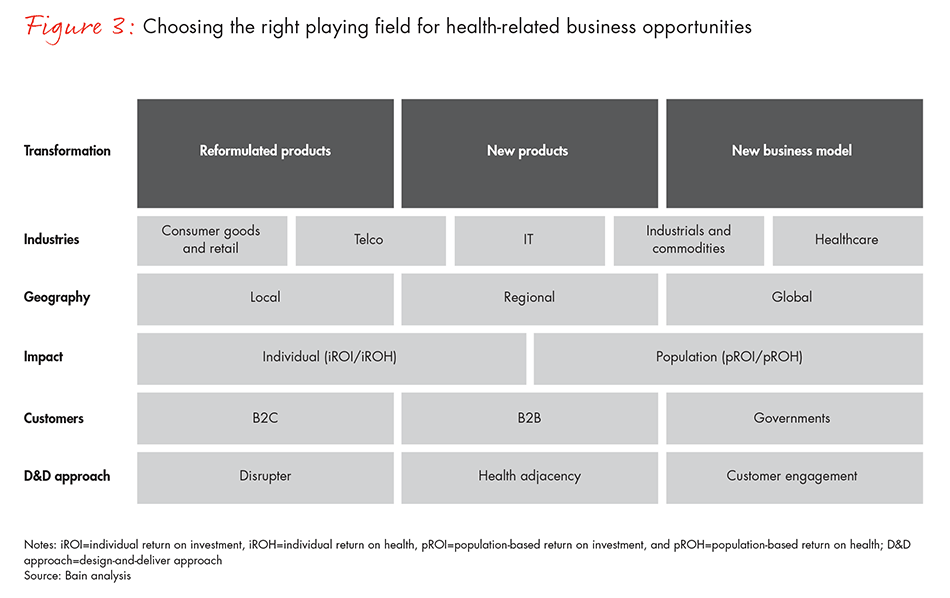
      The starting point for action is to understand the market and how health will change the ecosystems that are relevant for your company. As a company begins to design and deliver healthy offerings, it is important to understand the critical assets and capabilities you have at hand. For example, consumer goods companies are experts at obtaining consumer insights and driving consumer behavior that will create healthier choices. You must match the assets you have with trends and developments in the ecosystem in which you operate. The playing field of opportunities has multiple dimensions, including the scale of change (from incremental to full transformation into a health company), geography and the role you want to play in the ecosystem (see Figure 3). A careful assessment will reveal the most relevant opportunities and potential gaps in your assets and capabilities. Based on this information, you can define clear actions and develop a roadmap for building or acquiring required capabilities as well as rolling out initiatives without overburdening your organization.

      winning-companies-invest-healthy-life-years-fig03_embed

      How to identify healthy investment opportunities for your business and prepare your organization for health


      • Market: How can health transform our industry?
        • Understand key trends.
        • Get an overview of recent and expected changes to the relevant ecosystems.
        • Identify the products in your portfolio that are relevant to the health of your consumers, and determine the strategic role of your products.

        Ask yourself:

        • How urgent and fundamental are the changes?
        • Can we identify the health winners and losers in our current portfolio?
        • Where are the biggest opportunities?
      • Assets and capabilities: Which relevant assets do we have? Which ones do we need?
        • Identify your health-relevant assets and capabilities.
        • Assess the assets and capabilities that will benefit from the industry transformation.
        • Identify ways to close gaps.

        Ask yourself:

        • What are our strengths, and are these relevant for health?
        • Can we build or buy required capabilities and assets?
        • Are investments in health part of our core business or a one-step adjacency?
      • Opportunities: What are our most relevant business opportunities?
        • Assess attractiveness of different options.
        • Assess own ability to win different options.
        • Ensure fit with overall strategy.

        Ask yourself:

        • What is the size and profitability of the different markets?
        • What are the barriers to entry?
        • Do we have the necessary capabilities? Can we build them in time or access through partnerships?
      • Action: How can we make this happen?
        • Define the structure of the ecosystem of health, how the stakeholders interact, and whether the partnership should be private or public.
        • Prepare your organization for change.
        • Develop a plan to fill gaps in assets and capabilities.

        Ask yourself:

        • What is the setup of the ecosystem of health?
        • Who are our partners?
        • What are our next steps to seize these opportunities?

      The approaching tsunami of NCDs creates an urgent need for action, but it also offers investment opportunities for businesses and society. These investments will be most effective if they are tackled collaboratively. Governments, regulators and health insurers all have a role to play. Their active engagement in public–private partnerships can accelerate the paradigm shift to health and determine the pace of change that will maximize HLY.

      Companies can earn significant returns on health in two ways:

      • by upgrading or enlarging their product portfolios to better address population health and make their offerings more competitive; or
      • by developing and marketing targeted products for individual health that can be sold at a premium.

      Whichever market they target, winning companies will identify the most attractive opportunities for investment now and take action by shaping the right ecosystems of health for the products they offer.


      1 The Healthy Life Years indicator is a European structural indicator computed by Eurostat. It is one of the summary measures of population health, known as health expectancies, which are composite measures of health that combine mortality and morbidity data to represent overall population health on a single indicator.

      2 Bain analysis, supported by data from the World Economic Forum and Harvard University and the Federal Reserve Bank of Dallas.

      Norbert Hueltenschmidt is a partner with Bain & Company’s Zurich office. Karan Singh is a Bain partner in the New Delhi office.

      The authors wish to thank Eva-Maria Hempe (Bain & Company) for her contributions, as well as Fritz Lackhoff (Bain & Company), Subash Viroomal (Bain & Company) and Vanessa Candeias (World Economic Forum) for shaping the Bain/World Economic Forum journey from “Healthy Living” to “The Future of Healthy.”


      winning-companies-invest-healthy-life-years-fig01_full

      winning-companies-invest-healthy-life-years-fig02_full

      winning-companies-invest-healthy-life-years-fig03_full
      Authors
      • Headshot of Norbert Hueltenschmidt
        Norbert Hueltenschmidt
        Partner, Zurich
      • Headshot of Karan Singh
        Karan Singh
        Partner, New Delhi
      • Headshot of Subash Viroomal
        Subash Viroomal
        Partner, London
      Contact us
      Related Industries
      • Healthcare & Life Sciences
      Healthcare & Life Sciences
      Healthy living: Economic necessity and business opportunity

      How business leaders can understand, advance and shape the market for Healthy Living.

      Read more
      Healthcare & Life Sciences
      Multistakeholder collaboration for healthy living: Toolkit annex

      The templates in this document complement the guidance offered in the Multistakeholder Collaboration for Healthy Living: Toolkit for joint action.

      Read more
      Healthcare & Life Sciences
      The charter for healthy living

      Chronic conditions such as heart disease, diabetes and obesity pose threats to the human race.

      Read more
      Healthcare & Life Sciences
      Accelerating Growth and Innovation in European Mid-Sized Pharma

      Insights from the last decade of growth and portfolio innovation can help crack the growth code for EU mid-size pharma.

      Read more
      Healthcare & Life Sciences
      How Life Sciences Leaders Are Widening the AI Capability Gap

      Most pharma and medtech companies agree that a strong data foundation is table stakes. Few invest equally in the behaviors needed to move from pilots to adoption.

      Read more
      First published in julio 2016
      Tags
      • Healthcare & Life Sciences

      How We've Helped Clients

      A Pharma Company’s Finance Function Gets a Shot in the Arm

      Read case study

      Turning bottlenecks into growth opportunities

      Read case study

      Full-potential prescription makes pharmacy client better

      Read case study

      Ready to talk?

      We work with ambitious leaders who want to define the future, not hide from it. Together, we achieve extraordinary outcomes.

      Stay ahead in a rapidly changing world. Subscribe to Bain Insights, our monthly look at the critical issues facing global businesses.

      *I have read and understand Bain’s Privacy Notice.

      Please read and agree to the Privacy Policy.
      Bain & Company
      Contact us Sustainability Accessibility Terms of use Privacy Modern Slavery Act Statement Cookie Policy Sitemap Log In

      © 1996-2026 Bain & Company, Inc.

      Contact Bain

      How can we help you?

      • Business inquiry
      • Career information
      • Press relations
      • Partnership request
      • Speaker request
      See all offices