


Technology Report


|
At a Glance
This article is part of Bain's 2022 Technology Report. Revenue for software-as-a-service (SaaS) companies has grown 22% a year compounded since 2017, evidence of its popularity with customers tired of underused “shelfware” software licenses and of managing their own infrastructure. Whereas traditional subscription-based SaaS is typically paid in advance based on a predetermined capacity, such as seats licensed, the latest evolution of SaaS uses consumption-based models that calculate the price based on measures of actual use, such as data ingested, messages sent, or hours used. There are many flavors of consumption pricing, ranging from pay-as-you-go to allowances that are burned down and limits that are capped, but all with payment that is ultimately based on usage and aligned with value. It has quickly become popular with customers. With consumption pricing, 80% of customers report better alignment with the value they receive, according to Bain & Company research. Nearly half of software companies using it say it has helped them acquire more customers, and two-thirds say it’s helping them increase revenue with existing customers. Indeed, many of today’s most valuable, fastest-growing SaaS companies employ consumption pricing (see Figure 1).
Figure 1
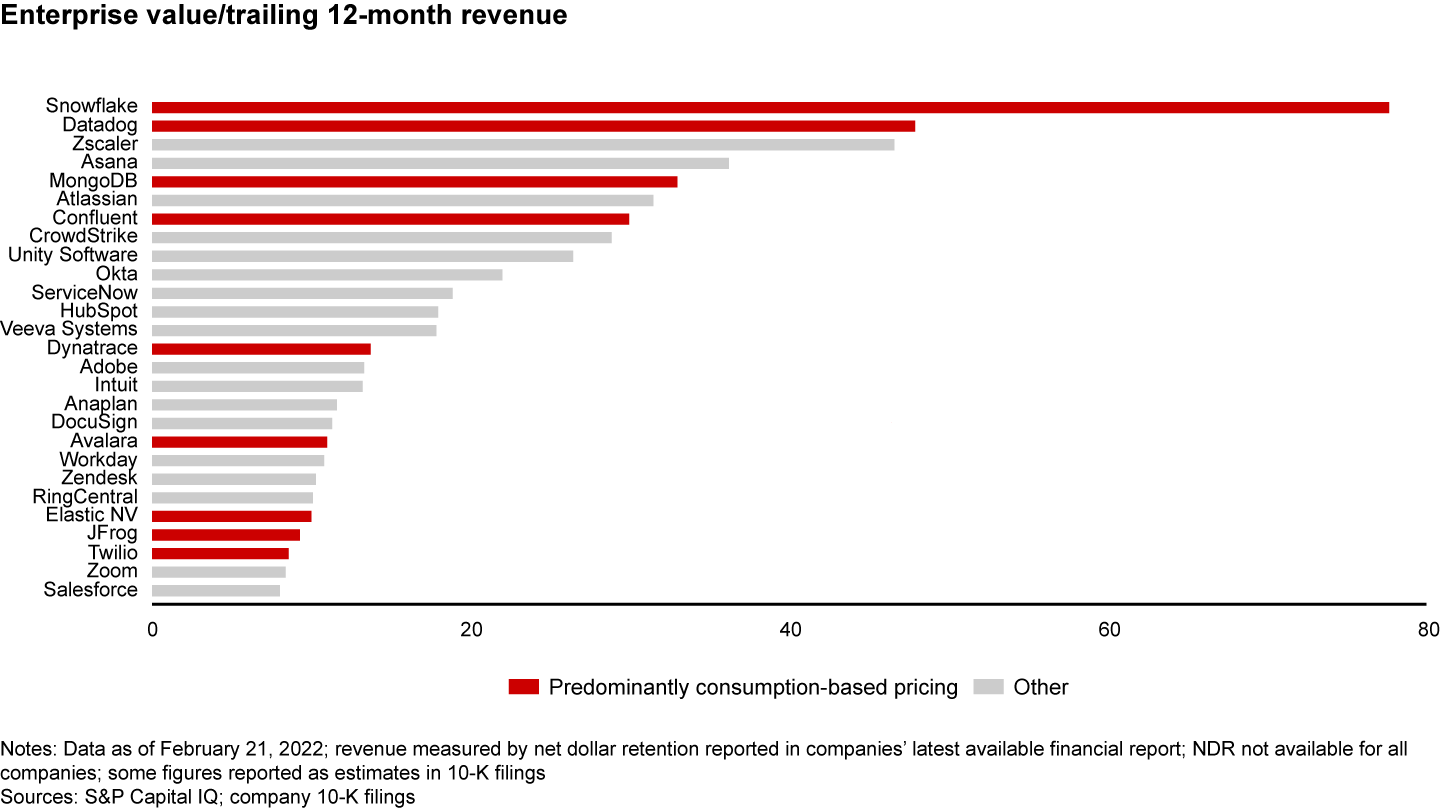

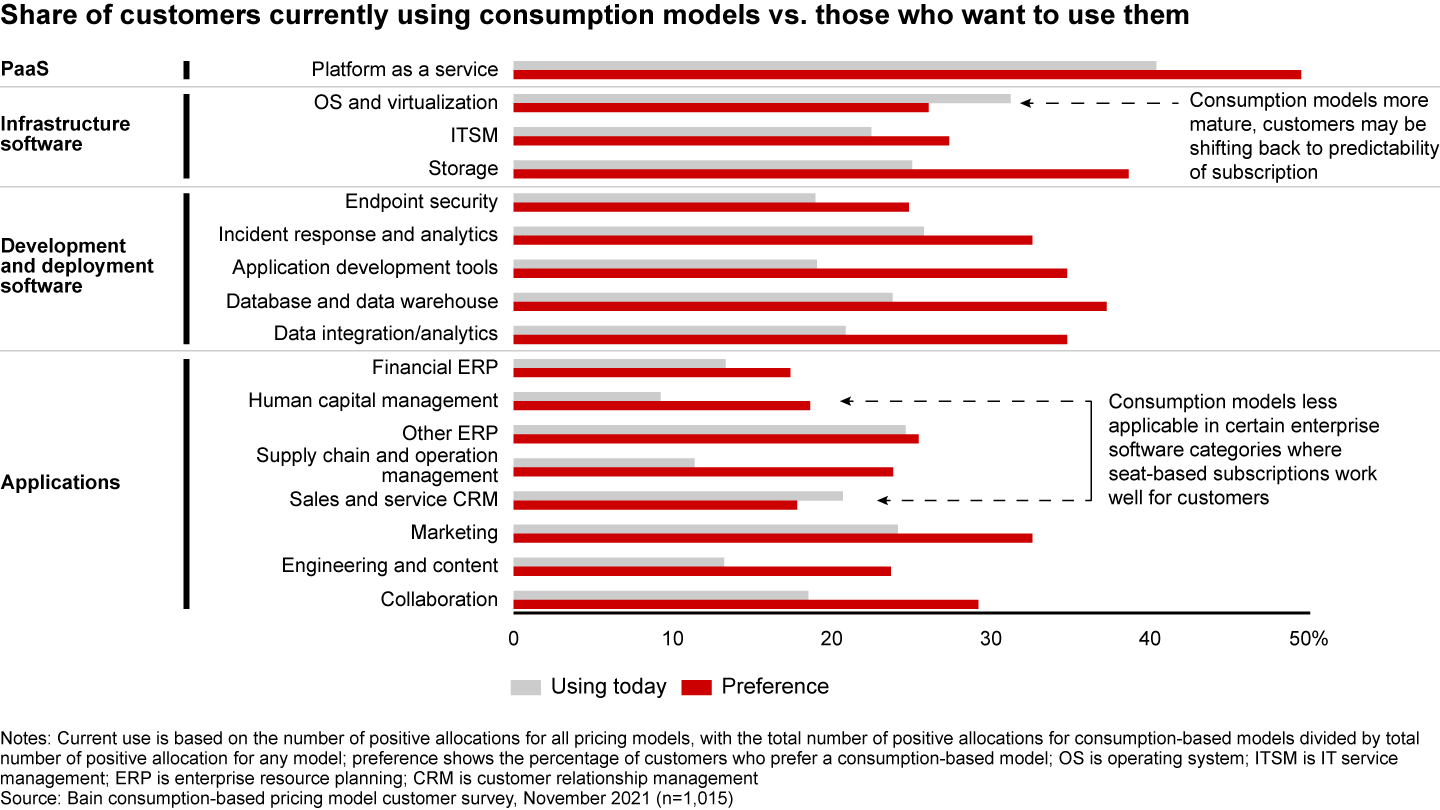
In 2021, companies with primarily consumption-based models, including Snowflake, JFrog, Elastic NV, Datadog, and Confluent, increased revenue approximately 8 percentage points higher on average than companies that mainly license or sell subscriptions to their software. Among the software companies with the highest valuation multiples, those offering consumption-based pricing on average earned 10 points higher revenue retention from existing customers, as measured by net dollar retention (NDR). Our research finds that customers expect to more than double their use of this model in the next one to three years, with most of that growth in the next 12 months. But even with this momentum, consumption-based pricing isn’t suited to every situation (see Figure 2). Three-quarters of software is still sold as a subscription or perpetual license, models that work well when customers know exactly how much they need. Consumption pricing has really taken off with platforms-as-a-service; cloud service providers like Amazon Web Services, Microsoft Azure, and Google Cloud; and infrastructure software and software tools serving developers.
Figure 2
Choosing the right pricing modelConsumption models offer potential new growth, but before adopting one, a vendor must think through important strategic, operational, and investment considerations, and realize that this transition can take multiple years. Software companies can begin by asking themselves three guiding questions. 1. Can we directly tie the value of our offering to a clear, transparent consumption metric that makes sense for both customers and vendors?Cloud software company Snowflake offers a usage-based pricing model with two metrics. For data storage, the company charges a certain dollar amount per terabyte per month after compression. For querying data, the metric is a dollar amount per second per warehouse, a flexible figure that enables customers to purchase any size and number of data warehouses. Because these metrics measure the use and value of the product’s two primary functions, they clearly align with the value delivered to customers. Defined and quantitative, they allow for granular tracking, and customers have embraced them. Today, 93% of Snowflake’s revenue is consumption-based. A successful meter has several characteristics.
2. Are customers in our industry interested in paying based on consumption, and are competitors offering it?In some applications like enterprise software for enterprise resource planning (ERP), human capital management (HCM), and customer relationship management (CRM), subscriptions based on seat count work well, and few customers are interested in changing models. For them, the value of the software lies in each user’s ability to create a unique workspace and workflow for managing customer and prospect pipelines. Start-ups in these categories aren’t using consumption models to disrupt. Operating system and virtualization software customers appreciate how the predictability of subscriptions aligns with corporate budgeting. 3. Do we have or can we see a path to developing the capabilities to operate the business in a consumption model?The selection of the pricing meters and packaged offerings was just the start of a much larger journey for an infrastructure software company that recently shifted to consumption pricing. Each function in the organization has adapted:
The answers to these three questions will help determine if consumption pricing is right for your company. If it is, there will certainly be work ahead to develop the capabilities and offerings needed to make the transition a success, but it will give your company a shot at growth and valuation rivaling that of some of the best businesses in software. Value EvolutionCompetitive BattlegroundsOperational AdvantageRead our 2022 Technology Report |